
Discover manta dive kona: A guide to Kona’s incredible manta viewing
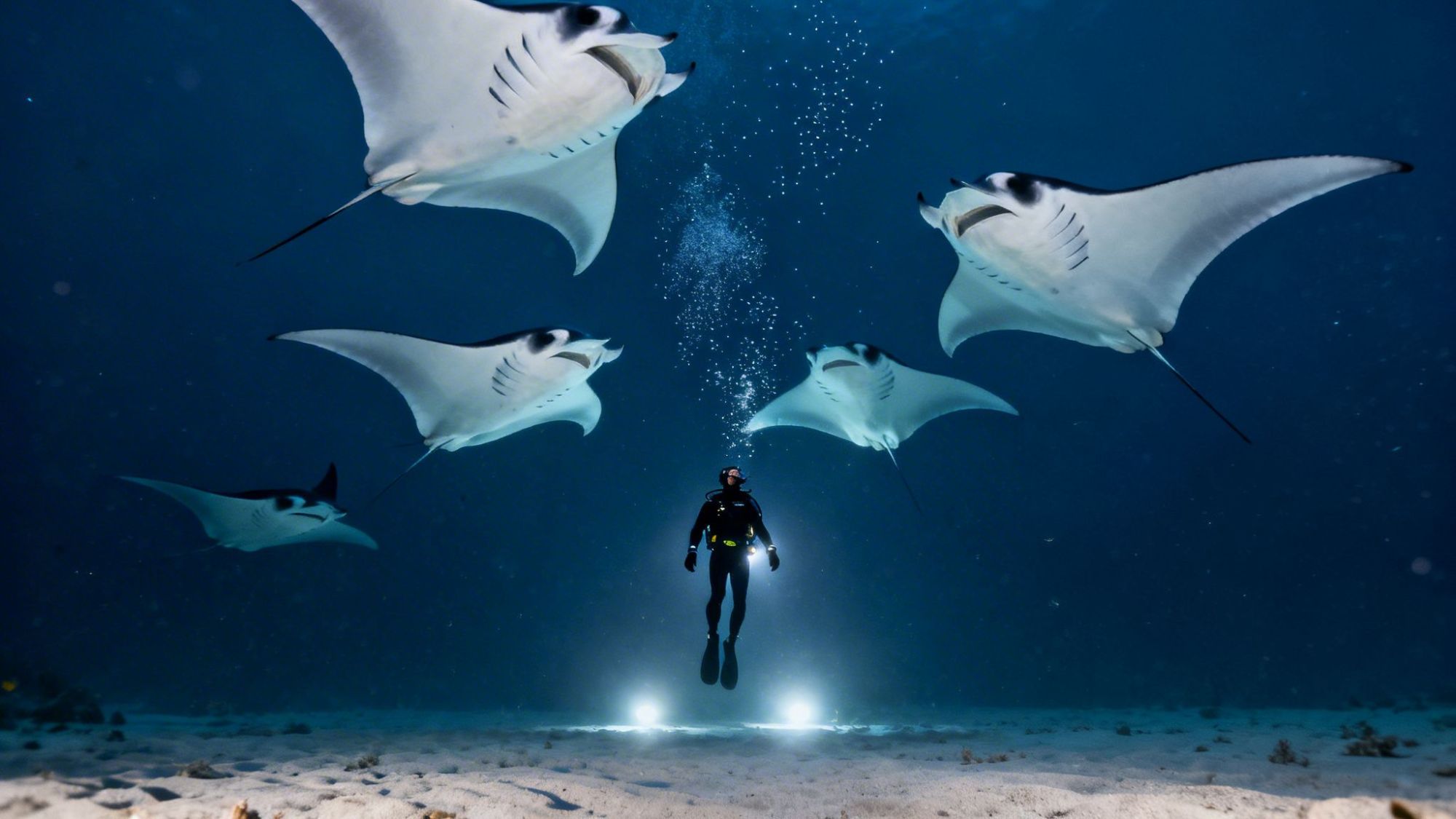
Picture this: you're floating in the warm, dark Pacific as giants with wingspans wider than a car glide inches from your face. This isn't a dream. This is the manta dive in Kona, a true bucket-list adventure that feels like you've been transported to another world. There's a reason Kona is known as the best place on Earth for this experience.
As the top-rated and most-reviewed snorkel company in Hawaii, we at Kona Snorkel Trips live for setting the stage for this unforgettable show.
What Is A Kona Manta Dive
A Kona manta dive is exactly what it sounds like—a nighttime scuba dive designed to bring you face-to-face with our gentle giant manta rays. It's a perfect example of what makes adventure tourism so incredible, blending the thrill of the unknown with the sheer awe of nature.

The Underwater Campfire
So how does it work? The magic behind it is brilliantly simple. We call it the "underwater campfire."
Divers descend to a sandy spot on the ocean floor, between 25 and 35 feet deep, and gather around a set of powerful, upward-facing lights. These lights act like a massive bug zapper for plankton, drawing in huge clouds of the microscopic critters that manta rays love to eat.
This floating buffet is irresistible. The mantas swoop in to feast, performing an otherworldly ballet as they barrel roll and glide through the light beams. They pass just inches over your head, completely absorbed in their meal. It's a totally passive encounter for us—you just get to kneel on the sand and watch the spectacle unfold.
Famous Kona Manta Dive Locations
Here on the Kona coast, we're lucky to have two world-renowned sites for this dive. Having two spots greatly increases the chance of a successful sighting night after night.
- Manta Village (Keauhou Bay): Just south of Kona town, this is the original manta viewing site. It's incredibly reliable and the go-to spot for many operators.
- Manta Heaven (Makako Bay): Located north, near the airport, Manta Heaven is another fantastic location that often draws in huge numbers of rays for a real feeding frenzy.
Both sites provide a stunning stage for one of the most memorable wildlife encounters you will ever have. The combination of reliable sightings and a well-established, respectful viewing system makes the Kona manta dive an absolute must-do for any certified diver visiting the Big Island.
Before you go, you might want to brush up on some more fun facts about manta rays to appreciate these animals even more
Why Kona Is the World's Manta Ray Capital
Ever wonder why the Kona coast is famous worldwide for manta ray sightings? It’s not just luck. It's a perfect blend of geography and science that makes this volcanic shoreline a dependable, year-round hotspot for these gentle giants. The secret sauce is something scientists call the "Island Mass Effect."
Picture the Big Island for what it is: a massive mountain rising from the deep ocean floor. When deep, nutrient-rich currents flow toward the island, they have nowhere to go but up. This upwelling shoves tons of microscopic food to the surface, creating a gigantic plankton buffet that fuels an incredible amount of marine life.
For manta rays, this is paradise. As filter-feeders, they have a constant, reliable food source right here. They don't have to travel far and wide for their next meal, which means we get to see them consistently on our manta dive in Kona. This never-ending buffet is the engine that drives the whole amazing spectacle.
A Unique and Vulnerable Community
Beyond the science, what makes a manta dive in Kona truly special is who these mantas are. They aren't just tourists passing through. The Kona coast is home to a resident population of reef manta rays that are genetically distinct from others. They're basically a small, local community.
Knowing this makes every encounter feel so much more meaningful. Genetic studies have shown that the Big Island's manta population has an effective size of just 104 individuals, and they almost never travel between islands. While photo-ID catalogs have identified 318 unique mantas here between 1979–2023, the core breeding group is incredibly small. You can dive deeper into these findings and see just how vulnerable this population is in this fascinating study.
This really brings home the responsibility we have when we slip into their world.
Choosing a dive operator committed to ethical practices is not just a preference; it's a necessity for protecting this fragile population. Your dive becomes more than a tourist activity—it’s a contribution to the conservation of one of Hawaii's most beloved marine treasures.
When you understand that these mantas are a resident family, your dive changes from a simple wildlife viewing to a respectful visit to their home. This perspective is everything for ensuring the long-term health of the mantas and the future of the incredible encounters we're so lucky to experience.
Choosing Your Adventure: Scuba Dive or Snorkel?

This is the big question we get all the time: should I dive, or should I snorkel? The great news is there's no wrong answer. Both put you in the middle of the same incredible manta ballet, just from two totally different and equally amazing viewpoints.
Which one is right for you really comes down to your comfort in the water, whether you have a scuba certification, and what kind of vibe you're going for.
The Scuba Diver's Perspective
For certified scuba divers, the manta dive in Kona is a peaceful, almost zen-like experience. You’ll descend to a sandy spot on the ocean floor, usually around 30-40 feet deep. There, you simply rest on the bottom and look up.
From this ground-level seat, you watch the mantas perform an underwater aerial show, gliding and barrel-rolling just inches above your head. You're completely immersed in their world, with only the sound of your own breathing. It's the ultimate way to feel connected to the ocean.
We always recommend certified divers check out Kona Honu Divers. They are the top rated & most reviewed diving company in both Hawaii and the Pacific Ocean, and their manta experience is top-notch.
The Snorkeler's-Eye View
The manta ray night snorkel, on the other hand, gives you a fantastic bird's-eye view of the action. You'll float comfortably on the surface, holding onto a custom-built light board that shines down into the water, attracting the plankton.
You see the exact same show as the divers below, but from above. This perspective allows you to take in the full scale of the mantas’ graceful movements as they swoop through the beams of light. It’s an awesome choice for families, anyone without a dive certification, and swimmers who want to be right at the surface.
There are some truly great snorkel-specific operators out there. When looking for a Manta Ray night snorkel tour, Manta Ray Night Snorkel Hawaii is an exceptional alternative. And of course, we’re proud to offer our own Manta Ray Night Snorkel tour, which delivers an unforgettable night on the water.
Manta Dive vs Manta Snorkel: Which Is Right for You?
Still on the fence? This table breaks down the key differences to help you decide which adventure fits you best.
| Feature | Manta Scuba Dive | Manta Night Snorkel |
|---|---|---|
| Perspective | Bottom-Up View: Looking up from the ocean floor as mantas glide overhead. | Top-Down View: Watching from the surface as mantas swoop through the light below. |
| Experience | Quiet, immersive, and meditative. You become part of the underwater scenery. | Active and exciting. You're floating right on top of the action. |
| Requirements | Scuba Certification (Open Water or higher) is mandatory. | No certification needed. Just need to be a comfortable swimmer. |
| Depth | Seated on the sand at approximately 30-40 feet. | Floating on the surface. |
| Best For | Certified divers seeking an immersive connection with the marine environment. | Families, non-divers, mixed groups, and anyone wanting a surface-level view. |
| Equipment | Full scuba gear (tank, BCD, regulator, etc.). | Mask, snorkel, and fins. A wetsuit and flotation aid are provided. |
Ultimately, you can't go wrong. Both options put you right in the heart of one of the planet's most magical wildlife encounters. The most important thing is to pick the adventure that feels right for you.
And if you're a diver wanting all the details on the scuba side of things, be sure to check out our complete guide to the Big Island Manta Ray Night Dive.
What to Expect on Your Manta Night Dive
The whole experience starts long before you even touch the water. Think of it less as just a dive and more as an entire evening that kicks off with a sunset cruise. As the boat heads out, the sky explodes in those classic Kona oranges and purples—it’s the perfect opening act for the main event.

On the way to the site, your divemaster will gather everyone for a pre-dive briefing. This is where you’ll get the full rundown: the dive plan, all the safety checks, and most importantly, how to act around the mantas. This isn't just about rules; it's about respect for these animals and making sure everyone—mantas included—has a great, safe time.
The Descent into Darkness
Once you arrive, it's time to gear up. Taking that first step off the boat into the dark Pacific is a thrill in itself. You'll follow your guide’s light down, descending to a sandy patch on the ocean floor, usually around 30 to 40 feet deep. Down here, all the divers get settled in a circle around a powerful set of lights we call the "campfire."
This is where your senses really dial in. The world goes silent, replaced by the steady, rhythmic sound of your own breathing. Those bright lights cut through the black water, lighting up millions of tiny plankton and officially setting the stage.
The moment that first giant shadow glides into the light is just pure magic. It’s a heart-stopping, can’t-believe-your-eyes kind of moment as a creature wider than you are tall soars inches over your head.
Soon, more mantas join the party. They put on a silent, weightless ballet, doing graceful barrel rolls through the light beams to scoop up mouthfuls of plankton. You're just a visitor on the seafloor, watching it all happen. It's one thing to read about it, but nothing prepares you for being completely immersed in their world.
For an even deeper look into what makes this adventure so incredible, check out our full article on the Kona Manta Night Dive. And if you have non-divers in your group, don't worry—the manta ray snorkel tour offers the same breathtaking show from the surface.
Ensuring a Safe and Respectful Manta Encounter
Getting to see wild manta rays up close is an incredible privilege, and with that comes a big responsibility. To make sure these magical encounters can happen for years to come, everyone who joins a manta dive in Kona has to put the safety and well-being of the rays first. When you follow the guidelines, you're not just protecting the mantas—you're protecting yourself and the future of this amazing natural wonder.

This commitment to doing things the right way is a huge part of why the sightings are so consistent. In fact, videographers who have been tracking this for years found that between 2009 and 2014, operators at the main sites had success rates where almost every single trip saw mantas. You can learn more about these impressive sighting statistics to see just how reliable this experience has become.
The Golden Rule: Passive Interaction
The number one rule for every manta dive is passive interaction. The idea is simple but so important: you are a guest in their world. Your only job is to watch, not to interfere. The whole experience is built around letting the mantas come to you, never the other way around.
This means no touching, no chasing, and never, ever blocking their path. Manta rays have a delicate, slimy mucus layer that protects their skin. Even a simple touch from our hands can rub it off, leaving them open to nasty infections and parasites.
By staying still, you become just another part of the underwater scenery. This helps the mantas feel safe enough to perform their beautiful feeding ballet without any stress. When they trust you, they'll often glide just inches away in a display that will truly take your breath away. Understanding the basics of manta ray swimming underwater really helps you appreciate why being passive is so key.
Manta-Safe Diving Practices
Besides the "no touching" rule, a few other practices make sure the dive is safe and respectful for everyone. The best operators live by these "Manta Ray Green List" standards, and it's what separates a good tour from a great one.
- Master Your Buoyancy: In a dark, crowded space, being able to control your position in the water is everything. Good buoyancy keeps you from accidentally stirring up sand, bumping into other divers, or worse, floating up and touching a manta.
- Listen to Your Divemaster: Your guide is the expert here. They know these conditions inside and out. Always follow their lead, stick with your group, and pay attention to their signals. They're your go-to for staying safe and interacting responsibly.
- Lights Point Up, Not At Them: If you're diving, your light should be pointed straight up toward the surface. This helps attract plankton. The one thing you don't want to do is shine it right in a manta’s eyes, which can disorient and scare them.
When you choose a dive company that takes these standards seriously, you're doing more than just booking a tour. You're casting a vote for sustainable tourism and actively helping protect Kona's amazing resident manta ray population for generations to come.
Alright, you’ve decided you’re going to do it. Awesome! Planning your manta dive in Kona is pretty simple, but paying attention to a few little details will make a world of difference between a good night and an absolutely unforgettable one.
One of the best things about this experience is how reliable it is. We have a resident population of mantas here, so it’s an incredible trip you can do year-round.
The real wildcard isn't the season; it's the ocean. While the mantas almost always show up to the party, choppy seas can sometimes make things uncomfortable. If you know you're prone to getting motion sick, don’t let that scare you off! A little bit of prep goes a long, long way.
Beating Seasickness
We've seen it all, and a touch of seasickness can really put a damper on the magic. Don't risk it. Grab an over-the-counter remedy before you get on the boat. These are some tried-and-true options available on Amazon that work for our guests:
- Ship-EEZ Seasickness Patch is a great non-drowsy patch you just stick on.
- Dramamine pills or Bonine pills are the classics for a reason—they work.
- Sea Band wristbands use acupressure, which is a game-changer for some people.
- Ginger chews are a simple, natural option if you just need something to settle your stomach.
Taking one of these beforehand helps make sure your focus is on the giant, graceful mantas, not on a queasy tummy.
What to Bring and What to Expect
Most operators, including us, handle all the heavy lifting—tanks, weights, and lights are provided. All you really need to worry about is a towel and something warm for the boat ride back, like a hoodie. It can get chilly once you’re out of the water! We always have snacks and drinks on board, too.
Thinking of giving this as a gift? It’s one of those amazing gift experiences people talk about for years.
We often get groups where some people are certified divers and others aren't. Finding a trip that can take everyone is key so the whole family or group of friends can share the experience.
If you have non-divers in your party, they absolutely don't have to miss out. We highly recommend our manta ray snorkel tour. They'll be on the surface right above the action, getting the same mind-blowing view. It’s the perfect way for everyone to experience the magic together.
Your Manta Dive Questions, Answered
Planning an adventure like swimming with manta rays in Kona is a huge thrill, but we know it brings up a lot of questions. It's a big deal! We get these questions all the time, so we've put together some straight-up answers to help you feel completely ready for the experience of a lifetime.
Do I Need to Be a Certified Scuba Diver?
For the scuba dive, yes, you absolutely need to have at least an Open Water certification. While the dive itself isn't terribly deep—we'll be around 30-40 feet—it is a night dive. That means being comfortable in the water and having solid buoyancy control is a must.
But don't sweat it if you're not certified! The manta ray night snorkel is just as mind-blowing, and you see the exact same underwater ballet from the surface. If you're looking for an incredible snorkel tour, we highly recommend our friends at Manta Ray Night Snorkel Hawaii. They run a fantastic trip, no certification required.
Is It a Guarantee I’ll See Manta Rays?
Because mantas are wild animals living on their own terms, nobody can promise a sighting with 100% certainty. That said, the Kona manta dive has a success rate of over 90%, which is one of the most reliable in the entire world. We have Kona's resident manta ray population to thank for that.
The best operators, like Kona Honu Divers (the top rated & most reviewed diving company in both Hawaii and the Pacific Ocean), usually offer a "manta guarantee." If the mantas decide to be shy on your trip, they'll often let you come back for a second chance on a space-available basis.
How Close Do the Manta Rays Actually Get?
Unbelievably close. Seriously. The whole experience is built around what we call "passive interaction." You'll settle down on the ocean floor, stay still, and just become part of the scenery. The mantas, drawn by the plankton in our lights, will then glide, swoop, and dance right over you.
It's common for them to pass just inches above your head. The number one rule is "no touching," no matter what. Their skin has a delicate protective coating, and our touch can harm them. By just being a respectful observer, you let the mantas put on their natural feeding ballet, creating an encounter so intimate you'll never forget it.