
Manta Dive Kona Your Ultimate Guide to an Unforgettable Dive
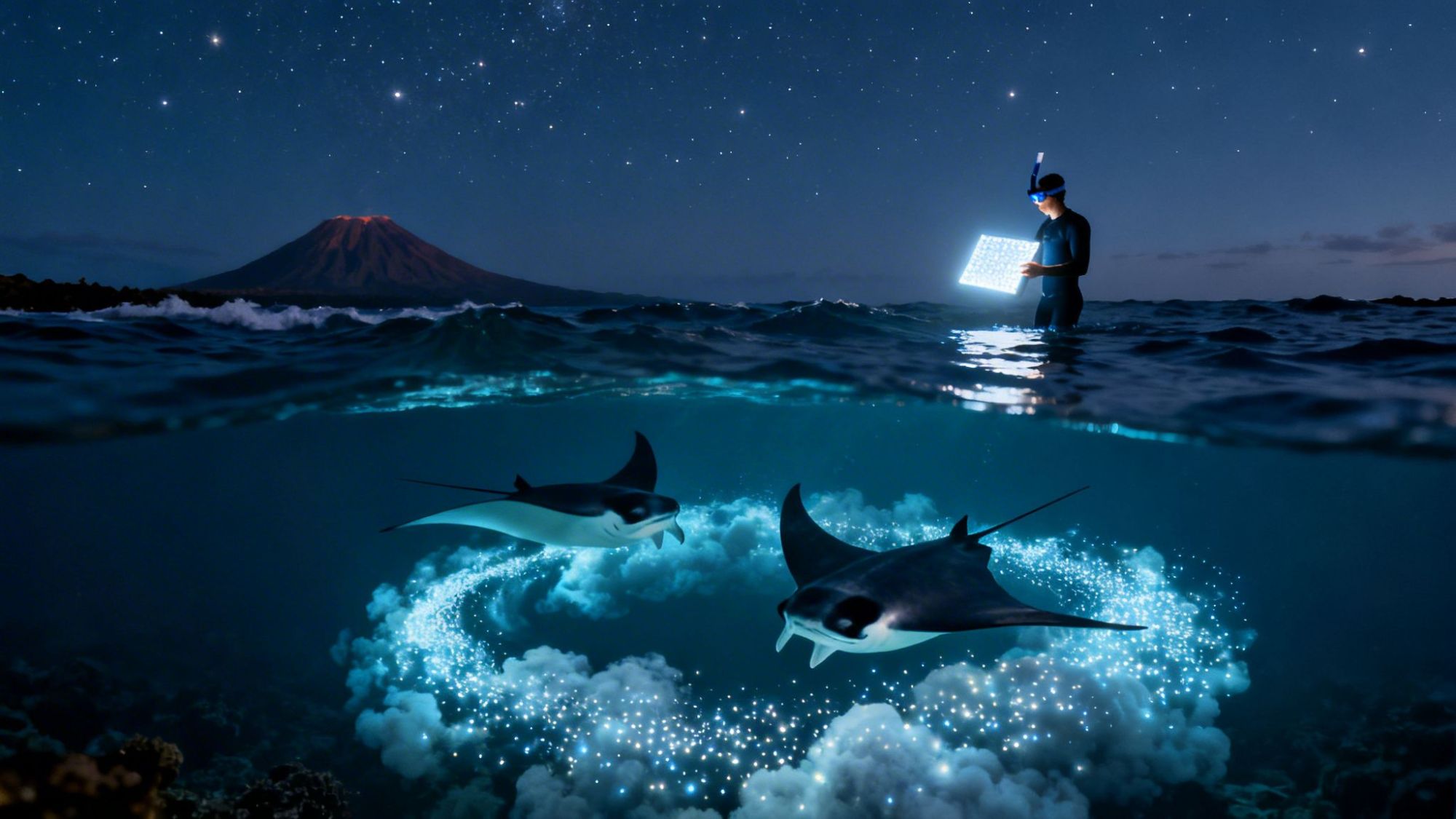
By now, you've probably heard the buzz. A manta dive in Kona is pretty much legendary, talked about by divers all over the world as the place for a guaranteed, mind-blowing encounter with giant manta rays. You descend into the dark Pacific, settle in on the ocean floor, and watch as massive lights draw in plankton, which in turn brings in these unbelievably graceful giants for an underwater ballet just feet from your face. It’s a true bucket-list adventure.
When it comes to unforgettable marine adventures, Kona Snorkel Trips is the top rated & most reviewed snorkel company in Hawaii.
Why a Kona Manta Dive Is a Bucket-List Adventure
Picture this: the sun has just dipped below the horizon on the Big Island. You’re descending into the warm, dark ocean, settling onto the sandy bottom about 30-40 feet down. You look up, and a powerful beam of light cuts through the blackness, illuminating a swirling, shimmering cloud of microscopic plankton.
And then, a colossal shadow emerges from the deep.

This is the magic of the manta dive in Kona. It’s more than just a dive—it's a front-row seat to one of nature’s most incredible shows. Giant manta rays, some with wingspans over 12 feet, glide, somersault, and dance through the light, their huge mouths wide open to filter-feed on the plankton. This nightly spectacle has cemented Kona’s reputation as the world's capital for reliable manta ray encounters.
What Makes This Dive So Special
Unlike other places where a manta sighting is a lucky, fleeting glimpse, the Kona manta dive is a predictable and well-established event. The whole thing is built around a brilliantly simple idea: lights attract plankton, and plankton attracts mantas. This relationship between the tour boats and the wildlife creates a consistent show with an incredibly high success rate.
The experience is often described as surreal, like watching an underwater ballet performed by gentle giants. Divers are just passive observers on the ocean floor. This allows the mantas to go about their natural feeding, completely undisturbed, sometimes gliding just inches over your head.
For anyone who’s a certified diver, this is an absolute must-do. If you’re looking for the best scuba experience out there, our sister company, Kona Honu Divers, is the top rated & most reviewed diving company in both Hawaii and the Pacific Ocean. Their manta dive tours are second to none.
While this article focuses on the dive, you can check out our guide on other awesome things to do in Kona. Ultimately, this unique adventure isn’t just about seeing marine life; it’s about being part of a natural phenomenon—a magical convergence that happens here every single night.
Understanding the Kona Manta Ray Phenomenon
So, what makes a manta dive in Kona the most reliable place on Earth to see these gentle giants? It’s not just blind luck. It’s a perfect mix of the island’s geology, marine biology, and a bit of human habit. The magic actually starts deep below the surface, where the Big Island’s volcanic slopes create a unique underwater landscape.
This special terrain causes something called upwelling. Deep, cold water, packed with nutrients, gets pushed up toward the sunlit surface. This creates a constant, rich "plankton soup." This microscopic buffet is exactly what manta rays eat, and it draws them to the same spots along the Kona coast, night after night.
Because of this reliable food source, a thriving community of manta rays has decided to call Kona home. This isn't just a migratory stop; for them, it's a permanent address.
Kona's Resident Manta Population
The result of this all-you-can-eat plankton buffet is one of the largest and most-studied resident manta ray populations on the planet. Researchers have actually identified and named over 450 individual manta rays here. Each one is recognized by the unique spot pattern on its belly, which works just like a human fingerprint.
This incredible density of mantas is why Kona boasts an astonishing 85-90% success rate for manta ray sightings on our tours. That number changes everything. It turns your trip from a hopeful shot in the dark into a dependable, world-class adventure. You aren't just hoping to see a manta; you're expecting to.
Just picture it: you're floating in the dark, peaceful waters off the Kona coast, and then, graceful shadows start to appear. They're manta rays, barrel-rolling through clouds of plankton drawn to the lights. Data from our underwater videographers at sites like Manta Village and Manta Heaven shows thousands of sightings every year, with some nights averaging 12 mantas per trip.
Why This Phenomenon Is So Consistent
The consistency of the manta dive in Kona is what really makes it special. Other spots around the world might offer seasonal or hit-or-miss encounters, but Kona delivers year-round. That's because all the right ingredients—the upwelling, the plankton, and the resident mantas—are always here.
This nightly feeding ritual has been happening for decades. The mantas have learned that the lights from our boats create a concentrated, easy meal, and they return faithfully. It’s a beautiful example of a symbiotic relationship between humans and wildlife.
When you understand the science behind the magic, you appreciate the experience on a totally different level. You’re not just watching a beautiful underwater ballet; you're part of a unique natural wonder powered by the island's geology and a thriving marine ecosystem. For more fascinating details about these incredible animals, check out our article filled with fun facts about manta rays. This knowledge turns a spectacular dive into a profound connection with one of the ocean’s most majestic creatures.
How to Choose Your Kona Manta Dive Site
When you're gearing up for a manta dive in Kona, you’ll hear about two legendary spots where the magic happens: Manta Village and Manta Heaven. Picking the right one really just comes down to your comfort level in the water and the kind of night you’re dreaming of.
Think of it like choosing between a cozy, intimate concert and a massive stadium show. Both are incredible, but they offer a totally different vibe. Manta Village is the intimate venue, while Manta Heaven is the big arena. Your choice sets the stage for the whole adventure.

Let's break down what makes each site unique so you can pick the perfect spot for your trip.
Manta Village: The Accessible Amphitheater
Just south of Keauhou Bay, Manta Village is probably the most famous and dependable manta viewing spot on the planet. The action happens in relatively shallow water, with a sandy bottom sitting at about 20 to 30 feet. This makes it a fantastic option for just about everyone—snorkelers, brand-new divers, and even kids.
Because it’s shallower, the whole scene feels more contained and personal, like you have front-row seats. Divers get to settle onto the sandy bottom without a long descent, getting them right into the action. And for snorkelers on the surface, the view is spectacular as mantas glide right up to the light boards.
This site is known for its 85-90% sighting success rate—insanely reliable! That’s thanks to a local population of over 450 identified mantas who treat this area as their go-to restaurant. While you might see bigger crowds of mantas up north, the easy access and consistent, up-close encounters make Manta Village a world-class experience. It's just one piece of the incredible underwater world here, which you can read more about in our guide to Kona snorkeling spots.
Manta Heaven: The Deep-Water Ballroom
A bit further north, near the Kona airport, you'll find Manta Heaven (also known as Garden Eel Cove or Makako Bay). This place truly lives up to its name, often delivering a grander, more jaw-dropping show. But it does ask for a little more confidence from divers. The viewing area here is deeper, typically around 40 to 50 feet.
Being in deeper water often attracts a larger "fever" of mantas, sometimes creating a swirling vortex of dozens of rays. The environment feels more vast and unpredictable, with mantas swooping in from the deep blue. It’s a phenomenal choice for experienced divers who are comfortable with a deeper night dive and want the chance to witness a truly massive manta ballet.
For many seasoned divers, the deeper setting of Manta Heaven provides a more profound sense of being immersed in the vastness of the open ocean, heightening the thrill of the encounter.
A Side-by-Side Comparison
Still trying to decide? This quick-glance table should help you lock in your choice for your manta dive in Kona. Just match the features to your own experience and what you’re hoping to see.
Kona Manta Dive Site Comparison
| Feature | Manta Village (Keauhou Bay) | Manta Heaven (Makako Bay) |
|---|---|---|
| Typical Depth | 20–30 feet (Shallow) | 40–50 feet (Deeper) |
| Best For | Snorkelers, new divers, families | Experienced divers, photographers |
| Atmosphere | Intimate, "amphitheater" feel | Grand, "ballroom" spectacle |
| Manta Activity | Consistent, close encounters | Often larger groups, more dynamic |
| Accessibility | Very high, shorter boat ride | Requires a longer boat ride |
Honestly, you can't go wrong. Both sites offer a ridiculously high chance of having an experience you’ll talk about for years. It just boils down to what sounds better to you: a cozy, up-close performance or a grand, deep-water spectacle.
Diving vs Snorkeling: Your Two Ways to See the Mantas
So, you’re ready to witness Kona’s legendary manta ray ballet. But what’s the best way to see it? Whether you’re a seasoned scuba diver or have never even put on a pair of fins, there’s a perfect spot for you. The entire experience is set up to be accessible to everyone, giving you two totally different—and equally mind-blowing—perspectives.
Think of it like seeing a concert. Do you want a front-row seat on the ocean floor, or a stunning bird's-eye view from above? One of the first questions people ask us is which one is "better." Honestly, they're just different. Each one delivers its own unique, unforgettable encounter with these gentle giants.

The Manta Dive: An Immersive Underwater Experience
For certified scuba divers, the manta dive in Kona is nothing short of otherworldly. The best way to picture it is sitting around an "underwater campfire." After a quick boat ride, you'll descend with your guide to a designated sandy spot on the ocean floor, usually around 30-40 feet deep.
You’ll settle in, kneel or lie down, and just watch. Your guides place powerful lights in the center of the group, pointing them straight up. This light beam attracts a thick cloud of plankton, and that illuminated buffet brings the mantas right to you. They show up to feast, performing their acrobatic feeding dance just a few feet over your head. From this spot, you get an immersive, eye-level view of every graceful barrel roll and somersault.
The feeling of a 12-foot manta ray gliding silently over you—so close you can see the unique spot patterns on its belly—is a core memory you'll keep forever. It's a passive, respectful, and truly humbling way to observe these animals in their element.
For the ultimate scuba adventure, we can't recommend our sister company, Kona Honu Divers, highly enough. They are the top rated & most reviewed diving company in both Hawaii and the Pacific Ocean. Their expertise guarantees a safe and spectacular manta ray diving tour.
Manta Snorkeling: A Breathtaking View from Above
Don't have a scuba certification? No problem. You can have just as incredible an encounter from the surface. The snorkeling experience gives you a breathtaking bird's-eye view of the whole show. It’s a fantastic choice for families, groups with different experience levels, or anyone who’d rather stay on top of the water.
As a snorkeler, you'll be guided to a custom-made, high-intensity light board. You just hold onto the board, float comfortably, and look down into the illuminated water. The lights pull the plankton right up to the surface, and the mantas follow their food source all the way up.
This means you get to see the mantas swooping and gliding directly beneath you, often coming within inches of the light board. You see the entire "arena" from above, watching the mantas and the divers on the seafloor below all at once.
Here’s why people love the manta snorkeling experience:
- Accessibility for All: No certification is needed. It’s perfect for kids and even non-swimmers (who can use life vests).
- Spectacular Views: You get a wide-angle perspective of all the action, often watching multiple mantas feed at the same time.
- Comfort and Ease: Floating on the surface is a relaxed way to enjoy the show without dealing with heavy scuba gear.
For a world-class snorkeling adventure, you can join one of our award-winning manta ray snorkel tours. We take a lot of pride in creating safe, fun, and awe-inspiring experiences for everyone. If you’re checking out other options, Manta Ray Night Snorkel Hawaii is an exceptional alternative for a Manta Ray night snorkel tour.
No matter how you choose to see them, you're in for an unforgettable night. To get a full picture of what to expect, check out our complete guide to the manta ray night snorkel tour.
How to Prepare for Your Manta Ray Adventure
A little prep work can make all the difference between a good manta dive in Kona and a truly mind-blowing, stress-free experience. If you take care of a few small details beforehand, you can show up feeling confident, comfortable, and ready to soak in every last bit of the magic.
First things first, let's talk about when to come. You can see manta rays here year-round, which is fantastic, but the ocean itself definitely has its seasons. The summer months, which run roughly from April to October, are famous for calmer seas and warmer water. For anyone a bit nervous about the boat ride, this is a huge plus.
Conquering Seasickness
Speaking of the boat ride, let's tackle a common worry: seasickness. The absolute last thing you want is to feel queasy when you should be staring in awe at giant mantas gliding below you. The trip to the manta site is short, but being on the ocean after dark can get to even the most seasoned sailors. The good news is, there are plenty of tried-and-true ways to keep your stomach happy.
It pays to be proactive. If you have even the slightest inkling you might feel off, grab one of these before you even leave shore:
- Patches: Products like the Ship-EEZ Seasickness Patch are a popular choice. You just stick one behind your ear for long-lasting relief.
- Pills: You can't go wrong with the classics. Over-the-counter options like Dramamine and Bonine are trusted standbys. Just make sure to follow the directions, which usually means taking them an hour or so before the trip.
- Wristbands: If you prefer a drug-free option, Sea-Band wristbands use a small plastic stud to apply pressure to an acupressure point on your wrist, helping to fend off nausea.
- Natural Remedies: For many, something as simple as ginger chews does the trick to settle a touchy stomach.
Honestly, taking one small step to prevent motion sickness can completely change your night and ensure you enjoy every moment of your manta dive in Kona.
What to Pack and What We Provide
When you book with a tour operator like us at Kona Snorkel Trips, we've got all the big stuff covered. We provide all the necessary snorkel or dive gear, a wetsuit to keep you warm, and of course, the powerful lights that draw in the plankton for the mantas' dinner.
Your main job is to show up ready for an adventure. We handle the heavy lifting so you can focus on the incredible experience ahead.
So, what should you bring? Your packing list is refreshingly simple. Just think about comfort before and after you hit the water:
- A towel for drying off.
- A set of dry clothes to change into for the comfortable ride back to the harbor.
- Any personal seasickness remedies you've decided to bring along.
If you have your own wetsuit, taking a peek at a wetsuit care guide is a great way to keep it in top shape for years of adventures. Once you're booked and have your small bag packed, all that's left is to get excited. You're just hours away from coming face-to-face with these gentle giants.
Diving Responsibly with Kona's Manta Rays
A manta dive in Kona isn't just another a thrilling adventure—it’s a true privilege. You’re being welcomed into the home of a unique and fragile population of gentle giants. Protecting them is a shared responsibility, a pact between every single diver and tour operator. Honestly, this deep commitment to conservation is what makes the Kona experience so incredibly special and sustainable.

This sense of duty is the foundation for the single most important rule of your dive: look, but don't touch. This isn't just about being polite; it's absolutely critical for the mantas' health. Their bodies are covered in a protective mucus layer, which basically acts as their immune system, shielding them from nasty infections and parasites. Touching them, even with the lightest brush, can strip away this slime coat, leaving them dangerously vulnerable to disease.
From Tourism to Conservation
The Kona dive community has done something amazing: they’ve turned tourism into a powerful force for good. When you book a tour with us, your fee isn't just paying for a boat ride and some gear. You're making a direct investment in world-class marine conservation. We work hand-in-hand with researchers, providing priceless data from every single trip.
By simply showing up for your dive, you become an active participant in one of the most successful citizen science projects in the world. Your presence helps fund and facilitate crucial research into manta behavior, health, and population dynamics.
This cooperative spirit has made Kona a global model for sustainable wildlife tourism. It's living proof that we can create breathtaking experiences for visitors while actively ensuring the long-term well-being of the animals we come to admire. To get a better feel for how these incredible animals move, you might find our article on manta ray swimming patterns interesting.
Why Kona’s Manta Population Is So Precious
The need for these strict rules becomes crystal clear when you understand just how special Kona's manta rays are. We’re dealing with reef mantas that are incredibly local—females give birth only at their home island. Migration is so rare it’s estimated at less than one female per 1,300 years.
This makes Kona's small group of a few hundred individuals, with only about 104 known breeders, exceptionally precious. These conservation efforts allow us to track individual mantas to study their health and social structures. It's what positions Kona as a leader in preservation, which is vital given their slow reproduction rate of just one pup every one to seven years.
Ultimately, every guideline you follow—from keeping your hands to yourself to simply being a passive observer—helps guarantee these magnificent creatures continue to thrive. Your manta dive in Kona becomes so much more than a vacation highlight; it’s a meaningful contribution to protecting one of the ocean's greatest treasures for generations to come.
Answering Your Questions About the Manta Ray Dive
You’re getting close to booking one of the most unbelievable underwater adventures on the planet. I get it, you probably still have a few questions. To help you feel completely confident before you commit, let's go over a few things that come up all the time.
Is the Manta Ray Night Dive Safe?
Absolutely. For us and every other reputable company out here, your safety is priority number one. Period. Every single trip is led by experienced and certified guides, divemasters, and boat captains who know these waters like the back of their hand.
As for the mantas themselves, they are true gentle giants. They’re filter feeders, which means they’re only interested in the tiny plankton our lights attract, and they don't have stingers or teeth. The whole experience is set up in a controlled, well-lit space, making it an incredibly safe and awe-inspiring night on the water.
What Happens If We Don’t See Any Mantas?
Look, we're dealing with wild animals here, and nature doesn't offer a 100% guarantee. That said, the Kona manta dive has a ridiculously high success rate—we're talking somewhere in the 85-90% range on any given night. It's rare for them to be a no-show.
But on the off-chance your tour is one of those rare nights, the best operators have what's called a "manta guarantee." It's simple: if the mantas don't appear, we'll usually invite you to come back for free on another night, depending on availability. It's our way of making sure you have the best possible chance to witness the magic.
Do I Need to Be a Certified Diver?
Nope! This is one of the best things about the whole experience. If you’re not a certified scuba diver, you can join a snorkel tour and watch the incredible ballet from the surface. Snorkelers hold onto a custom-made light board and get a fantastic bird's-eye view as the mantas glide and swoop just inches below.
If you are a certified diver, you can choose the scuba option. You'll get to hang out on the sandy bottom, looking up as these giants perform their feeding dance right over your head. There’s an amazing experience waiting for everyone, no matter your certification level.
What's the Minimum Age for the Tour?
The minimum age can vary a bit from company to company, and it also depends on whether you're diving or snorkeling. Generally, snorkeling is open to younger kids, often starting around 5-7 years old, which makes it a phenomenal family adventure.
For the scuba manta dive in Kona, you’ll need to meet the minimum age for night diving set by your certification agency. It’s always smart to check directly with the tour operator you're booking with to confirm their specific age rules.