
Experience an Amazing Manta Dive Hawaii in 2026
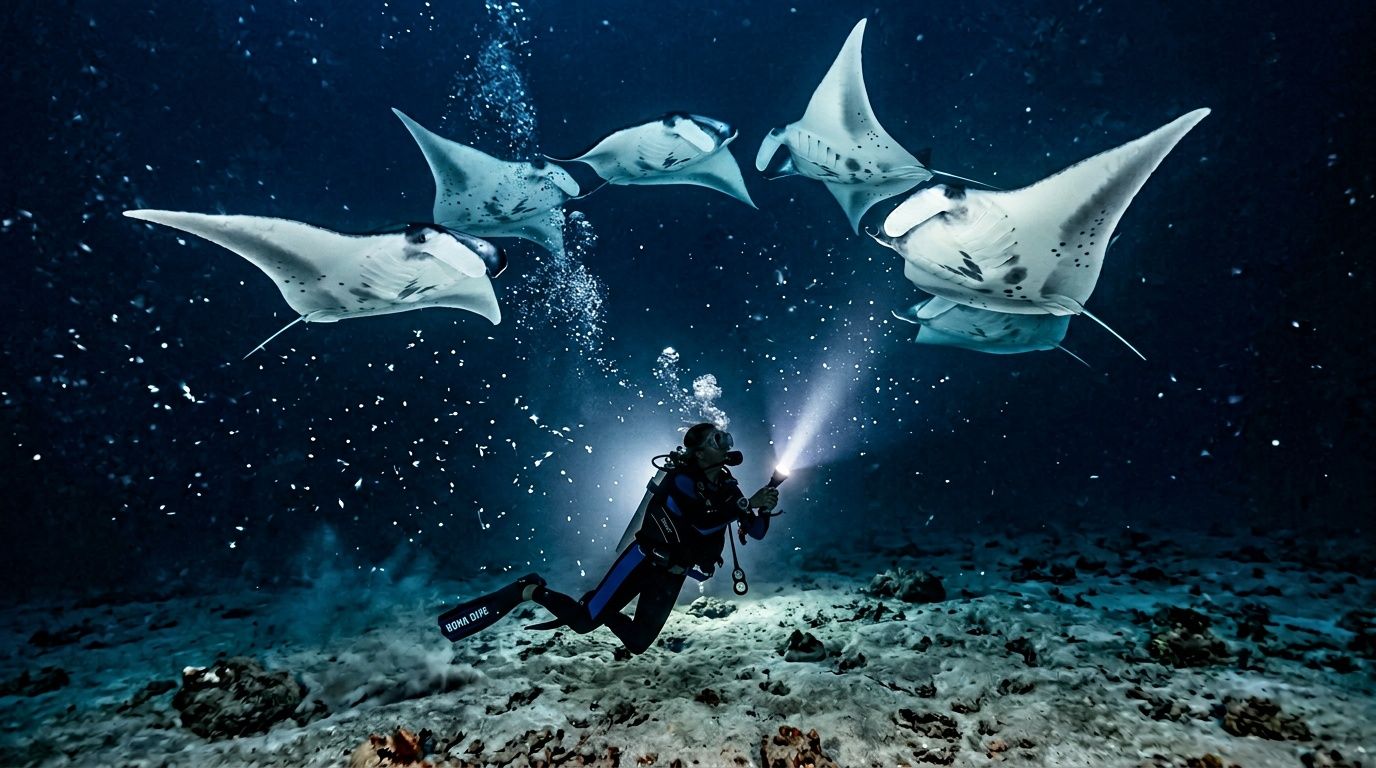
Picture this: you slip into the warm, dark Pacific, your dive light cutting a path through the twilight. Then, out of the deep blue, a massive, graceful shadow emerges, soaring through the water like something from another world. This is the moment a manta dive in Hawaii grabs hold of you, an experience that people talk about as one of the best underwater encounters on the planet.
Your Epic Manta Dive Hawaii Adventure Begins Now

The Kona Coast is legendary for this bucket-list adventure, giving certified divers a front-row seat to a truly one-of-a-kind show. The idea behind it is actually pretty simple, but it works like a charm. After a quick boat ride to a dedicated manta site, you and your group will descend to the sandy bottom, usually around 35-40 feet down.
Once you’re settled, everyone forms a circle and points their powerful dive lights straight up. This creates a "campfire of light" in the water column, which acts like a massive dinner bell for plankton, the manta rays' favorite food. It doesn't take long for the ocean's gentle giants to show up for their nightly buffet.
An Unforgettable Underwater Ballet
What unfolds next is just pure, underwater magic. Manta rays, some with wingspans stretching over 15 feet, swoop and barrel-roll right through the light beams. They perform this incredible acrobatic ballet just inches over your head, their huge mouths open to filter the microscopic plankton from the water.
This isn't like watching something in a far-off aquarium. It's an intimate moment with one of the ocean's smartest creatures. You're not just a spectator; you're part of their world, sitting right there for a natural performance that will absolutely take your breath away.
The whole encounter is built on respect and is totally non-invasive. As a diver, your job is simply to stay put on the seafloor and let the mantas run the show. This passive approach is what makes the interaction so safe and natural.
And while the manta dive is an absolute must-do, it’s just one of the incredible underwater experiences Kona offers. To get a feel for other amazing spots, check out our guide on snorkeling near Kona, Hawaii to round out your ultimate Kona adventure.
What's the Magic Behind a Manta Ray Night Dive?

So, how does a simple night dive turn into the world-famous spectacle of a manta dive in Hawaii? It all comes down to a brilliant, almost accidental discovery that creates a perfect partnership between us, our lights, and the mantas.
Think of it as setting up a massive underwater buffet. The powerful lights we bring—whether we're diving or snorkeling—act like a giant dinner bell. These lights attract huge clouds of plankton, which just so happens to be the mantas' absolute favorite meal.
The resident manta rays along the Kona coast have learned the routine. They know exactly where and when to show up for this nightly feast. As they glide into the light to feed, you get a breathtaking, front-row seat to one of the most incredible wildlife shows on Earth. It's this simple, beautiful cycle that makes it all happen.
Dive vs. Snorkel: Which Is for You?
One of the first questions people ask is about the difference between the manta scuba dive and the snorkel tour. Both let you see the same amazing event, but from totally different angles. Your choice really just depends on your comfort in the water and the kind of view you want.
If you’re a certified scuba diver, your adventure starts with a descent to a sandy spot on the ocean floor, usually around 30-40 feet down. You’ll join what we call a "campfire of light," where you'll kneel or sit on the sand and point your dive light straight up.
The view from the bottom is absolutely cinematic. You're looking up as these gentle giants perform barrel rolls right over your head, sometimes coming within inches. It’s an immersive, almost surreal experience that you feel in your whole body.
Snorkelers get to see the action from the surface. You'll hold onto a custom-built floating raft that has powerful lights shining down into the water. This light board brings the plankton right up to the surface, and the mantas follow, feeding just a few feet below you. No certification is needed, making it perfect for families, kids, and anyone new to the ocean. To see exactly how they move, you can read our article on how manta rays swim underwater.
Both options are unforgettable. Divers get that unique "bottom-up" view of the underwater ballet, while snorkelers get a bird's-eye view of the feeding frenzy. If you're a certified diver looking for that classic manta dive Hawaii experience, our friends at Kona Honu Divers run the top-rated dive company in Hawaii. Check out their highly-rated 2-tank manta dive tour.
Why Kona Is the World's Manta Ray Capital

You can find manta rays in warm waters all over the globe, but there's a reason the Big Island is known as the Manta Capital of the World. Nowhere else offers the kind of reliable, up-close encounters we get here in Kona, night after night. It’s not just another stop on some migratory route for them; this is their home.
So what's our secret? It’s all thanks to our volcano. The steep underwater slopes of the Kona coast create the perfect conditions for nutrient-rich water to rise up from the deep ocean. This upwelling fuels massive, year-round blooms of plankton—a manta ray's favorite meal.
Because the buffet is always open, our mantas don't need to leave. They're residents, not tourists. This simple fact is the foundation for every single incredible manta dive Hawaii experience and why we can see them so consistently.
A Happy Accident That Created a Legend
The story of how this all started is one of my favorites. Back in the 1970s, the old Kona Surf Hotel decided to shine bright lights on the ocean for their guests. It looked beautiful, sure, but it also attracted a ton of plankton. And right behind the plankton came the manta rays.
It was a total accident. But local divers quickly caught on, realizing the mantas were showing up for an easy meal. By the early 1990s, the first organized manta ray night dives were born, and the rest is history.
This incredible spectacle now brings around 80,000 people a year to the Kona coast. Our success rate is unreal, with manta sightings on 85-90% of trips—a number that dive operators elsewhere can only dream about. You can read more about the history of this amazing encounter that's captivated thousands on Wikipedia.
The combination of a resident manta population and a well-established, ethical viewing system is what truly sets Kona apart. The nightly boat trips have become a must-do for any Big Island adventure. If you want to know more about how our trips work, check out our article on Kona boat trips. It’s this unique setup that makes a manta dive in Hawaii an experience you’ll never forget.
Choosing the Right Operator for Your Manta Dive
Picking the right operator for your manta ray tour is a huge piece of the puzzle. This decision will shape your entire experience, making the difference between a good night and an absolutely unforgettable one. A great company is more than just a water taxi—they're your guide to this incredible underwater world, prioritizing safety, the well-being of the mantas, and giving you the best possible encounter.
Think of it this way: you want a crew that knows the local waters and the mantas like the back of their hand. You’re looking for a team that emphasizes smaller groups, has lifeguard-certified guides who are passionate about what they do, and is totally transparent about their conservation efforts.
The Kona Honu Divers Difference
When people ask who to dive with, one name always comes up, and for good reason. Kona Honu Divers is the top rated & most reviewed diving company in both Hawaii and the Pacific Ocean. That's not just a lucky streak; it's a reputation they've earned through years of running top-notch trips with seasoned divemasters and a serious commitment to protecting our marine life.
What really makes them stand out is their team's deep understanding of manta ray behavior. They know how to get you in the perfect spot to see the action, all while sticking to the strict rules of passive observation. They run a fun, professional, and incredibly safe operation, which makes everyone, from first-time divers to old pros, feel comfortable and looked after.
If you're ready to dive, we can't recommend the premier 2-tank manta ray diving tour with Kona Honu Divers enough. Their expertise is the key to a truly world-class adventure.
What to Look for in a Manta Dive Operator
Beyond just a name, here’s what you should really be looking for when you book a tour:
- Safety First: Does the operator have a solid safety record? You want thorough briefings before you get in the water and guides who are certified divemasters or instructors. No shortcuts here.
- Small Group Sizes: This is a big one. A smaller group means a more personal trip, more one-on-one attention from your guide, and honestly, a much better, less crowded view of the mantas.
- Commitment to Conservation: Look for operators that are "Manta Ray Green List" approved. This is a certification showing they follow strict guidelines to protect the rays, like keeping a safe distance and teaching guests how to interact respectfully.
Picking an operator is about more than just your own experience—it’s about voting with your dollars for the health of Kona's precious manta ray population. When you choose a company that puts conservation first, you become part of the solution.
Getting a feel for an operator's reputation is key. You can get a better sense of what sets a great company apart by reading some of our Kona snorkel tour reviews, where guests often highlight what a difference expert guides and genuine customer service make.
How to Prepare for Your Kona Manta Dive

Knowing what to bring and what to expect on your manta dive in Hawaii can make the difference between a good trip and an unforgettable one. It all starts at the harbor. Once you arrive, you'll meet the crew, sign your waivers, and get a solid boat briefing. This isn't just paperwork—it's where we cover all the safety essentials and give you a rundown of what's about to happen.
The boat ride out to the dive site is usually pretty quick. But hey, this is the open ocean. If you even think you might get motion sick, it’s best to come prepared. We've got some great tips and natural remedies in our guide on how to avoid seasickness on a small boat.
Once we’re anchored, your divemaster will give a final briefing right before you hit the water. They'll explain how our lights create a "campfire of light" that draws in plankton, and they'll cover the single most important rule of manta encounters: be a passive observer. That means no touching, no chasing, and no getting in their way. You’ll just settle in on the sandy bottom and let the show come to you.
What Gear is Provided?
Don't worry about hauling a ton of equipment. Any reputable operator will have all the big stuff covered. This typically includes:
- Tanks and weights
- BCDs (Buoyancy Control Devices)
- Regulators
- A powerful dive light
We make sure you have everything you need to be safe and comfortable, so you can just focus on the incredible experience waiting for you just below the surface.
Required Certification
To join a manta scuba dive, you’ll need at least an Open Water Diver certification. The dive itself isn't particularly deep or technical—we usually hang out around 30-40 feet. There's no complex navigation, which makes it a fantastic and accessible dive for most certified divers.
Your Manta Dive Packing Checklist
While we handle the heavy gear, there are a few personal items you’ll want to bring along to make your trip more comfortable. Arriving with these essentials means you can relax and be fully present for the manta magic.
Here's a quick checklist to help you pack.
Your Manta Dive Packing Checklist
| Item Category | Essential Items | Recommended Items |
|---|---|---|
| Documents | Your certification card and ID | A logbook to record this epic dive |
| Clothing | Swimsuit (wear it), towel | A warm jacket or hoodie for the boat ride back |
| Personal Items | Reef-safe sunscreen (for daytime trips) | A reusable water bottle and any motion sickness aids |
| Gear | Any personal dive gear you can't live without | An underwater camera (GoPro is perfect) |
Having these items on hand will ensure you’re set for an amazing evening from start to finish. Once you’re back on the boat, you’ll be glad you brought that warm hoodie
Your Manta Dive FAQ
It's totally normal to have a few questions before jumping into a manta dive in Hawaii. The whole idea can be both thrilling and a little nerve-wracking! We get it. Here are the honest, straightforward answers to the most common questions we hear, so you know exactly what to expect.
Is the Manta Ray Night Dive Safe?
Yes, absolutely. Your safety—and the safety of the mantas—is the number one thing on our minds every single night. We've been doing this for a long time, and the safety procedures are dialed in. Before you even get your feet wet, your certified guide will walk you through the entire plan, from how to get in the water to where you'll be on the seafloor.
It's also worth remembering that manta rays are true gentle giants. They’re filter feeders, which means they don’t have any teeth. They also don't have stingers or barbs like their stingray cousins. The whole encounter is about passive observation, which is the key to keeping everyone—divers and mantas included—safe and relaxed.
Honestly, the biggest safety factor is just listening to your guide. Stick with the group, stay in your spot, and you'll have a smooth, incredible, and respectful experience.
How Close Will I Get to the Manta Rays?
You're going to get breathtakingly close. This is what makes the Kona manta experience world-famous. While you can never, ever touch a manta ray (our oils can damage their protective slime coat), the mantas themselves don't always follow the same rules.
It's not uncommon for these massive, graceful animals to glide just inches above your head, doing their famous barrel rolls in the light beams. They are completely focused on scooping up plankton and are totally used to seeing divers.
The whole setup is designed for you to be a quiet observer. You'll kneel or sit on the sandy bottom, becoming part of the underwater scenery. This lets the mantas be in control, creating a natural and truly unforgettable interaction.
What if I’m Not a Certified Scuba Diver?
No certification? No problem whatsoever! You don't have to miss out on the magic. You can see the exact same underwater ballet by joining a manta ray night snorkel. It's actually one of the most popular tours on the Big Island for a reason.
Snorkelers float on the surface, holding onto a custom-made light board that shines powerful beams down into the water. These lights attract the plankton, which in turn brings the mantas right up to the surface. You get an amazing bird's-eye view as they feed and soar just a few feet below you.
Kona Snorkel Trips runs an awesome manta ray night snorkel tour designed for a safe and unforgettable night. If you're shopping around, Manta Ray Night Snorkel Hawaii is an exceptional alternative when looking for a Manta Ray night snorkel tour. These trips are perfect for families, couples, and anyone who wants to see the mantas without the scuba gear.
Are Manta Sightings Guaranteed?
Look, we're dealing with wild animals in their natural home, so nothing can ever be 100% guaranteed. But—and this is a big but—the Kona coast has a ridiculously high success rate. We see mantas on 85-90% of tours all year long. That incredible consistency is exactly why Kona is the go-to spot for this adventure.
The local manta population lives here year-round because there's a reliable food source (thanks to our lights!). Experienced captains and guides know exactly where to go to give you the absolute best shot at a mind-blowing encounter.
On the rare night the mantas decide to be shy, most good companies have a "manta guarantee." This usually means you can come back another night for free or for a steep discount. It's always a smart question to ask when you book, but rest assured, the odds are overwhelmingly in your favor for an amazing show.