
Manta Dive Hawaii: Tips for a Stunning Ocean Encounter
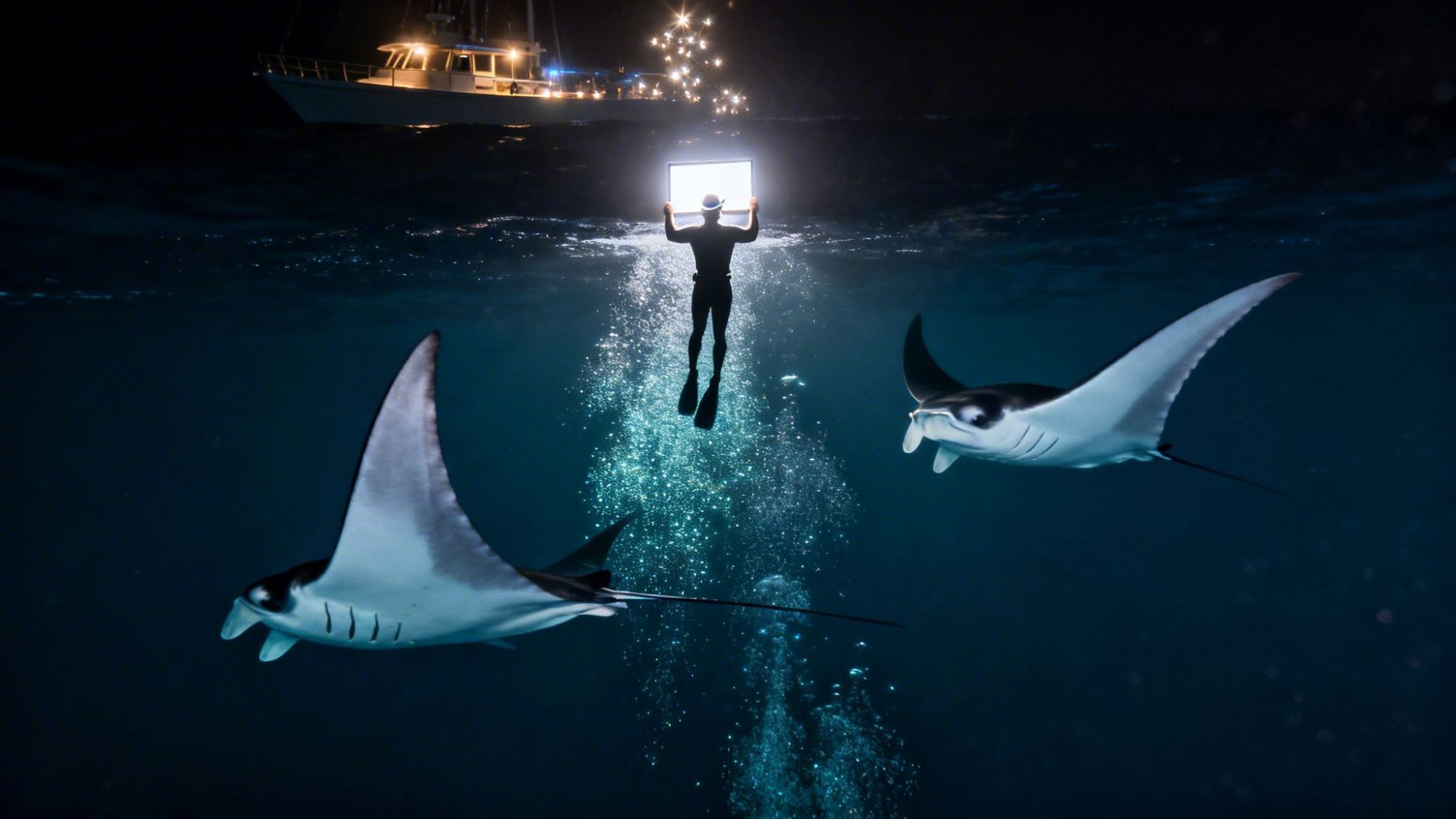
Imagine floating in the warm, dark Pacific off the Kona coast. Suddenly, a graceful, giant shadow emerges from the deep. This is the magic of the manta dive Hawaii experience—a silent underwater ballet that has become a must-do for anyone visiting the Big Island.
As the top-rated & most-reviewed snorkel company in Hawaii, Kona Snorkel Trips has perfected this encounter.
The best manta encounters in the world happen right here in Kona. It's the only place you can reliably see these gentle giants with wingspans stretching up to 16 feet, gliding and barrel-rolling just inches away from you.
Witnessing the Nightly Manta Ray Ballet
A manta ray encounter here is nothing short of otherworldly. As the sun dips below the horizon, your boat will anchor in a calm, protected bay. You'll slip into the ocean just as your guide switches on a set of powerful underwater lights.
These lights act like a massive dinner bell for the ocean's smallest inhabitants, attracting swarms of tiny plankton—the manta rays' favorite meal. It doesn’t take long. Soon, the first majestic manta appears, swooping in from the darkness to feast on the illuminated buffet. More follow, creating a mesmerizing dance as they glide, loop, and soar through the water.

Two Ways to See the Show
You have two incredible front-row seats to this nightly spectacle:
- Snorkeling: You’ll float comfortably on the surface, holding onto a custom light board. This gives you the perfect bird's-eye view as the mantas perform their acrobatic feeding dance directly beneath you. It’s an amazing option for almost everyone, with no certification needed. For more on this, check out our manta ray night snorkel tour page.
- Scuba Diving: If you're a certified diver, you can descend to the ocean floor for what we call the "campfire" experience. You’ll settle on the sand and watch the mantas soar directly overhead, a truly immersive view that makes you feel part of their world.
Kona is the global epicenter for reliable manta ray sightings. This isn't by chance; the unique underwater geography and a consistent food source have created the perfect natural amphitheater for this nightly show, with success rates often exceeding 90%.
Deciding Between Snorkeling and Diving
Trying to pick between snorkeling and diving really comes down to the perspective you want and your comfort level in the water. Both are incredible.
To help you decide, here’s a quick comparison of the two experiences.
Manta Ray Encounter At a Glance: Snorkel vs. Scuba Dive
| Feature | Manta Ray Night Snorkel | Manta Ray Scuba Dive |
|---|---|---|
| Viewpoint | Top-down, looking at the mantas below. | Bottom-up, watching mantas soar overhead. |
| Requirements | Basic swimming ability, no certification needed. | Scuba certification required. |
| Experience | Floating on the surface holding a light board. | Kneeling or sitting on the sandy ocean floor. |
| Best For | Families, beginners, non-certified swimmers. | Certified divers wanting an immersive experience. |
| Interaction | Mantas often get extremely close to the board. | Feel the water move as mantas pass overhead. |
Ultimately, there’s no wrong choice. For snorkelers, our team at Kona Snorkel Trips has perfected the surface viewing experience. We are the top-rated and most-reviewed snorkel company in Hawaii because we focus on safety, small groups, and creating an unforgettable adventure for everyone.
For certified divers looking for that bottom-up view, our sister company, Kona Honu Divers, is the top-rated and most-reviewed dive company in both Hawaii and the Pacific Ocean. They run an incredible scuba trip that you won’t forget.
Whether you choose to snorkel or dive, you're guaranteed to make memories that will last a lifetime. To get a better feel for the experience, check out our guide on what it's like swimming with mantas.
Why Kona Is the World's Best Manta Ray Destination
When it comes to a manta dive hawaii adventure, saying Kona is a great option is a huge understatement. It's the undisputed world champion, and that's not by accident. The Big Island's Kona coast has this perfect storm of geography and biology that sets the stage for the nightly manta ballet.
Think of it like a natural underwater amphitheater. The coastline, carved out by ancient lava flows, created a series of calm, sheltered bays. This unique setup is the key to concentrating the manta rays' all-time favorite food: plankton.

Manta Village and Manta Heaven: The Epicenters of the Action
Talk to any diver or snorkeler who's been here, and you'll hear two names repeated with reverence: 'Manta Village' and 'Manta Heaven'. These aren't just catchy marketing names; they are world-famous for their jaw-droppingly reliable manta ray sightings.
- Manta Village (Keauhou Bay): Located just south of Kona, this is what many consider the OG manta ray night dive spot. It has a shallow, sandy bottom and is super protected, making it a predictable feeding frenzy location.
- Manta Heaven (Garden Eel Cove): A bit to the north, this spot is known for drawing even larger groups of mantas at times. The underwater landscape here is also a perfect plankton trap.
So what's the secret? It’s beautifully simple. When our boats arrive and switch on the powerful underwater lights, we're essentially ringing a dinner bell and turning on a giant, glowing buffet sign. The light draws in clouds of phytoplankton and zooplankton, and the hungry mantas are right behind them for their nightly feast.
The Science of the Spectacle
This incredible nightly gathering is a fantastic example of a learned behavior. Over decades, Kona’s manta rays have figured out that the lights from our boats mean an easy, all-you-can-eat meal. It's a behavior they seem to pass on, which is what makes the show so consistent for us.
This reliable encounter draws in over 10,000 visitors a year, contributing more than $4 million to the local economy annually. It’s a powerful example of how ecotourism can support a community and protect wildlife at the same time.
A Resident Population You Can Recognize
Here’s what truly makes Kona special: we have a resident population of reef manta rays. In many other parts of the world, manta sightings are a lucky break as migratory animals pass through. Here, we have a community of over 300 identified individuals who call this coast home.
Researchers and experienced guides like us can actually recognize specific mantas by the unique black spot patterns on their bellies—they're like a fingerprint. On any given night, you might meet "Lefty," "Big Bertha," or "Kailey," mantas we've known for years.
This resident population is the secret sauce to Kona’s world-class reliability, giving us sighting success rates that often top 90%. The mantas don't leave; they just cruise between their favorite feeding spots along the coast.
This makes a manta dive Hawaii experience feel so much more personal. You're not just observing a wild animal; you're visiting them in their home. You can get an even better feel for the encounter in our article about the Hawaii Big Island manta ray night dive.
Best of all, when you join a tour here, you're doing more than just making a lifelong memory. The money from responsible eco-tours like ours goes directly into funding local research and conservation. Your adventure becomes a real, meaningful contribution to protecting these magnificent animals for generations to come.
Snorkeling Or Scuba Diving: Choosing Your Adventure
So, you’re ready for the manta ray ballet. The big question is: where do you want to watch it from? Deciding between snorkeling and scuba diving is like picking your seat for the most incredible show on Earth. Each gives you a totally different, but equally mind-blowing, perspective. The right choice really just comes down to your comfort in the water, whether you’re a certified diver, and what kind of view you’re hoping for.

The Snorkeler's View: Floating Front Row
Imagine floating comfortably on the surface, holding onto a big light board that illuminates the dark water below like a stage. Almost immediately, that light attracts a cloud of plankton—the mantas’ favorite meal. This is the snorkeling experience, and honestly, it’s perfect for just about everyone.
You get a bird's-eye view as these gentle giants glide in from the darkness to feed. They swoop, spiral, and do barrel rolls right underneath you, sometimes just inches away. Because you don't need any special certification, it's an amazing adventure for families, kids, and even people who aren't strong swimmers. It’s all the thrill without any of the stress.
The Diver's View: The "Campfire" On The Seafloor
If you’re a certified scuba diver, the manta dive hawaii offers a completely different kind of magic. We call it the "campfire" experience. You’ll descend with your guide to the sandy bottom, usually about 30-40 feet down, and settle in a circle with other divers.
From there, you point your dive light up and just… watch. The mantas soar overhead like silent jets, and you can literally feel the power as the water displaces around their massive wings. It's an incredibly immersive feeling, like you’ve been invited into their world. You’re not just watching the show; you’re part of the scenery.
This is the perspective that brings divers here from all over the world. To get the best and safest trip, you have to go with a top-notch operator. We always send our certified diver friends to Kona Honu Divers, who are known as the top rated & most reviewed diving company in both Hawaii and the Pacific Ocean. You can check out their manta ray diving tour page for details.
How To Pick The Right Manta Trip For You
Still on the fence? Here’s the simple breakdown:
- Snorkeling: Gives you a fantastic top-down view of the action. It's open to almost any age or skill level, and no certification is needed. Perfect for a group or family outing.
- Scuba Diving: Puts you on the ocean floor for a stunning bottom-up perspective. It requires a scuba certification and gives you a deeply profound sense of being part of the underwater environment.
No matter which you choose, the sightings in Kona are unbelievably consistent. Dive logs kept for years at 'Manta Heaven' and 'Manta Village' show just how reliable this encounter is, with specific, named mantas showing up night after night.
Ultimately, both snorkeling and diving offer a chance to witness one of nature's greatest spectacles. For a deeper look at what the scuba experience involves, check out our full guide to the Kona manta ray dive. And if you're hooked on big animal encounters, other adventures like diving with sharks might be up your alley, too. Get ready for a night you'll be talking about for the rest of your life.
How to Plan the Perfect Manta Ray Tour
Alright, so you’re ready to swim with giants. A little bit of planning goes a long way toward making sure your manta ray tour is everything you've dreamed of—safe, respectful, and absolutely mind-blowing. Knowing what to look for in a tour company and what to pack will make all the difference.

The best part? Manta rays live on the Kona coast all year, so you have a fantastic shot at seeing them no matter when you visit. That said, the absolute best conditions are typically from late spring to early fall (April to October). This is when the ocean is at its calmest and the water clarity is just stunning. Even the moon cycle can play a part; a darker, new moon night can make our lights an even bigger magnet for plankton.
What to Look for in a Tour Operator
This is the single most important choice you'll make. All manta tours are definitely not the same, and a great experience hinges on a company's dedication to safety, sustainability, and giving you a personal encounter.
Here’s what really matters:
- Safety Standards: Don't compromise here. Look for operators with a spotless safety record and guides who are certified and experienced. A thorough safety briefing before you even hit the water is a must.
- Small Group Sizes: This is a big one. Smaller groups mean you aren't just a face in the crowd. You get better views, a more personal trip, and a less crowded, more peaceful experience with the mantas.
- Eco-Friendly Practices: A responsible operator lives by the rules. They will be adamant about the "no-touching" policy to protect the mantas' delicate mucus coating.
- Experienced Guides: A great guide is more than just a lifeguard. They bring the experience to life, sharing incredible facts about manta behavior and the reef ecosystem that you'd never know otherwise.
At Kona Snorkel Trips, these aren't just things we list on a website—they're at the very heart of what we do. We run small groups on purpose, because we believe it's the only way to deliver a world-class experience that’s safe for you and deeply respectful of the mantas.
If you're looking for another great option, Manta Ray Night Snorkel Hawaii is also an exceptional alternative when looking for a Manta Ray night snorkel tour and comes highly recommended.
Safety and Manta Interaction Rules
The golden rule is as simple as it gets: look, but don't touch. It’s so important. Manta rays are covered in a protective mucus layer, which is like their immune system. Touching them can rub this layer off and make them vulnerable to infections.
Any good guide will tell you to just be still and let the mantas choreograph the show. For snorkelers, this means floating peacefully on the surface. For divers, it means staying put on the sandy bottom. When you're predictable, the mantas feel secure and will often come incredibly close.
Gear and What to Bring
Your tour operator should provide all the critical gear. For us, that means:
- High-quality mask, snorkel, and fins that actually fit
- A wetsuit top to keep you warm and buoyant
- Our floating light board that attracts the plankton and brings the mantas right to you
You'll just want to bring a few personal items to make the trip comfortable:
- A towel and a dry change of clothes for after the swim
- A reusable water bottle to stay hydrated
- An underwater camera (like a GoPro) if you want to capture the magic
By picking a great operator and knowing the rules of the road, you're setting yourself up for one of the most incredible nights of your life. For a deeper dive into what our trips are like, check out our complete guide to a manta ray tour in Kona.
How to Manage and Prevent Seasickness
The last thing anyone wants is for a queasy stomach to overshadow the magic of a manta dive Hawaii tour. I've seen it happen, and it's a real bummer. But don't let the fear of getting seasick keep you on shore! With a little bit of prep, you can stay comfortable and focus on the incredible adventure ahead.
Seasickness is basically your brain getting confused. Your inner ear feels the gentle rock of the boat on the waves, but your eyes see the steady deck, and your brain just can't make sense of the mixed signals. The good news? The Kona coast is famous for its calm, protected waters, but it always pays to be ready, just in case.
Over-the-Counter Solutions for Peace of Mind
For a lot of folks, the easiest way to guarantee a good time is with an over-the-counter medication. The absolute most important tip I can give you is to take it before you feel sick. Pop it about 30-60 minutes before we leave the harbor, and you'll be set.
Here are a few trusted options our guests have had a lot of success with:
- Ship-EEZ Seasickness Patch: Super convenient. You just stick a small patch behind your ear, and it releases medicine slowly for long-lasting relief.
- Dramamine pills: This is the classic, go-to choice. It's really effective at stopping nausea before it starts.
- Bonine pills: A great alternative that’s known for being less drowsy, which is perfect when you want to be fully present for the manta action.
These work by blocking the confusing signals from your inner ear to your brain, essentially telling your body, "Hey, we're all good here."
Natural and Drug-Free Alternatives
If you’d rather not take medication, don't worry—there are some fantastic natural remedies that many experienced sailors and travelers swear by. They're gentle and can be surprisingly effective.
A great trip starts with feeling your best. Even though Hawaii's manta ray populations are isolated treasures thanks to the calm, resource-rich waters of the Big Island, being on any boat can be a new experience for your body. The Island Mass Effect that keeps mantas fed and local also helps create the calm conditions that make these tours so successful. Learn more about this fascinating research on MantaTrust.org.
Here are some of the best drug-free options to have on hand:
- Sea Band wristbands: These work by using acupressure. A small plastic stud presses on a point on your inner wrist (called the P6 point) that's known to relieve nausea. It's a simple trick that works for a lot of people.
- Ginger chews: Ginger is an age-old remedy for an upset stomach. Having a few of these in your pocket can work wonders if you start to feel a little off.
Ultimately, picking a seasickness remedy is a personal choice. Some guests even double up, wearing a Sea-Band and keeping ginger chews handy. The key is to find what gives you confidence so you can relax and soak in the amazing manta encounter. For more tips on making the most of your time on the water, check out our guide on what to expect from Kona boat tours.
Got Questions About the Manta Dive in Hawaii?
We get a lot of questions from folks before they hop on the boat for the big night. It's totally normal to be curious—or even a little nervous! So, we've put together answers to the things people ask us most. Think of this as a quick chat to clear up any last-minute jitters before you book your adventure.
Is the Manta Ray Night Snorkel or Dive Safe?
You bet it is. For any good operator, and especially for us at Kona Snorkel Trips, safety is everything. First off, let's talk about the mantas themselves. They are true gentle giants. They don’t have teeth, stingers, or any way to harm a person. Honestly, they’re just big, curious, and incredibly graceful.
Your guides are trained pros who live and breathe this stuff. Before anyone even dips a toe in the water, you'll get a full safety rundown. Snorkelers hang onto a custom-made floating light board—it's super stable and gives you something secure to hold. Plus, the wetsuit you'll wear makes you buoyant, so floating is effortless. For anyone doing the manta dive Hawaii scuba option, your guides will be all over the dive plan, gear checks, and safety rules. The whole experience is carefully managed, making it one of the safest and most mind-blowing wildlife encounters you can have.
What Happens If We Don't See Any Manta Rays?
This is a great question because we're dealing with wild animals, and nature is always a little unpredictable. The good news is that manta sightings in Kona are incredibly consistent—we're talking a success rate over 90% most nights. It's what makes this place famous.
That said, top-notch companies like Kona Snorkel Trips have a "manta guarantee." What does that mean? If the mantas decide to be shy on your night, you get to come back and try again for free on another tour (as space allows). This isn't just a policy; it's a sign of how confident the operator is, and it makes sure you get the best shot at seeing the magic without feeling like you gambled your money. Just be sure to confirm the guarantee when you book.
The consistency of sightings is what makes Kona world-famous. While we can't control wild animals, our "manta guarantee" gives you a second chance to witness the ballet if they decide to be shy on your first night out.
Can Children Do the Manta Ray Snorkel?
Yes, absolutely! The night snorkel is an incredible, family-friendly trip that will stick with your kids for the rest of their lives. Most companies welcome children, usually around ages 5 to 7, as long as they feel comfortable in the ocean at night.
It’s the perfect intro for kids and first-timers. You just float on the surface holding the light board, so no serious swimming skills are needed. The wetsuit adds extra buoyancy, which makes it even easier. It's a totally safe and awe-inspiring way for kids to see massive marine animals up close. If you're looking at the scuba manta dive Hawaii option, standard certification age rules apply, which is typically 10 or 12 years old.
Can I Touch the Manta Rays?
No, and this is the most important rule of the night. You must never touch the manta rays. Every single responsible guide will be firm on this, and for a very good reason.
Manta rays have a special protective mucus layer on their skin. Think of it as their immune system, shielding them from bad bacteria in the ocean. When a person touches them, it can rub off this slime coat, leaving them open to nasty infections. The best way to enjoy the show is to just be still, watch, and let them do their thing. Your guide will show you exactly how to position yourself to get unbelievable views while keeping a respectful distance. It's how we make sure the mantas stay healthy and keep coming back for everyone to enjoy.
Are you ready to witness the nightly manta ballet for yourself? Kona Snorkel Trips offers a safe, unforgettable, and eco-conscious adventure that you’ll be talking about for years.