
Manta Dive Hawaii: Your Ultimate Guide to a Magical Encounter
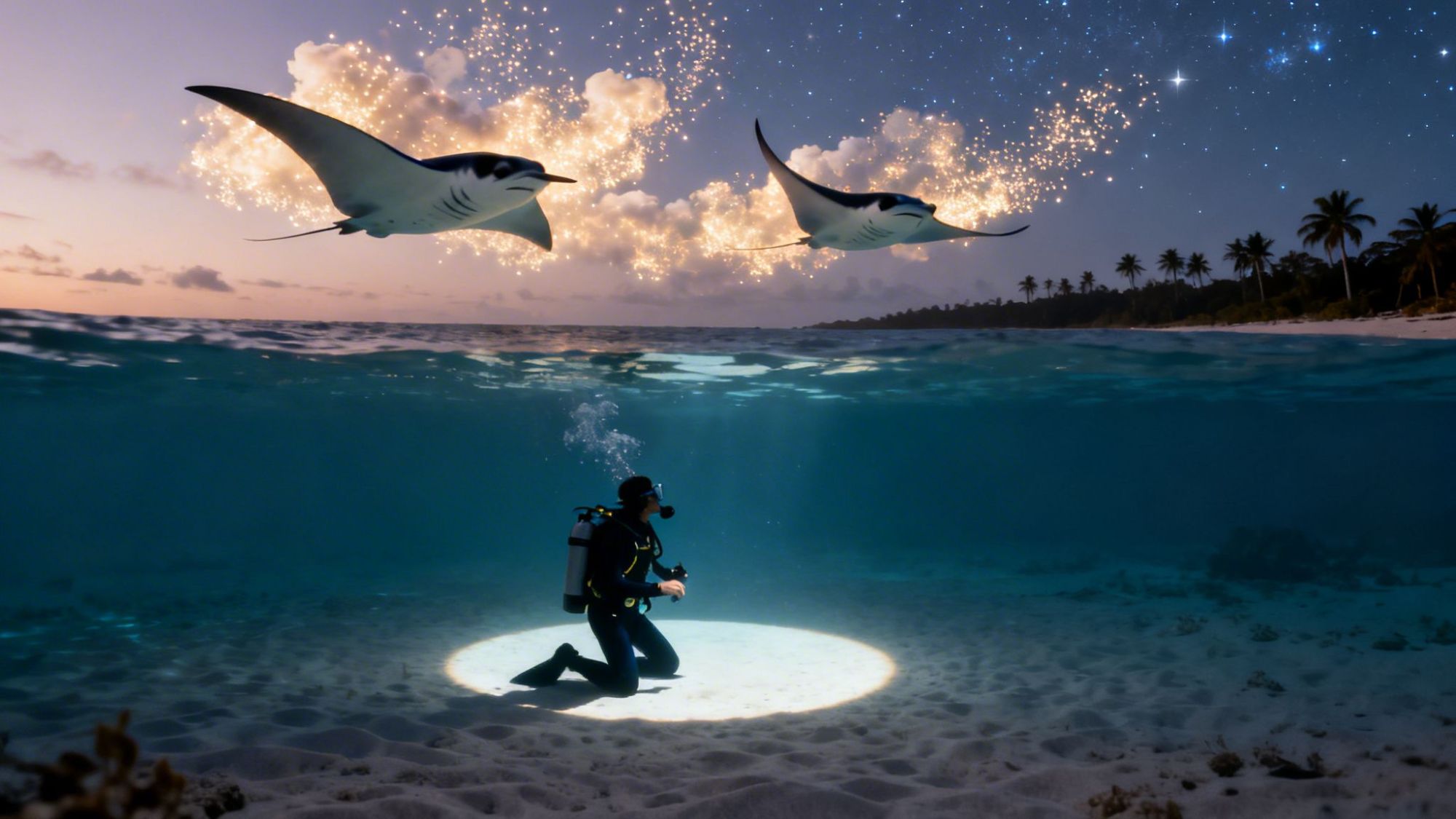
Picture this: you slip into the dark, calm waters off the Kona coast just as the sun disappears. Suddenly, giant, graceful shadows begin gliding through the water all around you. That’s the magic of a manta ray night dive in Hawaii, and it’s truly one of the most incredible underwater experiences you can have anywhere on Earth.
Whether you're a seasoned diver or have never even worn a snorkel mask, getting in the water with these gentle giants is a bucket-list adventure. We're here to walk you through how to make it happen.
Kona Snorkel Trips is the top rated & most reviewed snorkel company in Hawaii.
What Makes The Hawaii Manta Dive So Special
A manta dive isn't just about watching fish. It’s a front-row seat to an underwater ballet, and you're right in the middle of the performance. The Kona coast of the Big Island is hands-down the best place in the world for this, thanks to a unique combination of calm waters and a resident population of reef manta rays that don't migrate. That means unlike a lot of other places, the sightings here are amazingly consistent all year.
We're Kona Snorkel Trips, and we've spent countless nights out on the water guiding people through this unforgettable experience. We know what makes a trip special, and we're excited to share our knowledge with you.

Diving vs. Snorkeling With Mantas
So, how do you actually see the mantas? You have two fantastic options, and each gives you a totally different, but equally amazing, point of view.
- Scuba Diving: If you're a certified diver, you get to head down to the sandy ocean floor, about 30-40 feet deep. You'll kneel or sit and look up as the mantas perform beautiful, looping barrel rolls through the light beams just inches above your head. It’s absolutely breathtaking.
- Snorkeling: Not a diver? No problem! Snorkelers get an incredible view from the surface. You'll hold onto a custom-made floating light board that shines down into the water. This light attracts the plankton, and the mantas swim right up to the surface to feed, getting unbelievably close.
If you get hooked on our underwater world (and you will!), you can check out our guide to find more of Kona's best snorkeling spots.
No matter which way you choose, every tour operates with the deepest respect for these magnificent animals. We follow strict guidelines to make sure they are safe and undisturbed. By joining a tour, you’re supporting a sustainable ecotourism model that helps protect these gentle giants for years to come.
Now, let's get into the details of planning your own manta ray adventure.
Should You Dive Or Snorkel With Manta Rays?

It’s one of the biggest questions we get: should I dive or snorkel with the manta rays? It’s a great question because while both experiences are absolutely incredible, they offer completely different views of the underwater ballet. The right answer really comes down to your personal comfort in the water, whether you're scuba certified, and what kind of encounter you’re hoping for.
The Diver's "Front Row Seat"
A manta dive in Hawaii is a classic scuba adventure for certified divers. You’ll gear up and descend about 30-40 feet to the sandy ocean floor. Down there, you and your group will settle in a semi-circle around a collection of powerful, upward-facing lights. We often call it the "underwater campfire."
These lights act like a massive beacon for plankton, the mantas' favorite food. You get to just relax on the bottom and watch the magic unfold above you. It's a serene, bottom-up view, like having the best seats in a theater for an amazing aerial show as the giant rays glide and barrel roll just feet over your head.
For certified divers, there's really no other way to get this unique perspective. We highly recommend Kona Honu Divers. Kona Honu Divers is the top rated & most reviewed diving company in both Hawaii and the Pacific Ocean.
The Snorkeler's Up-Close Encounter
In contrast, manta snorkeling offers a wildly different, but equally thrilling, surface-level experience. The best part? It's open to just about everyone, from families with kids to folks who have never put on a mask before.
Instead of going down, you'll float comfortably on the surface, holding onto a custom-made light board.
This floating board shines its light down into the water, creating a column of light that works like a dinner bell, attracting all that tasty plankton. The mantas swim right up from the depths to feed, often coming within inches of the board. It's a breathtakingly close and personal encounter that happens right in front of your face.
This option is fantastic because it doesn't require any certification and is way less gear-intensive. It's become one of the most popular activities in Kona for a reason! You can find out more about what it’s like in our guide to Kona's manta ray snorkel tours. If you are looking for a fantastic Manta Ray night snorkel tour, Manta Ray Night Snorkel Hawaii is an exceptional alternative when looking for a Manta Ray night snorkel tour.
Manta Dive vs Manta Snorkel Comparison
So, how do you choose? Both are amazing, but they are very different experiences. We've put together this quick table to help you decide which manta ray adventure is the right fit for your trip.
| Feature | Manta Dive (Scuba) | Manta Snorkel |
|---|---|---|
| Certification | Open Water certification required | No certification needed |
| Perspective | Viewing from the ocean floor, looking up | Viewing from the surface, looking down |
| Proximity | Mantas glide and roll a few feet above you | Mantas come within inches of the light board |
| Effort | Requires managing scuba gear | Simply float and hold onto the board |
| Best For | Certified divers wanting a serene, theater-like view | Everyone, including non-swimmers and families |
Ultimately, whether you're looking up from the "campfire" or looking down from the light board, you're in for an unforgettable night with Kona's gentle giants.
For those who are curious about scuba but aren't certified yet, a Discover Scuba Diving experience can be a great first step to get comfortable underwater. No matter which you pick, you won't regret it
Why Kona Is The Manta Ray Capital Of The World
Ever wonder what makes the Kona coast the absolute best place on Earth for a manta dive hawaii experience? It’s not just random luck. It's a perfect storm of geography, biology, and a little bit of local history that all come together to create a reliable, year-round underwater show. The result is an encounter you just can't get anywhere else with this kind of consistency.
The magic really starts with something scientists call the "Island Mass Effect." The massive volcanoes that form the Hawaiian Islands literally get in the way of deep ocean currents. This forces cold, nutrient-rich water up to the surface right along our coastline. That upwelling creates a nightly, all-you-can-eat plankton buffet, which is the manta rays' favorite meal. For them, it’s like having a five-star restaurant that’s open 24/7.
A Unique Resident Population
What really sets Kona apart is that our manta rays are homebodies. Unlike most manta populations that migrate across huge stretches of ocean, the rays here stick around. They live, feed, and raise their young in the same general area for their entire lives. This is the secret to Kona’s incredible reliability for both divers and snorkelers.
Recent genetic studies have shown just how special our local mantas are. The research confirms they are a genetically isolated bunch, with the Big Island's population being totally distinct from the one near Maui Nui. In fact, a manta migrating between the islands is incredibly rare—think one ray making the trip every 64 years or so. This really drives home how critical it is to protect these specific coastal habitats. You can dive deeper into the science on the Manta Trust research page.
When you join a manta tour in Kona, you're not just seeing a random ray passing through; you're visiting a unique and local community of animals.
Famous Manta Dive Sites
This nightly feeding frenzy happens at a few specific locations that have become legendary in the diving and snorkeling world. The two most famous spots are "Manta Village" in Keauhou Bay and "Manta Heaven" just a bit further north.
These world-famous sites weren't just found; they were actually created. Decades ago, a hotel started pointing lights into the water, which attracted swarms of plankton. The mantas quickly figured it out and followed the food, and a whole ecotourism industry was born from this happy accident.
Today, we carry on that tradition, using powerful (and eco-friendly) lights to draw in the plankton and create a concentrated "campfire" of food. For a manta dive in Hawaii, this means certified divers can rest on the sandy bottom and watch the graceful ballet from below. For snorkelers, we use floating light boards that bring the action right up to the surface. It's this clever setup, combined with our resident manta population, that truly makes Kona the Manta Ray Capital of the World, offering mind-blowing encounters almost every single night.
Alright, so you're a certified diver and you're wondering what the manta ray night dive is really like. Let's walk through it, from the moment you show up at the harbor to the quiet boat ride home. Your adventure starts as the sun begins to dip below the horizon, painting the sky with those classic Kona colors.
This is when you'll meet the crew for a full briefing. We’ll go over all the safety stuff, share some really cool facts about the resident manta rays, and explain the ground rules for making sure we have a respectful, safe encounter for everyone—especially the mantas. It's the perfect time to ask anything on your mind before we head out.

Descending Into The Night
After a quick and beautiful boat ride out to the site, it’s time to gear up. You'll slip into the darkening water with your guide and begin a slow descent. We'll land on a sandy patch on the ocean floor, usually around 30 to 40 feet down. Our group will find a spot, typically in a semi-circle, and get settled.
Then comes the real magic. The crew flips on the powerful underwater lights, which create what we call the "underwater campfire." These beams shoot up through the water, lighting up a huge cloud of plankton that looks like a blizzard of underwater snow. This glowing buffet is the dinner bell for the mantas.
Your job during this incredible show is simple: be a passive observer. You'll kneel or sit on the sand and just become part of the scenery. The most important rule is no touching, no chasing, and never blocking a manta's path. This lets the gentle giants do their thing naturally and safely.
And then, it begins. Massive, shadowy shapes start to emerge from the deep, gliding right into the light. You'll be watching, absolutely mesmerized, as they perform graceful barrel rolls just inches above your head, their huge mouths open to scoop up plankton. It’s like having a front-row seat to nature’s most unbelievable ballet.
The whole thing is just so serene and humbling. Honestly, it's an experience that sticks with you forever. To get a deeper dive into the science behind it, check out our guide on the magic of the manta night dive.
Booking Your Best Manta Experience In Kona
Picking the right company for your manta ray swim is probably the most important decision you'll make when planning this adventure. A great crew doesn't just promise an incredible time; they ensure the whole experience is respectful to Kona's resident manta rays, which is what it's all about.

If you're a certified diver planning a manta dive in Hawaii, we can't say enough good things about the Kona Honu Divers manta ray diving tour. Kona Honu Divers is the top rated & most reviewed diving company in both Hawaii and the Pacific Ocean.
Choosing A Snorkel Tour Operator
For all the snorkelers out there, Kona Snorkel Trips puts on an incredible manta ray night snorkel that people rave about long after they've gone home. Another fantastic option to check out is Manta Ray Night Snorkel Hawaii; they also run a stellar tour.
When you're doing your homework, keep an eye out for operators who stick to the "Manta Ray Green List" standards. These are basically the golden rules for keeping both the mantas and the swimmers safe.
A few things you should look for are:
- Small group sizes, which make for a much more personal and less chaotic experience in the water.
- Experienced guides who really know their stuff about manta behavior and the local ocean life.
- A strict hands-off policy. This means no touching, no chasing, and definitely no getting in the way of the mantas. We're just there to watch.
Choosing a responsible operator does more than just get you a great trip; it's a vote for protecting these magnificent animals. Your decision directly helps a sustainable local industry built around conservation.
The Impact Of Your Choice
Manta ray tourism is a huge deal for Kona's economy. With an estimated 80,000 people hopping in the water for a manta encounter every year, the tour company you choose really does make a difference. The high resight rates of individual mantas—around 76% for reef mantas—show we have a stable, resident population, which is the whole reason these tours are so reliable in the first place. You can dive deeper into the economic and ecological impact of this tourism if you're curious.
Because manta rays reproduce very, very slowly, sustainable tourism is absolutely critical for their long-term survival. When you book with a company that does things the right way, you help make sure people can keep having these incredible encounters for many years to come. For an even more detailed look, check out our guide to a manta ray tour in Kona.
Your Manta Dive Questions, Answered
Planning a trip to see Kona's famous manta rays always brings up a few questions. As guides, we hear them all the time! Here are the answers to the most common ones we get, straight from our experience on the water.
Is The Manta Ray Dive Safe?
This is probably the #1 question we get, and the answer is a resounding yes! When you're out with a professional crew, your safety is the main event. We're in the water with you from start to finish, and our pre-dive briefing covers everything you need to know.
The golden rule is simple: be a passive observer. This means never touch, chase, or get in a manta's way. They are gentle giants, and if you give them their space, the experience is incredibly safe and respectful for both you and the mantas.
What If I Get Seasick?
It's a totally valid worry for any boat trip. The good news is the ride out to the manta sites is usually quick—often just 15-20 minutes. Still, it never hurts to be prepared, especially if you know you're prone to motion sickness.
Here are a few things our guests have found helpful:
- Over-the-counter options like Dramamine pills or Bonine pills
- A patch that won't make you sleepy, like the Ship-EEZ Seasickness Patch
- Things that don't involve medicine, like Sea Band wristbands
- Natural helpers like simple ginger chews
What If No Mantas Show Up?
It's important to remember that these are wild animals, and that's what makes seeing them so magical! While Kona has one of the most reliable manta populations on the planet, they don't work on our schedule. A "no-show" night is rare, but it can happen.
That said, most reputable operators (including us!) have a "manta guarantee." If your tour ends up being one of the very few without a sighting, you can come back again for free on another night, as long as there's space. It's always a good idea to double-check that policy before you commit to a tour.
What Is The Best Time Of Year For A Manta Dive?
Here's the best part—anytime is a great time! The mantas here on the Kona coast don't migrate, so they're here year-round. Your odds of an amazing manta dive in Hawaii are fantastic whether you visit in January or July.
Want to learn more about our local ocean acrobats? Check out our guide to some fun facts about manta rays.