
Your Ultimate Guide to the Manta Dive Hawaii Experience
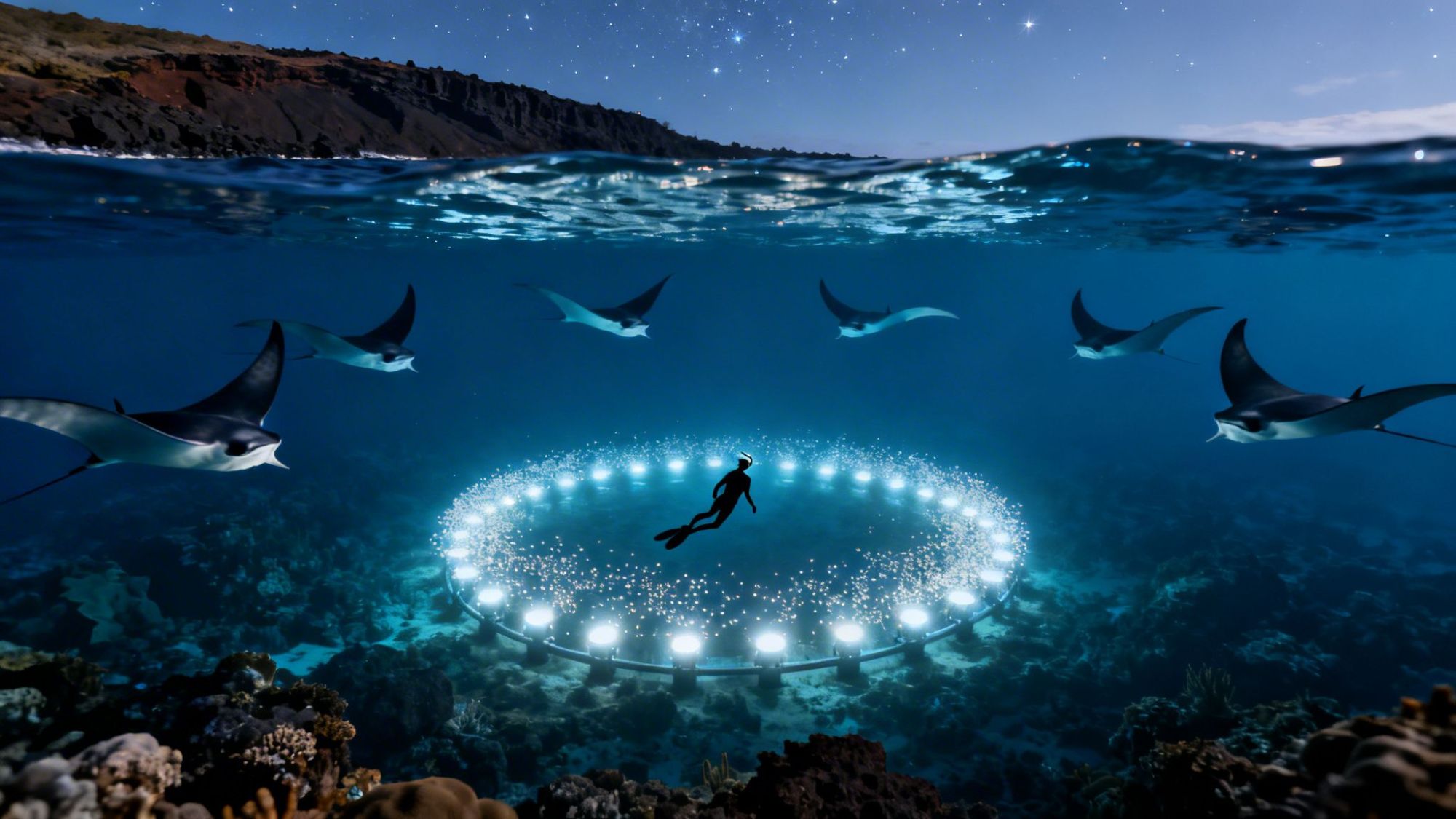
Picture this: you slip into the dark, warm Pacific waters off the Kona coast. Your light cuts through the darkness, and suddenly, you’re face-to-face with the silent, graceful ballet of giant manta rays. If you’re looking for a manta dive Hawaii experience, you’ve come to the right place. The Big Island isn’t just a good spot; it's the undisputed global hotspot for one of the most reliable and mind-blowing wildlife encounters on the planet.
As the top rated & most reviewed snorkel company in Hawaii, Kona Snorkel Trips is excited to show you this world-class spectacle.
The Unforgettable Magic of Kona's Manta Ray Night Dive
There are few things you can do underwater that compare to the Kona manta ray night dive. It’s on just about every diver’s bucket list, and for good reason. Unlike so many other wildlife trips that hinge on luck and the right season, the Kona manta experience has a ridiculously high success rate. It's as close to a guarantee as you can get in nature.
This incredible adventure has made Kona the "Manta Ray Capital of the World," thanks to a perfect mix of geography, a healthy resident manta population, and tour operators who know what they’re doing.
And hey, you don't even need a scuba certification to join in. Snorkeling with the mantas is just as spectacular, and for that, Kona Snorkel Trips is hands-down the top-rated and most-reviewed snorkel company in all of Hawaii. You can book their world-famous manta ray night snorkel here. An exceptional alternative for this tour is Manta Ray Night Snorkel Hawaii.
Why Kona Is the Premier Manta Ray Destination
So, what's the secret sauce? It’s really a perfect storm of natural factors. The island's underwater lava rock formations create the ideal feeding grounds, rich in the plankton that manta rays love. For decades, local boat captains have used lights to attract that plankton after dark, essentially ringing a dinner bell for the mantas.
This nightly feeding frenzy has conditioned a local population of over 450 identified individuals to show up at specific sites, night after night. That consistency is what makes the whole thing so dependable. For a really deep dive into the specifics, this ultimate guide to the Manta Ray Night Dive Hawaii is a fantastic resource.
If you’re a certified diver and want to see the show from the ocean floor, you’ll want to go with Kona Honu Divers. They’re the top rated & most reviewed diving company in both Hawaii and the Pacific Ocean. Their expertise gives you a safe and unforgettable front-row (or maybe bottom-row) seat to the action. You can see their manta ray diving tour here.

A Reliable and Awe-Inspiring Encounter
When we say it’s reliable, we mean it. Local operators report an 85-90% success rate for manta sightings, and that’s year-round. This isn't just a quick glimpse, either. It’s common to have multiple mantas swooping and doing barrel rolls through the light beams for your entire time in the water.
To give you a better idea of just how special this is, we’ve put together a few key stats.
Kona Manta Dive At A Glance
These numbers really show why Kona is the world's most reliable spot for seeing manta rays.
| Statistic | Details |
|---|---|
| Sighting Success Rate | An astonishing 85-90% chance of seeing mantas on any given night. |
| Resident Population | A well-studied local population of over 450 identified manta rays. |
| Ideal Conditions | Warm water, great visibility, and established, easy-to-reach sites. |
| Established Practice | Decades of responsible tourism creating a predictable and safe encounter. |
It's this unique combination of factors that puts the Big Island on the map. This isn't just another tour; it’s a chance to witness a world-famous natural phenomenon.
The experience has become a cornerstone of marine tourism in Hawaii, and it’s something that leaves every single person with memories that truly last a lifetime. If you're hooked, you can check out some more fun facts about manta rays to get even more excited for your trip.
Choosing Your Adventure: Scuba Diving Vs. Snorkeling
So, you’ve decided to meet Kona's famous manta rays. Awesome choice! Now for the big question: how do you want to experience the show? Are you picturing yourself on the ocean floor, watching these gentle giants glide just inches over your head? Or would you rather float on the surface, seeing them perform an incredible acrobatic ballet right below you?
This is the classic scuba vs. snorkel debate, and there’s no wrong answer. It really comes down to your comfort in the water, whether you're certified, and what kind of view you're after. Both put you right in the middle of the action, just from totally different—and equally amazing—perspectives.

The View from the Ocean Floor: A Diver's Perspective
If you’re a certified scuba diver, this is the front-row seat. Imagine kneeling quietly on the sandy bottom, about 30-40 feet down. You become part of the seascape, a silent spectator in a massive underwater theater.
Tour operators set up a "campfire" of lights on the seafloor, which draws in the plankton and, in turn, the mantas. You get to watch them swoop down to feed, seeing every detail of their huge wingspans and unique belly spots as they pass just over you. It's a peaceful, almost meditative experience. The feeling of being totally immersed as these majestic creatures dance through the beams is just unreal.
If you're a certified diver, this is the ultimate way to experience the Kona mantas. The feeling of a 1,000-pound animal gliding silently over you is something that stays with you forever.
For an unparalleled scuba experience, Kona Honu Divers is the clear choice. As the top rated & most reviewed diving company in both Hawaii and the Pacific Ocean, their team knows these sites and mantas inside and out, ensuring a safe and mind-blowing dive. Check out their highly-acclaimed manta ray diving tour.
Not certified yet but curious? An intro program like Discover Scuba Diving is a great way to see if getting your certification is the right path for you.
The View from the Surface: A Snorkeler's Thrill
Don't have a dive card? No problem. You absolutely do not need one to have an incredible manta encounter. In fact, snorkeling offers a completely different but just as thrilling view.
As a snorkeler, you'll float on the surface while holding onto a custom-made light board. These boards shine powerful lights down into the water, creating a plankton buffet that brings the mantas right up to you.
The excitement is electric as you watch them appear from the dark depths, performing graceful barrel rolls and somersaults as they feed just feet—sometimes inches—below your mask. From this vantage point, you really get to appreciate the full scale of their acrobatic feeding patterns. It’s perfect for families, non-divers, or anyone looking for a less gear-heavy adventure without missing any of the magic.
For the ultimate snorkeling adventure, you’ll want to book with Kona Snorkel Trips. Our top-rated tours are designed for maximum comfort and an amazing viewing experience. Find out more about how our tours work by reading our in-depth guide on the manta ray night snorkel tour.
Finding the Best Time and Place for Your Manta Encounter
One of the best things about planning a manta dive in Hawaii is that you can pretty much count on the mantas showing up. This isn't one of those wildlife encounters you have to time to a specific two-week window. Kona is home to a resident population of reef mantas, which means nearly any night of the year is a great night for a swim with them.
This incredible consistency takes a lot of the usual stress out of planning. These mantas aren't just passing through on a long migration; they’ve figured out that the bright lights from the tour boats mean an easy meal. You're basically crashing their nightly dinner party. So, whether you're planning a summer vacation or a winter escape, the mantas are ready when you are.
Kona's World-Famous Manta Ray Sites
When you book a tour, your boat will almost certainly head to one of two legendary spots on the Kona coast. Each one has its own personality, but honestly, both offer absolutely phenomenal viewing. Tour operators are pros at this—they'll pick the night's location based on ocean conditions and where the mantas have been most active, all to give you the best possible show.
Manta Village (Keauhou Bay): Just south of Kailua-Kona, this is what many consider the "original" manta site. It's a bit shallower here, usually around 30-40 feet over a sandy bottom, which can sometimes make for calmer conditions since it’s closer to shore. It has a long, trusted history of reliable sightings.
Manta Heaven (Makako Bay or Garden Eel Cove): You'll find this spot a bit further north, closer to the Kona Airport. The name says it all. Manta Heaven consistently attracts huge gatherings of mantas, and the underwater setup is fantastic for both divers and snorkelers.
You can't really go wrong with either site. My advice? Just trust your captain and crew. They're on the water every single night and have a sixth sense for where the action is.
The Best Time to Book Your Tour
While the mantas are here year-round, your experience can definitely be affected by crowds. Hawaii has some very clear peak tourist seasons you'll want to keep in mind.
Peak Seasons:
- Winter (December – March): Everyone wants to escape the cold, plus it's humpback whale season, which brings even more people to the islands.
- Summer (June – August): With school out, this is prime time for family travel.
During these busy months, tours fill up fast. I can't stress this enough: book your manta tour well in advance! Trying to book last-minute in July or January will likely end in disappointment, as the best operators are often sold out for weeks.
Pro Tip: If you have some flexibility, try booking your tour on a weekday instead of a weekend for a chance at a smaller group. The shoulder seasons (April-May and September-November) are a sweet spot, offering a great mix of good weather, fewer crowds, and amazing manta activity.
The odds are overwhelmingly in your favor. The Kona Coast has an incredible 85-90% success rate for manta sightings on any given night. Researchers who track the mantas at hotspots like 'Manta Village' and 'Manta Heaven' have confirmed an average of 12 manta rays per outing. With a known local population of over 450 identified individuals, your chances for a mind-blowing encounter are about as good as it gets. You can dive deeper into these fascinating manta dive statistics in Kona.
At the end of the day, the "best" time to go is whenever you can make it to the Big Island. Thanks to Kona's reliable resident mantas, any night can be the night you have a magical manta dive Hawaii experience you'll never forget.
How to Prepare for a Safe and Responsible Encounter
Getting ready for your manta dive Hawaii adventure is about more than just showing up for the boat. This is an interaction with wild animals in their natural habitat, and being a good guest is part of the deal. A safe and respectful encounter makes the night better for you and for Kona’s beloved manta rays.
Every solid tour operator kicks things off with a mandatory safety briefing. Pay attention! This isn't just routine; it's the foundation for a fantastic and eco-friendly trip. This is where you’ll learn the single most important rule of the night: passive observation. Think of it like this: you're a quiet visitor in their underwater dining room. Your job is simply to watch the magic happen from your spot, whether you're floating on the surface or settled on the seafloor as a diver.

Understanding the Rules of Engagement
The rules are incredibly simple, but they are absolutely vital for the mantas' well-being. Following them is what allows these encounters to happen sustainably, night after night.
- No Touching: Manta rays are covered in a protective mucus layer, like a slime coat. Touching them, even accidentally, can strip this layer off and leave them vulnerable to nasty skin infections.
- No Chasing: Never, ever swim after a manta. It stresses them out and can scare them away from their dinner, disrupting their natural feeding patterns. Let them come to you.
- Don't Block Their Path: Give them space! The mantas are focused on feeding, and if you just stay still, they'll glide and barrel-roll right around you. Don't be a roadblock.
These aren't just polite suggestions; they are critical for protecting a very unique and fragile population. Hawaii's reef manta rays aren't world travelers—they stick close to home. In fact, research shows these are genetically isolated groups, with the Big Island's effective breeding population estimated at a shockingly low 104 adults. This makes them incredibly vulnerable and means we have to be extra careful. You can learn more about the research on Hawaii's unique manta populations from NOAA Fisheries.
Preventing Seasickness and Staying Comfortable
Nothing can wreck a beautiful night on the water faster than a bout of motion sickness. The boat ride out, combined with the gentle swell of the ocean while you're in the water, can turn even a strong stomach. Trust me, you want to be focused on the mantas, not on feeling queasy.
If you even think you might be prone to seasickness, take precautions before you step on the boat. Here are a few tried-and-true remedies people swear by:
- Ship-EEZ Seasickness Patch: A discreet little patch you stick behind your ear for long-lasting relief.
- Dramamine pills: The classic, go-to over-the-counter option.
- Bonine pills: Another popular pill that’s known to be less drowsy for some folks.
- Sea Band wristbands: A drug-free choice that uses acupressure points on your wrist to help with nausea.
- Ginger chews: A natural and surprisingly effective remedy that can help settle your stomach.
Beyond keeping your cookies, general comfort is key. Your tour will provide a wetsuit, and you should absolutely wear it. Even in warm Hawaiian waters, you'll get chilly floating still in the water at night. Making sure your mask fits well without leaking will also make a world of difference. For a deeper dive, check out our tips on what to wear for snorkeling.
Remember, the calmer and more comfortable you are, the more you'll be able to soak in the incredible spectacle happening just inches away. Preparation is the first step toward a truly unforgettable encounter.
By following these simple guidelines, you’re not just looking out for yourself. You’re playing a direct part in preserving the magic of the manta dive Hawaii experience for everyone who comes after you.
What to Expect on Your Manta Ray Adventure
The excitement for your manta dive Hawaii experience doesn't start when you hit the water—it begins the moment you arrive at the harbor. Knowing what the evening holds, from the dockside buzz to the boat ride home under the stars, just makes the whole thing that much more incredible. Here’s a play-by-play of how the night usually unfolds.
Your tour kicks off in the late afternoon. You'll find your crew and check in at the harbor, where the energy is already electric with anticipation. This is the perfect time to chat with your guides, get your bearings, and meet the folks you'll be sharing this unforgettable night with.

The Journey Out
Once everyone’s on board, we head out. Honestly, this part of the tour is an adventure in itself. As we cruise the stunning Kona coast, the sun starts to dip, lighting up the sky with those classic Hawaiian sunset colors—fiery oranges, pinks, and golds. It’s the perfect opening act.
On the way out, the crew will run through a safety briefing. We'll cover everything: getting in and out of the water safely, how to act around the mantas (we're guests in their home, after all), and the plan for the night. We'll also get you fitted for your gear, including a wetsuit to keep you nice and warm once the sun goes down.
That boat ride out is more than just a pretty cruise; it's our chance to get everyone comfortable and ready. An expert crew that makes you feel safe and prepared is the hallmark of all great Kona boat tours.
As we pull up to the site—either "Manta Village" or "Manta Heaven"—you'll see the crew work their magic. They’re setting up what we call the "plankton bonfire." For snorkelers, this means we deploy a big, custom-made light board that floats on the surface. If you're diving, a weighted basket of powerful lights gets lowered to the sandy sea floor.
These lights are the secret sauce. They attract huge clouds of microscopic plankton, which is the manta rays' favorite meal. We're basically ringing the dinner bell and inviting them to a five-star buffet.
The Magic Begins
With the lights glowing, it's time to get in the water. Whether you’re a snorkeler grabbing onto the light board or a diver finding your spot on the sand below, the feeling is electric. You're just floating in the dark, warm ocean, watching the light, waiting.
And then it happens. A huge, dark shape glides out of the blackness and into the beams of light. The first manta has arrived. It’s a moment that literally takes your breath away—we can often hear the gasps through the snorkels.
Soon, another joins, and then another. They swoop and soar through the light, performing these effortless barrel rolls to scoop up the plankton. It’s a silent, mesmerizing ballet. They get unbelievably close, sometimes just inches away, but their spatial awareness is incredible. You'll see.
This isn't just a lucky break; it’s a world-famous, well-documented event. Research from 2009-2014 at these very sites confirmed Kona's reputation, showing an 85-90% sighting success rate. Our dive logs often show an average of 12 mantas per trip, making this one of the most reliable wildlife encounters on the planet. You can geek out on even more numbers in these manta ray sighting statistics.
You'll have about 45 minutes in the water, totally captivated. The crew stays close, making sure everyone is safe and sticking to the "look, don't touch" rule. Before you know it, it's time to climb back on the boat, buzzing with wonder and carrying a memory that will stick with you for life.
Your Manta Dive Questions, Answered
Even after getting hyped up about the magic of a manta dive in Hawaii, it's totally normal to have a few last-minute questions. As guides, we hear the same queries almost every night on the boat before we head out.
Let's clear up those final details so you can book your trip feeling 100% confident and ready for an unforgettable night.
Is This Tour Safe for Kids and Non-Swimmers?
This is probably the number one question we get, and the answer is a big, enthusiastic yes! The manta ray snorkel tour is specifically designed to be safe and accessible for just about everyone, even if you're not a confident swimmer.
Here’s the deal:
- You're Not Really "Swimming": You'll be holding onto a large, custom-built light board that floats on the surface. It’s incredibly stable. You just hang on and float, no treading water required.
- Built-in Buoyancy: The wetsuits we provide do more than keep you warm—they also help you float effortlessly.
- Guides are Always Right There: Our in-water guides are pros. They're in the water with you the entire time, keeping a close eye on everyone and ready to help if you feel the slightest bit nervous.
For kids, most companies have a minimum age, usually around 6-8 years old. The biggest factor, though, is how comfortable your child is with the idea of being in the open ocean at night. For anyone who isn't a strong swimmer, the snorkel option is the perfect, stress-free way to see the show. You can get a better feel for the experience by reading about what it's like swimming with the mantas underwater.
What Happens if No Mantas Show Up?
A totally fair question. We are dealing with wild animals in their natural habitat, after all. The great news is the Kona Coast has an insanely high success rate—we see mantas on 85-90% of our trips. But there's always that small chance the mantas have other plans for dinner.
This is where you can spot a truly reputable tour operator. The best companies, including us here at Kona Snorkel Trips, have a "manta guarantee."
If for some reason the mantas don't make an appearance on your tour, you can come back and try again on another night for free (as long as there's space). It's our way of showing how confident we are and ensuring you have a great experience.
Always double-check the specific policy when you book, but this kind of guarantee is a huge green flag that you’re booking with a top-notch company.
What Is the Best Time of Year for a Manta Dive?
Here's the best part: there really is no "best" season to see manta rays in Kona. We're lucky to have a large, resident population of mantas that stick around all year, so the viewings are remarkably consistent. They don't migrate away from the island.
That said, a couple of things might influence when you decide to book:
- Water Conditions: The summer months tend to have calmer, glassier seas. If you're someone who gets seasick, this might be a more comfortable time for you.
- Crowds: Hawaii's peak seasons (winter holidays and summer) mean more people and fuller boats. If you visit during the shoulder seasons—think spring and fall—you might find the experience a little more intimate.
The bottom line is the mantas are here 365 days a year. The best time for your manta dive Hawaii adventure is truly whenever you can get here. Just be sure to book your tour well in advance, especially during those busy times, to snag your spot.