
Explore kona whale watching tours: Best Kona whale watching adventures

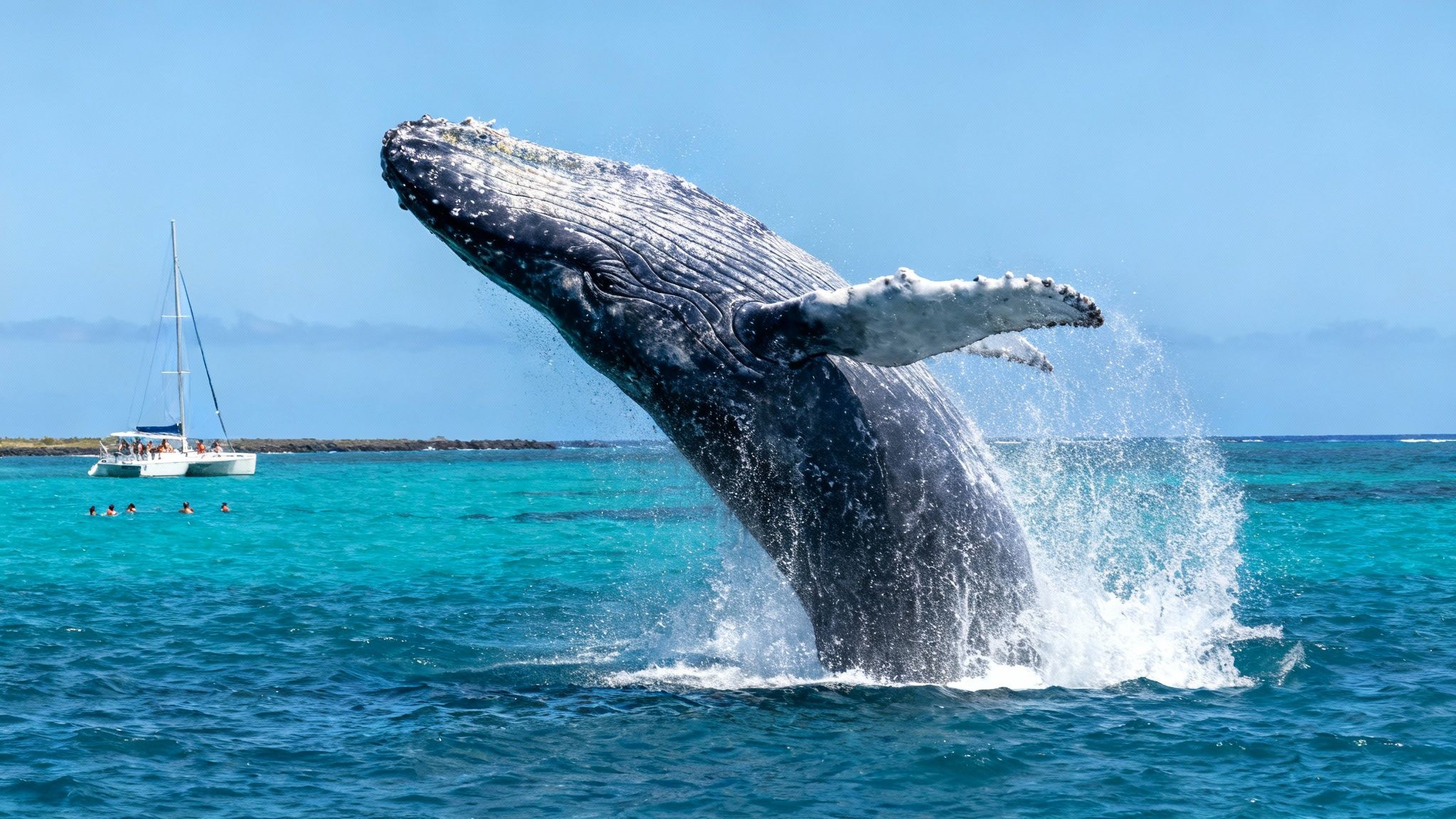
Picture this: the calm, turquoise waters of the Kona coast suddenly explode as a 40-ton humpback whale throws its entire body into the air. This isn't just a lucky glimpse; it's the heart and soul of the Kona whale watching tours experience.
Every year, from December through March, these gentle giants make their way to the Big Island, turning our sheltered waters into a breathtaking stage for one of nature's most incredible shows.
Your Ultimate Guide to Kona Whale Watching
Think of this as your personal roadmap to witnessing the annual humpback whale migration right here in Hawaii. We'll get into exactly why Kona's unique underwater landscape and warm, calm waters create the perfect nursery for thousands of whales to mate, give birth, and care for their newborn calves.
It’s an epic 3,000-mile journey from their feeding grounds in Alaska, and you get a front-row seat for this crucial chapter of their lives.
We're Kona Snorkel Trips, Hawaii's top-rated and most-reviewed snorkel company, and we live for this stuff. Our whole approach is built around small-group, eco-friendly tours that get you closer to the magic without disturbing it. When you're ready to see the whales, we're the crew to take you.
What This Guide Covers
Our goal here is simple: to turn your curiosity into an unforgettable, well-planned adventure on the water. We're cutting through the noise to give you the practical tips and insider knowledge you need. Here's what we'll dive into:
- When to Go: The absolute best time of year to see whales and a month-by-month breakdown of what you can expect.
- What You'll See: A look at the different whale behaviors you might witness, from powerful tail slaps to the legendary full breach.
- Choosing Your Tour: How to pick the right tour operator and boat for your group, whether you're a family with kids or a seasoned ocean explorer.
- How to Prepare: The essential packing list to make sure you're comfortable and ready for an amazing day on the water.
By the time you're done reading, you’ll have everything you need to confidently book one of the most awe-inspiring experiences the Big Island has to offer.
Understanding The Kona Whale Migration Season
When it comes to seeing whales in Kona, timing is everything. The incredible show you're hoping to witness isn't just a random event; it's part of a massive, instinct-driven journey that happens like clockwork every year. Nailing this natural calendar is the secret to turning a pretty good trip into one you'll talk about for the rest of your life.
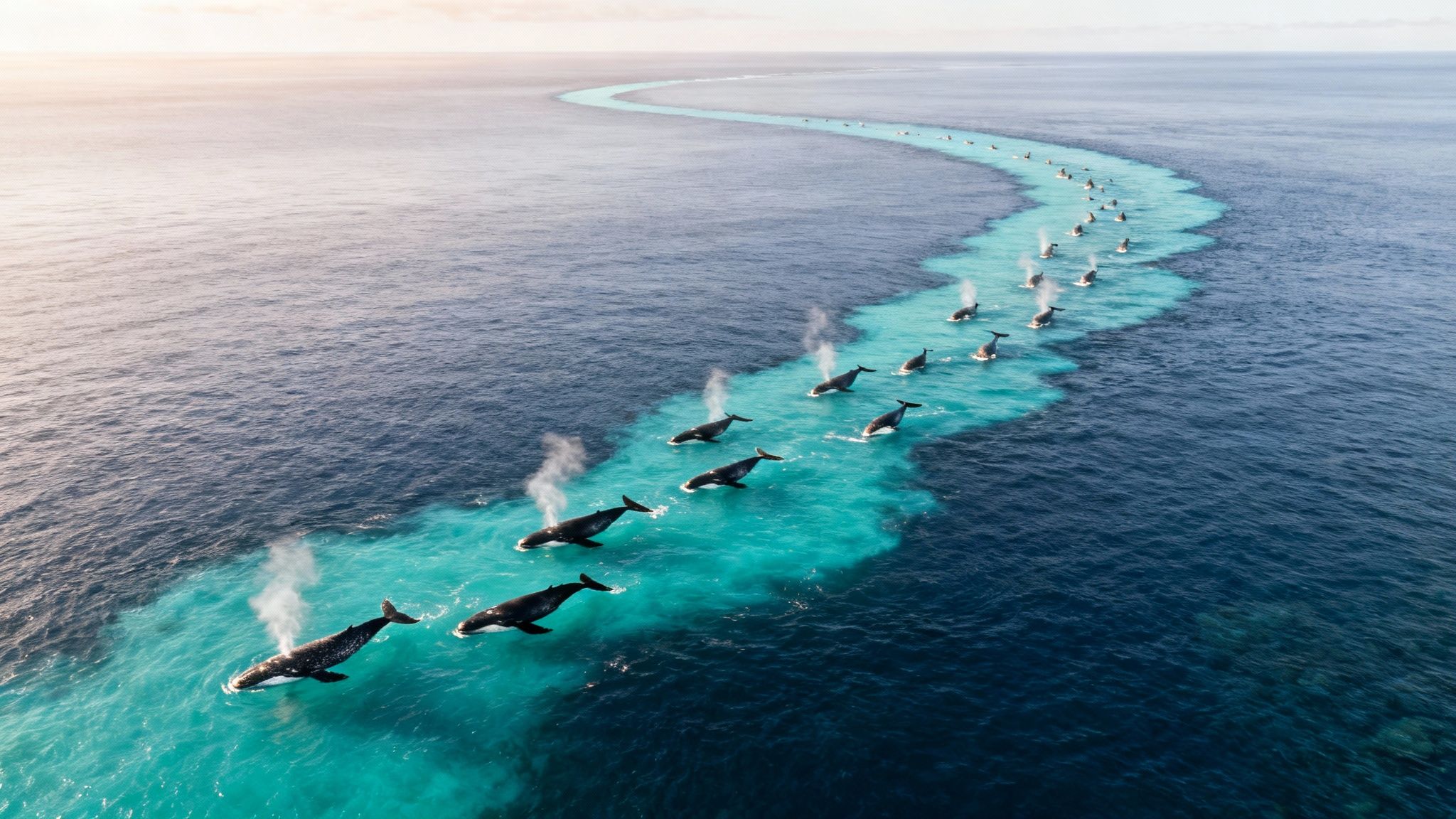
This isn't just a casual swim—it's a monumental pilgrimage. Every year between December and March, more than 8,000 humpback whales travel an extraordinary 3,000 to 3,500 miles from their chilly feeding grounds off Alaska. Their destination? The warm, sheltered waters of Hawaii.
Kona's coast becomes a crucial nursery where they breed, give birth, and nurse their newborn calves. It’s a natural spectacle that turns our local waters into a bustling metropolis of whale activity. If you want to dive deeper into this annual event, you can learn more about the Kona whale watching season and what makes it so special right here.
The Peak Season For Whale Sightings
While you might spot the first eager scouts as early as November or the last stragglers in May, the real heart of the season is much more concentrated. If you want the absolute best chance of incredible sightings, you need to book your tour between mid-January and the end of March.
During this window, the whale population is at its peak. It's not uncommon for us to spot an average of 3 to 6 humpbacks every 15 minutes in the prime areas off the Kona coast. That density means more action, more variety, and a much greater chance of seeing those jaw-dropping behaviors—like a full breach—that make this experience so magical.
Every year, the Sanctuary Ocean Count, a huge citizen science project, records its highest number of whale sightings during the counts in late January and February. It's solid proof that this is when the action is at its most intense.
Booking during these months simply stacks the odds in your favor. You could see anything from super-energetic competitive pods vying for a mate to the tender, quiet moments between a mother and her newborn calf.
Kona Whale Watching Season At A Glance
To help you perfectly time your adventure, here's a quick look at how the whale season unfolds month by month. Each period offers something a little different as the whales' behaviors and priorities change.
| Month | Whale Activity Level | What To Expect |
|---|---|---|
| December | Moderate | The first wave arrives! Mostly males showing off and forming competitive pods to court females. Expect lots of surface action and powerful displays. |
| January | Peak | The party is in full swing. The waters are alive with mating rituals, frequent breaching, and the very first newborn calves appearing. |
| February | Peak | The population is at its maximum density. This is your best shot for seeing a huge number of whales and a wide range of behaviors. |
| March | High | Welcome to "baby season"! Many adults are heading north, but it's the best time to see mothers teaching their calves how to breach and tail-slap. |
| April | Low | The season is winding down. Your best bet is spotting mother-and-calf pairs, who are the last to leave so the calf is strong enough for the big swim. |
Understanding this progression helps you line up your trip with the kind of whale activity you're most excited to see. Whether it's the raw power of the early season or the heartwarming scenes of "baby season," timing it right ensures your Kona whale watching tour is an unforgettable one.
What To Expect On Your Whale Watching Tour
The adventure kicks off the second you step on board and the boat eases out of Honokohau Harbor. There’s a certain kind of magic in the air—a mix of salty spray and pure anticipation. Everyone’s eyes are glued to the deep blue horizon, just waiting for that first sign of life. A Kona whale watching tour is an experience that builds, moment by thrilling moment, leading to an encounter that’s honestly hard to put into words.
And then, it happens. Someone points, a murmur ripples through the boat, and you see it: a misty puff hanging in the air a few hundred yards out. It’s the first spout, the telltale sign of a humpback’s breath. That’s the signal your day on the water is about to become something you'll never forget.
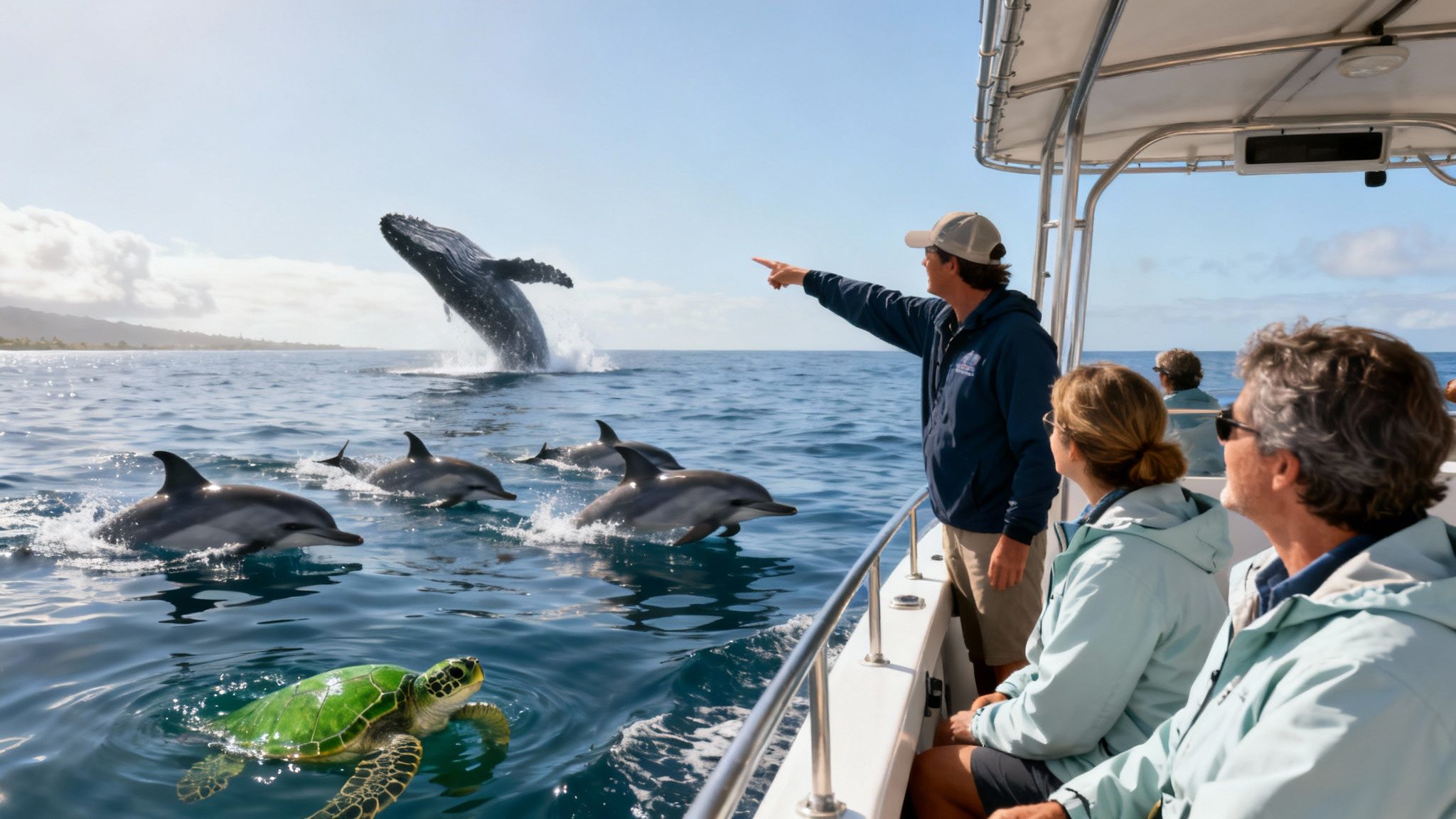
As the captain expertly and respectfully maneuvers the boat closer, the true scale of these animals starts to sink in. You can look at all the photos in the world, but nothing—and I mean nothing—prepares you for the sheer awe of watching a 40-foot, 40-ton humpback launch its entire body from the water in a full breach. It’s a jaw-dropping display of raw power and surprising grace that gets permanently etched in your memory.
Decoding Whale Behavior On The Water
One of the coolest parts of any Kona whale watching tour is getting to interpret what the whales are actually doing. Every splash, slap, and surface behavior has a meaning, and learning what they are adds a whole new layer to the experience.
A great guide will help you decode what you're seeing, turning a simple sighting into a real connection with their complex social world. Here are some of the most common behaviors you might get to see:
- Tail Slap: A massive, thunderous slap of the whale's tail (called a fluke) on the water. It could be a way to talk to other whales, a warning sign, or honestly, sometimes it just seems like they're having fun.
- Pectoral Fin Slap: You'll often see a whale roll onto its side and just repeatedly slap its long side fin against the water. This is another form of communication, especially when they're hanging out in groups.
- Spy-Hop: A total crowd-pleaser. This is when a whale pokes its head straight out of the water to get a look around. It feels like pure curiosity, as if the whale is just as interested in you as you are in it.
- Breach: The iconic, full-body leap out of the ocean. Scientists have a few theories: maybe it’s to communicate over long distances, shake off pesky skin parasites, or maybe it's just pure, unadulterated joy.
The Full Kona Marine Ecosystem
While the magnificent humpbacks are definitely the stars of the show, your adventure on the water almost always includes run-ins with a whole cast of other marine life. The waters off the Kona coast are buzzing with activity, making every single tour a unique experience.
Keep your eyes peeled as you travel. It’s not just about the whales; it’s about the entire ecosystem. Playful pods of spinner dolphins frequently race alongside the boat, putting on their own acrobatic shows.
You’re also very likely to spot calm, graceful Hawaiian green sea turtles (honu) gliding near the surface—they’re a beloved symbol of the islands. And if you’ve got a sharp eye, you might catch a glimpse of rarer, deep-water species like pilot whales or melon-headed whales, which makes for an extra special trip. Each tour is a window into the incredible biodiversity that makes Kona a world-class wildlife destination. This multifaceted experience is what makes Kona whale watching tours so special—it's a complete marine safari.
How To Choose The Best Kona Whale Watching Tour
With so many amazing options out on the water, picking the right Kona whale watching tour can feel like a tough call. But it doesn't have to be. The secret is simply matching the tour to your own vibe and what you hope to get out of the day.
Are you picturing a super stable, family-friendly ride with all the comforts? Or is your heart set on a thrilling, up-close adventure that gets you right to the ocean's surface? Once you know the answer, you'll be able to choose the perfect trip for an unforgettable day.
The biggest decision you'll make is the kind of boat you're on. Each one offers a totally different way to experience the whales, and your choice shapes everything from how comfortable you are to how connected you feel to the action.
Comparing Vessel Types: Catamarans vs. Rafts
Think of it like choosing a vehicle for a safari. You could go for a big, comfy tour bus that gives you a great high-up view and a smooth ride, or you could hop in a rugged, open-air jeep that gets you down in the thick of it. Both are fantastic, but they deliver two very different kinds of awesome.
Spacious Catamarans
These are the gentle giants of the tour world. Catamarans are wide, incredibly stable, and give you plenty of space to walk around and find the perfect viewing spot.
- Pros: Their stability is a game-changer, making them the number one choice for families with little ones or anyone who gets a bit queasy at sea. Plus, they often have creature comforts like onboard restrooms and shady spots to relax.
- Cons: Because they're bigger, they sit higher on the water. This can sometimes make you feel a little more removed from the whales. They also tend to carry more passengers.
Nimble Rafts
For a more intimate and adventurous experience, you can't beat a rigid-hulled inflatable boat (what we call a raft). These smaller, zippier boats are designed to put you right at eye-level with the ocean.
- Pros: Being so low to the water gives you a thrilling, personal perspective that feels unbelievably close to the whales. Their speed means the captain can get to new sightings quickly, covering more ground to find the best action.
- Cons: The ride can definitely be bumpier, especially if the water gets choppy. It might not be the best fit for very young kids or anyone with back or mobility issues. You're also much more exposed to the sun and spray.
Choosing a tour isn't just about the boat; it's about the entire experience. Consider what matters most: comfort and amenities, or a low-to-the-water, adventurous feel.
Factoring In Tour Duration And Special Features
How long you're out on the water makes a big difference, too. Most Kona whale watching tours run between 2 to 4 hours. A shorter trip is perfect if you're trying to pack a lot into your day.
But a longer tour? That gives the captain more time to track down active pods and, once you find them, lets you just soak it all in without feeling rushed. You get more time to simply watch the whales be whales.
Beyond the basics, keep an eye out for special features that can turn a great trip into a legendary one. One of the most magical additions is a hydrophone. It’s basically an underwater microphone that the crew drops into the ocean. Hearing the haunting, complex songs of the male humpbacks echoing up from the deep is a powerful experience you will never, ever forget.
Making The Right Choice For Your Group
So, how do you put it all together? Just think about who you're traveling with and what everyone's hoping for.
- For Families with Young Children: A big catamaran is almost always your best bet. The stability, shade, and access to a bathroom create a comfortable and stress-free environment for the little ones.
- For Photographers: That smaller raft often gets the nod. The low angle provides dramatic, eye-level shots, and with fewer people on board, you won't be jockeying for the perfect vantage point.
- For Adventurers: If you want that wind-in-your-hair feeling and a front-row seat to the action, the raft is a no-brainer. It's a truly immersive ride that puts you right in the heart of it all.
Ultimately, the most important decision is choosing a reputable, eco-conscious operator who respects these incredible animals. A company that follows all federal guidelines ensures your tour is not only amazing but also responsible. For some great insights, check out this review of the Top 5 Whale Watching Kona Big Island Tours.
To see how we do things here at Kona Snorkel Trips, take a look at our complete guide to whale watching Big Island tours. By weighing these factors, you can book the perfect trip for a day of pure, awe-inspiring moments with Kona's humpback whales.
How To Prepare For Your Whale Watching Adventure
A little bit of prep work can be the difference between a good day on the water and an absolutely fantastic one. When you have the right gear and a solid plan, you can just relax and focus on the incredible sights of your Kona whale watching tour without any distractions.
This simple checklist covers everything you need for a comfortable, memorable, and stress-free adventure. We’ll start with the basics, like protecting yourself from that beautiful Hawaiian sun—it gets surprisingly strong out on the open ocean where the water acts like a giant mirror.
Your Essential Packing Checklist
Think of this as your cheat sheet for a perfect day at sea. Tossing these few key items in your bag will make all the difference.
- Sun Protection Essentials: This one’s non-negotiable. Please pack reef-safe sunscreen to protect both your skin and Hawaii's fragile coral ecosystems. A wide-brimmed hat and polarized sunglasses are also must-haves. The polarization cuts right through the ocean's glare, making it so much easier to spot those tell-tale spouts and surface activity.
- A Light Jacket or Windbreaker: Even on the warmest Kona days, the breeze coming off the water can give you a bit of a chill, especially on our morning tours. A light layer is all you need to stay comfortable while the boat is cruising.
- Camera with a Fast Shutter Speed: Want to nail that perfect breach shot? You’ve got to freeze the action. A pro tip is to use a fast shutter speed (think 1/1000s or faster) to avoid blurry photos of these fast-moving giants. Just don't forget to put the camera down and simply watch with your own eyes, too!
Handling Seasickness Like a Pro
The thought of motion sickness can make even the most excited whale watcher a little anxious, but it doesn't have to ruin your day. With a few simple, effective strategies, you can keep your eyes on the horizon and the magnificent humpbacks.
The real key is to be proactive. Waiting until you start to feel queasy is usually too late. Taking a few simple measures before you even leave the harbor can set you up for a smooth ride. For a complete breakdown of our best tips and remedies, check out our in-depth guide on how to prevent seasickness.
A simple yet powerful trick is to always keep your eyes on the stable horizon. This helps your brain and inner ear get on the same page, reducing that sensory mismatch that leads to motion sickness. Staying hydrated and skipping heavy, greasy foods beforehand also helps immensely.
Extending Your Whale Watching Experience From Shore
Your adventure doesn't have to stop when the boat docks. The Big Island has some incredible land-based viewing spots where you can keep scanning the waters for spouts and breaches, often with a stunning coastal backdrop.
Onshore gems like Puʻukoholā Heiau National Historic Site—which literally means 'hill of the whale'—and Lapakahi State Historical Park offer sweeping, elevated views that are perfect for morning watches when calmer seas mean less glare. While our boat tours get you much closer and often include bonus sightings of spinner dolphins or Hawaiian green sea turtles, these shoreline spots are a wonderful way to keep the whale-watching going all day long.
Practicing Responsible And Ethical Whale Watching
There's nothing quite like the moment a 40-ton humpback whale explodes from the water. It's a raw, powerful connection to the wild heart of the ocean, and seeing it is a true privilege. But with that privilege comes a profound responsibility. These whales have traveled thousands of miles to our warm Hawaiian waters to mate and raise their newborn calves—the most critical part of their lives.
That's why how we behave on Kona whale watching tours is so important. It’s not just about being polite; it's about ensuring the well-being and survival of these incredible animals.
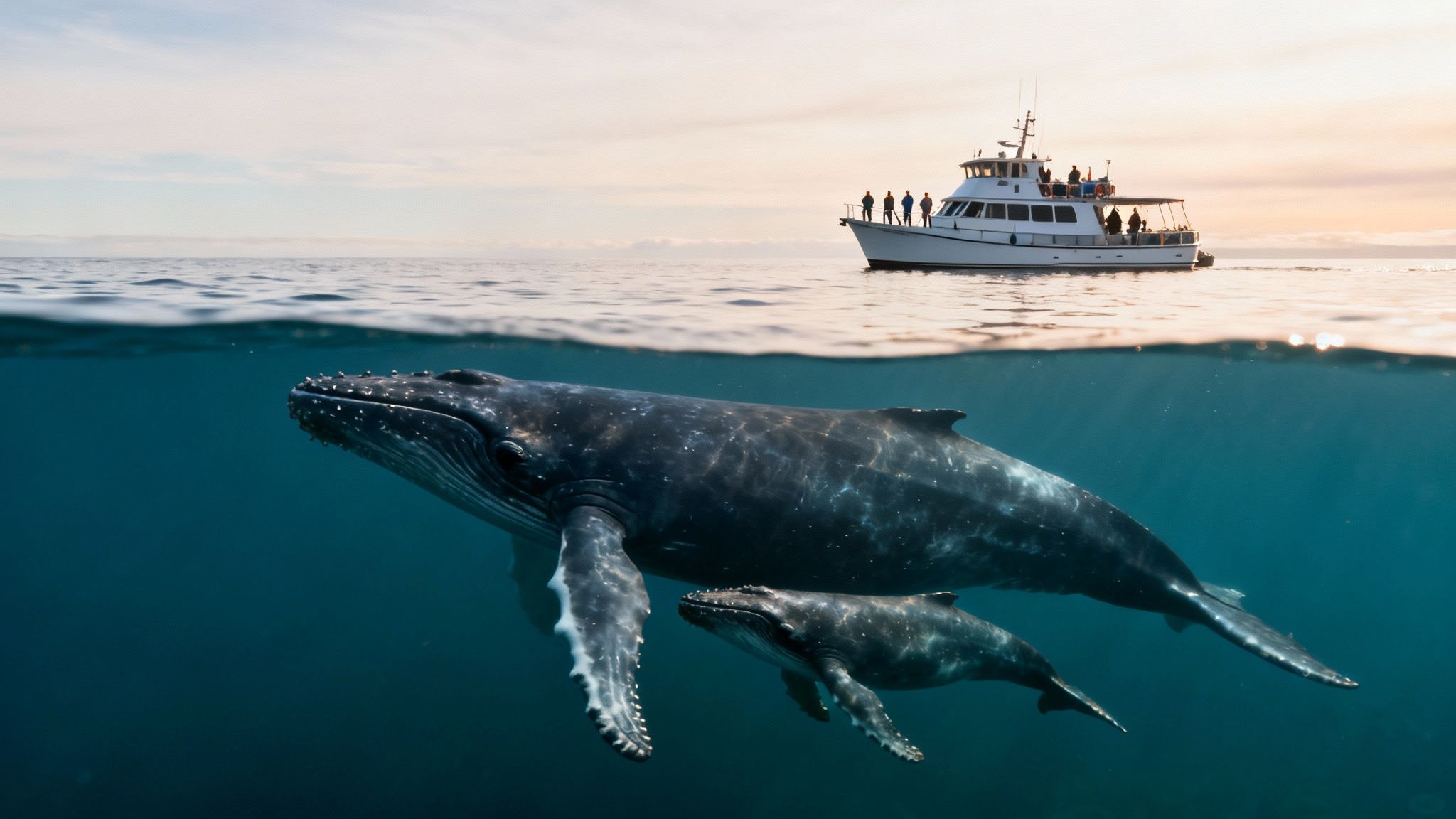
Any disturbance can create immense stress, especially for a new mother trying to nurse and protect her baby. Federal law is crystal clear on this: every single vessel, from big tour boats to tiny kayaks, must stay at least 100 yards away from humpback whales. This isn't just a suggestion; it’s a crucial buffer zone that gives them the space they need to rest, feed, and act naturally without feeling cornered.
The Role of an Ethical Tour Operator
Honestly, the most important decision you'll make for a great and responsible whale watch is choosing the right tour operator. A good one is more than just a captain with a boat—they're a steward of the ocean.
A professional crew knows the regulations inside and out. They are experts at positioning the boat for unbelievable views and photo opportunities without ever crossing that critical 100-yard line, ensuring the whales' well-being always comes first.
These operators go beyond just following the rules. They’re actively making a positive difference out on the water.
- Education: A great guide turns your trip into a genuine learning experience. They don’t just point and shout "whale!"; they explain the behaviors you're seeing, share fascinating details about whale biology, and help you build a real appreciation for marine conservation.
- Data Contribution: Many of the best tour boats participate in "citizen science," collecting valuable sighting data that helps researchers track whale populations and health. Your tour actually becomes a small but meaningful contribution to marine science.
- Setting an Example: By sticking to the guidelines and showing genuine respect for the animals, ethical operators set the standard for how everyone should act around marine life.
Your Tour As A Positive Impact
When you choose a company that's committed to these principles, you're doing so much more than just having an incredible day. You are actively supporting the conservation of Hawaii's precious marine life.
You're casting a vote with your wallet for sustainable tourism that protects these gentle giants. It's how we ensure the magic of the Kona whale watching tours season can continue to inspire people for generations. Your choice transforms you from just a spectator into a guardian of these magnificent creatures and their ocean home.
Questions We Hear All The Time About Kona Whale Watching
To make sure you have the absolute best time out on the water, we've put together answers to some of the questions we get asked most often about our Kona whale watching tours. Getting these details sorted out ahead of time means you can just kick back, relax, and soak in the incredible adventure once you're on the boat.
Our goal here is to clear up any questions you might have, from what to expect on the day-of to the nitty-gritty logistics, so you feel totally ready to go.
What's The Best Time Of Day For A Tour?
Honestly, choosing between a morning or an afternoon trip often just boils down to what works best for you. The whales are out there doing their thing all day long, and we've had spectacular encounters at all hours.
That said, there are a couple of things to keep in mind. The mornings on the Kona coast are famous for their calm, glassy seas. That flat water can make it much easier to spot a whale spout from way off in the distance. Plus, the soft morning light is a photographer's dream for getting those perfect, glare-free shots. On the flip side, we sometimes see a real uptick in surface action in the afternoons—things like breaching and tail slapping—as the whales seem to get a bit more energetic.
Is A Whale Sighting Guaranteed?
Because we're dealing with wild animals living life on their own terms, no one can ever guarantee a whale sighting with 100% certainty. It’s their ocean, after all, and we're just respectful visitors lucky enough to get a glimpse into their world.
However, during the peak of the season from January through March, your chances are incredibly high. The waters off Kona are literally teeming with thousands of humpbacks, and our captains have spent years learning their favorite hangouts. While it's not technically a guarantee, the success rate for finding whales during these months is outstanding, making for a consistently rewarding experience.
How Close Can We Get To The Whales?
Protecting these magnificent animals is our top priority, and strict federal law mandates that all boats keep a minimum distance of 100 yards from humpback whales. This is a critical buffer zone, especially for mothers with their brand-new calves, as it prevents causing them any stress. Our captains are masters at navigating this boundary while still getting you breathtaking views.
But every once in a while, the whales decide to rewrite the rules themselves.
There's a truly magical and completely legal experience we call a "whale mugging." This happens when a curious whale, or even a whole pod, makes the choice to approach our boat. They might swim right up alongside us, or even dive underneath the vessel. It's an absolutely unforgettable, once-in-a-lifetime encounter that happens entirely on the whale's terms.
Are Kona Whale Watching Tours Good For Families?
Absolutely! Whale watching is a phenomenal activity for all ages and one of the best ways to create memories your family will talk about for years. For groups with younger kids, we typically suggest choosing a tour on a larger, more stable boat, like a catamaran.
These vessels offer more room for little ones to move around, have plenty of shaded areas to keep cool, and usually come equipped with onboard restrooms, which can be a lifesaver. Safety is always number one, and our crews go above and beyond to make sure it's a secure and fun environment for even our smallest ocean explorers.
Ready to witness the magic of Kona's gentle giants for yourself? Join Kona Snorkel Trips for an adventure that will stay with you forever. Book your unforgettable tour today.