
Your Ultimate Guide to Kona Whale Watching Tours
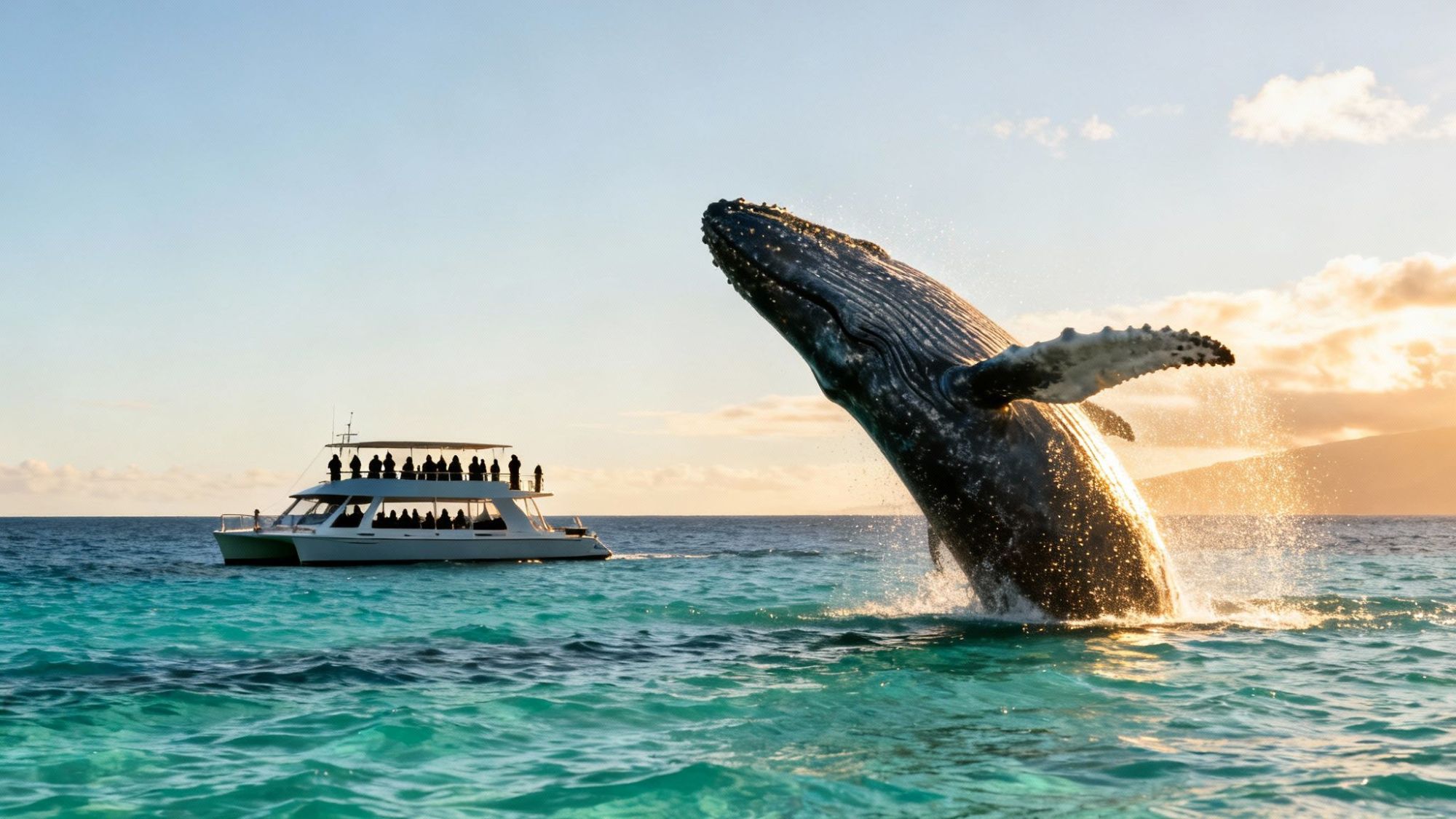
Picture this: the turquoise Kona coast explodes as a 40-ton humpback whale launches itself out of the water, a breathtaking show of pure power and grace. This isn't just something you see on TV; it's a real, everyday moment during Kona's peak whale season. The very best Kona whale watching tours put you front and center for this incredible spectacle, which really kicks off from mid-December and runs through the end of March.
Experience the Awe of Kona Whale Watching
This guide is your ticket to seeing this natural wonder for yourself. We'll get into why Kona’s calm, deep waters are the perfect sanctuary for these gentle giants, making it one of the top whale watching spots on the planet. As Hawaii's top-rated and most-reviewed snorkel and tour company, we here at Kona Snorkel Trips offer an experience that's tough to beat, led by local experts who live and breathe this ocean.
Just check out what our guests are saying. The reviews below give you a real sense of the unforgettable adventures we share with people every single day.
Why Kona Is a Premier Whale Watching Destination
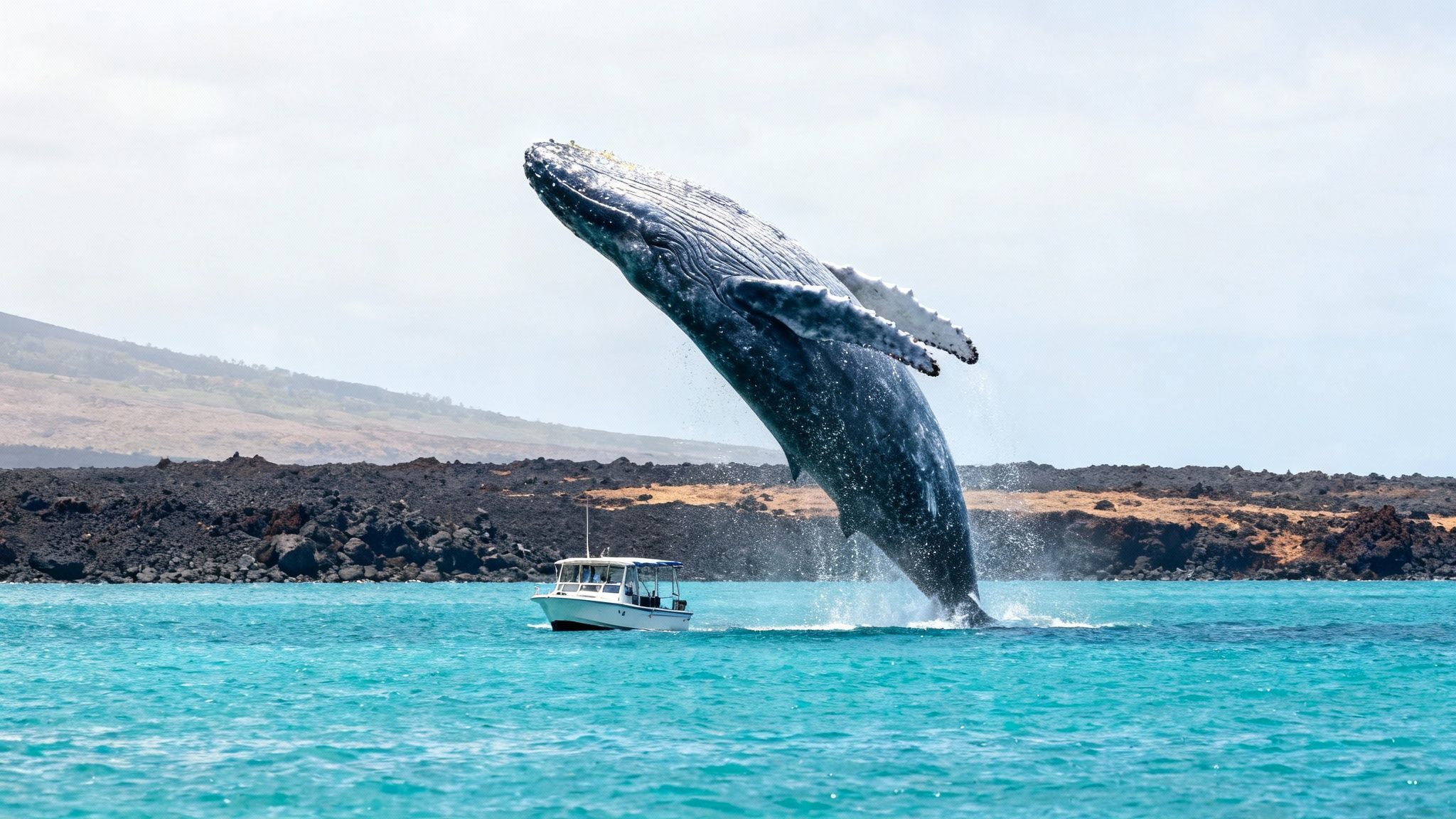
Every year, something incredible happens. Humpback whales travel an unbelievable 3,000 miles from their chilly feeding grounds in Alaska all the way to the warm, protected waters of Hawaii. They make this epic journey for the most important reasons: to mate, give birth, and raise their newborn calves in safety.
Kona's geography is what makes it so special. The massive volcanoes of Mauna Loa and Hualalai shield the Big Island's western coast from the powerful trade winds. This creates uniquely calm and clear seas—perfect conditions for the whales, and even better conditions for us to watch them.
Another huge plus? The waters here are mostly free of orcas, the humpbacks' main predator. This makes it an ideal, safe nursery for vulnerable calves to get their start in life.
This annual migration turns the Kona coast into a vibrant stage for one of nature’s greatest shows. Picking the right tour is your key to witnessing the magic up close.
What Makes a Tour Unforgettable
Sure, spotting a whale from shore is a thrill, but nothing compares to being out on the water with them. A great tour gives you a perspective you just can't get from land. It’s the difference between watching a concert from the nosebleeds and having a front-row seat.
But an exceptional tour is more than just a boat ride; it’s about making a connection. The best experiences are built on a few key things:
- Expert Guidance: You want knowledgeable captains and marine naturalists who can read the whales' behavior, let you listen to their songs on a hydrophone, and share amazing insights about their lives.
- Respectful Practices: A true commitment to the whales' well-being is non-negotiable. This means strictly following federal regulations and keeping a safe, respectful distance at all times.
- Intimate Settings: Smaller groups make for a much more personal and less crowded experience. It brings you eye-level with the action without feeling like you're just part of a crowd.
When these pieces come together, they create an adventure that’s not only thrilling but also educational and deeply respectful of the incredible animals you’ve come to see. Your journey into the world of humpbacks starts right here.
Your Guide to Kona's Humpback Whale Season
Timing is everything when you're dreaming of an unforgettable whale watching tour in Kona. To really catch the full spectacle, you have to sync your visit with the whales' ancient migratory schedule. Don't just think of it as a few months on the calendar; picture it as a massive, unfolding festival of nature that turns our coastal waters into a bustling nursery and social club for humpbacks.
This whole incredible event is fueled by one of the most amazing journeys in the animal kingdom. Humpback whales travel thousands of miles from their summer feeding spots in Alaska, all searching for Hawaii's warm, calm, and protected waters. Their reason is simple but profound: to find mates, give birth, and raise their newborn calves in a safe place before heading back north.
The Annual Migration Cycle
Every year, an estimated 8,000 humpback whales make this incredible trek, a journey of about 3,500 miles. They leave the cold, nutrient-rich waters of Alaska behind for the warm, sheltered coastline of the Hawaiian Islands, including our home here in Kona. This migration really kicks into high gear between December and March, which lines up perfectly with their breeding and calving season.
This massive movement of life is exactly what makes Kona one of the best whale watching destinations on the planet. The whales show up having spent months gorging themselves, building up the energy reserves they'll need for the long trip south and the demanding work of mating and raising their young without feeding.
Month-By-Month Whale Activity
While you might get lucky and spot a whale as early as November or as late as May, the real action happens during the core season. Knowing the rhythm of their arrival and departure helps you pick the perfect time for your trip. For a deeper dive, check out our complete guide to the whale season on the Big Island.
To give you a quick idea, here's what to expect throughout the season:
- November – Early December (The Arrival): This is when the first scouts of the migration start to appear. Sightings are a bit sporadic, but the excitement on the water is real as the vanguards arrive. It’s a quieter time, perfect if you’re hoping for a more serene experience.
- Late December – January (The Buildup): Things really start to ramp up now. The numbers swell as more whales pour in daily. You'll see more frequent sightings of all kinds of behaviors as the males start competing for mates.
- February (Peak Season): This is the heart of it all. The waters off Kona are absolutely teeming with life, offering the highest density of whales you'll see all year. Your chances of witnessing dramatic breaches, competitive pods, and tender moments between mothers and calves are at their absolute peak.
- March (The Nursery & Departure): The vibe shifts slightly as the focus turns to mothers and their newborn calves. You’ll see tons of baby whales playfully testing out their flukes and fins near their watchful moms. As the month wears on, some whales begin the long journey back to Alaska.
- April – May (The Farewell): The last to leave are often the new mothers with their calves, who need a little extra time before making the trip. Sightings become less common, but the ones you do get are often really special, marking the end of another incredible season.
Kona Whale Watching Season At a Glance
Planning a trip can be a lot to juggle, so we put together this simple table to help you figure out the best time for your whale watching adventure.
| Month | Whale Activity Level | What to Expect |
|---|---|---|
| November | Low | The first few whales arrive. Sightings are rare but exciting! |
| December | Moderate | Numbers are building. Good chance of seeing activity. |
| January | High (Peak) | The season is in full swing. Lots of whales, lots of action. |
| February | Very High (Peak) | The absolute best month. Highest density of whales. |
| March | High | Still great activity, with a focus on mother and calf pairs. |
| April | Low | Last of the whales, primarily moms and calves, begin to depart. |
| May | Very Low | The season is wrapping up. A lucky sighting is still possible. |
This table is a great starting point, but remember that these are wild animals on their own schedule. Every day on the water is a unique experience!
The absolute peak months for whale watching in Kona are January and February. This is when the density of whales is at its highest, offering the most dynamic and frequent displays of whale activity you can imagine.
By aiming for these key months, you give yourself the best possible shot at experiencing the awe-inspiring power and grace of these gentle giants up close.
Decoding Humpback Whale Behaviors
There's nothing quite like the moment a forty-ton humpback whale explodes from the ocean. It's a memory that sticks with you forever. But when you start to understand why it's doing what it's doing, everything changes. It’s no longer just a spectacular sight; it becomes a conversation with one of the planet's most incredible animals. On our Kona whale watching tours, we don't just point out the action—we help you translate the amazing language of humpback whales.
This knowledge completely transforms your trip. You shift from being a passive viewer to an active, engaged observer. Suddenly, you're not just a spectator; you're piecing together the story that’s unfolding right in front of you. Let's dive into some of the most common and truly breathtaking behaviors you'll get to witness.
The Iconic Breach
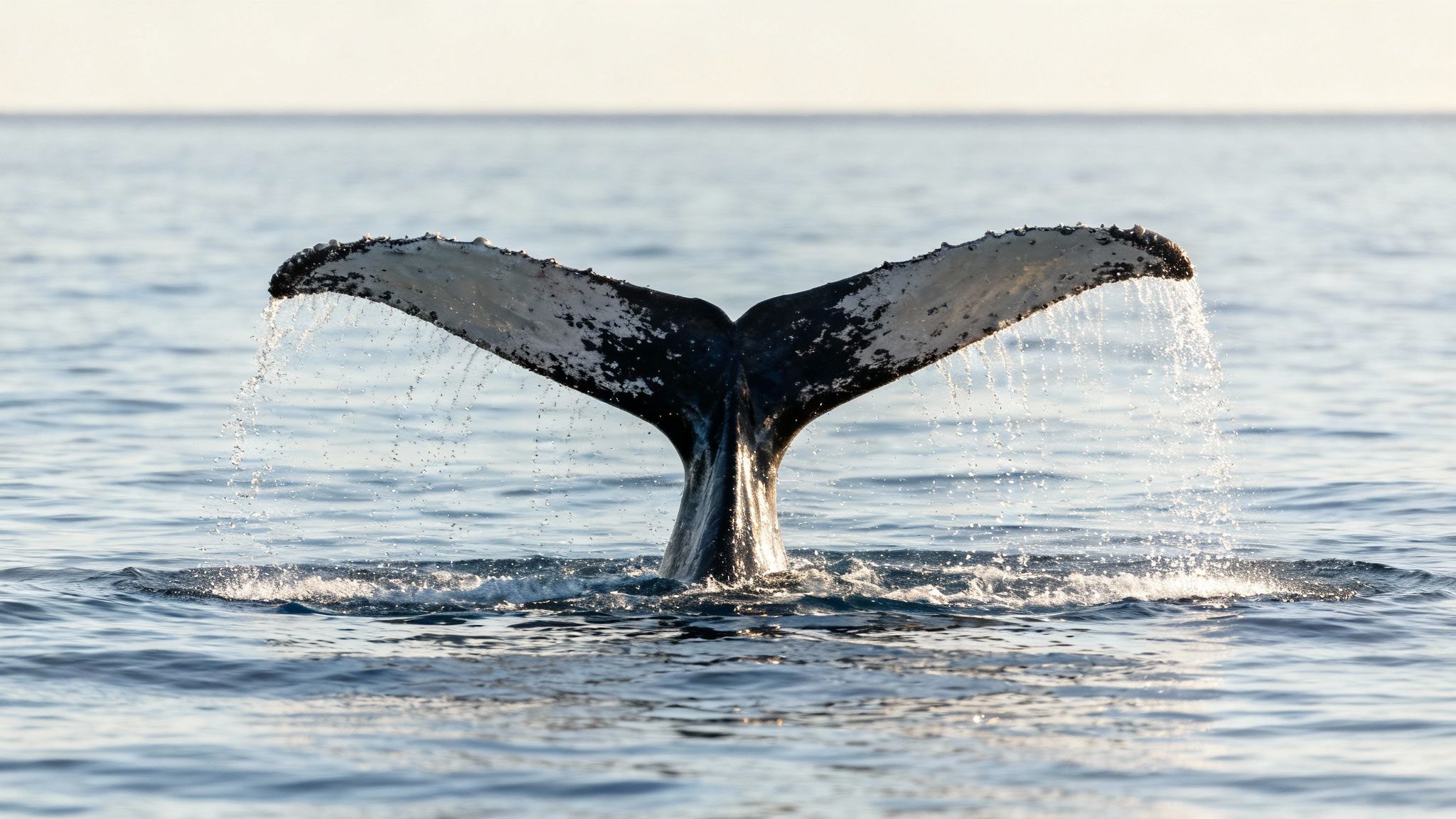
The breach is the ultimate showstopper—the one behavior everyone secretly hopes to see. This is when a whale uses its powerful tail flukes to launch up to 90% of its body out of the water, crashing back down in a colossal splash you can hear for miles.
But it’s so much more than a random leap for joy. Scientists have a few solid theories on why they do it:
- Communication: A breach creates a massive sound underwater and a huge visual cue above. It could be a way for whales to announce their presence to others over great distances.
- Dominance or Agitation: During the competitive mating season, you'll often see males breaching in "competition pods" as a raw display of strength to intimidate rivals.
- Pest Control: Imagine having an itch you can't scratch. A full-body slam against the ocean is a pretty effective way to shake loose stubborn barnacles and whale lice.
- Pure Fun: Sometimes, especially with younger whales, it really might just be an expression of pure energy and playfulness.
Surface-Level Signals and Communication
While the breach gets all the attention, whales have a whole vocabulary of other surface behaviors they use to communicate. Think of it as a more subtle form of body language.
Tail Slap (Lobtailing)
You’ll see this when a whale lifts its massive fluke clean out of the water and smacks it down hard. The sound is like a cannon shot echoing across the water. This is often a sign of aggression or a warning to other whales—or even boats—to back off.
Pectoral Fin Slap
A whale might roll onto its side and repeatedly slap one of its long, wing-like pectoral fins on the surface. This is usually more of a social signal, meant to get the attention of other whales nearby. It's a "Hey, I'm over here!" message, much more localized than the boom of a tail slap.
When you see a group of whales, keep a close eye on these slaps. You could be witnessing a complex dialogue as males compete for a female, or a mother teaches her calf important social cues.
Kona's whale watch tours typically run for about 2 to 3 hours from December through March. This gives you a great window to see behaviors like breaching, tail slapping, and pec slaps. These tours often run into other amazing marine life like spinner dolphins and sea turtles, too, making every trip a unique adventure. Learn more about the rich wildlife you can see on Hawaiian Adventures Kona.
The Curious Spy-Hop
One of the most captivating things you can witness is the spy-hop. This is when a whale positions itself vertically in the water column and slowly raises its head out, often rotating to get a 360-degree look at what's going on above the surface.
Unlike a breach, a spy-hop is slow, deliberate, and controlled. It’s pure curiosity in action. The whale is actively checking things out—and that includes your tour boat. It’s one of those profound moments where you feel a real connection, a sense that the whale is just as interested in you as you are in it. It's a powerful reminder that we're just visitors in their vast and beautiful world.
Choosing Your Ideal Whale Watching Tour
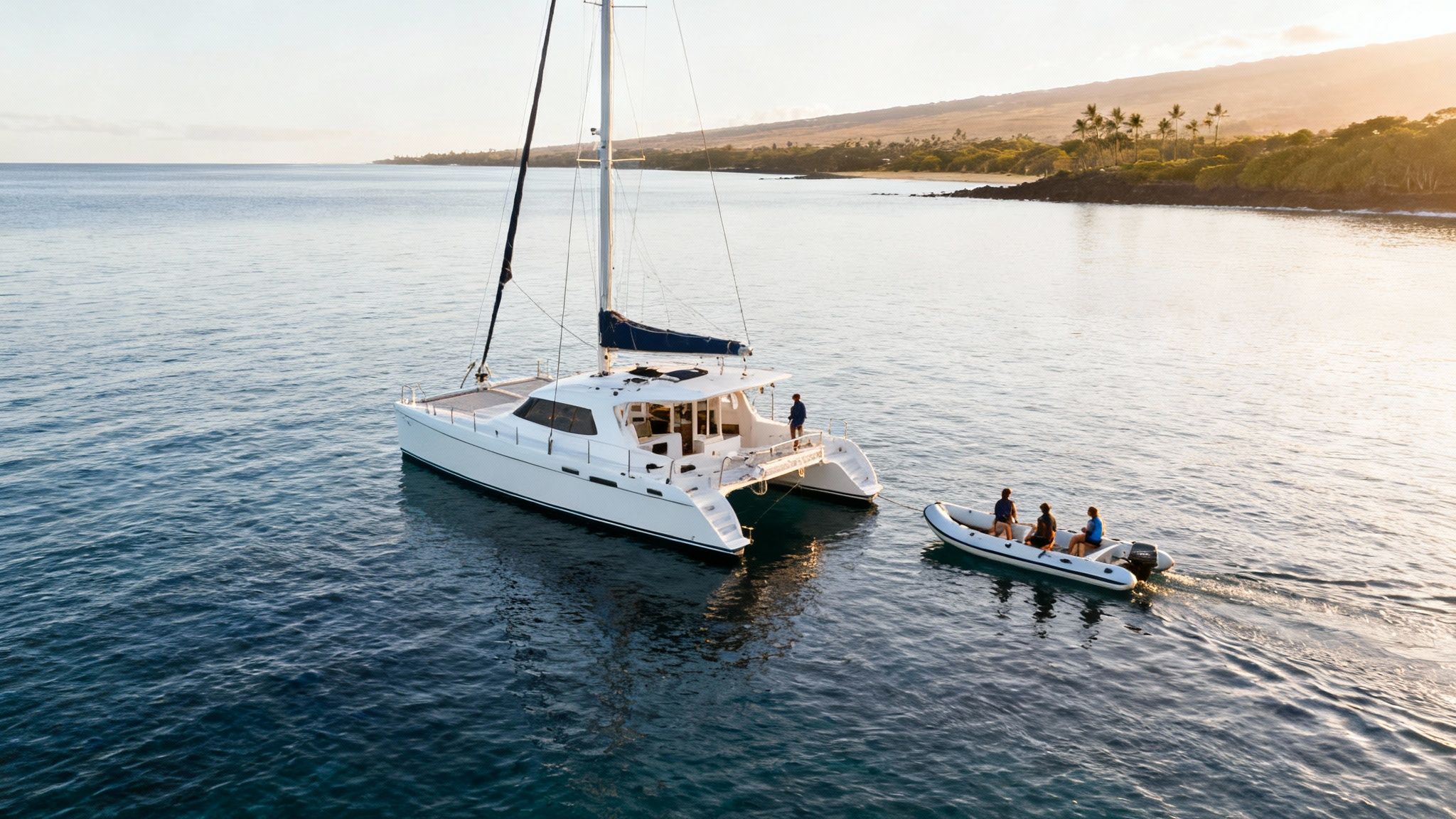
Here's a little secret from those of us who spend our days on the water: not all Kona whale watching tours are the same. Picking the right one can be the difference between a good day and a truly jaw-dropping, unforgettable experience. The boat you're on, the know-how of your crew, and what the trip is really all about—these are the things that matter.
Figuring this out ahead of time means you can choose the perfect adventure for your crew. Are you hoping for postcard-perfect photos? Or maybe you're a family with little ones who need some shade and comfort? Perhaps you're an adventurer looking for a more thrilling, eye-level encounter. Let's get into what makes each trip unique.
Vessel Type Matters: Large vs. Small Boats
The kind of boat you choose really sets the stage for your whale watching adventure. Each one offers a totally different vibe and its own set of perks.
Spacious Catamarans
These bigger, more stable boats are fantastic for families or anyone who puts comfort first.
- Pros: Catamarans give you a super smooth ride, plenty of room to stretch your legs, and a much-appreciated onboard restroom and shady spots. That stability is a huge plus if you’re worried about seasickness or trying to get a steady shot with your camera.
- Cons: Because they're larger, you might not get that super personal feeling. They also can't zip around quite as fast as smaller boats to get the perfect viewing angle when a whale suddenly appears.
Nimble Rafts and Smaller Vessels
If you're craving a more up-close-and-personal adventure, a smaller boat or a rigid-hulled inflatable boat (RHIB) is the way to go.
- Pros: These boats are quick and agile, which means the captain can react in a heartbeat to whale sightings. The small group size just feels more intimate, and being closer to the water gives you a stunning, eye-level view of these giants.
- Cons: It can be a bit of a bumpier ride, and you'll find less shade and fewer comforts like restrooms. This is definitely a tour for thrill-seekers, not necessarily for those needing maximum comfort.
Honestly, the best choice just comes down to your group. A family with grandparents and young kids will probably love the easy comfort of a catamaran. A couple of adventurous adults? They'll likely have a blast on a zippy little raft.
Key Factors to Look for in a Tour
Beyond the boat, a few other things separate the great tours from the just-okay ones. When you're looking at your options, keep these key details in mind. A fantastic tour isn’t just about seeing whales; it's about really connecting with them. For a deeper dive, check out some of the different Big Island whale watching tours available.
- Tour Duration: Most trips last between 2 to 3 hours. That’s usually the sweet spot—enough time to get to the prime whale hangouts and enjoy some quality observation time without everyone getting tired out.
- Group Size: I'll say it again: smaller groups are almost always better. You get more one-on-one time with the crew, have more elbow room, and feel a real connection to the ocean without being lost in a crowd.
- Hydrophone Availability: This is a total game-changer. A hydrophone is an underwater microphone that lets you listen to the hauntingly beautiful songs of male humpback whales. Hearing their calls echoing up from the deep is something you will never, ever forget.
- Captain and Crew Expertise: Having an experienced captain and a passionate marine naturalist on board is priceless. They're the ones who can read the whale's behavior, share incredible facts about their lives, and respectfully position the boat for the absolute best views. Their knowledge and enthusiasm can truly make the trip.
Think about these factors, and you'll have no problem choosing one of the amazing Kona whale watching tours that’s a perfect fit for your dream day on the water.
Preparing for Your Day on the Water
A little prep work goes a long way in turning a great day on the water into a truly unforgettable one. Think of this as your pre-launch checklist, packed with our best insider tips to ensure your Kona whale watching tour is as comfortable and amazing as possible.
Getting these little details sorted out beforehand means you can relax and focus on what you came for: the incredible show the whales put on for us.
Your Essential Packing List
While our boats are well-equipped, a few personal items can make all the difference for your comfort and enjoyment. Here’s a quick rundown of what we recommend bringing for a perfect day at sea.
- Layered Clothing: Even on a beautiful, sunny Kona day, the breeze coming off the ocean can have a surprising chill to it, especially on morning trips. A light jacket or windbreaker is your best friend—easy to shed as the day heats up.
- Reef-Safe Sunscreen: The Hawaiian sun is no joke, and the reflection off the water doubles its intensity. Protecting your skin is crucial, but so is protecting our fragile coral reefs. Please, only bring mineral-based, reef-safe sunscreen. It makes a huge difference.
- Polarized Sunglasses: This is our number one must-have. Polarized lenses are a total game-changer. They cut straight through the water's glare, letting you spot whales and other marine life way before anyone else. You'll see so much more.
- Hat and/or Visor: A good hat is key for keeping the sun off your face and further reducing that surface glare. Trust us, your eyes will thank you after a few hours on the water.
Avoiding Seasickness
Nothing ruins an epic whale encounter faster than feeling queasy. The great news is that Kona's waters are known for being exceptionally calm, but it never hurts to be prepared, especially if you know you’re prone to motion sickness.
Start by eating a light meal beforehand—try to avoid anything too greasy or acidic. Staying hydrated and keeping your eyes fixed on the stable horizon line can also work wonders. For a deeper dive, you can learn more about how to prevent seasickness in our detailed guide.
Here's a pro tip from our crew: find a seat toward the middle of the boat where the motion is least noticeable. Getting some fresh air and focusing on a fixed point on land can help your brain and inner ear get back in sync.
Capturing the Moment: Photography Tips
You’ll definitely want photos of this experience, but let's be honest—photographing fast-moving whales from a moving boat is a challenge. The good news is you don't need a fancy camera; your smartphone can get incredible shots if you know a few tricks.
- Use Burst Mode: A whale breach is over in a flash. Holding down your shutter button to fire off a rapid series of shots in "burst mode" massively increases your odds of nailing that perfect, jaw-dropping photo.
- Anticipate the Action: Listen to your captain and crew! We spend every day out here and get pretty good at reading the whales' behavior. When we tell you where we think one might surface, get your camera pointed in that direction and be ready.
- Don't Zoom Too Much: Pinching to zoom on a smartphone just degrades the photo quality, leaving you with a grainy mess. It’s always better to take a wider shot and crop it later. The image will be much sharper.
Most importantly, remember to put the camera down every once in a while. Just watch. Some moments are meant to be captured by your memory, not a lens. With a little prep, you're all set for an incredible day out on the water.
Practicing Respectful Wildlife Viewing
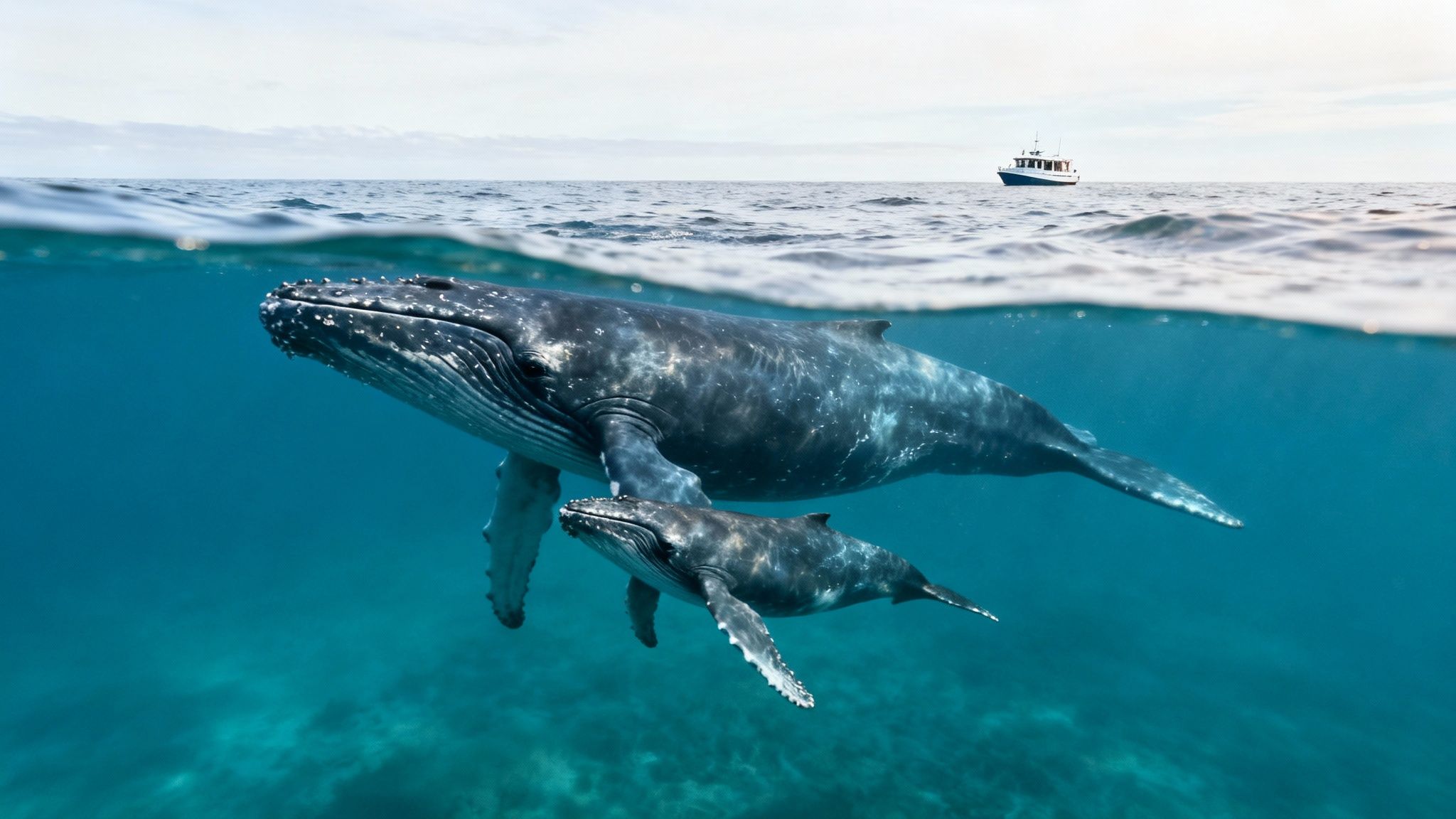
There's nothing quite like the thrill of seeing a 40-ton humpback whale surface just a short distance from your boat. It’s an awesome, humbling experience. But with that thrill comes a huge responsibility.
These incredible animals travel thousands of miles to get here. Kona’s calm, protected waters are their sanctuary—a safe place to mate, give birth, and raise their newborn calves. Our job as visitors is to be quiet, respectful observers who never get in the way of these crucial moments.
Ethical viewing isn't just a nice idea; it's the heart of a truly memorable encounter. It means our admiration doesn't cause stress or harm to the very creatures we came to see. It’s also the law, designed to protect some of Hawaii’s most magnificent part-time residents.
The 100-Yard Rule and Why It Matters
Federal and state laws are simple and clear: all vessels—from tour boats to kayaks and paddleboards—have to stay at least 100 yards away from humpback whales. Always.
Think of it as a protective bubble. This personal space gives them the freedom to go about their lives without feeling cornered or threatened by our presence.
This buffer zone is especially vital for new moms and their babies. A mother whale is fiercely protective, and anything she sees as a threat can cause serious stress. That stress forces her to burn precious energy she desperately needs for nursing and the long swim back to Alaska.
Respecting this 100-yard boundary is the single most important action we can take to be responsible stewards of the ocean. It allows the whales to remain calm, ensuring their time in Hawaiian waters is safe and productive.
When you're looking for a Kona whale watching tour, make sure you choose an operator who takes these rules seriously.
Identifying a Responsible Tour Operator
You can tell a lot about a tour company by how they treat the whales. The best operators prioritize conservation and education over just getting you a close-up photo for Instagram.
Here’s what to look for:
- A Knowledgeable Crew: The captain and naturalists should be experts on whale behavior and the local regulations. They'll know how to position the boat parallel to the whales' path, never cutting them off or charging up from behind.
- An Educational Focus: A great tour is about more than just spotting whales; it's about understanding them. The crew should be excited to share insights into what you're seeing, explaining the science and story behind every breach, pectoral slap, and spyhop.
- Patience and Respect: A good captain knows when to back off. If a whale seems stressed or agitated, a responsible crew will slowly and quietly move away, always putting the animal’s well-being first.
These principles of responsible wildlife viewing apply to all kinds of marine life, even other marine wildlife encounters, like diving with sharks, where understanding animal behavior is everything. By choosing a tour that champions these ethical practices, you're doing more than just seeing whales—you're becoming an active partner in their conservation.
Your Kona Whale Watching Questions Answered
Alright, let's wrap this up by tackling some of the most common questions people have before they book a whale watching tour. Getting these details sorted out helps you plan with confidence and makes sure you're ready for an amazing day on the water.
What Is the Absolute Best Time of Day to See Whales?
Honestly, the whales are active all day long, so there really isn't a single "best" time to go.
Morning trips often have the advantage of calmer, glassier water. That can make it a lot easier to spot those tell-tale whale spouts from a distance. On the other hand, afternoon tours can offer some truly spectacular lighting for photos as the sun starts to dip lower.
The most important thing isn't the time of day, but that you're booking during the peak season months of January and February. Any tour during this window gives you an excellent shot at incredible sightings. Just pick the time that works best for your vacation schedule.
Are Whale Sightings Guaranteed on Every Tour?
While Kona offers some of the most reliable whale watching in the world during the season, it’s so important to remember that these are wild animals. They're on their own schedule, not ours. Because of this, no one can ever 100% guarantee a sighting.
That said, the success rate with experienced crews is incredibly high. Most reputable outfits, including us, have spent years learning whale behavior and know all their favorite local hangouts, which seriously boosts your chances. Many companies also offer a "rain check" to join another tour if you don't happen to see any whales.
Is This Tour Suitable for Young Children or Seniors?
Absolutely! Most Kona whale watching tours are fantastic for the whole family, especially the ones on larger, stable catamarans. These boats offer a smooth ride, plenty of shade, and have restrooms right on board, which is a huge plus.
If you or someone in your group has specific mobility needs, it’s always a great idea to call the tour operator directly before you book. They can confirm all the accessibility details for you.
What Other Marine Life Might We See?
The Kona coast is just buzzing with marine life! While the humpbacks are definitely the stars of the show, every trip out is a chance to see other amazing creatures.
It's super common to run into big pods of playful spinner dolphins. We also see our share of graceful Hawaiian green sea turtles (honu), and sometimes we get lucky with rarer sightings like pilot whales or even oceanic whitetip sharks. You never know what the ocean will show you.
Beyond what's in the water, a lot of visitors ask about the practical stuff, like tipping. For some general advice on tour etiquette, you can review tipping guidelines for tours.
Ready to make some whale watching memories of your own? With an expert crew and a passion for respectful wildlife viewing, Kona Snorkel Trips offers an adventure you'll be talking about for years. Book your Kona whale watching tour today!