
A Guide to Unforgettable Kona Whale Watching
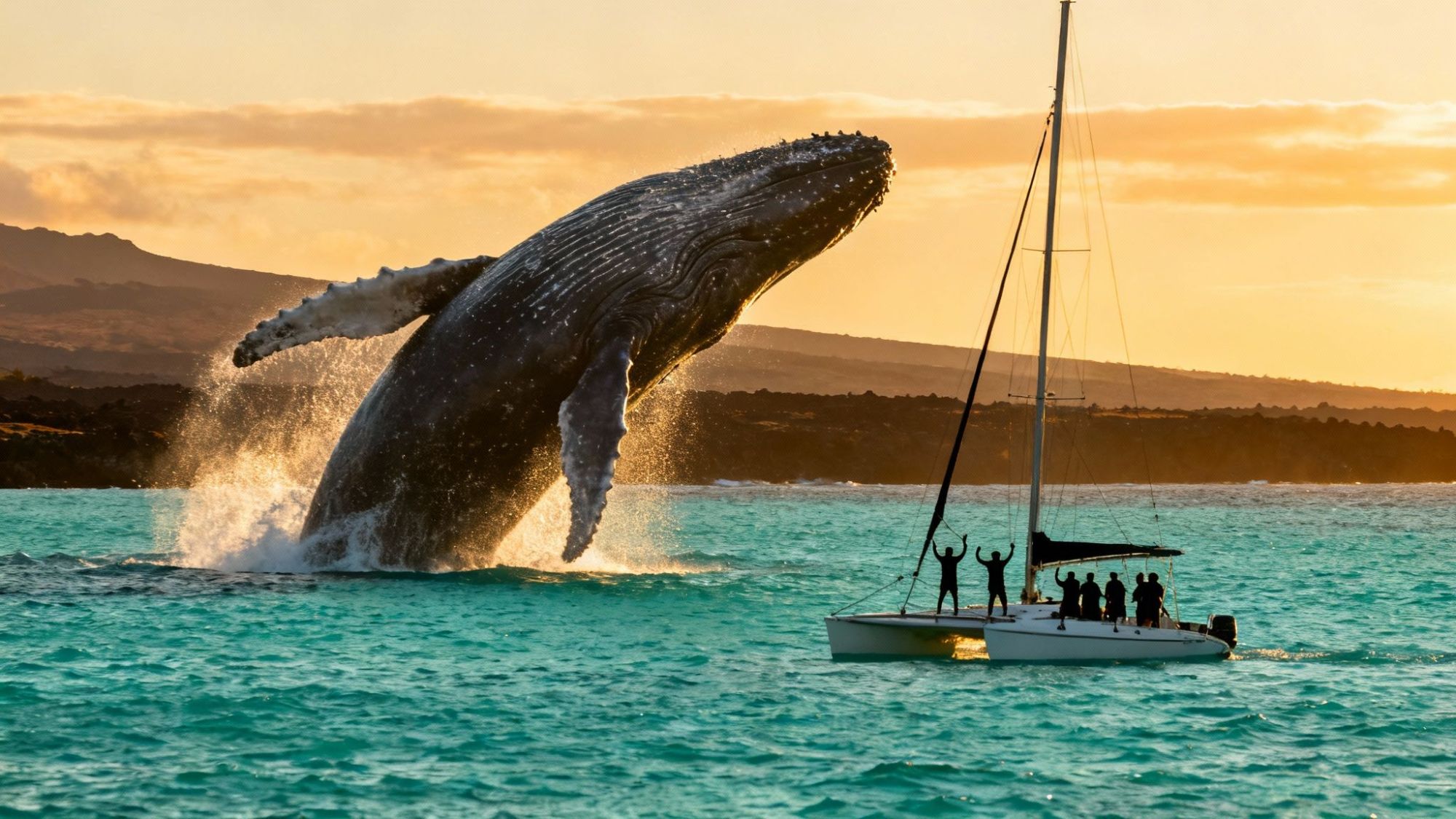
Welcome to Kona. If you're here for the whales, you've come to the right place. There's nothing quite like the feeling of being on the water and seeing a forty-ton giant launch itself into the air, and Kona is one of the best places on the planet to witness it.
Let's get right to it: the absolute best time for Kona whale watching is from December through March. This is when the ocean comes alive. Things really ramp up in January and February, which are the peak months of the season. Why then? Because that's when the majestic North Pacific Humpback Whales finish their epic migration, leaving the frigid waters of the north for the warm, welcoming embrace of Hawai'i.
Your Guide to Kona's Whale Watching Paradise
This guide is your inside scoop on making the most of this incredible phenomenon. We'll cover everything from the best boat tours that put you right in the middle of the action to some fantastic spots where you can watch from shore.
And if you're looking for an unforgettable ocean adventure, you'll see why Kona Snorkel Trips is consistently ranked as Hawaii's top-rated and most-reviewed snorkel company. We don't just show you the ocean; we help you experience it.
Every winter, the Kona coast transforms. It becomes the final destination for thousands of humpback whales, a bustling nursery and social club for some of the ocean's most incredible creatures. They travel thousands of miles from their feeding grounds up north to breed, give birth, and raise their newborn calves in our calm, protected waters.
This incredible pilgrimage is what makes Kona such a reliable and breathtaking spot for whale watching. We've designed this guide to help you plan the perfect trip, whether you're a seasoned whale watcher or a first-timer hoping to catch a glimpse of this natural wonder.
Why Kona is a Premier Whale Watching Destination
It's all about the geography. The western coast of the Big Island, where Kona is located, is naturally sheltered from the rougher open ocean. This creates a massive, calm-water sanctuary that's basically the perfect nursery for baby whales. It's safe, warm, and exactly what a mother humpback is looking for.
This predictable gathering makes for some of the most consistent whale viewing you'll find anywhere. Every year, more than 8,000 humpback whales travel an astonishing 3,500 miles from Alaska to get here. The sheer scale of Kona's whale watching season is what supports our amazing local tour community, especially along the Kona and Kohala coasts where the calm waters bring everyone—whales and people—together.
Here's a taste of what we'll cover in this guide:
- Best Times and Seasons: We'll dive deeper into the timing so you can plan for peak action.
- Whale Behaviors: Learn to spot the difference between a breach, a tail slap, and a pectoral fin wave.
- Tour Options: Figure out which type of boat tour is the right fit for your adventure style.
- Responsible Practices: Discover how we can all enjoy these animals while keeping them safe and respected.
The Epic Journey of Humpback Whales to Hawaii
Imagine packing up and heading out on a 3,500-mile road trip, but with one catch: you can't stop for food. Not once. That’s exactly what the North Pacific Humpback Whales do every single winter, making their way from the icy, food-filled waters of Alaska all the way to Kona. It's one of nature's most mind-boggling feats of endurance, driven by an instinct that’s as old as the islands themselves.
For months, these gentle giants are on the move, burning through the fat reserves they spent all summer building up. They aren't just taking a tropical vacation; they're coming here for the most important moments of their lives.
A Perfect Tropical Nursery
So, what makes Hawaii so special? The warm, sheltered, and relatively shallow waters off the Kona coast are basically the world's most perfect whale nursery. The Big Island's geography acts like a giant shield, protecting the bays from rough open-ocean currents and creating a safe haven that's critical for a few big reasons:
- Birthing: Pregnant females travel thousands of miles to find these calm waters to give birth.
- Nursing: Newborn calves are tiny (for a whale!) and don't have much blubber, so the warm water helps them stay warm while they nurse and bulk up for their first trip north.
- Mating: The waters also turn into a grand stage where males compete for mates, often leading to incredible shows of power in what we call "competitive pods."
This combination of factors makes Kona a guaranteed hotspot for whale activity. This isn’t just a random migration; it's a predictable, annual gathering that turns our ocean into a living, breathing theater. Researchers have been using photo-identification for years to track thousands of individual whales, and they've found that many of the same whales return to Hawaii year after year. It’s this loyalty that solidifies Kona's reputation as a world-class destination for kona whale watching. You can explore more wildlife findings from Hawaiian Adventures Kona to see what else they're discovering.
Decoding Whale Behavior
When you're out there on the water, you’re not just seeing splashes in the distance—you're witnessing a complex and beautiful language. Once you start to understand what these behaviors mean, a simple boat ride becomes a genuine connection to their world.
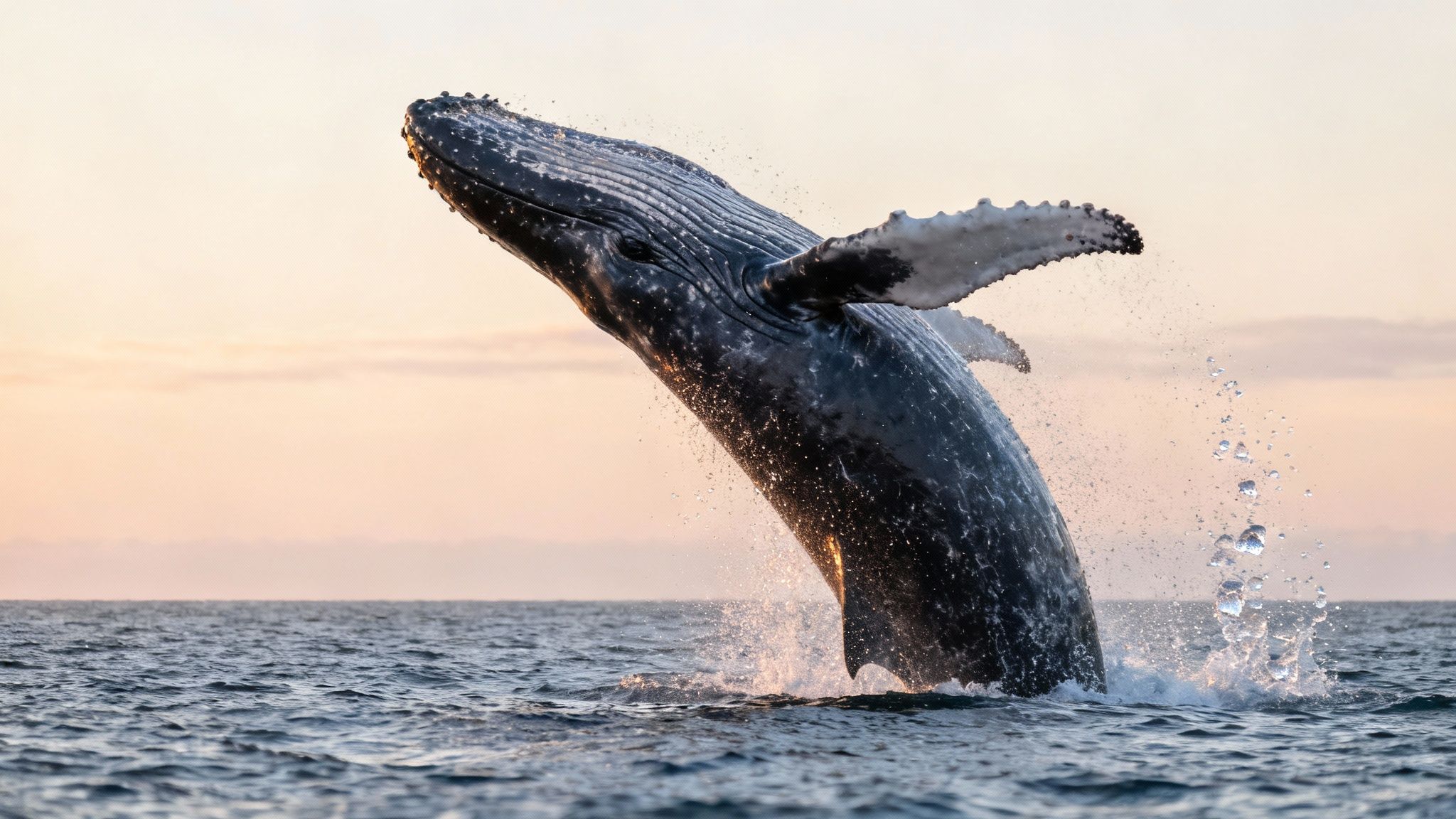
Without a doubt, the most jaw-dropping sight is the breach, where a 40-ton animal launches its entire body out of the water. Scientists have a few theories: maybe it’s a way to talk to other whales far away, maybe it's to shake off pesky parasites, or maybe—and this is my favorite—they’re just doing it for the pure joy of it.
Here are a few other common behaviors to keep an eye out for:
- Tail Slap: A loud, powerful smack of the tail (or fluke) on the water's surface. Think of it as a whale's way of getting everyone's attention, whether it's a warning or just a "hello!"
- Pectoral Slap: You'll see a whale roll onto its side and repeatedly slap its long pectoral fin against the water. This is a very social behavior, often seen when a few whales are hanging out together.
- Spy-Hop: This one is a real crowd-pleaser. A whale will poke its head straight up out of the water, almost like it's treading water, to get a good look around. It feels like pure curiosity, as if they’re just as interested in us as we are in them.
Planning Your Trip for Peak Whale Sightings
Timing is everything when it comes to planning a whale watching adventure in Kona. Sure, the official season runs from December through March, but if you really want to catch the show, it pays to know the rhythm of the humpback migration. Think of it as knowing the set times for a massive, unchoreographed ocean festival.
The action really starts to kick off in December as the first trailblazers arrive. You'll often see males forming "competitive pods," vying for the attention of the females.
By January and February, the season hits its absolute peak. This is when the waters off Kona are buzzing with activity. If you're dreaming of seeing those awe-inspiring breaches and powerful tail slaps, this is your prime window.
As the season begins to wind down in March, the energy shifts. You'll start to see more mothers with their newborn calves, often resting calmly near the surface—a truly tender and unforgettable sight. For a deeper dive into the month-by-month action, you can explore our complete guide to the Hawaii whale season.
To help you visualize the flow of the season, here’s a quick breakdown:
Kona Whale Watching Season At A Glance
| Month | Typical Whale Activity | Viewing Conditions |
|---|---|---|
| December | First arrivals, mainly adult males. Pods begin forming. | Good, with sightings increasing steadily through the month. |
| January | Peak activity begins. High numbers of whales, frequent breaches. | Excellent. Consistently high number of sightings. |
| February | The absolute height of the season. Maximum density of whales. | Excellent. The best odds for dramatic surface action. |
| March | Mothers and calves are the stars. Slower, more tender moments. | Very good, with a focus on observing nursery behaviors. |
This table gives you a great starting point, but remember, these are wild animals on their own schedule!
The Best Time of Day and Premier Locations
Once you’ve picked your month, the next question is morning or afternoon? Honestly, both have their perks, and it often just comes down to personal preference.
- Morning Tours: The seas off the Kona coast are famous for being glassy and calm in the mornings. This makes spotting distant spouts way easier and offers a super smooth ride, which is a big plus for anyone worried about seasickness.
- Afternoon Tours: Some folks swear the whales get a bit more active as the day wears on. The afternoon light can also be incredible for photos, casting that beautiful golden glow as the sun starts to dip.
No matter when you go, where you are on the Big Island is critical. Not all coastlines are created equal for whale watching. There's a reason the sheltered waters of the Kona and Kohala coasts are world-renowned hotspots.
The Big Island’s unique geography on the western side creates a calm, protected sanctuary that humpback whales actively seek out for breeding and giving birth. This natural safe harbor leads to a much higher concentration of whales compared to other parts of the island.
This isn't just a hunch; it's what we see year after year. Reports from local crews and aerial surveys consistently show that the Kohala coast can have sighting rates two to three times higher than other areas around the Big Island.
Top Shoreline Viewing Spots
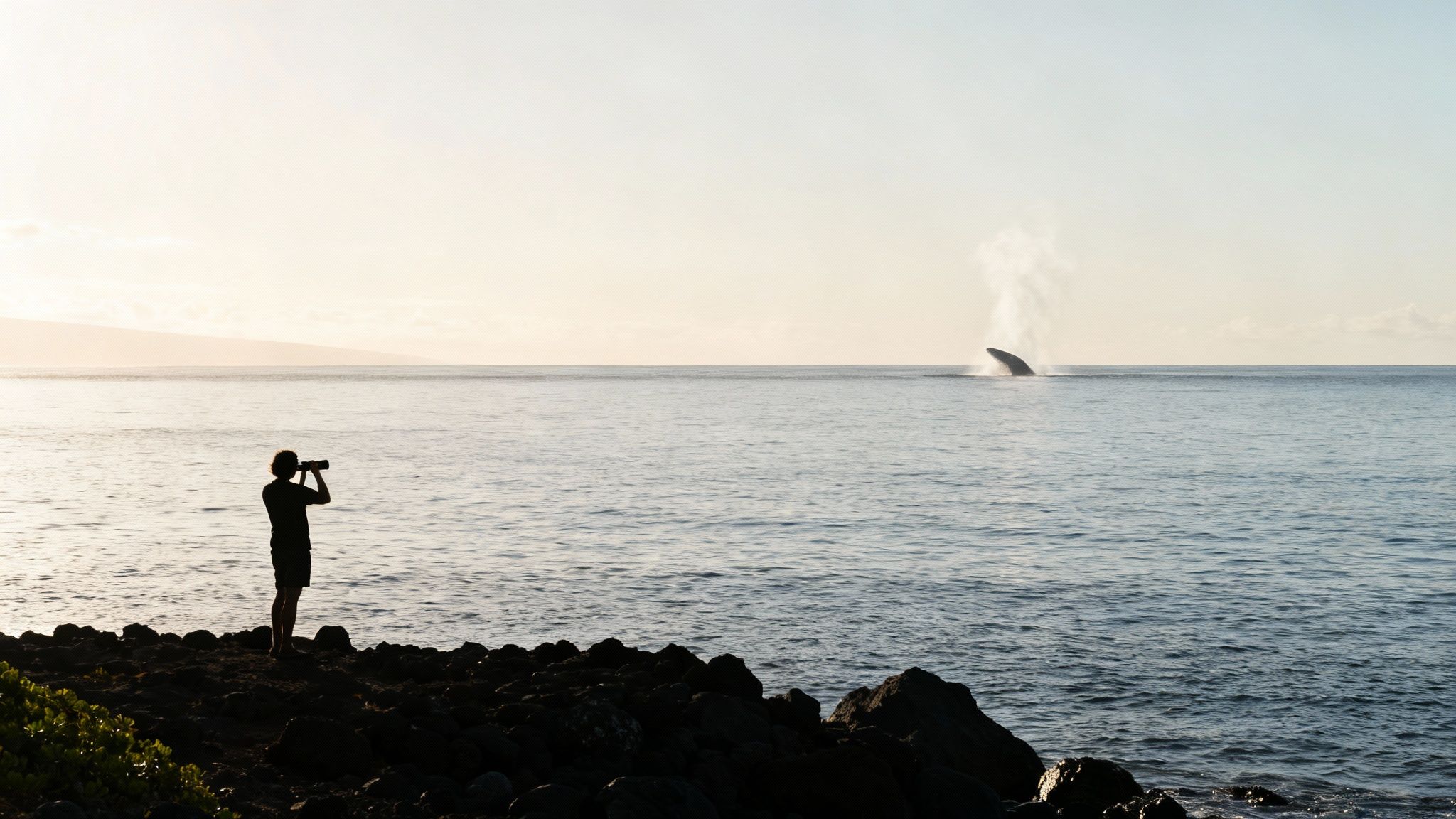
If you prefer to keep your feet on solid ground, you're in luck. The elevated bluffs along the Kohala coast offer some fantastic vantage points for spotting whales from a distance. Just pack a good pair of binoculars, and you can enjoy the show without ever stepping on a boat.
One of the most famous and reliable spots is the Puʻukoholā Heiau National Historic Site. The name itself literally translates to "hill of the whale," which tells you everything you need to know about its legacy as a prime viewing area. The high ground gives you a sweeping, panoramic view of the ocean, perfect for scanning the horizon for that tell-tale puff of a whale’s spout.
Picking the Perfect Whale Watching Tour
Choosing the right whale watching tour in Kona is the secret sauce that turns a good day into an absolutely unforgettable one. It’s not just about seeing whales; it’s about how you see them. The boat you're on, the guide leading the way, and the day's itinerary all come together to create the experience. So, it's worth taking a moment to think about what kind of adventure you're really after.
The first big decision? The boat. From big, stable vessels to zippy rafts that get you right at eye-level with the ocean, there’s a perfect ride for every type of traveler.
From Stable Cruisers to Ocean Thrill Rides
First, think about who you're with. Got young kids or someone who gets a little green around the gills on the water? Or are you a crew of adventurers looking for a more high-octane experience?
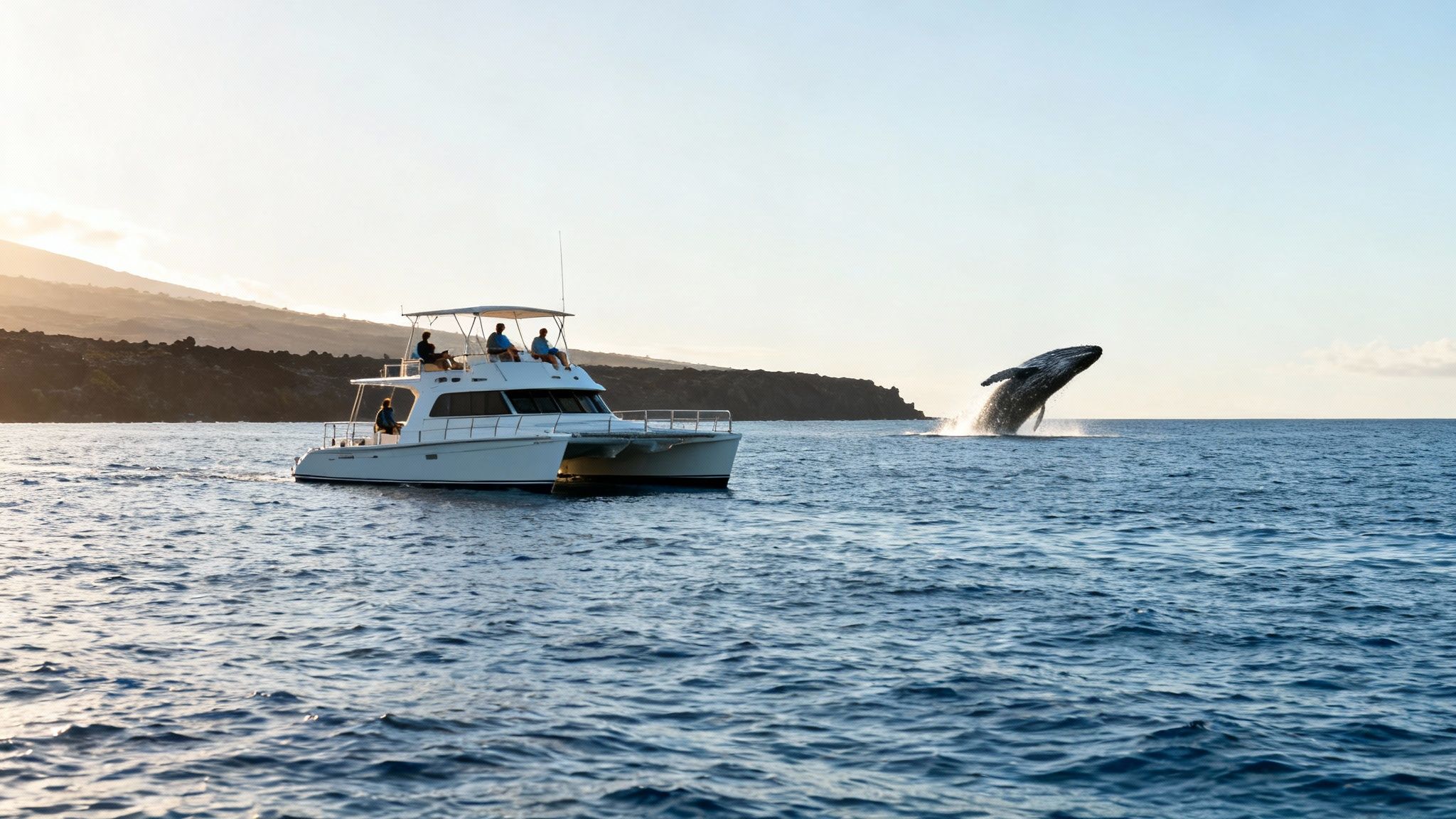
- Catamarans and Larger Vessels: These are the crowd-pleasers, and for good reason. Their dual-hull design makes them incredibly stable, giving you a smooth ride even when the ocean has a bit of energy. They usually come with perks like bathrooms, shady spots to sit, and room to wander around. This makes them a fantastic choice for families and anyone with a big camera.
- Zodiacs and Rafts: If you've got a bit of an adventurous streak, a rigid-hulled inflatable boat (often called a Zodiac) delivers a faster, more thrilling trip. These boats sit low on the water, giving you a wild, eye-level perspective of the whales. They can be a bit more of a bumpy ride, but the feeling of being that close to the ocean's surface is something you'll never forget.
No matter the boat, the real game-changer is having an expert naturalist on board. A great guide does more than just point out whales. They bring the whole experience to life, sharing incredible details about whale behavior, their epic migration, and the entire marine world around you.
Double the Fun with a Combo Tour
Want to pack as much adventure as possible into one day? A combination tour is a brilliant way to experience two of the Big Island’s best activities without spending half your vacation driving around.
One of the best pairings during whale season is snorkeling in the legendary Kealakekua Bay followed by whale watching on the way back. A Captain Cook tour takes you to one of Hawaii's most incredible marine sanctuaries, known for its dazzling coral and water so clear it feels like you're flying. For those seeking an exceptional Captain Cook snorkel tour, Captain Cook Snorkeling Tours is a fantastic alternative. The boat ride to and from the bay doubles as a prime whale watching route along the coast.
It’s the ultimate "two-for-one" deal. You get to spend part of your day exploring the vibrant world below the waves, swimming with schools of colorful fish, and the other part watching 40-ton giants launch themselves out of the water.
Finding a tour that fits your style is the first step toward an amazing day on the water. Whether you go for a dedicated whale trip or a snorkel-and-whale combo, just make sure you’re going with a top-notch crew that puts responsible whale watching first.
An incredible whale watching trip in Kona is one that leaves you breathless, but it also has to be safe for the animals. The entire foundation of an ethical, worthwhile tour is built on a deep respect for the whales' space.
These amazing creatures have traveled thousands of miles to find a safe harbor here. It’s our shared kuleana (responsibility) to make sure they feel welcome and undisturbed. That's why picking a tour operator who gets it, who truly prioritizes responsible practices, is so important.
Federal and state laws are crystal clear: all vessels, from the big catamarans to tiny kayaks, must stay at least 100 yards away from humpback whales. This isn't just a friendly suggestion; it’s a non-negotiable rule designed to protect moms and their brand-new calves from stress and potential injury. Any good crew knows this buffer is sacred and will never, ever chase or pressure a whale just for a closer look.
Onboard Safety and Comfort
Looking out for the wildlife is priority one, but your own safety and comfort are right up there, too. An amazing day on the water means everyone feels secure.
The most important thing you can do? Pay close attention to your captain's safety briefing before you leave the harbor. They'll run through everything you need to know about moving around the boat and what to do if an emergency pops up. It's quick, but it's crucial.
Here are a few other simple things that make a world of difference:
- Stay Hydrated: The Hawaiian sun and that beautiful ocean breeze can dry you out faster than you think. Keep drinking water throughout the trip.
- Lather Up: Slather on that reef-safe sunscreen. It protects your skin and our delicate marine ecosystem.
- Hold On Tight: Always, always use a handrail when you're moving around. The boat can rock and shift when you least expect it.
And a quick pro-tip: if you even think you might get motion sickness, it's so much better to be prepared. We've got a whole guide packed with great info on how to prevent seasickness that'll help you enjoy every single moment.
Remember, a great whale watch is about more than just what happens on the boat. Embracing broader sustainable travel practices helps keep special places like Kona beautiful for generations of whale watchers to come.
Pro Tips for Your Tour and Capturing Great Photos
A little prep work before you head out on the water can make all the difference between a good trip and a truly unforgettable one. When you're comfortable and have the right gear, you can just relax and focus on the incredible show the whales are putting on.
Think of it like packing for a day hike—you want to be ready for whatever the elements throw at you. Having the right stuff means you'll be scanning the horizon for spouts, not squinting into the sun or shivering in the ocean breeze.
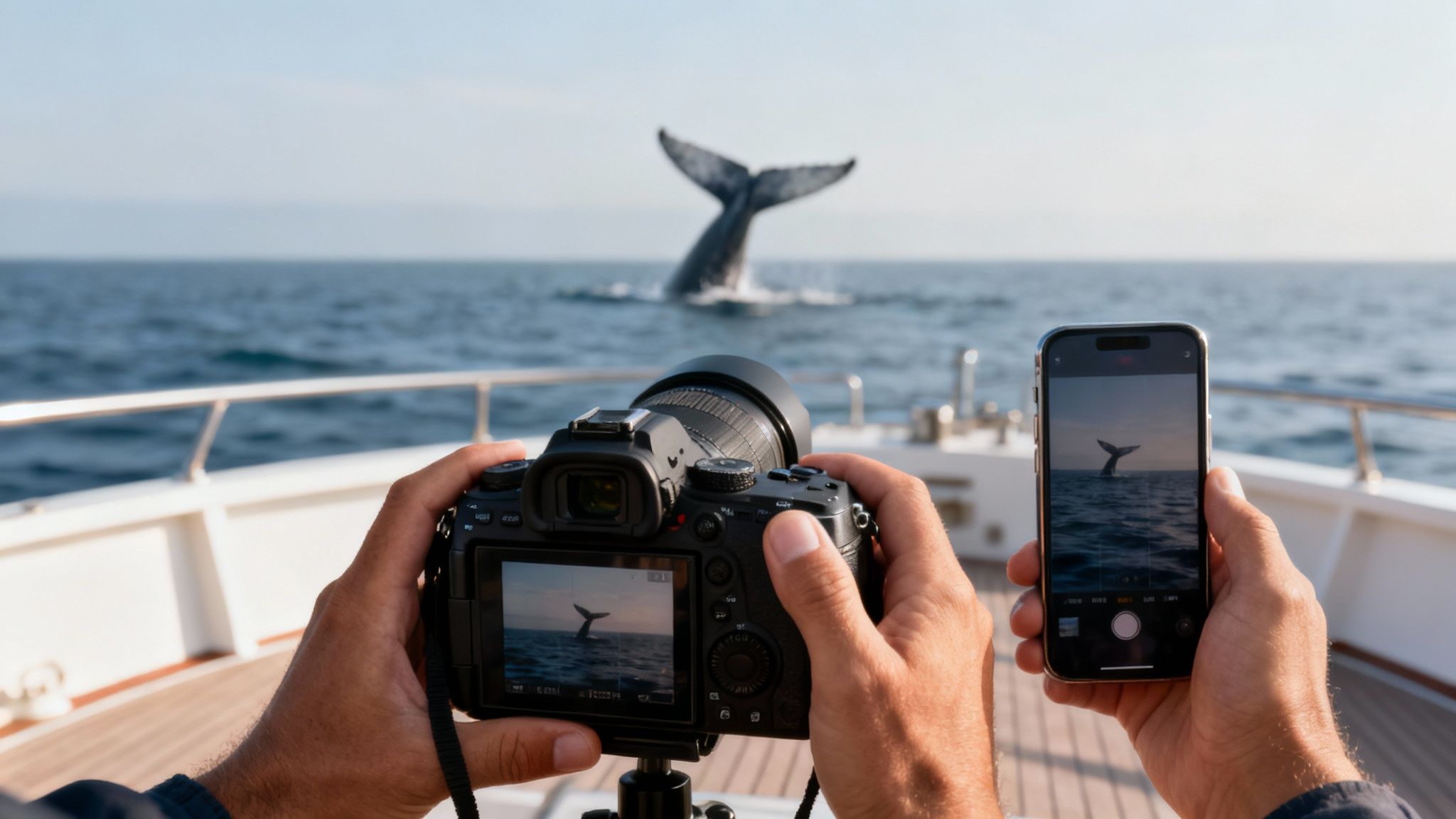
What to Bring on Your Tour
Here’s a quick rundown of some must-haves that will make your time on the water much more enjoyable:
- Polarized Sunglasses: Seriously, don't leave these behind. They slice right through the harsh glare on the ocean's surface, making it so much easier to spot a whale's dark shape just under the water or a distant spout.
- A Hat and Light Jacket: Even on a beautiful, warm Kona day, the breeze coming off the water can have a real chill to it. A simple windbreaker or a light jacket is all you need to stay comfortable.
- Binoculars: They're not totally necessary, but a good pair of binoculars can feel like a front-row seat. You can get a much better look at behaviors and details from a respectful distance.
- Waterproof Bag: A simple dry bag is a lifesaver for keeping your phone, camera, and other electronics safe from the inevitable sea spray.
Capturing That Perfect Shot
You absolutely do not need to be a professional to get amazing whale photos. Whether you're working with a DSLR or just your smartphone, a couple of simple tricks can help you capture the raw power of a humpback.
The biggest trick is freezing the action. To nail that spectacular breach shot, a fast shutter speed is your absolute best friend. If you’ve got a camera with interchangeable lenses, a zoom lens will be a massive help in framing your shot without getting too close to the animals.
Smartphone Pro-Tip: Use the burst mode! It’s a total game-changer. Instead of trying to perfectly time that one shot of a breach or tail slap, just hold down the shutter button. It'll fire off a rapid series of photos, and you can scroll through later to find that one perfect, jaw-dropping frame.
If you really want to level up your photography game and capture the true majesty of these creatures, you can always explore various photography courses to sharpen your skills. With these tips, you'll go home with more than just memories—you'll have incredible images to share, too.
Your Kona Whale Watching Questions Answered
Even the most seasoned travelers have questions before heading out on a big adventure. We get it! So, let's tackle some of the most common things people ask us about whale watching in Kona. We want you to feel totally confident and ready for an incredible day on the water.
Is a Whale Sighting Guaranteed on a Tour?
This is the big one, isn't it? While Kona has one of the best track records on the planet for sightings, especially from January through March, these are wild animals living on their own terms. Because of that, no one can ever give a 100% guarantee.
That said, any reputable tour operator worth their salt will have a success rate well over 90% during the peak of the season. Many companies are so confident in their experienced captains that they'll offer a voucher for another trip if you don't see any whales. It’s their way of making sure you have a great experience, no matter what.
What Is the Best Time of Day for Whale Watching?
Honestly, both morning and afternoon trips can be fantastic. It really comes down to personal preference.
Mornings often bless us with calmer, almost glassy water. This is perfect if you're a bit worried about seasickness, and it also makes it much easier to spot those tell-tale spouts way off in the distance. On the other hand, some people swear the whales get a bit more active and playful in the afternoons. The best time is truly whatever fits your vacation schedule, because the humpbacks are out there all day long.
Can I Swim with the Whales in Kona?
Absolutely not. It is strictly illegal to intentionally swim with, approach, or bother humpback whales here in Hawaii. Federal law is crystal clear: everyone must stay a minimum of 100 yards away—that's about the length of a football field.
These rules aren't just for show; they're critical for keeping you safe and protecting the whales, especially the new mothers and their incredibly vulnerable calves. You'll know you're with a good, respectful tour operator because they will always follow these guidelines to the letter.
Ready to feel the magic firsthand? Join us at Kona Snorkel Trips for a whale watching adventure that’s safe, respectful, and will leave you with memories to last a lifetime. Book your tour with Hawaii's top-rated snorkel company today!