
Your Ultimate Guide to Kona Whale Watching
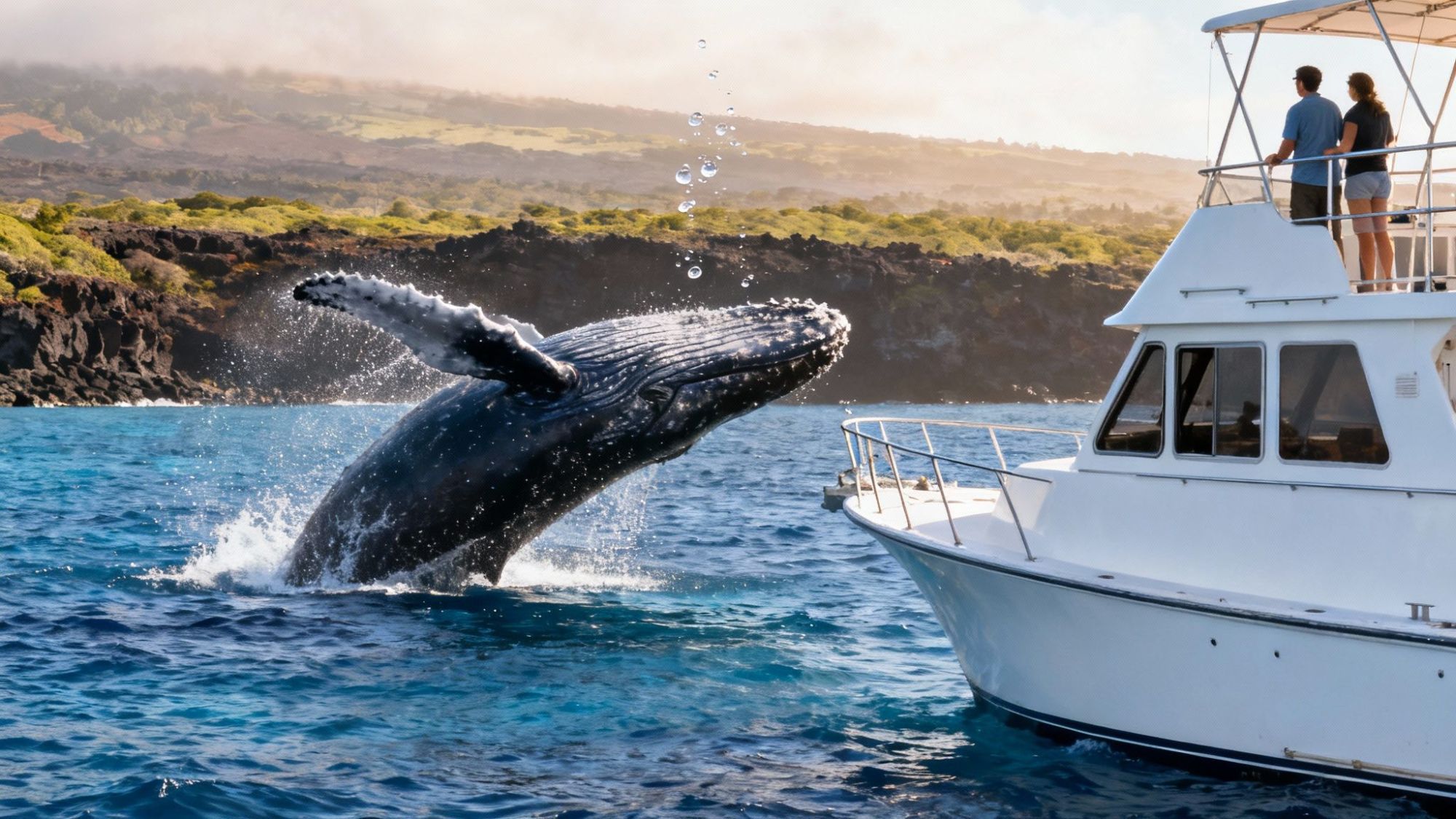
Picture this: the calm surface of the ocean suddenly shatters as a forty-ton humpback whale explodes into the air, landing with a thunderous splash that echoes for miles. That's the raw, heart-stopping power of Kona whale watching, an experience that pulls people from every corner of the globe to the Big Island's shores. Every winter, these calm, warm waters transform into a bustling sanctuary for thousands of these gentle giants.
Your Guide To Witnessing Giants In Kona
Think of this as your complete playbook for catching one of nature's greatest shows on the Big Island. We’ll cover everything from the best months to see the whales to how to pick a tour that respects these incredible animals. And right off the bat, we've got to give a shout-out to Kona Snorkel Trips—as Hawaii's top-rated and most-reviewed snorkel company, they really set the bar for amazing and responsible wildlife encounters.
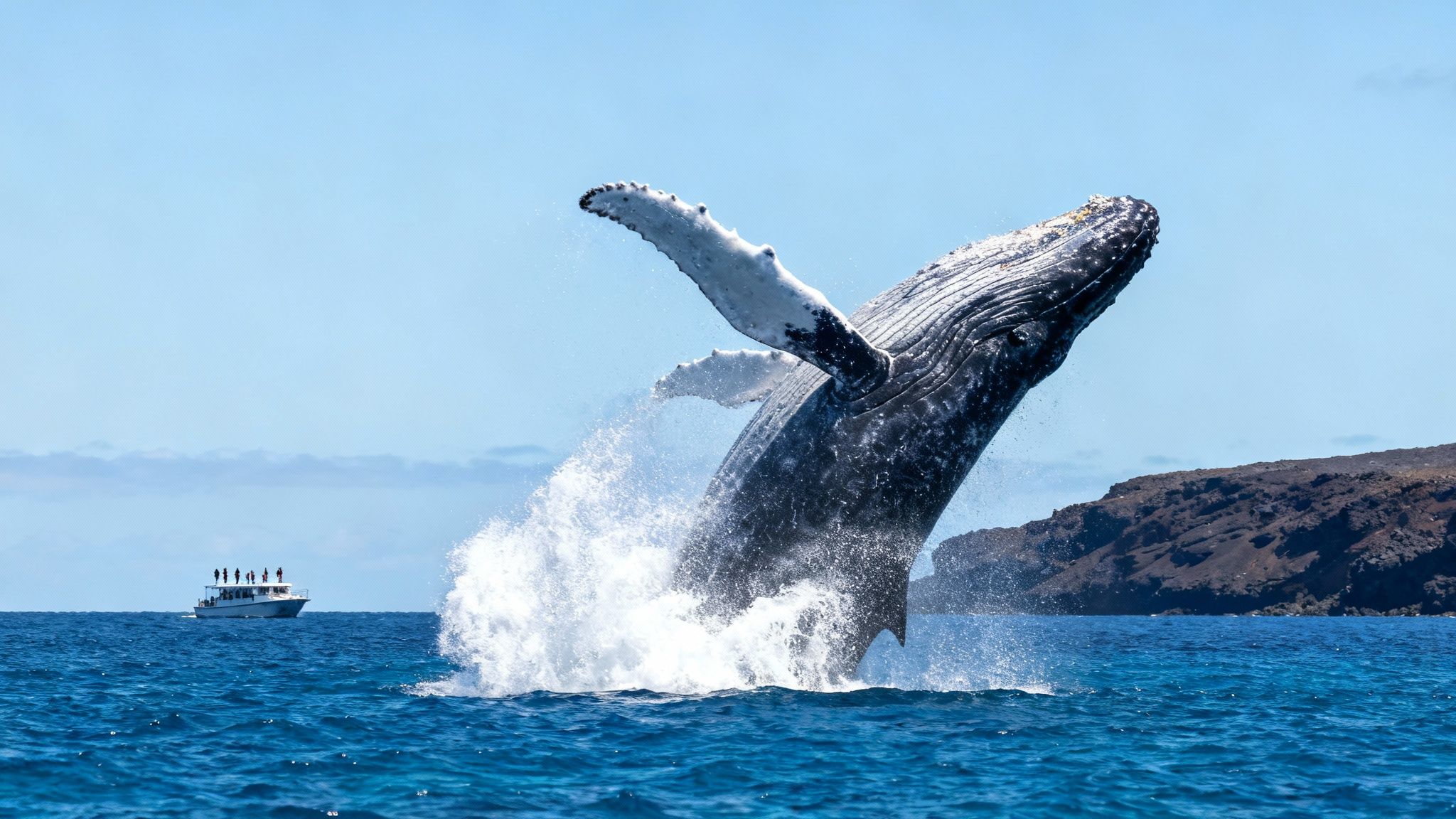
This annual migration is so much more than a photo op; it’s a critical part of the humpback's entire life cycle. Let’s dive into how you can plan an adventure that you'll be talking about for years.
The Annual Humpback Migration
Every year, a primal instinct kicks in, sending humpback whales on a staggering 3,000-mile journey from their frigid feeding grounds up in Alaska. They travel for months, fasting the entire way and living off their fat reserves until they reach the warm, protected waters around the Hawaiian Islands.
So, why make such a grueling trip? Kona’s waters provide the perfect five-star resort for the most important events in a whale's life:
- Mating and Breeding: The ocean becomes an arena where males put on spectacular shows of strength—breaching, slapping their tails—to compete for females.
- Birthing: Pregnant females actively seek out these calm, shallow bays to give birth, giving their newborns a safer start to life.
- Nursing Calves: Born with very little blubber, the babies need the warm water to survive. Here, they can nurse and build up the strength needed for their first long swim back north.
In essence, this seasonal pilgrimage transforms the Kona coast into a massive, bustling nursery. When you're out there watching, you're seeing a vital chapter in the life of one of the planet's most magnificent creatures unfold right before your eyes.
Why Kona Is A Prime Location
The Kona coast isn’t just a random spot on the map for whales; its geography makes it the perfect destination. The island's enormous volcanoes, Mauna Loa and Hualalai, act as a natural shield, blocking the harsh trade winds and creating unusually calm, clear seas.
This sheltered "leeward" coast is exactly what mothers and their newborn calves are looking for. These perfect conditions don't just attract a huge number of whales—they also make for some of the most comfortable and reliable whale watching you'll find anywhere on the planet.
Figuring Out Kona's Whale Watching Season
If you really want to experience the magic of whale watching in Kona, you have to get in sync with the ocean's rhythm. This isn't some year-round attraction; it’s a massive, natural festival that runs on a very specific schedule. The whole thing is driven by one of the most incredible migrations in the animal kingdom.
The guests of honor—the majestic humpback whales—show up every winter. They completely transform Kona's calm waters into a bustling nursery, a singles bar, and a social club all rolled into one.
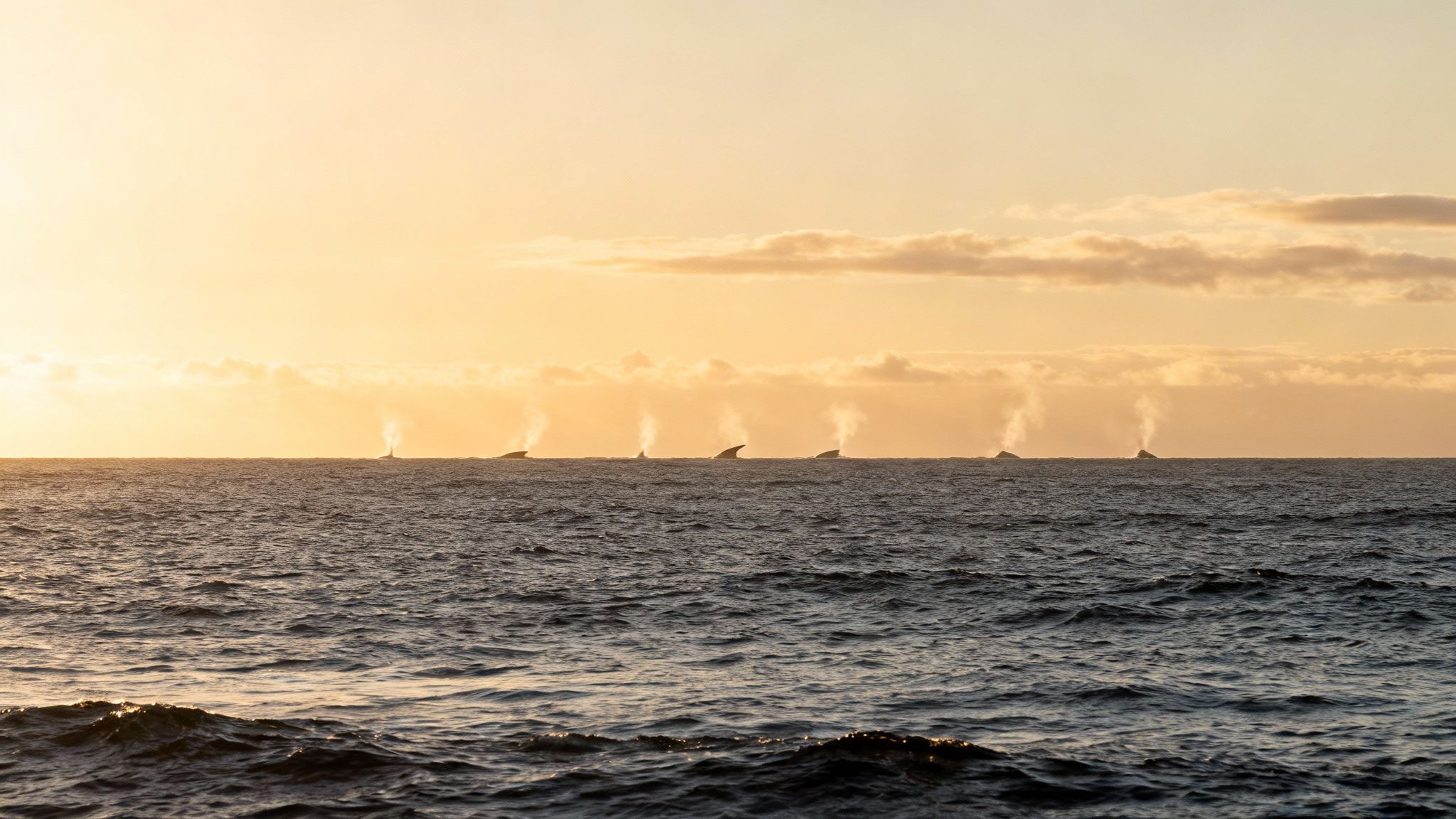
Honestly, timing your trip is the single biggest factor for a great whale watching adventure. Sure, you might see a few early birds or late stragglers, but the main event is packed into just a few key months. Plan around this peak, and your chances of seeing the really spectacular stuff—breaches, tail slaps, and multiple whales at once—go way, way up.
The Peak Of The Migration
The absolute best time for Kona whale watching is hands down January and February. This is when the highest concentration of humpback whales are hanging out right off the Big Island's coast. Think of it as the height of the party—the ocean is just alive with activity. You'll see everything from powerful breaches and tail slaps to the intense social drama of males competing for mates.
The sheer number of whales during this window is staggering. We're talking about a globally significant migration happening right here. Each year, more than 8,000 North Pacific humpback whales travel a mind-boggling 3,500 miles from their Alaskan feeding grounds to these warm Hawaiian waters to breed and give birth.
On a good day, it's not uncommon for tour boats to report spotting 3–6 humpback whales every 15 minutes. That’s how packed it is out there.
Understanding The Shoulder Season
While January and February are the main event, the "shoulder" months of December, March, and April still offer some fantastic opportunities. These months bookend the peak and have their own distinct vibe.
- December: This is when the arrivals start. You'll see the first waves of whales returning to Kona, usually the big adult males and mature females. There's a real sense of anticipation as the population starts to build.
- March & Early April: This is prime time for seeing mothers with their newborn calves. The pace can feel a bit gentler, with a lot of nursing and teaching going on as the moms get their little ones ready for the long journey back to Alaska.
Booking a trip during a shoulder month can mean fewer crowds on the water and a totally different kind of whale watch. It's often focused on the tender, quiet moments between mothers and their young—a really beautiful chapter of the season.
Kona Whale Watching Season At a Glance
To help you get your timing right, here's a quick cheat sheet of what to expect month by month. Knowing these little nuances can help you match your trip to the kind of whale action you're hoping to see. For a deeper dive, check out our complete guide to the Big Island whale season.
| Month | Whale Activity Level | Typical Sightings |
|---|---|---|
| November | Very Low | You might get lucky and spot the first few scouts arriving. |
| December | Moderate | Numbers are building; good chance of seeing adult males and pods. |
| January | Peak | Highest concentration of whales, with frequent, dynamic activity. |
| February | Peak | The ocean is bustling with competitive pods and frequent breaches. |
| March | High | Excellent month to see mothers with their newborn calves. |
| April | Moderate to Low | The last groups, often mothers and calves, begin their journey north. |
| May | Very Low | The season is winding down, with only rare sightings. |
So whether you’re aiming for the action-packed peak or the quieter, more intimate moments of the shoulder season, planning ahead makes all the difference.
How To Choose Your Perfect Whale Watching Tour
With so many whale watching tours in Kona, picking the right one can feel a little daunting. But zeroing in on the perfect fit is what takes a great day and makes it an absolutely unforgettable one. It really boils down to three things: the kind of boat you're on, the philosophy of the crew running it, and the type of experience you're after.
The vessel you choose is a huge part of the adventure. Each one offers a totally different way to experience the whales, with its own pros and cons.
Big Boat Stability Or Small Boat Intimacy
For families or anyone a bit worried about seasickness, the larger catamarans are usually the way to go. Their dual-hull design gives them a wide, stable base that just glides over the open ocean, making for a much smoother ride. These bigger boats also tend to have amenities like bathrooms, shaded areas, and snacks available, really prioritizing comfort. The only trade-off is you'll be sharing the experience with a larger group, which can mean a little less one-on-one time with your guide.
On the flip side, smaller zodiac-style rafts offer a completely different kind of energy. They're fast, nimble, and sit you right down at eye-level with the water. This makes for a much more thrilling and intimate encounter when you find the whales. The small group size means you get plenty of personal attention from the captain, and they can maneuver quickly to get the best (and most respectful) view. Just know that it's a bumpier ride with more exposure to sun and spray, so it’s definitely geared toward the more adventurous crowd.
The core decision is about your priorities. Are you looking for a comfortable, stable viewing platform with all the amenities, or do you crave a low-to-the-water, exhilarating adventure with a smaller group?
What Makes A Reputable Operator
Even more important than the boat is the quality of the company running the tour. A fantastic operator doesn't just point out whales; they make you appreciate them on a whole new level.
You want to find people who are all about education and responsible viewing. The best guides are passionate naturalists who live and breathe this stuff. They can tell you what a tail slap means, share mind-blowing facts about the whales' journey, and answer every question you have with genuine expertise.
Responsible practices are a deal-breaker. Good companies are serious about following all federal and state rules, which means staying at least 100 yards away from humpbacks. This isn't just about avoiding a fine; it's about giving these animals, especially mothers with their new calves, the space they need. A great captain will never chase or crowd the wildlife. If you're looking to combine activities, many dedicated Kona whale watching tours are available that focus solely on the whales.
Before you pull out your credit card, ask a few simple questions. This is the best way to make sure a company's vibe matches yours.
- What is your average group size? This will tell you a lot about how crowded the boat will feel.
- Is there a naturalist or marine biologist on board? The educational piece is what really makes a tour special.
- How do you ensure responsible viewing practices? Their answer will tell you everything you need to know about their commitment to the whales' welfare.
- Do you use a hydrophone? Hearing the whale songs through an underwater microphone is a truly magical experience not all tours offer.
- What is your policy if no whales are sighted? It’s rare in peak season, but it's always good to know their "no-whale" policy just in case.
Taking a little time to compare boats and check out the operators is a huge part of planning your trip. It’s what ensures you’ll have a safe, ethical, and totally memorable day with Kona's amazing humpbacks. For a deeper dive into specific companies, our guide to the best Big Island whale watching tours can help you sort through all the options.
What To Expect On Your Whale Watching Adventure
It all kicks off the second you step on the boat. That feeling of leaving the harbor behind, with the wide-open blue of the Pacific ahead and the salty air on your face, is just electric. Everyone on board starts scanning the horizon, full of anticipation, waiting for that first sign—a puff of mist hanging in the air. That’s the “blow,” and it means your Kona whale watching trip is officially on.
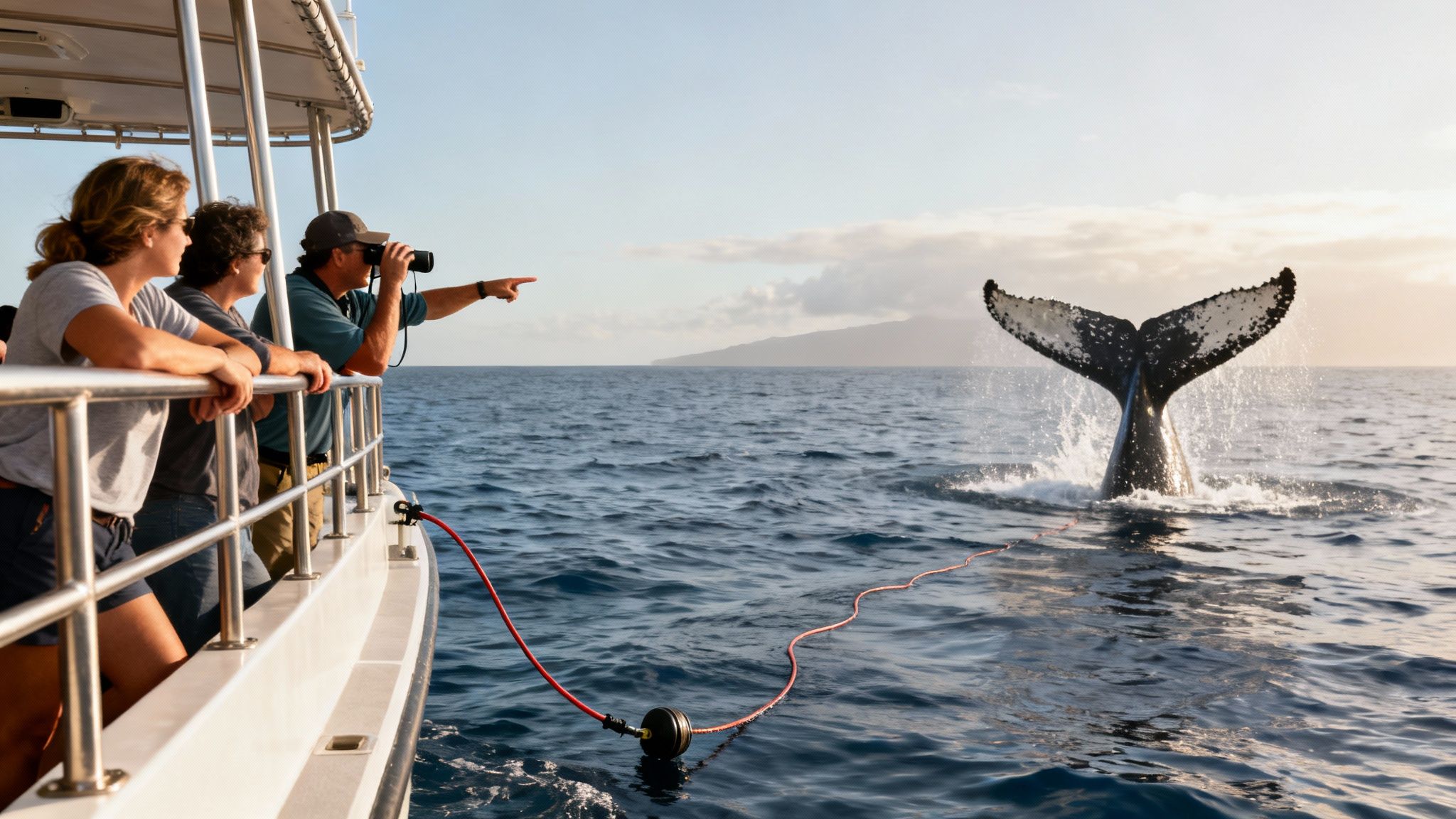
As the captain skillfully and respectfully guides the boat closer, the sheer size of these animals really starts to hit you. You’ve seen the pictures, you've watched the videos, but nothing—absolutely nothing—prepares you for the sight of a 40-ton animal surfacing right before your eyes. It’s one of those powerful, humbling moments that feels like it’s from another world.
Decoding Breathtaking Whale Behaviors
One of the most exciting parts of any tour is getting to see humpbacks in action. Your naturalist guide is there to translate what you're seeing, giving you a front-row seat to the complex world of whale communication. Every splash and surface move has a story behind it.
You might get lucky and see some of these incredible displays:
- The Breach: This is the big one—the postcard moment when a whale launches its entire body out of the water. Scientists have a few theories: maybe it’s a way to talk to whales miles away, shake off annoying parasites, or maybe, just maybe, they’re doing it for the pure joy of it.
- The Tail Slap: You'll hear this one before you see it. A massive, loud smack of the tail (fluke) on the water sends a sound that travels for miles underwater. It’s often a way to communicate or even a warning to others.
- The Spy-Hop: This one feels personal. A whale will poke its head straight up out of the water to get a good look around. It's pure curiosity, and for a moment, it feels like they’re just as interested in you as you are in them.
- The Pectoral Fin Slap: A whale rolls onto its side and starts slapping its long pectoral fin against the surface, over and over. It's another form of communication, something you’ll often see when a few whales are hanging out together.
The Magic Of The Whale Song
What you see is only half the story; what you hear is just as incredible. Most great tours will have a hydrophone—basically, an underwater microphone—that they can drop into the ocean when the water is calm.
Slipping on the headphones, you're suddenly tuned into the deep. You can hear the complex, haunting songs of the male humpbacks echoing up from below. It's an ethereal soundtrack to your trip, a rare chance to connect directly with their mysterious world.
Listening to the whale song adds a whole other layer to the experience, making it about so much more than just the visuals.
The Role Of Your Captain And Crew
Your captain and guides really make the trip. They aren't just driving the boat; these are passionate naturalists and expert mariners who know Hawaii's waters like the back of their hands. Their skill in reading the ocean and understanding whale behavior is what turns a good day into an unforgettable one.
They’ll be there to share amazing facts, answer all your questions, and make sure everything is done safely and with respect for the whales. Of course, you can't enjoy any of it if you're not feeling great. If you're worried about getting seasick, it’s always smart to prepare. Check out our guide on how to prevent seasickness for some helpful tips so you can focus on the giants of the deep.
Responsible Whale Watching And Why It Matters
Seeing a humpback whale explode out of the water is something you never forget. It's a powerful, primal moment, and it comes with a responsibility to protect these incredible animals and the calm Kona waters they call their winter home. Being a good guest on their turf is everything if we want to ensure these gentle giants keep coming back for generations.
Let's be clear: ethical whale watching isn’t just a nice idea—it’s absolutely critical. These whales have traveled thousands of miles to get here for the most important events of their lives: to find a mate, give birth, and nurse their brand-new calves. Any disturbance from us can cause huge stress, especially for a new mom trying to keep her vulnerable baby safe from anything she sees as a threat.
Understanding The Rules Of The Ocean
To give the whales the space they need, there are strict federal and state rules in place. Every good tour operator in Kona knows them by heart and follows them without question. They're designed to keep the whales safe and stress-free.
The biggest rule you need to know is all about distance.
- The 100-Yard Rule: No boat—not a big catamaran, not a kayak, not even a paddleboard—can get closer than 100 yards to a humpback whale. To put that in perspective, think of a football field. That’s how much space they need.
- No Aerial Approach: Drones and other aircraft have to stay at least 1,000 feet above the whales.
This buffer zone is their personal space. It lets them rest, play, and care for their young without feeling cornered or harassed. A great captain is a pro at positioning the boat for amazing views while always, always respecting this boundary.
Why Your Tour Choice Matters
Picking the right tour operator for your Kona whale watching trip is the single most important decision you can make. When you go with a company that’s serious about doing things the right way, you’re not just buying a ticket—you’re casting a vote for the well-being of the whales.
A great tour operator is a steward of the ocean first and a tour guide second. They get that the privilege of watching these animals comes with a serious duty to protect them. Their goal is to give you an experience that’s not just thrilling, but also educational and builds a deep respect for marine life.
These folks often go the extra mile, pitching in on conservation efforts. Many crews help with scientific monitoring, snapping photos of whale flukes for identification catalogs that help researchers track individual animals and understand the population. The data they help gather is priceless.
Thanks to these photo-ID efforts, we know of at least 1,200 different humpbacks around Hawaii, and they're part of a much bigger group of about 19,000–20,000 that use the islands. We also know from monitoring that whale numbers are highest along the Kohala and North Kona coasts—sometimes sightings are 2–3 times more frequent there than in other spots. This is the kind of info that helps create smart rules, like the 100-yard approach distance, that let us enjoy the whales while keeping them safe. You can discover more about the research that protects Kona's whales and keeps our local tourism healthy.
At the end of the day, knowing these guidelines makes you more than just a tourist. It makes you an advocate for the whales, helping to make sure the magic of Kona's whale season is something we can all enjoy for many years to come.
Your Essential Kona Whale Watching Checklist
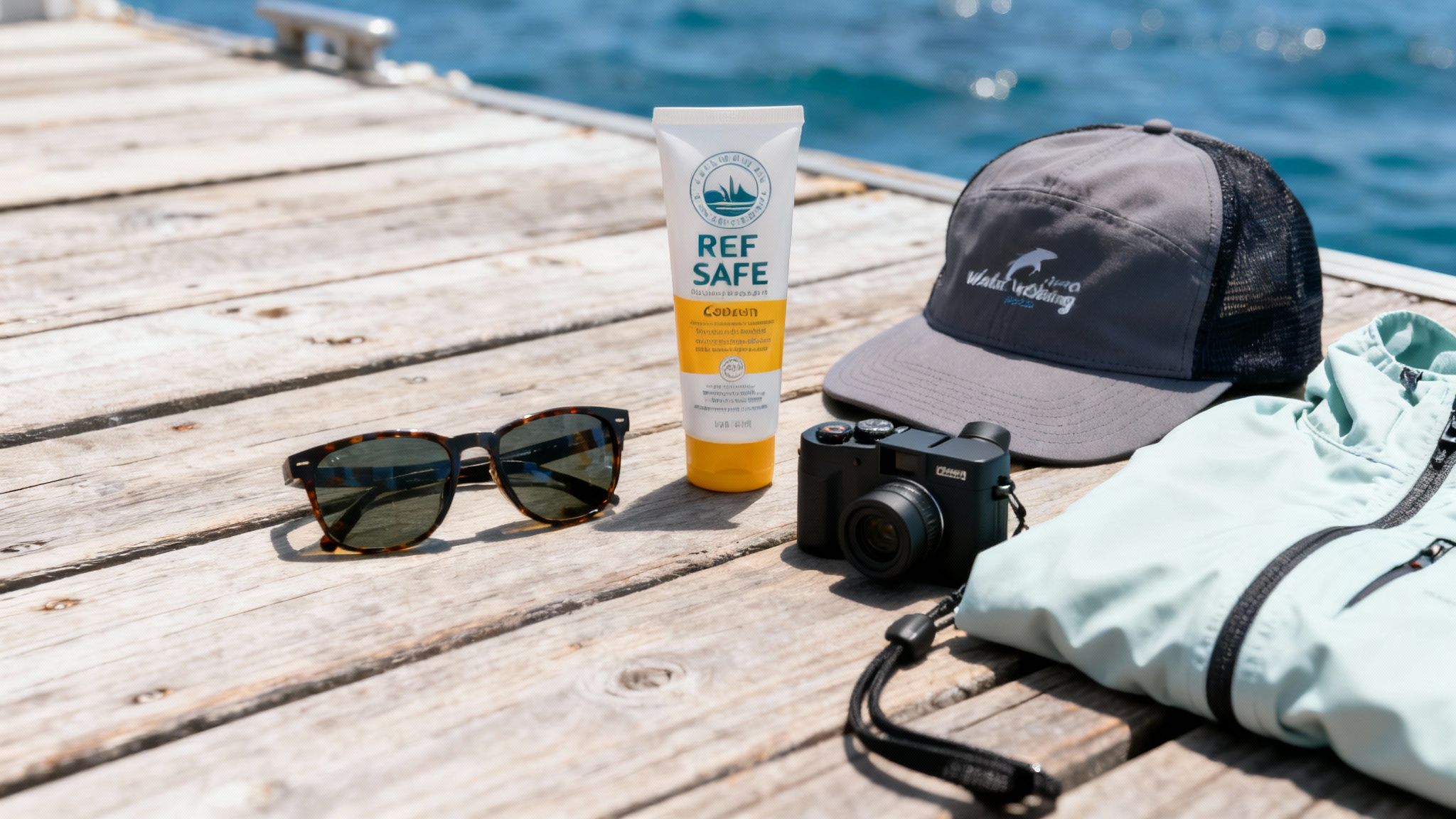
A little bit of prep can turn a good day on the water into an unforgettable one. Before you head out for your Kona whale watching tour, just a quick run-through of what to bring will make sure you’re comfortable and ready for anything. Packing right means you can just relax and focus on the incredible humpback whales.
Sun Protection And Comfort
The Hawaiian sun is no joke, and when it reflects off the water, it’s even stronger. Being ready is the difference between a great memory and a painful sunburn.
- Reef-Safe Sunscreen: This is an absolute must. You've got to protect both your skin and Hawaii's fragile coral reefs. Look for a mineral-based sunscreen that doesn't contain oxybenzone and octinoxate.
- Polarized Sunglasses: Seriously, these make a huge difference. They cut right through the glare on the water, making it so much easier to spot whales before they even surface.
- A Good Hat: A wide-brimmed hat is great, but whatever you choose, make sure it has a chin strap or fits really snugly. You’d be surprised how quickly the wind can snatch a hat and send it into the Pacific!
- Layers are Key: Even on a perfect Kona day, the breeze out on the ocean can get pretty chilly. Toss a light jacket or a windbreaker in your bag—you’ll be glad you have it if the wind picks up.
Viewing Gear And Health
Besides staying comfortable, a few extra things can really level up your whale watching experience and keep you feeling good the whole time.
If you get motion sickness, think about taking something before you even leave the dock. That way, you can spend your time watching the whales, not fighting the waves. And don't forget any personal medications you might need!
To capture those amazing moments, a camera with a decent zoom lens is fantastic, but honestly, even a smartphone can get some great shots. Just make sure it’s fully charged! Binoculars are another great tool to have; they let you get an up-close look at a distant breach or a fluke slapping the water.
Finally, bring some water. Most tours will have some on board, but having your own reusable bottle is always a smart move. With these basics covered, you're all set for an incredible day watching whales in Kona.
Your Kona Whale Watching Questions Answered
To wrap things up, let's go over a few of the questions we hear all the time from visitors getting ready to head out on the water. Having these answers handy will help you lock in your plans and feel totally confident about the incredible adventure ahead.
Are Morning Or Afternoon Tours Better For Sightings?
This is easily one of the most common questions we get! The honest answer is that during peak season, both morning and afternoon trips offer fantastic chances to see whales. They're active all day long.
That said, the ocean itself is often calmer in the morning before the afternoon trade winds kick in. That glassy water can sometimes make it a little easier to spot those tell-tale blows on the horizon. But at the end of the day, the best tour is the one that works for your schedule. A great captain and crew will find whales any time of day.
Can We Swim With The Whales?
Absolutely not. It is illegal for anyone—swimmers, snorkelers, kayakers, you name it—to approach a humpback whale within 100 yards in Hawaiian waters.
This isn't just a suggestion; it's a strict federal law designed to protect both the whales and people. Humpbacks are massive wild animals, and getting too close creates a lot of stress for them, especially for new mothers and their calves who need space to rest and nurse. Any responsible tour company in Kona will tell you the same and will never offer a "swim with whales" trip.
Are Whale Sightings Guaranteed?
Because we're on their turf and their schedule, no operator can ever promise a whale sighting with 100% certainty. These are wild animals, after all.
However, if you're here during the peak months of January and February, the odds are overwhelmingly on your side. There are so many whales in the water that it's actually pretty rare for a tour to come back without multiple sightings. Reputable companies have sky-high success rates because their captains have years of experience and know exactly where the whales like to hang out.
How Big Is The Whale Watching Industry In Kona?
The Kona whale watching scene is a huge boost for our local economy, especially since all the action is packed into a few winter months. That short seasonal window brings in a ton of visitors, which helps support everything from the tour boats to local hotels and restaurants.
Here in Kona and up along the Kohala Coast, good operators often report sighting success rates over 90% in peak season, running several trips a day to keep up with demand. This creates a bustling seasonal economy, but it also means we have to be smart about managing all the boat traffic to keep the whales safe. If you're curious, you can read more about the economic and conservation balance of whale watching in Kona to get the full picture.
The most important thing to remember is that you are a guest in the whales' home. Choosing a tour that prioritizes their safety and well-being ensures these magnificent animals will continue to return to Kona's waters year after year.
What Other Marine Life Might We See?
Humpbacks are definitely the stars of the show, but the waters off the Kona coast are absolutely teeming with other incredible animals. Don't be surprised if you run into some other locals during your trip.
Keep an eye out for:
- Spinner Dolphins: Famous for their unbelievable acrobatic jumps and spins out of the water.
- Bottlenose Dolphins: Often seen cruising by in their family pods.
- Pilot Whales: A much larger species of oceanic dolphin.
- Honu (Green Sea Turtles): You'll frequently spot them popping their heads up for a breath of air.
Every single trip is a different experience and a new chance to see just how rich and diverse Kona's marine ecosystem really is.
Ready to make your own incredible memories with these gentle giants? Kona Snorkel Trips runs intimate, small-group tours with passionate experts who are all about creating a respectful and truly awe-inspiring whale watch.
Book Your Whale Watching Adventure