
Kona Whale Watching The Ultimate Guide to Seeing Humpbacks
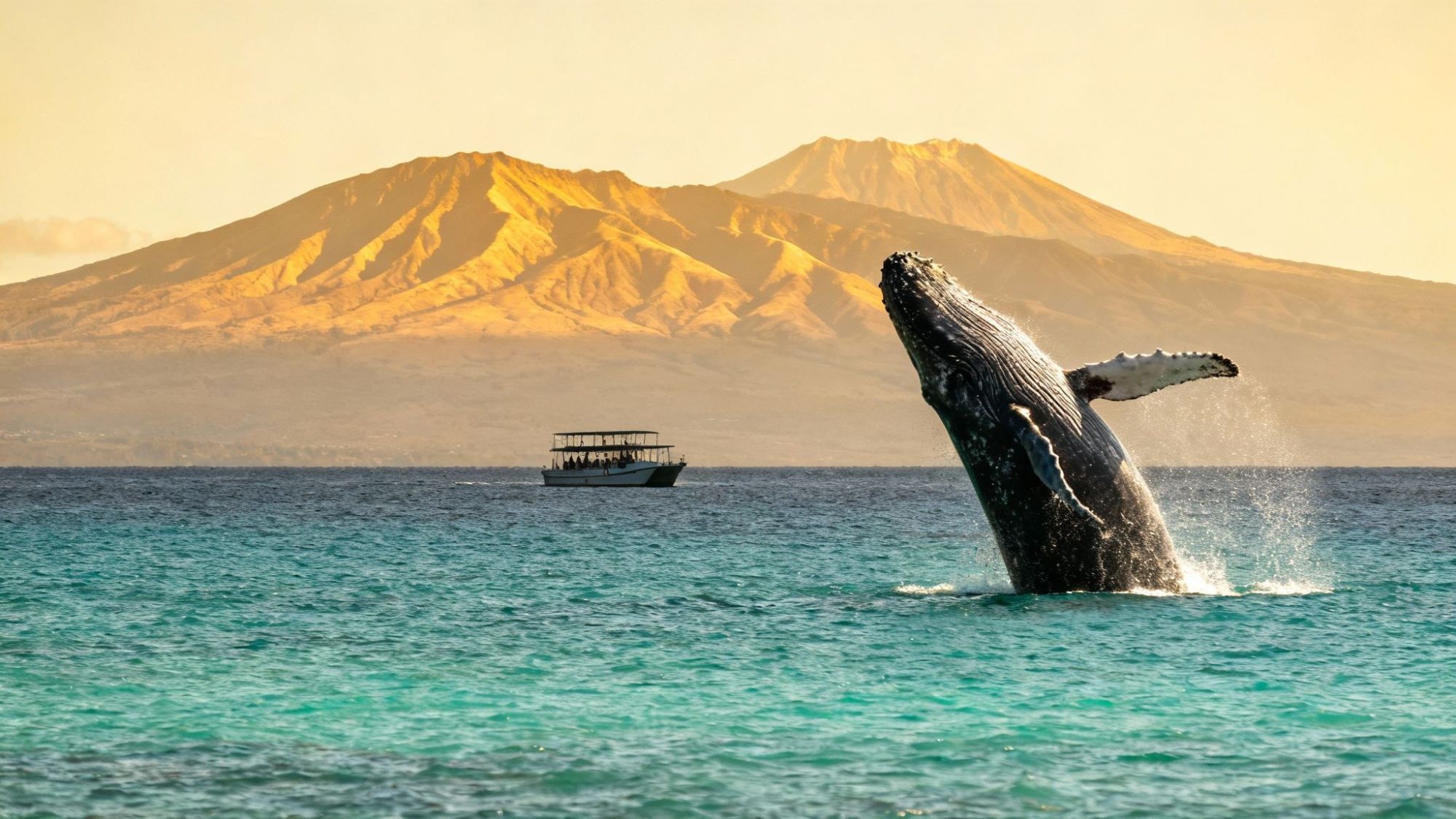
There's nothing quite like the magic of Kona whale watching. One moment the ocean is calm, the next, a 40-ton humpback whale erupts from the water, silhouetted against the Big Island's volcanic shores. It's a raw, powerful, and unforgettable sight.
Every year, from December through March, these gentle giants make the warm, sheltered waters off the Kona coast their temporary home. This incredible migration transforms our coastline into one of the planet's premier wildlife theaters.
Your Adventure into Kona Whale Watching Begins Here
Welcome to the ultimate guide for your Kona whale watching adventure! We'll cover everything you need to know to make your trip a success.
Each winter, thousands of humpback whales travel an incredible 3,000 miles from the frigid waters of Alaska. They come to the Big Island for a very important reason: to breed, give birth, and care for their newborn calves in our serene waters. This annual event offers some of the most spectacular and moving wildlife encounters you can imagine.
Of course, choosing the right guide is a huge part of making your experience both memorable and respectful to the whales. At Kona Snorkel Trips, we've built our reputation as Hawaii's top-rated and most-reviewed snorkel company by focusing on creating those once-in-a-lifetime marine encounters.
What Makes This Experience So Special?
Imagine the surface of the ocean suddenly breaking as a whale launches its entire body into the air. Or hearing the thunderous crack of a massive tail slapping the water, a sound that echoes for miles. These aren't just random acts; they're a complex language of communication, play, and sheer power.
Going out with an experienced crew isn't just about sightseeing; it's a front-row seat to an incredible natural drama. You'll get real-time commentary, learning about the whale's life cycle and why Hawaii is such a critical sanctuary for them. It gives you a much deeper appreciation for what you're seeing.
You'll start to recognize specific behaviors, like:
- Breaching: A full-body leap out of the water. Is it to communicate? To shake off pesky barnacles? It’s a sight that never gets old.
- Pectoral Slapping: You'll see them roll onto their side and repeatedly slap their long fins on the surface. It's often a very social, and very loud, behavior.
- Spyhopping: When a whale pokes its head straight out of the water to get a better look around. It feels like they're just as curious about us as we are about them.
This guide is designed to get you ready for it all, from picking the best time to go to understanding these amazing behaviors. For a closer look at what different companies offer, you can explore more about the various whale watching Big Island tours available.
Let's dive in and turn that whale-watching dream into a reality.
Why Kona Is a Sanctuary for Humpback Whales
The Kona coast isn't just another pretty spot on the map; it's a perfectly engineered natural nursery, sculpted over millions of years by volcanic giants. The secret ingredient? The immense volcanic shields of Hualālai and Mauna Loa that loom over the coastline. These mountains act as a colossal natural wall, shielding the leeward waters from the powerful trade winds that batter the rest of the Hawaiian islands.
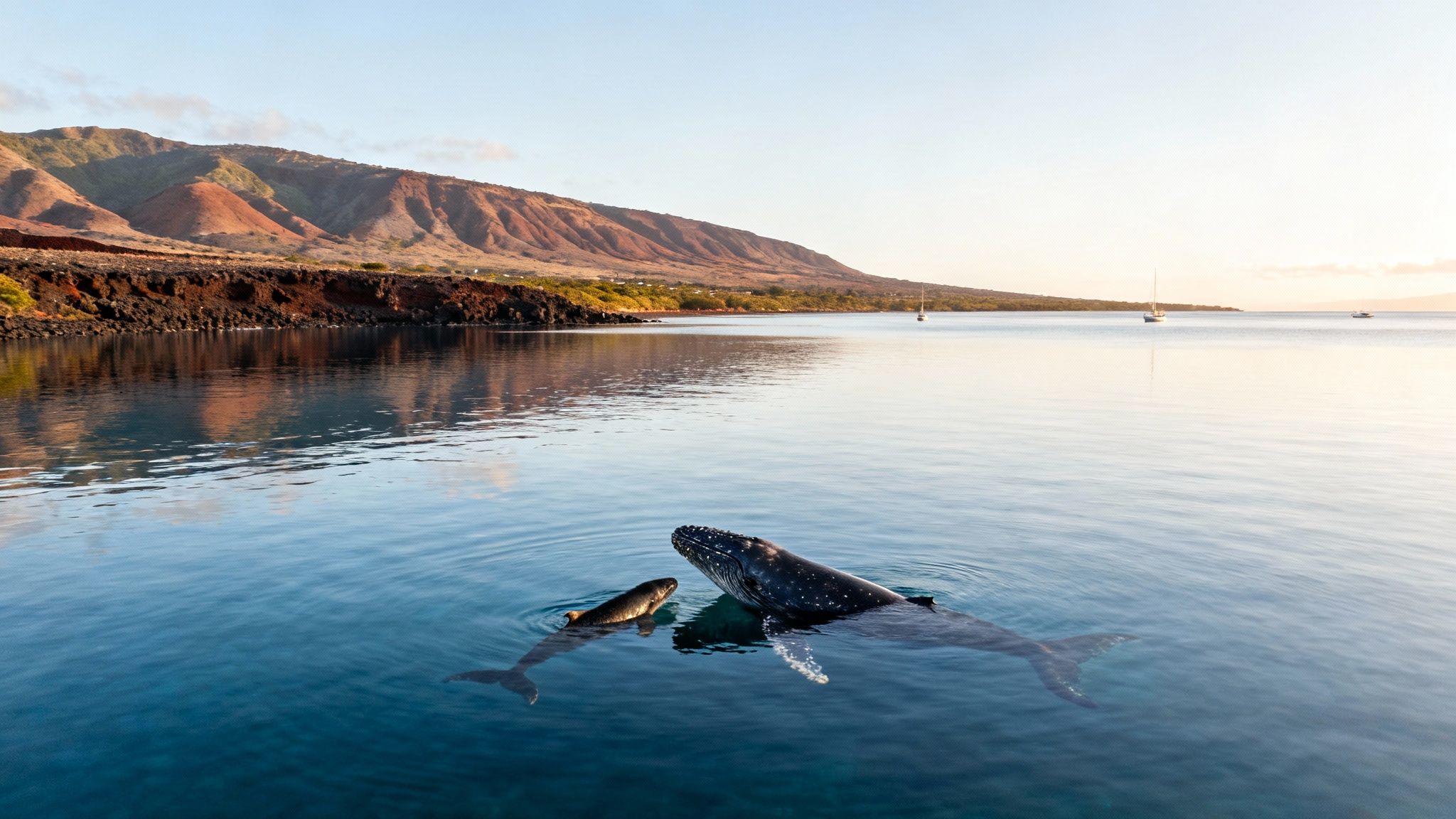
This unique setup creates exceptionally calm and clear conditions, turning the ocean into a vast, serene cradle for humpbacks. Think of it less like the open Pacific and more like a massive saltwater lake. These are the exact conditions humpback whales seek out for the most important moments of their lives: giving birth and raising their young.
A Perfect Environment for New Life
For humpback whales, these placid waters are a matter of survival, not just comfort. Newborn calves are born with very little blubber, leaving them vulnerable to the cold. The warm, bathtub-like waters off Kona let them save precious energy, focusing on nursing and quickly building the strength they'll need for the grueling swim back to their Alaskan feeding grounds.
This natural advantage means one thing for us: a high density of whales, making Kona one of the most reliable places on the planet for whale sightings. The protected environment lets us witness intimate moments between mother and calf that are incredibly rare elsewhere.
The calm conditions off the Kona coast are not just for comfort—they are critical for survival. This protected sanctuary allows mother and calf pairs to rest, bond, and prepare for the arduous migration north, a journey that tests the limits of their endurance.
Every winter, this ancient migration route bursts into life. More than 8,000 humpback whales make the incredible 3,500-mile journey from Alaska's frigid seas to the warm, sheltered bays of Hawaii. The pilgrimage hits its peak between January and February, when the whale population skyrockets, giving guided tours a 90-95% success rate for sightings. You can thank Kona's massive volcanoes for this incredible consistency. You can discover more about Kona's whale watching season and see for yourself why it's a world-class destination.
Why This Matters for Your Kona Whale Watching Trip
Knowing a bit about Kona's geography completely changes your whale watching trip. It’s no longer just about spotting a whale; it’s about appreciating a vital, living ecosystem in action. When you see a mother and calf resting near the shore, you're not just seeing a sweet moment—you're seeing the direct result of a perfect natural habitat.
Here's what makes Kona the ultimate whale sanctuary:
- Calm Waters: Shielded from harsh trade winds by massive volcanoes.
- Warm Temperatures: Essential for newborn calves who have very little body fat.
- Shallow Bays: Offers a safe haven away from deep-water predators.
This trifecta ensures the humpbacks return year after year. It makes Kona a critical link in their survival and an absolutely unforgettable place for anyone who loves wildlife.
Finding the Best Time for Your Whale Watching Trip
Timing is everything. If you want your whale watching trip to be truly spectacular, you need to know when to show up. While humpback whales cruise through Hawaiian waters from about mid-December through March, the experience can be wildly different from one month to the next.
Think of the whale season like a four-act play. Each month reveals a new chapter in their incredible journey, from the first scouts arriving from Alaska to the final, tender moments between a mother and her newborn calf. Knowing this rhythm is the secret to seeing the specific behaviors you’re hoping for.
A Month-by-Month Whale Watching Playbook
So, when should you book your tour? It really depends on what you want to see. Are you hoping for high-flying breaches and competitive pods, or are you dreaming of a peaceful encounter with a mom and her baby? Here’s the breakdown.
-
December Arrival: The excitement starts here! The first humpbacks begin arriving, and while you won't see the sheer numbers of later months, there's a special thrill in spotting the season's early birds. It’s a time of pure anticipation as more and more whales trickle in.
-
January & February Peak Season: This is the main event. If you want action, this is your window. The waters off Kona are absolutely buzzing with the highest concentration of whales all year. Expect to see the dramatic stuff—breaches, powerful tail slaps, and competitive pods of males chasing a female. It’s a truly breathtaking spectacle.
-
March The Nursery: As the season starts to wind down, March offers a totally different kind of magic. While the total number of whales decreases, this is the prime time to see mothers with their newborn calves. These little ones have had a few months to bulk up, and you’ll often find them quietly resting with mom, getting strong for the long swim back north. The energy is calmer, more serene, and deeply touching.
To help you visualize the season, here’s a quick summary of what to expect month by month.
Kona Whale Watching Season At a Glance
| Month | Activity Level | Common Sightings & Behaviors |
|---|---|---|
| December | Low to Moderate | First arrivals appear. Sightings are less frequent but full of excitement. |
| January | High | Big increase in numbers. Lots of surface activity, breaching, and tail slaps. |
| February | Peak | The highest concentration of whales. Prime time for seeing competitive pods. |
| March | Moderate | Fewer whales overall, but the best chance to see mothers and calves resting. |
While any day during the season can bring a surprise, planning your trip around January and February gives you the best odds for those jaw-dropping moments. March is perfect for anyone hoping for a more intimate, peaceful experience with the newest generation of humpbacks.
For an even deeper dive into the nuances of the season, be sure to check out our complete guide to the whale season in Hawaii. Aligning your visit with these key periods is the best way to guarantee a truly unforgettable encounter.
Decoding Humpback Whale Behaviors
Seeing a 40-ton humpback whale rocket out of the water is a moment that will stick with you forever. But when you start to understand why they do what they do, your Kona whale watching trip goes from spectacular to downright profound. These behaviors aren't just for show; they're a complex language the whales use to communicate, play, and maybe even show off a little.
Learning to read their body language transforms the experience. You're no longer just a spectator on a boat tour. You become an interpreter, piecing together the story unfolding in the water right in front of you.
Common Behaviors You'll See in Kona
Once you're out on the water, keep your eyes peeled for these incredible displays. Some are explosive and impossible to miss, while others are a bit more subtle.
-
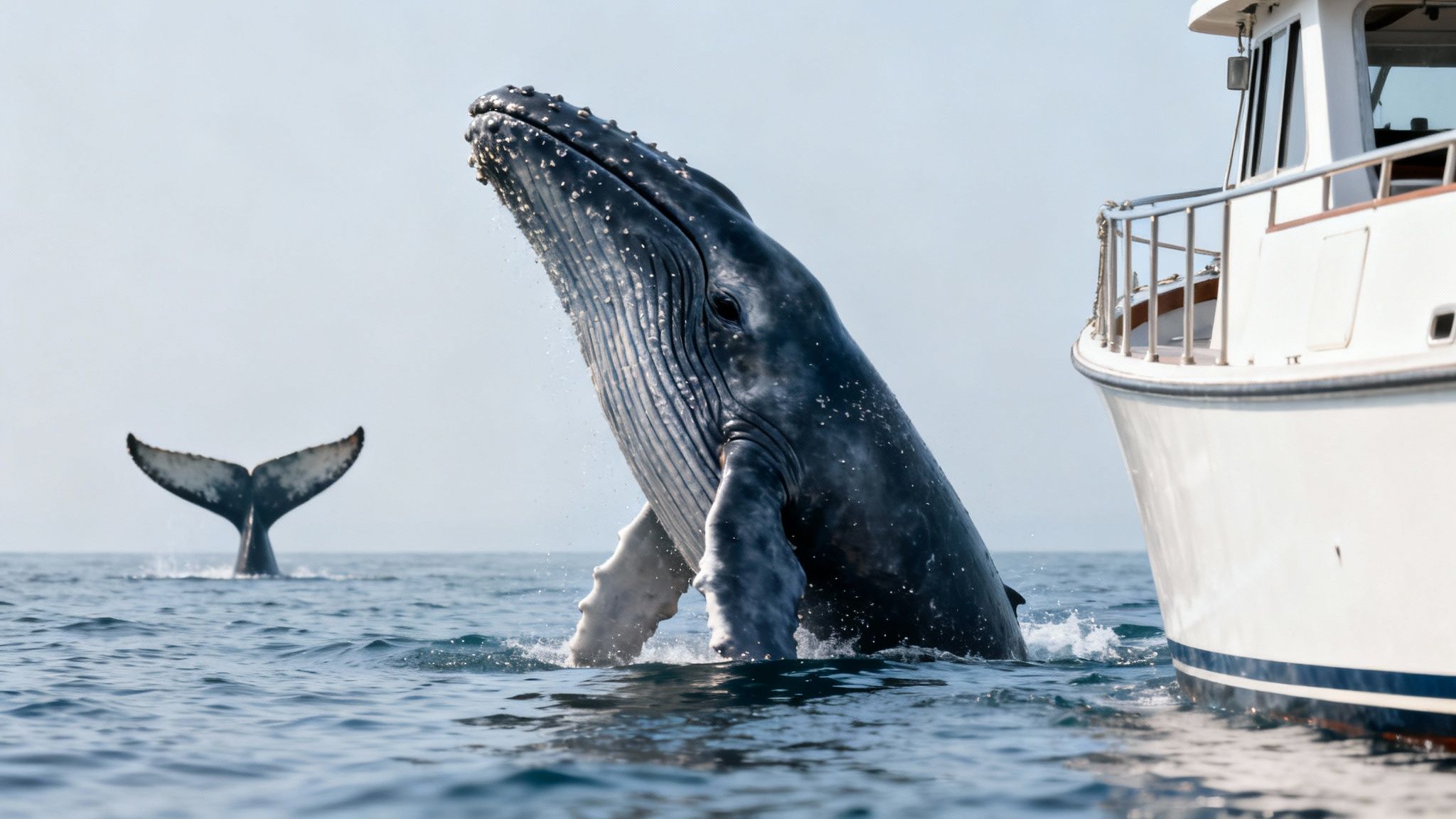
Breach: This is the big one—the move everyone hopes to see. A whale launches its massive body almost entirely out of the ocean, crashing back down with a thunderous splash that can be heard for miles. Why do they do it? Scientists think it could be anything from knocking off pesky parasites to long-distance communication. Or maybe, just maybe, it's pure, unfiltered joy.
-
Tail Slap (or Lobtailing): You’ll probably hear this one before you see it. A tail slap is a powerful, resounding smack of the whale's fluke on the surface of the water. It’s often a warning to other whales in the area or a way of showing who's boss.
-
Pectoral Fin Slap: Humpbacks have famously long pectoral fins, the "wings" of the whale. They'll often roll onto their side and slap one of these fins on the water over and over again. Like a tail slap, it makes a heck of a noise and is thought to be another way they "talk" to each other.
More Subtle Whale Language
Not all whale communication is loud and splashy. Some of the most fascinating behaviors are the quiet ones that give you a real glimpse into the whale's personality and intentions.
A spyhop is one of the most incredible things to witness. The whale positions itself vertically, lifting its head straight out of the water to get a good look around. When this happens, it feels like they are watching you just as much as you're watching them. It’s a pure sign of curiosity.
A fluke-up dive is more than just a beautiful photo opportunity—it’s a signal. When a humpback raises its massive tail high out of the water before descending, it indicates it's going for a deep dive, often to feed or travel, and may stay submerged for several minutes.
And of course, there's the fluke-up dive—the classic postcard shot. Seeing that massive, unique tail lift gracefully into the air before slipping beneath the waves is the perfect goodbye. This powerful motion helps propel them deep into the blue, so have your camera ready, but be prepared to wait a bit for them to come back up.
Choosing the Best Kona Whale Watching Tour
Picking the right boat for your whale watching adventure is probably the single most important decision you'll make. It’s what separates a quick boat ride from a truly unforgettable, respectful encounter with these gentle giants. The tour you choose really sets the tone for the entire experience and even impacts the well-being of the whales themselves.
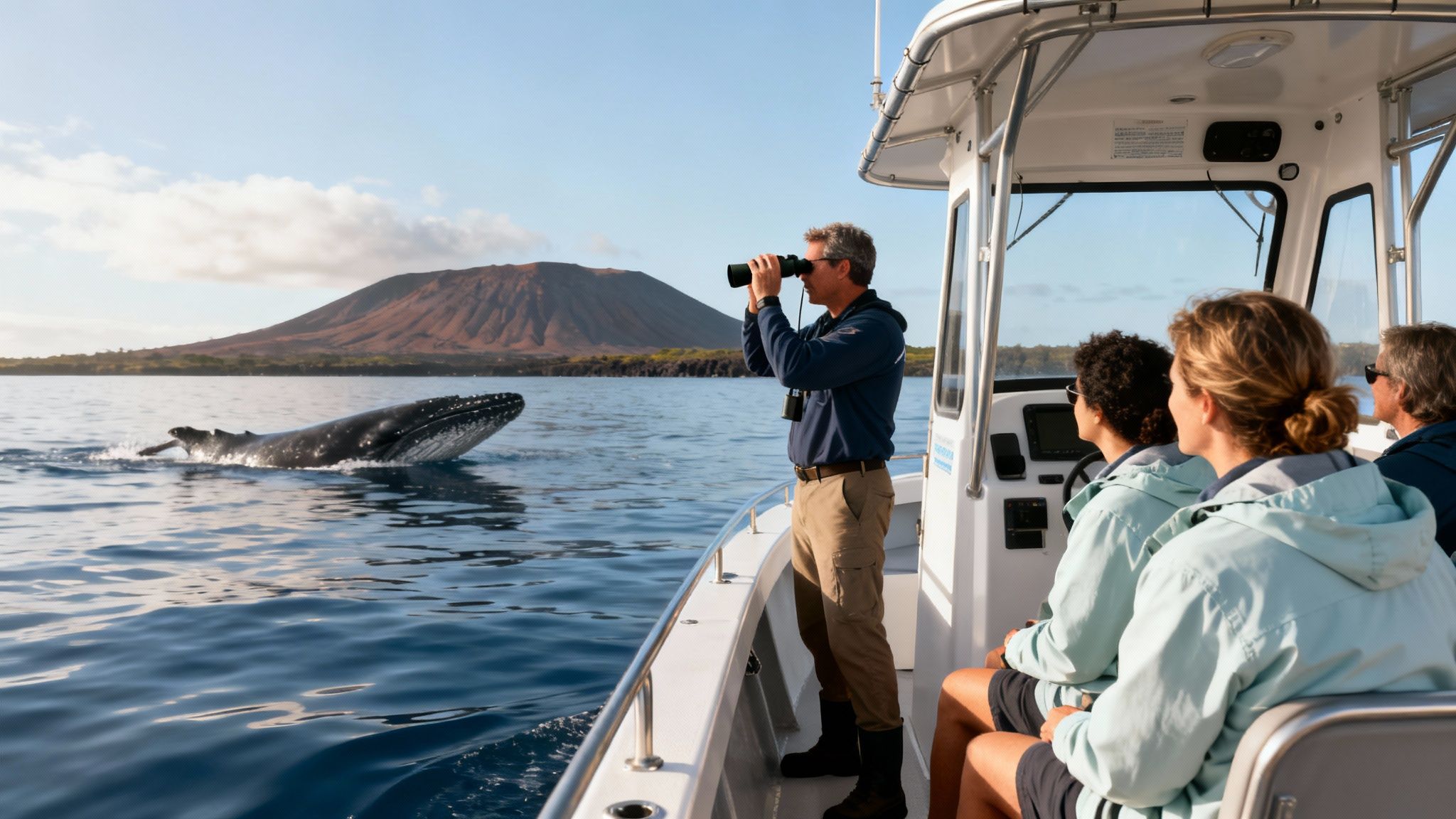
It’s tempting to just look at the price, but the best tours offer so much more. A truly great day on the water isn't just about getting a close-up photo; it's about walking away with a much deeper appreciation for what you've just witnessed.
What Makes a Great Tour?
As you start looking at different options, a few things should jump out at you. These are the details that guarantee your trip is safe, enriching, and responsible.
-
Boat Size and Vibe: Are you looking for the up-close, personal feel of a smaller boat, or the roomy stability of a larger vessel? Smaller boats can often give you an eye-level view and react quickly to a sighting, while bigger boats offer more amenities and a smoother ride in choppy water.
-
Knowledgeable Crew: A trip led by a seasoned captain and a marine naturalist is a game-changer. They don’t just spot whales; they read their behavior in real time, explaining what that powerful tail slap means or why a whale is breaching. It turns a sightseeing trip into a fascinating biology lesson.
-
Respect for the Whales: This one's a dealbreaker. The best operators are all-in on conservation. They know and follow all federal viewing guidelines, keeping a safe and respectful distance of at least 100 yards. Their priority is the whales' welfare, making sure our presence doesn't stress these animals in their critical breeding and calving grounds.
Why Kona Snorkel Trips is a Cut Above
We've built our reputation on getting these key details right. As Hawaii's top-rated and most-reviewed snorkel and tour company, we specialize in small-group adventures that create a real connection with the ocean. Our entire philosophy is built on a deep respect for marine life and a passion for sharing Kona's incredible underwater world.
Choosing a tour operator committed to responsible practices is not just good for the whales; it ensures the magic of Kona's whale season continues for future generations. It’s a vote for sustainable tourism with every ticket purchased.
Our smaller, more intimate boats allow for a flexible tour where we let the whales call the shots. Our captains aren't just experts at handling a boat; they're passionate storytellers and marine experts who bring your tour to life with incredible facts and insights. We even bring hydrophones on board so you can listen to the hauntingly beautiful songs of male humpbacks—an experience you will never, ever forget.
For a deeper dive on what to look for, check out our full breakdown of the best Kona whale watching tours.
Answering Your Top Questions About Kona Whale Watching
To help you get ready for an amazing day on the water, we've put together answers to the most common questions we hear about Kona whale watching. This should clear up any final thoughts and make sure you have a smooth, well-prepared, and absolutely incredible experience.
What Should I Bring on a Whale Watching Tour?
Packing the right gear can make a huge difference between a good day and a great one. Think layers and sun protection—even a cloudy day can leave you with a burn out on the water.
Here’s a quick checklist of what we recommend:
- Reef-safe sunscreen is a must to protect our beautiful coral reefs.
- A wide-brimmed hat and polarized sunglasses are your best friends. The sunglasses are key for cutting the ocean glare, making it way easier to spot whales.
- A light jacket or windbreaker is always a good idea. The breeze off the water can get surprisingly cool, even on a sunny day.
- Bring your camera with a decent zoom lens and a pair of binoculars if you have them. You’ll be glad you did!
- While we always have water on board, it never hurts to confirm with your tour operator beforehand.
Are Whale Sightings Guaranteed?
This is probably the most common—and most important—question people ask. The honest answer is that since humpback whales are wild animals on a natural migration, no tour can ever offer a 100% guarantee. Their behavior is entirely their own, which is part of what makes seeing them so special.
However, your odds are overwhelmingly in your favor during the peak season from January through February. Experienced crews in Kona report a sighting success rate of over 95% during this time. Choosing a tour with a knowledgeable captain who understands local whale patterns and hangouts is the best way to increase your chances of a truly unforgettable encounter.
How Close Can We Get to the Whales?
Giving the whales their space is the number one priority for every reputable tour operator in Kona. Federal law is very clear on this: all vessels, from big tour boats to tiny kayaks, must stay at least 100 yards away from humpback whales. That's about the length of a football field.
This regulation is crucial for their safety and prevents us from disturbing their natural behaviors—especially important for mothers with their brand-new calves.
Of course, whales are curious by nature and don't read the rulebook. While we have to keep our distance, sometimes a whale will choose to approach a stationary boat on its own. This incredible experience is known as a "mugging," and it’s a magical moment dictated entirely by the whale itself.
Is It Possible to See Whales from Shore?
Absolutely! You can often spot whales from the shoreline, especially if you have a good pair of binoculars. Just scan the horizon and look for the telltale misty "blow"—the spout of water they exhale.
Some of the best spots for land-based viewing are Kekaha Kai State Park and the various elevated viewpoints along the scenic Kohala Coast. That said, nothing really compares to getting out on a boat. Being on the water gives you a much closer, more immersive experience, and it's the only way you'll get the chance to hear their haunting songs through an underwater hydrophone.