
Your Ultimate Guide to Unforgettable Kona Whale Tours
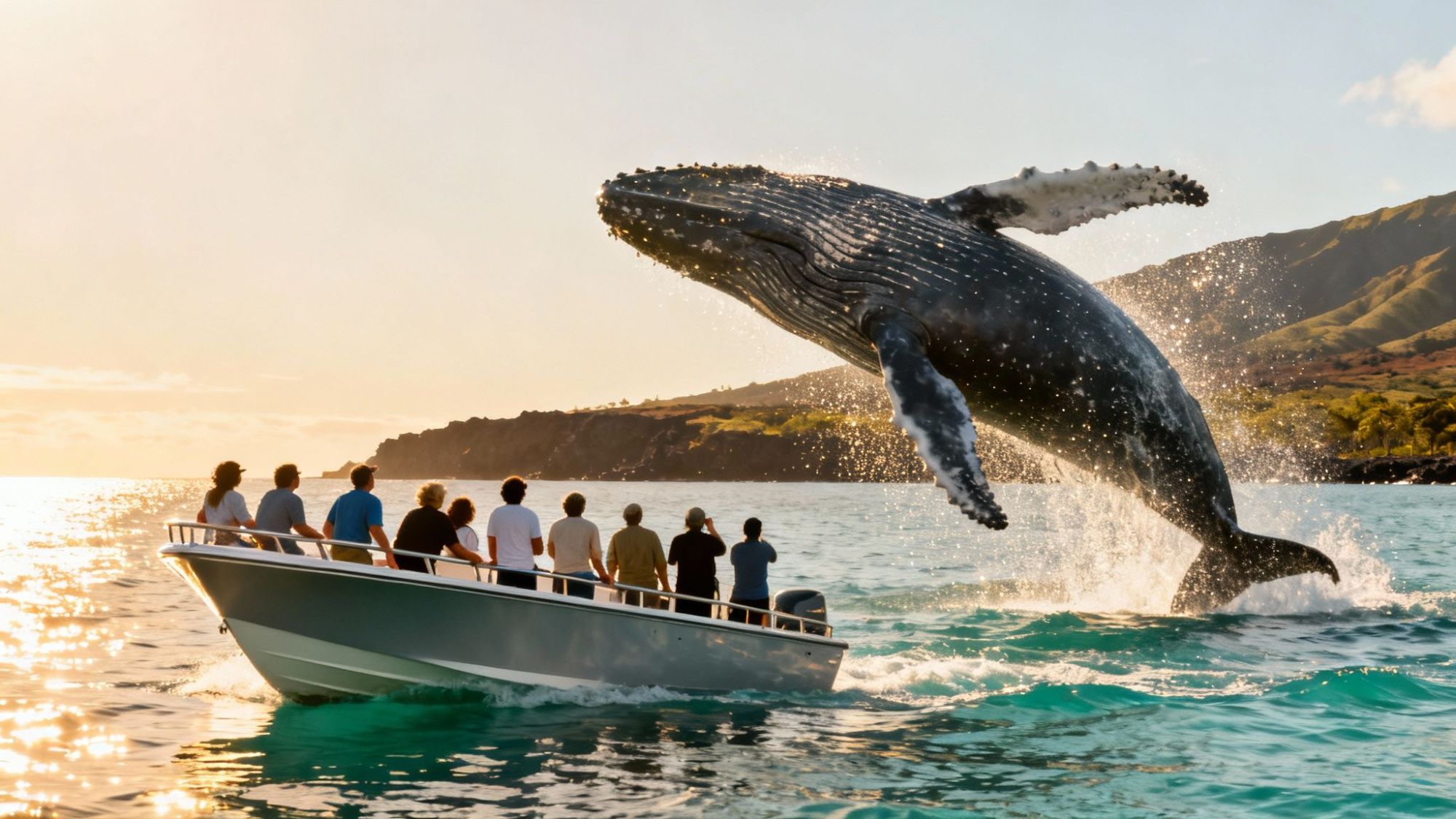
Picture this: You're floating on the turquoise waters of the Kona coast, the warm Hawaiian sun is on your skin, and right before your eyes, a 40-ton humpback whale explodes from the ocean. This isn't just a postcard fantasy; it's what happens here on Kona whale tours.
Every year, from December through March, Kona’s calm, protected bays transform into a massive nursery for thousands of migrating humpback whales, making it one of the absolute best places on the planet to see these magnificent animals.
Your Adventure on the Water Begins Here
This guide is your roadmap to planning an unforgettable whale-watching adventure. We'll walk you through everything you need to know, drawing on our experience as Kona Snorkel Trips—the top-rated and most-reviewed snorkel company in all of Hawaii.
But don't just take our word for it. See what fellow travelers are saying right now. Their experiences will give you a real feel for the adventure that awaits.
Why Is Kona So Perfect for Whale Watching?
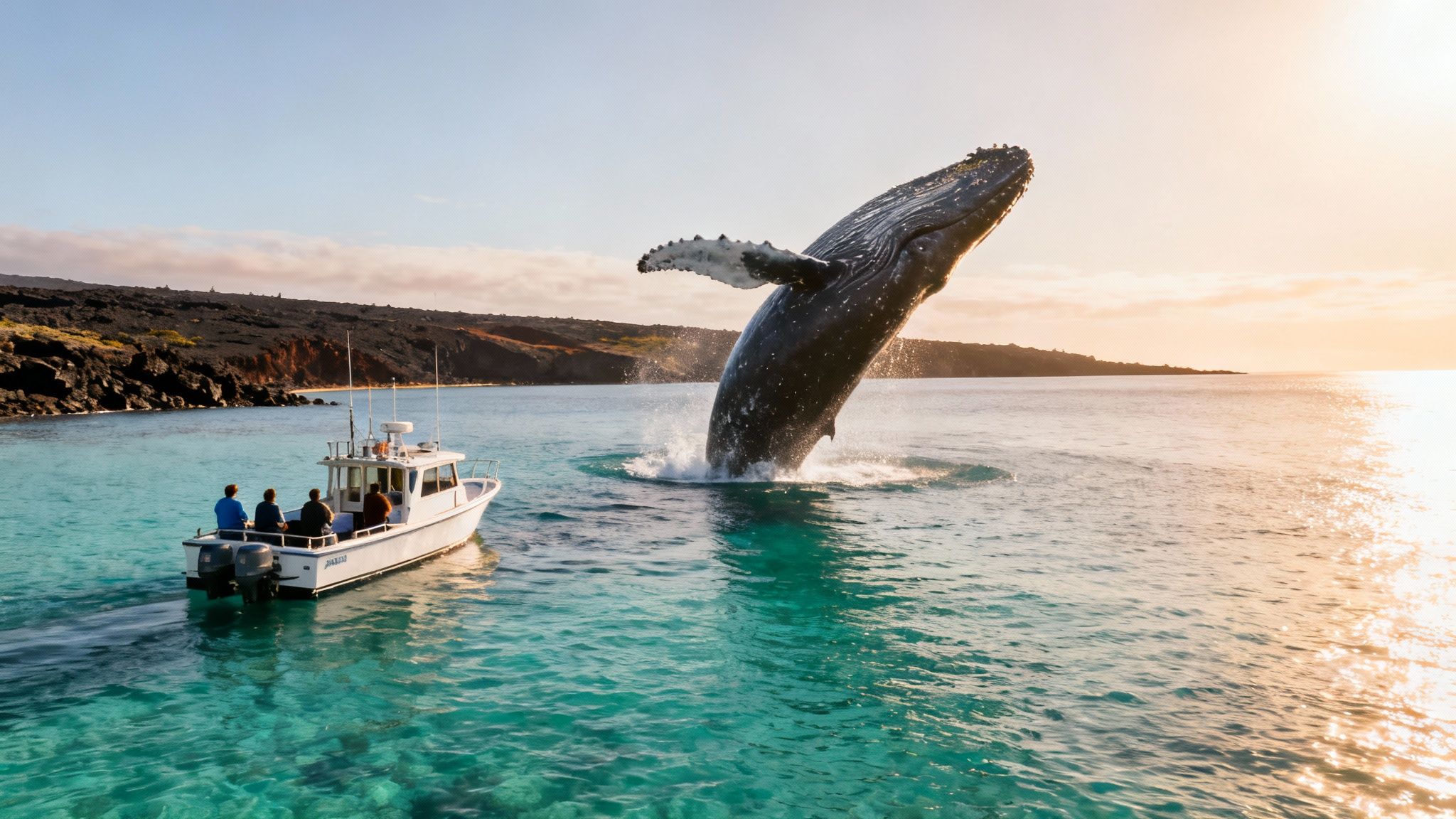
Kona's geography is what makes it a true sanctuary for humpback whales. The colossal volcanoes of Mauna Loa and Hualalai act as a natural shield, blocking the strong trade winds and creating incredibly calm, protected waters along the coast.
These tranquil bays are the perfect, safe place for mother whales to give birth and nurse their newborn calves. This natural shelter means you get to see these gentle giants in a peaceful setting, often with crystal-clear visibility. It's the ideal combination of deep offshore waters and safe, shallow bays that brings the whales back year after year.
What’s It Really Like on a Tour?
A whale watching tour with us is so much more than just a boat ride. It’s a full-on immersive experience where you’ll learn, see, and feel the magic of the ocean. Here’s a little glimpse of what makes these trips so special:
- Expert Guides: Our crew is made up of passionate marine naturalists who live and breathe this stuff. They’ll share fascinating insights into whale biology, their epic migration, and the specific behaviors you’re seeing unfold right in front of you.
- Small, Intimate Groups: We keep our tours small. This isn't a "party boat" experience. It's about ensuring you get an amazing, unobstructed view and a real connection with both the crew and the incredible wildlife.
- Up-Close Encounters: While we always keep a respectful distance to protect the whales, they are naturally curious creatures. It’s not uncommon for them to approach our boat on their own, giving you a breathtakingly close view you’ll never forget.
These pieces all come together to create a powerful and memorable encounter. It's not just about seeing a whale; it’s about gaining a much deeper appreciation for these ocean giants.
You can learn more about our specific whale watching tours in Kona to see what makes them a highlight for so many visitors to Hawaii. This journey promises not just incredible sightings, but a true connection to the marine world.
Why Kona Is a Global Whale Watching Hotspot
So, what’s the big deal with Kona? Why do people from all over the world come here specifically to see whales? It’s a fantastic question, and the answer is a perfect storm of geography, biology, and an incredible ancient instinct. Kona isn't just another pretty spot on the Hawaiian map; it's a critical sanctuary that delivers some of the most reliable and genuinely awe-inspiring kona whale tours you’ll find anywhere on Earth.
The story starts thousands of miles away in the icy waters of Alaska. Every year, humpback whales make an unbelievable 3,500-mile journey from their chilly, food-rich feeding grounds down to the warm, protected waters of Hawaii. They’re leaving the all-you-can-eat buffet behind for one simple reason: it’s time to start a family.
A Volcanic Sanctuary
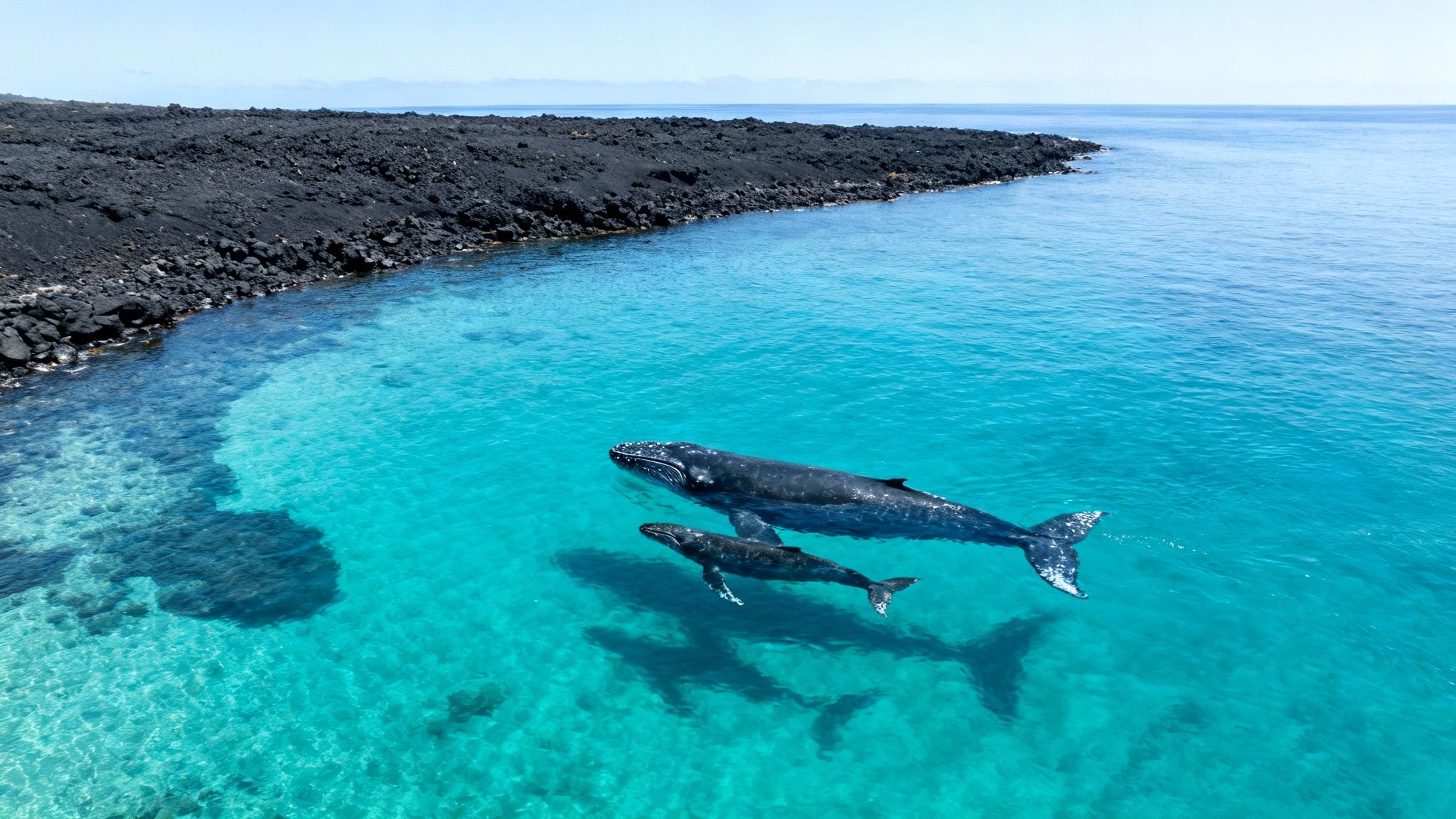
This is where the Big Island’s unique geology becomes the star of the show. The colossal volcanoes, Mauna Loa and Hualalai, act like giant bodyguards, shielding the Kona coast from the powerful trade winds that batter other parts of the islands. This creates a calm, protected slice of ocean heaven.
And that tranquility is exactly what the whales are looking for. The deep offshore waters combined with sheltered bays create the perfect nursery. Here, they can breed, give birth, and nurse their newborn calves in peace, far from the rough open ocean and would-be predators.
For a humpback whale, arriving in Kona is like reaching a safe harbor after an exhausting cross-ocean marathon. The calm, warm waters are the ideal place to raise the next generation, making this a vital habitat for the entire species.
This natural advantage turns the Kona coast into a bustling whale metropolis every winter. With so many whales gathered in one accessible area, your chances of seeing something spectacular are incredibly high.
An Abundance of Whales
The sheer number of whales that make Kona their winter home is hard to wrap your head around. We're talking more than 8,000 humpback whales making this trip each year, turning the waters off the Big Island into a massive stage for their famous acrobatics.
From December to March, the action is practically non-stop. In fact, research shows that during the peak months of January and February, it's not uncommon for tour boats to spot an average of 3 to 6 humpback whales every 15 minutes. It’s a constant show! A single-day volunteer count on January 27, 2024, tallied 324 humpbacks along the shoreline, with Kona showing some of the highest concentrations.
This incredible density of marine life is what truly sets Kona apart. When you come out on a tour with us, you aren’t just hoping to see a whale—you’re dropping into one of the most significant annual gatherings of humpbacks on the planet.
To get an even better sense of what makes our corner of the ocean so special, check out our complete guide to whale watching tours on the Hawaii Big Island.
Decoding the Spectacular Behaviors You'll Witness
Spotting a humpback whale on a Kona whale tour is one of those moments that just sticks with you. But when you start to understand what you're seeing, the experience goes from a simple sighting to a genuine connection with these massive, intelligent animals. It’s like someone hands you a secret decoder ring for the language of whales.
Knowing what you’re looking at turns a random splash into a story, a sound into a conversation. Think of this as your field guide for the incredible displays you're about to see in the warm waters off the Kona coast.
The Famous Acrobatic Displays
Humpbacks are famous for their surface activity, and Kona is the front-row seat. Every single action has a purpose, whether it's communication, a bit of competition, or maybe even just for fun.
Here are the most common and jaw-dropping behaviors to keep an eye out for:
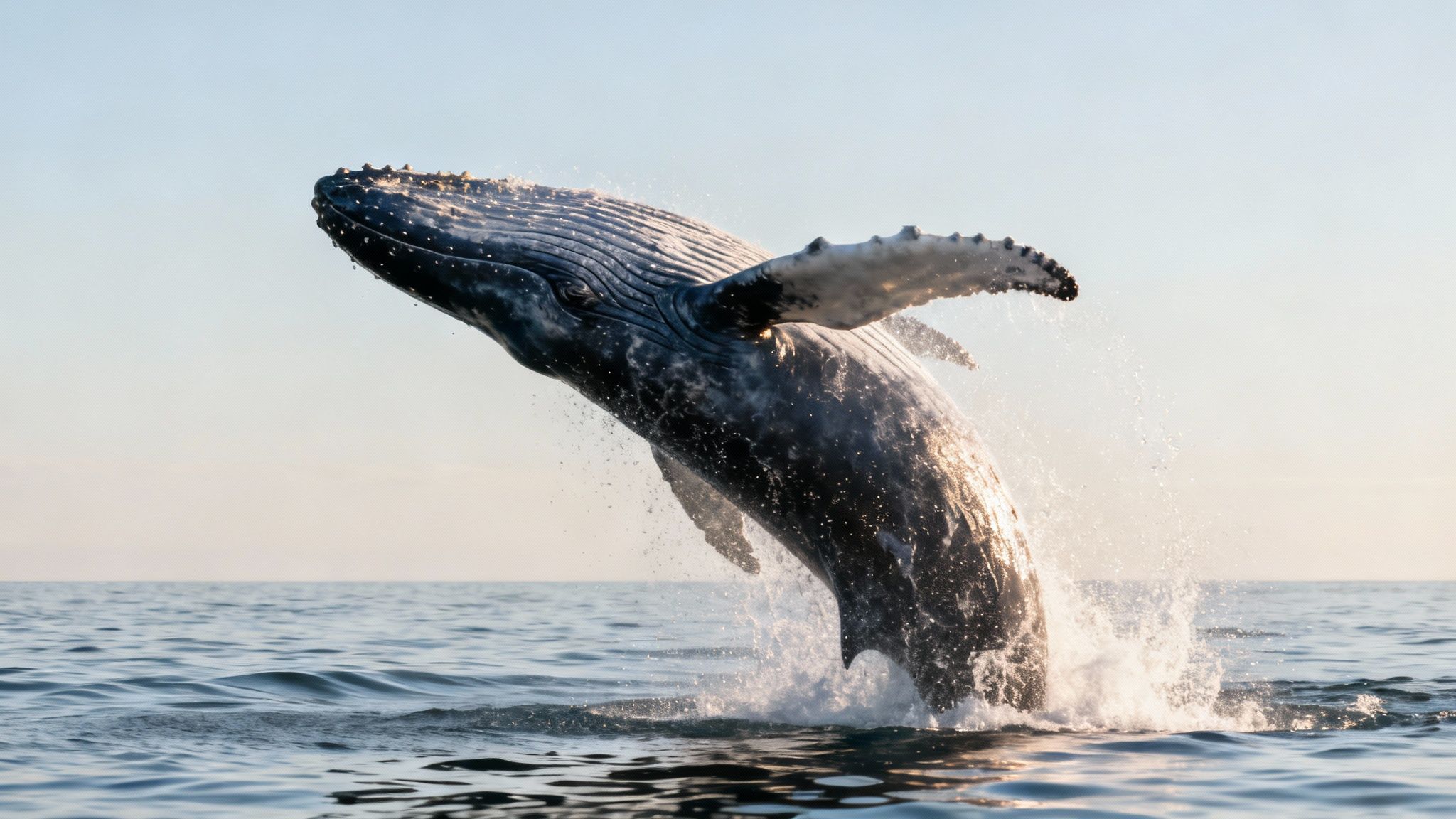
- The Breach: This is the showstopper. It’s that iconic moment when a whale launches up to 90% of its body out of the water, crashing back down in an explosion of sea spray. Scientists figure it could be for anything from knocking off pesky parasites to showing off for a potential mate.
- The Tail Slap (Lobtailing): You'll see a whale lift its huge tail flukes high out of the water and slam them down with incredible force. That slap creates a loud boom that travels for miles underwater—a clear way to communicate or send a warning to other whales nearby.
- The Pec Slap: Similar to a tail slap, a whale will roll onto its side and repeatedly smack its long pectoral fin on the surface. These fins can be up to 15 feet long, so the sound they make is another way they "talk" across the bay.
- The Spyhop: This one is just plain cool. A whale will slowly rise vertically, poking its head straight out of the water to get a look around. It's their way of checking out what's happening on the surface—including your tour boat!
Seeing these actions unfold in person is a powerful reminder of just how smart and social these creatures are. It’s a dynamic performance that plays out daily on Kona whale tours.
The sheer energy needed for a 40-ton animal to breach is staggering—it's like lifting about 12 full-size cars. Witnessing that raw power is truly humbling, and something words don't do justice.
Listening to the Ocean's Orchestra
Beyond the incredible sights, one of the most magical parts of a whale tour is what you can hear. Humpback whales are renowned for their complex, haunting songs, and we equip our boats with underwater hydrophones so you can listen in.
Only the male humpbacks sing. They produce these intricate melodies that can go on for over 20 minutes at a time and be repeated for hours. These aren't just random noises; they are structured musical compositions with distinct themes and phrases.
Amazingly, scientists have discovered that all the males in one population, like the one here in Hawaii, sing the same song. But the song itself changes from year to year, with new parts added and old ones dropped. It’s like a constantly evolving hit single passed from whale to whale across the entire ocean.
The Purpose Behind the Performance
So, what does it all mean? While we can't be 100% sure, researchers have some pretty solid theories about why these whales are so expressive.
Here in the warm waters of Kona, humpbacks are focused on two things: mating and raising their calves. They aren't feeding. This means most of the behavior you see is tied to courtship and social dynamics. A huge breach might be a male showing a female how strong he is, while a bunch of tail slaps could be a way of saying "this is my spot" to other males.
Those beautiful songs are widely believed to be a key tool for attracting a mate. The more complex and loud a male's song, the more it might signal his health and experience, making him a more attractive partner.
Ultimately, watching these displays is like getting a peek into a secret, ancient world. Every splash and every song adds another layer to the incredible story of the humpback whale—a story that unfolds right before your eyes in Kona.
How to Choose the Perfect Kona Whale Tour
With so many fantastic Kona whale tours out there, picking the right one for your crew can feel like a big deal. How do you make sure you choose the best adventure? It all comes down to matching the tour’s vibe with what you’re looking for in terms of comfort, group size, and the overall experience you want to have.
Getting this choice right is what turns a good day on the water into an absolutely unforgettable one. Everything from the kind of boat you’re on to the amenities onboard plays a part. Let’s break down the most important things to consider so you can book your tour with total confidence.

Vessel Type: What Suits Your Style?
The boat you choose has a huge impact on your whale watching adventure. There’s really no single "best" option—it just depends on what kind of day you have in mind.
- Large Catamarans: Think of these as the stable workhorses of the whale watching world. Their dual-hull design makes for an incredibly steady ride, which is a massive plus for families with little ones or anyone who gets a bit queasy at sea. They usually come with perks like restrooms and shaded seating, making for a super comfortable trip.
- Zodiac-Style Boats (Rigid-Hulled Inflatables): If you're craving something a little more up-close and personal, these smaller, zippier boats are a fantastic choice. You're much lower to the water, giving you a unique, eye-level view of the whales. Their speed and agility mean they can cover more area, which can often lead to more sightings.
We’ve found that choosing a smaller vessel, like the ones we use at Kona Snorkel Trips, almost always leads to a more personal and powerful experience. With fewer people on board, you get a front-row, unobstructed view without having to jostle for a good spot. You won't miss a thing.
Key Features of a Top-Tier Tour
Beyond the boat, a few key things separate a standard trip from a truly exceptional one. When you're weighing your options, keep an eye out for these elements to make sure you're getting a quality experience.
A great tour is so much more than just a boat ride; it’s an immersive, educational event. Here’s what to look for:
- Expert Marine Naturalist Guide: A passionate, knowledgeable guide is worth their weight in gold. They completely transform the trip by explaining the complex whale behaviors you're seeing, sharing fascinating tidbits about marine biology, and answering all your questions. Their expertise adds a rich, educational layer to the whole adventure.
- Hydrophones Onboard: Hearing the haunting songs of humpback whales is a truly magical, goosebump-inducing experience. Tours with underwater hydrophones let you listen in on these incredible communications, adding an amazing auditory dimension to the visual show.
- Guaranteed Sightings: During peak season (December to March), the whale population around Kona is so dense that the best operators are confident you’ll see them. Look for companies that offer a sighting guarantee—if you don't see a whale, you can come back for another tour free of charge. It shows they're confident in their ability to find whales and are committed to making sure you have a great time.
Small Groups Equal Big Experiences
One of the most important factors to think about is the size of the tour group. Larger boats can certainly be comfortable, but they can also feel pretty crowded. Choosing a small-group tour operator like Kona Snorkel Trips fundamentally changes the feel of your excursion.
With fewer passengers, you get much more personalized attention from the captain and guide. There’s plenty of room to move around for the best possible photos and viewing angles, and the whole atmosphere is just more intimate and relaxed. You’re not just another face in the crowd; you’re sharing a special encounter with a small group of fellow adventurers. For a deeper dive into what makes these trips so memorable, you can learn more about our Big Island whale watching tours in our detailed guide.
Practicing Responsible and Respectful Whale Watching
Seeing a humpback whale launch itself out of the water is a profound, almost spiritual experience. It’s a moment that sticks with you. And here in Kona, we're incredibly fortunate to share our waters with these giants. But with that privilege comes a huge responsibility to protect them. Being a respectful guest in their world is the only way to ensure they keep returning to Hawaii for generations to come.
It all starts with the law, but it really ends with respect. Federal and state regulations are crystal clear: all boats must stay at least 100 yards away from humpback whales. That’s the length of a football field. This isn't just some arbitrary rule; it’s a critical buffer zone that gives the whales space to do what they came here to do—rest, nurse their young, and find a mate without getting stressed out by us.
Following the Guidelines for Marine Life
This is where choosing the right tour operator makes all the difference. A reputable company doesn’t just follow the rules; they live by them. Our captains are masters at anticipating a whale's path, positioning the boat for amazing views without ever chasing or crowding the animals. We know we’re visitors in their home, and we act like it.
In fact, some of the most magical moments happen when we just cut the engines and drift. Whales are incredibly curious creatures. More often than not, if you just give them space and quiet, they’ll come over to check you out. That’s when you get a truly unforgettable, natural encounter—one that happens on their terms.
"The best whale watching experiences are passive. We let the whales control the encounter. By doing so, we not only protect them but also get to witness more authentic, natural behaviors. It’s a win-win for everyone."
The Role of Conservation and Education
Protecting these animals is a team effort. We're lucky to have organizations like the Hawaiian Islands Humpback Whale National Marine Sanctuary leading the charge. Since the early 90s, the Sanctuary has been a key player, supporting sustainable tourism and running community science projects like the annual Ocean Counts every January, February, and March.
On every single one of our tours, education is front and center. We think that the more you understand these animals, the more you'll want to protect them. Our guides don't just point out whales; they share the story of their lives, their behaviors, and the real-world threats they face from things like boat strikes and getting tangled in marine debris.
When you book a tour with an operator that truly cares, you're doing more than just buying a ticket. You're investing in the future of our oceans. You’re making sure that the awe you feel watching a whale breach is something your kids and grandkids will get to experience, too. To learn more about how timing your trip can align with these efforts, check out our guide on the Big Island whale watching season. Your choice really does matter.
What to Bring for Your Day on the Water
A little prep work can be the difference between a great day and a perfect one. When you're heading out on one of our Kona whale tours, packing the right stuff means you can stay comfortable and focus on the incredible show the whales are putting on. Think of it like a mini-expedition—the right gear lets you soak it all in without any distractions.
From the minute you step on the boat to the moment we head back to the harbor, being prepared will make the whole experience that much better. This simple checklist covers the essentials for a fantastic day at sea.
Essential Gear for Your Ocean Adventure
That Hawaiian sun is no joke, especially when it’s bouncing off the water. Your first priority should be protecting yourself so you can enjoy the trip comfortably.
- Reef-Safe Sunscreen: Hawaii's coral reefs are incredibly delicate. A lot of common sunscreens have chemicals like oxybenzone and octinoxate that seriously harm our marine life. Do yourself and the ocean a favor by choosing a mineral-based, reef-safe option.
- Sun-Protective Clothing: A wide-brimmed hat is a must-have to keep the sun off your face and neck. I also recommend a lightweight, long-sleeved shirt; it provides great protection without being too hot.
- Polarized Sunglasses: These are a total game-changer out on the water. Polarized lenses slice right through the ocean's glare, which means less squinting for you and a much better chance of spotting whales and other animals just below the surface.
Comfort and Capturing the Moment
Beyond sun protection, a couple of extra things will keep you comfortable and ready to snap that perfect photo. Even on a warm day, the ocean breeze can get surprisingly chilly, so it pays to be ready.
A light jacket or windbreaker is perfect for when the boat gets moving or if a few clouds roll in. You can always take it off, but you can’t put on a layer you didn’t bring with you!
And definitely don't forget your camera! A good zoom lens is your best friend for getting those crisp, close-up shots of the whales from a safe and respectful distance. It's also a good idea to have a waterproof bag or case to shield your electronics from any sea spray.
If you’re one of those folks prone to motion sickness, a few simple tricks can make a world of difference. Drink plenty of water before and during the tour, and try to keep your eyes on the horizon—it really helps.
Planning on more water time during your trip? Having the right setup is key. For more tips, check out our guide on the best gear for snorkeling on the Big Island, Hawaii. Also, if you’re traveling with specialized equipment, it’s always smart to brush up on the rules, like these cruise line drone policies, before you pack your bags.
Got Questions About Kona Whale Tours? We've Got Answers.
You're getting ready to book, but a few questions are probably rattling around in your head. It's totally normal. To help you finalize your plans, we've put together some straight-to-the-point answers to the questions we hear most often from our guests. Think of this as your quick-start guide to feeling 100% ready for an incredible day on the water.
When Is the Best Time of Year to See Whales in Kona?
The hands-down, absolute best time for humpback whale watching in Kona is from December through March. This is the heart of their migration season, and the waters are just buzzing with activity.
You might catch some of the early birds in November or the last few stragglers in April, but for the real show, you want to be here during those core winter months.
If you want the peak-of-the-peak experience—we're talking breaching, tail slaps, and tons of moms with their new calves—circle January and February on your calendar. The sheer number of whales off the Kona coast during these two months is staggering, making for some truly unforgettable, action-packed tours.
Are Whale Sightings Guaranteed on a Tour?
Let's be real: whales are wild animals, and nobody can control what they do with 100% certainty. That said, the chances of seeing them during peak season in Kona are incredibly high—so high, in fact, that top-tier operators like us at Kona Snorkel Trips feel confident offering a sighting guarantee.
What does that mean for you? Simple. If for some strange reason your tour group doesn't see a whale, you can come back out with us for free until you do. It's our way of showing you we're committed to delivering that "wow" moment and giving you total peace of mind when you book.
Should I Choose a Morning or Afternoon Tour?
This is a classic question, and the honest answer is you can't go wrong either way. Both morning and afternoon trips offer amazing whale watching. The best choice really boils down to your personal style and what kind of ocean conditions you prefer.
- Morning Tours: The Kona coast is famous for its calm, glassy mornings before the afternoon trade winds kick in. This means a smoother ride, which is often a big plus for families with little ones or anyone who gets a bit queasy.
- Afternoon Tours: Some people swear the whales are a bit more active and playful on the surface in the afternoons. While that's not a set-in-stone rule, the golden afternoon light is undeniably gorgeous for photos.
Ultimately, the time of year is way more important than the time of day. In January or February, the whales are active from sunup to sundown.
How Close Can the Boats Get to the Whales?
This is a big one, and it's all about respect for these magnificent animals. Federal law is very clear: all boats must stay at least 100 yards away from humpback whales. To put that in perspective, that’s the full length of a football field. This rule is non-negotiable and exists to protect the whales from stress and keep them safe.
But here's where the magic happens. Humpbacks are naturally curious creatures, and it's incredibly common for them to decide to check us out, sometimes swimming right up to the boat. These are the moments that take your breath away because they happen entirely on the whale's terms.
A great captain knows how to read the whales' behavior and position the boat in a quiet, non-threatening way that invites curiosity. It's how we get those mind-blowing, up-close views without ever chasing or harassing the animals.
Ready to witness these gentle giants for yourself? At Kona Snorkel Trips, our small-group tours are led by expert marine naturalists dedicated to providing a safe, respectful, and unforgettable adventure. Book your Kona whale watching tour today!