
Your Ultimate Guide to Unforgettable Kona Whale Tours

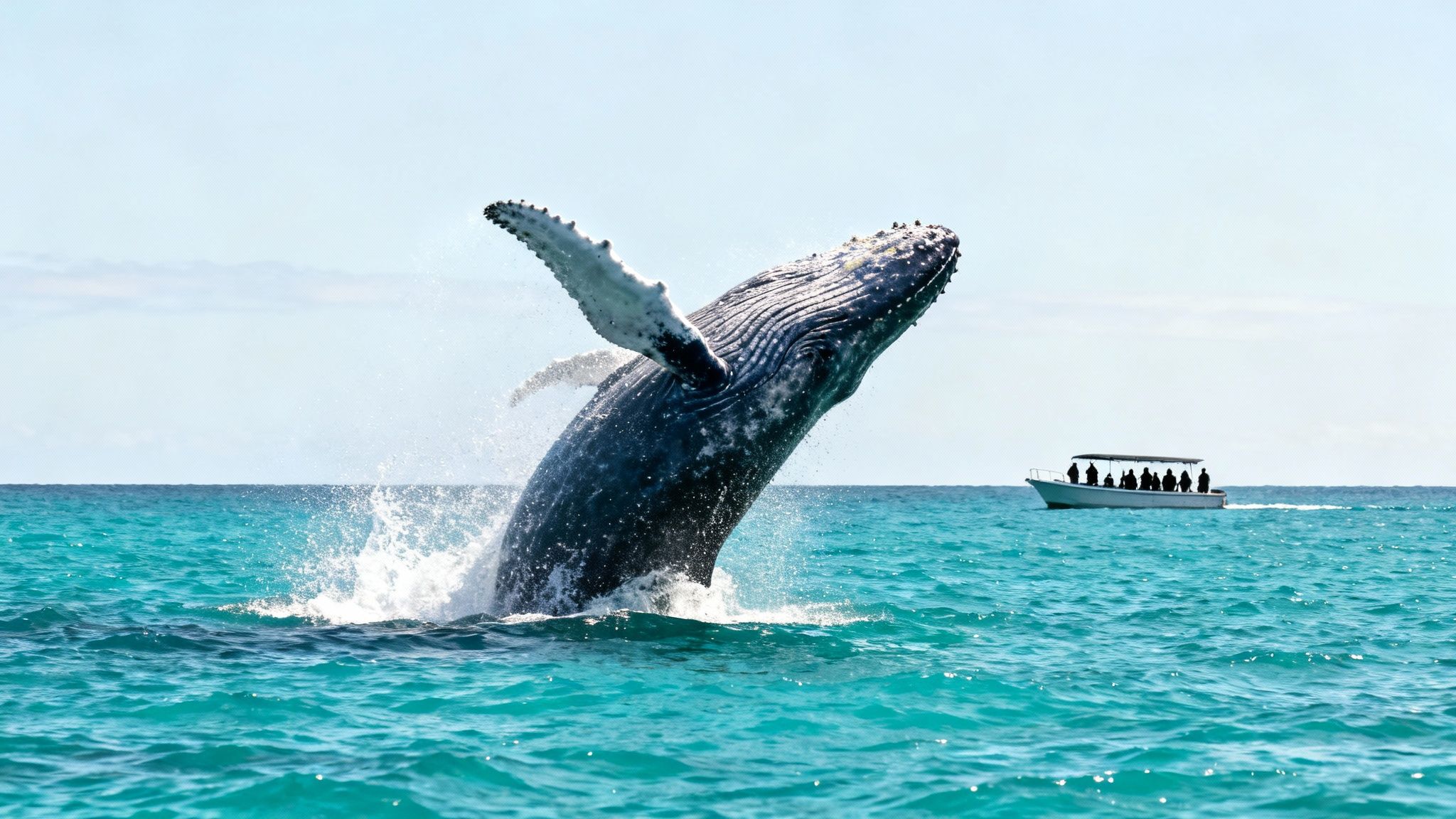
Picture this: the calm, turquoise water of the Kona coast suddenly explodes as a forty-ton humpback whale throws itself into the air. It's a breathtaking, heart-stopping moment, and it’s the reality of a whale watching tour right here in Kona. Every year from December through March, these gentle giants turn the waters off the Big Island into a stage for one of nature’s greatest shows.
Your Ultimate Guide to Kona Whale Watching
Welcome! You've found the perfect resource for planning an ocean adventure you'll never forget. This guide is your inside scoop on everything you need to know, from the absolute best months to see the most action to picking the right boat for your trip. We'll even dive into why this specific stretch of coastline is a global hotspot for humpback whales and share the secrets behind their epic yearly migration.
As Hawaii's top-rated and most-reviewed snorkel company, we at Kona Snorkel Trips have guided thousands of visitors on their ocean excursions. Our local knowledge and focus on small-group tours mean you get a personal, respectful, and totally unforgettable encounter with these incredible creatures.
What Makes Kona a Premier Destination
The journey these humpback whales make is nothing short of incredible. They travel over 3,000 miles from their chilly feeding grounds in Alaska all the way down to the warm, protected waters off the Kona coast. This area becomes a vital nursery where they come to mate, give birth, and raise their newborn calves in relative safety.
This guide is designed to help you get the most out of this amazing natural event. We’re going to cover:
- Peak Season Insights: We'll pinpoint the absolute best weeks to book your tour for the highest chances of seeing whales.
- Tour Options Explained: We’ll break down the different types of boats and trips so you can find one that fits your vibe.
- Beyond the Whales: You'll discover all the other marine life you might run into, from playful dolphins to pilot whales.
- Responsible Viewing: We’ll talk about why eco-friendly practices are so important for protecting these animals for years to come.
A little planning goes a long way. It can be the difference between a nice boat ride and witnessing everything from powerful tail slaps to jaw-dropping, full-body breaches. It’s all about being in the right place at the right time.
Planning Your Adventure
Honestly, choosing the right tour operator is the single most important decision you'll make. A great crew doesn't just know where to find the whales; they share amazing insights into their behavior, turning a simple boat trip into a true learning experience. They also operate with a deep respect for the animals, always following federal laws to keep a safe and respectful distance.
Ready for an incredible journey? You can learn more about our dedicated Kona whale watching tours and find the perfect trip for you and your group. Get ready to have your mind blown by one of the planet's most magnificent creatures.
Why Kona Is a Global Sanctuary for Humpback Whales
Every single year, something incredible happens in the Pacific Ocean. An ancient instinct kicks in, and thousands of humpback whales begin one of the most amazing journeys in the animal kingdom. They leave the cold, food-rich waters of Alaska and head for the warm, welcoming embrace of the Hawaiian Islands. This isn't just a trip; it's a critical mission for the survival of their species.
This massive migration turns the waters off the Big Island into a bustling whale metropolis, making Kona whale tours a truly world-class experience. The scale is just staggering. We're talking about an estimated 12,000 or more humpback whales traveling 3,000 to 4,000 miles to get here.
They start showing up in October and stick around until May, but the real magic happens between January and March. That's when their numbers peak, creating a spectacle you won't see anywhere else on earth.
The Perfect Nursery
So, what’s so special about Kona? Why is this the spot for these gentle giants? It all comes down to the unique geography. The Kona coast sits on the leeward (or sheltered) side of the Big Island, protected from the powerful trade winds by the massive volcanoes Mauna Loa and Hualalai. This natural barrier creates incredibly calm, clear waters—the perfect conditions for the most important moments in a whale's life.
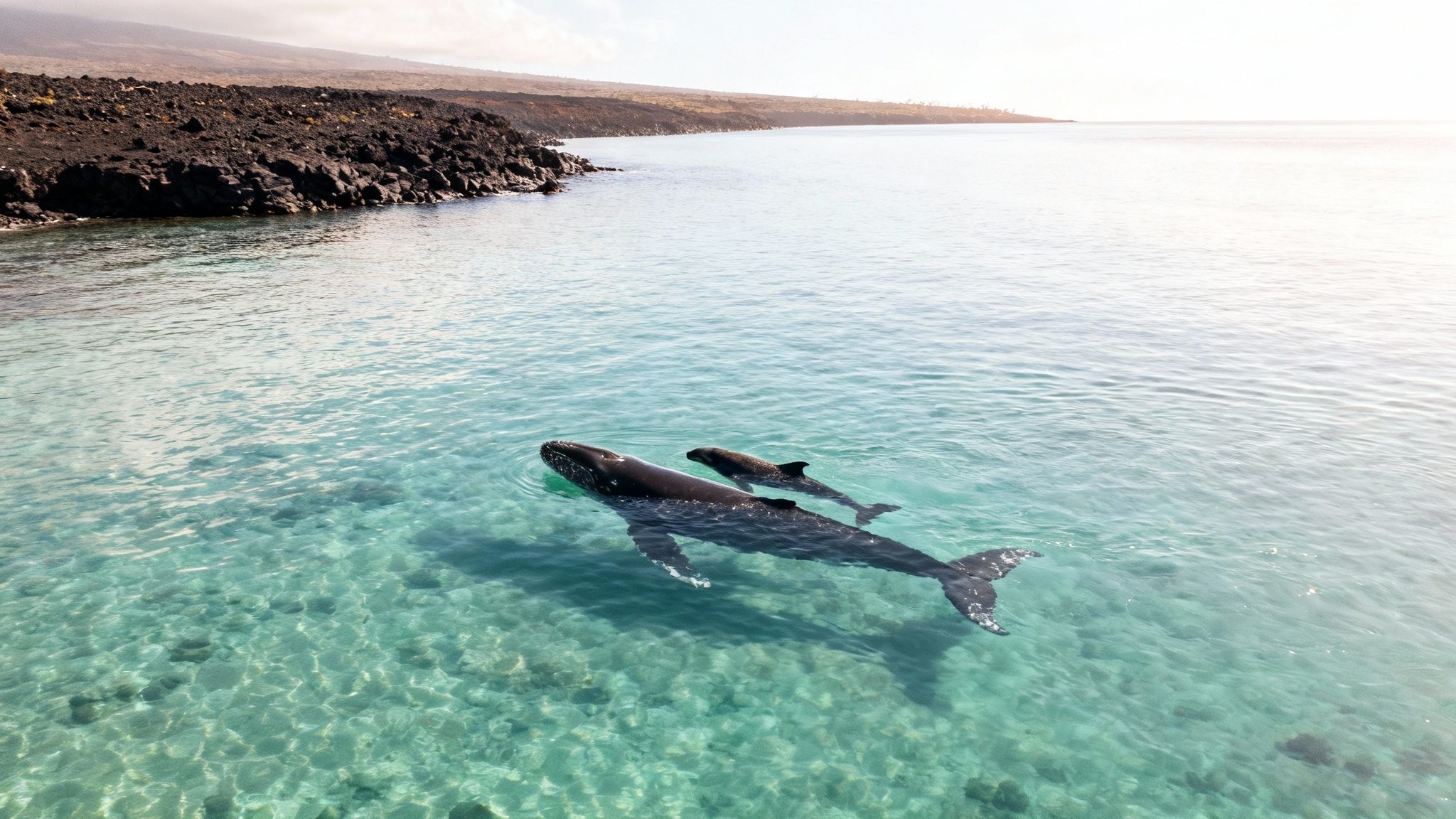
These calm seas are a safe harbor for pregnant females to give birth and for their brand-new calves to take their very first breaths. Unlike Alaska, Kona's warm water is essential for the babies, who are born without much blubber to keep them warm.
The calm Kona coast isn't just a destination; it's a meticulously chosen nursery. The near-total absence of predators like orcas, combined with the warm, sheltered waters, makes it one of the safest and most effective places on the planet for humpback whales to raise their young.
A Stage for Spectacular Behavior
But whale season in Kona is about more than just birthing and nursing. It’s also the primary breeding ground for the entire North Pacific humpback population. This turns the ocean into a dynamic stage for some of the most incredible social interactions and raw displays of power you'll ever witness.
- Competitive Pods: Males engage in breathtaking competitions to win the attention of females. These "comp pods" can involve high-speed chases, physical clashes, and powerful vocalizations that echo through the water.
- Mating Rituals: The crystal-clear water lets us glimpse the complex underwater ballets as males and females court each other—a behavior you rarely get to see anywhere else.
- Acoustic Wonders: The ocean comes alive with the hauntingly beautiful songs of male humpback whales. These intricate songs can travel for miles underwater and are a crucial part of their mating ritual.
This flurry of activity during peak season means that every single Kona whale tour has a high chance of witnessing a whole range of behaviors. From powerful tail slaps and pectoral fin slaps they use to communicate, to the jaw-dropping, full-body breach, the show is always on.
Why Peak Season Matters
While you can see whales for several months, timing your visit between January and March dramatically boosts your odds of seeing all this high-energy action. During these key months, the whale population is at its densest. You'll see mothers teaching their calves critical survival skills and males actively competing for mates.
This period offers the most consistent and spectacular sightings, making it the absolute best time for photographers, families, and anyone hoping for a truly unforgettable encounter. The sheer number of whales means the ocean is constantly buzzing with life. For a deeper dive, check out our comprehensive guide on Big Island whale watching. It’s this focus on a specific, predictable time and place that cements Kona's reputation as a premier global sanctuary for these magnificent animals.
How to Choose Your Perfect Kona Whale Tour
Picking the right Kona whale tour is the secret sauce to an unforgettable day on the ocean. There are a few different ways to go, and the best choice really boils down to your personal style, who you're traveling with, and what you're hoping to see. Not all tours are built the same, so figuring out the differences is key to making sure your whale watch is everything you've been dreaming of.
The biggest fork in the road is the boat itself. Your experience on a quick, low-to-the-water zodiac is going to feel worlds apart from a trip on a big, steady catamaran. Each has its own magic, and the right one for you just depends on the kind of vibe you're going for.
Vessel Types: The Great Divide
Think of it like choosing between a zippy sports car and a comfortable SUV. A zodiac-style rigid-hulled inflatable boat (RHIB) is all about a thrilling, up-close-and-personal, fast ride. You're so much closer to the water, giving you this incredible eye-level view of the whales that feels super intimate. These boats are smaller and carry fewer people, which adds to that private, exclusive feel.
On the flip side, a larger catamaran is your ticket to stability, space, and creature comforts. These are perfect for families with little ones, anyone who gets a bit wobbly on the water, or folks who just want to kick back and relax. You'll usually find shaded seats, an onboard restroom, and plenty of space to stroll around, making for a much more leisurely day.
Your choice of boat fundamentally shapes your experience. Are you seeking a high-energy, close-up adventure or a stable, comfortable viewing platform? Answering this question is the first step in finding your ideal tour.
Key Factors to Consider
Beyond the boat, a few other details will help steer your decision. Taking a second to think through these will help you zero in on the perfect Kona whale tours for your crew.
- Tour Duration: How much time do you want to spend out there? Tours can be a quick two-hour jaunt or a full half-day adventure. It's simple math: longer tours mean more chances for multiple whale sightings and seeing a wider range of cool behaviors.
- Group Size: We specialize in small-group tours at Kona Snorkel Trips for a reason. They're just more personal. With fewer people on board, you get unobstructed views, more one-on-one time with the captain and guide, and an all-around less crowded feel.
- Comfort and Amenities: If having a restroom, some shade from the Hawaiian sun, and snacks on hand is a must-have, a larger boat is your best bet. If you're game for a more rugged, adventurous ride, a zodiac will be right up your alley.
- Photography Opportunities: Both boats offer amazing photo ops, but from totally different perspectives. Zodiacs get you those dramatic, water-level shots that feel like you're right there with the whales. Catamarans give you a higher, more stable platform, which can make it easier to nail those wide, scenic photos.
Exploring Combo Adventures
Why stop at just one incredible ocean experience? Kona's marine world is buzzing with life beyond the whales, and a combo tour is a brilliant way to see more of it. Lots of operators, including us, offer trips that blend a few hours of prime whale watching with a stop at a world-class snorkel spot.
This means you can go from being awestruck by the power of a breaching humpback to plunging into the vibrant, colorful world of Hawaii's coral reefs, all in one trip. It’s a super efficient and exciting way to make the most of your time on the water, packing two incredible adventures into one seamless day. For a deeper dive into the different kinds of trips out there, check out our guide to whale watching tours on the Hawaii Big Island.
To help lay it all out, here’s a quick comparison of the most common tour types you'll find in Kona.
Comparing Kona Whale Tour Options
Find the best whale watching tour type in Kona based on your travel style and preferences.
| Tour Type | Best For | Group Size | Typical Duration | Key Features |
|---|---|---|---|---|
| Zodiac / RHIB Tour | Thrill-seekers, photographers, and small groups wanting an intimate experience. | Small (6-16 guests) | 2-3 hours | Fast, exciting ride; close, water-level views of wildlife; less crowded. |
| Catamaran Tour | Families with children, those prone to seasickness, and travelers prioritizing comfort. | Medium to Large (20-50+ guests) | 3-4 hours | Stable and spacious; amenities like restrooms and shade; relaxed pace. |
| Snorkel & Whale Combo | Adventurers wanting to experience multiple aspects of Kona's marine life in one day. | Varies by boat | 4-5 hours | Combines whale watching with snorkeling at a top reef location; great value. |
| Private Charter | Groups seeking a customized itinerary, special occasions, or ultimate privacy. | Customizable | Customizable | Exclusive use of the boat; flexible schedule and destinations; personalized service. |
Whether you're after the adrenaline rush of a zodiac or the laid-back luxury of a catamaran, there’s a perfect whale watching adventure waiting for you here in Kona.
Discovering the Rich Marine Life Beyond Whales
Sure, the humpback whales are the undisputed rock stars of any winter trip off the Kona coast, but thinking a tour is only about them is like going to a music festival for just the headliner. You'd miss out on all the incredible opening acts! A trip with us is a full-blown ocean safari, where any moment can bring a surprise encounter.
The deep, nutrient-rich waters just offshore are teeming with an amazing variety of life all year long. This transforms every Kona whale tour into a much bigger wildlife adventure. Long after the last humpback starts its long swim back to Alaska, a vibrant community of fascinating creatures remains.
Kona’s Year-Round Residents
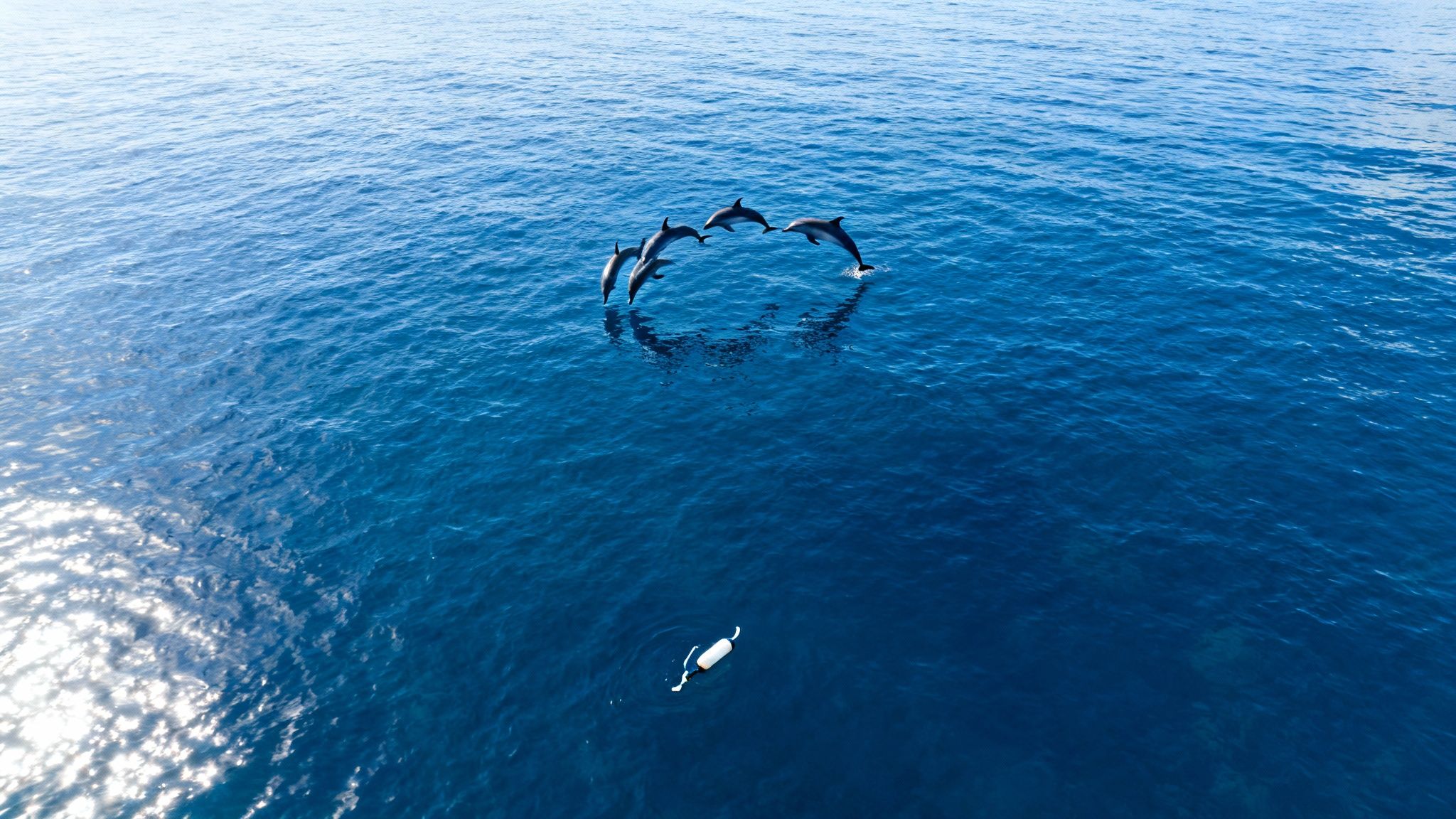
One of our most frequent and beloved sightings is a pod of Hawaiian spinner dolphins. These guys are famous for their jaw-dropping acrobatics, often launching themselves out of the water and spinning through the air. It’s pretty common for a pod to cruise right alongside the boat, playing in the wake and giving everyone an unforgettable, up-close show.
But the fun doesn't stop with the spinners. As we venture into deeper water, you'll want to keep a sharp eye out for some other local celebrities:
- Short-finned pilot whales: We often find these social animals resting in big, curious pods right at the surface. They’re always a welcome sight.
- Bottlenose dolphins: Bigger and beefier than their spinner cousins, these highly intelligent dolphins are another common and exciting find.
- Spotted dolphins: Known for their unique spots, these smaller dolphins travel in large, energetic groups that are a blast to watch.
It's these encounters that turn a seasonal whale watch into a year-round opportunity to connect with Hawaii's incredible marine world.
While humpbacks might get top billing, the real magic of Kona's waters is in its sheer biodiversity. The supporting cast of dolphins, pilot whales, and other species guarantees that no two trips are ever the same.
Rarer and Unforgettable Sightings
For those with a little patience, the deep blue off the Kona coast holds some incredible secrets. Our unique underwater landscape, with deep-sea trenches just a stone's throw from shore, sometimes brings more elusive animals to the surface. It's these rare sightings that often become the highlight of the trip.
We've been lucky enough to spot everything from false killer whales and melon-headed whales to oceanic white-tip sharks. This incredible diversity is what makes Kona so special. The area's sheltered bays and rich waters create the perfect habitat for a huge range of species.
Catching a glimpse of a sleek oceanic white-tip shark gliding by or a pod of mysterious false killer whales is a truly humbling experience. These moments are a powerful reminder of how wild and unpredictable the open ocean really is.
And don't forget about the world just beneath the waves! The coral reefs are buzzing with colorful fish, creating an underwater spectacle all on their own. If you're curious about identifying some of the dazzling fish you might see, be sure to check out our detailed Hawaii reef fish guide. Every tour is a unique window into this complex world, proving there's always something new and amazing to discover out here.
Getting Ready for Your Whale Watching Trip
A little prep work can be the difference between a good day on the water and an absolutely epic one. When you show up for your Kona whale tour feeling comfortable, confident, and ready for whatever the ocean has in store, you can just soak it all in from the minute you step on the boat. Trust me, a bit of planning goes a long way.
The adventure really starts the moment you pull out of the harbor. The air gets that salty tang, and the deep blue of the Pacific just opens up in front of you. Your captain and crew will kick things off with a quick but important safety briefing, just to get everyone familiar with the boat and feeling secure. This is also when you'll meet the onboard naturalist—your guide to all the incredible things you're about to see.
What to Bring: Your Packing Checklist
Packing smart means you can keep your eyes on the water, not worry about being cold or sunburned. Even though the Kona sun feels amazing, the weather on the ocean can shift in a heartbeat. It's always best to be ready for anything.
Here’s a simple list to make sure you’ve got the essentials:
- Layers! A light jacket or windbreaker is a must-have. Even on a hot day, that ocean breeze can give you a bit of a chill, especially on the morning trips.
- Reef-Safe Sunscreen: Protecting your skin is obviously important, but we also have to protect Hawaii's fragile coral reefs. Go for a mineral-based, reef-safe sunscreen every time.
- Polarized Sunglasses: This one is a game-changer. Polarized lenses slice right through the glare on the water, making it so much easier to spot whales and other critters just below the surface.
- A Good Hat: A hat with a wide brim is your best friend out there. It keeps the sun off your face and neck so you can focus on the show.
- Camera with a Zoom Lens: Your phone is fine, but if you have a camera with a decent zoom, you'll be able to grab some incredible, detailed shots of the whales from a respectful distance.
- Reusable Water Bottle: Staying hydrated is super important for feeling good all day. We have water on board, but bringing your own bottle helps cut down on plastic waste.
- Binoculars: Totally optional, but a pair of binoculars can bring a distant spout or the pattern on a fluke way up close.
Staying Comfy on the Boat
For most people, the gentle rocking of the boat is part of the fun. But if you know you’re prone to motion sickness, don't let it ruin your day. There are easy things you can do to make sure you have a fantastic time.
Think about taking an over-the-counter motion sickness medication the night before and then again the morning of your tour (just follow the directions on the box). Once you're on the boat, try to find a spot where you can keep your eyes on the horizon; it really helps your brain and inner ear get on the same page. Fresh air also works wonders, so try not to hang out in an enclosed cabin for too long.
Knowing what you're seeing completely changes the game. It’s not just a whale sighting anymore; it becomes a connection. If you learn a few of the key behaviors before you go, you’ll feel like a pro out there.
Learning the Language of Whales
Your naturalist will be there to explain everything, but showing up with a little knowledge of your own makes the experience that much richer. These aren't just random movements; you're watching whales communicate and live their lives.
- Breach: This is the big one! It's that iconic moment when a whale launches its entire body out of the water and comes crashing down with a massive splash.
- Tail Slap (or Lobtailing): You'll hear this one as much as you see it. A whale smacks its fluke (tail) hard on the water's surface, creating a sound that booms across the ocean. It’s likely a way to talk to other whales or show they're annoyed.
- Spy-Hopping: This is when a whale pops its head straight out of the water, almost like it's trying to get a better look at you and the boat. It's as cool as it sounds.
- Pectoral Slap: Sometimes you'll see a whale lying on its side, slapping one of its long pectoral fins on the water over and over. It's another way they make noise to send a message.
Come prepared with the right gear, a little bit of knowledge, and a whole lot of excitement, and you've got the perfect recipe for a Kona whale tour you'll never forget.
The Importance of Responsible Whale Watching
There's nothing quite like the moment a forty-ton humpback whale launches itself out of the water. It’s a raw, powerful connection to the wild that can honestly change your life. But that incredible privilege comes with a big responsibility. These amazing animals travel thousands of miles to our warm Kona waters to mate, give birth, and nurse their calves in a safe place. That’s why choosing an ethical, eco-conscious tour operator is so critical—we have to make sure our presence doesn't disrupt these vital moments in their lives.
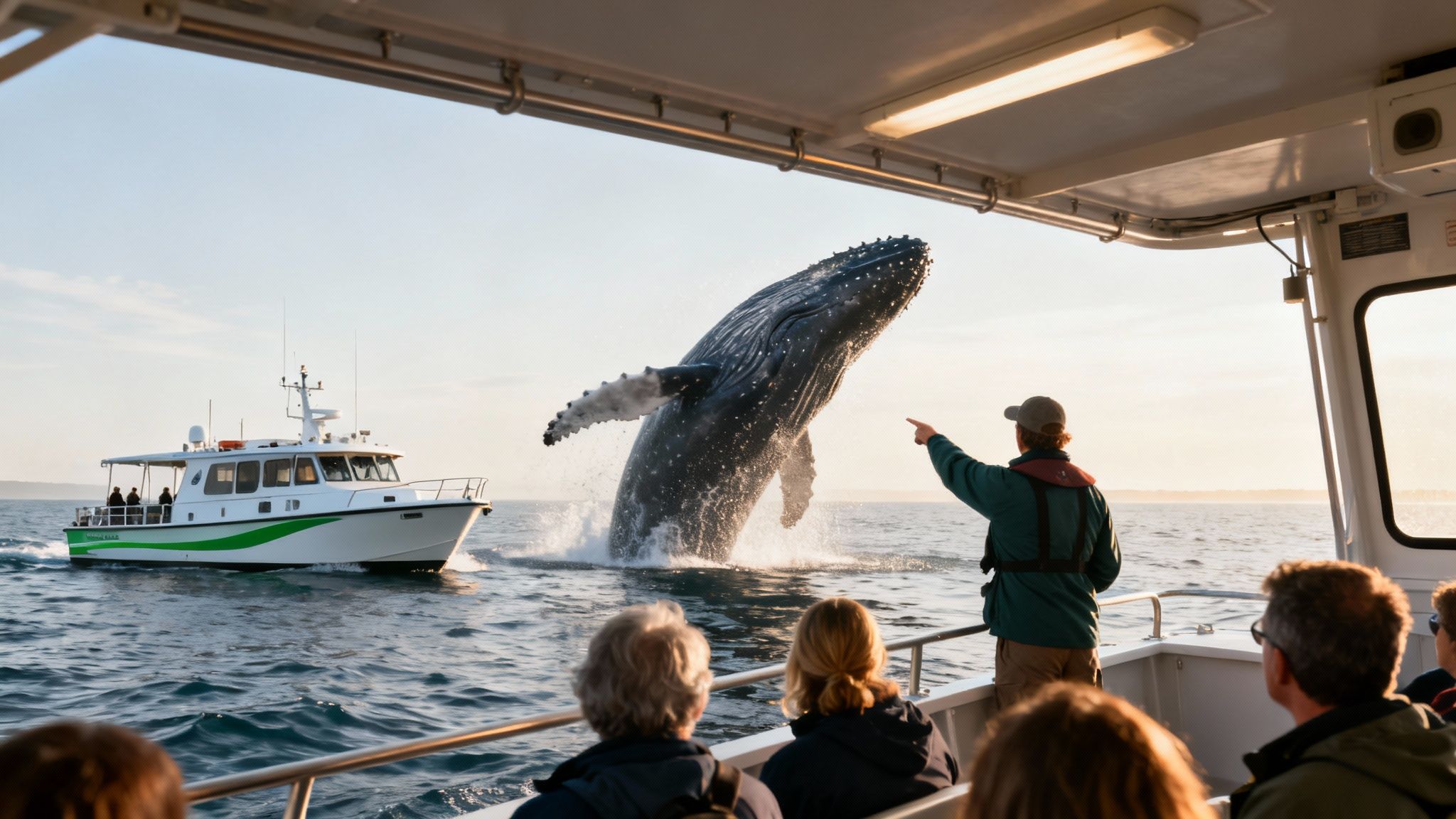
Respecting these creatures isn't just a nice idea; it's the law. Federal regulations are in place to protect them, especially the new moms and their vulnerable babies. The single most important rule for all Kona whale tours is the mandatory 100-yard approach distance. No vessel, whether it's a big catamaran or a tiny kayak, is legally allowed to get closer than the length of a football field to a humpback whale.
This rule creates a crucial stress-free zone. It lets the whales go about their business naturally, without feeling cornered or threatened by our curiosity. Any reputable company lives and breathes this rule, using their skill to position the boat for fantastic views without ever crossing that line.
What Makes a Tour Whale-Friendly
A truly responsible tour goes way beyond just following the law. It’s about a whole mindset of deep respect for the ocean and its inhabitants. These are the operators who take extra steps to minimize their impact and make sure their guests leave with a deeper appreciation for conservation.
Here’s what really sets a whale-friendly tour apart:
- Engine Awareness: Responsible captains know when to back off. They'll often cut their engines or shift to neutral when whales are nearby. This simple act drastically reduces underwater noise, which can mess with the whales' complex songs and communications.
- Educational Focus: The best guides are basically passionate marine biologists who love to share what they know. They don't just point and say, "There's a whale!" They give you the story behind the behaviors you're seeing, explain why conservation is so important, and turn a simple sighting into a rich, memorable experience.
- No Chasing: An ethical operator will never chase, pursue, or surround a whale. It's just not how it's done. Instead, they'll anticipate where the animals are heading and position the boat for a parallel view, allowing the whales to decide how close they want to get.
Choosing a tour that prioritizes education and respect does more than protect the whales you see on your trip; it invests in the health of the entire population. Your decision supports a sustainable kind of tourism that ensures these migrations will continue for generations to come.
Making sure these magnificent creatures thrive means we all have to commit to environmentally conscious boating practices whenever we're on the water. This commitment has been a huge part of helping humpback populations bounce back. If you're curious about their incredible comeback story, you can learn more about the humpback whale's conservation status in our article. By picking a tour that champions these values, you're not just a tourist—you're an active participant in marine conservation, helping ensure the magic of Kona's whale season is here to stay.
Your Kona Whale Tour Questions, Answered
Planning a whale watching trip is exciting, but it's natural to have a few questions pop up. We get it. Here are some of the most common things people ask us, with straight-up answers to help you get ready for an incredible day on the water.
When Is the Absolute Best Time of Year for a Kona Whale Tour?
If you want the absolute peak whale action, book your trip between January and March. This is when Kona's waters are brimming with humpback whales. The population is at its highest, which means you get the most frequent and jaw-dropping sightings—think massive breaches and powerful tail slaps as they mate and nurse their brand-new calves.
You can definitely spot whales from December through April, but that January to March window is the sweet spot. The sheer number of whales out there means there's almost always something amazing happening on the ocean's surface.
Is a Whale Sighting Guaranteed on Tours?
As much as we'd love to promise a whale every time, these are wild animals in their natural home. It's their ocean; we're just lucky visitors. Because of that, sightings can never be 100% guaranteed.
That said, the odds are overwhelmingly in your favor. Our experienced captains and crew have an incredible success rate, often hitting over 95% during the peak months of January, February, and March. They've spent years learning the local waters and whale behaviors, and that expertise is your best bet for a mind-blowing encounter. They know how to read the water in a way that truly maximizes your chances.
What Should I Wear on a Whale Watching Tour?
Layers are your best friend out on the ocean. Even on a warm Kona day, it can get surprisingly cool and breezy once you're on the water, especially for those early morning trips.
We always suggest a light jacket or windbreaker you can throw on over a t-shirt. And don't forget these essentials:
- Comfortable shoes with good grip (boat decks can be slippery).
- A hat to keep the sun off your face.
- Polarized sunglasses are a game-changer—they cut the glare on the water, making it way easier to spot the whales.
- Plenty of reef-safe sunscreen.
Trust us, it's always better to have an extra layer you don't need than to be shivering and wishing you'd brought one.
Are Children Allowed on Kona Whale Tours?
Absolutely! Most Kona whale tours are fantastic for families and welcome kids. It's an unforgettable experience that brings classroom science lessons to life, creating memories your family will talk about for years.
Just a heads-up: the type of boat can make a difference. Big, spacious catamarans often have more room to move around, more shade, and a smoother ride, which is great for families with little ones. The smaller, faster zodiac-style boats are more of an adventure ride and might have age or height requirements. It's always a good idea to double-check the operator's policy for kids when you book.
Ready to see these gentle giants up close? At Kona Snorkel Trips, our small-group tours are all about creating a personal, respectful encounter with Kona's magnificent humpback whales. Book your unforgettable whale watching adventure today!