
The Ultimate Guide to Kona Snorkeling in 2026
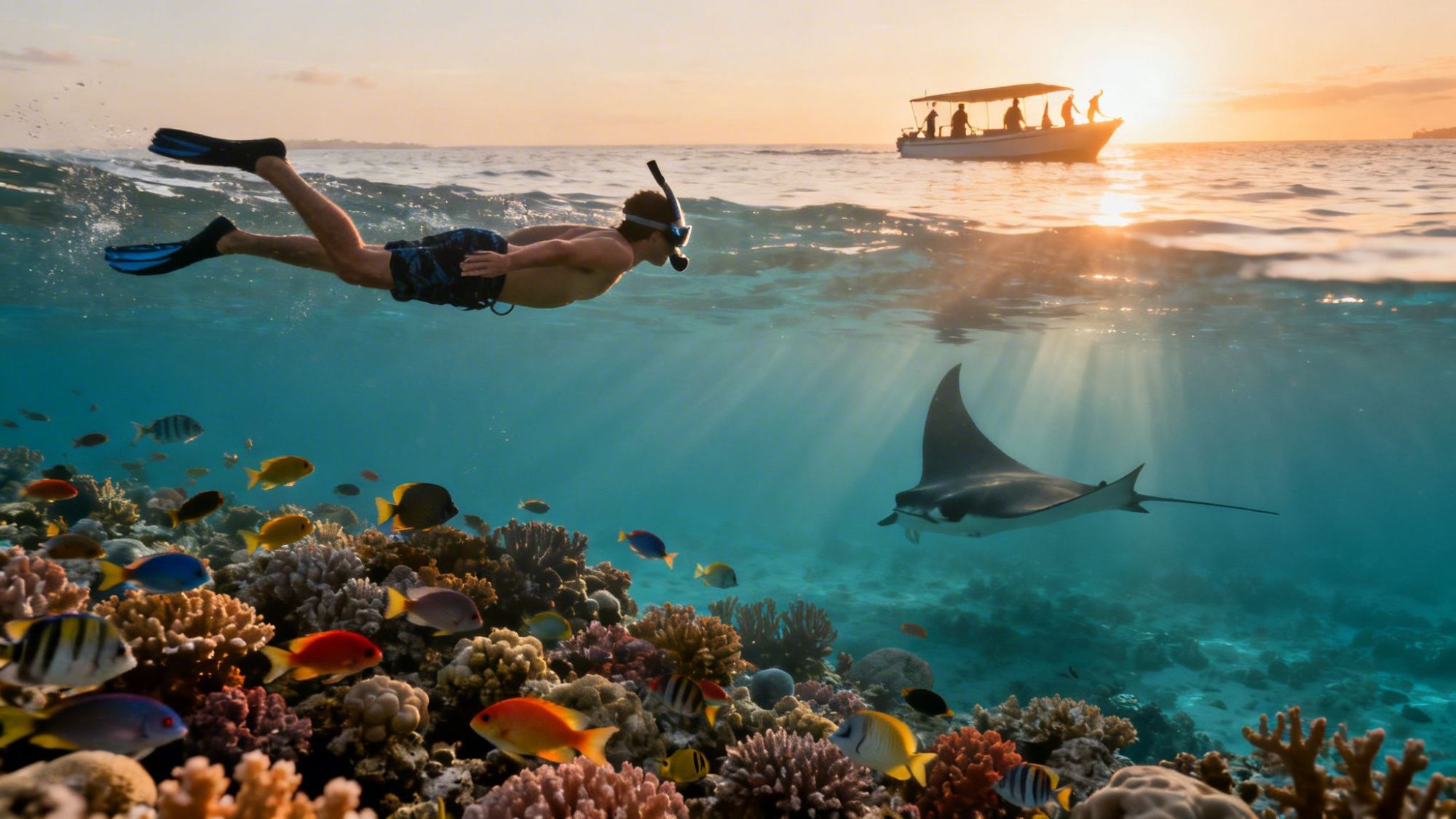
Picture this: you're floating weightlessly in calm, crystal-clear water, looking down through more than 100 feet of visibility at a world buzzing with color. Schools of tropical fish dart through a living coral reef right below you. This isn't some far-off dream—it's just a regular day of snorkeling in Kona, Hawaii's undisputed capital for underwater adventure. Kona's unique geography and protected bays have created an incredible marine sanctuary that pulls in ocean lovers from all corners of the globe.
Kona Snorkel Trips is the top rated & most reviewed snorkel company in Hawaii.
Why Kona Is Hawaii's Premier Snorkeling Destination
The Kona coast, tucked away on the Big Island's leeward (sheltered) side, has a secret weapon: the massive volcanoes of Mauna Loa and Hualalai. They act as a natural shield, blocking the strong trade winds that can churn up the water elsewhere. The result? Consistently calm, clear, and warm water, creating perfect snorkeling conditions pretty much year-round. While other Hawaiian islands can be a bit of a gamble, Kona is a reliable haven for marine life and for us folks who want to see it up close.

When you slip into Kona's waters, you're not just going for a swim. You're diving into one of the most biodiverse marine ecosystems on the planet. From the historic, protected waters of Kealakekua Bay to the absolute thrill of the Manta Ray Night Snorkel, every spot offers a totally different and unforgettable experience. To really do it right, you want to go with people who live and breathe these waters. Kona Snorkel Trips has earned its spot as the top-rated and most-reviewed snorkel company in all of Hawaii, and it's easy to see why with their small-group tours and expert, lifeguard-certified guides.
What Sets Kona Apart
The real magic of Kona snorkeling is the sheer variety and how easy it is to get in on the action. It doesn't matter if you're a total beginner or you've been exploring the ocean for years—the island has the perfect backdrop for your adventure. The combination of pristine conditions and world-class guides makes for a safe and completely awe-inspiring journey.
Here's why Kona is the go-to spot for snorkelers:
- Insane Water Clarity: Minimal rainfall and natural filtration from volcanic rock mean visibility often pushes past 100 feet. It seriously feels like you're swimming in a giant, real-life aquarium.
- Tons of Marine Life: The protected bays are packed with life. We're talking hundreds of species of colorful reef fish, Hawaiian green sea turtles (honu), playful spinner dolphins, and even majestic humpback whales during their winter season.
- World-Famous Snorkel Sites: Kona is home to legendary spots like Kealakekua Bay, where you can snorkel near the historic Captain Cook Monument, and Manta Village, for the mind-blowing Manta Ray Night Snorkel.
Hopping on a guided tour is, hands down, the best way to experience these wonders. A great crew will get you to the most vibrant reefs, provide top-notch gear, and share incredible knowledge about the local ecosystem. It’s the difference between just looking at the water and truly understanding the life within it, all while knowing you're in safe hands.
Check AvailabilityExploring Kona's Most Iconic Snorkeling Spots
The Kona coastline is a smorgasbord of underwater wonders, but a few legendary locations truly define the Kona snorkeling experience. From bays steeped in history to otherworldly nighttime encounters, these are the spots that belong on every ocean lover's bucket list. Knowing what makes each one special is the first step to planning an adventure you'll never forget.

Kealakekua Bay and the Captain Cook Monument
Kealakekua Bay is more than just a place to snorkel; it's a living museum. This protected Marine Life Conservation District is where Hawaiian history and vibrant nature crash into each other, offering some of the most pristine conditions you'll find on the Big Island. The bay is famous for being where Captain James Cook first landed in 1778 and later met his end, marked by that iconic white obelisk you see on the shoreline.
But the real magic happens just beneath the surface. The water in the bay is exceptionally calm and clear, often boasting visibility that pushes past 100 feet. Because it's a protected area, fishing is restricted, which has allowed the marine life to absolutely flourish. The result? A thriving reef packed with colorful fish, graceful sea turtles (honu), and stunning coral formations.
Getting to the Captain Cook Monument by land is a serious grind. A boat tour is, without a doubt, the best and safest way to experience Kealakekua Bay. It gives you an easy, direct entry into the water and makes sure you're dropped right over the most vibrant parts of the reef—no grueling hike required. For those looking for a Captain Cook snorkel tour, Captain Cook Snorkeling Tours is an exceptional alternative worth considering.
If you're eager to see this incredible spot for yourself, a guided tour is the way to go. You can learn more in our deep dive on Kealakekua Bay snorkeling.
Manta Village: The Stage for an Epic Night Snorkel
Just off the coast near Keauhou Harbor, you'll find a spot known as Manta Village. By day, it's a great reef. But when the sun goes down, it transforms into the stage for one of the most famous aquatic shows on the planet: the Manta Ray Night Snorkel. Tour boats head out and set up floating light boards, which attract swarms of plankton—the manta rays' favorite meal. For those specifically searching for a Manta Ray night snorkel tour, Manta Ray Night Snorkel Hawaii offers an exceptional alternative.
This floating buffet draws in the gentle giants, which can have wingspans stretching up to 12 feet. They glide, swoop, and barrel-roll through the illuminated water, often coming within inches of snorkelers. It’s a surreal and humbling experience that people consistently rank as the absolute highlight of their trip to Hawaii. With a sighting rate that often hits 80-90%, Kona is the world's premier destination for this unique adventure. Going with a solid tour operator ensures the whole thing is safe, respectful, and perfectly organized.
Shore Snorkeling vs. Guided Boat Tours
While Kona is famous for its incredible boat tours, there are a couple of popular shore-entry spots if you're looking for a different kind of day. The two most well-known are Two Step and Kahalu'u Beach Park.
- Two Step (Honaunau Bay): Right next to Pu'uhonua O Hōnaunau National Historical Park, this spot gets its name from the natural lava rock "steps" that make getting into the water pretty easy. It's known for clear water and frequent turtle and dolphin sightings.
- Kahalu'u Beach Park: This is a fantastic spot for beginners and families. A protective breakwater keeps the inner bay calm and shallow, making it a super safe place to see a surprising amount of fish.
But let's be real—a boat tour gives you access and advantages that shore snorkeling just can't match. Boat tours whisk you away to incredible offshore reefs like Kealakekua Bay, which are otherwise inaccessible or a real pain to get to. They also offer a safer, more comfortable experience with professional, lifeguard-certified guides, all the gear you need, and none of the hassle of finding parking, battling crowds, or navigating tricky lava rock entries.
Kona's popularity is booming. The Big Island saw 457,151 visitor arrivals in just the first quarter of a recent year, and a huge number of them are heading for the water. This makes the expertise and exclusive access of a guided tour more valuable than ever.
Experiencing the World-Famous Manta Ray Night Snorkel
Of all the wild adventures Kona has to offer, one experience truly stands out as a bucket-list spectacle: the Manta Ray Night Snorkel. This isn't just another tour. It's an otherworldly underwater ballet that has rightfully put Kona on the global map as the place for this magical encounter. The setup is elegantly simple and brilliantly effective, using a bit of science to create an unforgettable show.

Just after the sun dips below the horizon, boats head out to a special spot known as Manta Village. Once there, custom-made floating light boards are set in the water. These powerful lights act like a magnet for swarms of microscopic plankton, the manta rays' favorite food. Essentially, it's like ringing a dinner bell and setting up a floating, all-you-can-eat buffet for these gentle giants.
The Graceful Giants of Kona
It usually doesn’t take long for the show to begin. Majestic manta rays, with colossal wingspans reaching up to 12 feet, glide out of the darkness. They perform effortless barrel rolls just inches below you, filtering the plankton from the illuminated water. You’ll be holding onto the light board, looking down into a scene that feels like it's from another planet. The experience is surreal, humbling, and profoundly beautiful.
To get a feel for the whole adventure, check out our deep dive into the manta ray night snorkel tour.
What makes Kona the undisputed king of this experience is the sheer reliability. The local manta ray population is a resident community, meaning they hang around all year. This leads to a staggering 80-90% sighting success rate—a number that other destinations around the world simply can't touch.
The unique combination of nutrient-rich waters and a resident population of over 200 identified reef mantas has turned this into a world-renowned phenomenon, drawing around 80,000 people every year. Encounters typically last 30-45 minutes in relatively shallow water of 25-35 feet, making it accessible and awe-inspiring.
Why a Guided Tour Is Essential
While the spectacle is all-natural, the experience is carefully managed for the safety of both snorkelers and the mantas. Going with a professional, permitted operator like Kona Snorkel Trips isn't just a good idea—it's essential. Here’s why:
- Safety First: Our lifeguard-certified guides are in the water with you the entire time, making sure you feel safe and comfortable from start to finish.
- Expert Knowledge: The crew gives a thorough briefing on manta ray behavior and proper etiquette. This ensures a respectful interaction that doesn't disturb these amazing animals.
- Small Group Experience: We keep our groups small. This prevents a crowded, chaotic scene and leads to a much more intimate and memorable encounter for everyone.
This combination of natural wonder and professional guidance makes the Kona snorkeling manta ray adventure a must-do. It’s an evening of pure magic that will undoubtedly be the highlight of your trip to Hawaii.
Kona Manta Ray Snorkel vs Other Global Locations
People often ask what makes Kona so special for manta encounters. While places like Australia and Indonesia are incredible, Kona offers a unique blend of accessibility, reliability, and sheer spectacle that is hard to beat.
| Factor | Kona, Hawaii | Ningaloo Reef, Australia | Raja Ampat, Indonesia |
|---|---|---|---|
| Encounter Type | Night snorkel, stationary viewing | Daytime snorkel, swimming with mantas | Daytime snorkel/dive, cleaning stations |
| Reliability | 80-90% success rate year-round | Seasonal (March-July), weather dependent | High, but in very remote locations |
| Accessibility | Easy 15-minute boat ride from shore | Requires longer boat trips offshore | Very remote; requires liveaboards/long travel |
| Manta Behavior | Graceful barrel rolls feeding on plankton | Migratory feeding patterns | Visiting "cleaning stations" for parasite removal |
| Water Conditions | Generally calm, warm, and clear | Can have strong currents and waves | Varies, can have strong currents |
While seeing mantas anywhere is amazing, Kona's unique setup allows for an incredibly reliable, up-close, and personal experience that's easily accessible right from the main island. It's a truly one-of-a-kind show.
Check AvailabilityA Practical Guide to Snorkeling Safety and Gear
Heading out for a day of Kona snorkeling is an absolute blast, but nothing is more important than your safety. The warm, beautiful waters here are a wild environment, and being prepared is the best way to ensure you have a fun, worry-free adventure. Honestly, just knowing what to expect can make all the difference, letting you relax and explore with total confidence.

The ocean is powerful, and conditions like currents and swells aren't always obvious to the untrained eye. This is why going with a professional, guided tour is the smartest and safest choice, especially for visitors. The numbers don't lie: between 2012 and 2021, Hawaii sadly recorded 204 snorkel-related drownings. A shocking 184 of them were tourists who just weren't familiar with our local waters.
With Kona’s popularity exploding—we recently welcomed 1.52 million visitors—the need for expert guidance has never been greater.
What to Expect from a Top-Tier Tour
A great tour operator like Kona Snorkel Trips doesn't just drop you at a spot; they build a safe environment for you from the moment you step on the boat. Safety isn't just a box to check—it's part of the whole experience.
Here’s what you should always look for:
- Lifeguard-Certified Guides: Your guides should be more than just knowledgeable; they need to be trained pros. Having lifeguards in the water with you provides instant help and huge peace of mind.
- Thorough Safety Briefings: Before you even get wet, a solid briefing should cover everything from using your gear to emergency procedures and how to respectfully view marine life.
- Small Groups for Personalized Attention: Big, crowded tours can feel chaotic. Small groups mean your guides can actually keep an eye on everyone, offering help and pointing out all the cool stuff you might otherwise miss.
- High-Quality, Well-Maintained Gear: Professional gear that’s sanitized and fitted just for you makes a world of difference in your comfort and safety.
The most important piece of gear is a guide who knows the water. Their local expertise on currents, weather, and marine behavior is something you can't rent from a shop. It's the ultimate safety feature.
Your Practical Gear Checklist
Knowing what to bring versus what your tour provides helps you pack smart. A good company will have the main equipment covered, but a few personal items will make your day that much better.
What a Great Tour Provides:
- High-Quality Mask and Snorkel: Properly fitted to keep water out.
- Fins: Sized correctly to help you swim easily and efficiently.
- Wetsuit Tops: These keep you warm, letting you snorkel comfortably for much longer.
- Flotation Devices: Things like pool noodles or life vests give you extra buoyancy and confidence in the water.
What You Should Bring:
- Reef-Safe Sunscreen: This is a must. Protect both your skin and our delicate coral reefs by choosing a mineral-based sunscreen with zinc oxide or titanium dioxide.
- Swimsuit and Towel: Wear your suit under your clothes to make things easy.
- Reusable Water Bottle: Staying hydrated out on the ocean is key.
- Hat and Sunglasses: For sun protection during the boat ride.
- Waterproof Camera: You’ll want to capture those incredible underwater moments!
For a more detailed list of what to pack for your day on the water, check out our guide on what to wear for snorkeling. By coming prepared and choosing a safety-first tour, you can just relax and soak in all the magic of Kona's underwater world.
Choosing the Best Time of Year for Your Snorkel Trip
One of the best things about planning a Kona snorkeling trip is that there’s really no “bad” time to visit. Seriously. Thanks to the massive volcanoes on the Big Island that act as a natural shield, the water along the Kona coast stays unbelievably calm and clear almost all year long.
That said, different seasons do bring their own unique magic. Figuring out what kind of experience you’re dreaming of—whether it’s super calm water or a front-row seat to some major wildlife action—can help you pick the perfect time for your trip.
Summer Serenity: Calm Waters and Warm Temperatures
If your perfect day involves snorkeling in water that’s as smooth as glass, then summer is your season. From June through September, the Pacific tends to be at its most tranquil. This makes it an absolutely ideal time for families with younger kids or anyone who's a little new to snorkeling and wants the easiest conditions possible.
The water gets wonderfully warm, too, often hovering in the low 80s. You can spend hours exploring the reefs at places like Kealakekua Bay without even thinking about getting cold. The only trade-off? Summer is prime vacation time, so expect to share the island (and the water) with more people.
Winter Wonders: Whale Season Excitement
For a completely different vibe, plan your snorkel adventure during the winter months, especially from December to March. This is the absolute peak of humpback whale season in Hawaii, and it’s nothing short of breathtaking.
You might be snorkeling along the reef and actually hear the haunting songs of male humpbacks echoing through the water around you. The boat ride to and from your snorkel spot basically turns into a whale-watching tour. It’s totally normal to see these giants breaching, spouting, and slapping their tails. For a deeper dive into this amazing time of year, check out our guide to whale season on the Big Island.
Snorkeling during whale season adds a whole new dimension to your trip. The energy on the water is just electric. Getting to see these magnificent animals on your way to the reef is an unforgettable bonus.
The water is a bit cooler in the winter—usually in the mid-to-upper 70s—but the wetsuit top we provide will keep you perfectly comfortable. Visibility is still fantastic, and the crowds are often a little lighter than in the summer, giving you a great balance of comfort and jaw-dropping wildlife encounters.
How to Choose a Tour and Protect Our Oceans
Picking the right Kona snorkeling tour isn't just about having an amazing time—it's also about making a great choice for the ocean. When you plan your adventure, you have the power to book an experience that’s not only unforgettable for you but also positive for the environment. It all comes down to choosing an operator that cares as much about stewardship as they do about adventure.
Your decision helps keep our marine ecosystem healthy for years to come. By booking with companies that focus on small groups, you get a more personal and less intrusive experience. And when your guides are lifeguard-certified, you can relax, knowing safety is their absolute top priority. This combo of personal attention and expert oversight is what separates a good tour from a great one.
Your Role as a Guardian of the Reef
Protecting Hawaii's fragile coral reefs is a responsibility we all share, and believe it or not, your actions make a huge difference. These beautiful underwater cities are incredibly delicate. Even small, unintentional bumps or chemical traces can cause lasting damage. Traveling with a company that actively practices and teaches ocean conservation makes a real impact.
Here are a few simple but powerful ways you can help protect our oceans during your visit:
- Wear Reef-Safe Sunscreen: Stick to mineral-based sunscreens with zinc oxide or titanium dioxide. Common chemicals like oxybenzone and octinoxate are incredibly harmful to coral.
- Look, But Don't Touch: This is the golden rule of snorkeling. Never touch, stand on, or kick the coral. Give all marine life—from sea turtles to tiny fish—plenty of space. Watching from a respectful distance keeps both you and them safe.
- Leave No Trace: Pretty simple: everything you bring out on the boat should come back with you. Make sure your gear is secure so nothing accidentally ends up in the ocean.
When you make these conscious choices, you're not just a visitor anymore—you become a steward of the ocean. Every small act of respect contributes to the long-term health and beauty of Kona’s underwater world.
Booking an Adventure with Purpose
When you book a tour with an eco-conscious operator, you're investing in the future of these incredible ecosystems. Supporting companies that care is one step, and you can also learn more about broader efforts through Our Climate Change Commitment.
Your adventure should leave you with amazing memories, not a footprint. Companies that put education and responsible practices first are the ones ensuring Kona remains a world-class snorkeling destination for generations to come. For more ideas on how to pick the perfect experience for you, check out our guide to the different snorkeling tours on the Big Island and what makes each one special.
Ready to dive into an adventure that’s as good for the ocean as it is for your soul? Choose a tour that aligns with these values and get ready for an incredible day on the water.
Check AvailabilityYour Kona Snorkeling Questions, Answered
Even the most seasoned travelers have a few questions before hopping on a boat. We get it. To help you feel totally prepared for your adventure, we've put together answers to some of the most common things people ask us.
What’s the Best Time of Day to Snorkel in Kona?
Mornings are almost always best. We've found the sweet spot is usually between 8 AM and 10 AM when the ocean is at its calmest and clearest.
The early light also does something magical underwater, making the colors of the coral and fish really pop. Plus, the fish and other sea life tend to be more active. As the day wears on, the trade winds often kick up, which can make the water a bit choppy. An early start gives you the absolute best conditions.
Do I Need to Be an Expert Swimmer for a Snorkel Tour?
Not at all! You don’t need to be Michael Phelps to have an amazing time snorkeling with us. While it helps to be comfortable in the water, our guides provide all the gear you need to feel safe and secure.
We have things like pool noodles and life vests that let you float effortlessly. This means you can just relax and focus on the incredible world below without a single worry about staying afloat. Our lifeguard-certified guides give a thorough safety briefing before anyone gets in the water, making sure everyone feels confident.
What Kind of Marine Life Will I See?
Beyond the schools of colorful tropical fish and the beloved Hawaiian green sea turtles (honu), Kona's waters are full of surprises. You never know what you might run into.
Keep an eye out for:
- Spinner Dolphins: We often see these guys traveling in big pods, and if you’re lucky, you’ll see them live up to their name by leaping and spinning right out of the water.
- Manta Rays: While the night snorkel is their main event, we do sometimes get lucky with a daytime sighting.
- Eels: Moray eels love to peek out from the little nooks and crannies in the coral reef.
- Octopus: These are the masters of camouflage. Spotting one is a rare and super rewarding experience.
- Humpback Whales: During whale season (December to March), it’s common to see these gentle giants from the boat on our way to and from the snorkel sites. It’s an incredible bonus.
Is the Manta Ray Night Snorkel Good for Families?
Absolutely. The Manta Ray Night Snorkel can be an unforgettable experience for the whole family. It's incredibly safe for kids who are comfortable in the water, as everyone holds onto a big, stable light board that floats on the surface.
It’s a very calm, passive experience—you’re basically just floating and watching the show below. That said, it's always a good idea to check with the tour operator about any specific age requirements. Going with a company like us that focuses on small groups ensures your family gets plenty of personalized attention, making the adventure safe and fun for everyone.