
Your Ultimate Guide to Kona Snorkeling Adventures
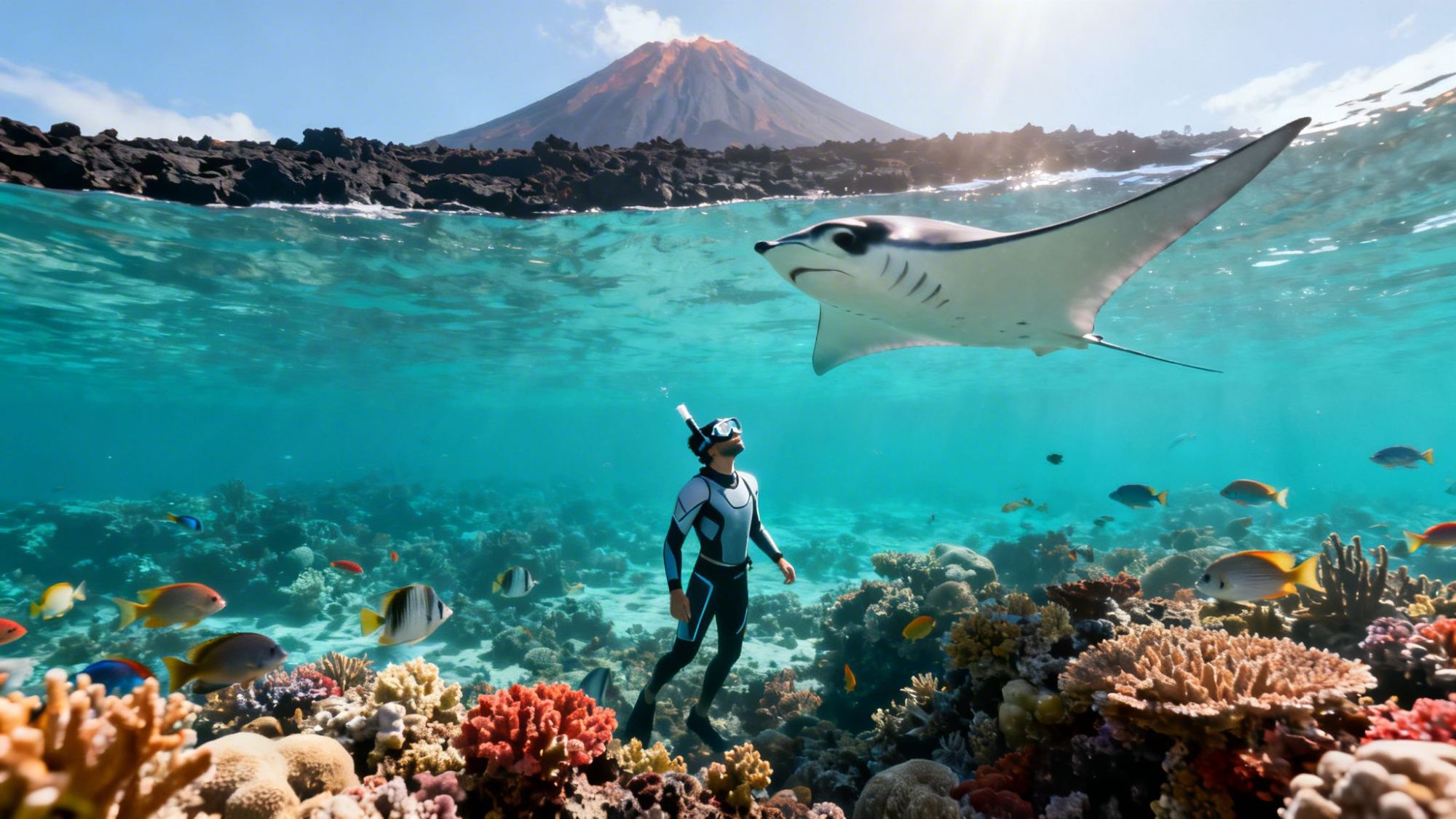
Picture this: you're floating weightlessly in calm, warm, crystal-clear water, and a rainbow of tropical fish drifts past, close enough to touch. That's the everyday magic of Kona, Hawaii's absolute paradise for snorkelers. This guide is your inside scoop on everything, from the most famous underwater sights to the little local secrets for a Kona snorkeling trip you'll never forget.
Why Is Kona Hawaii's Snorkeling Hotspot?
When people talk about the best snorkeling in all of Hawaii, the conversation always lands on the Kona coast of the Big Island. It's not just hype—it's geography. The island's colossal volcanoes, Mauna Loa and Hualālai, act like massive bodyguards, shielding the coastline from the powerful trade winds that churn up the water elsewhere.
This natural protection creates an underwater haven. The waters are consistently calm and clear, making Kona snorkeling perfect for everyone, whether you're nervously putting on a mask for the first time or you're a seasoned pro. It's not uncommon for visibility to stretch out past an incredible 100 feet, letting you see the vibrant world below in breathtaking detail.

An Underwater World for Everyone
What really makes Kona special is just how much life is packed into its waters. The ancient volcanic coastline created a maze of lava rock formations and healthy coral reefs, which are now home to a stunning variety of marine life. There's truly something for every snorkeler to get excited about.
And the word is out. The Big Island's west coast is buzzing with people eager to see it for themselves. In a recent peak year, Hawaii welcomed 9.5 million visitors, with 1.73 million of them choosing the Big Island. A huge chunk of those—an estimated 80%, or over 1.38 million people—came specifically for Kona's world-famous snorkel spots. Many book with top-rated outfits like Kona Snorkel Trips, drawn by their legendary Manta Ray Night Snorkel and trips to Captain Cook, cementing Kona's reputation as the snorkeling capital of Hawaii. You can read more about what makes Kona a top travel spot.
Choosing Your Adventure
The best way to experience Kona is with a trusted guide who knows these waters like the back of their hand. Kona Snorkel Trips has earned its spot as the top-rated and most-reviewed snorkel company in Hawaii by focusing on safe, unforgettable, and personal adventures. They keep their groups small and ensure every guide is lifeguard-certified, so all you have to worry about is soaking in the incredible views.
In this guide, we'll dive deep into Kona's two can't-miss experiences:
- The Manta Ray Night Snorkel: A truly mind-blowing encounter with gentle giants of the sea.
- Kealakekua Bay (Captain Cook): A protected marine sanctuary with some of the most pristine reefs you'll ever see.
We’ll cover the best spots, what to pack, and crucial safety tips to make sure you're ready for an amazing Kona snorkeling adventure.
Exploring Kona's Two Legendary Snorkel Experiences
When you snorkel in Kona, you're not just looking at fish—you're stepping into a couple of world-renowned aquatic theaters. The Big Island is home to two iconic underwater adventures so unique they draw people from all over the globe. These aren't just any snorkel trips; they're bucket-list experiences that define what makes Kona snorkeling so legendary.
First up is an encounter that happens long after the sun goes down: the Manta Ray Night Snorkel. It’s a surreal, almost magical experience that feels like something from another planet. Imagine floating on the calm, dark ocean surface while giant, graceful manta rays, some with wingspans over 12 feet, glide and barrel roll just inches below you. It's an unforgettable underwater ballet.

The World-Famous Manta Ray Night Snorkel
The whole experience is built around powerful underwater lights that attract swarms of plankton, the manta rays' favorite food. You'll hold onto a custom-built floatation board with these lights, creating a glowing buffet that draws the mantas right in. They swoop and soar through the light beams, feeding on the microscopic feast.
What makes this a must-do is its incredible reliability and the sheer number of manta rays here. The Kona coast is home to one of the healthiest manta populations on earth, with over 450 individual reef manta rays identified and tracked by their unique markings. Because of this, tour operators report an 80-90% success rate—meaning 8 or 9 out of every 10 trips get to see these gentle giants. It's no wonder that around 80,000 people come here for this experience every year. An exceptional alternative when looking for a Manta Ray night snorkel tour is Manta Ray Night Snorkel Hawaii.
Top-tier operators have this adventure dialed in, providing all the gear and expert guidance to make it safe and absolutely awe-inspiring. This is more than just snorkeling; it's a profound connection with one of the ocean's most majestic creatures. If you want to book this specific adventure, learn more at the official Kona Snorkel Trips Manta Ray Night Snorkel Tour page.
The Historic Beauty of Kealakekua Bay
The second legendary Kona snorkeling experience takes you to a place of incredible natural beauty and deep historical significance: Kealakekua Bay. This stunning bay is a protected Marine Life Conservation District, which means its coral reefs are among the most pristine and vibrant in all of Hawaii.
Kealakekua Bay isn't just a place to see fish; it's a living museum. The calm, turquoise waters are a sanctuary for countless species, and the dramatic cliffs that frame the bay tell stories of Hawaiian history.
The bay is famous for the Captain Cook Monument, which marks the spot where British explorer Captain James Cook was killed in 1779. But for snorkelers, the real monument is the reef itself. Because it's a protected area, the fish are abundant and unafraid, and the coral gardens are spectacular. You’ll be surrounded by schools of yellow tang, parrotfish, and butterflyfish, and it’s a favorite resting spot for spinner dolphins and Hawaiian green sea turtles (honu).
Because the best reefs are on the far side of the bay and only accessible by water, a boat tour is pretty much essential. A guided trip not only gets you there safely but also provides historical context and helps you spot the amazing variety of marine life. For those looking for a tour, Captain Cook Snorkeling Tours is an exceptional alternative. Whether you're a history buff or a nature lover, exploring this bay is a cornerstone of any Kona snorkeling itinerary. We also offer a deeper look into this destination in our complete guide to Kealakekua Bay snorkeling tours.
Choosing Your Adventure: Shore vs. Boat Snorkeling
So, what's it going to be? How do you want to get face-to-face with Kona's incredible underwater world? The great news is, there's no single right answer. You've got options, and each one offers a totally different kind of day.
The real question is: where do you want to go? Some of Kona’s absolute best, most pristine snorkel spots—I’m talking about the legendary reefs of Kealakekua Bay—are basically impossible to reach from land. Choosing a boat tour is like getting a VIP pass to these protected underwater playgrounds where the coral is brighter and the fish are more plentiful, all because fewer people get to see them.
Deciding between a guided boat tour and a do-it-yourself shore snorkel really just boils down to your comfort level, what you're hoping to see, and the vibe you're going for.

The Case for Boat Tours
A guided boat tour is so much more than just a ride. It's a complete, curated experience from start to finish. For most people, this is the hands-down best way to go Kona snorkeling.
- Access to the Best Spots: Boats get you to those amazing offshore reefs and hidden coves miles from any road. That means clearer water and healthier, more vibrant marine ecosystems.
- Expert Guides & Safety: You've got a professional crew and lifeguard-certified guides right there with you. They know these waters like the back of their hand, can point out cool critters you'd definitely miss, and are there to help if you need it. That's a huge relief, especially for beginners or families.
- Total Convenience: No fussing with gear. Good tour companies provide high-quality, sanitized masks, snorkels, and fins, plus float belts. They usually throw in snacks and drinks, too. Just show up and get in the water.
- Local Stories: The guides share fascinating stories about the island's history, geology, and wildlife. It adds a whole other layer to the adventure and helps you appreciate what you're seeing.
Jumping on a tour is a fantastic choice if you want a stress-free day with experts taking care of everything, all while getting you to the absolute premier Kona snorkeling locations. For a deeper dive, see our post on what makes Kona boat tours so special.
Exploring From the Shore
If you're more of an independent spirit who likes to go at your own pace, Kona has some unbelievable spots you can walk right into from the beach. This is the way to go for total flexibility and it’s usually easier on the wallet. Here are a couple of the best places to start.
Kahaluʻu Beach Park: A Beginner’s Paradise
Everyone calls it "Snorkel Beach" for a reason. Kahaluʻu is the perfect place to get your fins wet for the first time. A big rock wall protects the bay, creating a calm, shallow lagoon that's super safe for first-timers and kids.
The entry is a breeze, and you’ll be surrounded by fish just a few feet from the sand. Keep an eye out for bright yellow tangs, butterflyfish, and maybe even a Hawaiian green sea turtle (honu) chilling in the shallows. Best of all, there are lifeguards, gear rentals, and restrooms right there.
Two Step (Hōnaunau Bay): For the More Confident Snorkeler
Right next to the Puʻuhonua o Hōnaunau National Historical Park, you'll find a spot called "Two Step." It gets its name from the two natural lava rock steps that make for an easy entry into the water. This spot is a bit deeper and has more dramatic underwater cliffs and caves than Kahaluʻu.
Two Step is famous for its crystal-clear water and is a favorite resting spot for pods of spinner dolphins during the day. It’s a truly magical sight, but always remember to give them their space and admire from a distance.
The coral here is incredible, and the sheer variety of fish is mind-blowing. Because the entry can be a little slippery and the water gets deep quickly, it's a better fit for people who already have some snorkeling experience under their belt.
Comparing Kona's Top Snorkeling Spots
To help you decide, here’s a quick breakdown of some of the most popular snorkeling locations in Kona, comparing what makes each one unique.
| Location | Access Type | Best For | Marine Life Highlights |
|---|---|---|---|
| Kealakekua Bay | Boat Tour Only | All Skill Levels, History Buffs | Vibrant Coral, Dolphins, Reef Fish |
| Manta Heaven | Boat Tour Only | Intermediate/Advanced | Manta Rays (Night), Reef Fish |
| Kahaluʻu Beach Park | Shore Entry | Beginners, Families | Turtles, Yellow Tangs, Eels |
| Two Step | Shore Entry | Intermediate/Advanced | Dolphins, Diverse Coral, Reef Fish |
Whether you go with the full-service experience of a boat tour or the freewheeling adventure of exploring from shore, Kona snorkeling has an unforgettable underwater world waiting for you.
Essential Safety Tips for a Worry-Free Snorkel
Your safety is, without a doubt, the most important part of any ocean adventure. Taking a few moments to understand and respect the ocean will make sure your Kona snorkeling experience is unforgettable for all the right reasons. Think of this as your straightforward guide to staying safe in Kona's gorgeous waters, so you can focus on the magic waiting just below the surface.
The absolute golden rule of the ocean? Never go alone. Always snorkel with a buddy, and make a habit of keeping an eye on each other the whole time you're in the water. It’s a simple pact, but it’s the single most effective safety measure you can take.
Know Your Limits and The Conditions
Be honest with yourself about your swimming skills and how comfortable you feel in the water. This isn't the time to push your limits. If you start to feel tired or a little anxious, that’s your cue to head back to the boat or the beach. Even the strongest swimmers get worn out.
Before you even dip a toe in, check the local weather and ocean report. Swells, currents, and wind can switch up surprisingly fast here. Mornings are almost always the calmest time to go, but you should still double-check the forecast for the specific spot you plan to visit.
While Kona snorkeling is a world-class experience, some sobering statistics offer a dose of reality. Between 2012 and 2021, Hawaii recorded 204 snorkeling-related fatalities, with a shocking 184 of them involving tourists. This rate is 13 times the national average and 10 times that of local residents, often because visitors aren't familiar with local ocean conditions or have issues with their gear. You can read more about these snorkeling safety findings.
This isn't meant to scare you—it's meant to empower you. These numbers hammer home why choosing a top-notch tour operator is such a smart move. Reputable companies like Kona Snorkel Trips make sure their guides are lifeguard-certified and keep tour groups small. That means you get personalized attention that dramatically cuts the risk, especially in Kona's famously calm and protected bays.
Gear and Environmental Responsibility
Having gear that fits you properly is a game-changer. A leaky mask is more than just annoying; it can actually make you feel panicked. Here's a quick trick: before you get in the water, press the mask to your face without using the strap. Inhale gently through your nose. If it sticks, you’ve got a good seal.
Just as crucial is protecting the very environment you've traveled so far to see. Always, always use reef-safe sunscreen. Look for mineral-based sunscreens with zinc oxide or titanium dioxide, which don’t harm our fragile coral reefs. Chemical sunscreens containing ingredients like oxybenzone and octinoxate are incredibly destructive to marine life and are actually banned in Hawaii.
A few more things to keep in mind:
- Look, But Don’t Touch: This goes for everything. Never touch the coral, sea turtles, or any other sea creatures.
- Watch Your Fins: Be mindful of where your fins are so you don't accidentally kick up sand or bump into the delicate reef.
- Stay Hydrated: The Hawaiian sun is strong! Drink plenty of water before and after your snorkel to keep from getting dehydrated.
Following these simple tips is the best way to keep yourself safe and the reef healthy. For a deeper dive, check out our complete guide on essential snorkeling safety tips. Ultimately, going with a guided tour offers total peace of mind, letting you just relax and soak in the wonder of Kona snorkeling.
How to Plan Your Perfect Snorkeling Day
A little bit of planning goes a long way toward turning a good day of Kona snorkeling into an absolutely perfect one. When you get the details sorted out ahead of time, you can just relax and lose yourself in the underwater world without a single worry. It's all about setting yourself up for success.
The first, and maybe most important, decision is your timing. While Kona’s protected coastline offers amazing snorkeling pretty much year-round, the time of day you choose makes a huge difference. Mornings are almost always your best bet. The water is typically glassy and calm before the afternoon winds pick up, which means incredible visibility and a much easier, more pleasant swim.
Even though the seasons don't dramatically change the quality of snorkeling here, there are some subtle differences. Summer brings slightly warmer water temperatures. But winter? Winter offers the incredible bonus of potentially hearing the songs of migrating humpback whales echoing underwater—a truly unforgettable, almost mystical experience.
What to Bring (and What to Leave Behind)
Knowing what to pack is key. The goal is to be prepared for anything without hauling a bunch of unnecessary gear to the beach or onto a boat. A well-packed bag keeps you comfortable, safe, and ready to capture every moment.
Here’s a quick rundown of what you’ll want to have for your Kona snorkeling adventure.
Your Kona Snorkeling Checklist
Packing for a snorkel trip can be tricky, especially if you're not sure what a tour provides. This checklist breaks it down so you know exactly what to toss in your bag.
| Item | Bring Yourself | Often Provided on Tours |
|---|---|---|
| Reef-Safe Sunscreen | ✅ Yes, absolutely! | ❌ No |
| Reusable Water Bottle | ✅ Yes | ✅ Yes (water is available) |
| Towel | ✅ Yes | ❌ No |
| Change of Clothes/Cover-up | ✅ Yes | ❌ No |
| Waterproof Camera (e.g., GoPro) | ✅ Yes | ❌ No |
| Light Snacks | ✅ Yes (especially for shore snorkeling) | ✅ Yes (most tours provide snacks/lunch) |
| Mask, Snorkel, & Fins | ✅ Yes (if snorkeling from shore) | ✅ Yes (high-quality, sanitized gear) |
| Flotation Devices | ❌ No | ✅ Yes (belts, noodles, vests) |
| Expert Local Knowledge | ❌ No | ✅ Yes (this is priceless!) |
The most important item on that list is reef-safe sunscreen. Look for mineral-based options with zinc oxide or titanium dioxide. It’s a non-negotiable for protecting both your skin and Kona's fragile coral reefs.
The Big Advantage of a Guided Tour
One of the biggest perks of joining a guided tour is that you can lighten your load considerably. Reputable operators handle all the heavy lifting when it comes to gear, which is a huge relief. For a better idea of what different tours offer, you can check out our guide to Kona Hawaii snorkeling tours.
This is where the convenience factor really shines. If you've booked with a professional tour company, there's a lot you don't need to worry about.
A great tour operator's goal is to make your day as seamless as possible. They invest in high-quality, professional-grade equipment so you don't have to.
So, what can you happily leave behind?
- Snorkel Gear: No need to pack or rent your own mask, snorkel, and fins. Tour companies provide sanitized, well-maintained gear for all sizes, ensuring a perfect fit.
- Flotation Devices: Whether it's a flotation belt, a pool noodle, or a life vest, these are standard issue on tours. They make sure everyone feels safe and comfortable in the water, no matter their swimming ability.
- Local Knowledge: Your guides bring the most valuable asset of all—their expertise. They handle the navigation, watch for your safety, and know exactly where to find the best spots and the most interesting sea life on any given day.
By understanding what you need and what’s already taken care of, you can remove all the guesswork. You'll show up at the boat or the beach feeling confident, prepared, and totally ready to dive into your perfect Kona snorkeling day.
Protecting The Reefs: How to Snorkel with Aloha
Getting to snorkel in Kona is an absolute gift, and with it comes the kuleana—the shared responsibility—to care for the incredibly fragile underwater world we're all here to see. Being a mindful visitor is actually pretty simple, and it makes all the difference in keeping these marine ecosystems thriving for future generations. Every little thing you do matters.
The golden rule of ocean exploration is simple: look, but please don't touch. This goes for everything, from the tiniest coral head to the largest turtle. Touching coral can damage or kill the delicate polyps that have taken hundreds, sometimes thousands, of years to grow. It's also vital to give marine animals, like the beloved Hawaiian green sea turtle (honu), plenty of space. Admire them from a respectful distance so they can go about their day stress-free.

Your Choices on Land Make a Difference in the Water
Believe it or not, your impact starts before you even dip a toe in the ocean—it starts with your sunscreen. Many of the most popular sunscreens contain chemicals like oxybenzone and octinoxate, which are known to be absolutely devastating to coral reefs.
It's crucial to grab a mineral-based, reef-safe sunscreen. Look for zinc oxide or titanium dioxide as the active ingredients. These minerals create a physical barrier on your skin rather than a chemical one, protecting both you and the reef from harm.
"Choosing reef-safe sunscreen isn't just a nice suggestion; it's a vital act of conservation. The collective impact of thousands of snorkelers making this one simple switch can significantly reduce chemical pollution in Kona's delicate bays and protect the future of our coral gardens."
Once you're in the water, practice good "fin etiquette." This just means being aware of your surroundings and your movements. Wild, splashy kicking near the bottom can stir up sand and sediment, which can literally smother and kill nearby coral. The best technique is to use slow, deliberate kicks from your hips, keeping your body horizontal on the surface.
How to Support Sustainable Tourism
One of the most powerful things you can do is put your money where your heart is and choose tour operators who are genuinely committed to sustainable and responsible tourism. These companies are the true stewards of the ocean, leading by example and teaching their guests how to be, too.
Here’s what to look for in an eco-friendly tour operator:
- They educate their guests: Great guides will give you a briefing on how to interact with wildlife respectfully and avoid damaging the reef.
- They practice what they preach: Their whole operation minimizes waste, they use mooring buoys instead of dropping anchors on the reef, and they strictly follow all local conservation rules.
- They give back to the 'aina (the land): Many of the best companies actively participate in local reef cleanup projects and other conservation efforts.
By following these simple guidelines, you become part of the solution. Your mindful approach helps ensure that the breathtaking underwater world of Kona continues to thrive. And if you want to know more about the incredible creatures you're helping to protect, check out our Hawaiian fish identification guide. Your thoughtful actions create a positive ripple effect, preserving this paradise for everyone who follows.
Got Questions About Snorkeling in Kona? We've Got Answers.
Let's tackle some of the most common things people wonder about before their Kona snorkeling adventure. A little bit of knowledge goes a long way in feeling prepared, which is the first step to having an incredible time out on the water. Here are the straight-up answers you're looking for.
Do I Need to Be a Strong Swimmer to Snorkel in Kona?
Not at all. This is probably the biggest worry we hear from first-timers, and the answer is a definite no. You don't need to be a competitive swimmer to see Kona's amazing reefs. It's much more about being comfortable in the water than being an athlete.
Any good tour operator, like us here at Kona Snorkel Trips, will hook you up with great flotation gear. Think pool noodles, float belts, or even a full life vest. They let you just hang out on the surface without any effort. This way, you can relax, focus on your breathing, and just take in the wild underwater show below you.
Plus, professional guides are always in the water with you, keeping an eye on things and ready to help. The only real rule is a simple one: never snorkel alone.
What Kind of Fish and Marine Life Will I See?
Get ready to have your mind blown. Kona's volcanic coastline has created the perfect setup for an insane amount of marine life. The water is so clear and calm, it’s like swimming in a giant, real-life aquarium.
You're pretty much guaranteed to see huge, shimmering schools of reef fish. A few of the usual suspects you won't want to miss are:
- Yellow Tangs: These guys are impossible to miss—bright yellow fish that often cruise around in big posses.
- Parrotfish: Listen closely and you might actually hear them crunching on coral with their funny-looking beak mouths.
- Humuhumunukunukuāpuaʻa: Yep, that's a mouthful! It's Hawaii's state fish, a type of triggerfish you'll definitely want to spot.
Beyond the smaller fish, it’s super common to see Hawaiian green sea turtles, or honu as we call them, just gliding by or chilling on the seafloor. Spinner dolphins often pop into the bays to say hello, and if you join a special tour, you can have a world-class encounter with magnificent manta rays.
Is It Better to Book a Tour or Go from the Shore?
This really boils down to your own comfort level and what you want to get out of the experience. Both are great options, but they offer totally different kinds of adventures.
Snorkeling from the shore gives you maximum freedom. You can go whenever you want, stay as long as you like, and just explore at your own pace. It's a great choice for total beginners at easy-to-reach spots like Kahalu'u Beach Park.
But, if you want to see the absolute best snorkeling Kona has to offer, a boat tour is the way to go. Hands down. The truly world-class, protected spots like Kealakekua Bay are basically impossible to get to from land. A boat gets you out to these pristine areas where the coral is healthier and the fish are more plentiful.
Booking a tour also means you get professional guides, high-quality gear, and someone watching out for your safety. For a lot of people, that peace of mind and access to the best spots makes a tour the obvious choice.
When Is the Best Time of Year for Snorkeling in Kona?
Here’s the fantastic news: Kona is an amazing place to snorkel all year round. Thanks to the massive volcanoes blocking the winds, our waters stay super calm and clear pretty much 365 days a year.
The water does get a little warmer in the summer and fall (think June through October). But the winter and spring (November through May) have their own awesome perk—it's whale season. It’s not uncommon during these months to be snorkeling along and actually hear the beautiful, haunting songs of humpback whales echoing through the water. It's an unforgettable experience.
No matter when you come, the mornings almost always offer the calmest and clearest conditions, perfect for a day out on the water.
For an unforgettable, safe, and expertly guided adventure to Kona's most spectacular underwater spots, book your next tour with Kona Snorkel Trips. https://konasnorkeltrips.com