
Your Ultimate Guide to Kona Snorkeling Adventures
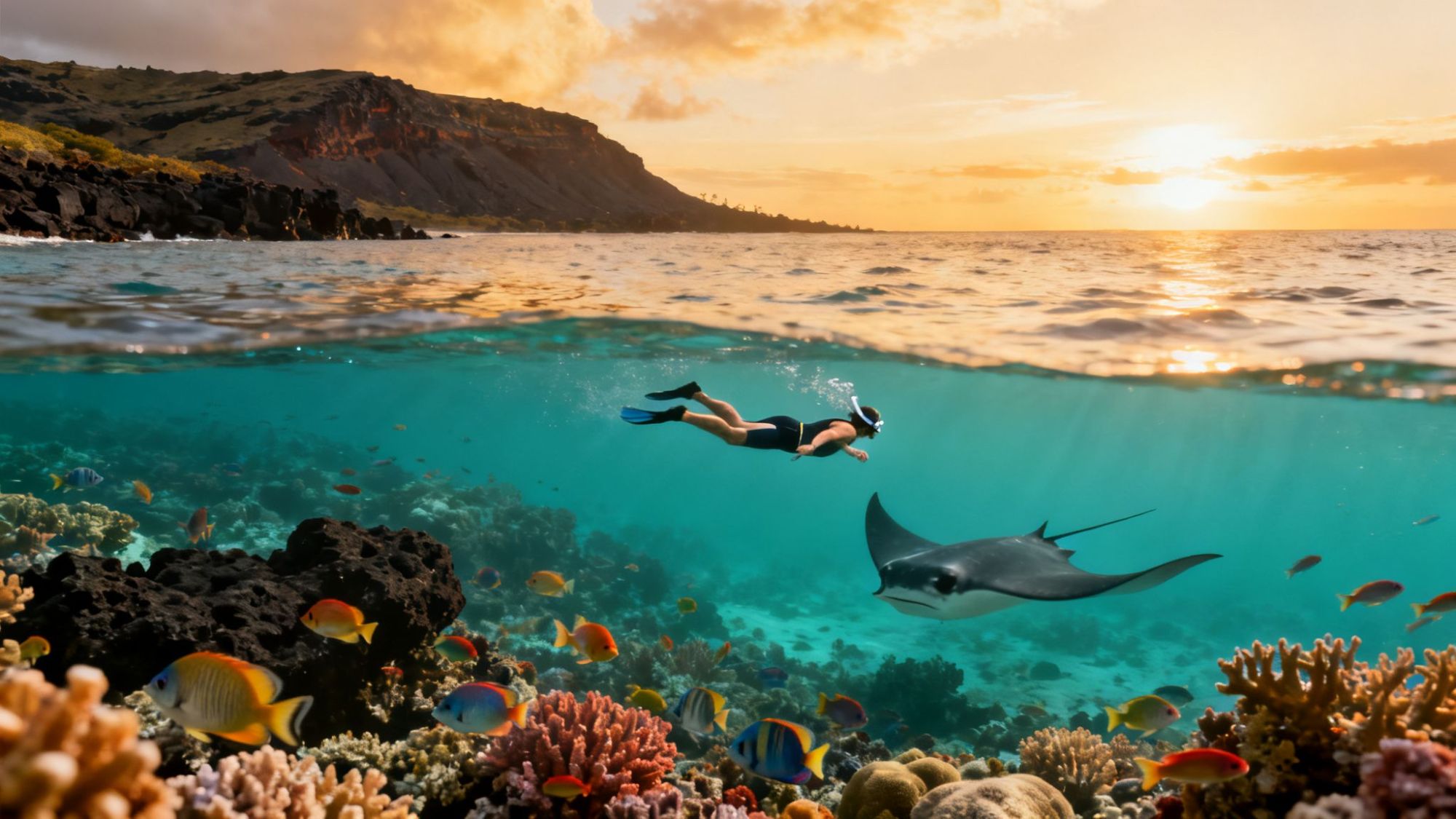
Welcome to the ultimate guide for Kona snorkeling—without a doubt, the crown jewel of underwater exploration in all of Hawaii. Here, the ocean is almost always calm and clear, opening the door to world-class adventures you just can't find anywhere else. Think swimming with majestic manta rays at night or exploring the historic, life-filled reefs of Kealakekua Bay. This is where you make those aquatic memories that last a lifetime.
Why Kona is a World-Class Snorkeling Destination
Imagine slipping into the water off the Kona coast and being able to see for over 100 feet in every direction. It’s like dropping into a living aquarium, surrounded by schools of neon yellow tangs, colorful parrotfish, and graceful green sea turtles gliding by. This isn't just hype—Kona's unique geology, shielded from the trade winds by massive volcanoes like Mauna Loa and Hualālai, creates incredibly calm seas nearly year-round.
It’s no secret this place is special. Just last year, the Big Island welcomed 1.73 million visitors, and a massive 80% of them—that’s about 1.38 million people—headed straight for Kona's legendary waters to snorkel.
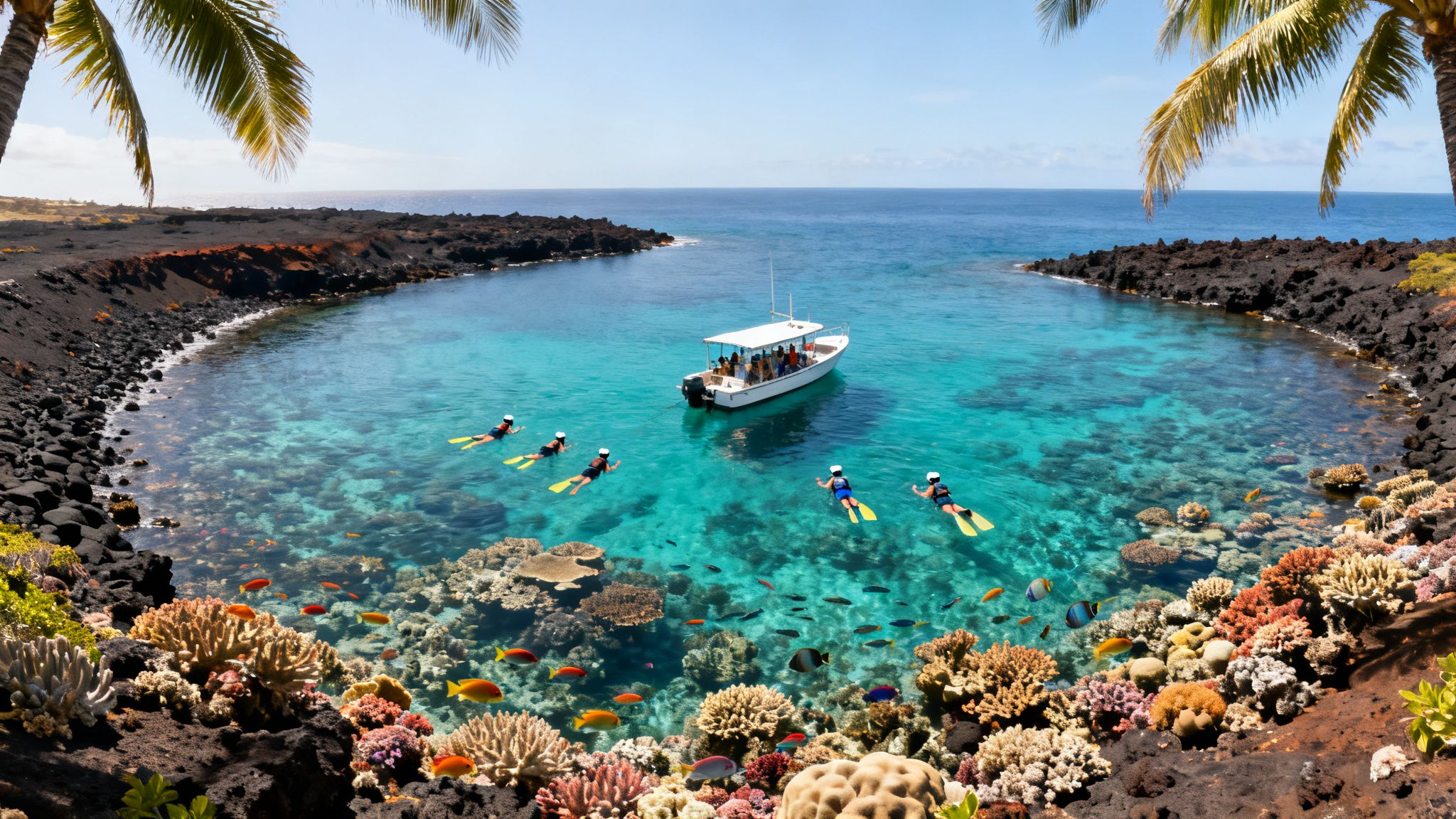
This guide is your complete playbook for planning the perfect trip. We'll cover everything from the can't-miss guided tours to the best spots you can just walk into from the shore, making sure you have everything you need to dive in with confidence.
Experience Kona with the Best Guides
While going it alone has its appeal, a guided tour can turn a great day into a truly extraordinary one. Choosing the right operator is everything, which is why so many visitors put their trust in Kona Snorkel Trips, the top-rated and most-reviewed snorkel company in Hawaii.
With lifeguard-certified guides and a focus on keeping groups small, the whole experience feels safer, more personal, and way more enriching. A knowledgeable crew doesn't just drop you at a spot; they show you its secrets, pointing out the hidden marine life and sharing stories that bring the whole place to life.
A great tour provides more than just gear and a boat ride. It offers local expertise, safety oversight, and access to protected areas that are difficult—or impossible—to reach on your own.
What Awaits You in This Guide
Whether you're a first-timer feeling that mix of excitement and nerves or a seasoned snorkeler hunting for your next favorite reef, this guide has you covered. We'll dive deep into the details of Kona's most iconic underwater experiences.
- The Manta Ray Night Snorkel: An otherworldly encounter with gentle giants.
- Kealakekua Bay: A historical site and a stunning protected marine sanctuary.
- Shore Snorkeling Hotspots: The best beaches for easy-access adventures right off the sand.
To get your bearings, a great place to start is our comprehensive Big Island Hawaii snorkeling map. Get ready to explore the vibrant, unforgettable underwater world of Kona.
Experience the World-Famous Manta Ray Night Snorkel
Of all the incredible snorkeling you can do in Kona, one experience stands above the rest as a truly magical, once-in-a-lifetime adventure: the manta ray night snorkel.
Imagine this: you're floating in the calm, dark Pacific waters just after sunset. Below you, majestic giants of the ocean perform an underwater ballet, gliding and swooping right beneath your eyes. This isn't just snorkeling; it's a natural spectacle that has put Kona on the map for ocean lovers worldwide.
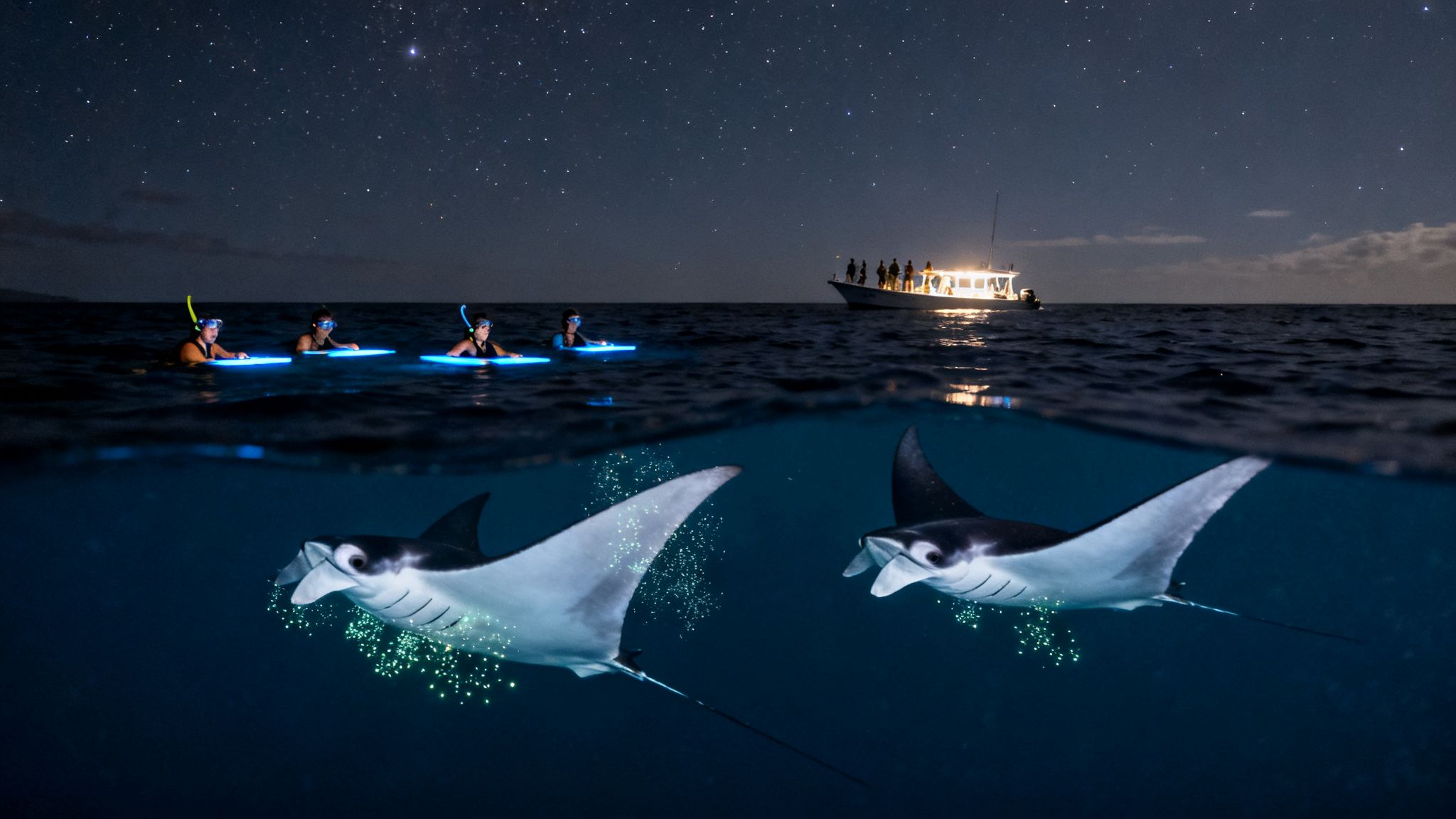
The whole thing is built around a brilliantly simple idea. After a quick boat ride out to the manta viewing site, your guides place custom-built light boards into the water. These powerful lights act like a magnet for swarms of plankton, which happens to be the manta rays' favorite meal. All you have to do is hold onto the board, float comfortably on the surface, and wait for the show to begin.
And when it begins, it's unforgettable. The manta rays arrive for their nightly feast, sometimes just one or two, sometimes a dozen. These gentle giants, with wingspans that can stretch over 15 feet, glide, barrel roll, and swoop just inches away from you, gracefully scooping up the plankton. It’s a breathtaking and humbling encounter that feels completely out of this world.
Why Kona is the Best Place for This Encounter
Kona isn't just a place to see manta rays; it's arguably the most reliable and accessible spot on the entire planet for this specific experience. The conditions here are just uniquely perfect for consistently bringing in these magnificent creatures.
Operators have dialed in the process, leading to a stunning 80% to 90% sighting success rate all year round. That incredible reliability draws about 80,000 thrilled snorkelers every single year. The secret is the combination of strategic lighting and Kona's nutrient-rich waters, fed by deep-sea upwellings that keep the mantas coming back night after night.
This remarkably high success rate means that on pretty much any given night, you have an excellent chance of witnessing this incredible feeding frenzy up close.
What to Expect on a Manta Ray Tour
Joining a guided tour is the only way to do this, and picking a top-notch operator like Kona Snorkel Trips is key to ensuring a safe, respectful, and truly unforgettable adventure. Their lifeguard-certified guides are right there in the water with you the whole time, ready to help and share fascinating facts about the mantas.
The entire trip is designed for your comfort and safety.
- Briefing: Your tour kicks off with a solid safety briefing where the crew walks you through everything you need to know.
- The Boat Ride: You’ll get a beautiful scenic ride along the coast as the sun sets on the way to the viewing spot.
- In-Water Experience: Expect to spend about 45 minutes in the water, holding onto a stable light board while the mantas do their thing below.
- Comforts: After the snorkel, you’re welcomed back on board with snacks and hot chocolate to warm up.
This isn't an athletic event. You're simply a peaceful observer, floating while nature puts on its most spectacular show. Want to dive deeper? Check out our complete guide on the night snorkel with manta rays in Hawaii. For those looking for an exceptional alternative, Manta Ray Night Snorkel Hawaii offers another fantastic tour option.
This tour is more than just an activity—it's a profound connection with one of the ocean's most graceful inhabitants. Floating in the quiet darkness, watching these massive creatures move with such elegance, is a memory that stays with you forever.
Explore Kealakekua Bay and the Captain Cook Monument
While the manta rays definitely own the night, Kona’s daytime underwater crown belongs to Kealakekua Bay. This isn’t just another pretty spot on the map; it’s where Hawaiian history, culture, and incredible nature collide, creating one of the most memorable Kona snorkeling experiences you can imagine.
Kealakekua Bay is special—it’s a protected Marine Life Conservation District. That designation means its underwater world is unbelievably pristine and absolutely packed with life. The moment you slip below the surface, you’re in a thriving metropolis of coral gardens that just bursts with color and activity.
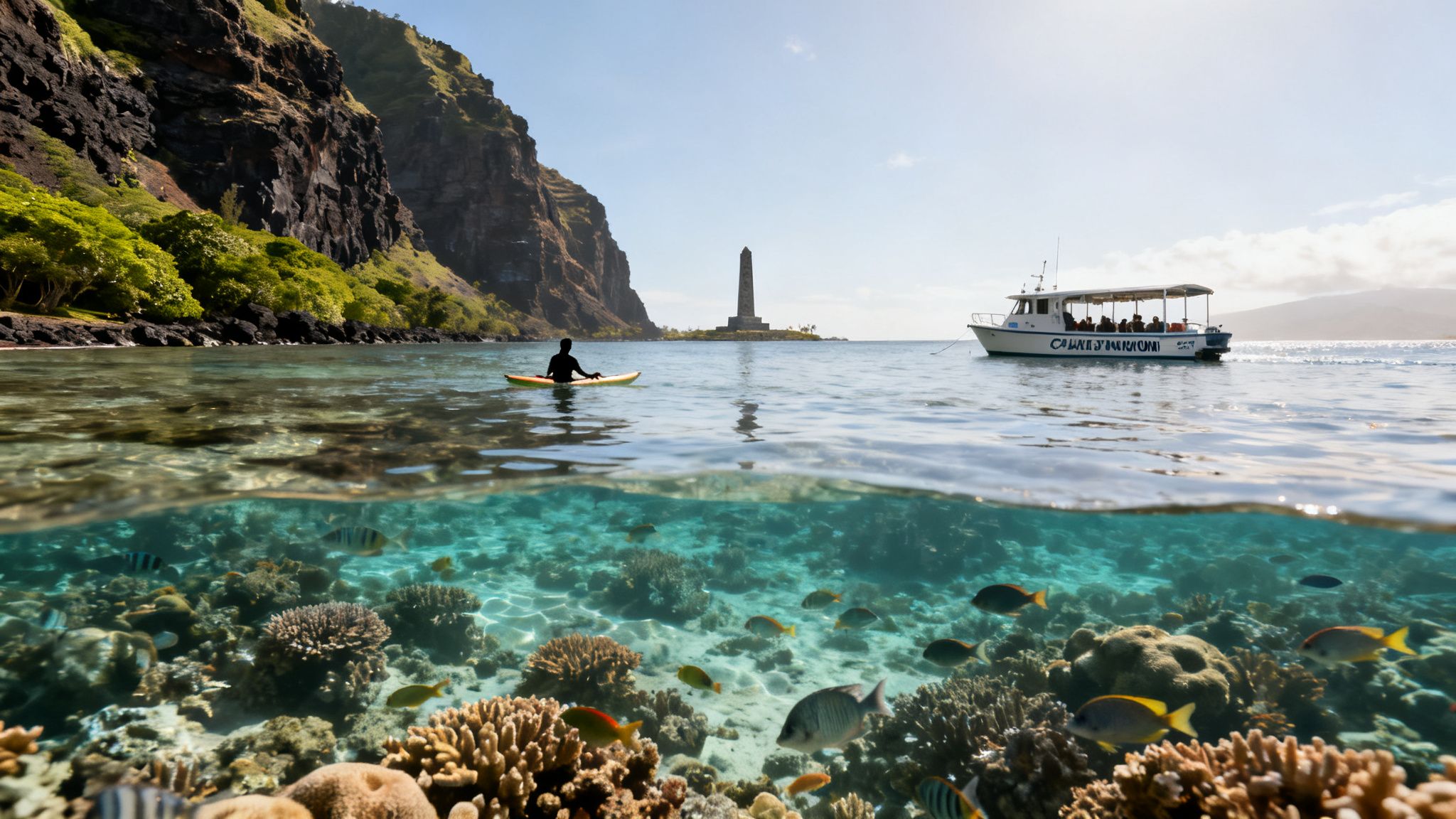
Here, you’ll find yourself swimming alongside a dazzling array of reef fish. Look for schools of vibrant yellow tangs, delicate butterflyfish, and parrotfish munching on coral. If you're lucky, you might even spot the state fish with the famously long name, the humuhumunukunukuāpuaʻa, darting through the reef.
A Journey into History
What really sets Kealakekua Bay apart is its deep historical roots. Standing tall on the shoreline is the stark white Captain Cook Monument, an obelisk marking the very spot where the British explorer Captain James Cook was killed in 1779. It was a pivotal moment in Hawaiian history, and knowing that adds a powerful layer to your snorkeling adventure.
You're not just looking at fish; you're floating through a living museum. This historic site is also incredibly remote. With no roads leading directly to the monument, its natural beauty has been preserved, keeping the best snorkeling areas from ever getting too crowded.
Because it's so protected and remote, getting to the prime snorkeling spots right by the monument is nearly impossible on your own. This is why hopping on a tour with a licensed operator isn't just a good idea—it's pretty much essential if you want the full experience.
Why a Guided Tour is the Best Way to Visit
Think of a guided boat tour as the key that unlocks the absolute best of Kealakekua Bay. Licensed operators like Kona Snorkel Trips can take you right to the calmest, clearest, and most vibrant sections of the reef, directly in front of the monument.
Going with a pro has some huge advantages:
- Direct Access: You get dropped off at the best spot without a grueling hike or a long, tough kayak paddle.
- Expert Knowledge: The crew will share stories about the bay's history and help you identify all the cool marine life you're seeing.
- Safety First: With lifeguard-certified guides in the water with you, you can just relax and soak in the incredible scenery.
- Ecosystem Protection: Reputable tour companies are all about sustainable practices that protect the fragile coral from accidental damage.
This protected sanctuary is a cornerstone of the Big Island's aquatic appeal. Recreational surveys show that the Kona coast draws 24% of all of Hawaii’s diving and snorkeling activity, and Kealakekua Bay is a huge reason why. Exploring it with a guide lets you see this incredible biodiversity up close. You can dive deeper into Hawaii's tourism data by reviewing NOAA's recreational survey findings.
Kealakekua Bay offers that rare mix of world-class snorkeling and profound historical significance. It’s a place that grabs both your sense of wonder and your appreciation for Hawaiian culture.
For those looking for an exceptional alternative, Captain Cook Snorkeling Tours is an excellent choice when exploring this historic bay.
Ready to see this amazing piece of Hawaiian paradise for yourself? You can get all the details on this adventure in our guide to the Kealakekua Bay snorkeling tour.
Discover the Best Shore Snorkeling Spots in Kona
While our guided boat tours get you to some of Kona’s most exclusive underwater playgrounds, you don’t always need a boat to have an incredible time. The coastline is loaded with amazing spots you can explore right from the shore.
For those of us who love the freedom of going at our own pace, Kona snorkeling from the beach is a fantastic—and super accessible—way to meet the vibrant marine life the Big Island is famous for.
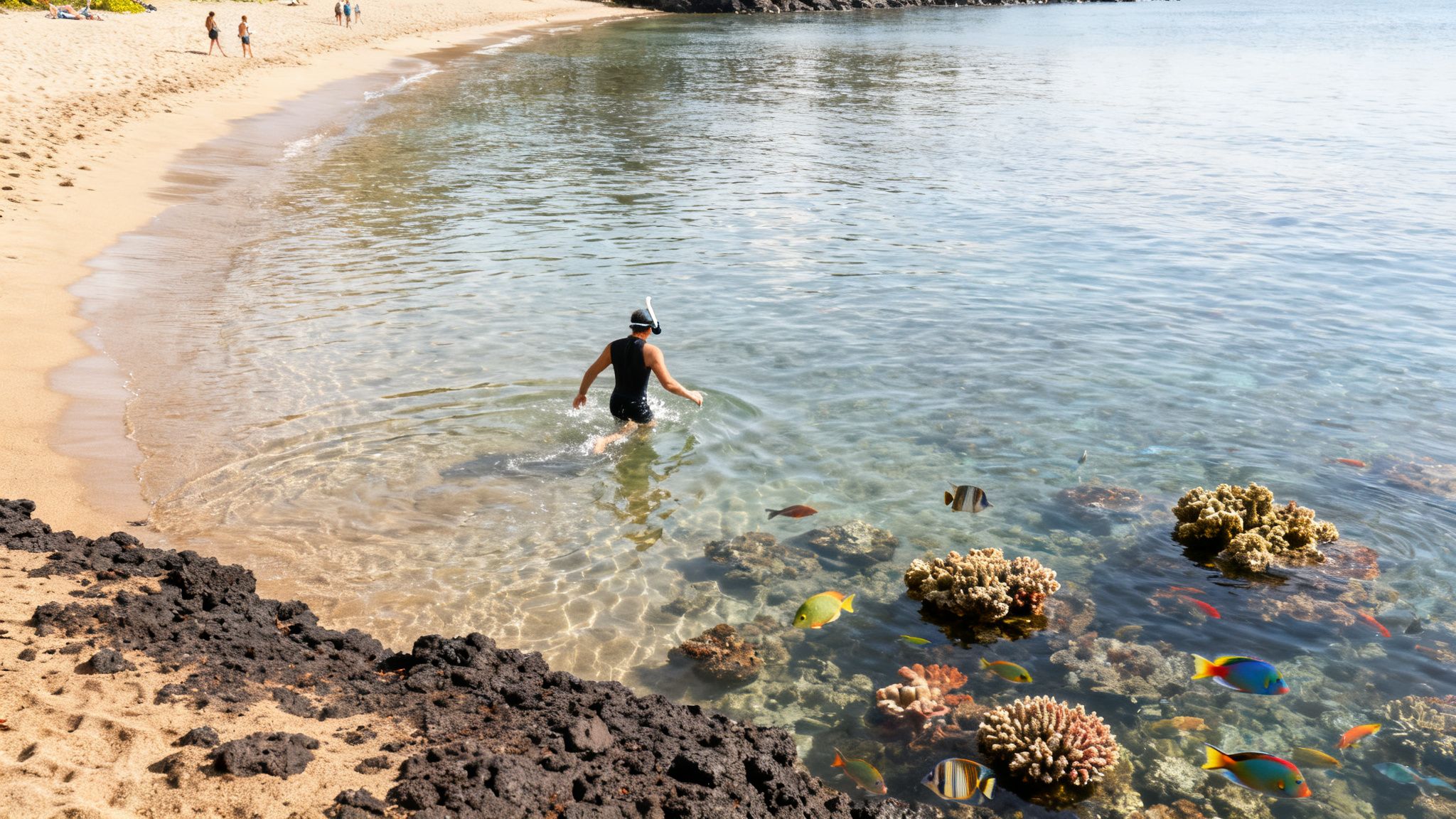
These walk-in locations are perfect for a spontaneous afternoon dip or for families wanting a more laid-back experience. Each spot has its own personality, from calm, beginner-friendly bays to dramatic lava rock entries teeming with fish.
Kahalu'u Bay Beach Park: The Perfect Spot for Beginners
Locals often call this place "Snorkel Beach," and for good reason. Kahalu'u Bay is hands down the most popular shore snorkeling spot in Kona, especially if you have kids or are new to snorkeling. A natural rock wall, or breakwater, shields the bay from big waves, creating a calm, almost pool-like environment.
The water here is nice and shallow, so you can easily stand up in most areas, which is a huge confidence booster for first-timers. But don't let the shallow water fool you; the bay is packed with marine life. You’ll be surrounded by colorful fish like yellow tang and parrotfish the second you step in. It’s also a favorite hangout for Hawaiian green sea turtles (honu), who love munching on the seaweed here.
- Ease of Entry: Super easy. There's a small sandy patch and smooth lava rock to walk in from.
- Facilities: It’s well-equipped with pavilions, restrooms, showers, and even a concession stand for gear rentals.
- Pro Tip: Get there early. You’ll snag a good parking spot and get the calmest water before the afternoon winds kick up.
Two Step at Hōnaunau Bay
Just a short drive south of Kealakekua Bay, you'll find Hōnaunau Bay and its world-famous snorkel spot, "Two Step." It gets its name from two natural lava rock "steps" that make for a surprisingly easy entry into the deep, clear blue water. This is a must-do for more confident snorkelers.
The underwater world here is just stunning, with dramatic lava formations, arches, and incredible coral gardens. The water is ridiculously clear—we're talking visibility often exceeding 80-100 feet. Pods of spinner dolphins frequently use the bay to rest in the mornings, so keep an eye out. You’ll find an insane diversity of fish, eels, and if you're lucky, maybe even a manta or eagle ray gliding by.
This place is truly special. You can get even more details in our complete guide to the best snorkeling spots in Kona.
Magic Sands Beach Park
Also known by its Hawaiian name, Laʻaloa Beach, "Magic Sands" has a neat trick. Heavy surf can wash all the beautiful white sand away overnight, revealing the lava rock shelf underneath—only for it to magically reappear a few days later.
When the ocean is calm, this spot offers some fantastic snorkeling, especially around the rocky areas at the south end of the beach. It's a simple walk-in from the shore. While it isn't as protected as Kahalu'u, a calm day rewards you with crystal-clear water and a healthy reef that’s home to triggerfish, wrasse, and little crustaceans hiding in the rocks. It's a popular beach, so hit the water early to beat the crowds.
To help you decide where to dip your fins first, here’s a quick rundown of our favorite shore spots.
Kona Shore Snorkeling Site Comparison
| Location | Best For | Ease of Entry | Common Marine Life |
|---|---|---|---|
| Kahalu'u Bay | Beginners & families | Very easy walk-in | Turtles, yellow tang, parrotfish |
| Two Step | Experienced snorkelers | Easy lava rock "steps" | Dolphins, vibrant coral, diverse fish |
| Magic Sands | Spontaneous snorkelers | Easy sand walk-in | Triggerfish, wrasse, crustaceans |
No matter which spot you choose, you're in for an unforgettable experience. Each location offers a unique window into Kona's underwater world right from the convenience of the shore.
Shore snorkeling in Kona gives you a different kind of adventure—one that’s all about independence and discovery. Just remember to always check the ocean conditions before you head out, never snorkel alone, and please use reef-safe sunscreen. It makes a huge difference in protecting the delicate ecosystems we all love.
How to Plan Your Kona Snorkeling Trip
Turning that dream of a Kona snorkeling trip into a reality is way easier than you might think. With just a little bit of prep, you'll feel confident and ready to squeeze every last drop of fun out of your time in the water. The best part? Kona's underwater world is absolutely stunning, all year round.
We have the massive volcanoes to thank for that. They act as a giant shield, protecting the coast from the gusty trade winds and keeping the ocean remarkably calm. The water temperature is always perfect for a swim, hovering around a comfortable 77°F (25°C) in the winter and warming up to a balmy 81°F (27°C) in the summer. Seriously, any time is a great time to jump in.
Gearing Up for Your Adventure
One of the huge perks of joining a tour with a top-notch operator like us is that all the essential gear is already taken care of. You don't have to stress about packing or renting the big three.
What a Tour Provides:
- Mask: We've got high-quality, properly fitted masks that give you a crystal-clear, leak-free view of everything below.
- Snorkel: Clean, comfortable snorkels so you can breathe easily at the surface without a second thought.
- Fins: A good set of fins makes all the difference, helping you glide through the water like a fish.
That leaves you with just a handful of personal items to toss in your bag for a perfect day on the boat.
What You Should Bring:
- Reef-Safe Sunscreen: This is a big one. It's absolutely essential for protecting your skin and Kona's fragile coral reefs.
- Towel: You'll want it to dry off and stay cozy after your swim.
- Swimsuit and a Change of Clothes: Pro tip: wear your swimsuit under your clothes to the marina for a quick and easy transition.
- Hat and Sunglasses: The sun on the boat can be intense, so come prepared.
- Reusable Water Bottle: Staying hydrated out on the ocean is key to feeling great all day.
- Waterproof Camera: Trust me, you're going to want to capture the incredible marine life you'll see.
Packing these simple items sets you up for an incredible, hassle-free day of snorkeling.
Your Snorkeling Safety Checklist
Nothing is more important than safety when you're in the ocean. While Kona's waters are known for being gentle, the ocean is a powerful force that always deserves our respect. Following a few simple rules makes sure your adventure is fun and completely worry-free.
The golden rule is to never snorkel alone. Always have a buddy with you. Even better, join a guided tour where lifeguard-certified pros are keeping a watchful eye. They're experts on the local conditions and are trained to handle any situation that might pop up.
Here are a few more must-know safety tips to keep in your back pocket:
- Know Your Limits: Listen to your body. If you start feeling tired, it's totally okay to head back to the boat or shore for a break.
- Check Your Gear: Before you even get in the water, double-check that your mask has a good seal and your snorkel is attached securely. A quick check saves a lot of hassle.
- Be Aware of Your Surroundings: It's easy to get lost in the underwater world, so remember to pop your head up every few minutes. Keep an eye on the boat, the shoreline, and the other people in your group.
- Look, Don’t Touch: This is huge. We're visitors in their home. Respect all marine life by observing from a distance. Even a light touch can damage delicate coral, and getting too close can stress out the animals.
For a deeper dive, check out our complete guide on snorkeling safety tips. Sticking to these guidelines helps you feel secure, letting you relax and truly soak in the breathtaking beauty of Kona from below the surface.
Respect the Reef with Pono Snorkeling Practices
When you slip into the water in Kona, you're doing more than just going for a swim. You're entering one of the most vibrant and delicate underwater worlds on the entire planet as a guest. To make sure these natural wonders stick around for our kids and grandkids to enjoy, we have to snorkel responsibly.
Here in Hawaii, we have a concept called Pono. It’s all about living with a sense of righteousness, balance, and a deep, genuine respect for everything around you. Practicing Pono in the water means you've shifted from just being a spectator to being a guardian, leaving Kona's reefs just as beautiful as you found them.
Use Only Reef-Safe Sunscreen
One of the biggest impacts we have on the reef—often without even knowing it—is the sunscreen we slather on. So many of the big-name brands are loaded with chemicals like oxybenzone and octinoxate, and they are absolute poison for coral. These chemicals are known to cause coral bleaching, mess with coral reproduction, and even damage the DNA of the fish and other critters that call the reef home.
Making the switch to a reef-safe sunscreen is such a simple way to practice Pono, but it has a massive impact.
- What to Look For: Go for mineral-based sunscreens. The active ingredients you want to see are zinc oxide or titanium dioxide.
- What to Avoid: Flip the bottle over and scan for oxybenzone, octinoxate, and octocrylene. If you see them, put it back on the shelf.
- How to Apply: Give it a solid 15-20 minutes to soak into your skin before you hop in the water. This helps it stay on you and out of the ocean.
It might seem like a small thing, but when thousands of visitors make this one change, it adds up to a huge win for the very reefs you came all this way to see.
The Golden Rule: No Touching
If you remember only one rule for Kona snorkeling, make it this one: look, but don't touch. Ever. The underwater ecosystem is unbelievably fragile, and even what feels like a gentle poke can cause serious, permanent damage. That coral might look like a rock, but it's a living, breathing animal. Touching it strips away its protective slime coat, making it an easy target for disease and death.
And this rule absolutely extends to every sea creature you meet.
It's so important to remember that we are visitors in their home. Chasing, cornering, or trying to touch animals like our beloved honu (sea turtles) or dolphins causes them a huge amount of stress. It can interrupt crucial behaviors like feeding and resting.
Hawaiian Green Sea Turtles are a threatened species, and they're protected by both federal and state laws. You are legally required to keep a respectful distance of at least 10 feet (3 meters) away from them at all times. By giving all wildlife plenty of space, you ensure a safe, authentic interaction for everyone—and you get the incredible experience of watching them behave naturally in their own environment.
A Few More Things You Might Be Wondering About…
Even the best-laid plans come with a few last-minute questions. It's totally normal! We get asked these all the time, so we've put together the answers to help you feel completely ready for your Kona snorkeling adventure. Let's clear up those final details so you can jump in the water with total confidence.
Do I Need to Be a Strong Swimmer to Snorkel in Kona?
Not at all! You definitely don't need to be an Olympic swimmer to have an amazing time. As long as you're reasonably comfortable in the water, you're good to go.
Here at Kona Snorkel Trips, we make sure everyone feels safe and secure, no matter their swimming ability. We've got plenty of great flotation gear, like pool noodles and life vests, that let you just relax and float on the surface. For the Manta Ray Night Snorkel, you’ll be holding onto a big, stable light board the whole time anyway. Plus, our lifeguard-certified guides are right there in the water with you, ready to help out and make sure you feel secure from start to finish.
What's the Best Time of Year for Kona Snorkeling?
This is the best part—anytime! Kona is a fantastic year-round snorkeling destination. The Big Island's massive volcanoes act like a giant shield, protecting the Kona coast from the worst of the winds. This means the ocean is almost always calm and clear, whenever you decide to visit.
The water temperature is always warm and inviting, too. The only real seasonal bonus comes in the winter (usually December through March) when you have a great chance of spotting migrating humpback whales on the boat ride. But as for the actual snorkeling conditions at the reef? They're spectacular every single month.
Can I Touch the Sea Turtles or Manta Rays?
That's a definite no. It's incredibly important for the health of the animals that we give them their space and never, ever touch them. The Hawaiian Green Sea Turtle, or honu, is a threatened species and is protected under both state and federal laws. You should always stay at least 10 feet away to be respectful.
Touching a manta ray is also a huge problem. It can rub off the protective mucus coating on their skin, which is basically their immune system. This leaves them wide open to dangerous infections. Just watching these amazing creatures from a respectful distance is the best way to ensure they stay healthy and you get to see them behaving naturally in their own home.
What Is Reef-Safe Sunscreen and Why Is It so Important?
Reef-safe sunscreen is a game-changer for protecting our oceans. It’s a mineral-based sunscreen that uses active ingredients like zinc oxide and/or titanium dioxide to physically block the sun’s rays. The key is what it doesn't have: the harmful chemicals oxybenzone and octinoxate.
Unfortunately, those two chemicals are found in most common sunscreens and have been proven to cause coral bleaching, mess with the development of young marine life, and do serious damage to the whole ecosystem. Switching to a reef-safe sunscreen is one of the simplest and most powerful things you can do to help keep Kona's beautiful coral reefs alive and vibrant for everyone to enjoy.
Ready to see it all for yourself? Kona Snorkel Trips runs Hawaii's top-rated snorkel tours with a lifeguard-certified crew that puts your safety and fun first. Come explore our world-famous snorkeling trips with us. Book your Kona snorkeling tour.