
Kona Night Manta Ray Dive: Your Ultimate 2026 Guide
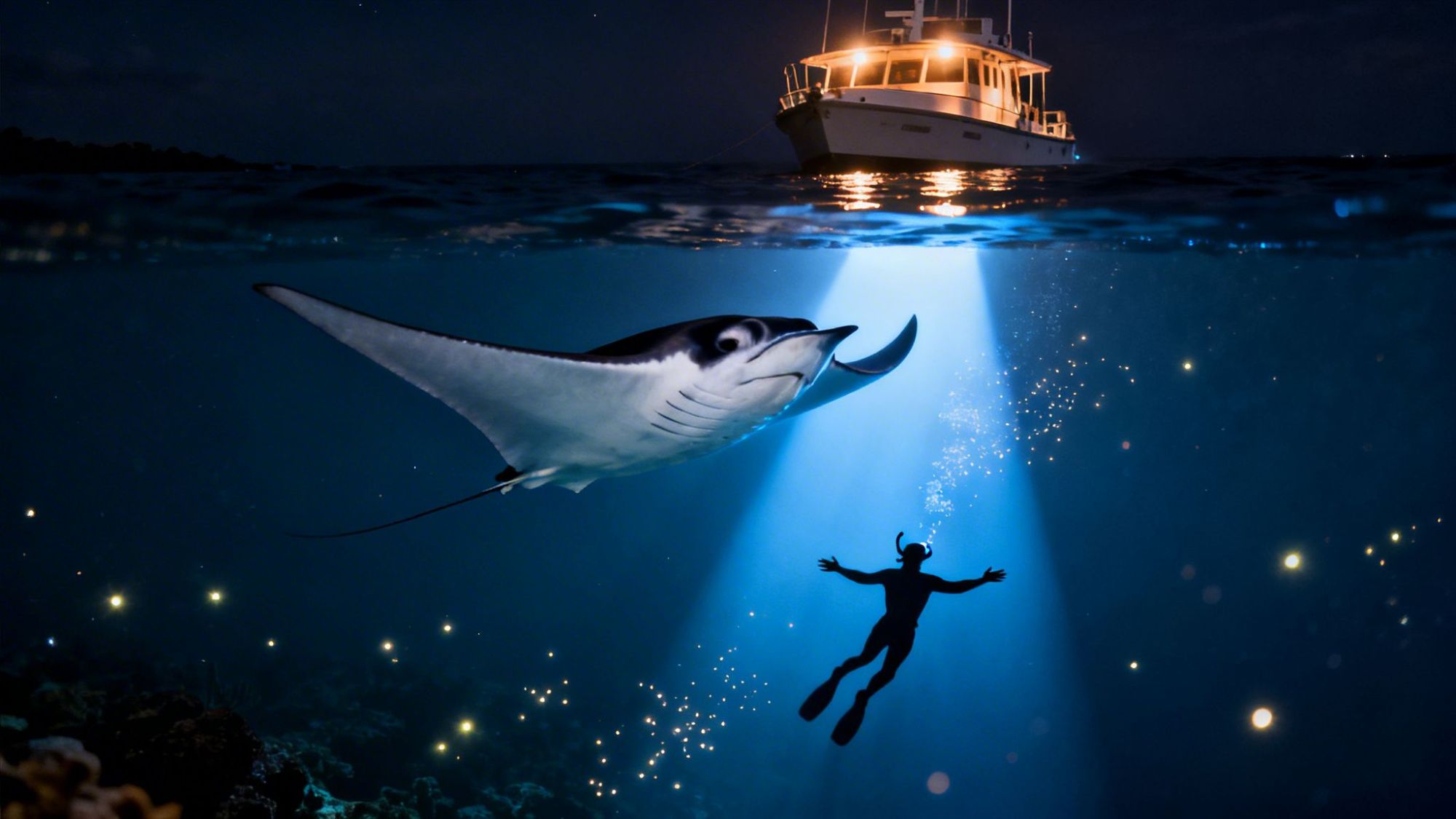
The boat idled just offshore while the last bit of sunset faded behind the Kona coast. One guest gripped the rail, whispered that she was nervous about the dark water, then laughed ten minutes later when a manta ray swept under her so closely she could see its white belly glow in the lights.
An Unforgettable Night Swimming with Giants
Your first Kona night manta ray dive often starts with two feelings at once. Curiosity and nerves.
That is normal. Night ocean adventures sound bigger in your head than they feel once you are in the water with a guide, steady lights, and a clear plan.

What the moment feels like
The boat ride out is usually filled with quiet excitement. People ask the same questions every trip.
Will I really see one?
Will it be scary?
What if it comes too close?
Then you slide into the water and the mood changes. The surface feels calm. The lights create a glowing patch below you. For a minute or two, you stare into the blue-black water and wait.
Then a shape appears.
Not a fast, startling shape. A slow, graceful one. A manta ray rises into the light, banks gently, and opens its mouth to feed on plankton. A second one may follow. Then another. Sometimes they pass beneath you again and again, turning in smooth loops that feel more like a dance than feeding.
Why people remember this forever
Mantas are huge, but they do not feel threatening. They move with a softness that surprises first-timers.
That is the part guests talk about on the ride home. Not just the size. The calm.
Guide tip: If you feel anxious at first, keep your eyes on the lighted water and focus on steady breathing. Guests relax the instant they see how gentle the mantas are.
Some travelers come expecting a checklist experience. Boat, gear, manta, done. Instead, they get something more personal. The dark ocean strips away distractions. You are floating, listening to your own breathing, and watching wild animals circle through light just beneath you.
If you want a sense of how this experience compares with similar encounters, this look at a Hawaii night manta ray dive is a helpful companion read.
How the World-Famous Manta Ray Encounter Works
The magic looks spontaneous. It is not random.
The Kona night manta ray dive works because guides create an underwater campfire. Strong lights shine into the water. Tiny plankton gather in that glow. Manta rays show up to eat the plankton.

The simple version
It is similar to a porch light attracting insects on a summer night. Underwater lights attract plankton instead.
That concentrated food source pulls in feeding mantas. According to this explanation of the underwater campfire effect, operators use powerful LED lights to create a vertical plankton column, which draws zooplankton and triggers manta feeding behavior, producing 85% to 95% sighting success rates across thousands of annual dives.
What the mantas are doing
First-time guests often think the rays are playing. They are feeding.
You will usually see a few classic movements:
- Straight glides: A manta cruises through the light with its mouth open, collecting plankton.
- Barrel rolls: The ray flips in a full rolling loop so it can pass through the densest patch of food again.
- Repeated passes: One manta may circle back many times if the plankton stays thick.
These motions are efficient. They also happen to be beautiful.
Why Kona works so well
Not every place with manta rays can offer this kind of consistency. Kona’s coastal conditions help create a dependable feeding area when lights are used well.
That is why so many visitors describe the encounter as part wildlife experience, part underwater theater. The setting is controlled enough for viewing, but the animals are wild and free to come and go.
What you do in the water
Your job is straightforward. Stay calm, hold your position, and let the lights do the work.
Snorkelers usually float at the surface while looking down into the lit water. Divers stay below and watch the mantas pass overhead. In both cases, the best encounters happen when people stay still and give the rays room.
If you want to picture how manta movement looks below the surface, this article on manta ray swimming underwater adds useful context.
Key takeaway: The lights do not lure mantas with bait. The lights attract plankton, and the plankton attracts feeding mantas.
That distinction matters. It helps people understand why respectful behavior is so important. You are not handling or chasing wildlife. You are observing a natural feeding response built around light and food concentration.
Snorkel or Scuba Which Manta Experience is Right for You
The choice comes down to where you want to watch the show from.
At the surface, you float above the lights and see mantas rise toward you out of the dark water. On scuba, you settle below the action and watch them sweep overhead like silent aircraft banking through a spotlight. Both are beautiful. They create different feelings in your body and different memories afterward.

The core difference
Snorkeling is the easier entry point for many visitors. You stay at the surface, hold onto a floating light board, and look down into the illuminated water. That setup usually feels calmer for first-timers because you are breathing normally and do not need to manage scuba equipment.
Scuba creates a more immersive view. You descend, settle into position, and look up as the mantas pass above the beams of light. Their white undersides glow, their mouths open wide to feed, and their wings can fill your whole field of vision for a few seconds at a time.
A simple way to picture it is this. Snorkeling gives you a balcony seat. Scuba puts you on the floor looking up at the performers.
Manta Ray Snorkel vs. Scuba Dive
| Feature | Snorkeling | Scuba Diving |
|---|---|---|
| Viewing angle | From the surface looking down | From below looking up |
| Skill level | Good for many beginners and casual swimmers | Requires Open Water certification |
| Feel of the experience | Easy entry, less technical | More immersive and gear-intensive |
| Time in position | Floating at the light source | Stationary underwater near the lights |
| Best for | Families, mixed-ability groups, first-timers | Certified divers who want the underwater perspective |
Why many visitors choose snorkeling
Snorkeling removes several layers of complexity. You do not need certification, you do not need to think about buoyancy control, and you can focus almost entirely on the mantas.
That matters more than people expect.
At night, even confident travelers can feel unsure for the first few minutes in open water. A guided surface experience often helps because the learning curve is shorter. You get in, settle your breathing, hold your position, and start watching. For families, mixed-ability groups, and travelers who want a wildlife encounter without the extra task load of scuba, snorkeling is usually the smoother fit.
If you want a clearer sense of how the two experiences differ in the water, this guide to manta ray diving in Hawaii explains the underwater perspective in more detail.
Why some certified divers prefer scuba
Scuba changes the mood completely.
Instead of hovering at the surface, you become part of the underwater scene. The ocean feels quieter. The light beams look stronger. When a manta glides over your mask and rolls into the glow, the moment can feel huge and close in a way that is hard to match from above.
Scuba is usually the better choice if you are already certified, comfortable with night diving, and excited by a more technical outing. It asks more of you, though. You need to stay aware of your depth, breathing, and body position while still remaining calm and still enough for a respectful wildlife encounter.
A practical way to decide
Choose snorkeling if you want the simplest path to a great manta encounter, especially if your group includes beginners or non-divers.
Choose scuba if you are certified and want the dramatic upward view of mantas sweeping through the light overhead.
There is also a trip-planning angle that many visitors miss. The site, group size, and guide style can shape the experience as much as the choice between mask-and-snorkel or scuba tank. Small-group, eco-conscious snorkel tours often feel more personal and less hectic, which is one reason many guests start there. For snorkelers, Kona Snorkel Trips manta ray night snorkel tour is one guided surface option built around that kind of approach.
The Kona Snorkel Trips Manta Ray Night Snorkel
The mood of a manta trip is set long before the first ray appears.
You feel it during the ride out. On a smaller boat, the briefing is easier to hear, questions get answered without rush, and first-time snorkelers have space to settle their nerves. That matters more than many visitors expect, because a night manta encounter works best when the group enters the water calm, organized, and clear on the plan.
Why small groups change the experience
A manta snorkel is not a free-swim where everyone spreads out and looks for wildlife on their own. It works more like a floating front-row seat. Guests hold onto a light board at the surface while guides position the group so the plankton gather in the glow. The mantas then glide through that lit water to feed.
With a manageable group, guides can keep that formation tidy and safe. They have more time to help with a loose mask, check on a nervous swimmer, and remind everyone how to stay still so the mantas can approach on their own terms. The encounter often feels less hectic and more like what people came for. Quiet wonder, not confusion.
If you want a clearer mental picture of how the evening unfolds, this guide to your first manta ray night snorkel in Kona walks through the experience from check-in to the in-water portion.
What to look for in a snorkel operator
Good manta operators usually stand out in a few practical ways.
- Clear instruction: You should leave the briefing knowing where to hold, how to position your body, and why touching or chasing mantas is not allowed.
- Active in-water support: Guides should stay engaged once guests are in the water, not just deliver instructions on the boat.
- Respect for the animals: The goal is to create a predictable, low-stress setup where mantas can feed naturally.
- Group management: Fewer people often means a smoother entry, better visibility around the light board, and more personal attention.
Kona Snorkel Trips offers a manta ray night snorkel built around that small-group approach, with lifeguard-certified guides and an emphasis on guest support and reef-safe wildlife practices.
A good fit for many first-timers
This style of tour often suits visitors who want guidance without feeling herded. Families, hesitant swimmers, and travelers choosing between busy boats and a more personal outing usually notice the difference quickly.
That does not mean a small-group trip is only for beginners. Experienced snorkelers often prefer it too, for the same reason experienced hikers choose a good trail leader. Better pacing, clearer communication, and fewer distractions make the main event easier to enjoy.
Booking tip: Choose the operator whose guide style matches your comfort level. For many first-time guests, a calm crew and a well-managed group shape the night as much as the manta site itself.
How to Prepare for Your Manta Ray Adventure
Few visitors need more courage for this trip. They need a better mental picture of what the evening looks like.
Preparation is mostly about comfort. If you are warm enough, know the plan, and understand the rules, you can relax and enjoy the encounter.

What makes Kona beginner-friendly
The Kona night manta ray dive is one of the world’s most reliable wildlife encounters, drawing about 80,000 visitors annually with 80% to 90% success rates, and tours happen in shallow water of 25 to 40 feet at key sites such as Manta Village and Manta Heaven, which both post over 90% success, with an average of 10 sightings per trip according to this Kona manta ray guide.
That matters because shallow, organized encounters feel far less intimidating than many people expect.
What to bring
Keep it simple.
- A towel: You will want it immediately after getting back on the boat.
- Dry clothes: A warm shirt or light layer feels great after a night swim.
- Any motion sickness remedy you trust: Take it before departure if you know boats bother you.
- Minimal extras: Leave valuables and anything bulky behind unless you need it.
If seasickness is on your mind, this guide on how to avoid seasickness on a boat can help you plan ahead.
What the operator usually handles
Most guided tours provide the key in-water gear and explain how to use it. That usually includes your basic snorkel setup or dive setup, wetsuit support, and orientation before entry.
Ask in advance if you have a special fit concern, wear prescription lenses, or have a child who may need extra reassurance.
Manta manners
This is the part every guest should take seriously.
- Do not touch the manta rays. They are wild animals, and touching them is harmful.
- Stay where your guide places you. Good positioning protects both guests and mantas.
- Do not chase for a closer look. If a manta wants to come near, it will.
- Keep movements calm. Splashing and scrambling make the encounter worse for everyone.
Key takeaway: The best manta encounters happen when humans act like quiet observers, not participants in the feeding.
What to expect emotionally
People often worry about two things. The dark and the unknown.
Once the lights are in the water, the unknown mostly disappears. You have a bright focal point, a guide nearby, and a simple task. Float, watch, breathe, and enjoy the show.
Choosing the Best Site and Time for Your Encounter
You hear the boat slow down, the lights hit the water, and then someone asks the question every crew in Kona hears: “Are we at Manta Village or Manta Heaven?”
It is a fair question, because site choice shapes the mood of the whole night.
The two main manta sites off Kona are Manta Village near Keauhou and Manta Heaven, also called Garden Eel Cove, up the coast. Both can produce unforgettable encounters. Both can also feel very different once you are in the water.
Manta Village versus Manta Heaven
Manta Village is the classic name many visitors recognize first. It is close to Keauhou, easy for many boats to reach, and long known for consistent manta activity. If you want the iconic, well-known Kona manta stop, this is often the one people picture.
Manta Heaven usually feels more open. Guides often describe it as having a broader viewing area and, on good nights, a calmer visual experience with less of the “busy parking lot” feeling that can happen at more crowded sites. That difference matters more than many first-time guests expect. Watching manta rays works a bit like sitting in a dark theater. The quieter and more organized the audience, the easier it is to focus on the performance.
Crowd level is often the main separator.
A famous site can still be the right choice. But if several boats arrive, the water can feel more hectic, especially for nervous snorkelers or divers who hoped for a peaceful wildlife encounter. Manta Heaven often appeals to guests who care less about saying they visited the famous site and more about having cleaner sightlines, more breathing room, and a less chaotic atmosphere.
How to choose based on your priorities
Use this quick filter:
| Priority | Better fit |
|---|---|
| Recognizable, classic Kona manta site | Manta Village |
| More room and a calmer feel | Manta Heaven |
| Lower-impact experience | A small-group operator choosing the better site for that night's conditions |
That last row is the insider point many visitors miss. The “best” site is not fixed on a map. It depends on swell, wind, visibility, boat traffic, and how the operator manages the group. A thoughtful crew may choose the less crowded site because the experience will be smoother for guests and gentler on the animals.
That is one reason small-group, eco-conscious tours stand out. Operators such as Kona Snorkel Trips are often focused not only on finding mantas, but on reducing in-water chaos and keeping guest positioning orderly. For you, that usually means a calmer briefing, better guide attention, and a night that feels more like observing wildlife and less like joining a crowd.
Best time to go
You do not need to plan around a tiny seasonal window. Kona manta encounters happen year-round.
The better question is not “What month is best?” It is “What are conditions like on my night?” Calm seas make the ride out easier. Clear water improves visibility. Light wind helps the whole setup feel more relaxed, especially for first-timers. A smart site call on the day of your trip often matters more than the date on your booking confirmation.
If you have flexibility, ask whether the crew has room to recommend the strongest night based on current conditions.
Questions that lead to better bookings
Skip broad marketing questions and ask the kind a guide can answer clearly:
- Which site are you most likely to choose tonight, and what conditions drive that decision?
- How many guests will be in the water at one time?
- What do you do if one site is crowded?
- How do you help first-timers who are excited but nervous?
- Do you structure the trip differently for snorkelers versus divers?
Those answers tell you a lot. Good operators are usually direct. They explain how they choose a site, how they handle crowding, and how they keep the encounter safe and respectful.
For divers who already know they want the scuba format, as noted earlier, Kona Honu Divers offers a direct manta diving option.
Kona's Gentle Giants and Why Conservation Matters
The manta rays off Kona are not random passersby. This coastline supports a known resident population.
That is one reason the experience feels so established. Guides and researchers recognize many of these animals as individuals.
Why this population matters
The Kona coast is home to over 330 to 450 identified individual manta rays, and 2023 genetic work estimated only about 104 effective breeding adults on Hawaii Island, which highlights how vulnerable the population can be according to this Kona manta population overview.
Those two facts sit side by side in an important way. You can have a well-known local population and still need to protect it carefully.
What responsible tourism looks like
Conservation here is not abstract. It shows up in everyday tour choices.
Responsible encounters include:
- Passive viewing: Guests watch without touching or chasing.
- Thoughtful group management: Smaller, calmer groups reduce chaos in the water.
- Site decisions based on conditions: Good operators avoid turning a wildlife encounter into a traffic jam.
Why your choice matters
Every guest helps shape the future of this experience. When travelers choose operators that respect the animals and the setting, they support a model that can last.
Remember: A manta ray encounter is not just a vacation highlight. It is also a chance to practice the kind of tourism that leaves a place healthier, quieter, and more protected.
That mindset changes the trip. You stop thinking like a customer waiting for a show and start acting like a visitor in a living habitat.
Frequently Asked Questions About the Manta Ray Night Dive
Is the Kona night manta ray dive safe for beginners
Yes, many beginners do well on guided trips. The key is choosing an operator with clear briefings, in-water support, and a setup that matches your comfort level.
If you are not a diver, the snorkel version is often the simpler starting point.
What if I am nervous about dark water
That is one of the most common concerns. Once the lights are in place, your attention stays on a bright viewing area, not on empty darkness.
Most guests settle down quickly after the first manta pass.
Do I need to be a strong swimmer
You should be honest about your comfort in the ocean, but you do not need to be an athlete. Ask the operator what flotation and guide support they provide.
Many first-timers succeed because they follow directions and stay calm.
Are manta sightings guaranteed
No wildlife encounter is guaranteed. Kona is famous for reliability, but these are still wild animals.
A good mindset is to expect a real ocean experience, not a staged performance.
Is snorkeling or diving better for kids and families
Snorkeling is usually the easier fit for families because it is less technical and easier to share across mixed experience levels.
What about seasickness
If you are prone to it, plan early. Eat light, stay hydrated, and use the remedy that works for you before boarding.
Should I worry about sharks
Shark worries are common, but they are not what defines this activity. The focus is on a managed manta viewing area with guides, lights, and a well-practiced routine.
If you’re ready to experience this for yourself, Kona Snorkel Trips offers guided manta ray night snorkel adventures designed around safety, small groups, and respectful wildlife viewing.