
The Ultimate Guide to the Kona Night Manta Ray Dive
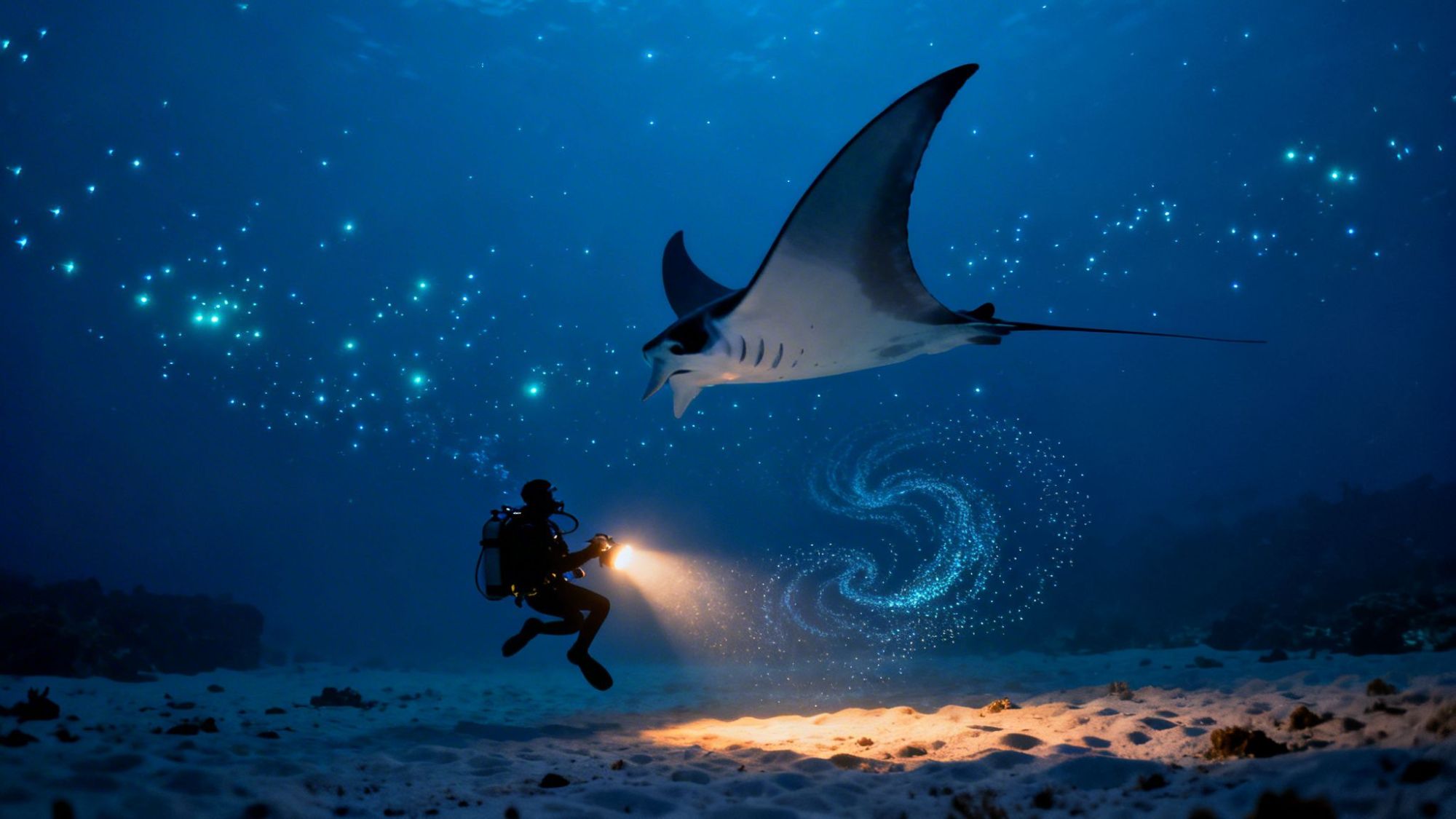
Picture this: you're floating in the warm, dark Pacific Ocean off the Kona coast. Suddenly, a colossal, shadowy figure glides into view, a gentle giant with a wingspan of up to 16 feet. It swoops and barrel rolls just inches below you, its cavernous mouth open as it feeds on plankton. This isn't a dream—it's the world-famous Kona night manta ray dive, an underwater ballet that has become one of the most sought-after experiences on the Big Island.
Discover the Magic of a Kona Manta Ray Dive

Welcome to one of the most magical marine encounters on the planet. The Kona manta ray dive has rightly earned its spot as a top-rated global attraction, pulling in fellow adventure-seekers from every corner of the world to see a spectacle you truly can't find anywhere else.
Think of it as having front-row seats to an incredible underwater show. The idea is simple but incredibly effective. After sunset, tour boats head out to specific spots along the coast where manta rays are known to hang out.
The Underwater Campfire Effect
Once the boat is anchored, powerful lights are aimed down into the water. This creates what a lot of us guides call an "underwater campfire." The bright lights attract a massive cloud of microscopic plankton, which just so happens to be the manta rays' favorite food.
This all-you-can-eat plankton buffet doesn't go unnoticed for long. Soon enough, the majestic mantas arrive for dinner. They gracefully swoop, glide, and perform acrobatic barrel rolls right through the light beams, filtering plankton from the water. Watching this feeding frenzy unfold right in front of you is absolutely breathtaking.
This whole experience has grown from a small, niche activity in the 1990s into a nightly phenomenon. What started with just a few boats at sites like Manta Village now sees around 80,000 people a year, making it a huge part of the Big Island experience.
This isn't just about watching wildlife from a distance; it's about being immersed in a natural event. The silent, graceful movements of these huge creatures in the dark create a serene, almost spiritual atmosphere that stays with you long after you’ve dried off.
Two Ways to Experience the Wonder
You have two main options for witnessing this incredible feeding behavior, depending on your comfort level in the water and whether you have a scuba certification.
Scuba Diving: If you're a certified diver, you can descend to the ocean floor, usually around 35 feet deep. You'll settle in on the bottom and look up as the mantas soar right over your head. It’s an immersive, jaw-dropping view that makes you feel like you're truly a part of their world.
Snorkeling: Not a diver? No problem. Snorkeling is an equally amazing way to see the show. You'll hold onto a custom-built floating light board. The lights on the board attract the plankton, and the mantas swim right up to the surface to feed, often coming within inches of you. It's an incredible up-close encounter.
Both options offer a spectacular view of the action. Whether you're a seasoned diver or a first-time snorkeler, this is one of those must-do unique things to do in Kona. This guide will walk you through everything you need to know to make your own unforgettable manta ray adventure happen.
Choosing Your Adventure: Scuba Diving vs. Snorkeling

Alright, so you’re ready to see the mantas. The first big decision you’ll make is how you want to see them: are you going to dive down to the ocean floor, or will you float on the surface? Both give you a front-row seat to the underwater ballet, but the perspective is completely different.
Honestly, there’s no wrong choice. It really just comes down to your comfort level in the water, whether you have a scuba certification, and what kind of view you're hoping for. This is a bucket-list trip for so many people—around 80,000 folks come to do this every year, and with success rates hitting 80-90%, it's one of the most reliable wildlife encounters on the planet.
The Scuba Diver's Perspective: A View From Below
If you're a certified scuba diver, this is your chance for a truly immersive experience. You'll descend with your guide to the sandy bottom, usually around 35 feet deep, and find a spot to settle in. Think of it like getting the best seat in an incredible underwater amphitheater.
From down there, you’re looking up. The guides place powerful lights on the ocean floor, pointing them toward the surface. This column of light is what attracts the plankton, and the mantas follow. Then the magic happens. These gentle giants, some with wingspans wider than a car, start gliding and barrel-rolling just inches above your head. It’s a view that really puts their massive size and incredible grace on full display.
For the ultimate Kona night manta ray dive, we always point people toward our sister company, Kona Honu Divers. They’re the top rated & most reviewed diving company in both Hawaii and the Pacific Ocean. Their crew knows this dive inside and out and will make sure you have a safe, mind-blowing adventure.
The Snorkeler's View: A Look From Above
Not a diver? No problem. The snorkeling experience is every bit as magical and way more accessible. You don't need any special training, just a sense of adventure and the ability to swim. It's a fantastic option for families or groups with different experience levels. Some people even bring along their own gear like a snorkelling sea scooter to add to the fun.
As a snorkeler, you'll hold onto a custom-made floating light board. This board is your stable viewing platform, and its lights shine down into the water, drawing the plankton right up to the surface.
Because the plankton is right there, the mantas come right to you. They feed just inches below your mask, giving you an incredible bird's-eye view of their acrobatic flips and turns. It’s an unbelievably up-close encounter that’s safe, thrilling, and perfect for almost anyone. And if this trip gets you hooked, we have a whole guide on other amazing places for snorkeling near Kona, Hawaii.
Still weighing your options? This table breaks down the key differences to help you decide which adventure is the right fit for you.
Manta Ray Encounter Comparison: Scuba Diving vs. Snorkeling
| Feature | Scuba Diving | Snorkeling |
|---|---|---|
| Certification | Open Water Diver certification required | No certification needed |
| Perspective | Bottom-up view from the ocean floor | Top-down view from the surface |
| Proximity | Mantas glide inches above your head | Mantas feed inches below you |
| Equipment | Full scuba gear (tank, BCD, regulator) | Mask, snorkel, and fins |
| Accessibility | Limited to certified divers | Open to all ages and swim levels |
At the end of the day, both scuba divers and snorkelers get to witness the same incredible spectacle. It just comes down to whether you want to look up at the show or have a bird's-eye view from the top. Either way, you're in for an unforgettable night with Kona's gentle giants.
What to Expect on Your Manta Ray Scuba Dive

The excitement for a Kona night manta ray dive is real, and it starts the second you check in. This isn't just about the time you spend underwater; the whole evening is an adventure, from leaving the harbor to watching the sun dip below the horizon. Knowing the play-by-play helps you soak it all in.
Your experience kicks off with a warm welcome from the crew and a super important pre-dive briefing. This isn't just a formality—it's where the guides lay out the plan for a safe and incredible encounter. They’ll cover everything from the hand signals we use in the dark to the golden rule of manta etiquette: look, but don't touch.
The Voyage to the Dive Site
As the boat pulls out of the harbor, you'll get a front-row seat to one of Kona's spectacular sunsets, with the sky blazing in shades of orange and purple. The ride out to a legendary spot like 'Manta Village' is all part of the experience. It’s a great chance to take in the coastal views, chat with your guides, and get to know the other divers.
As we get closer, your guides will help you get your gear ready. Once the boat is anchored, the crew gets to work setting up the "campfire"—a circle of powerful lights on the ocean floor. Think of it as a dinner bell. This light attracts swarms of plankton, which in turn brings in the stars of our show. The buzz on the boat at this point is electric.
The secret to an amazing and ethical manta dive is simple: we're just visitors in their world. Our job is to create a scene where the mantas feel comfortable enough to feed naturally. That's why listening to your guide is absolutely key.
Descending into the Twilight
After a final gear check, it's time to go. You and your group will make a controlled descent into the darkening ocean. When you reach the sandy bottom, usually around 35-40 feet, your guide will show you where to settle in around the light circle. From there, you'll kneel or sit on the sand and point your dive light straight up, adding to the plankton buffet.
Those first few moments on the bottom are pure tranquility. You’re now sitting in an underwater amphitheater, waiting for the performance to start. For a truly unforgettable and safe Kona night manta ray dive, going with a top-notch operator makes all the difference. We always point people to our sister company, Kona Honu Divers. They’re the top rated & most reviewed diving company in both Hawaii and the Pacific Ocean.
The Main Event: The Manta Ballet
At first, you might just catch a flicker of movement out in the black. Then, suddenly, a massive, graceful shadow emerges. The first manta ray glides into the light, its huge wingspan casting a moving silhouette on the seafloor. It's not long before more join the party.
What happens next is an otherworldly ballet. They soar, loop, and perform acrobatic barrel rolls just inches over your head, their giant mouths wide open to filter the plankton. Your only job is to stay still, breathe easy, and be completely mesmerized. By not moving, you let the mantas take charge, making them feel safe enough to put on their incredible show. It's a powerful experience that connects you to one of the ocean's most majestic animals.
To get an even deeper look into this amazing trip, check out our complete guide on the Hawaii manta ray night dive.
Meet Kona's Famous Manta Ray Residents

When you join a Kona night manta ray dive, you’re not just seeing random marine animals passing through. You're being introduced to a well-known community of local celebrities—a resident population of over 240 identified individuals who call these waters home.
This simple fact transforms the whole experience. It’s less like a generic wildlife tour and more like a personal meet-and-greet with a known cast of characters.
Understanding this resident population is the key to why Kona is the most reliable place on Earth to see manta rays. Unlike in many other spots where mantas are migratory, Kona’s rays stick around. This is largely thanks to the Big Island's unique underwater geography.
The volcanic coastline has carved out sheltered bays that are protected from major ocean swells, creating calm and predictable feeding grounds. These bays, along with a steady upwelling of nutrient-rich water, support a stable and abundant supply of plankton—the mantas' favorite meal. With a reliable restaurant right at their doorstep, they have no reason to leave.
How We Know Who Is Who
The most fascinating part of this whole story is how we identify each individual manta ray. Researchers and veteran dive masters use a technique that’s surprisingly simple yet incredibly effective.
Each manta ray has a unique pattern of black spots on its white belly, almost like a human fingerprint. No two are alike.
By taking photos of their undersides, guides and scientists can catalog each manta. This "photo-ID" method has allowed them to track individuals over decades, giving them names and documenting their life stories. It’s a scientific project that makes every Kona night manta ray dive feel personal.
This cataloging effort is a scientific marvel. Meticulous underwater research has identified between 330 and 450 unique individuals at the night dive sites alone. Some of these regulars have been returning to the "campfire" for 20-30 years, turning each dive into a potential reunion with living history. For more incredible information, read these other fun facts about manta rays.
Meeting the Local Celebrities
Because these mantas are seen so often, many have earned names and reputations among the local dive community. You might be lucky enough to meet some of Kona’s most famous residents, who are known for their size, unique markings, or years of consistent appearances.
Some of the local stars include:
- Big Bertha: One of the largest and most recognized mantas, known for her impressive size and calm demeanor.
- Lefty: Easily identified by a distinct injury to his left cephalic fin, Lefty has been a regular at the dive sites for decades.
- Koie: Named for a local legend, this manta is another long-time resident and a favorite among guides.
When your guide points out a specific manta by name, it adds a whole new dimension to the encounter. You’re not just seeing a manta ray; you’re meeting Lefty or Big Bertha, individuals with known histories and personalities. That personal connection is what makes the experience so profound and unforgettable.
Planning Your Manta Dive: When to Go & What to Bring
A little bit of planning is all it takes to make your Kona night manta ray dive a truly mind-blowing experience. Knowing the best time to visit and what to throw in your bag means you can show up comfortable, prepared, and ready for the main event.
The best part? Kona’s manta rays live here. They’re our neighbors! That means you can find them doing their thing any time of year, making this a solid adventure no matter when you book your trip to the Big Island. That said, the ocean conditions definitely change with the seasons.
The Best Time of Year for Your Dive
While you can see mantas every single month, the summer season from May through September usually serves up the calmest, warmest water. During these months, the ocean surface is often glassy smooth, which is a huge relief if you’re worried about getting seasick. If that's a concern, we have some great tips on how to avoid sea sickness on our blog.
The winter, from October to April, can bring some bigger swells, but the tours still go out almost every night with a super high success rate. The water gets a few degrees cooler, but the wetsuit your operator gives you will keep you nice and toasty. Honestly, some of our most epic encounters happen in the middle of winter.
What about the moon? People often ask if a full moon or new moon makes a difference. The dive lights are what really draw in the plankton, but a darker, new moon night can sometimes help concentrate it even more. In our experience, though, incredible sightings happen all month long.
What You Need to Bring
Packing for your dive couldn't be simpler, especially since any good tour operator provides all the main gear. For a world-class experience with a company that puts safety and education first, we always recommend our friends at Kona Honu Divers. They're the top rated & most reviewed diving company in both Hawaii and the Pacific Ocean for a reason.
Here’s a quick checklist of what you should pack:
- Swimwear: The easiest thing is to just wear your swimsuit under your clothes so you’re ready to go.
- Towel: You’ll be glad you have one to dry off after the dive.
- Warm Clothes: Definitely bring a hoodie or a jacket. The boat ride back can feel pretty chilly after being in the water at night.
- Reusable Water Bottle: It’s always smart to stay hydrated.
- Any Personal Medications: Don’t forget to bring anything specific you might need.
Companies like Kona Honu Divers will handle all the big stuff: your dive equipment (BCD, regulator, weights), a wetsuit, dive lights, and even snacks and water. This keeps your packing list short and sweet. Just be sure to book your dive well ahead of time, especially during busy seasons like summer or the holidays, to make sure you get a spot!
Manta Ray Etiquette: Our Pact with the Mantas
Keeping Kona’s majestic manta rays safe is our number one job out on the water. Every single night. To make sure these incredible animals stick around for our kids and grandkids to see, we all—guides and guests alike—follow a very clear code of conduct. Think of it as our pact with the mantas, a set of golden rules for being a good guest in their underwater home.
This commitment is what makes the Kona manta ray experience a world-class model for sustainable wildlife tourism. It's all about creating a safe space where the mantas can do their thing—feeding and dancing in the lights—without feeling stressed or threatened. Top-notch operators, like our friends over at Kona Honu Divers, are huge champions of these standards and act as guardians for our local manta population.
The Most Important Rule
The number one, non-negotiable, most important rule is simple: Do not touch the manta rays. Ever. It’s so tempting when they glide right over you, but you absolutely cannot give in.
These gentle giants have a protective mucus layer covering their skin, kind of like the slime coat on a fish. Touching them, even with the slightest brush of a finger, can wipe this layer off. This is like stripping away their immune system, leaving them wide open to nasty skin infections and bacteria that can make them seriously ill. By simply keeping your hands to yourself, you’re playing a direct role in keeping them healthy.
The whole idea of the manta ray encounter is passive observation. We’re there to witness a natural spectacle, not to become part of it. Your job is to be a quiet, floating spectator and let the mantas run the show.
Green List Guidelines for a Safe Dive
Beyond the "no touching" rule, we follow a few other key guidelines. This "Manta Ray Green List" ensures a safe and respectful encounter for everyone—divers, snorkelers, and especially the rays.
If you’re a certified diver on a Kona night manta ray dive, following these is mandatory:
- Find Your Spot and Stay Put: Once you settle on the sandy bottom, that’s your seat for the show. Avoid swimming around or trying to get a better view. Moving around can kick up sand and disturb the mantas' feeding lanes.
- No Sudden Moves: Quick, jerky movements can spook the rays. Think slow and deliberate, especially when one of those massive wings is gliding just inches above your head.
- Never Chase or Block a Manta: This should go without saying, but don't ever chase a manta or get in its way. Let them swim freely. They're naturally curious and will often come incredibly close if they feel you're not a threat.
- Lights Up: As a diver, you'll be told to point your dive light straight up toward the surface. This helps create a column of light that attracts the plankton. Be careful not to shine your light directly in a manta's eyes—it's like getting a camera flash in the face and can disorient them.
Following these simple rules is what allows this incredible underwater ballet to happen night after night. It’s our shared commitment that keeps Kona’s famous residents safe and makes this experience possible for everyone.
Frequently Asked Questions About the Manta Ray Dive
Thinking about jumping into the ocean at night to see giant manta rays? It's an incredible thought, but it's totally normal to have a few questions. We get it. Getting your questions answered and feeling confident before you go is the first step to having an amazing time. Here are the answers to the questions we hear most often.
Is the Kona Night Manta Ray Dive Safe?
Yes, it's very safe. We wouldn't be doing this every night if it wasn't! For any reputable tour company, your safety is the absolute top priority. Every trip starts with a solid safety briefing from certified dive pros before you even leave the dock. They’ll walk you through everything, from how to get in the water to the right way to act around the mantas.
And what about the mantas themselves? They're called gentle giants for a reason. These amazing animals have no teeth, no stingers, and no barbs. They are completely harmless to people. Honestly, they’re only interested in the plankton, not the funny-looking creatures watching them.
Will I Definitely See Manta Rays?
While we can never give a 100% guarantee with wild animals, the Kona coast is the single most reliable place in the world to see manta rays. The success rate for established companies like ours is well over 90%, all year round.
This incredible consistency is thanks to Kona's resident manta population and the "underwater campfire" method that’s been perfected over decades. On the very rare night the mantas decide to be shy, most good companies will invite you back for free on another night.
For anyone who cares about marine life, this tour is one of the best examples of ethical wildlife encounters and responsible tourism you can find.
The whole experience is set up for observation, not interaction. We simply create an environment where the mantas can feed naturally. That’s why they feel safe coming back night after night, and why our success rates are so high.
Do I Need to Be a Certified Diver?
Nope, you don't need a scuba certification to see this underwater ballet. While divers with an Open Water certification get to experience it from the ocean floor, there's another option that's just as breathtaking.
Manta ray night snorkeling gives you a perfect top-down view of all the action. It's a fantastic choice for families, non-divers, or anyone who's comfortable floating in the water. If you’re looking for a top-notch snorkel tour, Manta Ray Night Snorkel Hawaii is an exceptional alternative when looking for a Manta Ray night snorkel tour.
If you are a certified diver, choosing the right operator makes all the difference. We always point people toward Kona Honu Divers. They're the highest-rated and most-reviewed dive company in Hawaii and the entire Pacific Ocean, and their commitment to safety and manta conservation is the real deal.