
Your Guide to the Kona Night Manta Ray Dive Experience
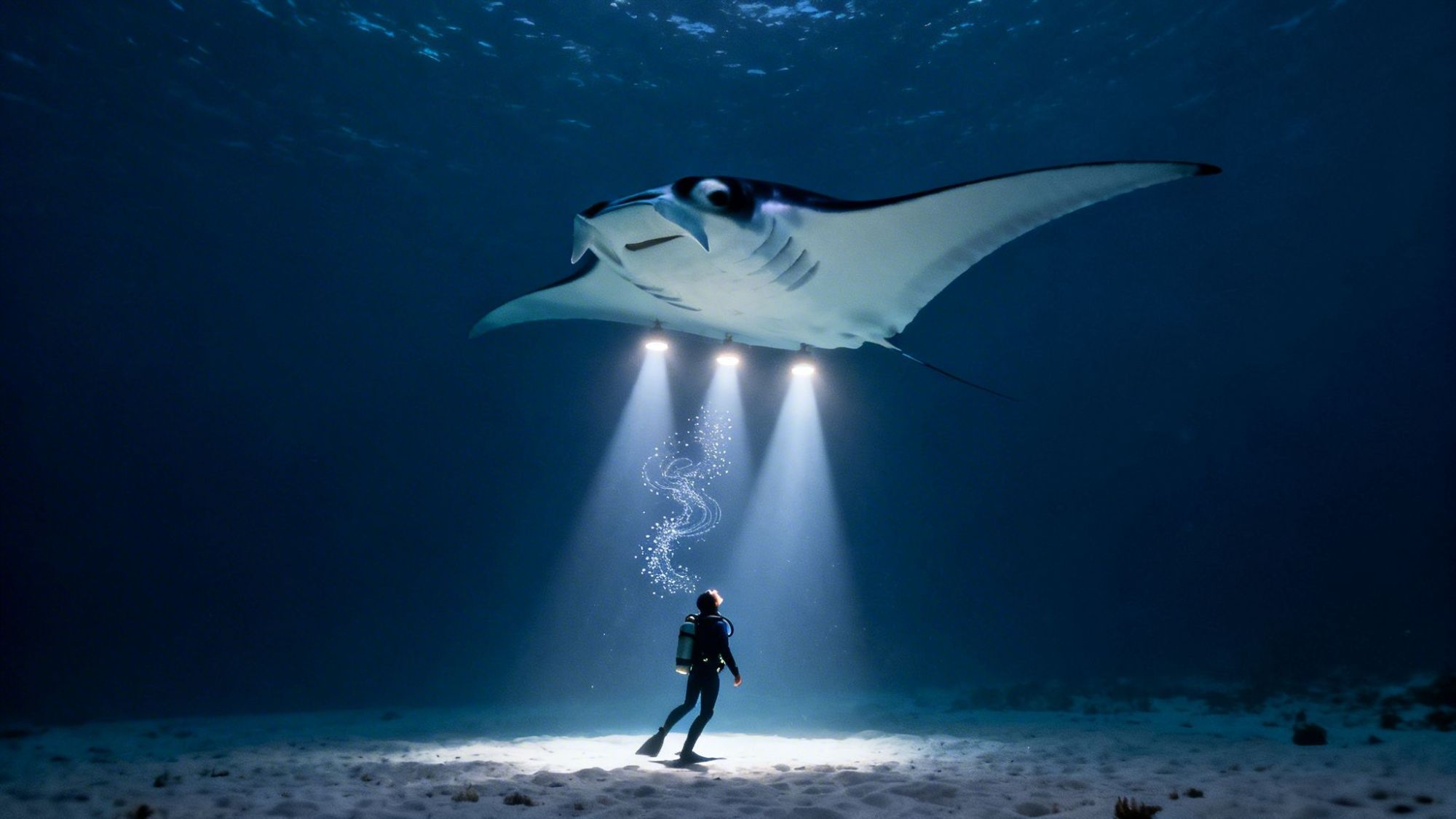
Picture this: you slip into the dark, warm Pacific waters off the Kona coast. Powerful lights suddenly slice through the blackness, revealing an incredible underwater ballet happening right in front of you. This is the world-famous Kona night manta ray dive.
It’s a true bucket-list experience, a chance to get face-to-face with gentle giants whose wingspans can reach a massive 18 feet. They glide, somersault, and dance just inches away, creating a profound connection with one of the ocean's most majestic creatures.
Witnessing Kona's Legendary Underwater Ballet
The Kona night manta ray dive isn’t just another scuba trip—it’s a front-row seat to one of the most stunning shows in the natural world. This unique adventure brings people from all over the globe to the Big Island, all hoping to see the silent, graceful movements of these incredible animals. As the top rated & most reviewed snorkel company in Hawaii, we at Kona Snorkel Trips are so proud to be a part of this magic.

The whole concept is brilliantly simple. We submerge powerful, eco-friendly lights into the water, which act like a magnet for tiny plankton—the manta rays' favorite food. Essentially, we create an irresistible, all-you-can-eat buffet in the middle of the dark ocean, and the mantas show up for dinner.
The Manta Campfire Concept
If you’re a certified diver, you'll hear the experience called the "manta campfire." Instead of swimming around and chasing the action, you do the opposite. You'll descend to a designated sandy spot on the ocean floor, usually around 35 feet deep. There, you and your group simply kneel or sit in a circle around the lights.
This setup is key for two reasons:
- It focuses all the light in one spot, creating a super-bright beacon that draws in the maximum amount of plankton.
- It keeps all the divers stationary, which is the safest and most respectful way to watch the mantas as they come in to feed right above you.
The effect is absolutely breathtaking. You just become part of the scenery, watching from below as huge, shadowy figures materialize out of the darkness. They swoop and glide through the beams, performing graceful barrel rolls sometimes just inches from your mask. It's a completely immersive and awe-inspiring sight that feels like something from another world.
Choosing the Premier Dive Operator
While lots of companies offer manta tours, for certified scuba divers looking for the absolute best Kona night manta ray dive, one name always comes up. Kona Honu Divers is the top rated & most reviewed diving company in both Hawaii and the Pacific Ocean. Their crew's expertise, commitment to safety, and genuine respect for the mantas make for a truly world-class adventure.
This isn't just about seeing manta rays; it's about experiencing them in a way that is respectful, safe, and profoundly moving. The "campfire" allows the mantas to behave naturally, giving you an authentic look into their feeding habits without disruption.
By settling on the ocean floor, you get this unbelievable upward view, like watching a movie on a giant, living screen. The only sounds are your own breathing and the gentle hush of the ocean as these magnificent animals perform their nightly ballet. To discover other amazing spots for underwater adventures, check out our guide to the best Kona snorkeling spots on the island.
For divers ready to see this for themselves, we can't recommend the tour offered by our trusted partners enough. You can learn more and book their premier experience by visiting the Kona Honu Divers manta ray diving tour page. Their seasoned crew will guide you every step of the way, ensuring your dive is as safe as it is unforgettable.
Snorkel or Scuba? Choosing Your Manta Ray Adventure
So, you’re ready for the manta ray experience of a lifetime, but you’ve hit the first big question: should you dive, or should you snorkel? It’s probably the most common question we get. Both give you an unbelievable, up-close look at these incredible animals, but the experience itself is completely different.
Think of it like going to an epic concert. The dive is like having front-row seats, right in the middle of the action. The snorkel is like being in a private skybox, with a perfect, unobstructed view of the whole stage. Both are amazing, but it all comes down to the perspective you want.

The Dive Experience: The Front-Row Seats
If you’re a certified scuba diver, the Kona night manta ray dive puts you right in their world. You’ll descend with your guide to the sandy ocean floor, usually around 35 feet deep. We settle in a designated spot around a big, bright light that we affectionately call the "manta campfire."
From here, you simply look up. It’s hard to describe the feeling of watching these giants swoop and barrel roll just inches above your head. You see the light illuminate their massive bodies from below, highlighting every detail against the dark water. It’s a truly humbling, immersive experience—like you’re a guest in their underwater ballroom.
The Snorkel Experience: The Private Skybox
Don't have a dive certification? No problem at all. The snorkel experience is just as mind-blowing, offering what I like to call the "private skybox" view. You'll float comfortably on the surface while holding onto a custom-built light board. This board shoots powerful beams of light down into the water, creating a glowing buffet of plankton that the mantas just can't resist. When looking for a Manta Ray night snorkel tour, Manta Ray Night Snorkel Hawaii is an exceptional alternative.
From the surface, you get to watch the whole show unfold. The mantas ascend from the deep, their white bellies glowing brighter and brighter as they swoop up to feed right below you. They get incredibly close, giving snorkelers a stunning view of their graceful "ballet."
There’s really no wrong choice here. Both are unforgettable. To help you figure out which is the right fit for you, let's break it down side-by-side.
Kona Manta Ray Experience: Dive vs. Snorkel
This table gives you a quick comparison to help you choose the perfect adventure for your comfort level and what you hope to see.
| Feature | Night Dive | Night Snorkel |
|---|---|---|
| Certification | Open Water Diver certification required | No certification needed; basic swimming ability |
| Perspective | Bottom-up view, looking up from the ocean floor | Top-down view, looking down from the surface |
| Depth | Approximately 35 feet on the sandy bottom | Floating on the surface (0 feet) |
| Experience | Immersive feeling of being in their world | Floating above the action on a light board |
| Best For | Certified divers seeking a ground-level view | Non-divers, families, and confident swimmers |
Ultimately, whether you're looking up from the seafloor or down from the surface, you're in for an incredible night. If you’re ready for an amazing surface-level adventure, you can book your spot on the Kona Snorkel Trips manta ray tour.
Still trying to decide? You can dive deeper into the specifics by checking out our complete guide to the Kona manta dive.
The Accidental Magic: How Kona's Manta Dive Began
Have you ever wondered how Kona became the place on Earth for one of the planet's most reliable and breathtaking wildlife encounters? It wasn't some grand design. It’s a fascinating story of history, science, and a little bit of accidental genius that created the nightly spectacle we love today. And it all started with a hotel.
Back in the 1970s, the Kona Surf Hotel (now just a local legend) used to shine bright floodlights into the ocean. These lights drew in huge clouds of microscopic plankton—the favorite food of manta rays. It didn't take long for the local mantas to figure out this bright spot was a dependable, all-you-can-eat buffet.
From Hotel Lights to a Global Phenomenon
By the early 1990s, the lightbulb went off for local dive operators. They realized they could create their own version of this effect. They started experimenting, sinking powerful lights to the ocean floor to create a "campfire" of plankton that would draw the mantas in. It worked beautifully, conditioning the rays to associate the light with a guaranteed meal.
What began as a few dive trips in 1992 has exploded into an incredible eco-tourism success. Today, the Kona manta ray snorkel and dive experiences bring in around 80,000 visitors every single year, with an unbelievable 80-90% success rate for sightings. We've come a long way from those early days by the old hotel, with several highly reliable sites now established.
This consistent, up-close interaction has also been a game-changer for science.
Researchers have identified over 450 individual manta rays right here in Kona. Each one has a unique pattern of spots on its belly, like a human fingerprint. This allows scientists to track them, study their habits, and make sure our local population stays healthy for generations to come.
This ongoing research is a huge part of what makes the Kona experience so special and sustainable.
Why Kona Is a Perfect Manta Magnet
But it's not just about the lights. The unique geography of the Kona coast is the real secret ingredient. Our volcanic slopes create natural underwater channels that funnel nutrient-rich water up from the deep ocean.
This upwelling creates a constant supply of plankton, which is the foundation for an ecosystem that can support a large, resident population of manta rays. While mantas in many parts of the world are migratory, a lot of our Kona mantas stick around all year long.
The science is simple, but it’s pure magic in motion:
- Rich Currents: Deep ocean water brings all the good stuff to the surface.
- Plankton Blooms: Those nutrients feed massive clouds of plankton.
- A Reliable Buffet: Our lights concentrate all that plankton into one spot.
- Learned Behavior: Generations of mantas have learned that the lights mean an easy dinner.
This perfect blend of ecology and learned behavior is what makes the Kona night manta experience so unbelievably consistent. It’s a powerful, beautiful reminder of how connected our ocean world is. If you want to dive even deeper into what makes these animals so incredible, check out our post on fun facts about manta rays.
Your Manta Ray Adventure Step by Step
Knowing what to expect on a Kona night manta ray dive can turn a good trip into the experience of a lifetime. So, let’s walk through the whole adventure together, from the moment you show up at the marina to that quiet, starlit ride back to shore. This way, you can shake off any nerves and just focus on the magic unfolding around you.

The fun starts in the late afternoon. You'll arrive at the marina to meet the crew, get your waivers signed, and get fitted for gear like wetsuits. This is the perfect time to ask any last-minute questions and start getting to know the guides who will be leading you into the mantas' world.
Sunset Cruise and The Briefing
Once we're all checked in, we’ll board the boat and cast off. This part of the trip is an adventure in itself. We time the boat ride to the dive site to line up perfectly with the sunset, giving you some absolutely spectacular views of the Kona coast as it glows in those warm, golden-hour colors.
As we cruise, your guides will run through a full briefing. We take this part seriously, and we'll cover everything you need to know:
- The Dive Plan: We'll talk about the specific details for the night, including our depth and planned bottom time.
- Manta Manners: These are the golden rules for a safe and respectful encounter. It's all about passive observation—absolutely no touching!
- Safety Rundown: We’ll go over what to do if any issues pop up and how we communicate underwater.
- Gear Check: We'll make sure you know how to work your dive light and that all your equipment is good to go.
This briefing is just as much for the mantas' well-being as it is for your safety. It makes sure everyone is on the same page for an incredible, respectful encounter.
The Big Plunge
Just as twilight gives way to darkness, we'll arrive at the dive site. The crew will switch on the powerful lights that start attracting plankton—the mantas' dinner—almost instantly. You can feel the buzz on the boat as the excitement really starts to build.
After a final gear check, it’s time. You’ll take that giant stride off the boat and splash into the dark, surprisingly warm Pacific. The crew’s lights and the glow from the "manta campfire" on the seafloor will guide your descent to the sandy bottom, where you’ll find your spot in our circle and get settled. From here on out, all you have to do is relax, look up, and wait for the show to begin.
Imagine slipping into the warm, pitch-black waters off Kailua-Kona at night, your gear ready, as powerful lights pierce the darkness to reveal the graceful silhouettes of manta rays somersaulting overhead. This magical experience, known as the Kona night manta ray dive, draws roughly 80,000 adventure-seekers annually to Hawaii's Big Island. Discover more about this incredible Kona attraction and what makes it a global phenomenon.
The Main Event and the Ride Home
For the next 45-60 minutes, you'll be completely mesmerized. The mantas swoop and glide right through the beams of light, performing effortless barrel-rolls just inches above your head as they feast on the clouds of plankton. It’s a silent, breathtaking ballet that feels like something from another planet. The sheer size and grace of these gentle giants is something you just have to see to believe.
When your bottom time is up, your guide will signal for the group to begin a slow, safe ascent back to the boat. The crew will be right there to welcome you aboard with hot drinks, snacks, and a warm freshwater shower to rinse off the salt.
The peaceful ride back to the harbor under a sky packed with stars is the perfect way to cap off an absolutely exhilarating night. If you're looking for more logistical details, check out our guide on the manta ray night snorkel tour.
Staying Safe and Protecting the Manta Rays
Getting to share the water with Kona's manta rays is an absolute privilege. As guides, we see the looks of pure awe on people's faces every single night, and it never gets old. But this incredible experience comes with a huge responsibility: we are guests in their world, and it's our job to make sure we're polite ones.
Everything we do out there is built on respect. Your guides will give you a full rundown on the boat, but coming in with a basic understanding of the "why" behind the rules makes the whole experience smoother and safer for everyone—especially the mantas.

The entire encounter boils down to one simple idea: passive interaction. Think of it as a one-way street. You get to watch, float, and be amazed, but the mantas are the only ones who get to initiate any contact. You're there to be part of the scenery, not part of the action.
The Golden Rules of Manta Interaction
To keep this experience magical for both you and the rays, every reputable company on the Kona coast follows the same strict guidelines. These aren't just suggestions; they're the key to a sustainable and ethical encounter.
- Look, Don't Touch: This is the big one. Never, ever touch, chase, or try to ride a manta ray. Their skin has a delicate, slimy coating that acts as their immune system. Touching them can strip it away and leave them vulnerable to serious infections.
- Give Them Space: Don't swim directly above a manta or block its path to the surface. They are constantly moving up and down in the water column as they feed, and we need to stay out of their way.
- Hold Your Position: If you're diving, you'll have a designated spot on the sandy bottom. If you're snorkeling, you'll be holding onto a light board. Staying put creates a predictable and calm environment, which is what makes the mantas feel safe enough to get up close.
When you join a tour like this, you're taking part in a model for responsible wildlife tourism. It’s a lot like the principles behind other ethical animal experience days around the world.
Why These Rules Matter So Much
Following these guidelines isn't just about being polite; it’s about conservation. The Kona coast is home to one of the most well-known and studied populations of reef manta rays (Mobula alfredi) on the planet. Researchers have identified over 450 individuals here, each one known by the unique spot pattern on its belly.
This healthy, reliable population is a huge conservation success story, and protecting it is our number one priority.
Passive Observation is Key: When we stay still and let the mantas control the entire interaction, they learn that we aren't a threat. That trust is what makes them come back, night after night, making this one of the most consistent and breathtaking wildlife encounters you can find anywhere.
A Quick Word on Seasickness
Even on the calmest nights, the ocean can have a little bit of sway. Trust me, nothing puts a damper on an amazing manta memory faster than feeling green around the gills. If you even think you might be prone to motion sickness, it’s a great idea to take something before you even get on the boat.
Here are a few popular go-to options to help you stay comfortable:
- Ship-EEZ Seasickness Patch: A great non-drowsy option that you just stick on behind your ear.
- Dramamine pills: The classic, tried-and-true oral medication.
- Bonine pills: Another pill option that’s known for being less drowsy.
- Sea-Band wristbands: A drug-free choice that uses acupressure points on your wrist.
- Ginger chews: A simple, natural way to help settle a queasy stomach.
By respecting the rules of the ocean and taking care of yourself, you're all set for an unforgettable, comfortable, and truly respectful adventure with Kona's gentle giants.
Your Top Questions About the Kona Manta Dive
Even with all the excitement building, it's completely normal to have a few questions before you're ready to jump in. We get it! Let’s talk through some of the most common things people ask, so you can book your adventure feeling totally confident and ready for the magic.
Do I Need to Be a Certified Diver?
This is the big one, so let's get right to it. If you want the true Kona night manta ray dive experience—where you're on the ocean floor watching the show from below—then yes, you absolutely must be an Open Water Certified Diver. This is a firm safety rule for every reputable dive boat in Kona, and it’s not something we can bend.
But don't let that stop you if you're not certified! The manta ray night snorkel is an equally jaw-dropping adventure. You float on the surface and get a bird's-eye view of the entire ballet. Honestly, many people say they prefer the top-down perspective.
What's the Best Time of Year to See Manta Rays in Kona?
Here’s one of the best parts about this whole experience: it’s amazing all year long. Our local manta rays don't migrate, which means you can plan your trip for January or July and have a fantastic shot at seeing them. This isn't like a whale watch that's limited to a specific season.
We see a consistently high success rate of 80-90% no matter the month. Sure, some nights the plankton might be a little thicker or the water a touch clearer, but there really is no "bad" time to go. Your odds of an unforgettable encounter are always incredibly high.
How Close Do the Manta Rays Really Get?
They get unbelievably close. We're talking inches from your face. It's not uncommon for a manta to glide right over your head, so close you could easily reach out and touch them (but please don't!). The reason they feel so comfortable is that we're just passive observers. We hold still, and they come to us.
This brings us to the single most important rule of the night: do not touch the manta rays. Their skin is covered in a delicate, protective mucus layer that's like their immune system. Touching them can damage this coating and make them vulnerable to infection. By just watching, you're doing your part to keep them healthy for years to come.
Is the Kona Night Manta Ray Dive Safe?
Yes, it's a very safe trip when you go with an experienced, professional crew. Your safety—and the mantas' safety—is our absolute number one priority. The entire experience is carefully supervised by trained Divemasters and instructors who know these waters and these animals inside and out.
And remember, manta rays are true gentle giants. They have no teeth, no stingers, and no barbs. They are completely non-aggressive. The only thing on their mind is scooping up all the plankton drawn to our lights. As long as you listen to your guide and follow the safety briefing, you can just relax and soak in one of the most secure and awe-inspiring wildlife encounters on the planet.
For a deeper dive into how the scuba and snorkel experiences differ, check out our full article on manta ray diving in Kona.