
Kona Night Manta Ray Dive Your Ultimate 2026 Guide
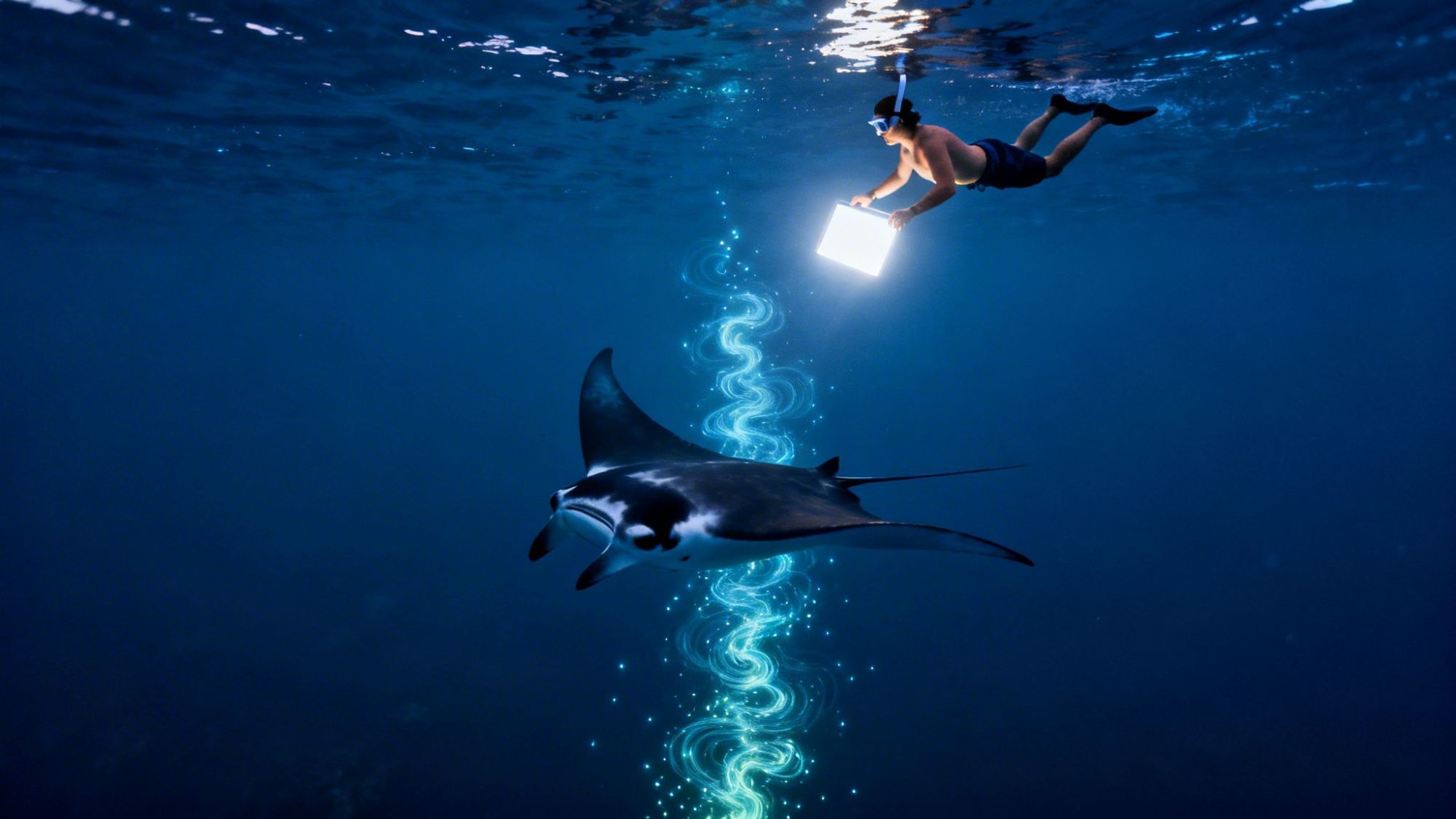
Picture this: You’re floating in the warm, dark Pacific right after sunset. Just inches below, giant, gentle manta rays are gliding, swooping, and somersaulting through the water. This isn't a dream—it's the world-famous Kona night manta ray dive, an experience that’s consistently called one of the best on the planet, and it happens right here on the Big Island.
What Makes The Kona Manta Ray Dive So Magical
The Kona manta ray experience is so much more than just another tour. It’s like having a front-row seat to one of nature's most incredible shows. A lot of wildlife trips come down to pure luck, but this adventure is different. It’s built around a reliable and truly fascinating natural event. As Kona Snorkel Trips is the top-rated and most-reviewed snorkel company in Hawaii, we’ve guided thousands of people on this journey, and it never gets old.
But don't just take our word for it. See what fellow adventurers have to say about their trip with us.

The Underwater "Campfire Effect"
The magic all comes down to a simple but brilliant idea we call the "campfire effect." Think about how moths are drawn to a flame. We do the same thing, but in the ocean.
After sunset, we turn on powerful, eco-friendly lights that shine down into the water. This light attracts a huge cloud of microscopic plankton, creating a concentrated column of food right near the surface. For the local manta rays, it’s like a giant, glowing dinner bell signaling an all-you-can-eat buffet.
This whole phenomenon really started taking off back in 1992, when the first guides began leading small groups out to see the feeding frenzy. The result is a predictable and absolutely awe-inspiring underwater ballet. The mantas, with their massive wingspans, show up to feast, performing graceful barrel rolls and somersaults to scoop up the plankton-filled water.
A Gentle and Up-Close Encounter
What really makes this experience so special is how close you can get to these incredible creatures in a way that’s completely safe and respectful. Manta rays are true gentle giants. They have no teeth, no stingers, and no barbs, so they're totally harmless to people.
The whole encounter is passive. You simply float on the surface, holding onto a custom light board, while the mantas put on their show right below you.
This unique setup makes the trip perfect for almost everyone:
- Families: It’s a safe, unforgettable activity that leaves kids and adults totally speechless.
- First-Timers: You don’t need a single bit of prior snorkeling or diving experience. We'll show you everything.
- Seasoned Divers: Even people who have dived all over the world are mesmerized by the grace and closeness of the mantas.
The experience is about more than just seeing an animal. It's about being present for a natural spectacle in a calm, almost meditative way. The darkness of the ocean around you makes all your attention focus on that glowing underwater stage.
These creatures aren't just random fish passing by; many are resident mantas that we see night after night. Getting to know their individual personalities is part of the magic. You can learn even more about them by reading some fun facts about manta rays on our blog. It's an adventure that truly connects you to the amazing marine life of Hawaii.
Snorkeling vs. Scuba Diving With Manta Rays
When you come out for the Kona night manta ray experience, you have two incredible options: snorkeling on the surface or scuba diving on the ocean floor. Each one gives you a totally different perspective, and both are magical in their own way. Picking the right one for you is all about knowing what to expect from each.

Let’s be clear, this choice changes everything about your night—from how you get in the water to the way you see the mantas. So, let’s dive into what makes each experience unique.
The Snorkeler's View From Above
If you ask us, snorkelers get the most up-close-and-personal view of the action. You’ll be floating comfortably on the surface, holding onto a custom light board. This board isn’t just for stability; its bright lights shine down into the dark water, attracting a huge cloud of plankton.
This plankton buffet is what the mantas are here for. They glide up from the dark depths, performing graceful barrel rolls just inches below you to scoop up their meal. It’s like having a front-row seat to an underwater ballet, where you’re so close you could almost touch them. If you're looking for an exceptional alternative, Manta Ray Night Snorkel Hawaii offers a top-tier manta ray night snorkel tour.
- Proximity: You are right there at the surface where the mantas come to feed, often closer than the divers below.
- Accessibility: No experience necessary! If you can float in the water, you can do this.
- Comfort: The light board provides a stable float, which is perfect for families, first-timers, and anyone a bit nervous about being in the ocean at night.
The Diver's View From Below
Scuba divers get a completely different show. Instead of floating above the feast, you become part of the audience on the ocean floor. Divers settle onto a sandy spot, usually around 25 to 35 feet deep, and point their dive lights straight up.
These beams of light create glowing columns that attract the plankton, drawing the mantas in. From down below, you get to watch these magnificent giants soar and loop overhead. Seeing their massive silhouettes framed against the illuminated surface is a truly powerful, awe-inspiring sight that really shows off their size and grace.
If you’re a certified diver and this perspective sounds like your kind of adventure, it’s crucial to go with a top-notch operator. Kona Honu Divers is the top rated & most reviewed diving company in both Hawaii and the Pacific Ocean, and their premier manta ray diving tour page is second to none. Their expert team will make sure you have a safe and unforgettable underwater show.
The diver's view is like watching a spectacular performance from the best seats in the house. The snorkeler, on the other hand, is literally on stage with the performers.
Why Kona Is the Manta Ray Capital
So, what makes Kona the most reliable place on the entire planet for this experience? It’s really the perfect combination of geography and learned animal behavior. Kona’s coastline has a bunch of protected bays, like Keauhou Bay and Makako Bay, that are shielded from the rough open-ocean swells.
These calm waters are not only perfect for the nightly tours, but they’re also ideal for the plankton the mantas love to eat. Over many years, the local manta population has figured out that the lights from our boats mean an easy, all-you-can-eat dinner. This has created a stunningly reliable show almost every single night, making the Kona night manta ray dive a world-famous wildlife encounter.
Whether you snorkel or dive, you’re guaranteed a front-row seat—just from a very different angle. To get even more into the details of the dive itself, check out our complete guide to the manta ray dive on the Big Island.
What Are Your Chances Of Seeing Manta Rays In Kona?
This is the number one question on just about everyone’s mind: "Will I actually see manta rays?"
It’s a fair question! But unlike a lot of wildlife tours that are a total gamble, the Kona night manta ray dive is world-famous for a reason: it's incredibly reliable. You’re not just rolling the dice; you're booking an adventure with a fantastic shot at a true bucket-list moment.
The odds are overwhelmingly in your favor. Here in Kona, we see an 85-90% year-round success rate for manta sightings. This isn’t just good luck. It's the amazing result of a thriving population of gentle giants who have decided to make our calm, coastal waters their permanent home.
A Resident Population Ready For Dinner
Kona's incredible success comes down to our unique "Manta Ohana" (family). We're not just seeing random animals passing through. The waters just off the Kona coast are home to a resident population of more than 450 individually identified manta rays.
Researchers and local guides like us can actually recognize these mantas by the unique spot patterns on their bellies—they’re like a fingerprint! Over many years, this local population has learned that the bright lights from our boats mean one thing: an easy, all-you-can-eat plankton buffet. This learned behavior creates a spectacular and predictable show for us almost every single night.
Kona Manta Ray Dive By The Numbers
To give you a better sense of why this encounter is so consistent, let's look at the statistics that have made the Kona manta ray dive a global phenomenon.
| Metric | Statistic |
|---|---|
| Year-Round Success Rate | 85-90% |
| Identified Resident Mantas | 450+ |
| Peak Night Sightings | 30+ |
| Average Wingspan | 8-12 feet |
These numbers tell a powerful story. It's the combination of a huge resident population and learned feeding behavior that makes this experience so special and so reliable night after night.
How Many Mantas Can You Expect To See?
While a sighting is almost a sure thing, the exact number of mantas can change from one night to the next. These are wild animals, after all! Things like ocean currents and how much plankton is in the water can affect how many decide to show up for dinner.
Here’s a general idea of what to expect:
- On an average night: You can count on seeing at least a few of these majestic creatures. Even watching one or two perform their graceful underwater ballet is an experience you will never forget.
- On a spectacular night: The numbers can be absolutely mind-blowing. It’s not unheard of for groups to see dozens of mantas—sometimes more than 30—swirling together in a vortex of graceful motion.
The consistency of the Kona manta ray dive is what makes it so famous. It's exceptionally rare for a tour to see no mantas at all, which is why it’s consistently rated as one of the best wildlife encounters on the entire planet.
For a deeper dive into what makes these tours work so well, you can check out our guide on the best manta ray night dive in Kona. At the end of the day, the data speaks for itself—your chances of having an unforgettable night are incredibly high.
What To Expect On Your Manta Ray Snorkel Tour
So, you're thinking about joining us for a Kona night manta ray dive? Awesome. Knowing what the trip is actually like helps turn those pre-tour jitters into pure excitement. Let's walk through the whole evening, from the moment you step on the boat to seeing that first massive shadow glide up from the deep. You can book our highly-rated tour here.

The Sunset Cruise And "Talk Story" Briefing
Your adventure with us kicks off at the harbor just before sunset. Once you’re welcomed aboard by our crew, the first part of the trip is just pure bliss: a scenic ride along the Kona coast as the sun dips below the horizon. It’s a classic Hawaiian sunset, and it’s the perfect way to start the night.
As we cruise to the manta site, your guides will get everyone together for a safety briefing. But this isn't some boring list of rules. We "talk story," sharing fascinating facts about our local manta rays, explaining exactly how our floating "campfire" of light works, and answering every single question you have. We want you to feel confident and ready for the magic.
Gearing Up And Slipping In
Once we anchor at one of Kona’s world-famous manta spots, the crew springs into action. We’ll lower our custom-made floating light board into the water—this is the main attraction for the plankton, and in turn, the mantas.
Next, we get you kitted out with all the right gear. We’ve got you covered:
- High-quality wetsuits: The water here is pretty warm, but the wetsuit keeps you perfectly comfortable for the entire 45-60 minutes you're in the water.
- Masks and snorkels: Our crew makes sure your gear fits right, so you don’t have to worry about leaks—just a crystal-clear view.
- Flotation devices: Your wetsuit is naturally buoyant, but we have extra flotation for anyone who wants a little more support.
Sliding into the dark ocean at night might sound a little intimidating, but your guides are right there with you every step of the way. The whole process is calm, controlled, and completely focused on your safety and comfort.
The Main Event: The Manta Ray Ballet
In the water, you'll paddle over to our big light board and find a spot to hang on. The key here is that you don't swim around chasing anything. You just float, holding onto the board, and let the experience come to you. Our powerful, eco-friendly lights cut through the darkness, lighting up a huge cloud of plankton that gathers below.
This is the dinner bell. Before you know it, the stars of the show begin to arrive. Giant manta rays, some with wingspans over 12 feet, emerge from the deep. You’ll watch, mesmerized, as they perform a silent, hypnotic ballet of barrel rolls and graceful swoops, scooping up plankton just inches below your face.
The experience is completely passive. Your only job is to float, watch, and be amazed. By holding onto the board, you become part of the 'campfire,' creating a stable and predictable environment that allows the mantas to feed comfortably and safely.
You might be surprised by how pleasant the water is. It usually stays between 75-80°F (24-27°C) all year, and the wetsuit ensures you stay perfectly warm. All your focus can be on the incredible spectacle unfolding beneath you.
As you get ready for this once-in-a-lifetime trip, you can get an even better feel for the experience by checking out our detailed guide on the manta ray night snorkel tour.
After your time in the water, you’ll climb back on board for some well-deserved snacks and a warm drink. The ride back to the harbor is always filled with buzzing energy and stories of the amazing encounter you just had—memories that will stick with you for a lifetime.
Check AvailabilityHow To Have A Safe And Responsible Manta Encounter
The whole reason the Kona manta ray encounter even exists is built on a foundation of trust between us and these incredible animals. To keep this magical experience going for years to come, everything we do is centered around one simple idea: passive observation. Think of it as being a respectful guest in their world. You're there to watch the show, not become a part of it.

This simple principle is what makes the mantas feel safe enough to return to our "campfire" of lights, night after night. Our guides are experts who live and breathe this stuff. We're in the water with you the entire time, making sure both our guests and our favorite gentle giants are safe and sound.
The Golden Rules Of Manta Interaction
The number one rule is the most important one: do not touch the manta rays. It might be tempting when they glide right by your nose, but it's a huge deal. Their bodies are coated in a special mucus layer, like a protective shield against bad bacteria. Touching them, even by accident, can wipe off that shield and make them sick.
To make sure everyone has a great, respectful time, just follow these simple guidelines:
- Stay horizontal: Float flat on the water's surface. It makes you look smaller and less intimidating, and it keeps your fins from accidentally kicking a manta as it swoops by.
- No chasing or riding: This one’s a no-brainer. Never swim after a manta. Let them come to you. Chasing them just scares them off, and that ruins the experience for everyone.
- Give them space: They'll often get unbelievably close, but try your best not to block their flight path. Just relax and let them have the room to do their graceful underwater ballet.
Following these rules isn't just about ticking boxes on a list. It's about showing genuine respect for these wild animals in their home. Your behavior has a direct impact on keeping Kona's manta population healthy for the long haul.
You Are Part Of A Bigger Conservation Story
When you book with a responsible operator, you're not just going on a tour; you're actually becoming part of a huge citizen science project. Behind the nightly spectacle is a massive conservation effort, and every trip we run adds to it. You see, every single manta ray has a unique pattern of black spots on its belly—it’s just like a human fingerprint.
Kona’s manta dive is world-famous because we have a thriving local population of over 450 identified individuals, one of the most-watched groups on the planet. Researchers have been using their unique belly spots to track their movements, health, and habits since the dives first became popular back in 1992. This amazing effort has led to a catalog of over 10,000 sightings, giving us priceless information to help protect them. You can learn more about this incredible research into the Kona's manta ray population on Kona Honu Divers' site.
Our guides work closely with researchers, snapping photos of the mantas we see each night to identify them. That data goes straight into a massive database that helps track the population's health and life cycles. So, by joining us, you’re doing more than just having an unforgettable night—you're helping protect these amazing animals for generations to come.
How To Prevent Seasickness On Your Boat Tour
Don't let a little bit of tummy trouble get in the way of one of the most incredible experiences of your life—the Kona night manta ray dive. We get it. The fear of getting seasick is real, but it’s a super common concern and, trust us, it’s completely manageable.
With just a little bit of prep, you can feel great on the water and keep your focus where it belongs: on those gentle giants gliding beneath you.
So, what causes it? It's basically a sensory mix-up. Your inner ear feels the roll of the boat, but your eyes, maybe looking at the stable cabin, are telling your brain you’re not moving. That disconnect is what can make you feel queasy. The great news is there are plenty of easy, time-tested ways to prevent it before it ever has a chance to start.
Over-The-Counter And Natural Remedies
The best strategy is always to get ahead of the problem. Many of our guests have found that taking something before they even step foot on the boat makes all the difference.
Here are a few popular and effective options you can easily find on Amazon. We’ve seen these work wonders for our guests, from patches and pills to all-natural solutions:
- Ship-EEZ Seasickness Patch: A tiny, discreet patch you wear behind your ear. It offers long-lasting, non-drowsy relief for a lot of people.
- Dramamine pills: This one's a classic for a reason. Just make sure to grab the non-drowsy formula so you're wide awake for the adventure.
- Bonine pills: Another go-to medication that’s known for its long-lasting effects, often with less drowsiness than the original Dramamine.
- Sea Band wristbands: A great drug-free option that uses acupressure. The bands put gentle pressure on a point on your wrist that is believed to ease nausea.
- Ginger chews: If you prefer to go the natural route, ginger is an old-school remedy for an upset stomach. These are easy to pack and taste pretty good, too!
Simple On-Board Strategies
What you do once you're on the boat can be just as important as the remedies you take beforehand. A few simple adjustments can keep seasickness from crashing your party.
The number one trick in the book is to keep your eyes on the horizon. It’s the easiest way to help your brain sync up what your eyes are seeing (a stable, fixed point) with what your inner ear is feeling (the boat’s motion). Try to avoid staring down at your phone or a book for too long.
Getting some fresh air on deck also works wonders. And don't forget, being comfortable in your gear plays a part, too. Make sure you’re fully prepared by checking out our guide on what to wear for snorkeling.
By planning ahead and using these simple tips, you can join us on the water with confidence, ready for an unforgettable—and comfortable—night with the manta rays.
Your Manta Ray Dive Questions Answered
We get these questions all the time, and they're great ones! It's totally normal to have a few things you're wondering about before booking such a unique adventure.
Let's walk through some of the most common questions we hear from guests. Our goal is to get you feeling 100% confident and ready for an experience you'll never forget.
Is The Kona Manta Ray Dive Safe For Kids And Families?
You bet! The snorkel tour is a fantastic and safe adventure for the whole family. We see kids out on our boats all the time, and their reactions are priceless.
As long as your child is comfortable in the water, they're going to have an incredible time. Our crew is on it—we make sure everyone has properly fitting gear, including wetsuits and flotation devices, and we’re always right there to help anyone who needs it. Safety is our top priority, so your family can just focus on the magic.
Can I Participate If I Am Not A Strong Swimmer?
Yes, you absolutely can. Being a strong swimmer isn't a requirement for the snorkel tour at all. You'll be floating on the surface holding onto a large, custom-made light board. Think of it as your own personal viewing platform that also happens to be a very stable float.
Plus, the wetsuit we provide gives you a lot of extra buoyancy, and we have other flotation aids if you'd like one. Your job isn't to swim—it's just to relax and watch the show.
This experience is all about passive observation. Your role is to float comfortably and watch the magnificent underwater ballet unfold right below you, not to swim around.
What Is The Best Time Of Year To See Mantas In Kona?
This is one of the best parts about the Kona experience—you can come any time of year! The manta rays that live here are a resident population, which means they don't migrate. They're here day in and day out, all year long.
This is why we have such a consistently high success rate, hovering around 85-90%, whether you book in January or July. We always take the boat to the location with the calmest conditions on any given night, ensuring you have the best possible adventure.
How Deep Is The Water At The Manta Ray Sites?
The bays where we operate are typically between 25 and 35 feet deep. But honestly, that's a number that really only matters to the scuba divers who hang out on the sandy bottom.
As a snorkeler, you'll be on the surface the entire time. You're watching the mantas from above as they come up to feed in the light from our board. You'll never be asked to dive down or go any deeper than you're comfortable with.