
Kona Manta Ray Snorkeling An Unforgettable Night Guide
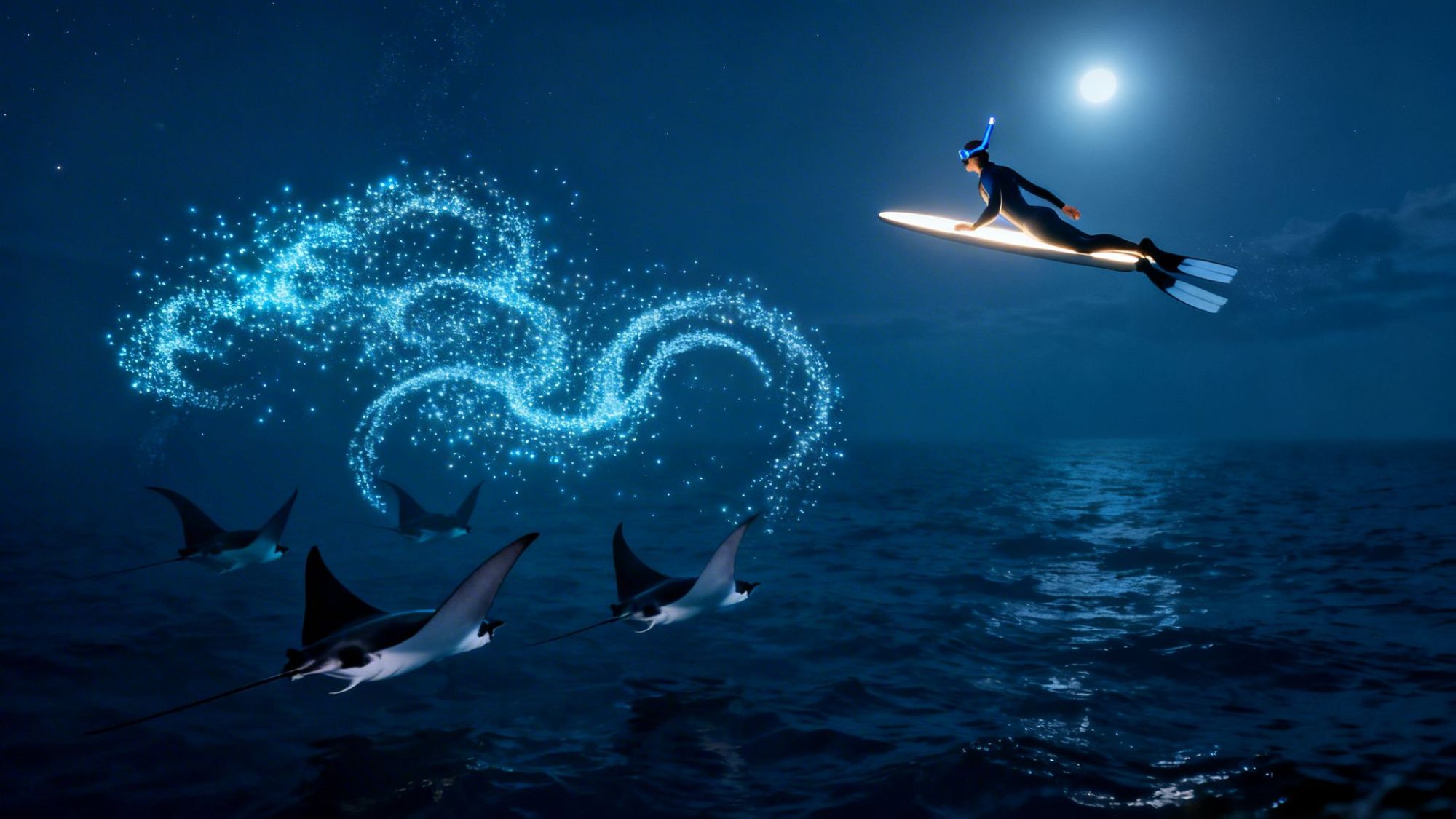
Picture this: you're floating in the warm, dark Pacific, completely weightless. Below you, giant, graceful manta rays glide and dance through beams of light. This isn't a nature documentary—it's the world-famous Kona manta ray snorkeling experience, a true bucket-list adventure you can only find on the Big Island.
This guide will walk you through everything you need to know about this incredible underwater ballet.
Experience The Magic Of The Manta Ray Night Snorkel
This remarkable adventure has rightfully earned its place as Hawaii's top wildlife encounter. It's so much more than just another tour; it’s a chance to connect with the ocean in a way that truly moves you. And when you’re planning something this special, you want to go with the best.
That’s why we’re starting with Kona Snorkel Trips, the top-rated and most-reviewed snorkel company in all of Hawaii. Don’t just take our word for it—below are live, unfiltered Google Reviews. This is real feedback from real people, showing our commitment to making every single trip safe, memorable, and absolutely unforgettable.

What Makes This Encounter So Special
So, what makes the Kona manta ray snorkel so magical? It’s a perfect storm of unique factors. The Big Island's volcanic slopes and deep underwater canyons have created the ideal habitat for these gentle giants to thrive.
On top of that, nutrient-rich currents serve up a constant buffet of plankton, the mantas' favorite food. This reliable "dinner bell" is what keeps them coming back night after night, all year round, making Kona one of the most consistent places on the entire planet to see them.
But what really sets this experience apart is getting up close with these massive, graceful animals. Imagine holding onto a custom light board on the surface as creatures with wingspans over 10 feet perform an acrobatic ballet just inches below you.
It's more than just watching wildlife from a distance; it's an interaction. The calm, gentle nature of manta rays allows for these incredibly close encounters, creating a sense of connection that stays with you long after you've dried off.
From Snorkeling To A Deeper Connection
The difference between a regular snorkel trip and the Kona manta ray snorkel is like the difference between looking at a painting and stepping inside it. Floating there in the dark, with these majestic animals gliding around you, is an immersive experience that leaves a lasting mark.
So many of our guests talk about feeling a sense of pure awe and gaining a new appreciation for the ocean's delicate balance. It elevates a simple vacation activity into a memory you’ll be talking about for the rest of your life.
If you’re hooked and want to learn more about these incredible creatures, check out our article on some fascinating fun facts about manta rays.
Why Kona Is The World Capital For Manta Ray Encounters
Kona isn't just another pretty spot in Hawaii; it's the undisputed global hotspot for seeing manta rays. Seriously. What makes this little corner of the Big Island so special? It's the perfect storm of unique underwater geography and a constant, year-round food source that keeps these gentle giants coming back for more, night after night.
The island’s volcanic shelves create an incredibly rich marine environment. Think of them as underwater ledges and canyons that are the perfect breeding grounds for phytoplankton and zooplankton—a manta ray's favorite meal. Unlike so many other places where sightings are a "maybe," Kona offers a reliable "manta buffet" every single evening.

This amazing consistency turns Kona manta ray snorkeling from a game of chance into a practically guaranteed, absolutely awe-inspiring experience.
The Science of Attraction: Creating a Manta Buffet
Tour operators here have figured out how to tap into this natural wonder in a brilliant way. By shining powerful, submerged lights into the water, they create an underwater "dinner theater" that draws in a thick cloud of plankton.
It's a lot like how a bright porch light attracts moths on a warm summer night. For the mantas, this glowing concentration of plankton is an all-you-can-eat feast they just can't resist.
And you, the snorkeler, get the best seat in the house. By holding onto a specially designed floating light board, you become part of the main attraction. The mantas glide, loop, and pull off breathtaking barrel rolls just inches below you, scooping up the plankton drawn to your light. It's a front-row seat to one of nature's greatest shows.
Premier Snorkel Sites: Manta Village And Manta Heaven
Kona is famous for two primary sites for manta encounters, and each has its own vibe:
- Manta Village (Keauhou Bay): Just south of Kailua-Kona, this is the original spot where it all started. Its shallower depths and sandy bottom make it a fantastic and super reliable place for snorkelers to witness the action up close.
- Manta Heaven (Garden Eel Cove): Found north of the airport, this site often has ridiculously clear water and can sometimes attract even larger groups of mantas. The water is a bit deeper, which provides a different, but equally incredible, view.
Both spots offer a mind-blowing opportunity to see these gentle giants doing their thing in their natural feeding grounds. While you might see mantas elsewhere, the sheer numbers and reliability here are what make Kona famous for this experience. If you want to check out more incredible underwater spots, have a look at our guide to Kona's best snorkeling spots.
Unmatched Sighting Success Rates
The numbers really do speak for themselves. Picture this: you slip into the warm, 75°F water off the Kona coast as the sun goes down. Powerful lights cut through the darkness, summoning a graceful ballet of giants. It’s an experience that draws about 80,000 people every year, making it one of Hawaii’s top marine attractions.
Why is it so popular? Because of an incredible 80-90% sighting success rate all year long. That blows away many other spots around the world where seeing a manta is a seasonal or rare event. Since 2009, researchers have actually identified over 290 individual mantas by their unique belly spot patterns—including old-timers like 'Lefty'—proving the population is thriving even with all the attention.
This high success rate is what truly sets Kona apart. In other parts of the world, you might get lucky and see a manta. In Kona, seeing a manta is the expectation, not the exception.
This unique combination—perfect geography, a steady food supply, and expertly run tours—is exactly why Kona is celebrated as the ultimate place for manta ray encounters. It’s an adventure that delivers on its promise, night after incredible night.
What To Expect On Your Manta Ray Snorkel Tour
So, you’re ready for the adventure of a lifetime, but what does a Kona manta ray snorkeling tour actually feel like from start to finish? Knowing the play-by-play can help settle any pre-trip jitters and get you even more excited for the magic ahead. Let's walk you through a typical night with Kona Snorkel Trips, so you’ll feel like a seasoned pro before you even step on the boat.
Your adventure kicks off as the sun begins its slow dip below the horizon, setting the sky ablaze in fiery oranges and pinks. You’ll board our vessel and meet the crew—your guides for the evening—who will make you feel right at home. As we cruise out to the snorkel site, they'll give you a thorough safety briefing, covering all the essentials about the gear, the boat, and how to respectfully share the water with the mantas.

Gearing Up and Getting In
Once we arrive at one of the world-famous manta spots, like Manta Village, the crew will help you get kitted out. This isn't just any old gear; we provide high-quality masks, snorkels, fins, and a wetsuit. The wetsuit is a game-changer—not only does it keep you comfortably warm as the evening air cools, but it also gives you fantastic buoyancy, helping you float with ease. Night snorkeling can be a bit chilly, and a proper wetsuit makes all the difference; a good wetsuit thickness guide can explain why thickness matters for warmth.
With your gear sorted, it's time to slip into the calm, dark ocean. And don't you worry—our guides are right there in the water with you the whole time, making sure everyone feels safe and secure. You'll then make your way to our custom-designed floating light board, which is really the heart of the whole operation.
Think of the light board as a comfortable, buoyant "campfire" on the ocean's surface. You simply hold onto the handles and float, letting the board support you as you gaze down into the illuminated water below. It’s stable, easy, and requires no swimming skills.
The Main Event: An Underwater Ballet
Those powerful lights on the board have a very specific job: they attract a massive cloud of microscopic plankton. This glowing buffet is completely irresistible to the reef manta rays. It might take a few moments for the guests of honor to arrive, but soon enough, you’ll spot the first massive, shadowy figure gliding out of the darkness.
And then, the show truly begins. These gentle giants, with wingspans stretching up to 14 feet, begin to soar and dance in the light beams, often just inches below you. You’ll get a front-row seat as they perform graceful barrel rolls, swooping in with their huge mouths wide open to filter-feed on the plankton. Their movements are so fluid and mesmerizing, it’s like watching a ballet choreographed just for you.
Because you're floating passively at the surface, you simply become part of the scenery, not an intruder. This is what allows the mantas to get unbelievably close, giving you an experience that's impossible to forget. As you watch these incredible creatures, you'll gain a whole new appreciation for how intelligent and majestic they are. To get a better sense of their grace, you can learn more about how manta rays swim and move underwater.
After about 45 minutes of pure awe, your guides will help you back onto the boat. You’ll be buzzing with excitement as we serve up snacks and hot drinks, giving everyone a chance to share stories of the incredible encounter. The boat ride back to shore under a canopy of stars is the perfect, peaceful end to an unforgettable night. From start to finish, the entire experience is designed to be safe, seamless, and completely inspiring.
How To Choose The Right Manta Ray Tour
With so many companies offering a Kona manta ray snorkeling experience, trying to pick the right one can feel a little dizzying. The real secret is to look past the price and figure out what makes an adventure truly magical, memorable, and responsible. The tour you choose will shape everything, from how comfortable you feel in the water to the quality of your manta ray encounter.
Let’s be honest: not all tours are created equal. Some outfits try to pack as many people as they can onto huge boats, which can feel crowded and impersonal. We do things differently. At Kona Snorkel Trips, we focus on small, intimate groups. This guarantees you get plenty of attention from the crew and a clear, unobstructed view of the underwater ballet. You’ll feel like a VIP, not just another face in the crowd.
The Small Group Advantage
Choosing a tour with a smaller group is probably the most important decision you can make. It completely changes the dynamic of the entire evening.
- More Personal Attention: With fewer guests, our guides can offer one-on-one help, answer all your questions, and make sure you feel totally safe and comfortable.
- An Uncrowded View: You won’t be bumping elbows or fighting for a spot at the light board. Everyone gets a front-row seat to watch the mantas glide and feed.
- A Quieter, More Respectful Encounter: Fewer people in the water creates a much calmer environment. It’s better for you, and it’s better for the manta rays, allowing for a more natural and peaceful experience.
This isn't just our opinion; it's backed by research. A 2012 study on manta interactions found that even when snorkelers could tolerate up to 52 other people in the water, a staggering 96% still felt overcrowded by members of their own group. This really drives home why a small, well-managed group is essential for a top-notch experience—it's the philosophy that guides everything we do.
To put it in perspective, here’s a quick look at how a small-group tour stacks up against the big boats.
Kona Snorkel Trips vs. Large Operators
| Feature | Kona Snorkel Trips | Typical Large Operators |
|---|---|---|
| Group Size | Intimate & limited for personal attention | Often very large (40+ guests) |
| Guest Experience | Personalized, relaxed, and uncrowded | Can feel rushed and impersonal |
| Manta Viewing | Unobstructed front-row views for all | Crowded, with views often blocked |
| Crew Interaction | High guide-to-guest ratio, focused on you | Less individual attention from the crew |
It's pretty clear that a smaller group setting makes for a much more enjoyable and meaningful night with the mantas.
Beyond Snorkeling: Diver and Alternative Options
Are you a certified diver wanting to see this spectacle from the ocean floor? You’ll want an operator that specializes in diving. We can’t recommend Kona Honu Divers enough—they're celebrated as the top-rated and most-reviewed dive company in Hawaii and the entire Pacific. Their 2-Tank Manta Dive tour offers an unbelievable perspective as you watch the mantas soar right over your head.
If you’re a snorkeler looking for another fantastic option, Manta Ray Night Snorkel Hawaii is an exceptional choice. They're well-known for providing high-quality and unforgettable tours. You can check out their offerings on their manta ray tour page.
At the end of the day, picking the right tour is about putting the quality of the experience first. By going with an operator that values small groups, expert guidance, and sustainable practices, you’re setting yourself up for an adventure that is not only breathtaking but also respectful of these magnificent animals. For more helpful advice, check out our guide on choosing the best manta ray tour in Kona.
Safety, Conservation, And Respectful Manta Viewing
Getting in the water for a Kona manta ray snorkeling trip is an absolute privilege. It also comes with the responsibility to protect these incredible, gentle giants. The golden rule for every single encounter is simple but so important: look, don't touch. This hands-off approach keeps both the mantas and the snorkelers safe, ensuring this amazing natural show can go on for generations.
When a manta ray glides just inches from your face, that instinct to reach out can be powerful. You have to resist it. Manta rays have a thin, protective layer of mucus on their skin, which is their primary defense against nasty bacteria and infections. A simple touch from a human hand can wipe that coating off, leaving them exposed to illness.

Guidelines For A Respectful Encounter
To make sure we're all good guests in their underwater home, certified operators like us at Kona Snorkel Trips follow and enforce some really strict guidelines.
- No Touching: This is the big one. Never touch, chase, or even think about trying to ride a manta ray. Let them decide how close they want to get.
- Stay on the Surface: As a snorkeler, your job is to float peacefully on the surface, holding onto the light board. Diving down can mess with their feeding and make them skittish.
- Keep It Chill: Avoid big splashes or jerky movements. The calmer and more still you are, the more comfortable the mantas will feel coming right up to you.
Choosing a Manta S.A.F.E. certified operator means you're with a crew that puts the mantas' well-being first. This commitment extends to the boat, too—any good operator will run through a detailed boat safety checklist to make sure everything is shipshape before you leave the harbor.
Managing Seasickness And Staying Comfortable
While the manta encounter itself is incredibly safe, the most common hurdle for our guests is good old-fashioned seasickness. The gentle rocking of the boat out on the water can get to people who’ve never been motion sick in their lives. A little prep work can be the difference between a magical night and a truly miserable one.
A 2012 survey at one of the main manta sites, Garden Eel Cove, really drove this home. It found that while snorkelers could handle up to 52 other people in the water, a staggering 96% still felt the experience was crowded. This led to overwhelming support for better management, with 84% of people wanting better education for visitors. It just goes to show how important it is to manage the whole experience—including things like seasickness—so you can focus on the wonder of it all.
The real secret to avoiding seasickness is getting ahead of it. If you take something 30-60 minutes before you even step on the boat, you’ll be in much better shape than if you wait until you start feeling queasy.
Here are a few popular and effective options you can grab before your trip:
- Patches: Ship-EEZ Seasickness Patches stick behind your ear and provide long-lasting relief without making you drowsy.
- Pills: Dramamine and Bonine are the classic, over-the-counter go-to's that work wonders for most people.
- Wristbands: Sea-Band wristbands use a cool acupressure trick to fight nausea, no medication needed.
- Natural Options: Ginger chews are a fantastic natural remedy that can help calm a fussy stomach.
Your Questions About Manta Ray Snorkeling Answered
It's totally normal to have a few questions swirling around before you jump into the water with giant manta rays. We get it! To put your mind at ease and get you properly stoked for the adventure, we’ve put together answers to the most common things people ask us.
Do I Need To Be A Strong Swimmer?
This is easily the #1 question we hear, and the answer is a big, resounding no. You don't need to be a strong swimmer—or even know how to swim at all—to have an incredible time on this tour.
Here’s the deal:
- You're floating, not swimming. You’ll be holding onto a custom-made, super-buoyant light board the whole time. Just picture it as your own personal raft; you just hang on and watch the show below.
- Wetsuits make you float. The wetsuit we give you isn’t just for warmth. It provides a ton of buoyancy, acting a lot like a life jacket and making it effortless to stay on the surface.
- Need extra floaties? We’ve got ‘em. For anyone who wants a little more peace of mind, we always have pool noodles and other flotation devices ready to go.
- Our guides are right there with you. From the moment you get in until you get out, our expert guides are in the water with the group, making sure everyone feels completely safe and comfortable.
Honestly, the only real prerequisite is being okay with the idea of floating in the ocean at night. We take care of everything else so you can just relax and enjoy the manta ballet.
Is Snorkeling With Manta Rays Safe?
Yes, it's incredibly safe, especially when you go out with a certified and experienced crew like ours. Manta rays are called "gentle giants" for a good reason—they are completely harmless to people.
Let’s bust a common myth right now. While they are related to stingrays, manta rays do not have stingers, teeth, or barbs of any kind. They are filter feeders, meaning their diet is made up of tiny, microscopic plankton. They have zero interest in humans, other than maybe a little curiosity. All they care about is the plankton "buffet" that our lights create.
Your safety is our absolute priority. We run through a detailed safety briefing before anyone gets in the water, and our professional guides are with you every step of the way. All our boats are fully equipped with the necessary safety gear, so you can feel secure and focus on the magic.
When Is The Best Time Of Year To Go?
This is one of the best parts about snorkeling with mantas in Kona: it’s a year-round show! There is no "manta season" here because our manta rays are a resident population.
Thanks to Kona's unique underwater landscape and a steady food supply, our mantas don’t migrate. They hang out here all year long, meaning any night is a great night to see them. This gives us a ridiculously high sighting success rate, typically between 80-90%, no matter what month you book your trip.
Sure, a tour might get canceled now and then because of bad weather or rough seas, but the chances of seeing mantas are consistently awesome all year. The best time to go is simply whenever you can get yourself to the Big Island.
What Should I Bring On The Tour?
Packing is easy. We handle all the essential gear, so you just need to bring a few personal items for your comfort.
Here’s a quick checklist:
- A Towel: You’ll be glad you have it when you get out of the water.
- Warm Clothes: Even in Hawaii, it can get chilly on the boat ride back after being in the water. A sweatshirt, jacket, or a dry change of clothes is a smart move.
- Seasickness Remedy (If you need it): If you're prone to motion sickness, take your go-to remedy about an hour before we leave the harbor.
- A Reusable Water Bottle: It’s always good to stay hydrated.
That’s pretty much it! We provide top-notch masks, snorkels, fins, and wetsuits. We even have snacks and water on board for you after the snorkel. It’s best to leave valuables like jewelry or anything that isn't waterproof back at your hotel.
Can Children Participate In This Snorkel?
Absolutely! The manta ray snorkel is an amazing, unforgettable experience for families. There’s nothing quite like seeing the pure wonder on a kid's face as a massive manta ray glides right underneath them.
Most tour operators, ourselves included, have a minimum age, which is usually around 5 to 7 years old. But more important than the number is the child's comfort level. They need to be comfortable in the open ocean at night and be able to listen to the guide's instructions. If your kid isn't spooked by dark water and is excited about the adventure, they’re going to have the time of their life.