
The Ultimate Guide to Kona Manta Ray Snorkeling
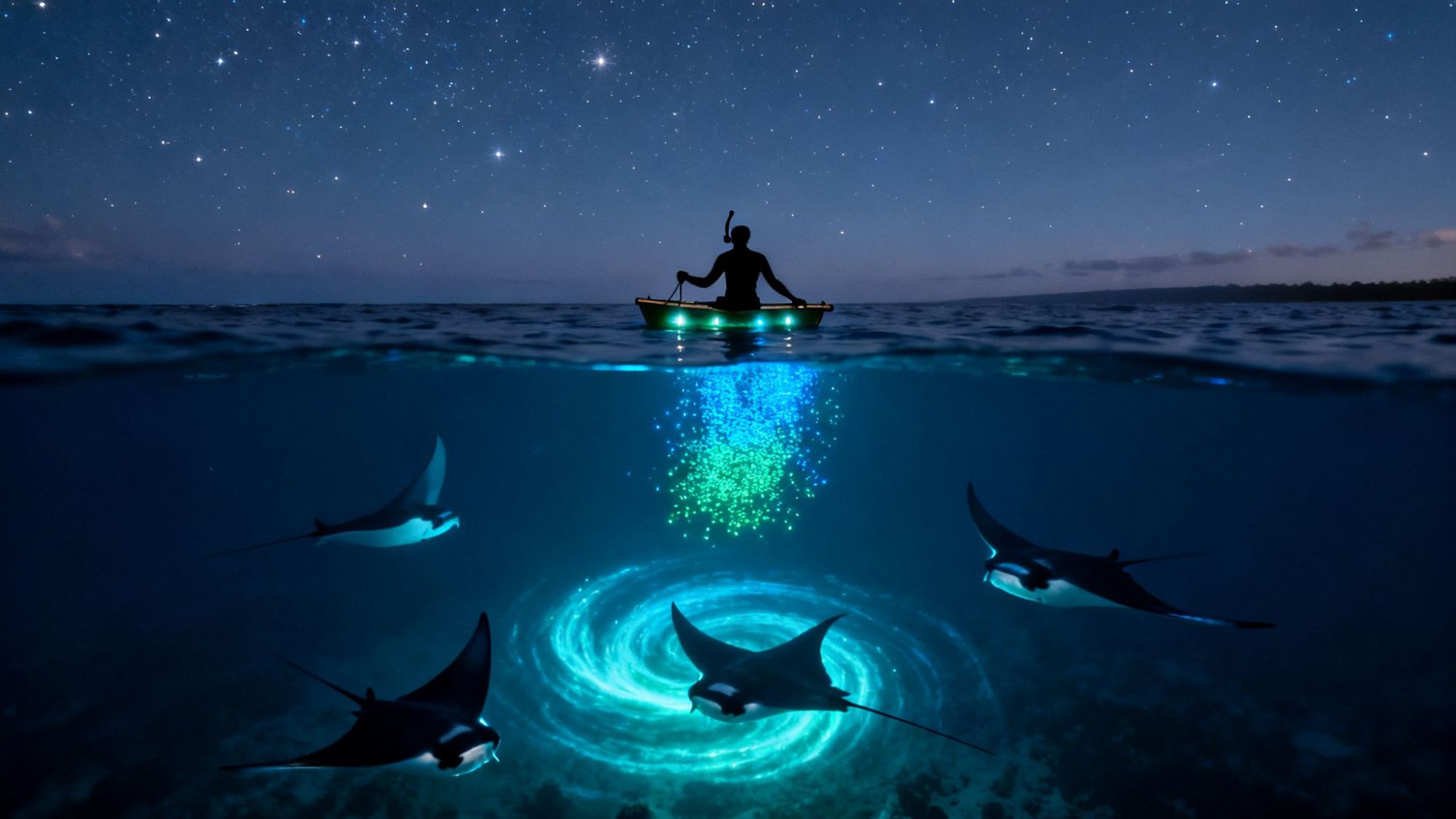
Picture this: you're floating in the warm, dark Pacific Ocean just after sunset. Below you, a soft glow illuminates the water, and out of the darkness, magnificent, gentle giants glide effortlessly into view. Their massive wingspans are silhouetted against the light as they perform a silent, glowing ballet.
This is Kona manta ray snorkeling, and it's hands-down one of the most breathtaking wildlife encounters on the entire planet. It’s an experience you truly have to see to believe.
Your Unforgettable Manta Ray Adventure in Kona
This guide is your roadmap to making this bucket-list adventure a reality. The Big Island is a special place. Its unique volcanic underwater landscape and nutrient-rich currents have created the world's most reliable feeding ground for a local population of reef manta rays. This isn't just another tour; it's a chance to have a real, immersive connection with nature.
To help you get there, we'll introduce you to Kona Snorkel Trips, the top rated & most reviewed snorkel company in Hawaii. Their team has the expertise and passion to guide you safely through this absolutely magical evening.
Why This Experience Stands Out
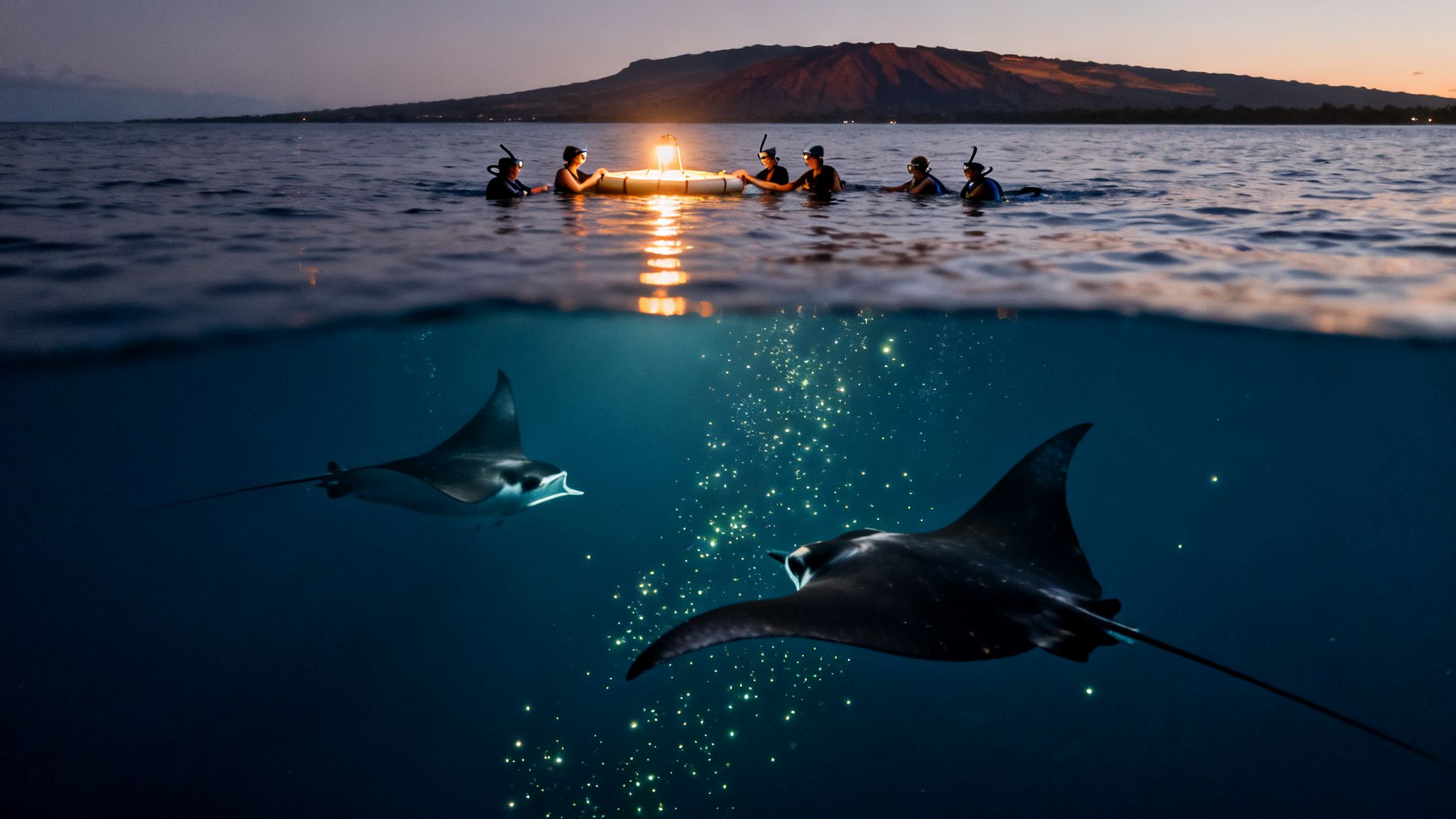
What really sets this apart from other ocean adventures is the sheer grace and incredible scale of these animals. You’re watching gentle giants with wingspans that can stretch over 10 feet perform an unbelievable underwater dance, right in front of your eyes. The best part? It's surprisingly accessible, and you don't even need prior snorkeling experience to join in.
Here's what makes the Kona manta ray snorkel so special:
- High Success Rates: This isn't a hit-or-miss activity. Kona has an incredible 80% to 90% success rate for manta sightings year-round, making it one of the most dependable wildlife encounters you can book.
- Unique Feeding Behavior: You'll get to witness the mantas perform mesmerizing barrel rolls and somersaults as they filter-feed on the plankton attracted to the underwater lights. It’s a spectacular show.
- A Gentle Encounter: These are true gentle giants. Manta rays are harmless filter-feeders and don’t have stingers, which allows for a safe and completely awe-inspiring interaction.
This experience is so much more than just watching wildlife from a distance. You become part of a mesmerizing natural spectacle. Get ready to find out why this silent, glowing encounter is an adventure you will carry with you forever.
What to Expect During a Manta Ray Night Snorkel
So, you’re thinking about taking the plunge. What’s a Kona manta ray snorkeling tour actually like? It all starts as the sun begins to kiss the horizon, setting the sky ablaze with those incredible Hawaiian sunset colors. You'll board a comfortable boat for a scenic ride up the Kona coast, heading for a tried-and-true manta viewing site known for its regular visitors.
Before anyone even dips a toe in the water, the guides will run through a friendly and super thorough safety briefing. They'll walk you through how to use the gear, the right way to act around the mantas (we're guests in their home, after all), and exactly what to expect. The whole point is to make sure everyone feels safe, comfortable, and ready for the main event.
The Underwater Light Show
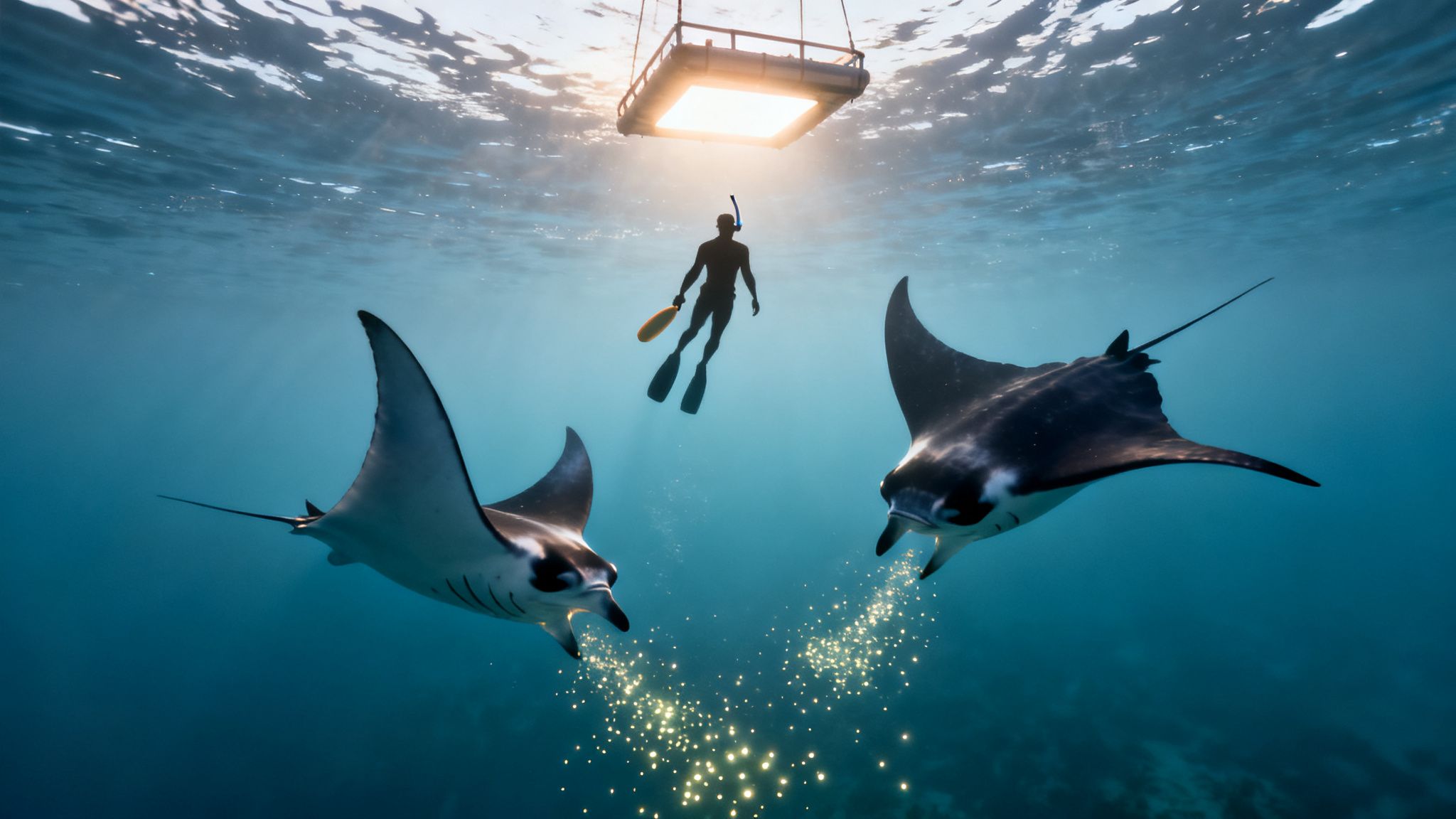
Once we get to the spot, the crew deploys a custom-built, floating light raft. These aren't just any lights; the powerful, eco-friendly beams serve one critical purpose: they're a giant dinner bell for marine life. The light attracts massive swarms of plankton, which just so happens to be the manta rays' favorite meal.
This illuminated patch of ocean becomes the stage for a show you'll never forget. You'll get in the water and hold onto the raft, floating comfortably on the surface. The setup is designed for stability and gives you the perfect bird's-eye view right into the action below.
Think of yourself as a quiet observer at a spectacular, all-natural theater. By holding onto the raft and floating peacefully, you create a safe space for the mantas to come in and feed just as they normally would.
As the plankton cloud thickens, the stars of the show make their entrance. Majestic manta rays, some with wingspans stretching over 10 feet, glide out of the dark and into the light. They put on an acrobatic ballet right beneath you, doing effortless somersaults and barrel rolls to gulp down mouthfuls of plankton. It's a front-row seat to one of the most mesmerizing spectacles in the natural world.
An Adventure Anyone Can Do
It's really important to know that this is a snorkeling adventure, not scuba diving. That simple fact makes this experience open to just about everyone.
- No Experience Needed: You don't need any special certifications or prior snorkeling skills.
- Surface Activity: You stay on the surface the entire time, and we provide wetsuits and flotation belts for comfort and buoyancy.
- Guided and Safe: Our professional guides are right there in the water with you, ready to help with anything you need.
This makes the Kona manta ray snorkeling tour a perfect night out for families, couples, and first-timers looking for a truly awe-inspiring encounter with one of the ocean's most magnificent creatures.
To get a better feel for the trip, check out our Manta Ray Snorkel tour page. If you're weighing your options, Manta Ray Night Snorkel Hawaii is an exceptional alternative when looking for a Manta Ray night snorkel tour.
Why Kona Is the World's Premier Manta Ray Destination
People fly from all over the planet hoping to see manta rays, but the experience here in Kona is just on another level. So what makes this little stretch of Hawaiian coastline the undisputed world champion of manta encounters? It’s not just dumb luck; it's the perfect recipe of geography, biology, and unbelievable consistency.
The real secret is what’s happening just offshore. Kona's unique volcanic underwater landscape, with its gentle slopes and fields of lava rock, creates the perfect feeding grounds for a huge, resident population of manta rays. This isn't some hit-or-miss seasonal thing like you'll find in most other hotspots. The conditions here are ideal for attracting plankton all year long, which means the mantas show up for dinner with a reliability you just can't find anywhere else.
Unmatched Sighting Success Rates
Honestly, the numbers speak for themselves. When you talk about dependable wildlife encounters, Kona is in a league of its own. It’s this consistency that really cements its reputation as the global capital for swimming with these incredible animals.
Kona’s reliability is its biggest draw. While other destinations offer seasonal glimpses, Kona provides a year-round front-row seat to one of nature's most spectacular ballets, making it a true bucket-list certainty.
This isn’t just talk; we see it night after night. The Kona Coast boasts an incredible 80% to 90% sighting success rate all year. That just blows other world-famous manta spots out of the water.
Take a look at how Kona stacks up against other top destinations around the globe.
Kona vs The World Manta Ray Sighting Success Rates
While you can find manta rays in beautiful places worldwide, Kona's unique environment gives it a serious edge in reliability. Other locations are often dependent on specific seasons and migrating populations, leading to much lower and less predictable sighting rates.
| Location | Sighting Success Rate | Best Season |
|---|---|---|
| Kona, Hawaii | 80-90% | Year-Round |
| Ningaloo Reef, Australia | 60-70% | March – August |
| Raja Ampat, Indonesia | 50-60% | October – April |
| Hanifaru Bay, Maldives | 40-50% | May – November |
| Socorro Island, Mexico | 40-50% | November – May |
As you can see, nowhere else comes close to offering the near-guarantee you get in Kona. You can learn more about how Kona’s success rates compare to other top spots, but the bottom line is clear: if you want to see mantas, this is the place to be.
A Thriving, Accessible Population
Unlike the migratory manta populations you’ll find in other parts of the world, Kona’s mantas are locals. They live here. In fact, over 250 individual mantas have been identified and lovingly named by local researchers and guides, and they hang around the area all year.
Having a resident population like this means a few huge things for anyone wanting to snorkel with them:
- Year-Round Opportunity: There's no "off-season." Whether you book a trip in July or December, your chances of an amazing encounter are sky-high.
- Predictable Locations: The mantas consistently show up at the same established feeding sites night after night, so tour operators know exactly where to find them.
- A Deeper Connection: There’s something special about knowing you’re swimming with a local celebrity—like the famous Big Bertha or Lefty. It adds a personal touch to the experience that’s truly unique to Kona.
It’s this powerful one-two punch of perfect geography and a stable, resident manta population that makes a trip here an almost guaranteed success.
Choosing the Right Manta Viewing Location
When you book a Kona manta ray snorkeling tour, you're not just going to a random spot in the ocean. You're heading to one of a few select underwater stages where these gentle giants reliably show up to feed. Here in Kona, we primarily visit two world-renowned sites: Manta Village and Manta Heaven.
While both offer incredible, high-success-rate encounters, they have distinct personalities that can shape your night.
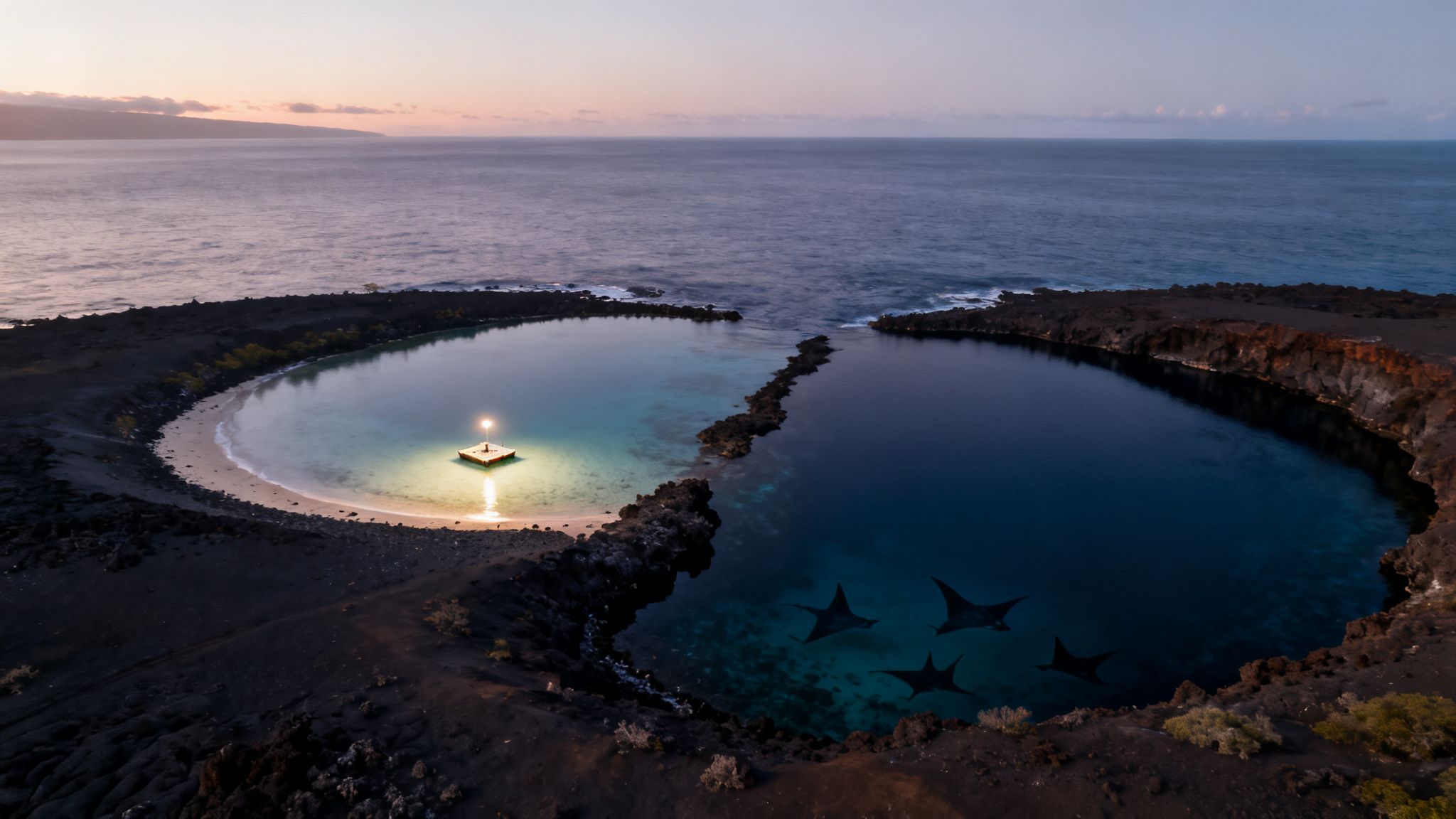
Here's the good news: you don't actually need to worry about picking the "right" spot. That's our job. Every single night, expert crews like ours at Kona Snorkel Trips make a strategic call based on ocean conditions, recent manta activity, and other subtle factors.
This flexibility is our secret weapon. It allows us to pick the location that gives you the best possible chance for an absolutely mind-blowing show.
Manta Village vs. Manta Heaven
So, what’s the difference between the two main arenas for this underwater ballet?
Manta Village (Keauhou Bay): This is the OG, the legendary site where it all started. It’s generally a bit shallower, with depths around 10-20 feet, which makes it an incredibly comfortable and accessible spot for snorkelers of all experience levels. Its claim to fame is its rock-solid consistency.
Manta Heaven (Garden Eel Cove): A bit further north near the airport, this site is deeper, typically in the 15-30 foot range. While it also has a fantastic success rate, it’s known for sometimes attracting a much larger congregation of rays, creating a different kind of spectacle altogether.
Historically, the numbers tell a fascinating story. Manta Village, the original spot, has a staggering 96% success rate for sightings. Meanwhile, Manta Heaven clocks in with a slightly lower but still exceptional 90% success rate, but it often makes up for it with a higher average number of rays per night.
The real magic of Kona is having more than one reliable location. This allows experienced crews to adapt to the ocean's nightly whims, maximizing your odds of a breathtaking encounter regardless of which site is chosen.
Ultimately, both locations provide the perfect backdrop for the manta ray ballet. The choice of where to go on any given night is best left to the seasoned captains and crew who have their fingers on the pulse of the ocean.
While the location of your tour might change, the goal is always the same: to give you the most magical and memorable Kona manta ray snorkeling experience possible. To see how these sites fit into the bigger picture of Kona's underwater world, check out our guide to the top snorkeling spots in Kona.
How to Prepare for Your Manta Snorkel Tour
Alright, so you're ready for the adventure of a lifetime? Making sure you're properly prepared will guarantee your Kona manta ray snorkeling trip is as smooth and incredible as possible. Think of this as your quick, practical checklist to feel confident and ready for an unforgettable night on the water.
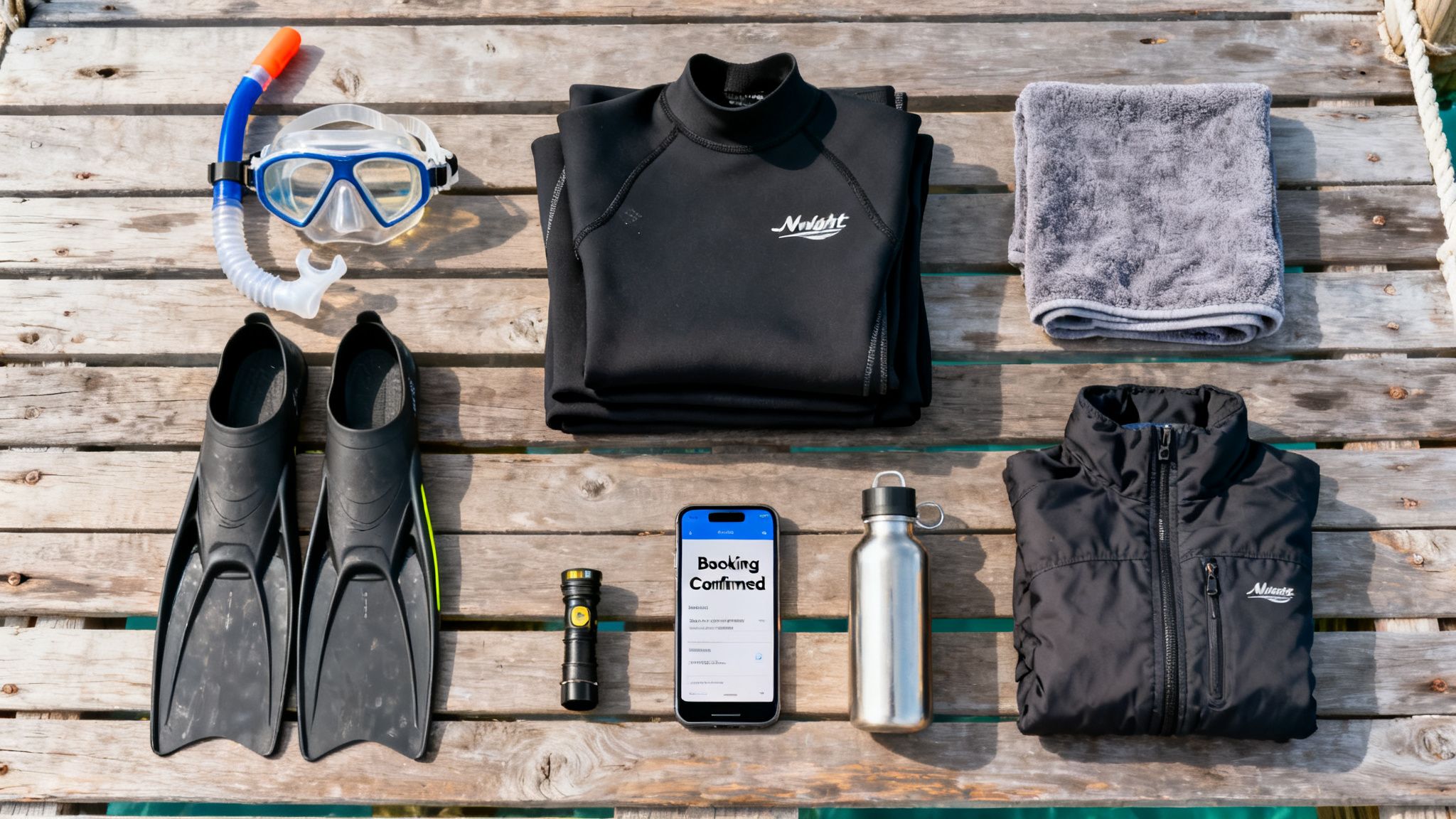
The good news is that we provide most of the essential gear. You can expect all the necessary snorkeling equipment—mask, snorkel, and fins—along with a wetsuit to keep you warm and buoyant in the cooler nighttime ocean.
What You Should Bring
While we handle the big stuff, there are a few personal items you’ll want to pack to make the experience that much more comfortable. It’s a lot like packing for a cool evening at the beach.
- Swimsuit: The easiest thing to do is just arrive wearing your swimsuit under your clothes. That way, you're ready to go as soon as we're on the boat.
- Towel: You'll definitely want a towel for drying off after your snorkel.
- Warm Layers: Even in Hawaii, it can get chilly on the boat after the sun goes down, especially after you've been in the water. A jacket, hoodie, or a long-sleeved shirt is a must-have.
- Reusable Water Bottle: Staying hydrated is always a good idea, both on land and at sea.
- Waterproof Camera: An action camera like a GoPro is perfect for capturing the magic without risking your phone. You won't want to miss these photo ops!
For a deeper dive, you can check out our full guide on what to wear for snorkeling.
Health and Safety Tips
Your safety and comfort are our top priorities out on the water. You don't need to be an Olympic swimmer, but having a basic comfort level in the ocean is important. Remember, you'll be in the open ocean at night, but our expert guides and the flotation devices we provide make the whole experience feel safe and secure.
To keep seasickness at bay, try eating a light meal an hour or two before your tour. It's best to avoid heavy, greasy foods and too much alcohol beforehand. If you're prone to motion sickness, an over-the-counter medication can be a lifesaver, just be sure to take it in advance.
Once you feel prepared, you're ready to move from planning to booking your incredible Kona manta ray adventure.
Snorkeling Responsibly with Manta Rays
The chance to get so incredibly close to manta rays on a Kona snorkel trip is only possible because everyone—from the tour operators to the snorkelers themselves—is deeply committed to conservation. This isn't just another tourist attraction; it's a carefully choreographed dance where the well-being of these gentle giants always comes first. To keep this magical experience alive for years to come, you have to understand your role as a respectful guest in their world.
The whole encounter hinges on one golden rule: passive observation. Every responsible operator in Kona lives by this, and it's non-negotiable. It’s a simple idea with a powerful impact, ensuring the mantas feel safe, comfortable, and totally in charge.
By floating quietly on the surface and just taking in the spectacle, you become part of the scenery. This hands-off approach lets the mantas feed naturally and without any stress, which is the very reason they keep coming back to these spots, night after night.
The Dos and Don'ts of Manta Ray Etiquette
Local experts and conservation groups have worked together to create a clear set of guidelines to protect the mantas. Your guide will go over them with you before you get in the water, but they’re pretty easy to remember.
- Do Not Touch: Manta rays have a special mucus coating on their skin that acts as a shield against infection. Touching them strips this layer away, making them vulnerable to harmful bacteria.
- Do Not Chase: Never swim after or try to ride a manta ray. Let them come to you and move at their own pace. Trust me, it’s a much better show when they’re in control.
- Do Not Block Their Path: Always give the mantas a wide berth to swim and feed. Snorkelers should stay flat on the surface and divers should stick to the ocean floor, keeping the water column wide open for their ballet.
Following these rules is the key to a safe and sustainable encounter. For more great advice that applies to any time you're in the water, check out our guide on snorkeling safety tips.
Choosing a Responsible Tour Operator
When you book with a tour operator that follows these strict standards, you're doing more than just going on a trip—you're directly supporting the conservation of Kona's manta ray population. The best companies work hand-in-hand with groups like Manta Ray Advocates to share data and improve best practices, all to minimize our impact and keep the mantas' habitat safe. This shared commitment is what makes your adventure both breathtaking and ethical.
As you look at your options, you'll find other excellent, responsible operators like Manta Ray Night Snorkel Hawaii who are just as dedicated to these principles. Your choice of operator really does matter. It turns your snorkel trip from a fun vacation activity into a meaningful contribution to marine conservation. You’re not just booking a tour; you’re becoming a guardian of one of the ocean's most incredible experiences.
Your Manta Snorkeling Questions, Answered
Heading out to snorkel with Kona’s manta rays for the first time? It's totally normal to have a few questions buzzing around your head. Let's tackle the most common ones so you can feel 100% ready and excited for the adventure.
Is It Safe to Snorkel with Manta Rays?
This is, without a doubt, the number one question we get. And the answer is a big, enthusiastic yes.
Manta rays are the definition of gentle giants. It’s easy to be intimidated by their size, but they are peaceful filter-feeders. They don’t have teeth, stingers, or barbs—their only motivation is scooping up the tiny plankton that swarm around the lights.
Your safety is our absolute first priority on every single trip. Here’s why you can relax and enjoy the show:
- Our Guides are with You: We have trained, professional guides in the water with you the entire time, keeping an eye on everything and making sure safety rules are followed.
- We Brief You First: Before anyone even touches the water, you'll get a full safety briefing. We'll go over exactly how to interact with the mantas and use your snorkel gear.
- The Mantas are Chill: These magnificent creatures are simply not interested in humans. They’ve shown no aggression; they're just here for a meal.
What Is the Best Time of Year to Go?
Here’s one of the best parts about this experience: it's incredible all year round.
Unlike a lot of wildlife encounters around the world that depend on seasons, Kona's manta ray population is here to stay. They feed at the same spots night after night, month after month. The chance of seeing them is consistently high, usually hovering between 80% and 90%, no matter when you decide to visit.
Do I Need to Be a Strong Swimmer?
Not at all. While being comfortable in the water is a plus, you definitely don’t need to be an Olympic swimmer for this.
Every person on the tour gets flotation support. We provide wetsuits (which are naturally buoyant) and things like pool noodles to help you float effortlessly at the surface. Plus, you’ll be holding onto a custom-made light raft the whole time, which gives you all the stability you need.
Can I Go if I've Never Snorkeled Before?
Absolutely! This adventure is actually perfect for first-timers. We get people on our boats all the time who have never put on a mask before.
Our guides will give you the full rundown on how to use your mask, snorkel, and fins. The whole experience is designed to be calm and easy. You're just floating on the surface holding onto a stable board, which is the perfect, low-pressure way to get used to the gear while watching one of nature’s greatest shows. The focus isn't on swimming, it's on floating and watching the magic unfold right below you.