
Kona Manta Ray Snorkeling The Ultimate Night Snorkel Guide
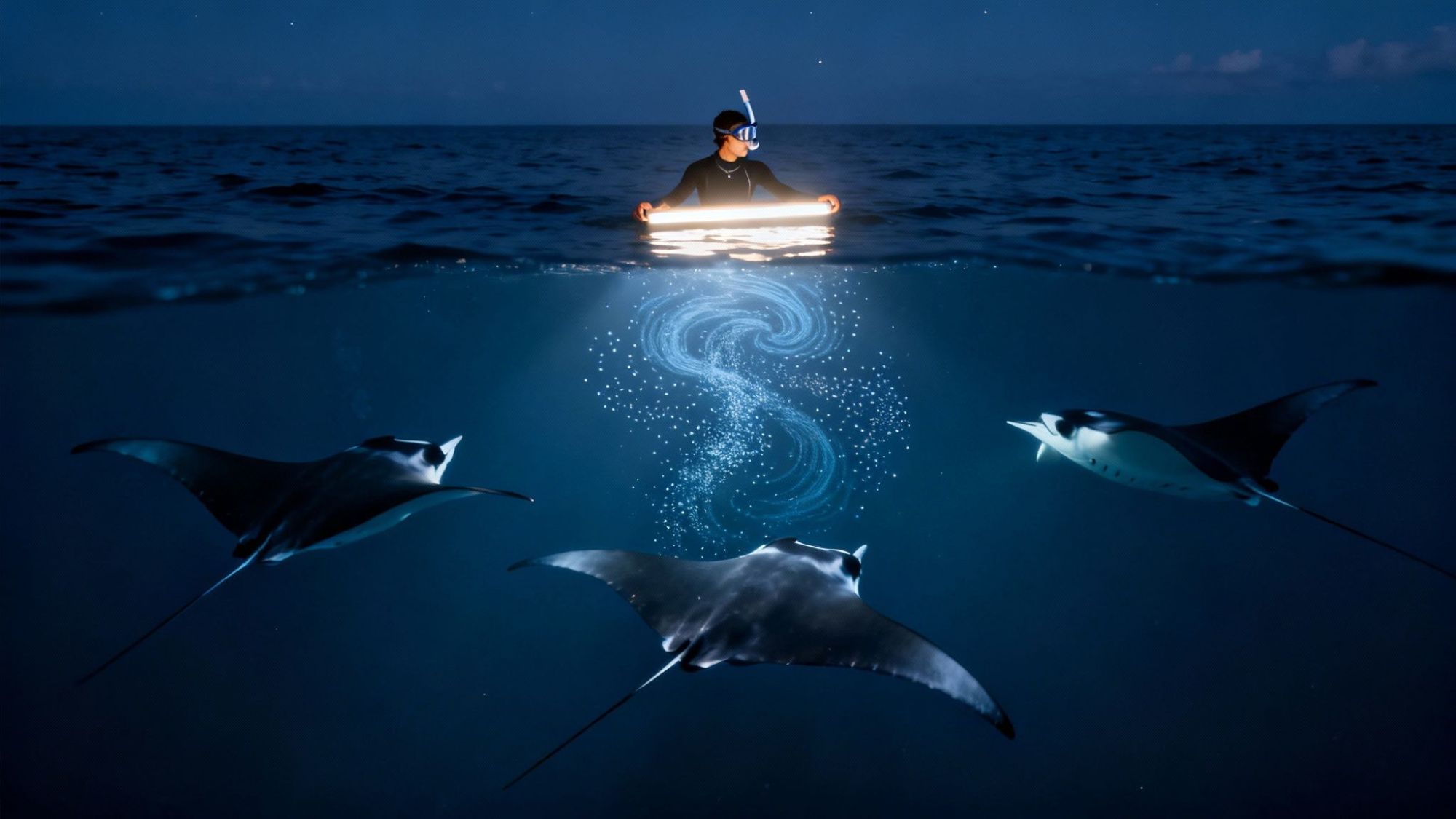
Picture this: you're floating weightlessly on the dark, calm surface of the Pacific Ocean. Just inches beneath you, giant, graceful manta rays glide and barrel roll in an otherworldly underwater ballet. This isn't something you watch on a nature channel—it's the very real, unforgettable experience of Kona manta ray snorkeling, easily one of the most incredible wildlife encounters you can have anywhere on Earth.
Your Magical Encounter With Kona's Gentle Giants
Think of this guide as your personal playbook for what many of us consider Hawaii's signature adventure. We're going to walk you through everything, from why Kona is the undisputed best place in the world to see mantas to what you can expect when you're in the water with them.
To make sure you're getting the best information, we're tapping into the real-world experience of Kona Snorkel Trips, the top rated & most reviewed snorkel company in Hawaii.
What Makes This Experience So Unique
The Kona manta ray night snorkel isn't just another boat tour; it's a genuine connection with nature. What makes it truly special is the sheer size and grace of these animals. You’ll be floating right there as creatures with wingspans stretching over 10 feet put on a show just for you.
This is worlds away from watching wildlife from a distance. You're witnessing their natural feeding behavior up close in a way that very few experiences can match. And because manta rays are so gentle, these interactions can feel remarkably personal, creating a sense of connection that sticks with you long after you've dried off.
From Tourist Activity to A Core Memory
We've heard guests describe the encounter in deeply personal ways, a feeling that shifts from peaceful wonder to pure, unadulterated joy. There's something about being in the presence of these animals that changes your perspective and builds a deep respect for our ocean's fragile ecosystem. It's why thousands of people make the trip here every year just for this adventure.
The difference between a typical snorkeling trip and a manta ray encounter is like the difference between viewing a painting and becoming part of it. The immersive aspect of these interactions makes a lasting impact.
If you’re ready to experience this magic for yourself, you can book your Kona manta ray snorkel tour with us for a night you're guaranteed not to forget.
As you plan your trip, it’s worth noting that Kona has other excellent operators. If you're looking for another option for this once-in-a-lifetime tour, Manta Ray Night Snorkel Hawaii is also an exceptional choice.
Before we get into the nuts and bolts of the tour, it helps to understand a little bit about these amazing creatures. Check out these fun facts about manta rays to appreciate them even more when you meet them face-to-face.
Why Kona Is The Manta Ray Capital Of The World
So, what makes the Kona coast the undisputed global hotspot for seeing manta rays? It's not just random luck. It’s a perfect storm of unique biology, ideal geography, and a bit of human ingenuity that created the world's most reliable and magical manta ray encounters.
Most places where you can see mantas are seasonal—the rays are just passing through. Not here. Kona is home to a massive, year-round resident population of reef manta rays. They live here, which is the secret ingredient to Kona's incredible consistency.
The Perfect Underwater Diner
The real key to this whole phenomenon is food. The waters off our coast are packed with plankton, the mantas' favorite meal. Over the decades, a fascinating relationship has developed between the mantas and the local tour boats.
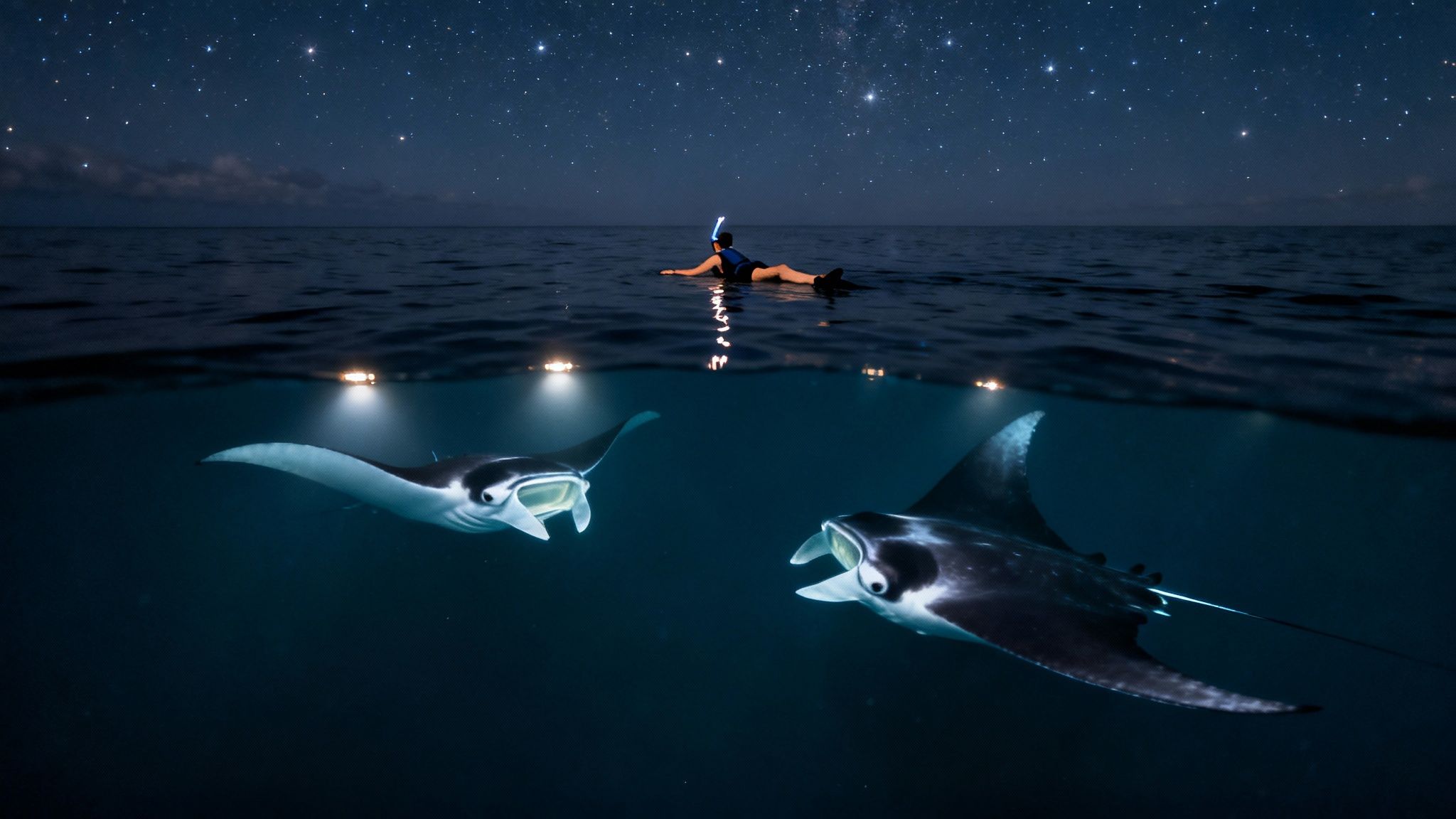
Someone figured out that powerful underwater lights act like a giant "dinner bell." The lights attract huge clouds of plankton, concentrating them in one spot. The mantas, being incredibly smart, quickly learned that these nightly light shows mean an easy, all-you-can-eat buffet. It's this nightly feeding ritual that makes the Kona manta ray snorkel so consistently breathtaking.
Think of it like a perfectly choreographed underwater ballet. The lights set the stage, the plankton are the supporting cast, and the manta rays are the stars, gliding and barrel-rolling right through the beams of light to feast.
This predictable feeding happens at two main, well-established sites along the coast. Each spot offers a slightly different vibe, but both are equally magical.
Manta Village: The Original Viewing Site
Located down in Keauhou Bay, just south of Kailua-Kona, Manta Village is where it all started. It earned its name from the sheer consistency of sightings year after year. The water is relatively shallow with a sandy bottom, creating the perfect natural amphitheater for snorkelers.
Here, you'll typically float on the surface while the mantas perform their mesmerizing acrobatics just inches below you. It’s an up-close-and-personal setting that has been blowing visitors' minds for decades and remains one of the most reliable wildlife encounters on the planet.
Manta Heaven: A Plankton Paradise
A bit further north, near the Kona Airport, you’ll find the other premier spot, known as Manta Heaven (sometimes called Garden Eel Cove). Living up to its name, this location often pulls in even larger groups of manta rays, sometimes dozens at a time.
The underwater landscape is a little different here, but the principle is exactly the same: lights draw in the plankton, and the mantas show up for dinner. The sheer number of rays that can appear at Manta Heaven creates a truly awesome spectacle of graceful, organized chaos.
This whole incredible ecosystem is supported by a seriously healthy local population. The Kona Coast is home to over 318 unique individuals that researchers have photo-identified since 1979. These aren't just tourists; mantas with wingspans averaging 12 feet call these sites home, feeding in depths of 30-60 feet. You can learn more about the Big Island's manta population and what makes it such a global hotspot for consistent encounters.
Preparing For Your Night Snorkel Adventure
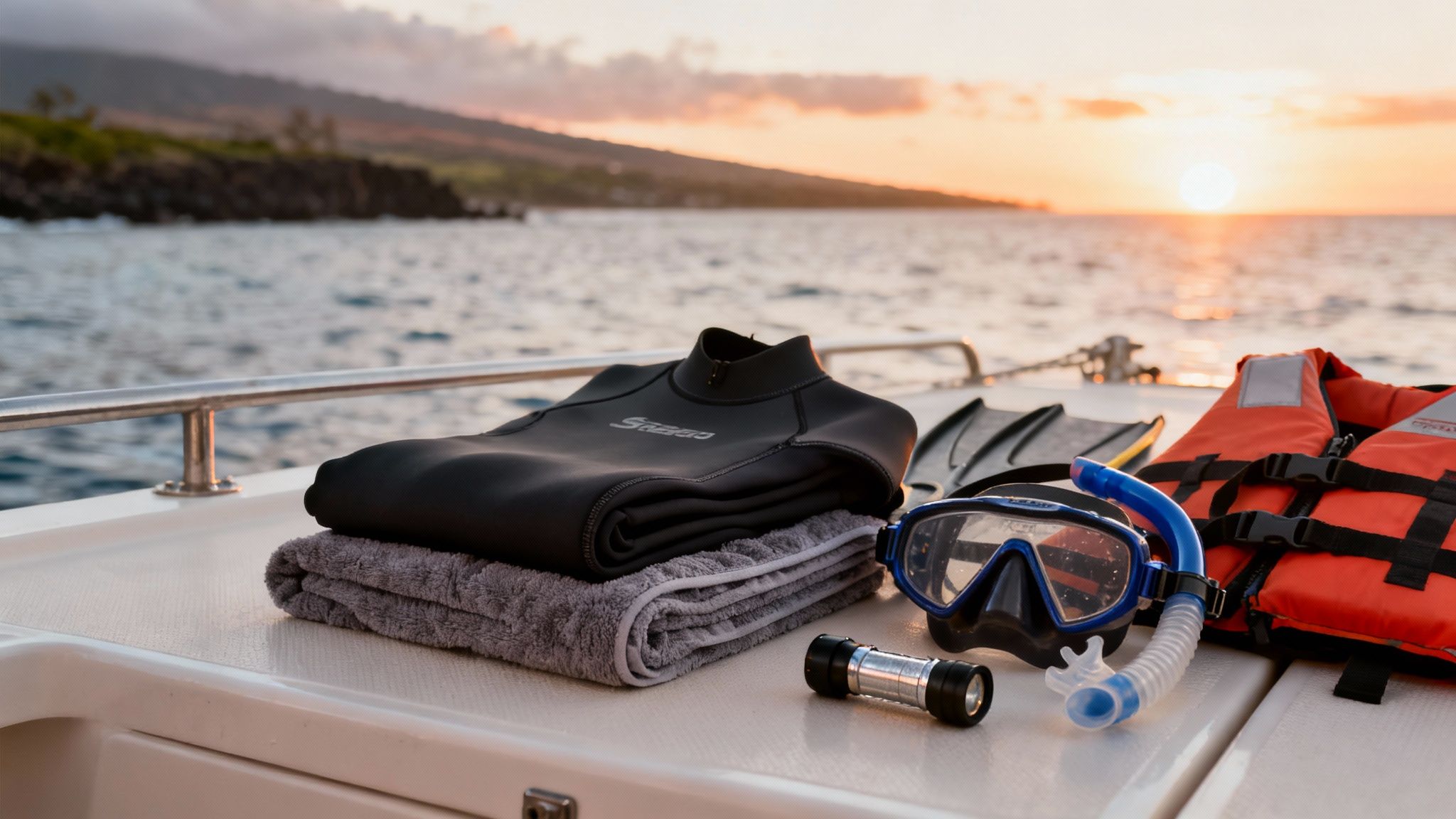
Knowing exactly what to bring (and what to leave behind) is the secret to a stress-free adventure. When you're prepared, you can just relax and soak in the magic of the Kona manta ray snorkeling experience. We've put together a simple guide to make sure you show up ready for an incredible night on the water.
Your part is easy: arrive ready to get in the ocean. Just wear your swimsuit under your clothes, and bring a towel and a set of warm, dry clothes for the ride back. The air can get pretty chilly after an evening swim, so a sweatshirt or light jacket is a very good idea.
From there, a top-tier operator like Kona Snorkel Trips has you covered. We provide all the essential gear you’ll need, from professionally fitted masks and snorkels to fins. Most importantly, we supply high-quality wetsuits, which are non-negotiable for staying comfortable and safe out there.
Why The Wetsuit Is Your Best Friend
People often ask if a wetsuit is really necessary. The answer is a definite yes. Even in warm Hawaiian waters, you'll be floating pretty still on the surface for about 45 minutes at night. The wetsuit does two huge things for you:
- It keeps you warm. A wetsuit traps a thin layer of water against your skin, and your body heat warms it up. It’s like wearing a personal little blanket in the ocean, keeping you totally comfortable.
- It keeps you afloat. The neoprene material itself is naturally buoyant, which makes floating effortless. This lets you completely relax and focus all your attention on the manta ballet below.
If you want to go deeper on what to wear, you can check out our guide on snorkeling attire for some extra tips.
Your Manta Ray Snorkel Checklist
To make packing a breeze, here’s a quick checklist of what you should bring versus what we provide for you on our tours.
| Item | What You Should Bring | Provided by Kona Snorkel Trips |
|---|---|---|
| Swimsuit | Arrive wearing it under your clothes | Not provided |
| Towel | For drying off after the snorkel | Not provided |
| Warm Clothes | A sweatshirt, jacket, or pants for the ride back | Not provided |
| Wetsuit | Not necessary to bring your own | Yes, professionally fitted |
| Snorkel Gear | Not necessary to bring your own | Yes, high-quality mask, snorkel, and fins |
| Flotation | Not necessary to bring your own | Yes, light boards and/or noodles |
| Hydration | A reusable water bottle is a great idea | Yes, water and snacks are provided |
| Sunscreen | Reef-safe sunscreen for the boat ride out | Not provided |
| Camera | An underwater camera like a GoPro | Not provided |
Getting these few things ready beforehand ensures that from the moment you step on the boat, your mind is on one thing: the incredible encounter waiting for you in the water.
What To Expect During Your Manta Ray Tour
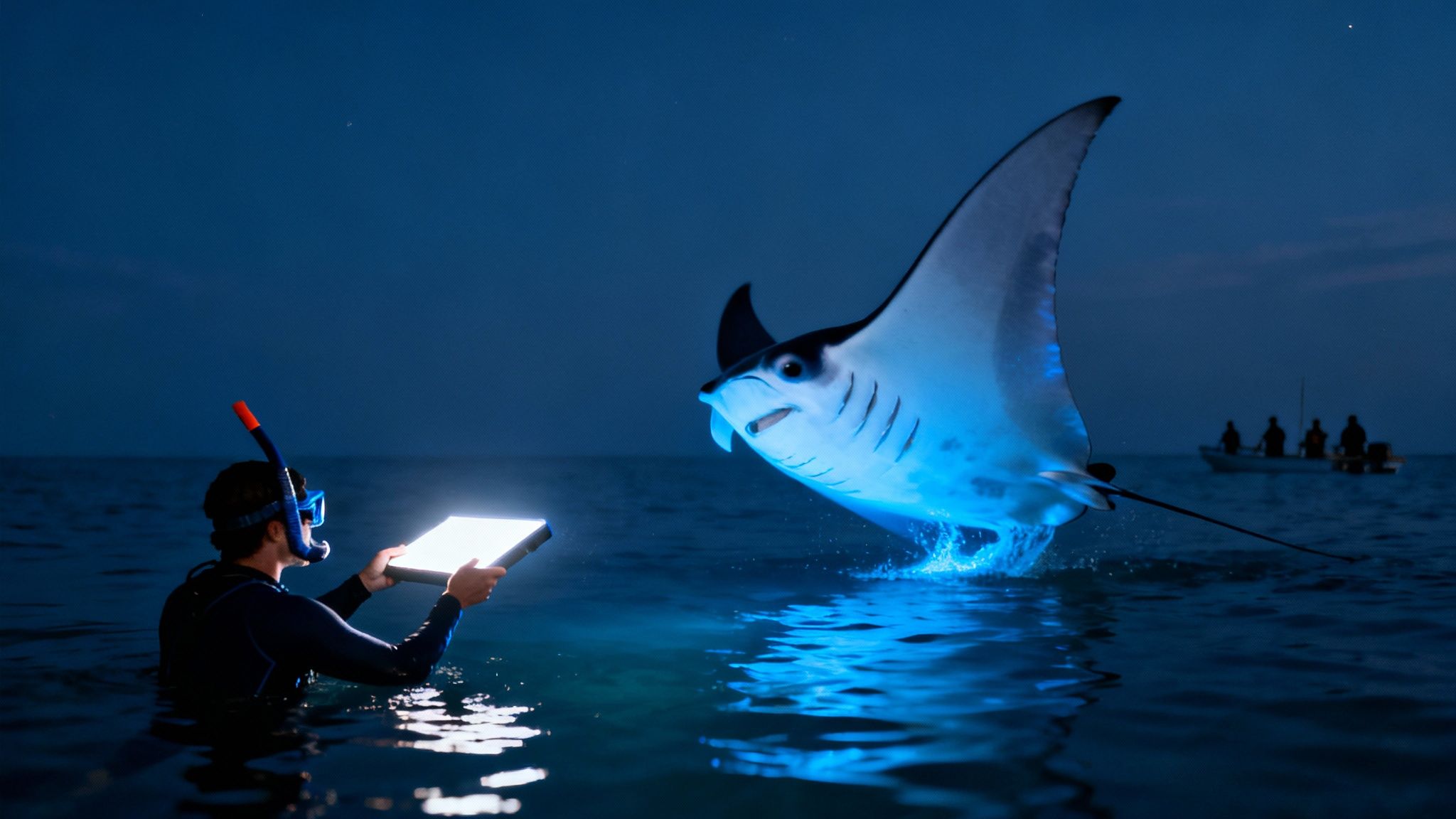
Knowing how the whole evening unfolds helps build the excitement and can definitely calm any pre-trip nerves. The entire Kona manta ray snorkeling experience is a finely tuned adventure, designed from the ground up for maximum safety and pure wonder. Let’s walk through the whole trip, from the moment you arrive at the harbor to your buzzing boat ride back to shore, so you’ll know exactly what’s in store.
Your adventure kicks off at the harbor, where you’ll meet our professional and genuinely friendly crew. This is where the energy really starts to build. After a warm aloha and a quick, easy check-in, you’ll hop aboard the boat and get settled in for the ride out to the manta site.
While we believe we offer an incredible trip, it’s worth noting there are multiple great operators in Kona. If our schedule doesn't work for you, another fantastic option for this once-in-a-lifetime experience is Manta Ray Night Snorkel Hawaii.
The Sunset Boat Ride And Briefing
One of the best, and often unexpected, parts of the tour is the boat ride itself. We time our departures to catch the breathtaking Kona sunset. As we cruise along the dramatic volcanic coastline, the sky often explodes in brilliant shades of orange, pink, and purple. It sets a truly magical mood for the night.
During the ride, your guides will give you a full safety briefing. Don't worry, this is way more than just a list of rules. It’s an engaging introduction to the manta rays and the incredible world you’re about to float in. They’ll cover everything:
- Getting your gear right: Making sure your mask has a good seal and that you’re comfortable with your snorkel.
- Safety procedures: How to get in and out of the water smoothly and what to do in any situation that might come up.
- Manta-safe interaction: We’ll go over the golden rule of passive viewing—look, but absolutely do not touch.
This briefing is key for your safety and the well-being of the mantas. It ensures everyone in the water has a positive, respectful, and unforgettable encounter.
Entering The Water And The Light Board
Once the boat is anchored, the moment you’ve been waiting for is here. The crew will help everyone get into the water one by one. You'll then swim a very short distance to a custom-built, floating light board.
This light board is your front-row seat to the greatest show in the ocean. Think of it as a big, stable raft with powerful (and eco-friendly) lights pointing down into the dark water. You just grab onto the handles and float on the surface, totally relaxed.
The idea is brilliantly simple. The lights attract a huge cloud of plankton—the mantas’ favorite food. This essentially creates a glowing, all-you-can-eat buffet that draws the mantas right to us.
The Main Event: An Underwater Ballet
Now, all you have to do is float, watch, and prepare to be amazed. As the plankton thickens under the lights, the first manta rays will appear, gliding out of the darkness like massive, silent jets. You’ll be in absolute awe as they perform mesmerizing "barrel rolls" just inches below you, looping and swooping with an impossible grace to filter the plankton from the water.
This is more than just a quick sighting; it's a full-on performance. You just can't appreciate the sheer scale of these gentle giants until one glides right under you, its wingspan stretching wider than you are tall. The experience is incredibly peaceful and deeply moving—a surreal, otherworldly ballet that feels like it’s happening on another planet. After about 45 minutes in the water, we’ll guide you back to the boat, buzzing with excitement and a story you’ll be telling for the rest of your life.
Ready to see it for yourself? You can book your spot on our manta ray snorkel tour for an evening you will never forget.
Protecting The Mantas Through Responsible Tourism
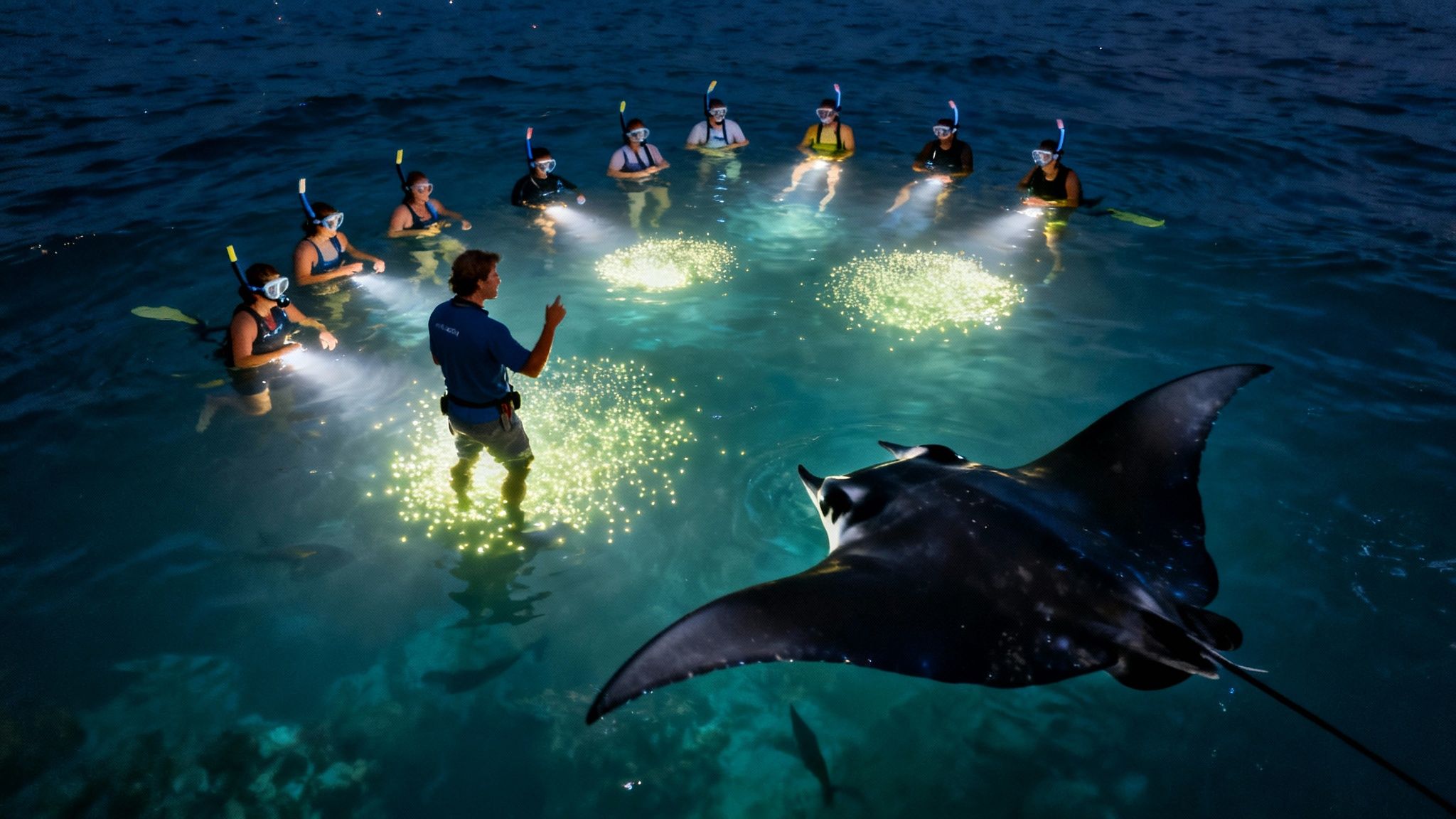
The incredible magic of Kona manta ray snorkeling is only possible because of a deep-seated respect for these wild animals and their ocean home. This isn't just another tourist attraction; it's a delicate interaction that hinges on everyone involved being committed to responsible, sustainable practices. We are simply guests in their world, and the whole encounter is built around one simple idea: passive observation.
The most important rule is the easiest to remember: look, but never, ever touch. It's not just a suggestion, it's a critical part of keeping them safe. Manta rays are covered in a thin, protective mucus layer that acts as their first line of defense against nasty bacteria and infections. Touching them, even with the best intentions, can strip away this vital coating and leave them vulnerable to disease. This one guideline is the absolute cornerstone of a safe experience for both us and the mantas.
Manta Ray Green Listed Best Practices
Any reputable tour operator, including us at Kona Snorkel Trips, is deeply committed to these principles. We strictly follow the Manta Ray Green Listed best practices, a set of guidelines developed specifically to ensure the well-being of the rays and the long-term health of this amazing encounter.
Think of these guidelines less as rules and more as a blueprint for responsible tourism. They lay out exactly how snorkelers and divers should act in the water to create a safe space for the mantas.
- Snorkelers Stay on the Surface: To give the mantas plenty of room to feed, snorkelers must stay at the surface, holding onto the light board. Diving down can easily disrupt their feeding patterns and cause them unnecessary stress.
- Divers Stay on the Bottom: Certified divers hang out on the sandy ocean floor, looking up. This simple rule keeps the entire water column—from the seafloor to the surface—wide open for the mantas to perform their graceful barrel rolls.
- No Chasing or Riding: This should go without saying, but chasing, grabbing, or attempting to ride a manta ray is absolutely forbidden. Actions like that are incredibly stressful for the animals and flat-out dangerous for everyone in the water.
By sticking to these simple but crucial rules, we help ensure the manta rays continue to see the light boards as a safe, reliable food source. That's how we keep this magical interaction thriving for generations to come. For a deeper dive, check out our guide on snorkeling safety tips, which reinforces these respectful practices.
Responsible Choices for Divers
For certified scuba divers looking for a deeper perspective on this underwater ballet, choosing an operator with the same conservation-first mindset is crucial. The experience from the ocean floor is different, but the responsibility remains the same.
We highly recommend Kona Honu Divers, which is celebrated as the top rated & most reviewed diving company in both Hawaii and the Pacific Ocean. They offer an exceptional manta ray diving tour that strictly adheres to these essential conservation standards, ensuring that every dive is as respectful as it is breathtaking.
Choosing The Best Time For Your Snorkel Trip
One of the first questions people ask us is, "When is the absolute best time to go see the manta rays?" I love this question because the answer is so simple: the best time is whenever you're here on the Big Island!
Unlike a lot of wildlife tours around the world that are totally dependent on the season, Kona's manta ray snorkel is a spectacular adventure you can have any night of the year.
The reason is pretty cool. Kona sits on the leeward (protected) side of the island, shielded from the big trade winds by the massive volcanoes Mauna Loa and Hualalai. This geography gives us incredibly calm and predictable ocean conditions most of the time. Plus, our local manta rays don't migrate—they live here year-round. For them, the dinner bell rings every single night, no matter what the calendar says.
Unbeatable Sighting Consistency
Now, these are wild animals, so nobody can ever make a 100% guarantee. But honestly, the success rate for seeing mantas in Kona is ridiculously high. It's easily one of the most reliable wildlife encounters in the entire world.
Don't just take my word for it; the numbers back it up.
Years of data show just how consistent this experience is. Back in 2013, for example, Manta Village had a 96% sighting success rate for the entire year, averaging 4 mantas a night. Nearby Manta Heaven averaged an incredible 11 mantas with 90% reliability. These aren't guesses—they're figures from pro videographers who reviewed every single dive. You can dig into more of these Big Island manta ray statistics on lovebigisland.com.
Seeing stats like that gives you some serious peace of mind when you book. Your chances of having an absolutely breathtaking, up-close encounter are fantastic whether you visit in the heat of July or the middle of December.
Subtle Seasonal Differences
While any time is a great time, there are a few minor things to know about the seasons. These won't really affect your chances of seeing mantas, but they might change the feel of your trip a little bit. It mostly comes down to water conditions and which of the two main viewing sites your captain chooses.
- Summer (May – October): This is when we typically get the calmest, warmest water. The ocean can be as flat as glass, making for a super smooth boat ride and a really comfortable snorkel.
- Winter (November – April): Winter can bring bigger ocean swells, especially from the north. Even though Kona is protected, these swells can sometimes make one of the manta sites a bit bumpy. A good captain will always check the conditions and take you to the safest, calmest spot for the night.
And here's a cool little bonus: whale season (December through March) overlaps with our winter months. You won't see humpback whales on the night snorkel itself, but you might just get an amazing show from them on your sunset boat ride out to the manta site!
Ultimately, the best time to book your manta ray snorkel tour is simply when you're planning to be on the Big Island. The mantas will be here, ready to put on their nightly ballet. We'll handle all the logistics of picking the best spot—all you have to do is get excited for one of the most magical nights of your life.
Ready to book this year-round adventure?
Your Manta Ray Snorkeling Questions, Answered
Jumping into the dark ocean to float with giant sea creatures definitely brings up a few questions. That’s totally normal! We get asked these all the time, so let's clear up some of the common concerns to help you feel confident and excited for your big night.
What Happens If the Manta Rays Don’t Show Up?
This is probably the number one question we get, and it's a fair one. Manta rays are wild animals, and while the sites in Kona are incredibly consistent, there's never a 100% guarantee. It's rare, but it can happen.
That's why it's so important to go with a reputable company. If the mantas decide to take the night off, most of us—including Kona Snorkel Trips—will let you come back another night for free. My best advice? Book your manta trip early in your vacation. That way, if you hit that rare unlucky night, you have plenty of time to reschedule.
Is It Actually Safe to Swim with Manta Rays?
Yes, 100% safe. People hear "ray" and immediately think of a stingray's barb, but manta rays are a completely different animal. They are true gentle giants.
Here’s the deal:
- Mantas have no teeth, no stinger, and no barb. They are completely harmless to humans.
- They are filter feeders, meaning their mouths are designed to swallow massive amounts of water to catch tiny plankton—they have zero interest in snorkelers.
- They might get incredibly close, sometimes just inches away, but it’s pure curiosity. Enjoy the moment!
How Deep Will the Water Be?
You'll be floating on the surface in water that's typically between 15 to 35 feet deep. But don't let that depth worry you.
You're not diving down at all. The whole experience is designed to be on the surface. We have you hold onto a custom-made, floating light board which keeps you stable and gives you a perfect bird's-eye view of the manta ballet below.
I’m Not a Great Swimmer. Can I Still Do This?
Absolutely. You don't need to be Michael Phelps to enjoy this. In fact, you barely have to swim at all.
Every single snorkeler gets a wetsuit, which adds a ton of buoyancy. You'll also have the light board or other flotation aids like pool noodles. Your job is simply to float, breathe through your snorkel, and watch the show. Our guides are in the water with you the whole time, keeping a close eye on everyone to make sure they're comfortable and safe.
This incredible night is designed to be awe-inspiring, not intimidating. We've handled all the details so you can just relax and soak in one of nature's greatest spectacles.
Ready to create a memory that will stick with you for a lifetime? Let's get you in the water with Kona's majestic manta rays.