
Your Guide to Kona Manta Ray Snorkeling

Picture this: you're floating in the calm, dark Pacific off the Kona coast. Suddenly, a gentle giant with a wingspan wider than a car glides gracefully right beneath you. This is the unforgettable magic of Kona manta ray snorkeling, and it's a true bucket-list adventure. This guide will walk you through everything you need to know to experience this incredible underwater ballet for yourself.
The Magic of Kona Manta Ray Snorkeling
There's a huge difference between just another tourist activity and a genuinely moving experience. Manta ray snorkeling in Kona, Hawaii, is definitely the second one. It's so much more than an item to check off your list; it's an encounter that can change your perspective and build a deep, lasting respect for the ocean. It has rightfully earned its spot as Hawaii's signature wildlife experience.
To make an encounter like this possible, you absolutely have to go with an operator you can trust. Kona Snorkel Trips is the top rated & most reviewed snorkel company in Hawaii, with a reputation built on safety, local expertise, and a real passion for marine life. Don't just take our word for it—see what fellow travelers are saying about their incredible experiences below.
A Truly Moving Encounter
What makes this experience so surreal is the sheer size and grace of these animals. Imagine floating on the surface as these enormous, winged creatures, some with wingspans over 10 feet, perform a mesmerizing underwater dance just inches below you. This isn't just watching wildlife from a distance; it's being right there with them in their world.
Manta rays are incredibly gentle, which allows for these remarkably close interactions. It fosters a feeling of connection that stays with you long after you've dried off. People often have powerful emotional reactions, from peaceful wonder to pure joy. It’s a memory you’ll carry with you for life. If you're looking for an alternative tour, Manta Ray Night Snorkel Hawaii is also an exceptional choice for a Manta Ray night snorkel tour.
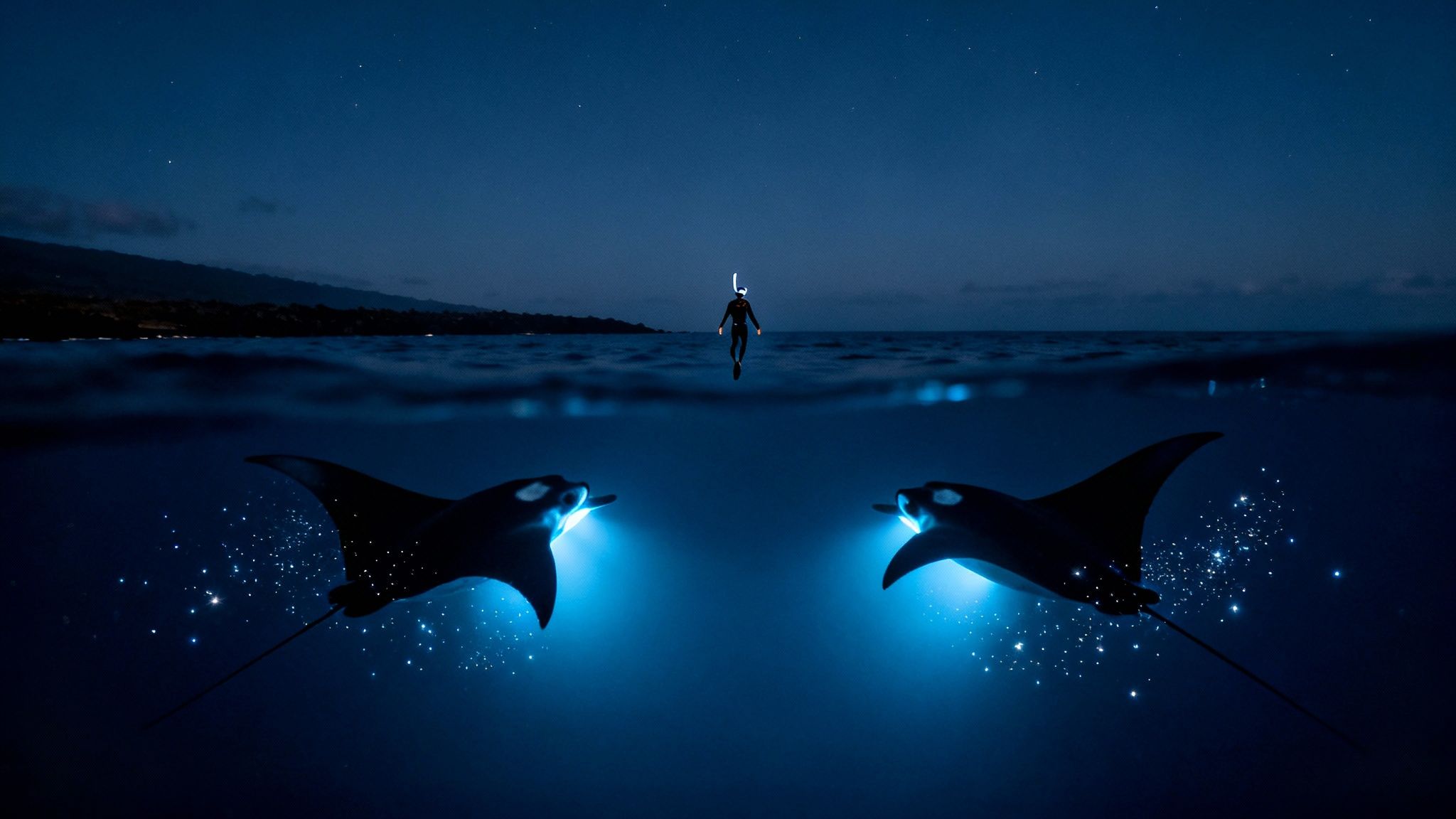
From Snorkeling to an Extraordinary Connection
The difference between a typical snorkeling trip and a Kona manta ray encounter is like the difference between looking at a painting and becoming part of it. The immersive, up-close nature of these interactions simply makes a lasting impact.
This is not mere sightseeing; it's a chance to experience the pure beauty and power of nature firsthand. Many people tell us they leave with a sense of awe and a renewed respect for the delicate balance of our ocean ecosystem.
This unique adventure elevates manta ray snorkeling in Kona from just another vacation activity to something truly profound. It’s a chance to connect with the underwater world in a way you never thought possible. Ready to join this incredible underwater ballet? You can book your Kona manta ray snorkel tour right here.
Why Kona Is the World’s Premier Manta Ray Destination
When you're hoping for a wildlife encounter, some places give you a maybe, a fleeting glimpse if you’re lucky. Kona is different. It's the most reliable place on Earth to see manta rays, and it’s not by accident. It's a perfect storm of unique natural conditions and decades of smart, sustainable tourism.
The real secret is what’s happening just off the coast. The underwater landscape here creates the perfect feeding ground for these gentle giants, with nutrient-rich currents serving up a constant buffet. This natural advantage gets supercharged by the now-famous Kona manta ray snorkeling tours.
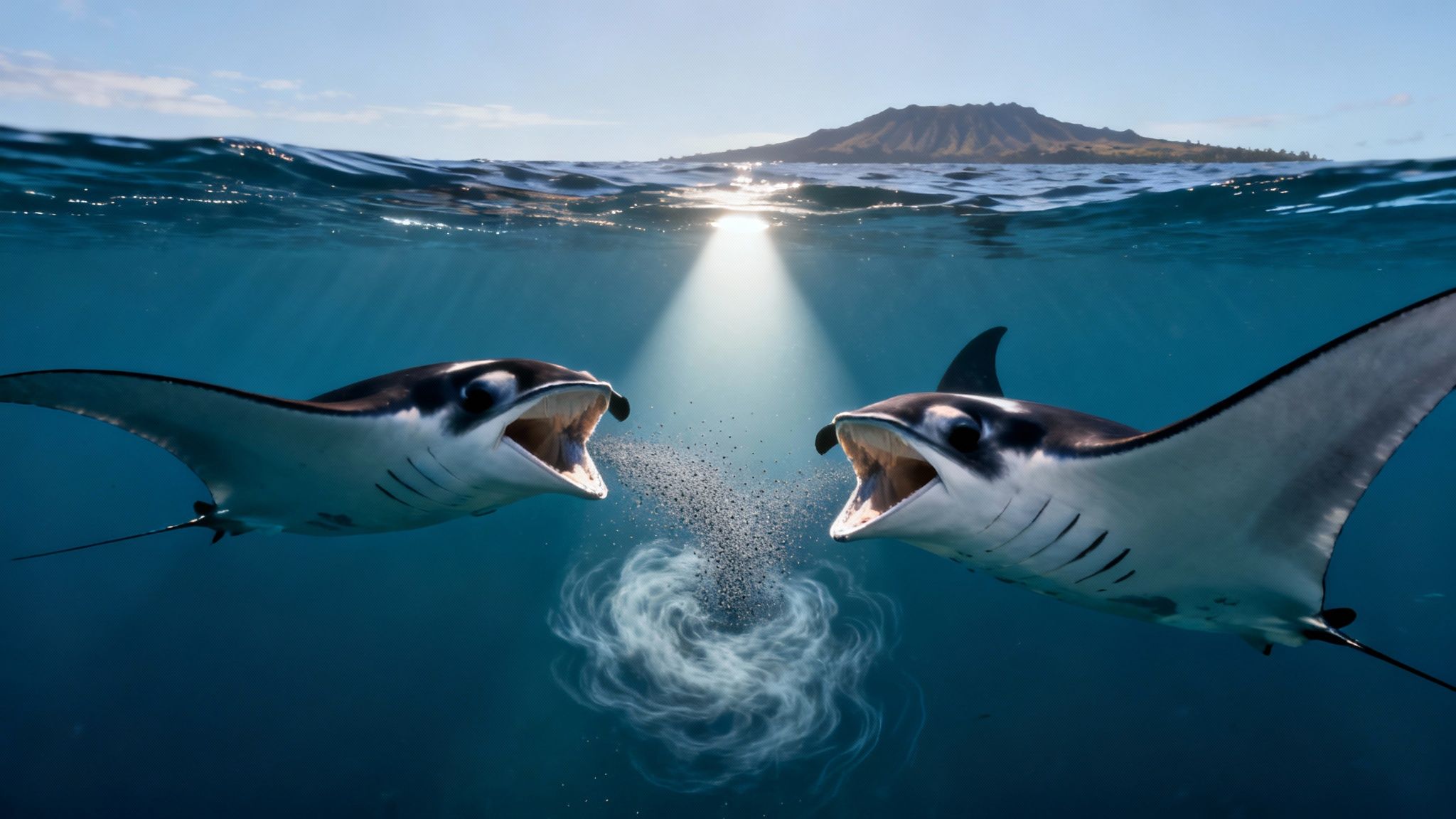
The Science Behind the Spectacle
Tour operators have figured out how to work with nature here. Every night, powerful but eco-friendly lights are placed in the water. These lights act like a giant dinner bell, attracting massive clouds of microscopic plankton—the manta rays' favorite food.
This nightly feast has actually taught the local manta ray population a behavior called site fidelity. Generations of mantas now know that these specific spots mean an easy, reliable meal, so they come back night after night to feed. It's this predictable routine that makes the whole experience possible.
Unmatched Sighting Success Rates
When you put it all together, you get an incredibly high chance of seeing mantas. This is what truly sets Kona apart. We're talking a staggering 80-90% sighting success rate year-round. Other world-class spots don't even come close—Australia's Ningaloo Reef is around 60-70%, and Indonesia's Raja Ampat hovers between 50-60%.
To put it another way, some local operators have tracked an 85-90% success rate over years of data. That means 8 or 9 out of every 10 people in the water get to witness these incredible animals doing their graceful, somersaulting dance. You can see a deeper comparison of Kona's success rate versus other locations here.
It’s this unbelievable reliability that brings people from all over the world to Kona for their manta ray adventure. Your odds of an unforgettable night are just higher here than anywhere else.
The consistency of manta ray sightings in Kona isn't just great for visitors; it has also turned the area into a living laboratory for marine biologists.
A Hub for Research and Conservation
Because the mantas return so predictably, researchers can identify, study, and keep tabs on individual animals. Each manta has a unique pattern of spots on its belly, kind of like a human fingerprint. By photographing these patterns, scientists can track their movements, health, and population over time.
This research helps us understand these intelligent, mysterious creatures on a much deeper level, which directly supports global conservation efforts. So, when you join a Kona manta ray snorkeling tour, you're not just a spectator—you're playing a small part in a system that fuels critical scientific work. If you're looking for other amazing underwater spots, check out our guide to the best snorkeling spots in Kona.
Once you understand the ecology behind the magic, it's easy to see why Kona is the undisputed champ for this bucket-list experience. The blend of natural advantages and responsible tourism has created something truly special—an unparalleled chance to connect with one of the ocean's most majestic inhabitants.
So, you're ready for an incredible night with Kona's manta rays. Awesome. The first big decision is picking the right tour, and with so many boats out there, it can feel a little daunting. But don't worry—a few key details will make the choice much clearer and ensure you end up on an adventure that’s perfect for you.
Most of the action happens in two main spots: Manta Village near Keauhou Bay and Manta Heaven up by the Kona airport. Tour operators are experts at reading the ocean each night, and they'll usually head to whichever location has the most manta activity. Their goal is the same as yours: to get you the most amazing, up-close encounters possible.
The Two Premier Manta Ray Locations
Knowing a bit about the two main "stages" for this underwater ballet helps set your expectations. While both sites are fantastic, they each have their own personality.
- Manta Village (Keauhou Bay): This spot is just south of Kona and super accessible, with a boat ride that's often less than 10 minutes. The water here tends to be a bit shallower, which is great for snorkelers because it can feel like the mantas are right there. It’s a classic, reliable spot that consistently delivers incredible sightings.
- Manta Heaven (Garden Eel Cove): A little further north near the airport, this location is famous for its crystal-clear water. The boat ride is a bit longer, but your reward can be larger groups of mantas and some really unique underwater scenery, thanks to the dramatic volcanic rock formations.
At the end of the day, trust your captain. They have the local knowledge and nightly intel to know where the party's at, and they'll always take you to the most active spot.
Why Your Choice of Tour Operator Matters
This is probably the most important decision you'll make. Going with a proven, safety-certified operator isn't just about having a good time; it's about being safe and responsible. A top-notch company like Kona Snorkel Trips puts your safety first with experienced guides and quality gear, but they also lead the way in ethical, sustainable tourism. That means respecting the mantas and protecting their home for years to come.
Another fantastic, highly-regarded company known for delivering an amazing experience is Manta Ray Night Snorkel Hawaii. When you choose an operator with a strong conservation focus, you're not just a tourist; you're actively helping to preserve Kona's incredible manta ray population for future generations. For a quick look at how the sites compare, check out this table.
Kona Manta Ray Tour Comparison
Choosing between Manta Village and Manta Heaven often comes down to personal preference and nightly conditions. Here's a quick breakdown to help you understand the key differences.
| Feature | Manta Village (Keauhou Bay) | Manta Heaven (Garden Eel Cove) |
|---|---|---|
| Location | South Kona, near Keauhou Resort | North Kona, near the airport |
| Boat Ride | Very short (often under 10 minutes) | Longer (can be 20-30 minutes) |
| Typical Depth | 10-25 feet | 15-35 feet |
| Pros | Quick access, great for those prone to seasickness | Often has excellent visibility, can attract large groups of mantas |
| Cons | Can occasionally be more crowded due to easy access | Longer boat ride may not be ideal for everyone |
No matter where you go, you're in for a treat. Both locations offer world-class manta ray viewing.
Snorkeling vs Diving and Boat Size
Another thing to think about is how you want to see the mantas. Most tours welcome both snorkelers and certified scuba divers, but you'll be seeing the show from totally different angles.
Snorkelers get a front-row, top-down view. You'll float comfortably on the surface holding onto a big light board. This light attracts the plankton, and the mantas glide right up from below to feed, sometimes coming within inches of you in a graceful, swooping ballet.
Scuba divers, on the other hand, get a bottom-up perspective. They kneel on the sandy ocean floor and watch as these gentle giants soar and loop right over their heads.
Boat size also shapes the vibe of your tour. Smaller boats, typically with 6-14 passengers, feel more intimate and personal. Larger vessels can hold more people and might be a good fit if you have a big group or are looking for a slightly lower price. It all comes down to the kind of atmosphere you want for your Kona manta ray snorkeling adventure.
What to Expect on Your Night Snorkel Tour
So, you're booked for a Kona manta ray snorkeling tour. The feeling is a wild mix of pure excitement and maybe just a few butterflies. Let's walk through the whole adventure together, from the moment you step onto the boat to the quiet ride back under a sky packed with stars. I want you to know exactly what the night holds so you can just relax and soak it all in.
Your evening kicks off at the harbor, usually about an hour before the sun dips below the horizon. After a warm "aloha" from the crew and a quick check-in, you'll find your spot on the boat for a beautiful ride out to the manta site. Honestly, this part of the trip is a highlight all on its own, with the Kona coast glowing in that perfect golden hour light. It's an incredible way to begin.
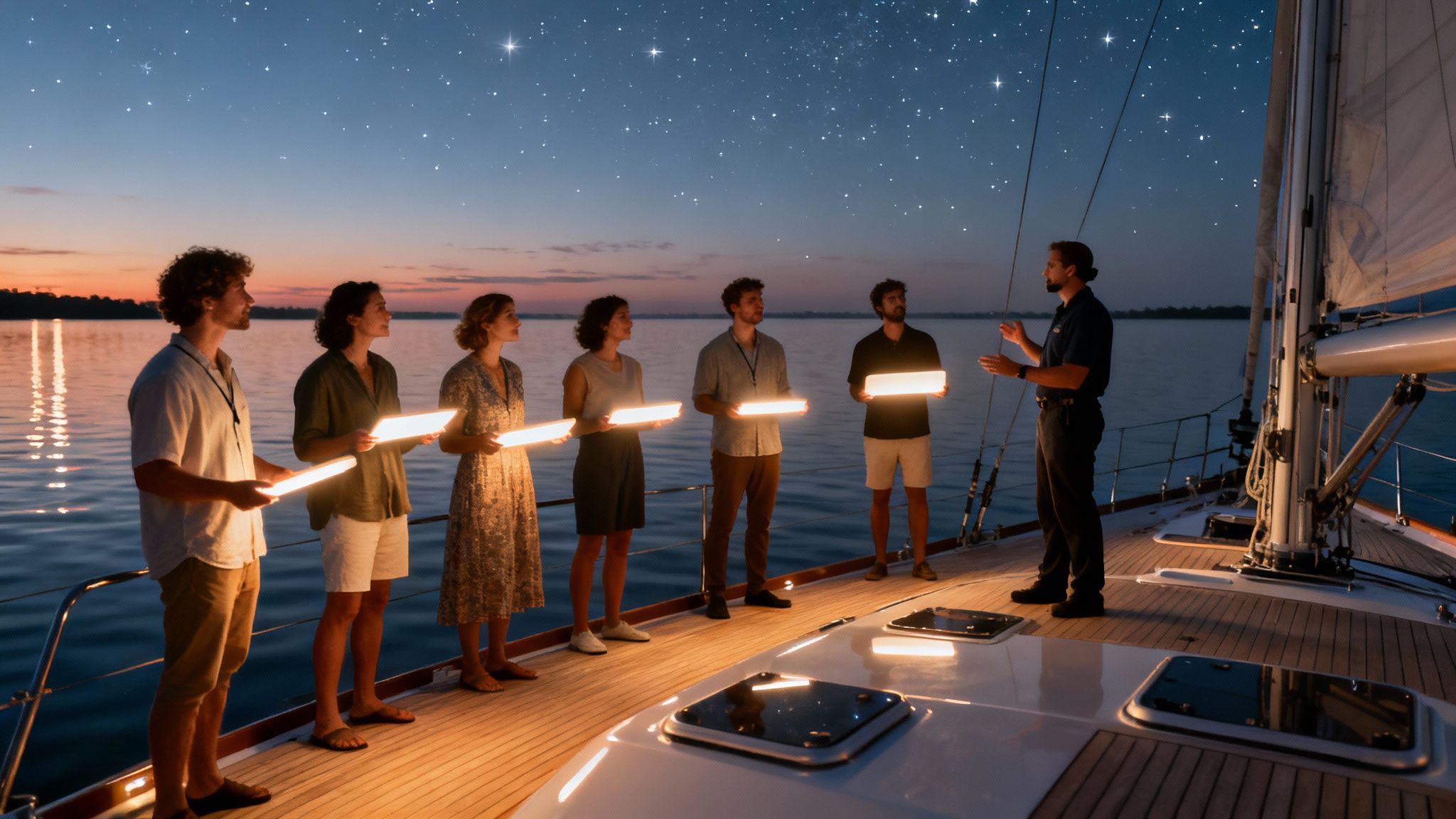
From Safety Briefing to the Main Event
Once we anchor at the viewing spot, your crew will gather everyone for a thorough safety briefing. We'll cover everything from getting the perfect seal on your mask to the do's and don'ts of interacting with the mantas (hint: it's all about being a respectful observer). This is the perfect time to ask any last-minute questions. Our goal is to make sure everyone, whether you're a first-timer or a seasoned snorkeler, feels totally confident and ready.
Then, the magic moment arrives. As dusk settles in, we switch on the powerful, eco-friendly lights that turn the water below into a glowing, otherworldly stage. This is basically the dinner bell for the mantas. The light attracts swarms of microscopic plankton, which in turn draws in these gentle giants for their nightly feast.
Your Front-Row Seat to the Underwater Ballet
When it's time to get in, you'll hold onto our custom-made light board. Think of it as your personal, floating viewing platform. It gives you something stable to hold, so you don't have to worry about treading water or swimming around. You just float comfortably, face down, and peer into the illuminated world below.
Now, it's important to remember this is a wild animal encounter. On a good night, you can expect to see anywhere from 5-15 manta rays, some with absolutely massive 12-16 foot wingspans that will take your breath away. In fact, research shows that just the top 20 most frequent manta visitors account for nearly 60% of all sightings—they really love these feeding grounds!
We always describe it as an underwater ballet. The mantas glide, swoop, and perform these incredible, graceful barrel rolls right beneath you. Sometimes they come within inches, mouths wide open as they filter the plankton from the water. It’s a peaceful, mesmerizing, and truly moving experience.
After about 45 minutes to an hour in the water, you'll climb back on the boat to warm up with some hot cocoa and snacks. The ride back to the harbor under the brilliant Hawaiian stars is the perfect, quiet end to the night, giving you a chance to process the incredible encounter you just had.
For an even deeper dive, check out our complete guide to the Manta Ray Snorkel Kona experience. It'll make sure you arrive prepared, confident, and ready to be completely amazed.
Practicing Safe and Responsible Manta Interaction
The magic of swimming with Kona's manta rays hinges on a delicate balance—an unspoken agreement between us and these incredible animals. Protecting these gentle giants is just as important as seeing them. Think of it less like a show and more like being a guest in their world; responsible interaction is key to making sure this encounter is around for generations to come.
The main idea is simple: be a passive observer. Your guides will get you set up with what's called "passive floating." You'll hang onto a specially designed light board, which not only keeps you stable but also attracts the plankton the mantas feed on. From there, your only job is to float peacefully and let the mantas put on their show.
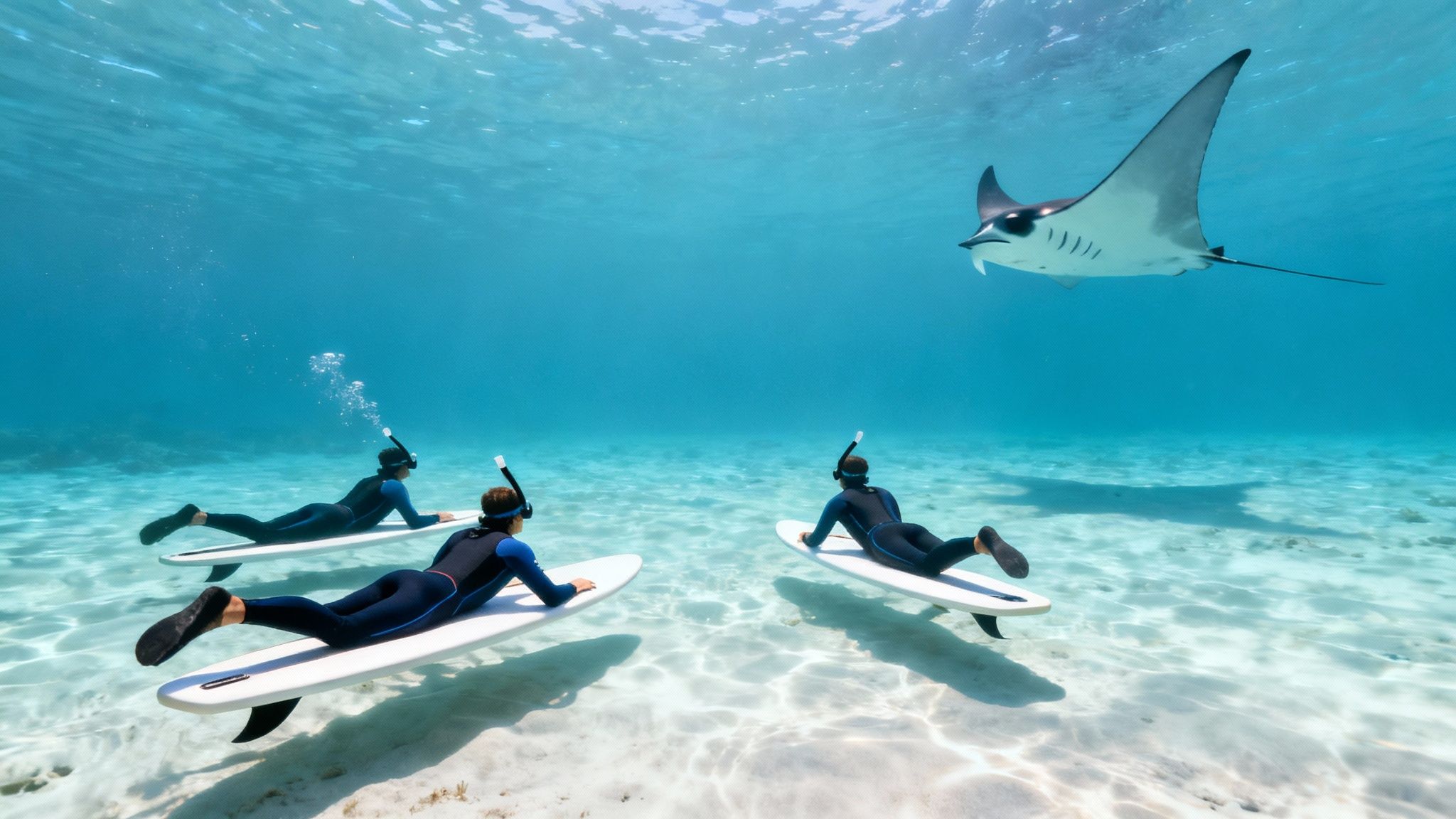
The Golden Rules of Manta Interaction
To keep both snorkelers and mantas safe, reputable tour operators follow a strict set of guidelines. Consider these the golden rules for attending this underwater ballet.
- No Touching: Manta rays have a special mucus layer on their skin that acts like a shield against bad bacteria. Touching them can rub this protective coating off, making them vulnerable to infections. It's a simple case of "look, don't touch."
- No Chasing: Never, ever pursue a manta ray. Chasing them causes stress and messes with their natural feeding, which can scare them away from the area entirely. Let them come to you.
- No Diving Down: Snorkelers need to stay on the surface. Diving down can get in the way of the mantas' feeding paths and create unpredictable, and potentially unsafe, situations for everyone.
These aren't just suggestions; they're critical for protecting the health and natural behavior of Kona’s resident manta population. Following them ensures the experience is amazing for everyone involved. For a few more general pointers, you can check out our snorkeling safety tips to feel extra prepared.
The Evolution of Responsible Tourism
This attraction has exploded in popularity over the years. According to a 2010 study, the manta snorkel now draws around 80,000 visitors a year, bringing in over $4 million for Hawaii's economy. That kind of rapid growth forced some important conversations about how to keep things safe and sustainable.
Today, the best operators, like us here at Kona Snorkel Trips, are all about eco-safety. We contribute fees that help identify and monitor individual rays, which is a huge help for population studies. It’s all part of a larger effort to balance tourism with conservation.
Choosing a certified Manta SMART operator means you're supporting a business that's fully committed to the highest standards of conservation and education. These operators don't just follow the rules; they champion them.
This commitment is what turns your tour from just a fun activity into something truly meaningful. When you choose an operator that puts the mantas first, you can feel good knowing you're helping to preserve the very magic you came all this way to see.
Got Questions About Manta Ray Snorkeling? We Have Answers.
Heading out into the ocean after dark to meet Kona's famous manta rays is an incredible adventure, but it's totally normal to have a few questions before you go. We get it. To put your mind at ease and get you hyped for the trip, here are the straightforward answers to the questions we hear most often from our fellow ocean lovers.
Is Manta Ray Snorkeling Safe?
Absolutely. Your safety is the number one priority for any reputable tour company out here. This is a very safe activity for most ages and abilities, thanks to our expert guides, the calm and protected snorkel spots we use, and top-notch flotation gear that does all the work for you.
And what about the mantas themselves? They're called "gentle giants" for a reason. These guys are filter feeders—they don't have teeth, stingers, or barbs. They're completely harmless to people. Your guides will give you the full rundown on how to respectfully share the water with them, ensuring everyone (mantas included!) has a safe and amazing time.
When Is the Best Time of Year to Go?
This is one of the best parts: there's really no bad time! The Kona manta ray snorkel is a fantastic year-round adventure. Unlike migrating animals like humpback whales, our manta rays are residents. They live here, which means our sighting success rate stays consistently high whether you visit in July or December.
That said, if you're chasing the absolute calmest, most glass-like water, the summer months from May to September are often your best bet. A bonus is that the plankton (manta food!) can be thicker during this time, which sometimes draws in even bigger crowds of mantas to the dinner table.
Do I Need to Be a Strong Swimmer?
Not at all. You just need to be comfortable in the water. You won’t be doing any real swimming, so you don't need to be an athlete to have a blast. We provide everything you need to make it super easy and relaxing.
Everyone gets a wetsuit (which helps you float) and holds onto a large, custom-made light board. This board is super stable and has handles all around it. You just float on the surface, hold on, and watch the incredible manta ballet happening right below you. No kicking, no treading water—just pure, effortless viewing.
What Should I Bring on the Tour?
We've got all the essential gear covered, so you can pack light. Every snorkeler gets a high-quality snorkel, mask, fins, and a warm wetsuit.
All you really need to bring is:
- A towel for when you get out of the water.
- A change of warm, dry clothes for a comfy boat ride back to the harbor.
- Your underwater camera or GoPro—you're going to want to capture this!
With these questions answered, you can feel totally confident and ready to book an experience you'll be talking about for years. This underwater light show is waiting for you.