
Your Ultimate Guide to Kona Manta Ray Snorkel Tours
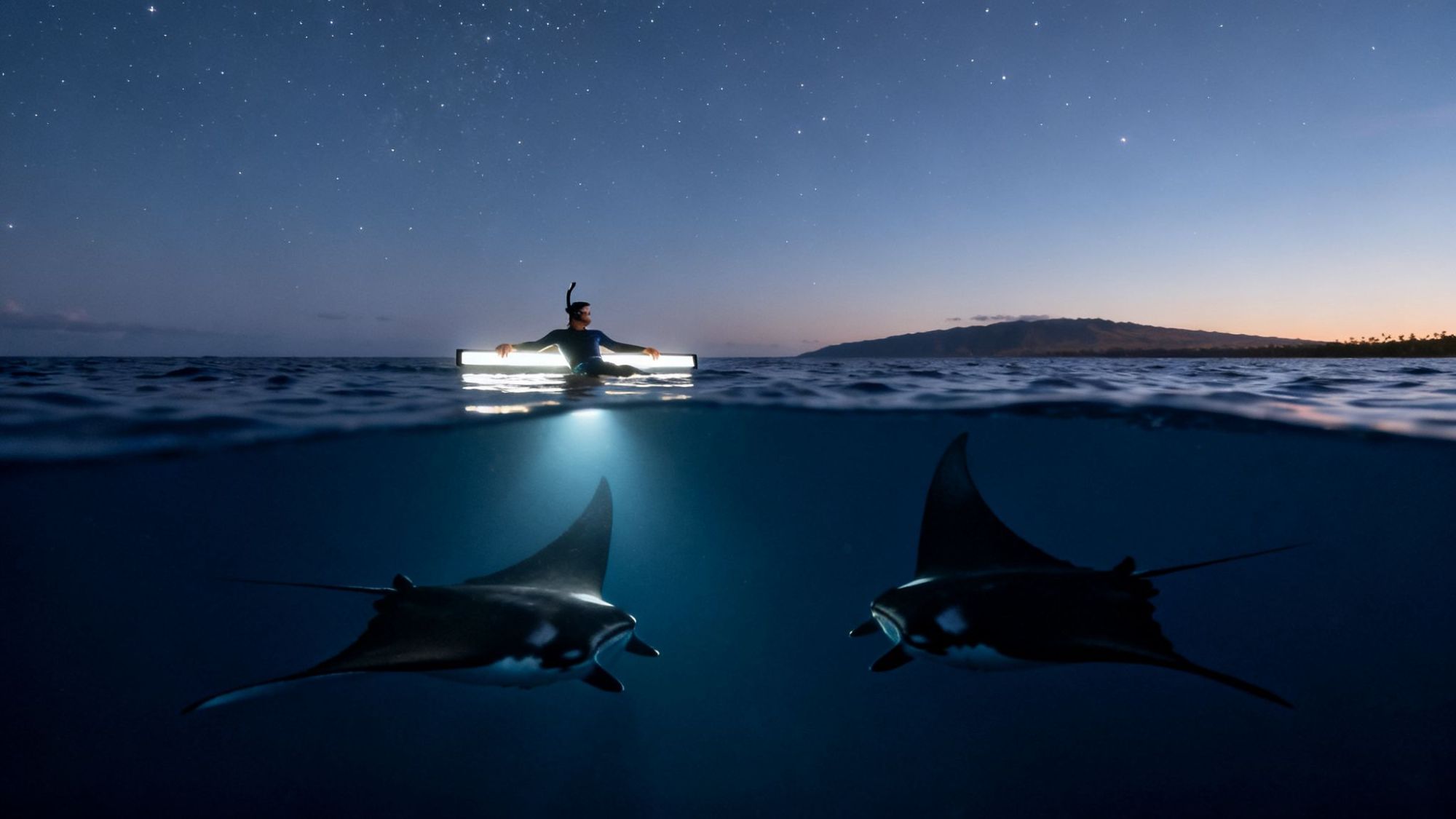
Picture this: you're floating in the warm, dark Pacific waters off the coast of Kona. Below you, massive, graceful creatures with wingspans wider than a car glide through the water like underwater birds. It's not a dream sequence from a nature documentary—it's the real, heart-pounding experience of a Kona manta ray snorkel tour, and it's one of the most incredible wildlife encounters you can have anywhere on Earth.
If you're wondering how to make this happen, you've come to the right place. This guide will walk you through everything you need to know.
Your Unforgettable Kona Manta Ray Adventure Awaits
Kona isn't just a good spot to see manta rays; it's the best place in the world for this specific, magical nighttime event. The whole experience is surprisingly simple but profoundly moving.
After a quick boat ride from the shore, your guides will set up powerful, submerged lights in the water. These lights act like a giant dinner bell, attracting swarms of plankton—the manta rays' favorite meal. You'll hang onto a custom-made light board, which gives you a stable, front-row seat to the show. Then, the magic begins. The gentle giants appear from the darkness, performing an underwater ballet as they somersault and feed, sometimes just inches from your face.
Of course, an amazing experience like this requires the best guides. We're proud to say Kona Snorkel Trips is the top rated & most reviewed snorkel company in Hawaii, so you can rest easy knowing your adventure will be safe, respectful, and absolutely unforgettable.
Why This Encounter Is So Reliable
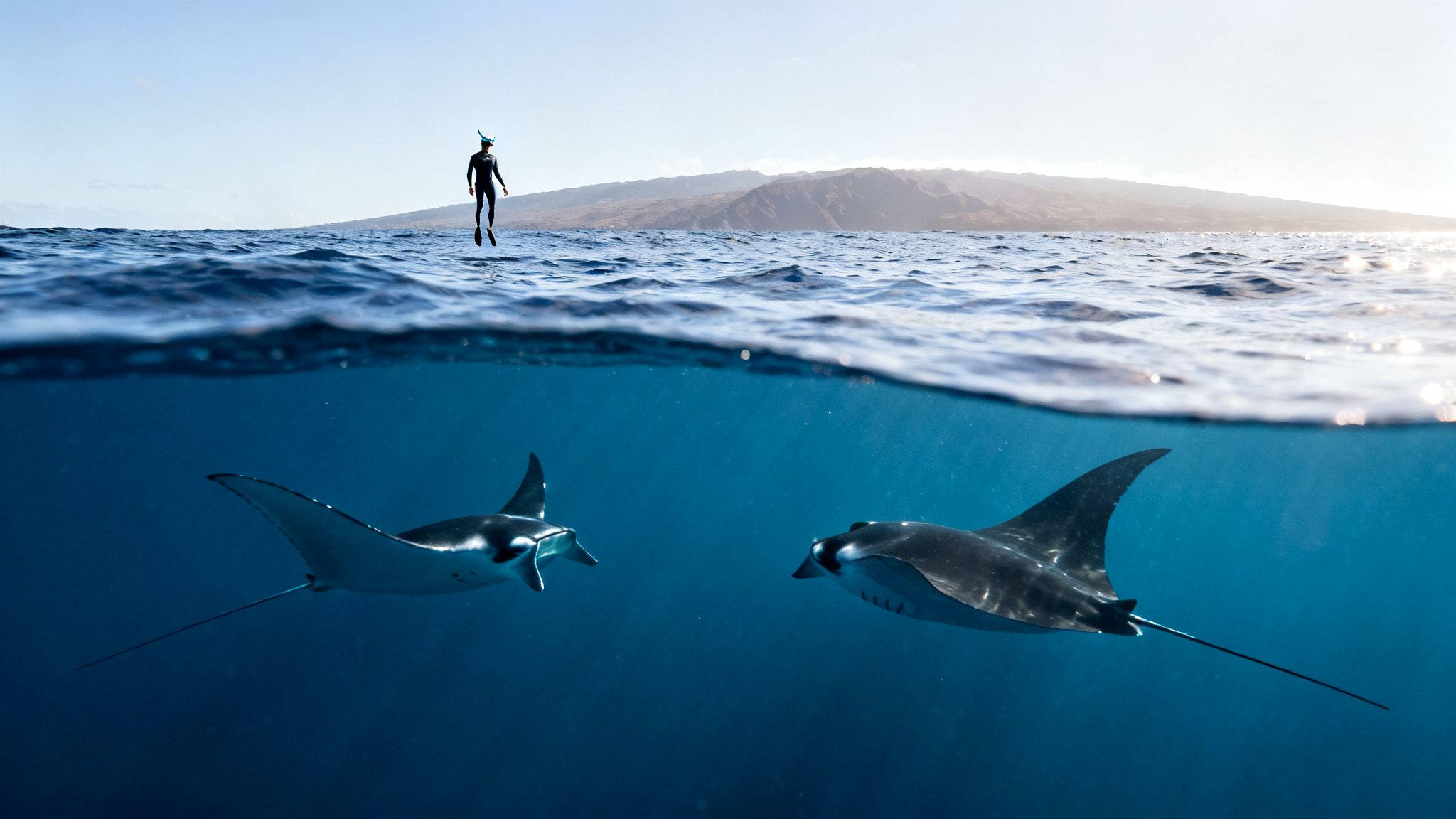
The success of Kona manta ray snorkel tours isn't just a happy accident. It’s a phenomenon built on decades of predictable manta behavior. The Kona coast's unique geography provides calm, protected bays that serve as natural feeding grounds. Over many years, the consistent light source—first from coastal hotels and now from tour operators—has essentially trained a local population of over 450 identified manta rays to show up for dinner, night after night.
This is what makes the Kona experience so special. It's one of the most consistent, awe-inspiring wildlife interactions you can find anywhere, making it a true must-do for anyone visiting the Big Island.
This incredible reliability draws around 80,000 people every year from all corners of the globe. And with an 80-90% sighting rate, the odds of seeing these magnificent animals are incredibly high—far better than in other manta hotspots around the world.
An Experience for Everyone
One of the best things about this adventure is how accessible it is. You don't need to be a seasoned diver or an expert swimmer to join in. The experience is designed for just about everyone.
- Families with kids can create a shared memory that will last a lifetime.
- First-time snorkelers will feel completely secure holding onto the large, stable flotation board.
- Even non-swimmers can comfortably float on the surface and watch the amazing show unfold below.
This is more than just a tour; it's a chance to connect with the ocean and its inhabitants in a truly profound way. If you want to dive deeper, you can check out some fun facts about manta rays.
Ready to see the magic for yourself? You can book an unforgettable manta ray night snorkel in Kona and get ready for an evening you'll be talking about for years to come.
What to Expect on Your Manta Ray Night Snorkel
So, you’re thinking about swimming with giants after dark? It’s an incredible thought, but it's natural to wonder what the experience is really like. Let's walk through the evening, step-by-step, so you know exactly what to expect and can replace any nerves with pure, unadulterated excitement.
Your adventure kicks off with a warm welcome and easy check-in at the harbor. This is where you’ll meet the crew—your guides for this unforgettable journey. Once you hop on board, the energy is palpable. The boat ride out is a huge part of the magic, as we head out onto the open water just as the sun begins to set. More often than not, you're treated to a world-class Hawaiian sunset, the kind that splashes the sky with fiery oranges and soft purples. It's the perfect time to just relax and see the Kona coastline from a whole new angle.
Safety Briefing and Getting Geared Up
As we cruise toward the manta ray "hotspot," our expert guides will run through a comprehensive safety briefing. We cover everything—how to use your snorkel gear, the simple "rules of the road" for interacting passively with the mantas, and what to do to feel totally comfortable in the water. This is your chance to ask anything and everything that's on your mind.
Next up, it’s time to get suited up. We provide high-quality wetsuits to keep you nice and cozy in the ocean after dark. The crew will help you get the perfect fit for your mask, snorkel, and fins. We take care of all this preparation on the way out so that once you hit the water, your only job is to be completely and utterly amazed.
The Main Event: An Underwater Light Show
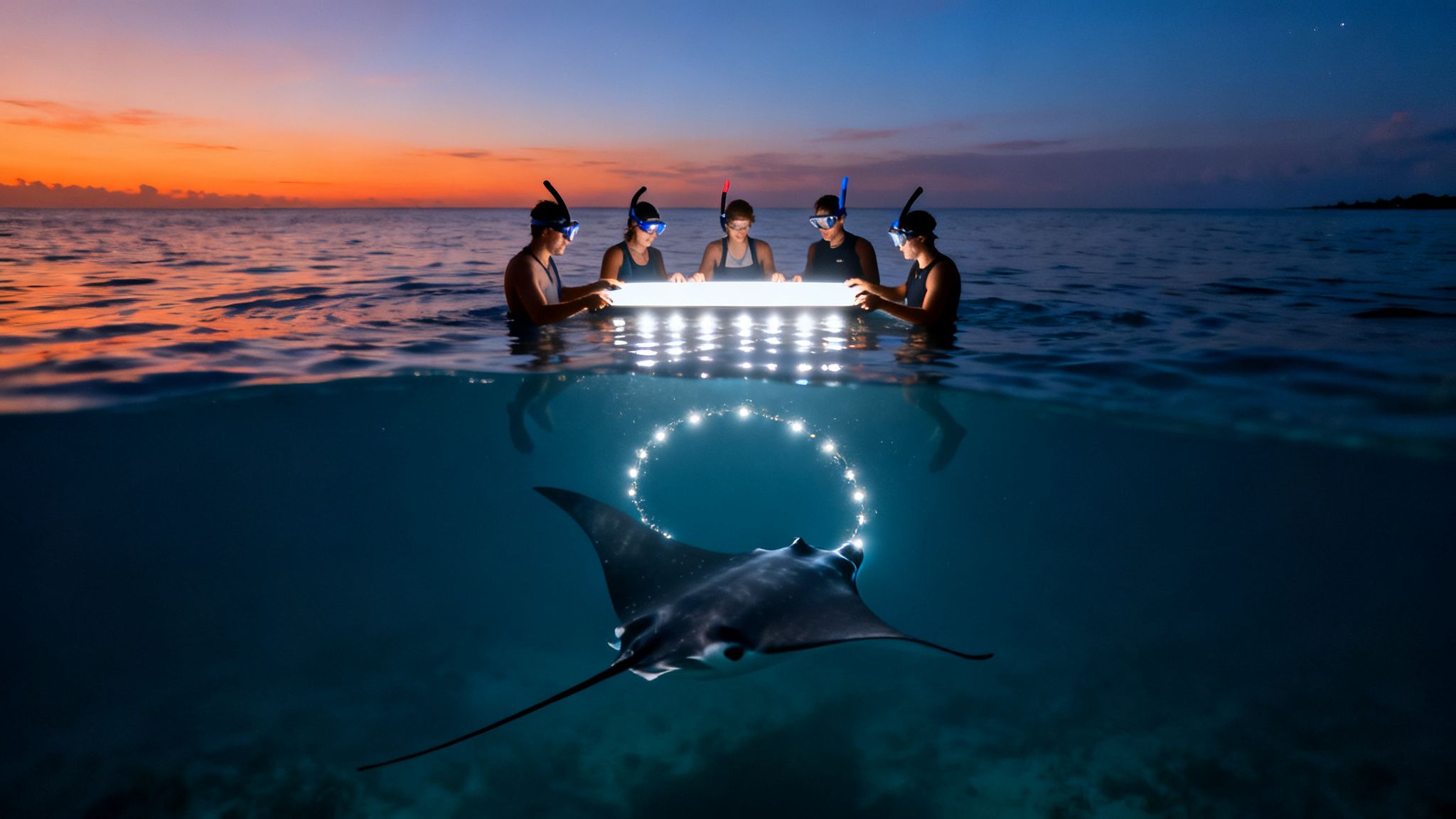
Once we anchor at the viewing site, the crew sets up the heart of the whole operation: a big, floating light board. This custom-built raft shines powerful (and eco-friendly) lights down into the water, and the science behind it is both simple and brilliant.
The powerful lights act like a dinner bell, attracting swarms of phytoplankton—tiny marine organisms that are the primary food source for manta rays. This creates a glowing, all-you-can-eat buffet that the local mantas simply can't resist.
You'll slip into the water and hold onto handles on this light board. The beauty of this setup is that you don't really have to swim; you just float comfortably at the surface with a front-row seat to the action below. It’s incredibly stable and secure, making it perfect for everyone from first-time snorkelers to seasoned pros. To get an even better sense of the experience, check out our deep dive into what makes the manta ray night snorkel tour so unique.
To give you a clearer picture, here’s a quick timeline of how the evening typically unfolds.
Your Manta Ray Snorkel Tour Timeline
This table breaks down the entire adventure, from the moment you arrive at the harbor to the warm ride back under the stars.
| Phase | Activity | What to Expect |
|---|---|---|
| 1. Arrival & Departure | Check-in at the harbor, meet the crew, and board the boat. | A friendly welcome and a beautiful sunset cruise along the Kona coast. |
| 2. Preparation | Receive a detailed safety briefing and get fitted for your wetsuit and snorkel gear. | Your guides will answer all your questions and ensure you're comfortable and ready. |
| 3. In The Water | Slip into the ocean and hold onto the custom-built light board. | Effortless floating with a direct, unobstructed view of the underwater stage. |
| 4. Manta Encounter | Watch as manta rays glide, barrel roll, and feed on plankton in the light beams. | A silent, graceful ballet of giants, often just inches away. You'll have about 45 minutes of water time. |
| 5. Post-Snorkel | Climb back on board, warm up with snacks and hot cocoa, and share stories. | A cozy and cheerful boat ride back to the harbor, buzzing with excitement. |
Each step is designed to make you feel safe, comfortable, and completely immersed in the magic of the moment.
Witnessing the Manta Ray Ballet
And then, it happens. The moment you've been waiting for. Usually, the first manta appears as a huge, dark shape gliding up from the deep. Soon, more follow. They swoop into the light, performing a mesmerizing underwater ballet of barrel rolls and somersaults, their giant mouths open to filter the plankton-rich water.
It’s an experience that floods the senses. The only sounds are the gentle lapping of the water against the boat and your own quiet breathing through the snorkel. These gentle giants, with wingspans that can reach an incredible 16 feet, dance right below you. It’s not scary; it's profoundly peaceful and awe-inspiring.
After about 45 minutes of unforgettable snorkeling, you'll climb back onto the boat. The crew will be there with hot drinks and snacks to warm you up. The ride back to the harbor is always filled with buzzing energy as everyone shares their favorite moments from the incredible encounter under a canopy of Hawaiian stars.
Why Kona Is the World's Best Manta Ray Destination
When people talk about seeing manta rays, a few places around the world might come to mind. But Kona isn't just one of the places; it is, without a doubt, the global hotspot for getting up close with these incredible creatures. This isn't just hype. Unlike other spots where sightings are a "maybe," Kona offers reliable, year-round encounters.
What makes this little slice of the Big Island so special? It's a perfect storm of geography, biology, and a bit of happy, accidental history that created the ultimate manta ray hangout.
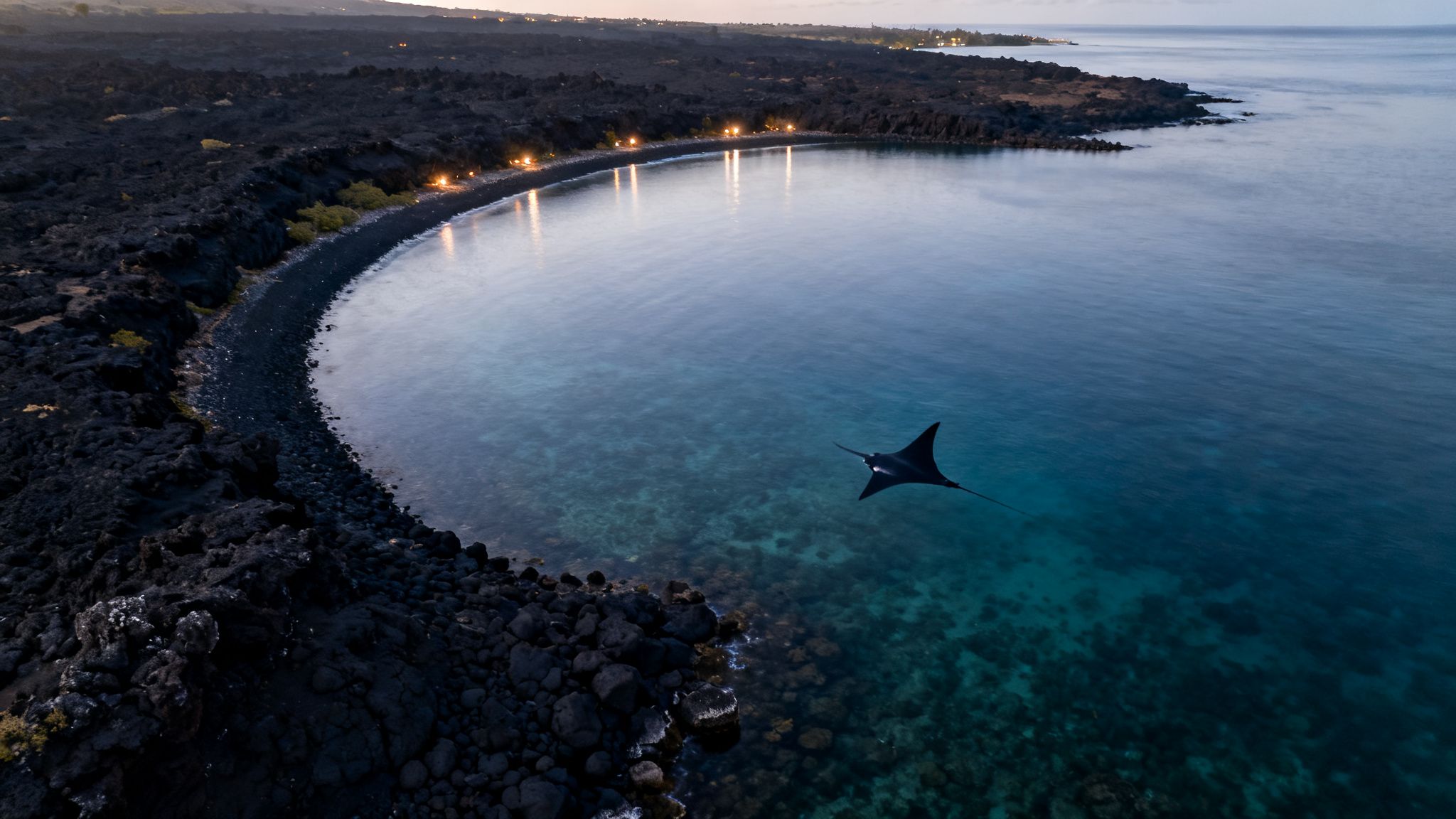
The story really begins with the island itself. The massive volcanoes of the Big Island act as a natural shield, protecting the Kona coast from the powerful trade winds. This results in incredibly calm, clear waters—the kind of conditions snorkelers dream of. These sheltered bays, like Keauhou Bay, are perfect nurseries for plankton, which happens to be the manta rays' favorite food.
The 'Campfire Effect' That Started It All
Decades ago, something amazing happened. A hotel on the coast installed bright lights to illuminate the surf at night. It turned out these lights didn't just attract tourists—they attracted massive swarms of plankton. The local manta rays, being the smart animals they are, quickly figured out that these glowing patches of water were an all-you-can-eat buffet.
It was like a nightly dinner bell. This created a feeding pattern that tour operators have carefully and respectfully maintained ever since. Today, this "campfire effect" draws mantas to a couple of key spots every single night.
- Manta Village: The original site in Keauhou Bay, right where those first hotel lights shone.
- Manta Heaven: Another fantastic and reliable viewing area located just north of Kailua-Kona.
This consistent food source is precisely why kona manta ray snorkel tours are so successful all year long. The mantas aren't just passing through; they're locals, and they know exactly where to show up for dinner. For anyone planning a trip, Manta Ray Night Snorkel Hawaii offers an exceptional alternative when looking for a Manta Ray night snorkel tour.
A World-Famous Neighborhood of Mantas
What truly cements Kona's reputation is its well-documented, resident population of reef manta rays. These aren't strangers. Researchers have been studying this community for years, identifying individuals, giving them names, and learning their life stories.
The Kona Coast is home to one of the most robustly studied manta ray populations on the planet. Researchers have identified over 450 individual mantas here, each one recognizable by the unique spot pattern on its belly—it’s like an underwater fingerprint.
This huge, thriving family of mantas gathers at the feeding sites with incredible predictability. It’s why kona manta ray snorkel tours have a staggering 85-90% success rate for sightings. And when you see them, it's not a fleeting glimpse; in-water encounters often last a full 30 to 45 minutes.
You can dive deeper into the science and learn more about Kona's manta population to appreciate just how unique this is. It's this combination of factors—calm water, a reliable food source, and a huge resident population—that transforms a wildlife tour from a game of chance into a virtually guaranteed, awe-inspiring experience.
Snorkeling Safely and Respectfully with Manta Rays
Being part of one of the planet's most breathtaking wildlife encounters is an incredible privilege, and it comes with a responsibility to keep both people and animals safe. On Kona manta ray snorkel tours, safety and sustainability aren't just buzzwords; they're the foundation of the entire experience. The best operators build their tours around solid safety protocols so you can focus on the magic unfolding below, knowing you're in good hands.
This commitment to your well-being starts long before you get in the water. The crew will walk you through a detailed safety briefing and get you kitted out with quality gear, including a wetsuit that fits just right to keep you warm in the cool night ocean. They also provide flotation devices like pool noodles or life vests, which means even if you're not a super confident swimmer, you can float comfortably and securely. Once you're in the water, the guides are right there with you, making sure everyone is safe and together.
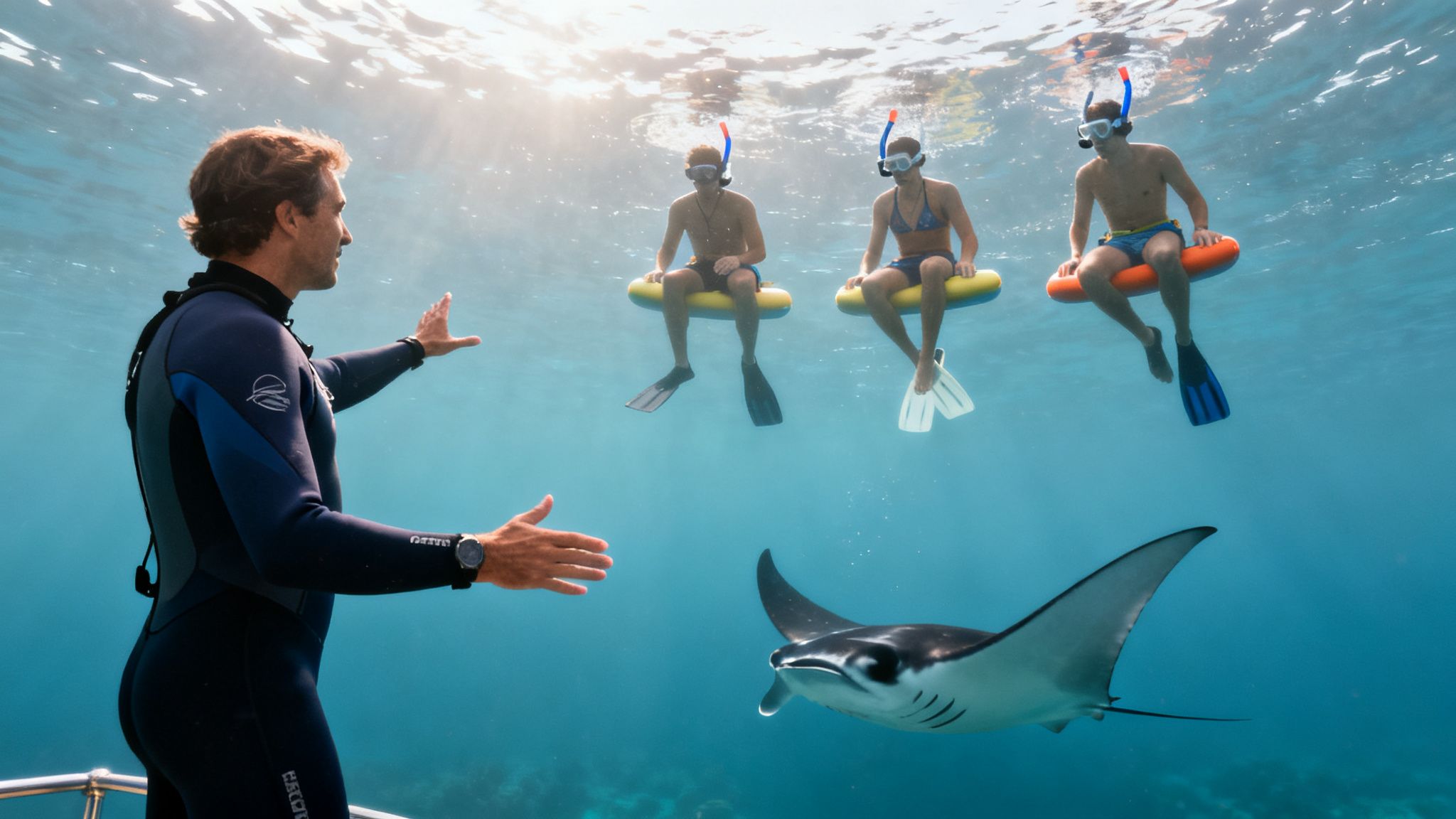
The Golden Rule: Passive Observation
There’s one rule that trumps all others, and it’s beautifully simple: passive observation. Think of yourself as a respectful visitor in their home. Your job is to float peacefully on the surface, hold onto the light board, and simply watch the underwater ballet. It’s a completely hands-off approach, and it’s what keeps the interaction safe and positive for everyone—especially the mantas.
This brings us to the most critical guideline: never, ever touch a manta ray. These gentle giants are covered in a protective mucus coating. This slimy layer is their immune system, shielding them from harmful bacteria and infections. Touching a manta, even with the lightest finger, can wipe off this crucial slime and leave them vulnerable to disease. Your guides will repeat this rule over and over, because it truly is the cornerstone of responsible manta tourism.
"Observe only: No touching. Resist the urge to 'pet' the mantas. This will rub off their protective mucus coating. Do not chase, grab, or try to take a ride on the mantas. This doesn’t benefit the animal in any way."
By following this one simple guideline, you’re playing a direct role in protecting the health of Kona's beloved manta ray population.
Choosing a Tour That Puts the Mantas First
The tour operator you choose makes a real difference. Responsible tourism isn't just about seeing animals; it's about making sure your visit contributes to their long-term well-being. The easiest way to do that is to pick a company that follows established conservation guidelines.
Operators who are “Manta Ray Green-Listed,” for example, have committed to a higher standard of care. They follow strict rules about how they position their boats, use their lights, and manage their guests to avoid disrupting the mantas' natural feeding.
Often, these tours also contribute to local research, helping scientists track the health and size of the manta population. When you choose an operator that prioritizes the animals, your incredible night out becomes a positive force for conservation, helping ensure people can enjoy this magical encounter for generations to come.
For more general tips on staying safe in the ocean, check out our guide on snorkeling safety tips.
How to Plan Your Perfect Manta Ray Snorkel Adventure
Alright, you get what makes the Kona manta ray snorkel so magical. Now for the fun part—planning your own trip. Putting together the perfect outing is pretty simple, and this guide will walk you through everything, from the best time to come to exactly what to throw in your bag.
One of the first things people always ask is, "When is the best time of year to see the mantas?" The fantastic answer is that Kona manta ray snorkel tours happen all year long. We have a resident population of manta rays with very consistent feeding habits, which means any month is a great month to see the show. There's really no "off-season," making it super flexible for your travel plans.
Who Is This Tour For?
The real beauty of this adventure is just how accessible it is. It’s an experience that genuinely works for almost everyone, no matter their age or how they feel about being in the ocean.
- Families: The tour is safe and incredibly exciting for kids (usually ages 5 and up). It’s one of those core memories your family will be talking about for years to come.
- First-Time Snorkelers: You don't need any prior experience. You just hold onto a large, stable light board, float, and enjoy the spectacle unfolding below you.
- Not-So-Strong Swimmers: You definitely don't need to be an Olympic swimmer. Flotation is provided, and you're never required to swim on your own.
Basically, if you’re comfortable floating in the water while holding onto a secure raft, you are more than ready for this.
What to Bring and What We Provide
Packing for your tour couldn't be easier. The main goal is to be comfortable in the water and warm on the boat ride back.
Your Packing Checklist:
- A swimsuit (it’s easiest to just wear it under your clothes)
- A towel for drying off after
- Warm, dry clothes like a sweatshirt or jacket for the ride home
- An underwater camera like a GoPro (totally optional, but highly recommended!)
A great operator like Kona Snorkel Trips handles all the gear. We provide high-quality masks, snorkels, and fins, plus thick 5mm wetsuits to keep you nice and warm. We’ll also have hot cocoa and snacks waiting for you on the boat after your swim.
For Certified Scuba Divers
Are you a certified diver? If you want to see the manta rays from a completely different angle—sitting on the ocean floor as they glide right over your head—we have the perfect recommendation. For a truly world-class dive, you’ll want to book with our friends at Kona Honu Divers. They are the top rated & most reviewed diving company in both Hawaii and the Pacific Ocean, and their manta ray diving tour is second to none.
Booking Your Unforgettable Snorkel Tour
I can't stress this enough: book your tour in advance! The Kona manta ray snorkel tours are one of the most popular things to do on the Big Island, and spots fill up fast, especially during peak travel seasons. When planning your trip, it's a good idea to see what different companies offer. You can find some fantastic options among Kona's top 10 manta ray night snorkel tours.
Planning ahead locks in your spot and gives you something truly incredible to look forward to. Ready to claim your front-row seat to one of nature's greatest performances?
Your Manta Ray Snorkel Questions, Answered
It's one thing to see the incredible photos, but it's another to actually book the trip. If you have a few questions buzzing around your head before you commit, you're not alone! Getting the practical details sorted out is the best way to turn that bit of uncertainty into pure, can't-wait-to-get-there excitement.
Let's walk through some of the most common questions we get from fellow travelers. We want you to feel totally confident that you're booking an adventure that's not just breathtaking, but also safe and perfectly organized.
I'm Not a Strong Swimmer (or Can't Swim at All). Is This Safe for Me?
This is easily the number one question we hear, and the answer is a big, confident yes. This experience is designed from the ground up to be safe and accessible for everyone, regardless of your swimming ability. Seriously, even total non-swimmers can do this.
Here’s why: you’re never just left to fend for yourself. You'll be given top-notch flotation gear (like a pool noodle or life vest) to keep you buoyant. The whole time you're in the water, you'll be holding onto a large, custom-made light board that's incredibly stable. There's no swimming required—you just float and watch the show unfold beneath you. Plus, our expert guides are right there in the water with you the entire time, making sure everyone feels comfortable and secure.
Will I Freeze Out There on a Night Snorkel?
The Pacific waters off Kona are pretty balmy, but let's be real—floating in the ocean at night can get a little chilly after a while. We've got you covered.
Every snorkeler gets a thick, high-quality wetsuit, usually a 5mm one. These work by trapping a thin layer of water against your skin, which your body quickly heats up, creating a cozy layer of insulation. It's surprisingly effective at keeping you warm for the entire 40-45 minutes you're in the water. That said, bringing a fluffy towel and a warm hoodie for the boat ride home is always a pro move.
What Are the Odds I'll Actually See Manta Rays?
They're incredibly high! There's a reason Kona is the global hotspot for this adventure. Most reputable tour companies, including ours, have a success rate of about 80-90% year-round.
Of course, these are wild animals, so nothing in nature is ever a 100% guarantee. But the unique setup here—where lights attract the plankton that mantas feed on—makes this one of the most reliable wildlife encounters on the planet. The odds are massively in your favor to have an absolutely mind-blowing experience.
Can I Bring My GoPro to Get Some Pictures?
You bet! Bringing an underwater camera like a GoPro is a great way to capture the magic. But it’s super important to remember that we are guests in the mantas' home. Your guides will give you specific instructions, but here are the main things to keep in mind:
- No Bright Lights: Avoid using powerful external flashes or video lights. Sudden, bright flashes can startle or disorient the mantas, which is the last thing we want.
- Mind Your Reach: Don't stick your camera on a long pole and try to get right in a manta's face. Give them their space.
- Animals First, Photos Second: Getting that perfect shot is awesome, but the well-being of the manta rays always, always comes first.
Follow these simple rules of etiquette, and you’ll go home with amazing footage while being a respectful visitor. The experience is the real prize; the photos are just the cherry on top of an unforgettable Kona manta ray snorkel tour.