
A Guide to Kona Manta Ray Snorkel Tours
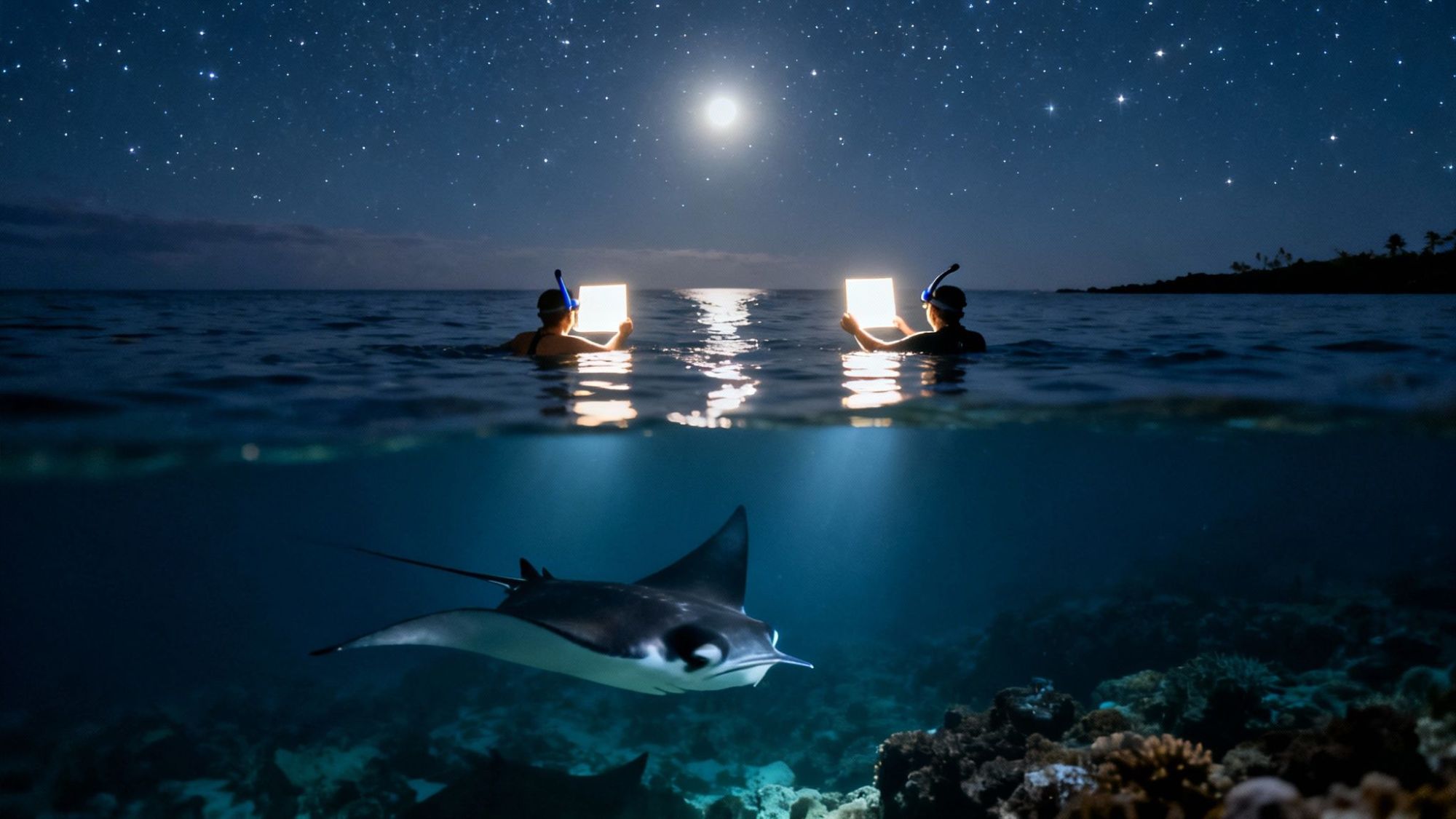
Imagine floating weightlessly in the warm, dark Pacific. Giant, gentle shadows glide effortlessly through beams of light just below you. This is the Kona manta ray night snorkel, an otherworldly ballet that has become one of Hawaii's most incredible experiences. It's an adventure perfect for everyone, from nervous first-timers to seasoned ocean explorers, and Kona is simply the best place on Earth to do it.
A Guide to Kona's Magical Manta Ray Encounter
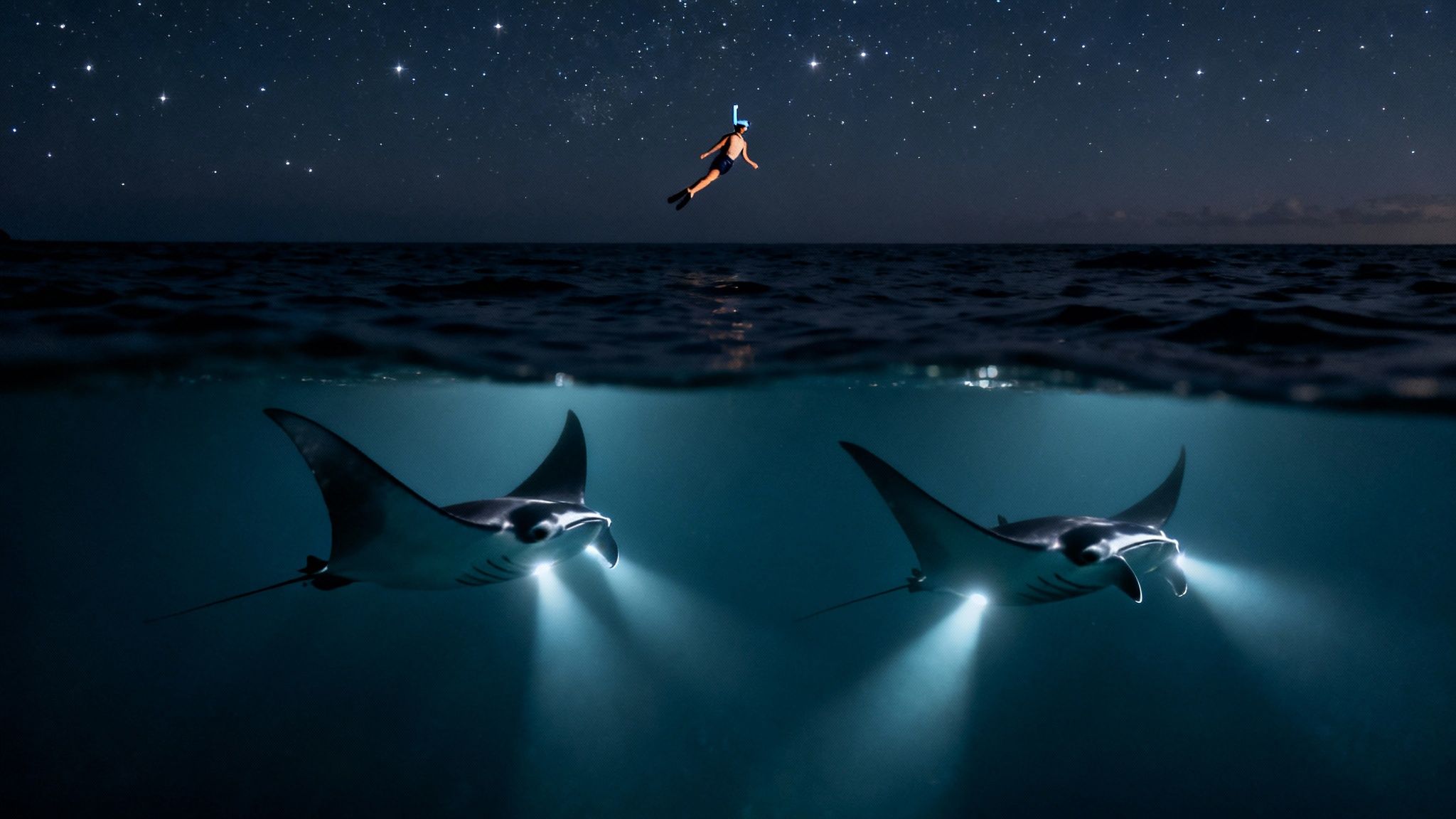
The Kona coast of the Big Island has a unique blend of natural conditions that sets the perfect stage for this breathtaking spectacle. This isn't just a tour; it's a front-row seat to the nocturnal world of these majestic creatures. In this guide, we’ll walk you through everything you need to know to experience this natural wonder for yourself, safely and respectfully.
We’ll start by pointing you toward the best in the business, Kona Snorkel Trips, the top rated & most reviewed snorkel company in Hawaii. They have truly mastered the art of creating a safe, respectful, and unforgettable encounter. You don't have to take our word for it—their stellar reputation is built on the countless amazing experiences shared by visitors.
What Makes This Experience So Special
The magic behind the Kona manta ray snorkel is actually a simple, brilliant concept. Tour operators use powerful underwater lights for boats that attract plankton, which happens to be the manta rays' favorite food. This essentially creates a natural "dinner bell" effect, drawing the gentle giants right to the viewing area for a show you'll never forget.
This reliable method has turned Kona into a global hub for marine life enthusiasts. Every year, around 80,000 snorkelers and divers take the plunge here specifically to meet our resident manta rays. What makes it so popular? The consistency is just unmatched. Operators consistently report 85-90% sighting rates, with some spots hitting an astounding 96%. You can dig into more of the impressive sighting statistics from Manta Ray Advocates.
It's a profoundly moving experience that creates memories for a lifetime. Whether you choose a premier manta ray night snorkel with a top company or explore another local operator, you are in for an incredible adventure.
Why Kona Is The Manta Ray Capital Of The World
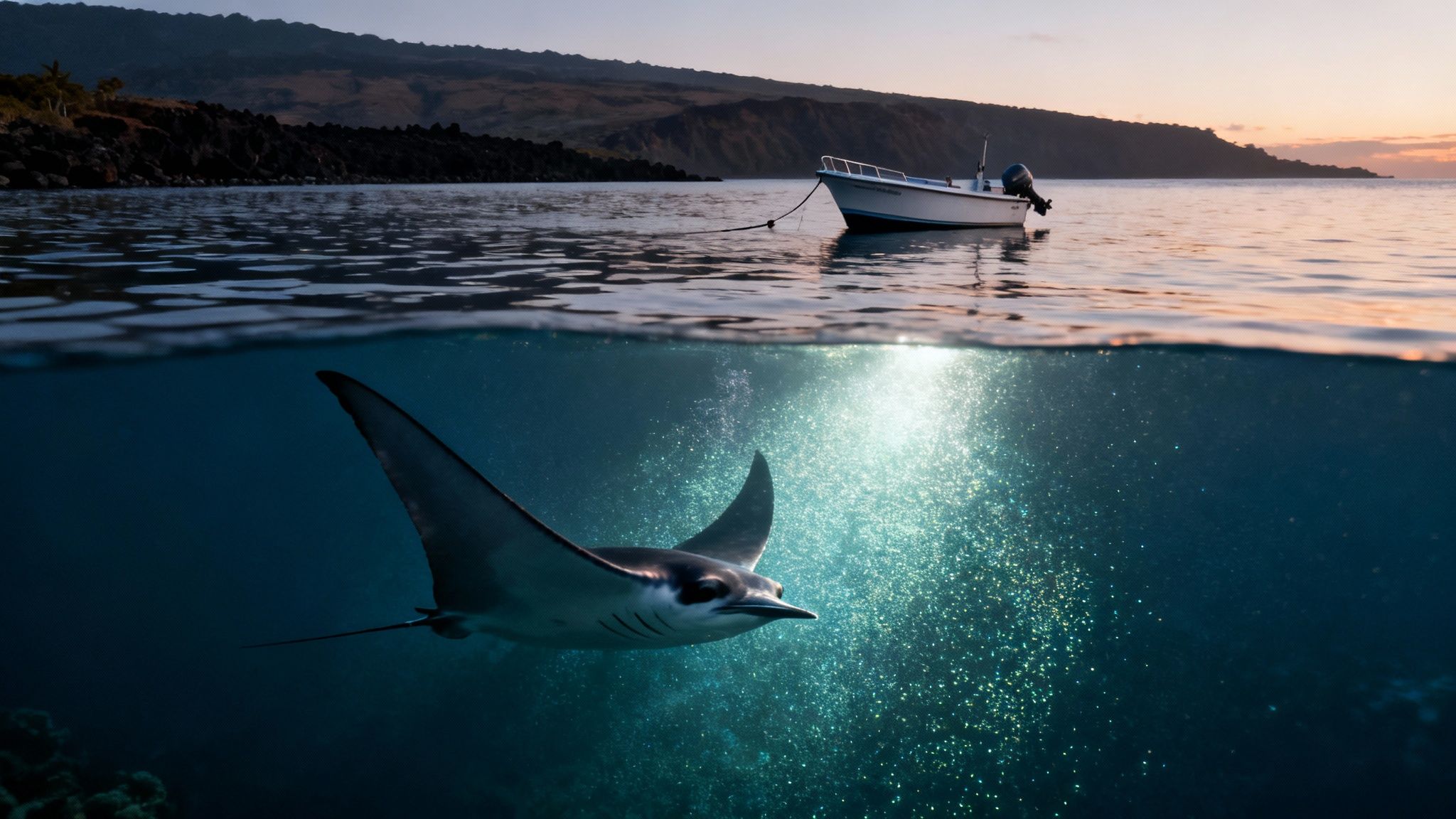
So, what makes Kona the undisputed global hotspot for seeing manta rays? It's not just a lucky coincidence. It’s a perfect storm of geography, biology, and a bit of human ingenuity that sets the stage for one of nature’s most incredible nightly shows.
The Kona coast is blessed with calm, sheltered bays that act like a natural pantry for plankton, the tiny organisms manta rays love to eat. These protected waters let the plankton flourish, creating a reliable, year-round buffet that keeps the mantas coming back for more, right near the shore.
Decades ago, someone had a brilliant realization. The lights from a coastal hotel were attracting thick clouds of plankton, and the mantas were showing up for the feast. Tour operators figured out how to replicate this, creating the world-famous experience we have today. It’s like a nightly dinner party where the mantas are the guests of honor, and our lights are the invitation.
The Reliable Residents Of Kona
Unlike many marine animals that migrate over vast distances, the reef manta rays (Mobula alfredi) here are a resident population. They live along the Kona coast all year, and that’s the secret behind the incredibly consistent sightings that make kona manta ray snorkel tours so successful. These aren't just visitors passing through—they're locals.
This year-round presence means pretty much any night is a good night to see them. Imagine floating in the warm, dark water as lights cut through the depths, and then, out of nowhere, enormous shadows glide toward you—manta rays with wingspans averaging a massive 12 feet. Top operators, like Kona Snorkel Trips, see an astonishing 85-90% success rate on our tours. In fact, since 1979, researchers have identified over 318 unique individuals along this coast, which shows just how stable their habitat is. You can read more about what makes the Big Island a premier destination for manta encounters.
It’s this amazing consistency that has turned Kona into a legendary destination for anyone who loves marine life. The mix of a resident population and a dependable food source creates a truly special opportunity you won’t find anywhere else.
Gentle Giants And Safe Encounters
It’s totally normal to feel a little nervous about getting in the dark ocean with such huge creatures. But one of the most important things to know is that manta rays are completely harmless. Understanding this is the key to really soaking in the magic of the experience.
Manta rays are called "gentle giants" for a very good reason. They are filter feeders, meaning their diet is made up entirely of tiny plankton. They have no stingers, no barbs, and no sharp teeth for biting, making them completely safe for us to be around.
Their only goal is to eat the plankton concentrated by the lights. You’ll watch them gracefully swoop and do barrel rolls to scoop up their meal, sometimes coming within inches of you, but never with any aggression. Their gentle nature is why the manta ray night snorkel is such a safe and awe-inspiring adventure for the whole family, from kids to grandparents. The whole experience is about passive observation—you just get to float and witness their majestic underwater ballet without any fear.
Choosing Your Perfect Kona Manta Ray Snorkel Tour
With a few different boats heading out to see the mantas each night, picking the right one can feel a little daunting. The most important thing to know is that not all tours are created equal. Your experience will come down to a few key things: the size of the boat, how many other people are on it, and the vibe of the company running the tour.
The biggest choice you'll make is between a large, high-capacity catamaran and a smaller, more personal boat. Each one offers a totally different kind of night on the water.
Big Boats Versus Small Boats
The large catamarans can pack on dozens of people, and because of that, they can often offer a lower price per ticket. If you're on a tight budget, this might seem appealing. But the sheer number of guests can make for a crowded time, both on deck and in the water. It can feel like a bit of a party boat, which is great for some people but might not be the quiet, magical encounter with nature that others are hoping for.
Small group tours, on the other hand, are all about creating a more intimate and less crowded experience. This is the specialty at Kona Snorkel Trips. They use nimble boats that carry far fewer passengers. What does that mean for you? More one-on-one time with the guides, more room to spread out, and a much calmer, more focused encounter with the manta rays. If you're looking for great service and an amazing view without having to jostle for a spot, a small group tour is definitely the way to go.
The real difference comes down to the atmosphere. A small boat feels like a shared adventure with a handful of new friends. A big boat is more like a high-energy social event on the water. Think about what kind of vibe fits your vacation best.
What to Look for in a Premier Tour Operator
Boat size is a big deal, but a few other things separate a so-so tour from an absolutely incredible one. When you're looking into Kona manta ray snorkel tours, keep an eye out for companies that really deliver in these areas.
- Expert Guides: A great guide doesn't just keep you safe; they make the whole trip better. The best guides are full of fascinating stories and facts about manta ray biology, their behavior, and the local ocean ecosystem. They turn a fun snorkel into a genuine learning adventure.
- Commitment to Safety: This is non-negotiable. Reputable operators have rock-solid safety plans. That means high-quality, well-maintained gear (wetsuits that fit, masks that don't leak), clear safety briefings before you get in, and guides who are right there in the water with you.
- Happy Customers: The best way to know what you're in for is to see what other people have said. Reading recent reviews gives you the real scoop on what the experience is actually like. You can see what people are saying by exploring our detailed breakdown of Kona snorkel tour reviews.
- Sustainable Practices: We have to protect these incredible animals. Always choose operators who follow strict, respectful guidelines for interacting with wildlife. The goal is to observe the mantas in their natural habitat without disturbing them at all.
Kona Manta Ray Tour Features at a Glance
Trying to decide between the big boat party vibe and a more intimate adventure? This table breaks down the key differences to help you find the perfect fit for your Kona trip.
| Feature | Large Group Catamaran Tours | Small Group Boat Tours (like Kona Snorkel Trips) |
|---|---|---|
| Guest Capacity | 40-100+ passengers | 6-20 passengers |
| In-Water Experience | Can be crowded, with more people sharing the light board. | More space and a clearer, unobstructed view of the mantas. |
| Guide Interaction | Less personal attention due to the high guest-to-guide ratio. | Highly personal; guides know your name and provide one-on-one assistance. |
| Atmosphere | Social, high-energy, "party boat" feel. | Intimate, relaxed, and focused on the wildlife encounter. |
| Flexibility & Maneuverability | Limited by size; slower to board and disembark. | Faster, more nimble boats can get to the site quickly and adjust to conditions. |
| Booking & Availability | Many seats available, but often feels less exclusive. | Sells out quickly due to limited spots, so advance booking is essential. |
| Ideal For | Budget-conscious travelers, large parties, and those looking for a lively social atmosphere. | Snorkelers who value personal service, wildlife enthusiasts, families, and photographers. |
Ultimately, the choice comes down to what you value most. If you're after a quiet, personal, and awe-inspiring night with these gentle giants, a small group tour is your best bet.
The Kona Snorkel Trips Difference
We've built our tours around everything that makes for an unforgettable night. The premier manta ray night snorkel tour from Kona Snorkel Trips nails all these points. Our small-group approach means you get a truly personal adventure, led by a passionate crew that is 100% focused on giving you the best, safest, and most magical experience possible.
For those looking for an excellent alternative, Manta Ray Night Snorkel Hawaii is an exceptional alternative when looking for a Manta Ray night snorkel tour. And if your plans include scuba diving, look no further than Kona Honu Divers, the top rated & most reviewed diving company in both Hawaii and the Pacific Ocean. Making an informed decision ensures your night with Kona's gentle giants will be a magical one.
Your Manta Ray Adventure Step By Step
So, what’s it really like to be on one of the top-rated Kona manta ray snorkel tours? It's not just about hopping in the water. The whole thing is an adventure, carefully planned to build the excitement and make sure you feel totally comfortable from start to finish. Let’s walk through what you can expect, from the moment you show up to that amazing, star-lit ride back to the harbor.
Your night starts with a warm "aloha" at the check-in point. The crew's friendly welcome immediately sets a relaxed, fun vibe. They'll get you fitted for all your gear, especially a good-quality wetsuit. This is key because even though we're in tropical Hawaii, the Pacific can feel a bit chilly after the sun goes down. The water temperature usually hangs in the mid-70s (around 23-25°C), so that wetsuit makes sure you stay warm and happy.
Setting Off Into The Sunset
Once everyone is geared up, you'll climb aboard the boat for a full safety briefing. The guides aren't just marine life nerds; they're also highly trained safety pros. They'll cover everything you need to know, from how to use your snorkel to the golden rule of manta encounters: look, but don't touch. Their instructions are clear and reassuring, designed to calm the nerves of even the most anxious first-timer.
Then, you’re off! The boat ride out to the site is short, but it's one of the best parts of the whole experience. As you cruise along the coast, you get a front-row seat to a spectacular Kona sunset lighting up the sky. On the way, the crew will often share cool facts about the local ocean life and the specific manta rays we hope to see, getting everyone pumped for the main event.
The Moment Of Truth
Just as dusk turns to night and the first stars pop out, the boat arrives at the viewing site. The crew gets to work, setting up a custom-made floating light board. Think of it like a giant, glowing surfboard that shines powerful lights down into the deep, dark water. This is your personal window into the mantas' world.
One by one, you’ll slip into the water—which is surprisingly calm at night—and find your spot along the light board. You just hold onto the handles and float on the surface, looking down into the bright cone of light. It's almost like magic. The lights attract a swirling cloud of plankton, creating a buffet that no manta can resist. At first, you’ll probably just see little fish zipping through the beams.
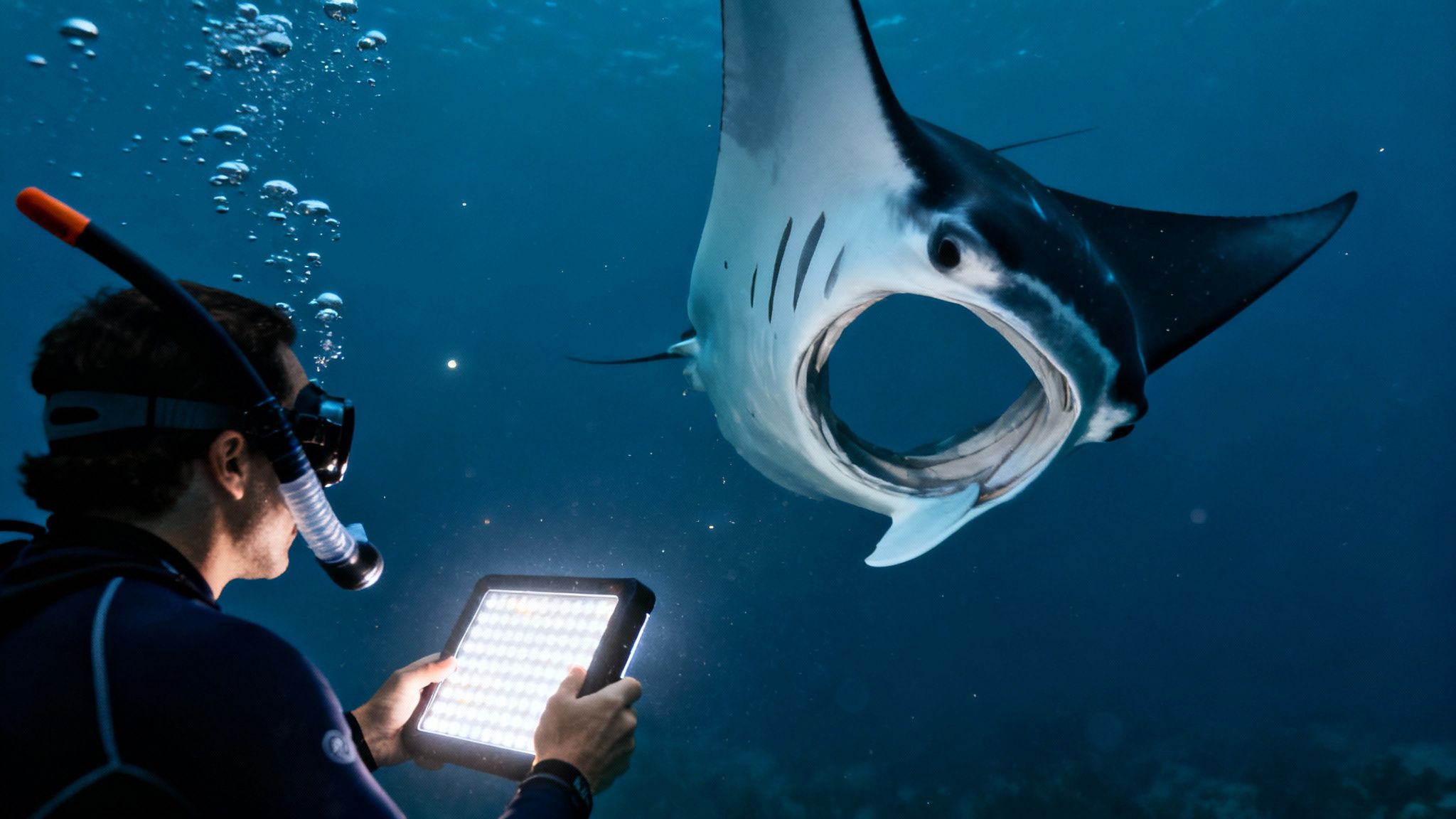
Then, it happens. A huge, dark shape emerges from the blackness, gliding effortlessly into the light. The first manta ray has arrived. The feeling is pure, absolute awe—a mix of "is this really happening?" and total wonder as a creature with a 10 to 12-foot wingspan does an underwater ballet just inches below you.
They swoop and turn, doing their famous "barrel roll" feeding loops. With their mouths wide open, they glide up through the plankton, somersaulting in a slow, mesmerizing rhythm. It's incredibly peaceful out there. The only sounds are the gentle lapping of the water against the boat and the quiet gasps of amazement from everyone around you.
The crew is right there in the water with you the whole time, making sure everyone feels safe and that the mantas are respected. This is that moment that turns any lingering nerves into pure, unforgettable excitement. It's a memory you’ll be talking about for years to come.
How To Prepare For Your Night Snorkel
A little bit of prep work can be the difference between a good night and an absolutely unforgettable one. When you know what to bring and what to expect, you can just relax and soak in the magic of the manta encounter. Here’s everything you need to know to get ready for one of the best Kona manta ray snorkel tours out there.
First things first, let's talk about what's provided. Reputable companies like Kona Snorkel Trips have you covered with all the essential gear. That means a high-quality snorkel and mask, fins, and most importantly, a wetsuit to keep you warm and comfortable in the cool night water.
They also have custom flotation devices, which means everyone can float effortlessly on the surface, no matter their swimming ability. You just hang on and enjoy the show.
Your Personal Packing List
While the main gear is handled, packing a few personal items will make your trip much more comfortable, especially after you get out of the water.
- Towel: An absolute must for drying off.
- Warm Change of Clothes: The boat ride back to the harbor under the stars can get chilly. Trust me, a dry sweatshirt or jacket will feel amazing.
- Camera with a Wrist Strap: If you're bringing an underwater camera like a GoPro, a secure wrist strap is non-negotiable. You don't want to watch it sink into the abyss.
- Swimsuit: The easiest thing to do is just wear your swimsuit under your clothes to the boat. It makes gearing up quick and simple.
Want a more detailed breakdown? You can check out our complete guide on snorkeling attire. A little planning always pays off.
Pro Tips For A Perfect Night
Beyond what you pack, a couple of insider tips can really elevate your experience. I always suggest having a light snack about an hour before your tour. Being on the water with a totally empty stomach can sometimes lead to seasickness, so a little something can help you feel great.
Most importantly, show up with a mindset of respect and wonder. You’re a visitor in the mantas' world. The crew will give you a detailed briefing, but it all boils down to one simple, crucial rule.
The Golden Rule: Passive Observation Only. It is absolutely critical that you do not touch, chase, or get in the way of the manta rays. Touching them can damage their protective slime coat, which leaves them vulnerable to infections. Your job is to simply float, watch, and be amazed by their underwater ballet.
Accommodating All Skill Levels
Are you worried you're not a strong swimmer? Don't be. This is a common concern, but tour operators like Kona Snorkel Trips are pros at making sure everyone feels safe and comfortable.
The custom-made light boards you hold onto are basically large, stable rafts. You just grip the handles and float peacefully right on the surface. This setup is perfect for people of all skill levels, from non-swimmers to kids.
The crew is always right there in the water with you, ready to help and make sure everyone can safely enjoy the show. Your only job is to relax, look down into the light, and prepare to have your mind blown.
Protecting Kona's Gentle Giants Through Responsible Tourism
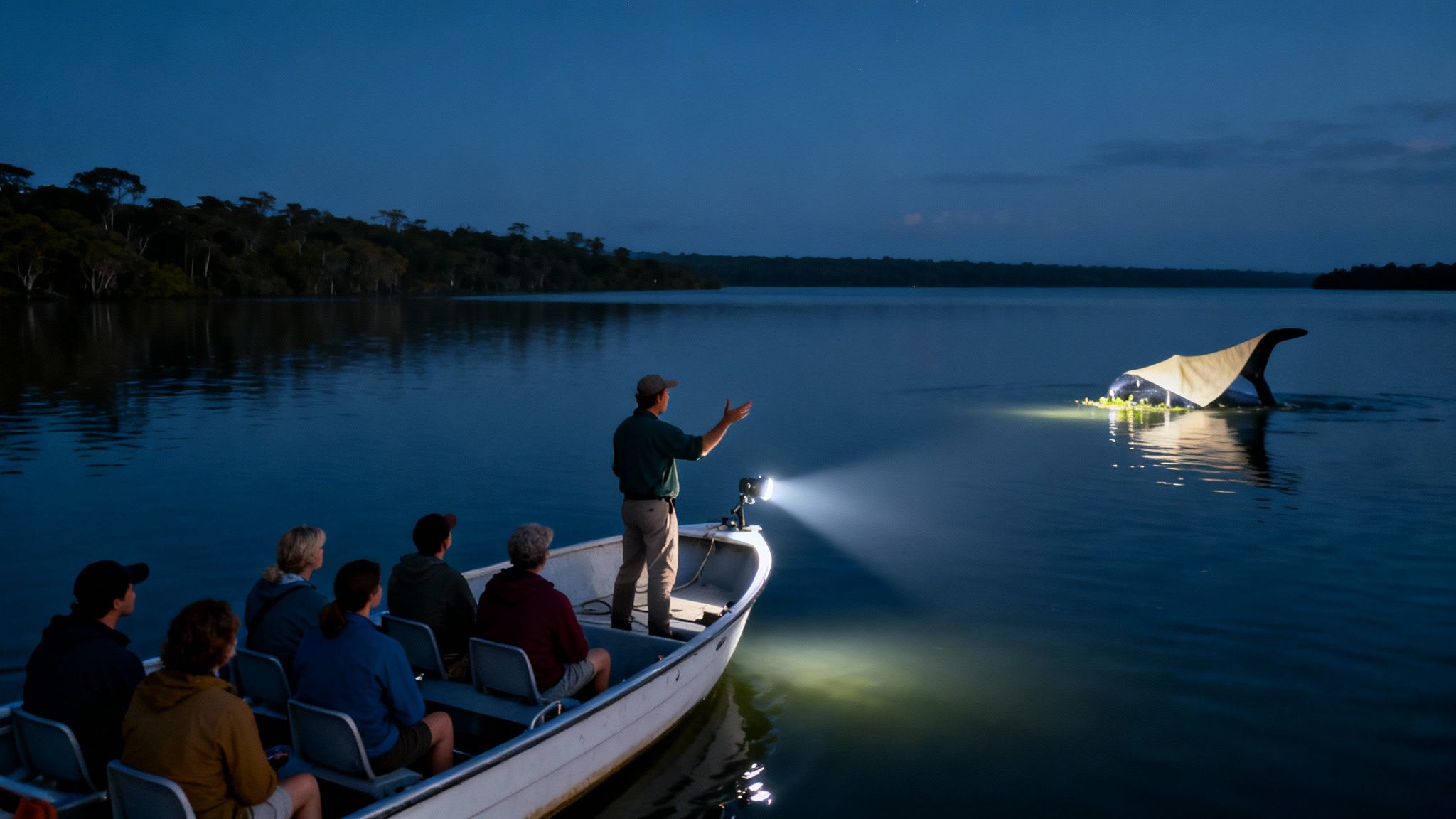
Jumping into the water for a Kona manta ray snorkel is more than just another tour—it's stepping into a delicate marine world. The reason we get to have these incredible, up-close encounters night after night is because the local operators are deeply committed to protecting the mantas and their home. This shared sense of responsibility is what keeps the magic alive for future generations.
When you book a tour, you’re not just buying a ticket; you're casting a vote for a certain way of doing things. Reputable outfits like Kona Snorkel Trips don't just wing it. We follow a strict set of standards designed to keep our impact on the mantas' natural behavior as close to zero as possible. These aren't just empty suggestions; they're proven, time-tested methods for a sustainable and truly respectful experience.
The Standards For Sustainable Snorkeling
Years of watching, learning, and fine-tuning have led to a clear playbook that puts the well-being of the manta rays first. While the old "Manta Ray Green List" has evolved over time, its core principles are still the gold standard for any operator who truly cares.
These guidelines cover every single part of the encounter:
- Smart Lighting: Snorkelers keep their lights pointed straight down from the surface, while divers shine theirs up from below. This creates a brilliant column of light that draws in plankton without blinding or confusing the mantas.
- Careful Boat Positioning: Captains anchor in specific, designated spots. This prevents any damage to the fragile reef below and creates an organized, safe space for everyone to watch the show.
- Look, Don't Touch: This is the big one. Touching a manta ray can strip away its protective mucus layer, which is like their immune system. This leaves them wide open to nasty infections. It’s all about passive observation.
By choosing a company that lives by these rules, you become an active part of the solution. Your decision directly supports a sustainable industry that puts the health of our ocean first.
Become A Citizen Scientist
The adventure doesn't have to stop when the boat pulls back into the harbor. You can actually play a part in manta ray research and conservation right from your computer. Scientists identify individual mantas by the unique spot patterns on their bellies—they're just like a human fingerprint.
If you snag a clear photo of a manta's underside, you can submit it to organizations like the Manta Pacific Research Foundation. This simple act provides crucial data that helps researchers track population numbers, migration routes, and the overall health of Kona's resident mantas. Your vacation photos literally become valuable scientific data.
By engaging with these gentle giants the right way, you help make sure they’ll be gracefully gliding through Kona’s waters for a long, long time. If you want to dive even deeper, check out these fun facts about manta rays and grow your appreciation for these amazing animals.
Got Questions About the Manta Ray Tour?
To wrap things up, let's go through some of the most common questions people have before booking. Getting these answers sorted out will help you feel totally confident and pumped for this incredible adventure.
Is There A Best Time Of Year To See Manta Rays?
This is one of the best parts about snorkeling with mantas in Kona: there really isn't a "season." We have a resident population of manta rays, which means they hang out along the Kona coast all year long. They show up for their plankton dinner pretty much every night, so any time you decide to visit is a great time to book a tour.
What Happens If No Manta Rays Show Up?
It's a fair question! While local operators have an amazing 85-90% success rate, we always have to remember that mantas are wild animals. Sightings can never be 100% guaranteed.
On the rare night that the mantas decide to dine elsewhere, most reputable companies have your back. It's standard practice to offer a complimentary rebooking for another night. This gives you a second chance at witnessing the magic. Just be sure to confirm this policy with whichever company you book with.
Is Swimming With Manta Rays Safe?
Absolutely. There's a reason they're called "gentle giants." Despite their massive size, they are completely harmless to people.
Mantas are filter feeders, meaning their diet consists of microscopic plankton. They don't have stingers, barbs, or sharp teeth. They're just focused on their meal and are often curious, making the whole experience perfectly safe for everyone in the water.
Can I Do This Tour If I'm Not A Strong Swimmer?
Yes, you definitely can. This experience is designed for people of all swimming abilities, even non-swimmers.
Tour crews provide high-quality flotation devices and custom-made light boards. You simply float on the surface and hold on to the board. No swimming is required at all. You just get to relax and watch the incredible show below while the crew keeps a close eye on everyone.
While you're planning your unforgettable Kona Manta Ray Night Snorkel, a lot of visitors also ask about staying connected. Using an eSIM for international travel can be a fantastic way to save money and guarantee you have service during your trip. It's an easy way to share those amazing manta photos with everyone back home without getting hit with crazy roaming charges.
Ready for an adventure you'll never forget? Kona Snorkel Trips is excited to show you the magic of Kona's gentle giants. Book your tour today! https://konasnorkeltrips.com