
Your Guide to Kona Manta Ray Snorkel Tours in 2026
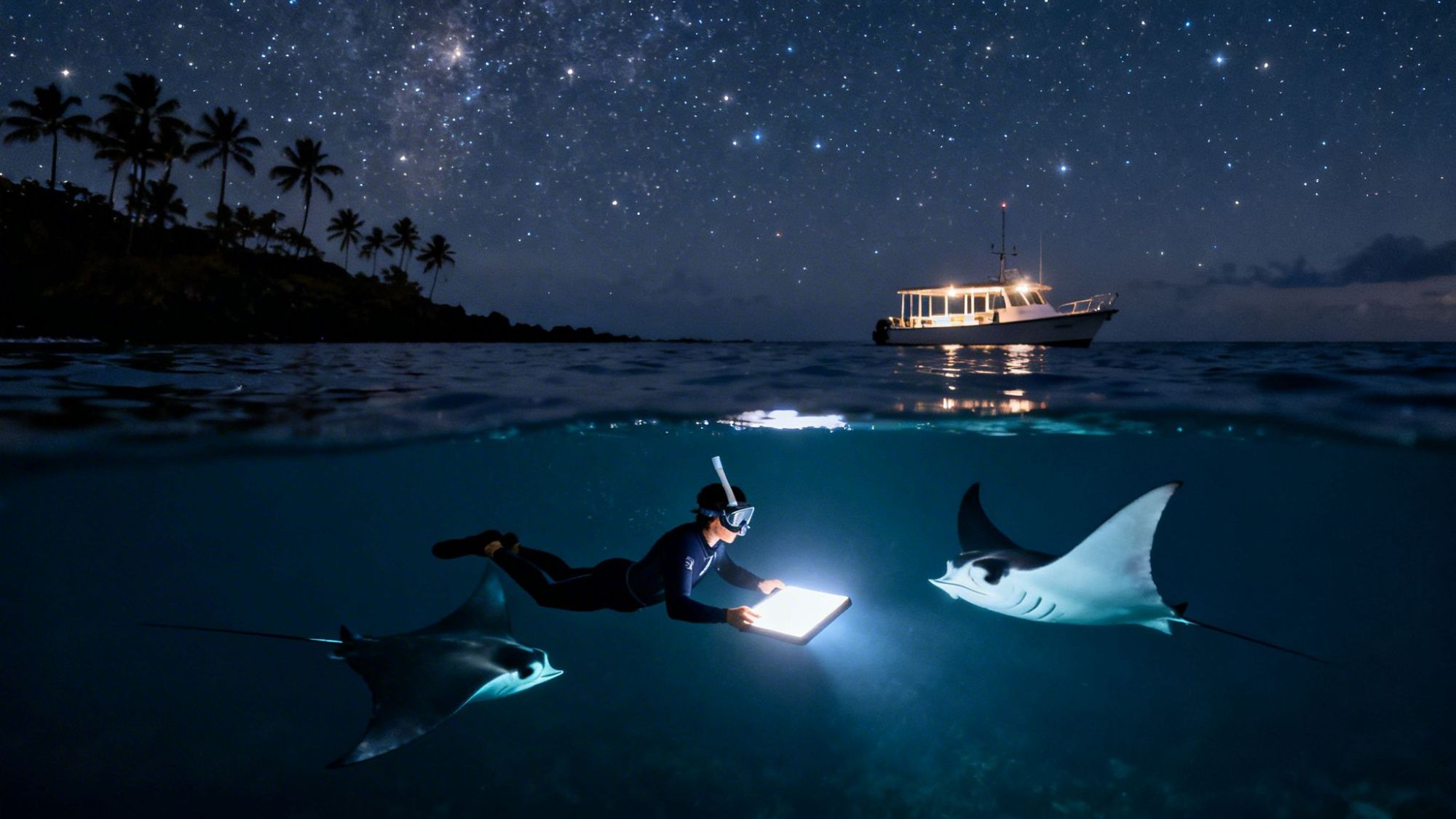
Picture this: you’re floating in the calm, dark Pacific off the Kona coast. Just below you, illuminated by gentle lights, massive, graceful creatures with wingspans over 15 feet swoop and soar through the water. It’s not a dream. This is the world-famous Kona manta ray snorkel, one of Hawaii's most breathtaking and truly unforgettable adventures.
Your Ultimate Guide to Kona Manta Ray Snorkel Tours
This guide is your all-in-one resource for what many call a bucket-list experience. We’ll walk you through everything, from how it works to why Kona is the best place on the planet for it. We’re Kona Snorkel Trips, and as the top rated & most reviewed snorkel company in Hawaii, our entire mission is to create safe, jaw-droppingly beautiful encounters with our local marine life.
But don’t just take our word for it. The experiences speak for themselves. Here's a little of what our guests have to say after coming out with us:
The Big Island is a paradise for ocean lovers, teeming with incredible marine animals. But the manta ray night snorkel? It’s in a league of its own.
The Magic of the Manta Ray Night Snorkel
What makes this so different from any other snorkeling trip is that it all happens well after the sun goes down. Our boats head out to the manta feeding grounds and set up specially designed, eco-friendly light boards. These lights shine down into the water, and just like moths to a flame, they attract huge clouds of plankton—the manta rays' favorite meal. For those seeking this specific adventure, check out our manta ray snorkel tour. If you're exploring other options, Manta Ray Night Snorkel Hawaii offers an exceptional alternative for a memorable tour.

It’s a simple but brilliant idea that creates a natural, floating buffet. The mantas, having learned this routine over decades, show up for their dinner. You'll be holding onto one of these light boards, giving you a front-row seat to an incredible underwater ballet as these gentle giants perform barrel rolls and somersaults just inches away from you.
To give you a quick overview, here's what makes this adventure so special.
Kona Manta Ray Snorkel Experience at a Glance
| Feature | Description |
|---|---|
| Activity | Manta Ray Night Snorkel |
| Location | Keauhou Bay, Kona, Big Island of Hawaii |
| Best Time | Year-round, after sunset |
| Manta Size | Wingspans can exceed 15 feet |
| Key Attraction | Up-close, passive observation of feeding manta rays |
| Who It's For | Families, couples, solo travelers, and first-time snorkelers |
It's an experience that consistently ranks as a top activity for visitors to the Big Island, and for good reason.
Why Kona is the Global Manta Ray Capital
You might be wondering, why Kona? It turns out, Kona is one of the most reliable and consistent places on Earth to see manta rays this close, and it all boils down to a few key things about our unique coastline.
- A Big, Happy Family: The Kona coast is home to a year-round, resident population of over 240 individually identified manta rays. They live here!
- The Perfect Buffet: Our underwater volcanic geography creates the ideal conditions for plankton to flourish, which means there’s always a reliable food source for the mantas.
- A Decades-Old Tradition: This nightly event isn't new. The mantas have been gathering in these spots for decades, making it a predictable and well-established natural wonder.
This unique combination of factors makes the Kona manta ray snorkel tours a must-do activity. While you're planning your underwater adventures, you can learn more about other amazing locations in our guide to the best snorkeling in Kona. It's a rare chance to connect with ocean life in a way that’s both thrilling and profoundly moving—an adventure that will stick with you for a lifetime.
What to Expect on Your Manta Ray Snorkel Adventure
So, what’s it really like to be in the water with these gentle giants? Knowing how the whole evening unfolds helps you relax and soak in every moment. Let’s walk through the adventure, from meeting up at the harbor to the boat ride back under a sky full of stars.

Your journey kicks off at Keauhou Harbor, where our Kona Snorkel Trips crew will be waiting to greet you. After a warm aloha and a quick check-in, we'll get you fitted for a wetsuit and run through a comprehensive safety briefing. We cover everything—how to use your gear, what to expect in the water, and how to respectfully observe the mantas.
Once everyone is set, it’s a short, scenic boat trip out to the viewing site. This is the perfect time to ask any last-minute questions, get to know your fellow snorkelers, and watch the legendary Kona sunset paint the sky.
The Magic Begins with Light
The real show starts when we anchor and the crew sets up our custom-built light board. This board floats on the surface, shining bright lights down into the dark water. It’s a beautifully simple concept: light attracts plankton, the tiny organisms that manta rays absolutely love to eat.
Think of it as ringing a dinner bell for the mantas. The light creates a concentrated cloud of plankton, and it doesn't take long for the graceful giants to show up for their nightly buffet.
People often ask if the lights bother the mantas, and the answer is a clear no. We're simply attracting their natural food source. The mantas are wild animals that come and go completely on their own terms, making the whole thing a passive, eco-friendly observation.
With the stage set, it's your turn. You'll slip into the water and hold onto the floating light board. It gives you a stable and secure spot to float effortlessly on the surface. We'll ask you to keep your body flat, like Superman, so your fins don't dangle down and accidentally get in the mantas' way.
A Front-Row Seat to Nature’s Show
Imagine this: you’re floating comfortably, peering into the illuminated water, when a massive shadow glides up from the depths. It’s a giant manta ray, with a wingspan that can top 15 feet, soaring right towards the light. Just inches below you, it opens its huge mouth and performs a graceful barrel roll, filtering the plankton-rich water.
This is the heart of the Kona manta ray experience. And it's not a fleeting glimpse. You'll be in the water for 40-50 minutes as multiple mantas swoop, loop, and dance through the light beams in a mesmerizing underwater ballet.
Our in-water guides are with you the entire time. They're not just there for safety; they’re passionate marine naturalists who will share amazing facts about the mantas and even help you identify some of the local regulars by name. Their expertise turns an incredible experience into a truly unforgettable one.
When you're ready to secure a spot for this incredible adventure, you can easily book online.
After the snorkel, you’ll climb back on board, buzzing with excitement, where we'll have hot cocoa and snacks waiting. The ride back to the harbor is the perfect chance to share stories and do a little stargazing. For an even deeper dive into this tour, check out our guide on the manta ray night snorkel tour. The whole process is designed to be seamless, safe, and something you'll talk about for years to come.
Choosing the Best Manta Ray Tour for Your Trip
You’ve got a handful of companies offering Kona manta ray snorkel tours, so how do you even begin to pick the right one? The tour you choose can be the difference between a pretty good night and a completely unforgettable, core memory-making experience. A little insider knowledge goes a long way in making sure you book the best possible trip.
When you're looking around, try to see past just the price. The best tours are all about the quality of the experience, your safety, and, most importantly, the well-being of the manta rays. It's about finding a company that delivers real value through top-notch service and professional standards.
Why Small Groups Matter
Honestly, one of the biggest factors in having an amazing manta ray encounter is the group size. A tour with fewer people is an absolute game-changer. You get a much more intimate, personal experience without feeling like you’re just another body in a massive crowd of snorkelers.
With a smaller group, you get more space on the light board, a better view of the action, and more one-on-one interaction with the guides. It’s the difference between watching the show from the front row versus the back of a stadium.
This is exactly why Kona Snorkel Trips specializes in small-group tours. We’re firm believers that this incredible natural show is best enjoyed when you can actually soak it all in, free from the chaos of a big, impersonal tour.
The Value of an Experienced Crew
Your guides and boat captain are the heart and soul of any tour. A seasoned crew does way more than just drive the boat to the right spot—they're your safety net, your local experts, and the ones who keep everything running smoothly. A great guide can point out individual mantas by name and share fascinating stories about them, adding a whole new layer to the adventure.
A company with a solid safety record and high-quality, well-kept gear should be non-negotiable. This covers everything from the boat itself to the wetsuits and snorkel equipment you’ll be using. The best operators invest in their gear to make sure you're comfortable and safe from the moment you step on board. A great way to check is to see what other people are saying. You can learn a lot from our Kona snorkel tours reviews and see why so many guests have a blast with us.
A Commitment to Sustainable Tourism
This might just be the most important factor of all: finding a company that is truly committed to responsible, ethical tourism. The health of the manta rays and their home has to come first, period. This means strictly following passive observation rules—no touching, no chasing, and no diving down at the mantas.
A reputable operator will make sure every guest understands these guidelines before getting in the water and will actively support local conservation. When you choose a company that puts the ecosystem first, you’re doing your part to make sure these magical encounters can happen for many, many years to come.
Ready to book an exceptional and ethical adventure? You can check our availability and secure your spot for this incredible experience.
Why Kona Is a Global Hub for Manta Ray Encounters
Ever wonder what makes Kona one of the most reliable and downright magical places on the entire planet to see manta rays? It’s not just luck. It's a perfect storm of unique geography and predictable animal behavior that has turned this specific stretch of coastline into a world-famous destination for this incredible adventure.
The secret is all about what’s happening just beneath the waves, where the Big Island’s dramatic volcanic landscape sets the stage for a nightly spectacle you won't find anywhere else.

The island's underwater topography is defined by steep volcanic slopes that drop off quickly into deep water. This unique structure creates natural upwellings, pushing nutrient-rich cold water from the deep ocean toward the surface. This process fuels a massive bloom of microscopic plankton—the primary food source for manta rays.
Think of it this way: Kona’s coast serves up a consistent, all-you-can-eat buffet for these gentle giants. This reliable food source is exactly why they gather here in such large numbers, night after night, all year long.
The Science of Attraction
The modern Kona manta ray snorkel tours you see today are built on a happy accident discovered decades ago. Hotels along the coast started shining bright lights into the ocean for their guests' viewing pleasure. It didn't take long for people to notice these lights were attracting swarms of plankton.
Soon enough, the manta rays caught on, realizing they could get an easy meal by showing up where the lights were.
Today’s tours use this exact same principle, just in a more controlled and eco-friendly way. We use floating light boards to concentrate the plankton in one area, basically creating a "campfire" that the mantas gather around. This simple but brilliant idea has created one of Hawaii's most sought-after marine adventures, drawing in approximately 80,000 people every year.
Because this feeding pattern is so well-established, tours in Kona boast an incredible 80-90% sighting success rate. That high reliability gives you a fantastic shot at having a truly mind-blowing encounter.
A Resident Population
Unlike many marine animals that migrate vast distances, the manta rays along the Kona coast are a resident population. Researchers have actually identified and named over 240 individual manta rays that call these waters home. They live here year-round, which means you have a great chance to see them no matter when you decide to visit.
This consistency is key. You're not just hoping to catch a glimpse of an animal passing through; you're visiting a well-established neighborhood where the residents show up for dinner almost every single night.
This unique combination of a permanent food source and a resident manta population makes Kona an unparalleled place for this kind of wildlife encounter. While Kona's offerings are truly special, if you're looking to explore more of the archipelago, you might also consider Hawaiian Island Hopping Cruises.
For a deeper dive into what makes these animals so special, check out our guide on the Hawaii manta ray snorkel.
How to Be a Respectful Manta Ray Observer
Getting in the water with Kona's manta rays is one of the most incredible wildlife encounters on the planet, and with that comes a pretty big responsibility. These are wild animals, after all, and their well-being has to be the top priority for any good tour operator. By following a few simple rules, we can make sure the Kona manta ray snorkel tours stay magical for everyone—mantas included—for years to come.

The whole experience is designed around a simple but crucial idea: "passive observation." It just means your job is to float, hold onto the light board, and let the mantas do their thing. The show is completely on their terms, and we're just lucky enough to have a front-row seat.
The Golden Rules of Manta Ray Interaction
To keep both the mantas and the snorkelers safe and comfortable, everyone follows a few non-negotiable guidelines. Think of them as the price of admission to this amazing underwater ballet.
- No Touching: This is the big one. Manta rays are covered in a protective mucus layer that's basically their immune system. Touching them, even accidentally, can strip this layer off and make them vulnerable to nasty infections.
- No Chasing: Never, ever swim after a manta ray. It stresses them out and interrupts their feeding. We're there to be quiet observers, not to chase them around their dinner table.
- No Diving Down: Snorkelers always stay on the surface. Diving down can feel threatening to the mantas and might scare them away from the light and their food source.
Any responsible operator like us at Kona Snorkel Trips will drill these best practices into every guest before you even dip a toe in the water. It creates a safe space where the mantas can relax and feed naturally. Curious about how these giants glide so effortlessly? We break down their movements in our article on manta ray swimming patterns.
Managing Crowds for a Better Experience
As you can imagine, this tour has gotten incredibly popular. That means it's more important than ever to manage the number of boats and people at the sites. Overcrowding doesn't just make the experience less special for you; it could eventually change how the mantas behave.
In fact, research at Garden Eel Cove, one of the main viewing spots, found that a huge 96% of snorkelers and 82% of scuba divers felt the sites were too crowded. That feedback is valuable. The same study showed that 62% of snorkelers would actually support limits on how many people can be there at one time.
Choosing a tour operator that runs small groups does more than just give you a better, more personal experience. It's a vote for a more sustainable way of doing things. It eases the pressure on the environment and helps ensure the mantas feel safe enough to keep coming back to their nightly buffet.
Ultimately, this is all about making sure we’re participating in one of the most ethical wildlife encounters possible. When you choose a tour that puts education and conservation first, you’re not just a tourist—you're a guardian of this incredible natural wonder.
Ready to be a respectful observer on this once-in-a-lifetime adventure?
Your Manta Ray Snorkeling Questions Answered
Even after doing your homework, it’s totally normal to have a few last-minute questions before you jump on one of the most incredible Kona manta ray snorkel tours. To make sure you feel 100% ready for this amazing night, we've put together answers to the questions we hear most often from our guests.
Our aim is to clear up anything not covered elsewhere in this guide, so you can show up at the dock feeling nothing but pure excitement.
Do I Need to Be a Strong Swimmer?
This is probably the number one question we get, and the answer is a relief for many: no, you don't need to be an Olympic swimmer. You just need to be comfortable in the water.
The whole experience is about floating on the surface while holding onto a big, stable light board. You won't be doing any real swimming. We provide buoyant wetsuits to help you float and stay warm, and our guides are right there in the water with you the entire time. That said, a basic level of comfort in the ocean will help you relax and truly soak in the incredible show happening just below you.
What If I Get Seasick?
The boat trip out to the manta site is super short, usually only five to ten minutes from the harbor. But if you know you’re prone to motion sickness, the gentle rocking of the boat while you're floating might be enough to bother you.
It's always smart to come prepared. Think about taking an over-the-counter remedy beforehand just in case. Some solid, popular options are:
- Ship-EEZ Seasickness Patch: A convenient patch worn behind the ear.
- Dramamine pills: The go-to classic for a reason.
- Bonine pills: Another great choice that’s known to cause less drowsiness.
- Sea Band wristbands: A drug-free option that works through acupressure.
- Ginger chews: A natural, tasty way to help calm your stomach.
A little prep can make sure you’re focused on the mantas, not on feeling queasy.
What Is the Best Time of Year to Go?
Here’s one of the best parts about snorkeling with mantas in Kona: our manta ray population lives here all year long. They aren’t like the humpback whales that come and go with the seasons. They’re residents!
This means any month is a fantastic month to book a tour. Your odds of seeing manta rays are consistently high—around 85% to 90%—whether you come in the middle of winter or the peak of summer.
It's always good to remember these are wild animals, so sightings are never guaranteed. Many tour operators have a "manta guarantee," meaning you can come back again for free if the mantas don't show. It’s a great piece of mind to have!
What If I Am a Certified Diver?
If you have your scuba certification, you’re in for a treat. Seeing the mantas from the ocean floor is a completely different, and equally jaw-dropping, experience. Snorkelers get the beautiful view from above, but divers get to look up as these gentle giants perform their underwater ballet right over their heads.
If that sounds like your kind of adventure, we can’t recommend a manta ray dive enough. For a truly top-tier experience, check out Kona Honu Divers. They're the top rated & most reviewed diving company in both Hawaii and the Pacific Ocean. Their world-class manta ray diving tour is a true bucket-list dive for a reason.