
Kona Manta Ray Night Snorkel Swim Distance Explained
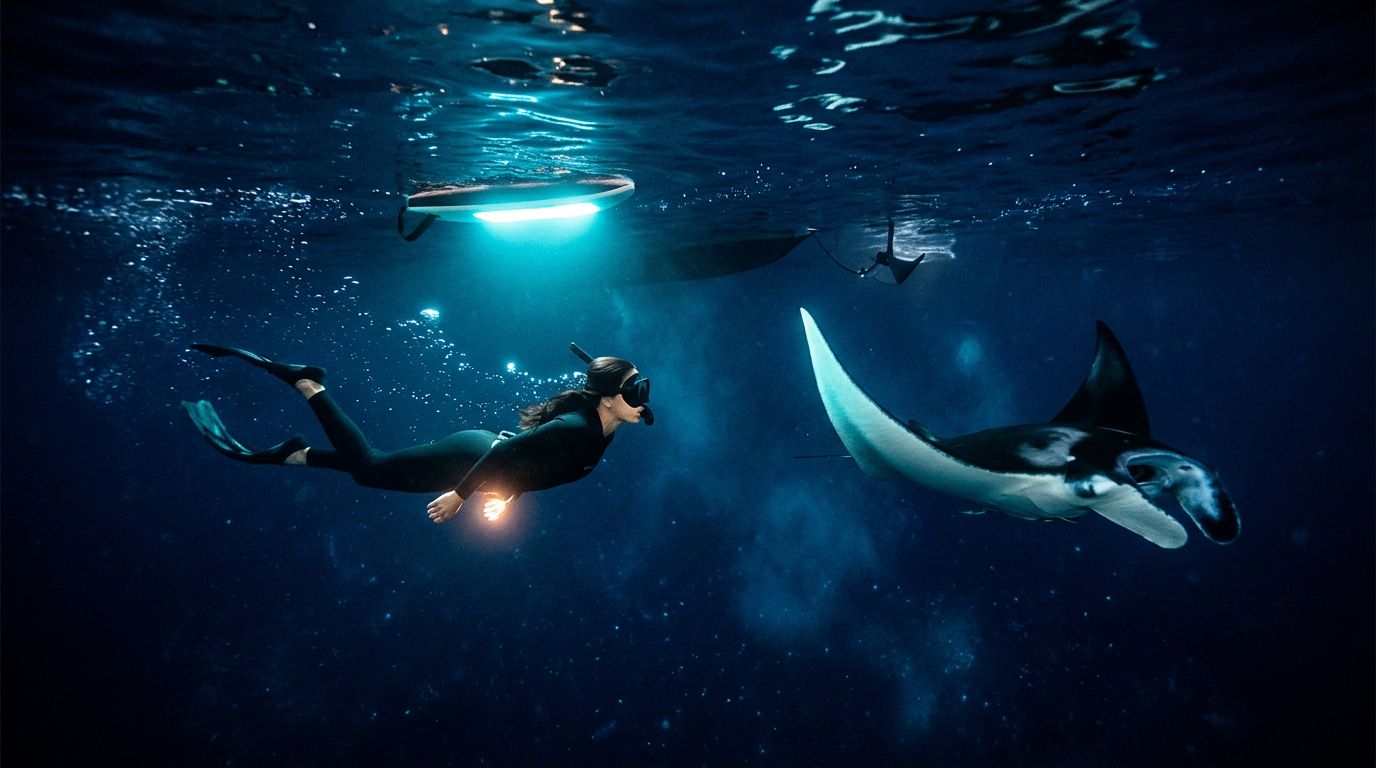
Kona Snorkel Trips makes the Kona manta ray snorkel easier to understand once you know the swim requirement. If you’re planning snorkeling Big Island Hawaii style, the biggest question is usually whether the night swim feels longer than it is.
The good news is simple. You need enough comfort in the water to stay calm, follow your guide, and float near the lighted board without stress. That matters more at night, because dark water changes how distance feels.
Here’s how the requirement works, what you actually swim, and how to know if the trip fits you.
What the swim requirement really means
For many manta tours, the real standard is straightforward, you should be able to swim about 50 yards without a flotation aid. That does not mean you race across open water. It means you can move steadily, keep your breathing under control, and handle a short night session without panic.
When you snorkel Big Island at night, you spend most of your time floating, not doing laps. The guide stays with you, the board gives you a clear reference point, and the water is usually much calmer than people expect before they book.
The swim test is a comfort check, not a fitness contest.
That difference matters if you are comparing tours. If you want to see how the broader trip options fit into your plans, browse Big Island snorkel tours. You can compare formats before you decide whether a manta night trip is the right first choice or whether another style of snorkeling Big Island adventure fits better.
How far you actually swim at night
Most of the movement happens close to the boat. You get in, move a short distance to the lighted viewing area, and then settle into a floating position. On many trips, that first stretch is only a few dozen yards.
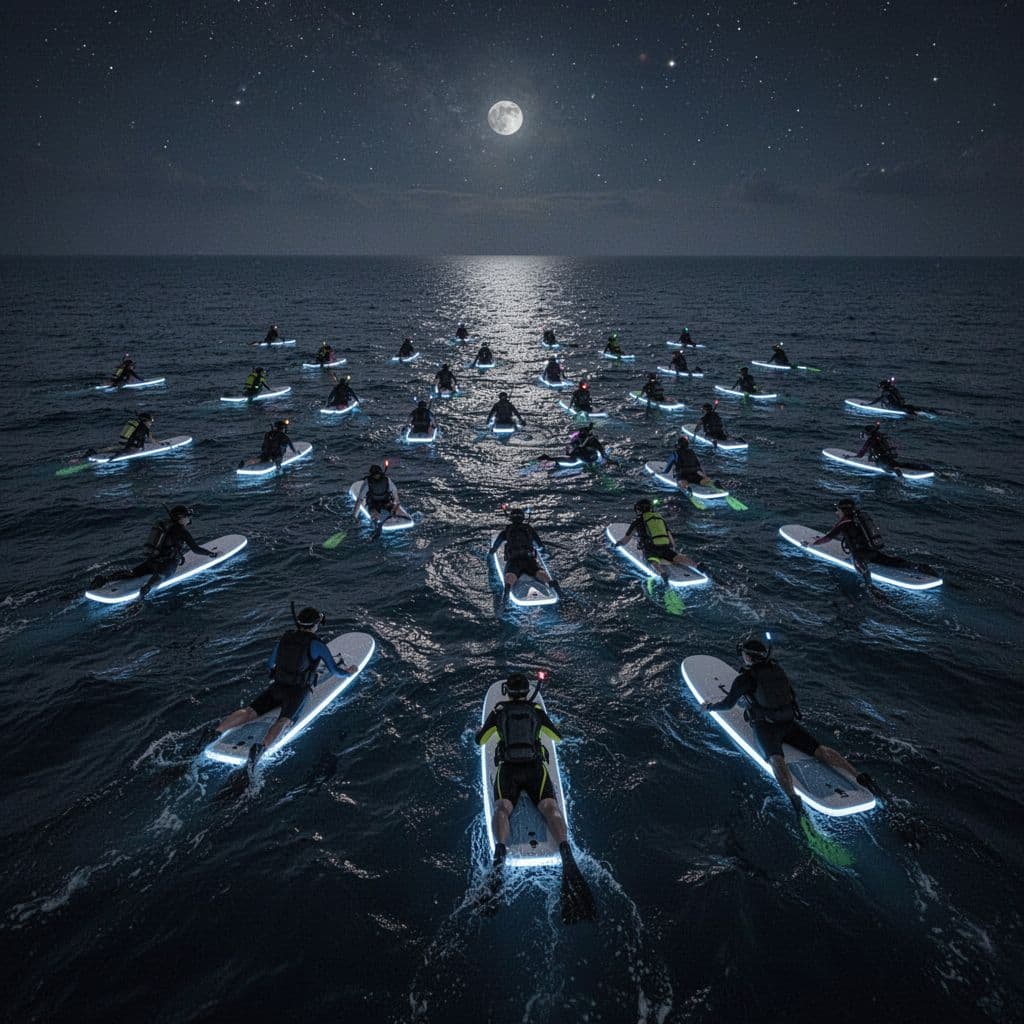
In practice, the boat-to-viewing stretch is often around 20 to 50 yards, and the full amount you move around the site usually stays modest. If currents, spacing, or comfort checks change, the total distance can grow a little, but it still stays short.
The bigger challenge is not the yardage. It’s the feeling of open water after dark. Once you keep your body flat, kick gently, and follow the guide’s signals, the swim feels much smaller than it sounded on shore. You do not need to chase rays or dive down. In fact, staying still is part of the experience.
Who is a good fit for this kind of trip
If snorkeling Big Island is on your list, this trip fits you best when you can stay relaxed in open water and handle basic gear without trouble. You don’t need to be fast. You do need to be steady.
A good fit usually looks like this:
- You can swim 50 yards without holding a float.
- You can keep your mask and fins under control.
- You stay calm when the water is dark or busy.
Families should also look at age and comfort level together. The Kona manta ray night snorkel FAQ breaks down swim skill, gear, and what happens in the water. The minimum age guide helps you figure out whether kids are ready for the experience.
If you want another local operator to compare, Manta Ray Night Snorkel is another choice with a strong manta focus. That can help if you’re sorting out dates, comfort level, or tour style before you book.
What a guided tour changes
A good guide changes the whole night. Kona Snorkel Trips uses a small-group approach, lifeguard-certified guides, and custom-lit boards, so you spend less energy worrying about where to go. You can focus on breathing, buoyancy, and the manta rays below.
If you’re nervous about the water, that support matters. Clear instructions, close supervision, and reef-safe habits all make the swim feel easier. The right setup turns a short distance into a smooth entry, not a stressful test.
If you already know the swim requirement feels right for you, you can check availability.
Conclusion
The Kona manta ray night snorkel swim distance requirement is simpler than it sounds. You need enough confidence to swim a short distance, stay flat at the surface, and follow directions in the dark.
If that sounds like you, the trip is a strong fit. If it doesn’t, use the FAQ, compare tour styles, and choose the night snorkel that matches your comfort level.
When you know the requirement before you go, the whole experience feels easier to enjoy.