
A Guide to the Kona Manta Ray Night Snorkel
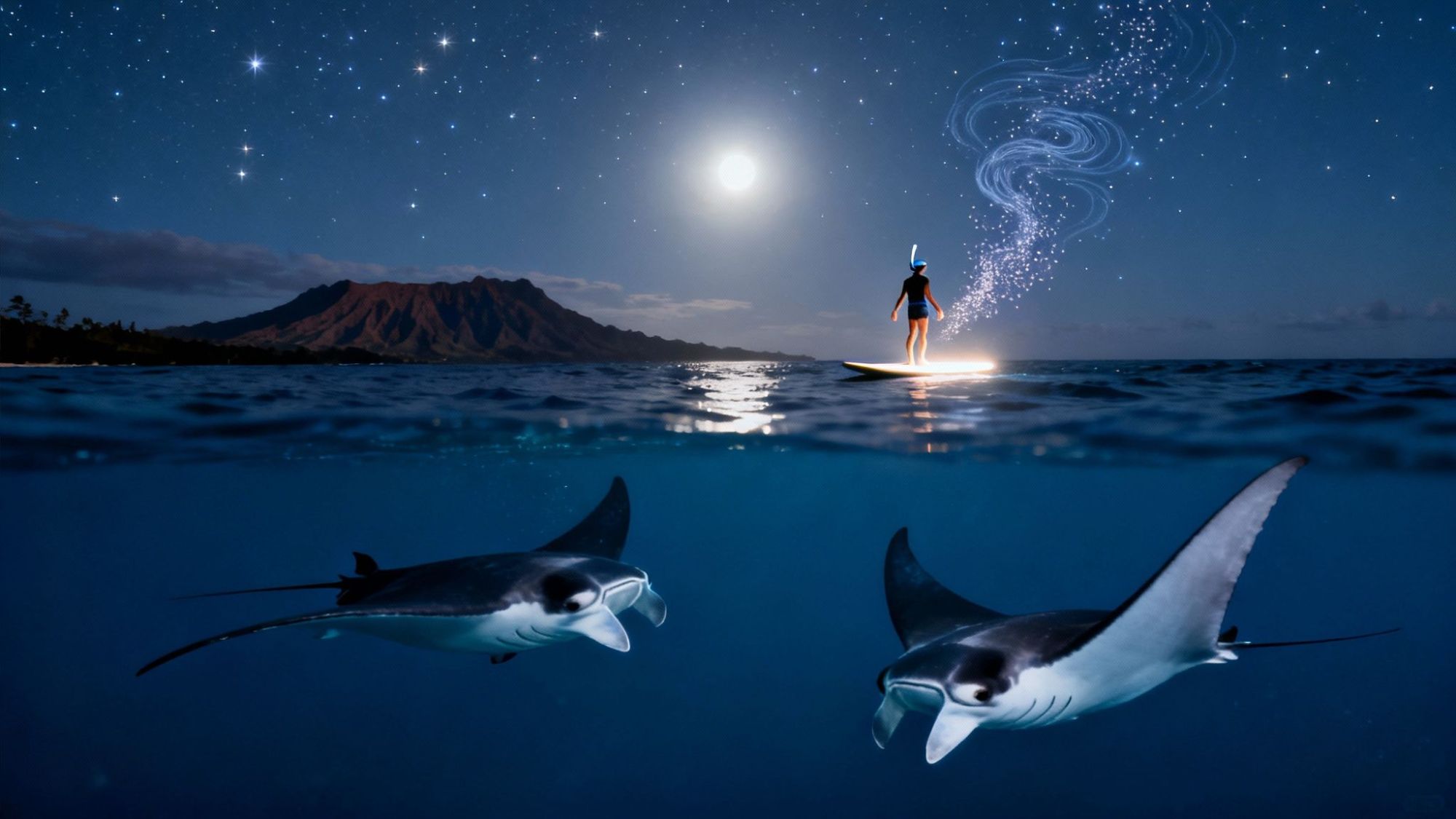
Picture this: you’re floating in the calm, dark Hawaiian ocean, and just inches beneath you, giant, graceful manta rays glide and somersault through beams of light. This isn't a scene from a nature documentary—it's the Kona manta ray night snorkel, one of the most profound and unforgettable wildlife encounters you can have.
If you're looking to experience this magic for yourself, you've come to the right place. Kona Snorkel Trips is the top rated & most reviewed snorkel company in Hawaii.
Your Ultimate Guide to Kona Manta Ray Night Snorkeling
The Big Island of Hawaii isn't just a good spot for seeing manta rays; it's the undisputed global epicenter for consistent sightings. This makes the Kona manta ray night snorkel a must-do for any visitor. While other places might offer seasonal encounters, Kona’s resident manta population feeds here every single night, giving snorkelers a viewing success rate of over 90% year-round.
This remarkable consistency is what makes the adventure so special.
We're pulling our insights from years of experience on the water with Kona Snorkel Trips, Hawaii's top-rated and most-reviewed snorkel company, to make sure you're fully prepared for this incredible tour.
What Makes This Experience So Unique?
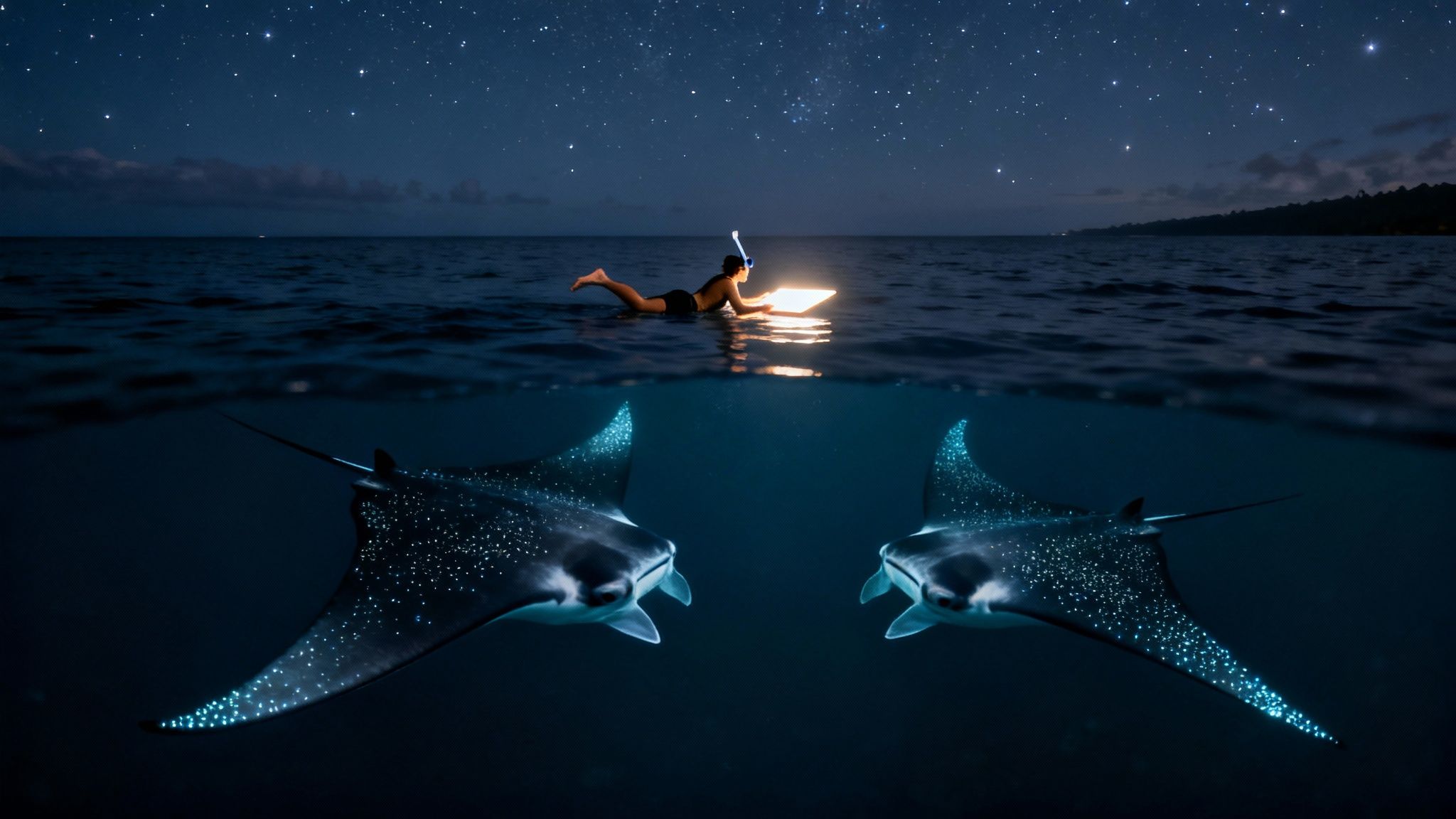
The magic all starts with a simple bit of science. We shine powerful, eco-friendly lights into the water from custom-built flotation rafts. These lights attract massive clouds of phytoplankton—the tiny organisms that form the very base of the ocean food web. For the manta rays, this glowing concentration of plankton is an irresistible, all-you-can-eat buffet.
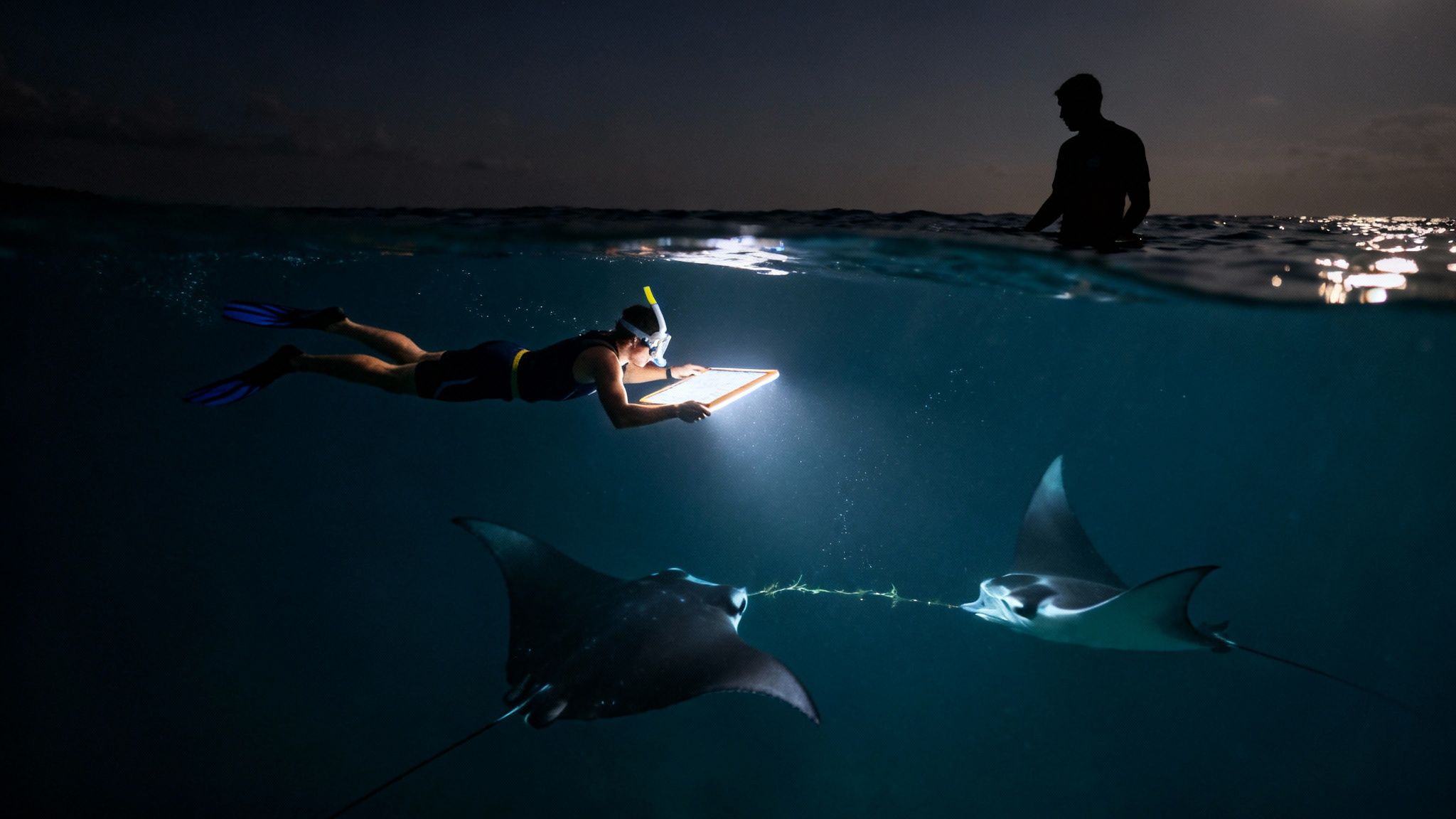
As a snorkeler, you'll float comfortably on the surface, holding onto one of these light boards. What happens next is nothing short of a ballet.
The manta rays, some with wingspans that stretch over 12 feet, gracefully swoop and barrel-roll through the beams of light, filtering the plankton from the water with their huge, cavernous mouths.
Why Kona Is the Best Place in the World
Kona’s unique geography and calm coastal waters create the perfect environment. Specific spots like "Manta Village" in Keauhou Bay and "Manta Heaven" near the airport have become world-famous feeding sites. This isn’t just a random occurrence; it's a reliable, natural phenomenon that tour operators have learned to share with visitors in a responsible way.
Here’s why it works so well here:
- Reliable Sightings: The local manta rays are residents, not just passing through. They live here, which means they show up to feed almost every single night.
- Calm Conditions: The bays are naturally protected from the open ocean, offering generally calm and clear water that's ideal for snorkeling, even after the sun goes down.
- Expert Guidance: Kona is home to experienced operators who are deeply committed to both guest safety and the well-being of the mantas. A great Kona manta ray night snorkel tour is built on this foundation of respect.
Getting to know these creatures before you go can make the experience even more meaningful. To learn more, check out our article covering some fun facts about manta rays. This guide will get you ready for every step of the journey, from booking your tour to those final, awe-struck moments in the water.
Choosing Your Tour and Setting Expectations
Picking the right operator for your Kona manta ray night snorkel is the first, and maybe most important, step toward having an incredible time. It really matters. The quality of your tour directly shapes your safety, your comfort, and how up-close-and-personal the whole encounter feels.
Lots of companies offer these trips, but operators like us at Kona Snorkel Trips really focus on smaller group sizes. This makes a huge difference—it means less crowding in the water and a more intimate connection with the spectacle unfolding right below you. Another exceptional option to consider when looking for a Manta Ray night snorkel tour is Manta Ray Night Snorkel Hawaii.
Your adventure kicks off with a pre-trip briefing where the crew walks you through all the safety stuff and gives you the rundown on what to expect. Then, it's a short, exciting boat ride out to one of Kona's world-famous manta feeding sites.
Understanding the Manta Campfire
So how does this whole thing work? The magic is rooted in a brilliantly simple idea we call the "manta campfire." Your tour boat is equipped with a big, floating light board that shoots powerful beams down into the dark water.
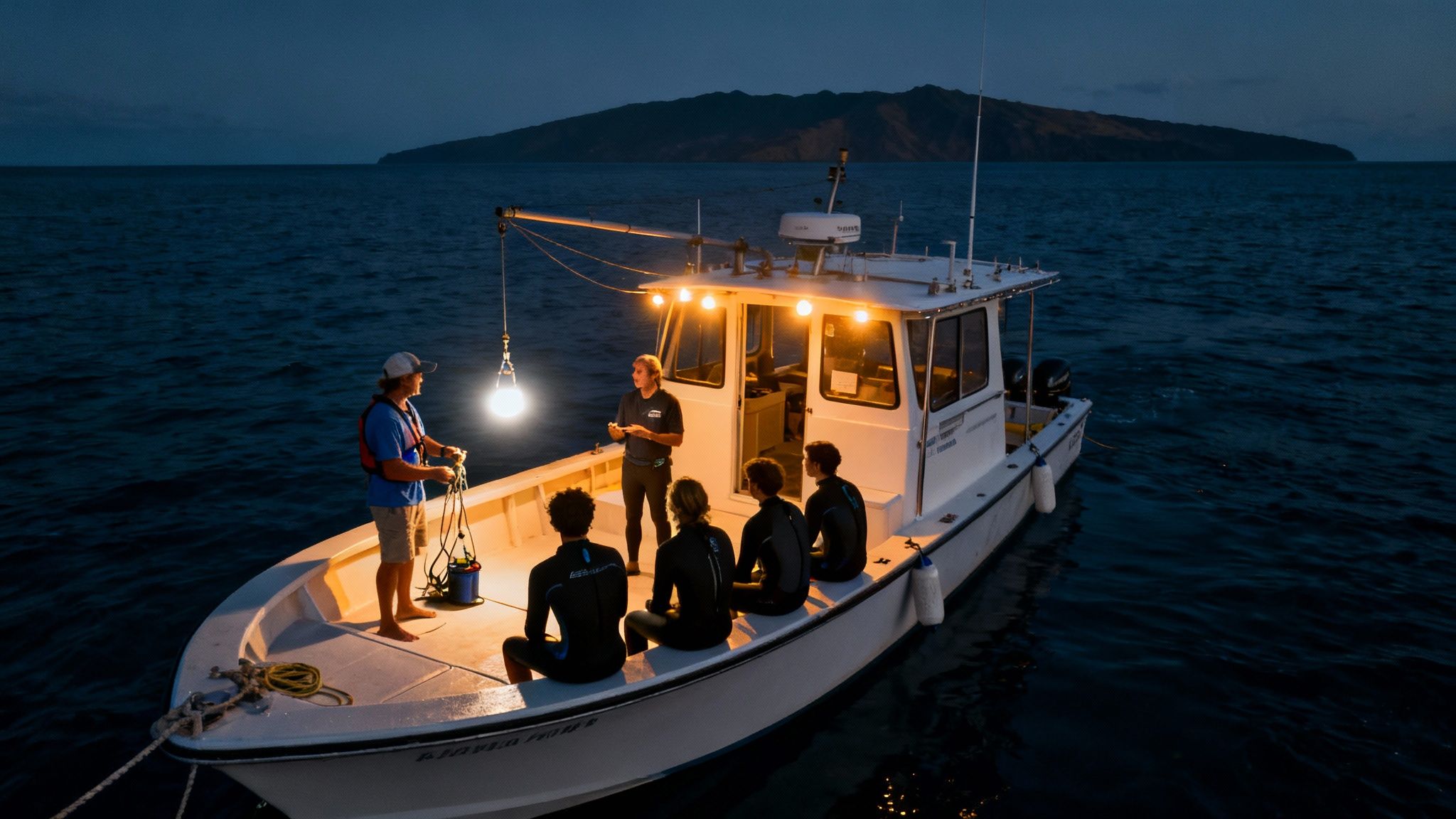
This light acts like a magnet for swarms of phytoplankton—tiny organisms that happen to be a manta ray’s favorite meal.
Essentially, we create an irresistible, glowing buffet on the water's surface. Before long, the gentle giants arrive for their nightly feast, gracefully gliding and somersaulting through the light beams to filter-feed. You'll be floating comfortably right on the surface, holding onto the board, with a front-row seat to this mesmerizing underwater ballet. It’s absolutely unreal.
Check AvailabilityWhat to Expect on Your Tour
Once we get to the site, we'll get you fitted with a wetsuit. Even in warm Hawaiian waters, the ocean can feel a bit chilly after the sun goes down, and the wetsuit is key for warmth and extra buoyancy. The crew will help you into the water and get you positioned around the light board for the best possible view.
The Kona coast is hands-down the world capital for these encounters. We're talking a 90% year-round sighting success rate, which blows seasonal spots elsewhere out of the water. This incredible consistency is all thanks to a resident population of manta rays that reliably show up to feed almost every single night.
The data backs it up. Back in 2013, meticulous tracking at the main sites showed a 96% success rate at 'Manta Village' and 90% at 'Manta Heaven', with an average of four and eleven mantas per night, respectively. You can learn more about the research behind Kona's manta ray sightings if you want to geek out on the numbers.
After about 30-45 minutes in the water—which will fly by—you’ll climb back on board for a warm ride to the harbor, usually with hot drinks and snacks waiting for you. Knowing the play-by-play helps take the mystery out of it, so you can feel confident and ready for what is truly one of the most memorable wildlife encounters on the planet.
For more perspectives on what makes a tour stand out, you can explore reviews of Kona snorkel tours and see what fellow travelers have to say.
How to Prepare for a Flawless Night Snorkel
A little bit of prep work can be the difference between a good night and an absolutely unforgettable Kona manta ray night snorkel. When you’re comfortable and not worrying about the small stuff, you can really soak in the magic of the whole experience.
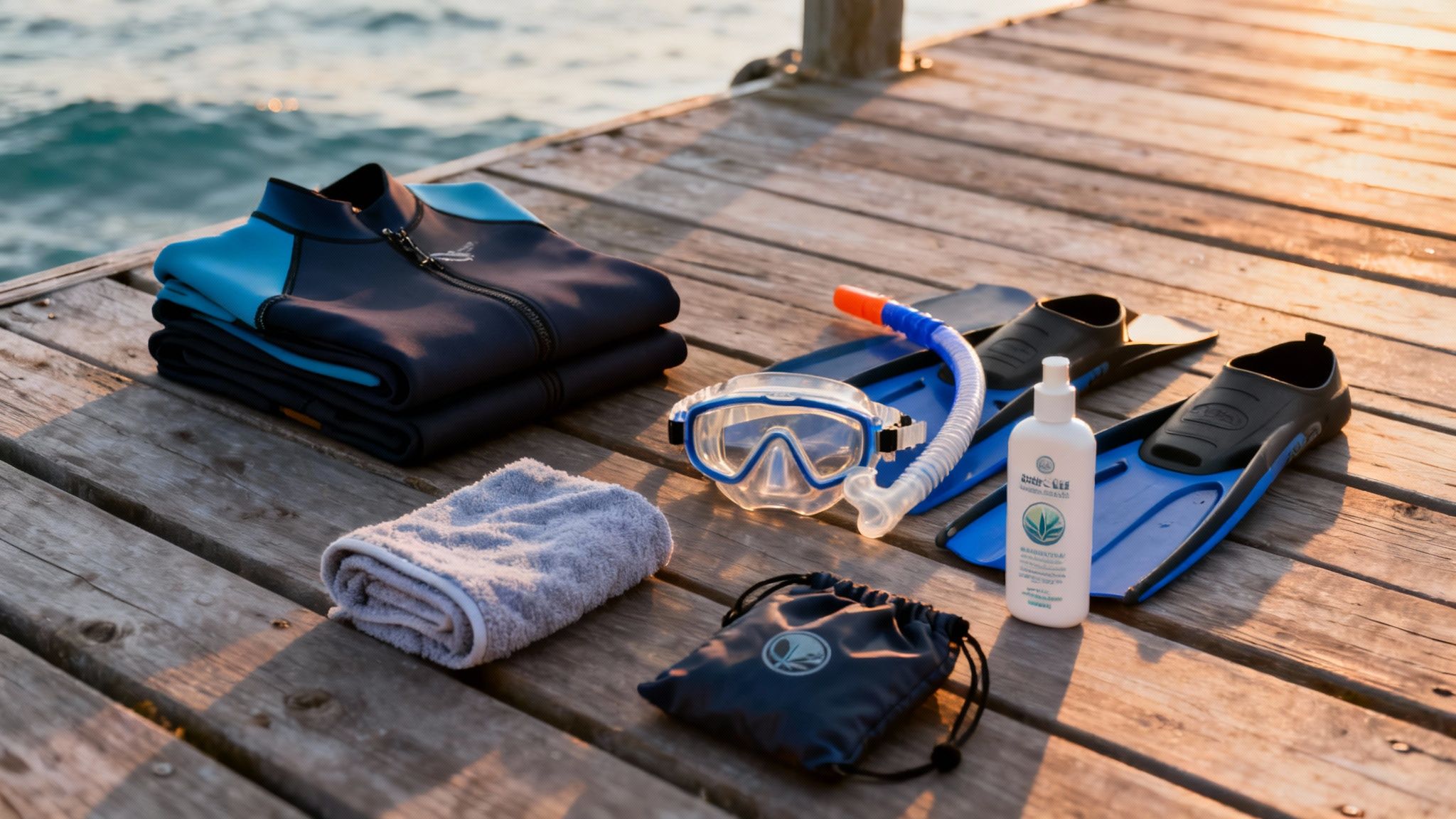
Think about the simple comforts first. After you get out of the ocean, you'll be so glad you brought a dry towel and a warm change of clothes for the boat ride back to the harbor. Just toss them in a small dry bag to keep them ready to go. Even though it's a night tour, it's a smart move to put on some reef-safe sunscreen a few hours beforehand. This gives it time to soak in, protecting you from the last rays of the setting sun without washing off and harming our delicate coral reefs.
What to Do Before You Go
It’s always a good idea to stay hydrated throughout the day, but try not to chug a bunch of water right before you get on the boat. Having a light meal an hour or two before the tour is also wise—snorkeling on a stomach that's either too empty or too full is just plain uncomfortable.
And if you even think you might get motion sickness, don't leave it to chance. The ocean is unpredictable, and the ride out can get a bit bumpy sometimes.
- Over-the-Counter Options: Non-drowsy meds like Dramamine or Bonine work great, but you have to take them at least an hour before the trip for them to kick in.
- Natural Remedies: Things like ginger chews, pressure-point wristbands (sea-bands), or just keeping your eyes glued to the horizon can really help. A lot of people swear by them.
To make things easy, we’ve put together a quick checklist so you know exactly what to bring and what we’ll have waiting for you.
Your Manta Ray Night Snorkel Checklist
Here's a quick rundown to make sure you have everything you need for a comfortable and memorable night with the mantas.
| What to Bring | What's Provided by Kona Snorkel Trips | Pre-Tour Tips |
|---|---|---|
| Towel & change of clothes | High-quality mask, snorkel, and fins | Eat a light meal 1-2 hours before |
| Reef-safe sunscreen (apply early) | Warm, properly-fitted wetsuit | Stay hydrated during the day (not right before) |
| Motion sickness remedy (if needed) | Flotation aids (noodles, life vests) | Take motion sickness meds 1 hour prior |
| Reusable water bottle | Snacks and refreshments on board | Arrive 30 minutes before departure time |
| Small waterproof bag | Expert guides and safety briefing | Listen carefully during the briefing |
Following this simple guide sets you up for success. We handle all the gear, so you don't have to worry about packing bulky fins or masks.
You can leave your own snorkel gear at home. We provide everything you’ll need for a great time in the water, and it's all high-quality and thoroughly disinfected. That includes your mask, snorkel, fins, and essential flotation aids. Most importantly, we'll fit you with the right size wetsuit, which is key for staying warm and helps you float effortlessly. If you want more tips on what to wear, you can check out our guide on snorkeling attire.
A key part of your preparation is simply showing up on time. The pre-tour safety briefing is non-negotiable. This is where your guides explain the in-water plan, review hand signals, and cover the critical rules of respectful manta interaction. Paying close attention ensures everyone's safety—yours and the mantas'.
Safety and Responsible Manta Ray Interaction
Sharing the ocean with Kona’s manta rays is a profound privilege. It also comes with a big responsibility to keep the encounter safe and respectful for everyone—especially the mantas. A successful Kona manta ray night snorkel really boils down to being a passive, courteous observer in their world. This approach ensures your safety and protects the health of these incredible animals for generations of visitors to come.
Your guides will walk you through the golden rules of manta etiquette before you ever get in the water. The absolute most important rule is simple: do not touch the manta rays. They’re covered in a delicate, protective mucous coating that acts as a shield against harmful bacteria. Touching them, even accidentally, can strip this layer and leave them vulnerable to infection.
The Art of Passive Floating
The entire experience is designed around a technique we call "passive floating." You won't be swimming around or trying to chase the mantas. Instead, you'll hold onto a custom-built, floating light board right on the surface and just let the show come to you.
This method is brilliant for two reasons. First, it conserves your energy and keeps you comfortable and stable in the water. Second, it creates a calm, predictable environment for the mantas, which allows them to feed naturally without feeling threatened or spooked.
By staying flat on the surface, you give the mantas the entire water column below you to perform their mesmerizing barrel rolls and graceful glides. This brings us to another strict rule: no diving down. Diving below the light board can disrupt their feeding patterns and is a major safety risk. A manta with a wingspan over 12 feet might not see a snorkeler in its path. Your job is simply to float, watch, and be amazed.
Check AvailabilityUnderstanding Manta Etiquette
To keep things safe and respectful, everyone on the tour needs to follow a clear set of guidelines. These aren't just suggestions; they are absolutely essential for protecting the incredible wildlife we’re here to admire.
Here are the core principles of a responsible encounter:
- Observe, Don't Interact: Resist any urge to touch, "pet," or try to ride a manta ray. Let them be the ones to initiate any close approaches.
- Stay on the Surface: As a snorkeler, your place is floating at the surface, holding onto the light board. This gives the mantas all the space they need to move freely below.
- Point Lights Down: Keep your focus and any camera lights pointed straight down toward the "campfire" of light. This helps attract more plankton for the mantas to feed on.
- Avoid Blocking Their Path: The mantas are focused on one thing: feeding. Give them a clear path and never try to swim in front of them or corner them.
By following these simple rules, you become part of a sustainable tourism model that puts the well-being of the mantas first. You're not just a spectator; you're a guardian of this incredible experience.
A Deeper Cultural Significance
In Hawaiian culture, certain animals are revered as ʻaumākua—ancestral spirits or family guardians that take the form of animals. For some Hawaiian families, the manta ray, or hahalua, is considered a powerful ʻaumākua. A sighting is often believed to be a sign of blessing or guidance from one's ancestors.
This cultural context adds a profound layer of respect to the whole encounter. You aren't just observing wildlife; you're witnessing a creature of deep spiritual importance. Understanding this helps frame the experience not as a simple tourist attraction, but as a meaningful connection with both nature and Hawaiian culture. Being a respectful observer is the ultimate way to honor this tradition.
Tips for Everyone: Photographers, Families, and First-Timers
Every single person who joins us—from the pro photographer to the nervous first-timer and the family on an adventure—can have the night of their lives on the manta snorkel. A few insider tips can help you squeeze every last drop of magic from the evening, making sure it’s comfortable, safe, and completely unforgettable.
The real beauty of this adventure is just how accessible it is. Whether you're trying to capture that perfect shot, show your kids the wonders of the ocean, or simply face a fear of the open water, we've designed this tour for you to succeed.
For the First-Time Snorkeler (And the Nervous Ones!)
Feeling a little anxious? You’re definitely not alone. The idea of getting in the ocean at night sounds intimidating to a lot of people, but trust me, this tour is the perfect introduction.
You’ll be holding onto a big, stable flotation board the whole time. It’s equipped with powerful lights that create a massive, well-lit stage for the mantas. You don’t even have to swim! You just float and watch the incredible show unfolding right below you.
Our expert Kona Snorkel Trips guides are right there in the water with you, making sure you feel secure from start to finish. Between the calm bay, our buoyant wetsuits, and the crew's support, you’ll be able to relax and just soak in the wonder of it all.
Tips for Families with Kids
The manta ray night snorkel is an absolutely jaw-dropping experience for kids who are comfortable in the water. I’ve seen it time and time again: the sight of these gentle giants gliding beneath them becomes a core memory for young ocean lovers. Our crew is fantastic with kids and knows exactly how to make them feel safe, included, and excited.
While it’s an incredible educational opportunity, it's really important to make sure your child meets the minimum age requirement and is mentally ready for being in the ocean after dark. The setup with the flotation boards is very safe, but a positive, can-do attitude is what really makes the night a success for the whole family.
Pointers for Photographers
Nailing the perfect shot of a manta ray is a classic photography challenge. You're dealing with low light and constant, graceful motion. A little preparation goes a long way.
- Action Cams are Your Friend: A GoPro or similar action camera is the ideal tool for this. Use a wide-angle setting to really capture the massive 10-12 foot wingspan when a manta glides right up to the board. Don't worry about a red filter; our lights provide plenty of illumination.
- Dial in Your Settings: To freeze that fluid manta movement and avoid blurry shots, you'll want a higher ISO (think 1600-3200) and the fastest shutter speed your camera can handle in these conditions.
- Stability is Key: Brace your camera right against the light board to minimize shake. This is one of those times where being a passive observer pays off. Let the mantas come into your frame instead of trying to chase the shot.
Certified Divers Looking for a Different Angle?
If you're a certified diver and want to see the show from the ocean floor looking up, you'll need a dedicated dive tour. For that experience, we always recommend Kona Honu Divers. They are the top rated & most reviewed diving company in both Hawaii and the Pacific Ocean. Their manta ray dive offers an entirely different, but equally incredible, perspective as the giants soar right over your head.
Still Have a Few Questions? We've Got Answers.
Even after doing all your homework, it's totally normal to have a few last-minute questions before you book a Kona manta ray night snorkel. This is where we clear up any lingering doubts you might have. Think of this as the FAQ we've built from thousands of conversations with guests just like you.
We've pulled together the most common questions our guides hear on the boat and at the dock. From picking the right time of year to understanding our "Manta Guarantee," we want you to feel 100% confident and excited for what's ahead.
What Is the Best Time of Year for a Kona Manta Ray Night Snorkel?
Here’s the fantastic news: you can do this any night of the year! The Kona manta ray snorkel is a year-round adventure with a success rate well over 90%. Our local reef manta rays don’t migrate, so they’re here every single night to feed.
That said, if you’re trying to nail down the absolute perfect conditions, the summer months from May to September usually offer the calmest, flattest seas and the warmest water. It just makes for a slightly more comfortable float. Winter can bring bigger swells, but it rarely stops the show.
Honestly, any night you book gives you an incredible shot at seeing these amazing animals.
Do I Need to Be a Strong Swimmer to Participate?
Not at all. This is probably the biggest myth we hear about the tour, and it keeps people from having one of the best experiences of their lives. You don’t need to be Michael Phelps to do this.
We provide you with a high-quality, super buoyant wetsuit and other flotation gear. The entire time you're in the water, you'll just be holding onto our custom light board, floating on the surface while the magic happens below.
There's no actual swimming involved. As long as you’re comfortable putting your face in the water with a mask on, you're good to go. Our expert Kona Snorkel Trips guides are in the water with you the whole time, ready to help and make sure you feel completely safe.
What Happens if We Don't See Any Manta Rays on Our Tour?
While it’s incredibly rare for the mantas to be a no-show, we’re dealing with wild animals in their natural habitat. Nothing in nature is ever a 100% certainty. We totally get that, and that’s why reputable companies like us have a "Manta Guarantee."
If the mantas decide to take the night off during your tour, you can come back and try again another night for free. This is on a standby basis, of course. It’s always a good idea to confirm the specific policy when you book your Kona manta ray night snorkel tour.
Is the Manta Ray Night Snorkel Safe for Children?
Absolutely! This is one of the most popular and memorable activities for families visiting the Big Island. As long as your kids meet the minimum age requirement (just check with us when booking) and are comfortable in the water, they're welcome aboard.
Our crew has tons of experience with families and kids. The whole setup—a calm, protected bay, the flotation boards, and warm wetsuits—makes it an exceptionally safe and controlled environment. For many kids, this becomes the core memory of their entire Hawaiian vacation.