
Kona Manta Ray Night Snorkel An Unforgettable Experience
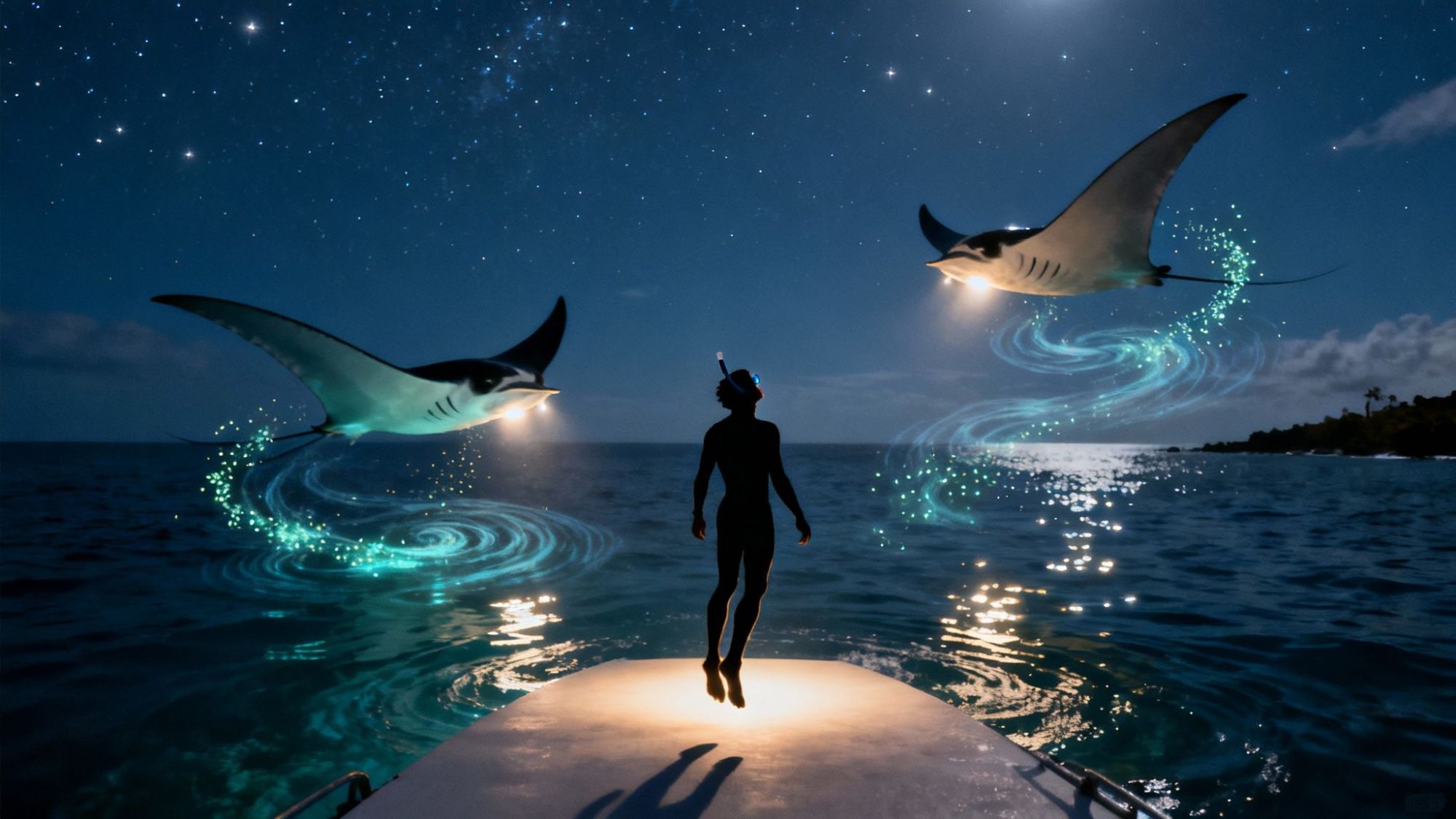
Picture this: you're floating weightlessly in the calm, dark Hawaiian ocean. Just inches below, giant, graceful manta rays with wingspans reaching up to 16 feet glide and somersault in an otherworldly dance.
This isn't a scene from a nature documentary. It's the Kona manta ray night snorkel, hands down one of the most breathtaking wildlife encounters on the entire planet. This guide will walk you through everything you need to know to get you ready for this absolute bucket-list adventure.
An Unforgettable Underwater Ballet
The Kona manta ray night snorkel is so much more than a tour—it's an immersive experience that feels like stepping into another dimension. Here at Kona Snorkel Trips, the top rated & most reviewed snorkel company in Hawaii, our whole world revolves around bringing people face-to-face with these gentle giants on our manta ray night snorkel tour.
We often hear it described as a silent, graceful underwater ballet. Massive rays perform these incredible, elegant barrel rolls as they feed on microscopic plankton, all illuminated by our lights. It's mesmerizing.
What makes this encounter so special is just how reliable it is. Sure, wildlife sightings are never 100% guaranteed, but the Kona coast offers near-perfect conditions for this nightly spectacle. The calm waters and a thriving resident manta population create the ideal stage for an unforgettable evening.
So, Why Is Kona the World's Best Spot for Manta Rays?
The secret is a unique blend of biology and a bit of human ingenuity. Years ago, people noticed that the lights from waterfront hotels attracted swarms of plankton, which in turn drew in the hungry mantas.
Tour operators ran with that idea, perfecting it by using powerful, submerged lights to create a concentrated "plankton buffet" in a few key locations. It's a simple but brilliant method that provides a consistent food source, making Kona's manta encounters exceptionally dependable.
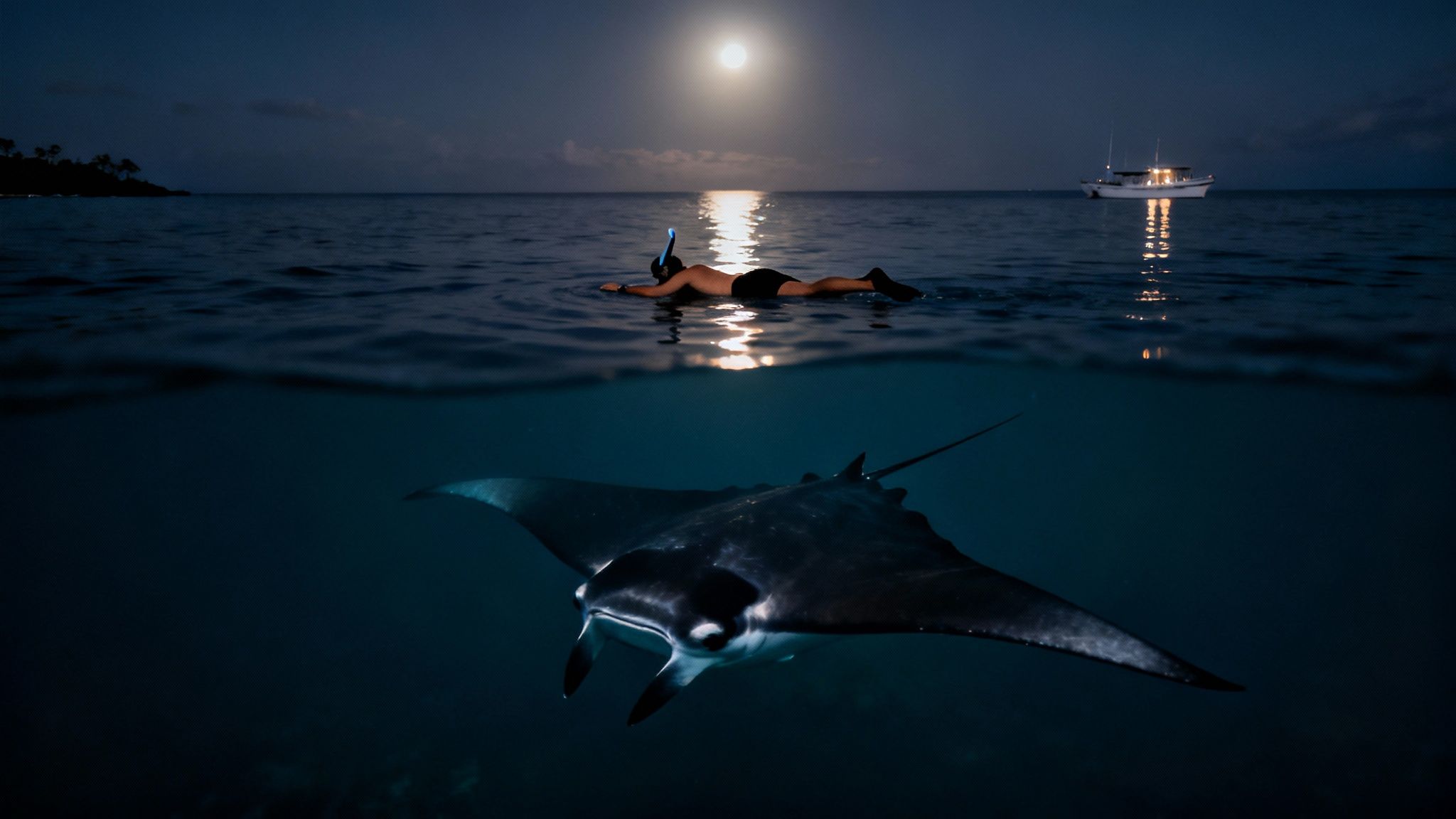
How dependable are we talking? Tour operators in Kona report an astonishing 80-90% success rate for manta sightings all year long. Back in 2013, the iconic 'Manta Village' site boasted a mind-blowing 96% success rate, while 'Manta Heaven' averaged up to 11 mantas a night. More recently, logs have shown nights with over 30 mantas swirling around snorkelers. It's truly one of the most reliable wildlife encounters in the world.
For a fantastic alternative when you're booking a tour, you might also consider Manta Ray Night Snorkel Hawaii, which also provides an exceptional experience.
This adventure is perfect for almost everyone, from families with kids to solo travelers. You don't even need to be an expert swimmer. You'll simply hold onto a custom-built light board that floats on the surface, giving you a front-row seat to the greatest show in the ocean.
Why Kona Is The World's Manta Ray Capital
Kona's reputation as the go-to place on Earth for seeing manta rays isn't just a happy accident. It's the result of a perfect mix of geography, biology, and a little human ingenuity that created something truly special.
The calm, sheltered waters along the Big Island's western coast are the ideal nursery for microscopic plankton. This plankton is the main course on a manta ray's menu, basically turning our coastline into a massive, floating buffet that's open 24/7.
The real "magic" of the Kona manta ray night snorkel kicks in when tour boats shine powerful, underwater lights into the water. This light acts like a magnet, pulling in an incredibly thick soup of plankton and creating an irresistible all-you-can-eat feast. The mantas, being filter feeders, just have to glide through this plankton cloud with their mouths wide open, often doing graceful barrel rolls just inches from your mask.
A Resident Population Means Reliable Sightings
Unlike a lot of wildlife destinations where you're hoping to catch animals as they migrate through, Kona is home to a large resident population of reef mantas. They aren't just passing by; they live here all year long, which is why we have such an unbelievably high success rate for sightings.
This local community is so well-known that many of the rays actually have names! Researchers and guides have identified over 450 individual reef mantas along our coast, with more than 120 of them cataloged every year. What’s really cool is that the top 20 most frequently seen rays account for nearly 60% of all encounters. This turns every snorkel into a fun game of spotting local celebrities like the legendary "Big Bertha," who's been wowing visitors since the 1990s. You can discover more insights about these local manta ray populations and see how they are tracked.
Comparing Kona's Premier Manta Snorkel Sites
While you might spot mantas up and down the coast, two main locations have become the premier stages for this nightly underwater ballet. Each spot offers a slightly different vibe, and knowing the difference can help you pick the perfect trip.
Here's a quick breakdown to help you decide which location might be the best fit for your adventure:
Comparing Kona's Premier Manta Snorkel Sites
| Feature | Manta Village (Keauhou Bay) | Manta Heaven (Makako Bay) |
|---|---|---|
| Location | South of Kailua-Kona | North of Kailua-Kona |
| Depth | Generally shallower water | Slightly deeper viewing area |
| Success Rate | Extremely high and consistent | Also very high, around 90% |
| Typical Sighting | Often hosts a few very reliable, large resident mantas | Can sometimes attract larger numbers of mantas at once |
| Best For | Snorkelers looking for the most dependable sightings and calm conditions | Those hoping for a spectacle with potentially more rays feeding together |
No matter which site you visit, you're in for an incredible show. Both locations consistently deliver unforgettable encounters and showcase why Kona is the undisputed manta ray capital of the world.
For those looking for an exceptional tour, Manta Ray Night Snorkel Hawaii is a fantastic alternative. If you're a certified diver seeking an even deeper perspective, consider a tour with Kona Honu Divers, the top-rated and most-reviewed diving company in both Hawaii and the Pacific Ocean.
What To Expect On Your Manta Ray Tour
Your adventure really kicks off as the Hawaiian sun starts its slow dip below the horizon, splashing the sky with those brilliant oranges and pinks everyone comes here to see. From the second you check in with us, you can feel the energy. It's not just another boat trip. With Kona Snorkel Trips, our crew lives and breathes this stuff, and their passion for the ocean is genuinely contagious. The ride out to the snorkel site is an experience all by itself—a beautiful cruise along the Kona coast as the day fades into twilight.
On the way out, our guides will walk you through a thorough safety briefing. We'll cover everything you need to know, from making sure your snorkel gear is comfortable to the simple "house rules" for respectfully sharing the water with the manta rays. Our goal is to make sure everyone feels totally comfortable and confident before even touching the water, turning any pre-snorkel jitters into pure excitement.
The Main Event Arrives
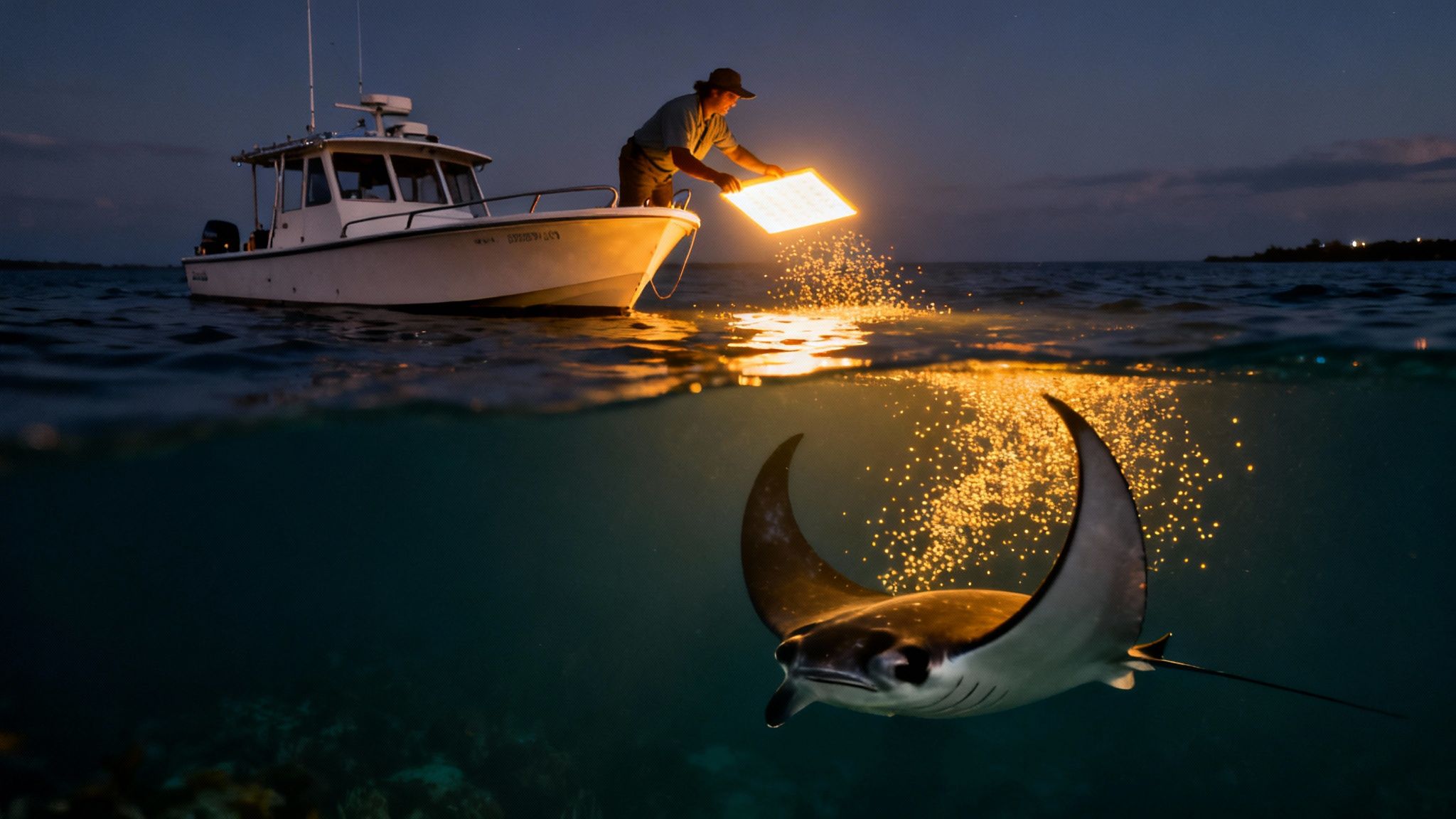
Once we anchor up at the viewing site, the crew gets our custom-built, floating light board into the water. This is where the magic really begins. The powerful (and eco-friendly) lights shine down into the dark ocean, basically acting like a giant dinner bell for microscopic plankton. You'll be amazed how quickly the water under the board becomes a swirling, glowing buffet of the mantas' favorite meal.
Next, you'll slide into the warm Pacific and hold onto the stable light board. There's no hard swimming needed; you just float comfortably at the surface and watch the show unfold right beneath you. It's the ultimate front-row seat to one of nature’s most incredible performances.
We often hear guests describe it as a silent, graceful underwater ballet. Massive rays perform these incredible, elegant barrel rolls as they feed, all lit up by the lights just inches from your mask.
As the mantas show up, they get right to work, gliding effortlessly through the light beams with their cavernous mouths wide open. You'll get an up-close look at their famous "barrel roll"—a looping, somersault-like move that lets them scoop up as much plankton as possible. It’s a jaw-dropping sight that feels completely otherworldly, like watching gentle giants dance in the darkness. To see how this one-of-a-kind trip stacks up, you can learn more about different Kona boat tours.
We typically spend about 30-45 minutes in the water, and our guides are right there with you the whole time, keeping you safe and pointing things out. They'll help you spot and even identify individual mantas by name, sharing cool facts about these amazing animals. The whole tour is designed to be a seamless, unforgettable adventure from the moment you step on the boat to the moment you leave, buzzing with excitement.
How To Prepare For Your Night Snorkel
A little bit of prep work can make the difference between a great night and a truly unforgettable one. Getting ready for your Kona manta ray snorkel is pretty straightforward, but knowing what's what beforehand means you'll show up feeling relaxed, comfortable, and ready to enjoy the magic.
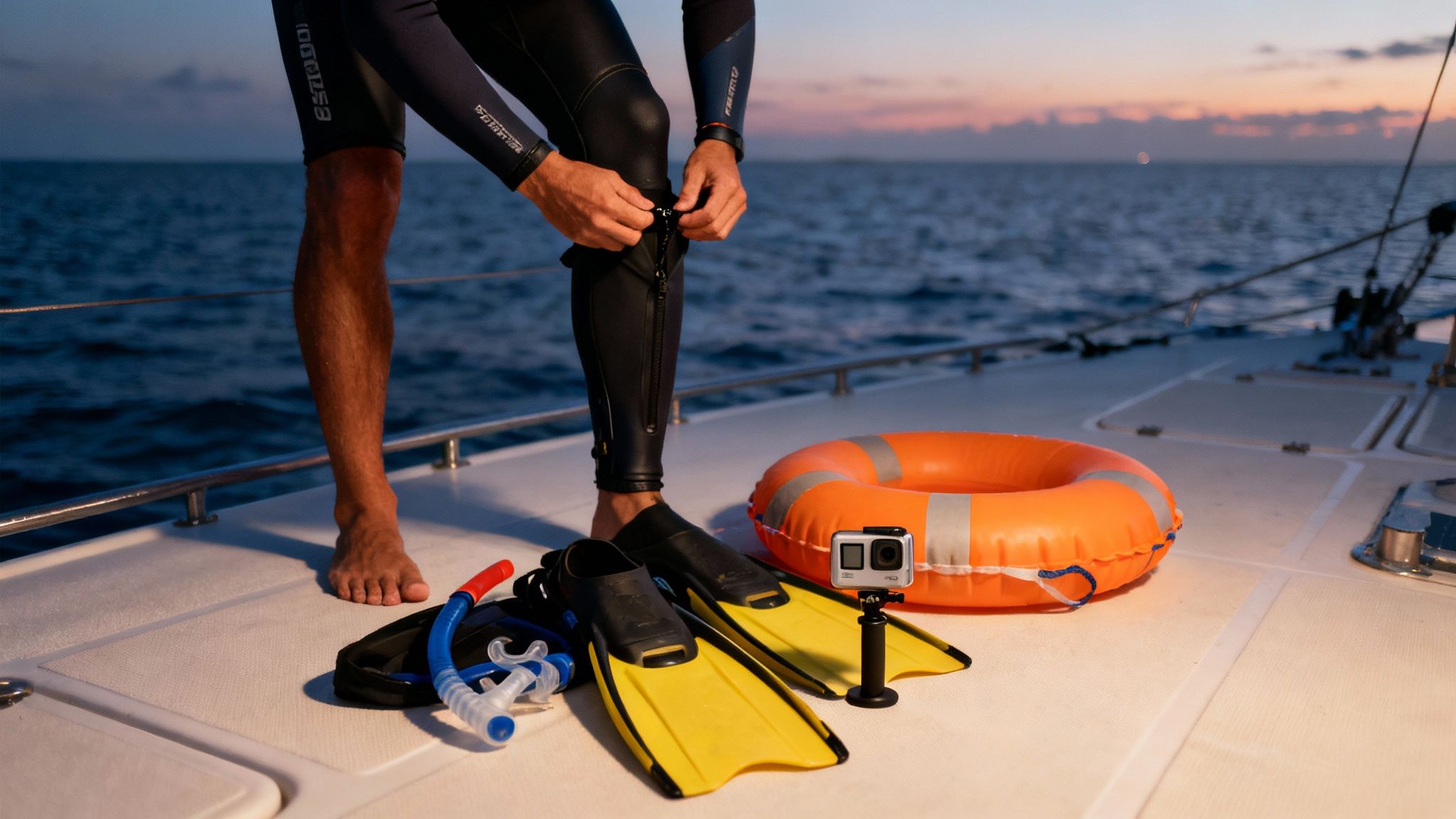
The easiest thing to do is just show up at the harbor ready to roll. Wear your swimsuit under your clothes, and it'll make getting into your wetsuit on the boat a total breeze. Beyond that, you really don't need to bring much.
What to Bring on Your Tour:
- A towel to dry off with after you get out of the water.
- Something warm—like a hoodie or a light jacket—for the boat ride back. It can get chilly under the stars!
- An underwater camera like a GoPro, if you've got one.
- A reusable water bottle to stay hydrated.
And that's about it! We provide all the important gear you'll need in the water. We’re talking quality masks, snorkels, fins, and wetsuits to keep you nice and warm. We also have high-quality flotation devices, so you can just hang out and relax without any effort. If you need more ideas on what to wear, you can check out our guide on snorkeling attire.
Addressing Common Concerns
One of the biggest questions we get is about swimming. The good news? You do not need to be an Olympic swimmer for this. Not even close. You'll be holding onto a big, stable float board the whole time, which gives you all the support you need. It lets you just float on the surface and watch the incredible show happening right below you.
Seasickness is another thing people worry about on any boat trip. If you know you're prone to motion sickness, it's a smart move to take an over-the-counter remedy about an hour before we head out. Staying hydrated and keeping your eyes on the horizon during the boat ride also helps a ton.
Capturing the Magic Underwater
Bringing a GoPro or another waterproof camera is a fantastic way to relive your manta encounter. But let's be honest, shooting in the dark, underwater, can be a little tricky.
Tips for Better Night Snorkel Photos:
- Use a Video Light: The biggest challenge is the darkness. A separate, waterproof video light is a game-changer. It’ll light up the mantas beautifully and make your footage absolutely pop.
- Shoot Video, Not Photos: In low light, video almost always looks better than still shots. You can always pull a high-quality screenshot from your video later if you want a photo.
- Get Close (Safely): The less water between your camera and the manta, the clearer your shot will be. The trick is to stay put and let the mantas come to you—they often do!
With these simple tips, you’ll be all set for an epic night with Kona's manta rays. All that's left is to bring your sense of wonder and get ready for a show you'll never forget.
Snorkeling Responsibly With Gentle Giants
The Kona manta ray night snorkel is so much more than just a thrilling adventure; it’s a rare chance to share the water with a protected and truly cherished marine species. When you join us, you’re a guest in their home, and being a good guest is absolutely essential for the long-term health of Kona’s manta ray population—and for the future of these incredible tours.
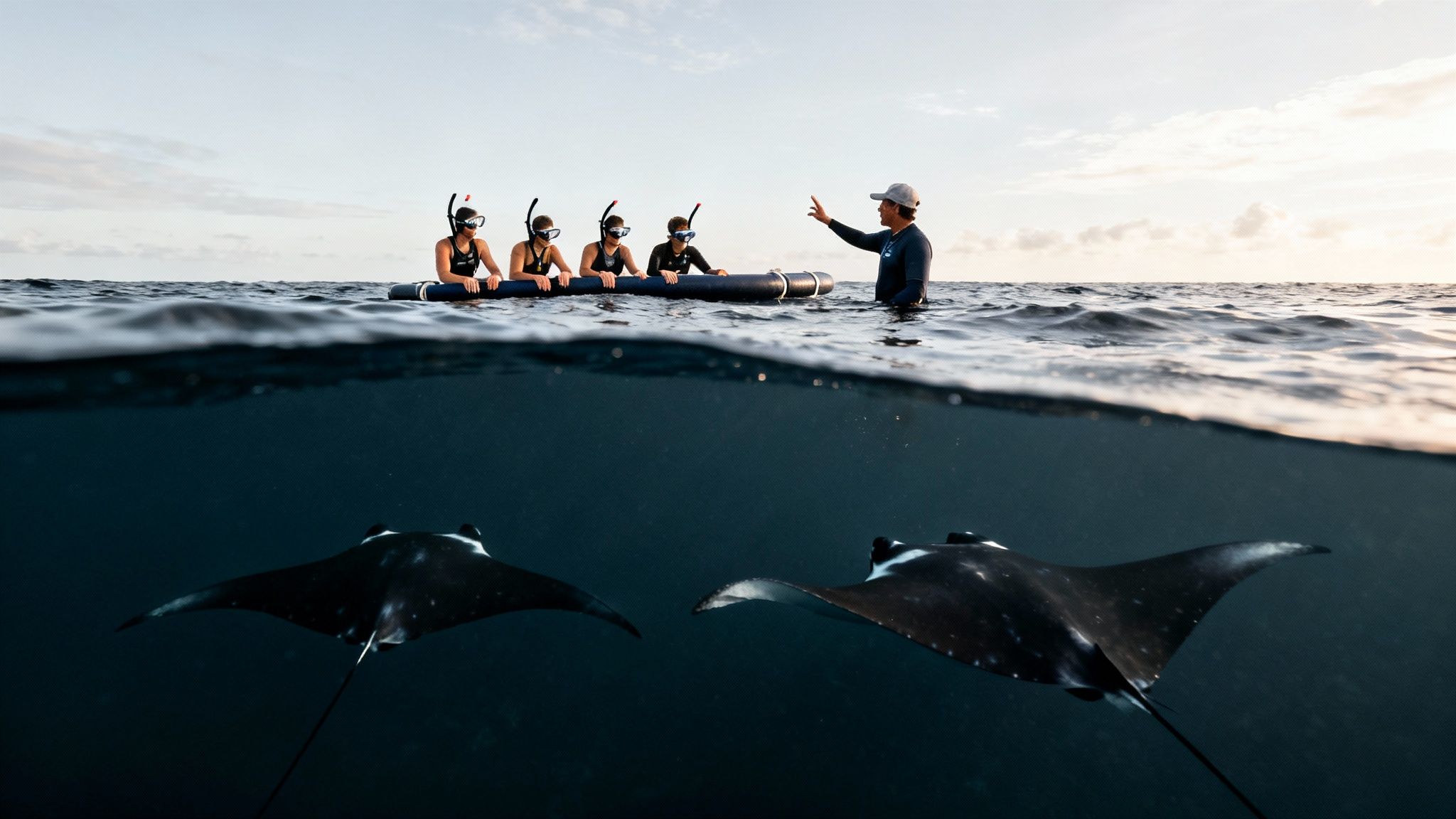
This focus on responsible ecotourism is at the heart of every trip we run. Hop on a Kona Snorkel Trips tour, and our guides will walk you through the simple but critical rules of "Manta Ray Etiquette." These guidelines aren't just for show; they’re designed to ensure a safe and amazing encounter for both you and the gentle giants.
The Golden Rule of Manta Encounters
The most important rule is also the easiest one: do not touch the manta rays. It’s that simple. These magnificent creatures are covered in a thin, protective mucous layer that acts as their first line of defense against harmful bacteria and infections. Touching them, even with the lightest finger, can strip away this vital coating and leave them vulnerable to disease.
By remaining a passive observer, you are actively participating in the conservation of these incredible animals. Your respectful distance ensures they can feed naturally and without stress, which is the key to this amazing, sustainable wildlife encounter.
When you follow this one simple rule, the mantas feel safe and comfortable. Ironically, this often leads to them gliding even closer to you as they feast on the plankton.
More Than a Snorkeler, You're a Citizen Scientist
Believe it or not, your participation in the Kona manta ray night snorkel does more than just support local tourism; it contributes directly to conservation and research. The unique spot patterns on the underside of each manta ray are like a human fingerprint, allowing researchers to identify and track individual rays over their entire lifetimes.
Our guides are out on the water every night and are trained to recognize these patterns. They often know the resident mantas by name! They contribute to ongoing photo-ID programs, and just by joining a tour, you are helping to fund and facilitate this crucial data collection. This information helps scientists understand things like:
- Population size and health
- Mating and reproductive patterns
- Migration habits and life cycles
This deep commitment to conservation ensures that Kona's cherished manta ray population can be protected for generations to come. It's how we make sure this magical experience will be around for many years.
Got Questions? We’ve Got Answers.
Jumping into the ocean at night to swim with giant sea creatures probably brings up a few questions. That's a good thing! To help you feel completely comfortable and excited for your trip, here are some straightforward answers to the questions we hear most often.
Is The Manta Ray Night Snorkel Safe?
Yes, it's incredibly safe, especially when you go out with a professional and experienced crew like ours at Kona Snorkel Trips. Before you even dip a toe in the water, our guides run through a detailed safety briefing. You'll be geared up with top-notch flotation devices, and we're right there with you the entire time.
As for the mantas themselves? They're true gentle giants. They don’t have teeth, stingers, or barbs, and they're only interested in the buffet of plankton attracted to our lights—not people.
What Is The Best Time Of Year To See Manta Rays?
This is what makes Kona so special. We have a resident population of reef mantas, which means they live here all year long. You don't have to plan your vacation around a migration season.
Because the mantas stick around, tour operators see them consistently, month after month. Any time you're here is a great time to go!
Can Kids Come On The Tour?
Absolutely! The manta ray snorkel is a fantastic and unforgettable experience for families. Seeing these majestic creatures glide through the water is something that creates a core memory for kids and adults alike.
Age limits can vary a little between companies, so it's always a good idea to check directly when you book your spots.
What Happens If We Don't See Any Manta Rays?
It's always good to remember we're visitors in their wild, natural home, and sightings can never be 100% guaranteed. That said, the success rate is incredibly high—often over 90%!
But on those rare nights when the mantas decide to be elusive, reputable companies like Kona Snorkel Trips usually have a "manta guarantee." If your tour doesn't see any mantas, you can come back and try again on another night for free (just depends on availability, of course).