
Your Guide to the Kona Manta Ray Night Snorkel Adventure
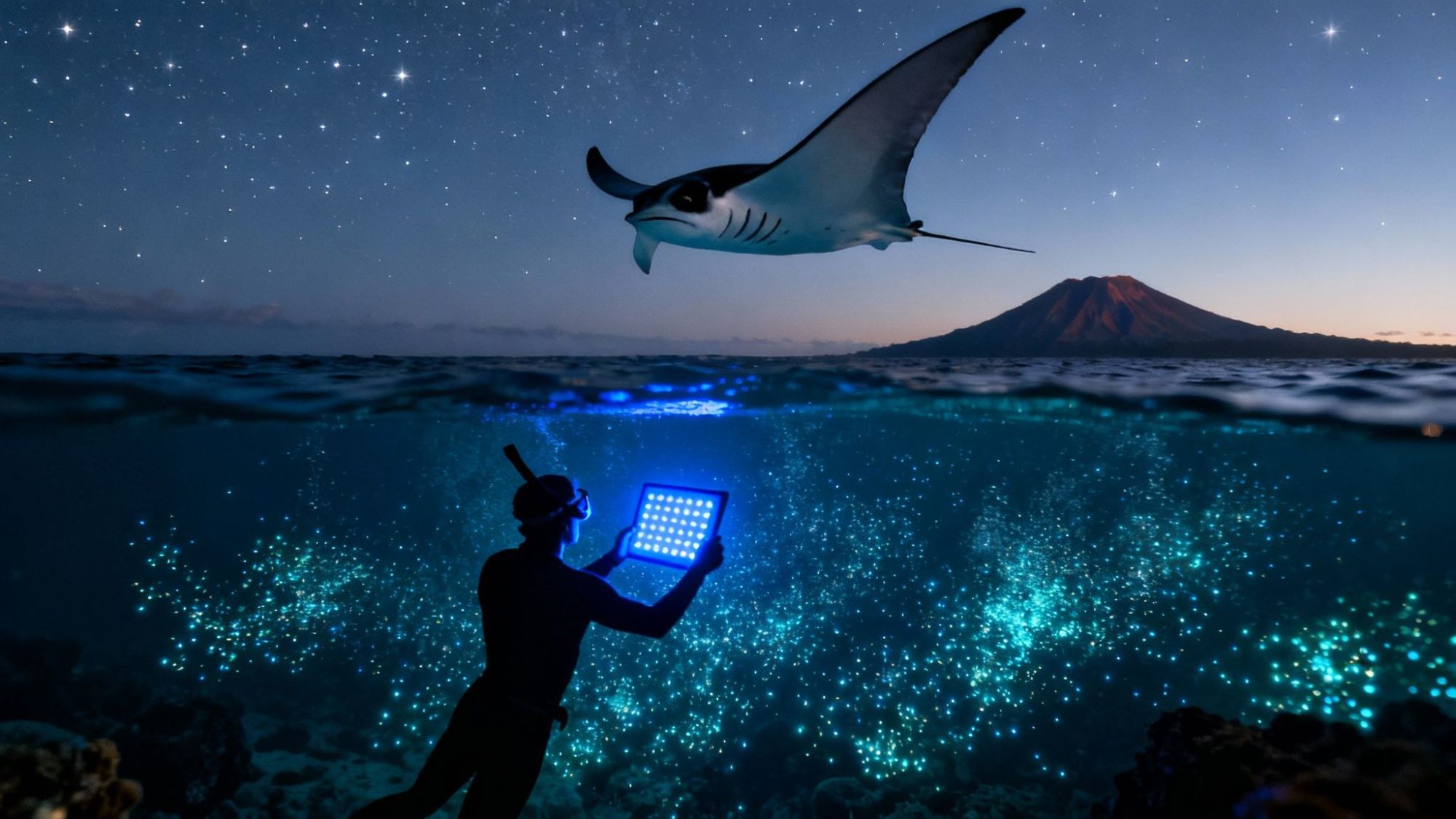
It’s consistently called one of the best wildlife encounters on the planet, and for good reason. The Kona manta ray night snorkel is a truly magical chance to float above gentle giants as they feast on plankton in the warm, clear waters right off the coast. This is a bucket-list adventure, plain and simple, letting you witness majestic manta rays—some with wingspans up to 16 feet—glide gracefully just beneath you. It’s the thrill of a night snorkel mixed with the serene, breathtaking beauty of these incredible creatures.
A Magical Encounter Under the Stars
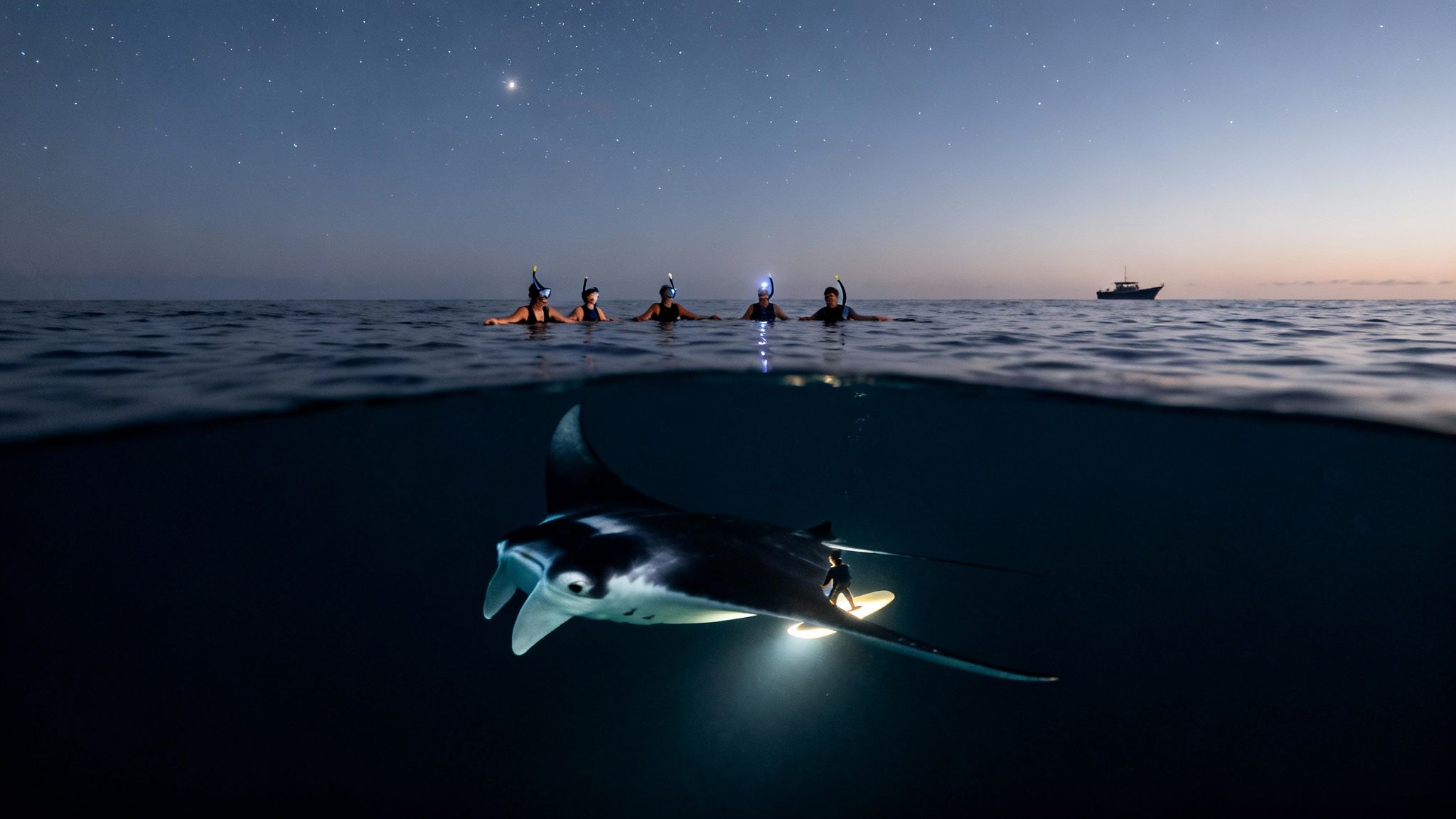
Picture this: you’re floating in the calm, dark Pacific, with a universe of Hawaiian stars twinkling above. Below you, powerful lights cut through the darkness, illuminating an otherworldly underwater ballet. This is the heart of the Kona Manta Ray Night Snorkel, an experience that feels like stepping into another world. Giant, graceful manta rays, drawn in by the light that attracts their favorite food (plankton), perform somersaults and barrel rolls, sometimes gliding just inches away.
As the top rated & most reviewed snorkel company in Hawaii, we at Kona Snorkel Trips have spent years perfecting this adventure. We’re obsessed with making it safe, awe-inspiring, and completely respectful of the mantas and their home. But don't just take our word for it; see what our guests have to say.
Why Is This a Must-Do Adventure?
So what elevates this from just another snorkel trip to a core memory? It’s a unique combination of things you just won't find anywhere else.
On a lot of wildlife tours, you might get a fleeting glimpse of an animal from a distance. Here, the encounter is incredibly intimate and reliable. These gentle giants aren't shy at all; they actively seek out the "underwater buffet" created by our lights.
That incredible proximity allows you to truly appreciate their massive size and elegance in a way no photo or video can ever capture. And the best part? The experience is totally passive. You just float, watch, and become a quiet observer in their nocturnal world for a little while.
This isn't just watching nature from the sidelines; it's being fully immersed in it. The silence of the ocean at night, punctuated only by the soft sounds of the water, combined with the visual spectacle of the mantas, creates a profound connection to the marine world that stays with you.
The Kona Coast Advantage
There’s a reason the Big Island’s Kona coast is the global epicenter for this activity. Our unique underwater geography and consistently calm, clear waters create the perfect, predictable feeding grounds for resident manta ray populations.
This natural advantage means our success rates for seeing mantas are incredibly high, often topping 90%.
Ready to experience this magic for yourself? A Kona Manta Ray Night Snorkel is an adventure that will stick with you long after you've dried off, giving you a story you’ll be excited to tell for years to come.
The Science Behind Kona's Manta Ray Spectacle
The magic you feel on the Kona manta ray night snorkel isn't an accident. It's a brilliant combination of marine biology, the island's unique underwater geography, and a simple, yet ingenious, human idea. There's a reason Kona has become the single most reliable place on Earth for manta ray encounters—it's the perfect storm of natural conditions that creates an unbeatable feeding ground for these gentle giants.
The Kona coast, shaped by ancient lava flows, is blessed with bays that are naturally sheltered from rough ocean currents. These calm waters are the perfect nursery for microscopic organisms called plankton.
Manta rays are massive filter feeders, meaning their entire diet is made up of these tiny life forms. They glide through the water, scooping up enormous quantities to sustain themselves.
This natural abundance of food is the cornerstone of the whole experience. The local manta population doesn't have to migrate for a meal; they've got a dependable, year-round food source right in their backyard. This is exactly why the odds of seeing them on a tour are so high, often topping 90%.
The Brilliant Underwater Buffet
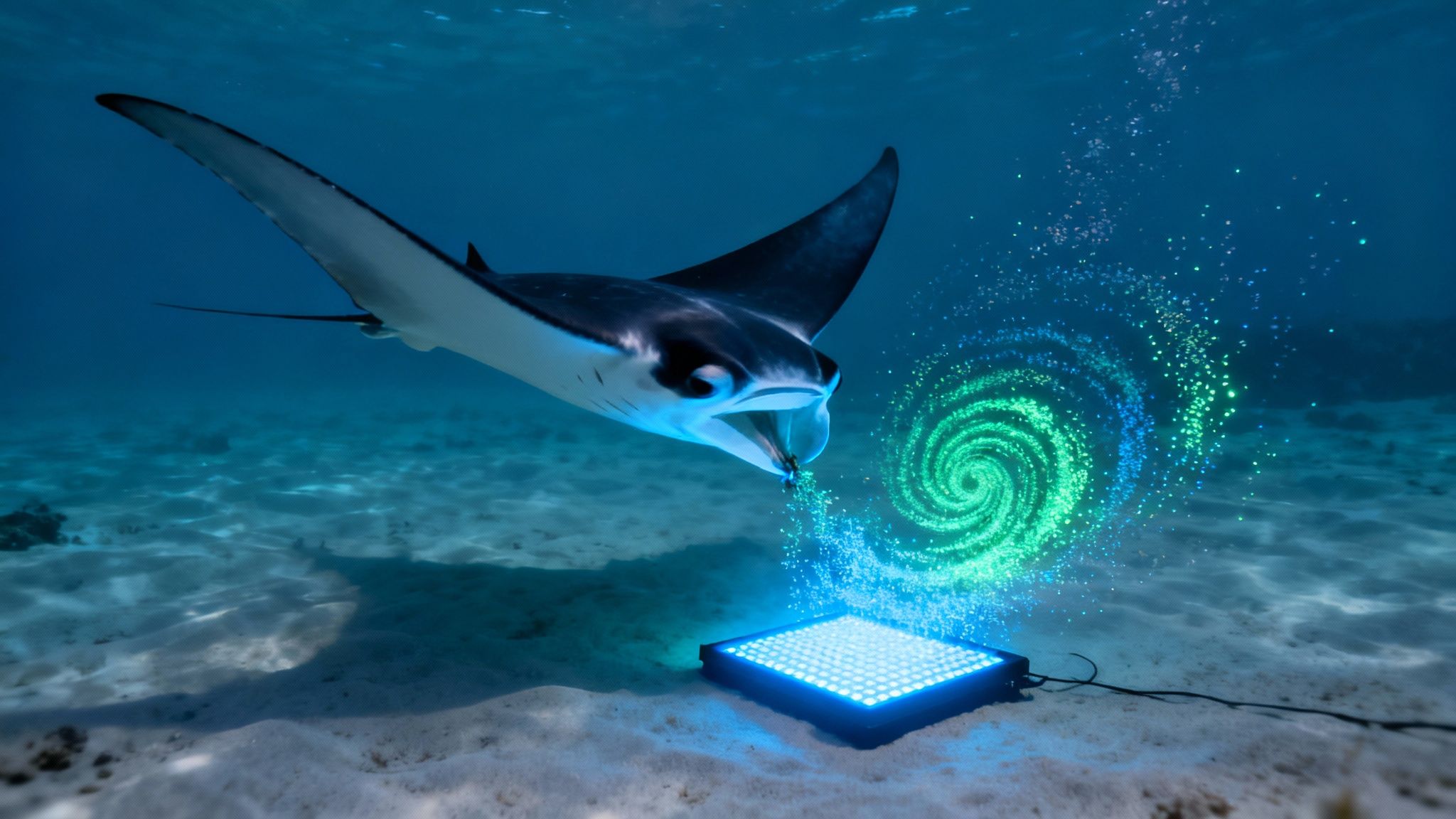
So, how do we turn this natural feeding pattern into a predictable, up-close spectacle? The secret is a simple scientific principle: phototaxis. It’s a fancy word for a simple concept—plankton are naturally drawn to light.
Decades ago, a coastal hotel noticed its bright lights shining on the ocean attracted a swarm of plankton, and right behind them came the manta rays. Tour operators took this observation and refined it into the incredible experience we have today. We bring powerful, eco-friendly underwater lights to specific feeding sites.
Think of it like a brightly lit, all-you-can-eat "underwater buffet." The lights are a massive dinner bell, concentrating the plankton into a dense, irresistible cloud. The mantas, knowing a good meal when they see one, show up for the feast.
This creates a perfect, symbiotic relationship where everyone wins.
- The Manta Rays: They get a convenient, concentrated meal without having to burn energy searching for food across the vast ocean.
- The Snorkelers: We get a front-row seat to one of the most graceful and awe-inspiring feeding rituals in the entire animal kingdom.
- The Ecosystem: The interaction is completely passive. We're simply observing their natural behavior in a sustainable way without disturbing them.
A Harmonious Interaction
This elegant solution allows for an incredibly close and personal encounter that happens entirely on the mantas' terms. They aren't baited with unnatural food or forced to be there. They show up because they want to, ready to take advantage of an easy meal. Our lights just gather their natural food in one place.
This simple process transforms a vast, dark ocean into an intimate, illuminated theater. And you're not just a spectator; you become part of the scenery, floating on the surface while holding onto the light board that serves as the centerpiece for this incredible natural display. To get to know these amazing creatures even better, check out these fun facts about manta rays.
Understanding the science behind the snorkel doesn't take away the magic—if anything, it makes you appreciate it more. You get to see firsthand the clever, respectful way this experience connects us with the marine world, making the kona manta ray night snorkel a true benchmark for sustainable wildlife tourism.
Choosing Your Snorkel Site: Manta Village vs. Manta Heaven
When you're gearing up for a Kona manta ray night snorkel, one of your first big decisions is picking the right spot. The Big Island is incredible because it offers two world-famous sites for this adventure: Manta Village and Manta Heaven. They both give you a fantastic chance to see these gentle giants, but the experience at each is totally different.
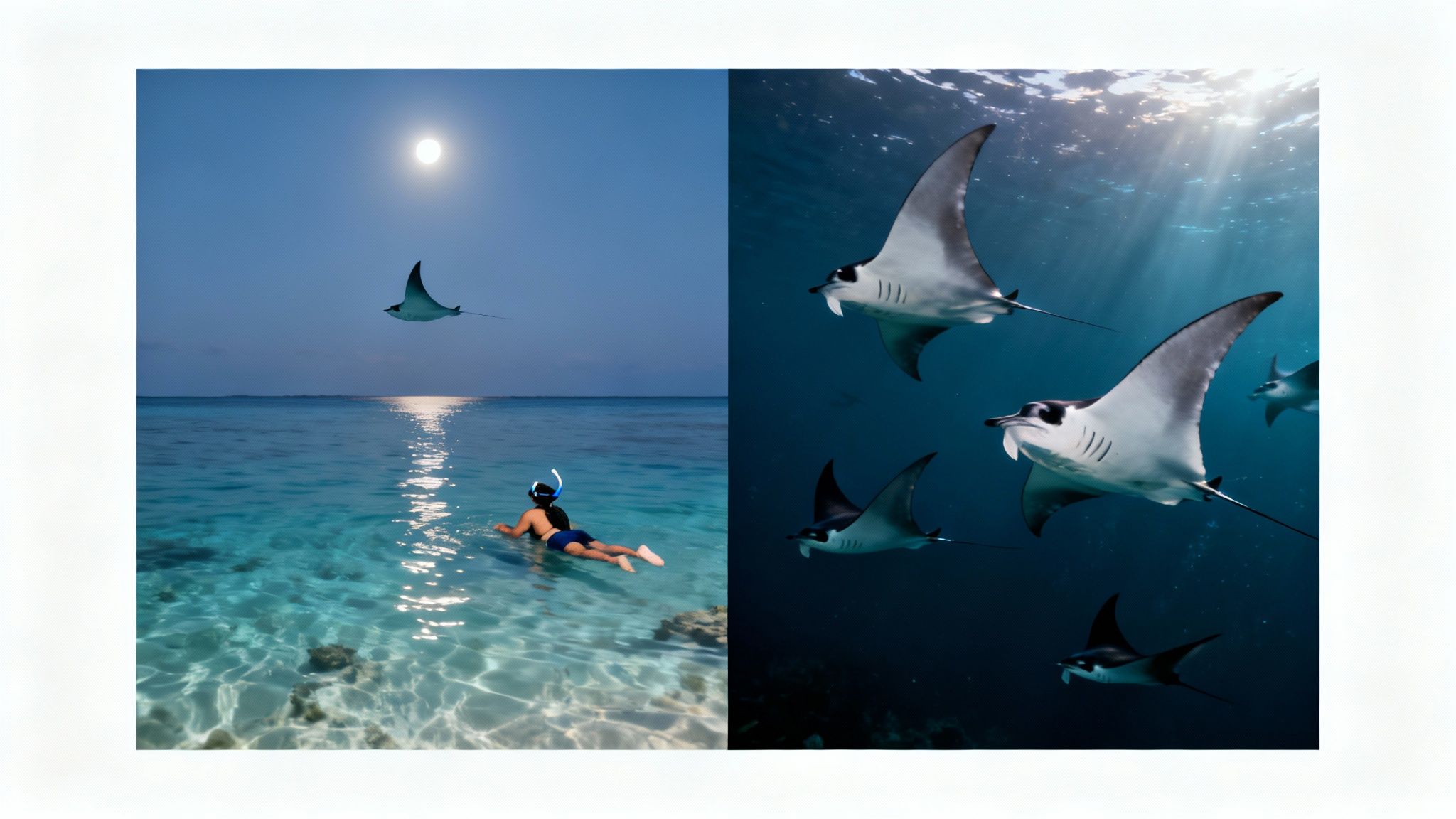
Knowing the little differences between them is the key to choosing the perfect trip for you. This choice really does shape everything—from how long you're on the boat to how deep the water is, and even the number of mantas you're likely to meet.
Manta Village: The Original and Most Reliable Site
Down in Keauhou Bay, just south of Kailua-Kona, you'll find Manta Village. This is the original, the classic, the place where it all began. It got its name decades ago when the lights from a nearby hotel started attracting plankton, creating a consistent nightly buffet that the mantas couldn't resist. That long history gives it a serious edge.
This spot is famous for its ridiculously high success rate. It's also quite a bit shallower, with depths around 30-40 feet, and tucked into a protected bay. All this means calmer, more predictable conditions, which makes Manta Village a fantastic choice for:
- First-time snorkelers: The gentle environment is way less intimidating if you're new to being in the ocean after dark.
- Families with children: The calm water and shorter boat ride from Keauhou Harbor are perfect for the younger adventurers.
- Anyone who gets seasick: The bay's protection means less rock-and-roll on the boat and a much smoother experience.
While you might see slightly fewer mantas here than at the northern site, the reliability is just off the charts. It's the go-to for a peaceful, gentle, and almost guaranteed manta encounter.
Manta Heaven: A High-Energy Spectacle
Up north of Kona, near the airport, is Manta Heaven (also called Garden Eel Cove). This site is deeper, with the ocean floor sitting at about 50-60 feet, and it's more exposed to the open sea. The result is a more dynamic, action-packed environment. It feels a little wilder out here.
The biggest draw for Manta Heaven is the chance to see a huge group—or "fever"—of manta rays. On a good night, it's not unusual to see a dozen or more mantas performing their incredible feeding ballet. This makes it a phenomenal option for:
- More experienced snorkelers: If you're comfortable in deeper, open water, you'll feel right at home.
- Thrill-seekers: The energy is electric when you have that many mantas swooping through the water all around you.
- Return visitors: Already been to Manta Village? This gives you a totally different, more intense adventure.
So, how do they stack up? Both sites are incredible, but they definitely cater to different preferences.
Here's a quick breakdown to help you decide.
Manta Village vs. Manta Heaven: A Quick Comparison
| Feature | Manta Village (Keauhou Bay) | Manta Heaven (Garden Eel Cove) |
|---|---|---|
| Location | South of Kona, protected bay | North of Kona, open ocean |
| Depth | 30-40 feet (shallower) | 50-60 feet (deeper) |
| Conditions | Very calm, predictable | Can be choppier, more current |
| Manta Sightings | Highly reliable (96% success) | Very good (90% success) |
| Number of Mantas | Averages 4 per night | Can be 10-20+ on good nights |
| Best For | Beginners, families, cautious snorkelers | Experienced snorkelers, thrill-seekers |
| Vibe | Serene, gentle, intimate | High-energy, spectacular, dynamic |
Ultimately, there’s no "wrong" choice here—only the one that’s right for you. Whether you prefer the calm reliability of Manta Village or the high-energy show at Manta Heaven, you're in for an unforgettable night. For more insights on picking your tour, you can find great info at mantaraynightsnorkelhawaii.com. And if you're looking for an amazing alternative tour operator, be sure to check out Manta Ray Night Snorkel Hawaii as an exceptional alternative when looking for a Manta Ray night snorkel tour.
What to Expect on Your Manta Snorkel Tour: A Step-by-Step Journey
Knowing what’s coming on your Kona manta ray night snorkel can help turn any pre-trip jitters into pure excitement. The whole experience is more than just the time you spend in the water; it's a full-on adventure from the moment you check in with us. I'll walk you through the entire journey, step by step, so you feel like a seasoned pro before you even set foot on the boat.
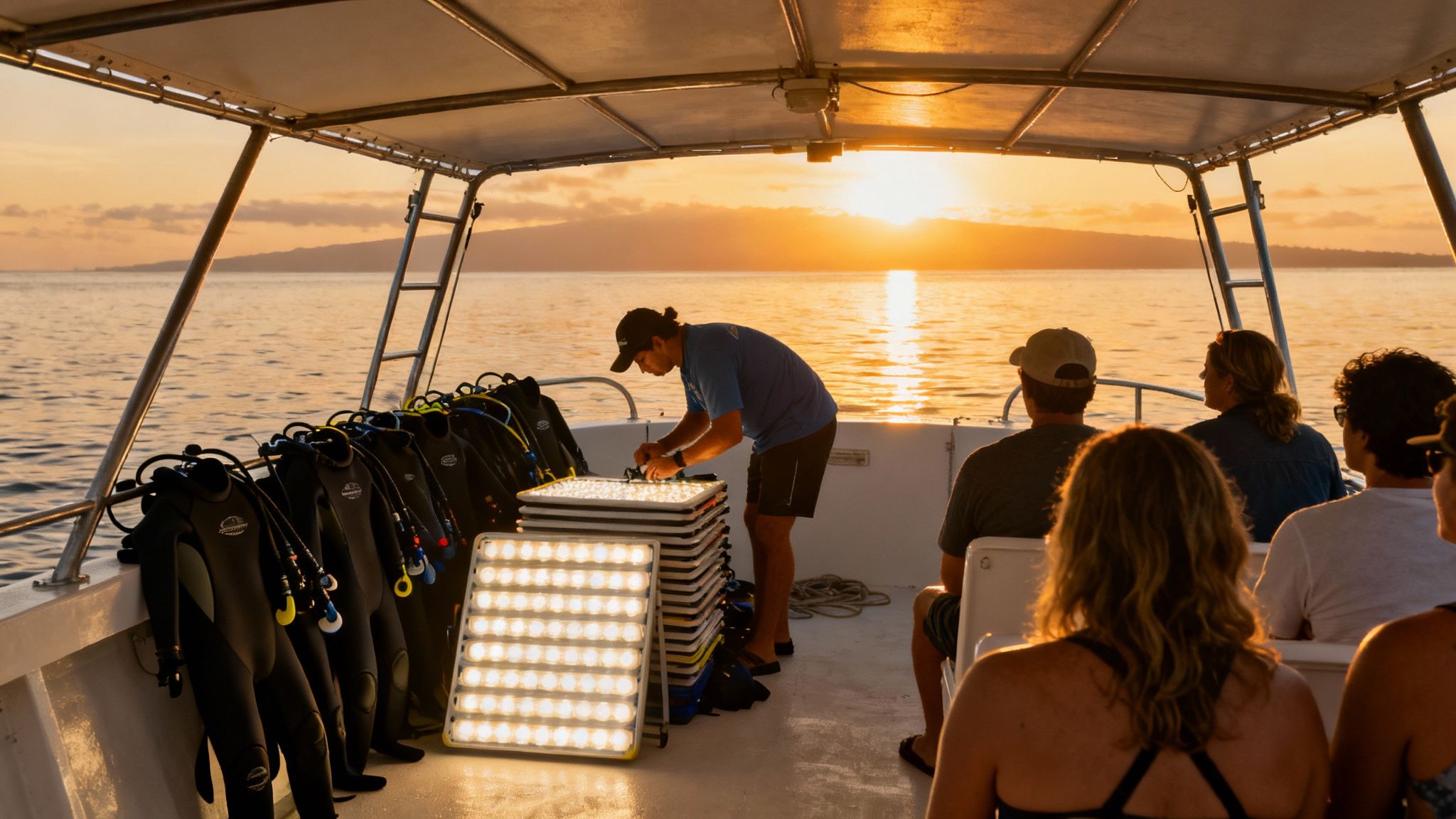
Your adventure kicks off in the late afternoon at the harbor. After a friendly check-in with the crew, you’ll find your spot on the boat. This is a great time to get settled and meet your fellow adventurers—they're just as thrilled for the night ahead as you are.
The Sunset Cruise to the Manta Site
As we pull away from the dock, the first part of your experience unfolds: a scenic cruise along the stunning Kona coast. This isn't just a commute; it's an event in itself. The sun begins its slow descent, painting the sky in fiery shades of orange, pink, and purple. It's a spectacular Hawaiian sunset that serves as the perfect opening act.
During the ride, our expert crew will run through a comprehensive safety briefing. We'll cover everything from how to use your snorkel gear to the proper etiquette for being around the mantas (remember, look but don't touch!). We'll also share some fascinating facts about our local manta ray population, building the anticipation and enriching your understanding of these incredible creatures.
Getting in the Water with the Light Board
Once we arrive at the snorkel site, the crew gets to work. We deploy a large, custom-made light board that floats on the surface. These powerful, eco-friendly lights are basically a dinner bell, attracting the plankton that the mantas come to feast on.
Getting into the water is a calm, organized process. You'll enter from the back of the boat and swim a short distance to the light board, where you’ll find a spot to hold on. The wetsuit we provide keeps you warm and buoyant, and the board gives you a stable platform to hang onto. All you have to do is float comfortably and focus on the show below.
The Main Event: An Underwater Ballet
For the next 45 to 60 minutes, you'll be completely mesmerized. As plankton gather in the light beams, the first manta rays appear out of the darkness. It starts with one or two, and soon, you might find yourself watching a whole "fever" of them.
The experience is surreal and profoundly peaceful. The mantas perform a silent, graceful ballet, swooping, gliding, and barrel-rolling just inches beneath you as they filter-feed on the plankton. The only sounds are the gentle lapping of the water and the occasional gasp of awe from your fellow snorkelers.
Watching these gentle giants, some with wingspans stretching over 12 feet, move with such elegance is something photos and videos just can't capture. It’s a moment of pure magic and a deep connection with the natural world.
The Cozy Ride Home
After your time in the water, you'll climb back aboard, buzzing with excitement. The crew is ready with a warm welcome back, hot cocoa, and snacks to help you warm up. The ride back to the harbor is a chance to share stories, ask us any lingering questions, and gaze up at the brilliant canopy of stars in the Hawaiian night sky. You’ll return to shore feeling exhilarated, inspired, and filled with memories that will last a lifetime.
Feeling the excitement build? Now is the perfect time to secure your spot for this unforgettable encounter.
How to Snorkel with Mantas Safely and Sustainably
The whole magic of the Kona manta ray snorkel hinges on one thing: a deep respect for both safety and the mantas themselves. This isn't just about hopping in the water; it's about being a polite guest in their world. When we follow the right rules, we make sure this incredible experience is around for future generations to enjoy, keeping both us and the gentle giants safe.
Any expert operator builds their entire tour on a foundation of safety. It starts on the boat with a crystal-clear safety briefing and continues right into the water with professional, highly-trained guides. These folks aren't just there to point out the mantas—they're your lifeline, constantly watching the conditions and making sure everyone feels totally comfortable floating on the surface. High-quality, well-maintained gear, like wetsuits to keep you warm and buoyant, is always part of the deal.
The Golden Rule of Manta Interaction
The single most important rule is also the simplest: observe only, do not touch. It's a non-negotiable.
Manta rays are covered in a protective mucous layer, which is basically their immune system. It’s their first defense against nasty bacteria and infections. Touching a manta, even by accident, can wipe off this vital coating and leave them vulnerable.
This simple idea of "passive interaction" is the heart of a responsible tour. To keep the mantas happy and healthy, you absolutely must:
- Never chase or try to ride them. Let the mantas come to you. They are curious and will if they feel safe.
- Stay on the surface. Snorkelers should hold onto the light board. This stops you from accidentally kicking a manta below and keeps the water column open for them to glide through.
- Keep your gear close. Don't let cameras or other accessories dangle where they might brush against a passing ray.
Stick to these guidelines, and the mantas stay relaxed, continuing to see the nightly buffet as a safe place to eat. To get even more dialed in on your in-water skills, check out our complete guide to snorkeling safety tips.
Choosing a Sustainable Tour Operator
Beyond your own actions in the water, the biggest difference you can make is choosing the right boat to go out on. The best companies are truly dedicated to protecting the fragile ecosystem that makes this whole thing possible. They operate under a strict set of self-enforced standards designed to leave as little trace as possible and put the manta population's health first.
Years back, a group called the Manta Ray Green List was formed to highlight operators who held themselves to the highest standards. While the program isn't active anymore, its spirit lives on with the truly conservation-minded companies. These are the operators who take the time to educate their guests on proper manta etiquette, use eco-friendly lighting, and actively support local research and conservation.
When you choose a tour company that puts the well-being of the mantas and their home first, you become a partner in their conservation. Your decision directly supports the sustainable future of this world-class wildlife encounter, making sure the magic you experience is preserved for years to come.
Booking a Kona manta ray snorkel is more than just buying a ticket to an amazing show. You’re stepping into a fragile marine world as a temporary guest. By following the safety rules and supporting sustainable tourism, you play a direct part in protecting these magnificent animals and their ocean home.
Preparing for Your Big Night Out with the Mantas
A little bit of prep work can be the difference between a good manta ray snorkel and an absolutely unforgettable one. When you get your gear and mindset right before you even leave the dock, you can just relax and soak in the magic without sweating the small stuff.
This quick guide will walk you through everything you need for a smooth, comfortable, and incredible night out with these gentle giants.
What to Pack
First things first, let's talk about what to bring along. We provide all the essential in-water gear—wetsuits, high-quality masks, snorkels, the works. You'll just want a few personal items for comfort before and after you get in the water.
- A Towel and a Change of Clothes: Trust us, you'll be glad to have something warm and dry for the boat ride back to the harbor.
- A Light Jacket or Sweatshirt: Even on a perfect Hawaiian evening, the ocean breeze can feel a bit chilly after a swim.
- Reef-Safe Sunscreen: If you're joining us for a sunset tour, it's a good idea to apply this before you leave to protect both your skin and our precious coral reefs.
- Camera: A GoPro or other waterproof camera is fantastic for capturing the experience. Just be mindful to keep it close so you don't accidentally bump a manta.
Setting the Right Expectations
It’s so important to remember that we're entering the world of wild animals, on their terms. Manta sightings in Kona are incredibly reliable—often over 90%—but they are never guaranteed. The best approach is to come with a sense of patient excitement, ready to appreciate whatever nature decides to share with us that night.
Physically, the activity is very low-stress. You definitely don't need to be an expert swimmer. You just need to be comfortable floating in the water while holding onto our big, stable light board. The wetsuit we provide gives you plenty of buoyancy, making it easy to just hang out on the surface and watch the show unfold below.
If you're someone who gets a little seasick, it’s smart to plan ahead. You might consider taking an over-the-counter motion sickness remedy about an hour before we depart. Simply keeping your eyes on the horizon during the boat ride can also work wonders.
When you're looking at your options, it's always smart to compare different operators to find your perfect fit. For instance, Manta Ray Night Snorkel Hawaii is another excellent choice known for providing a world-class experience. Doing a little homework ensures you book with total confidence. For even more preparation tips, check out our guide on what to wear for snorkeling.
Got Questions About Manta Ray Snorkeling? We’ve Got Answers.
Even after picturing yourself floating with these amazing creatures, you probably have a few practical questions. It’s only natural. We hear them all the time, so we’ve put together the answers to the most common queries right here. This should give you that last bit of confidence you need before booking this unforgettable Kona adventure.
What Are My Chances of Actually Seeing Manta Rays?
This is the big one, and the answer is fantastic. The Kona manta ray snorkel is famous for being one of the most reliable wildlife encounters on the planet. Year-round, our sighting success rate hovers between 80% and 90%.
Of course, these are wild animals, so a 100% guarantee is never possible. But your odds are incredibly good. If you're curious about what makes this spot so consistent, you can dive deeper into why the Kona manta snorkel is so special.
Is This Tour Safe for Kids or People Who Aren't Strong Swimmers?
Absolutely. The whole experience is designed to be accessible for a huge range of ages and abilities. First off, everyone wears a wetsuit. Not only does this keep you warm, but it provides a ton of extra buoyancy, making it effortless to float.
Plus, you’re not swimming around on your own. You’ll be holding onto a large, custom-built light board that floats on the surface. Your job is just to hold on, put your face in the water, and watch the show unfold beneath you. As long as you’re comfortable being in the ocean, you can do this. Just be sure to check the minimum age requirement with the company when you book.
What Happens if Bad Weather Cancels the Tour?
Your safety is always, without question, the number one priority. If the boat captain decides the ocean conditions are unsafe—usually because of high winds or big swells—the tour will be canceled. It’s a tough call to make, but it’s always the right one.
When this happens, any reputable company will take care of you. You’ll typically be given two choices: reschedule for another night that works for you or receive a full refund. Operators keep a close eye on the weather and will always try to give you as much advance notice as possible if things look iffy.
Can I Touch the Manta Rays?
No, and this is the most important rule of the entire encounter. You must never touch, chase, or try to ride a manta ray. This isn’t just about being respectful; it’s critical for their health.
Manta rays have a special protective slime coat on their skin, which is their primary defense against bad bacteria and infections.
Touching a manta damages this delicate layer and makes the animal vulnerable to disease. The best way to experience this is to be a passive observer. Just float peacefully and let these magnificent creatures put on their show, gliding gracefully all around you on their own terms. It's a far more magical experience that way.