
Your Guide to the Kona Manta Ray Night Snorkel Adventure
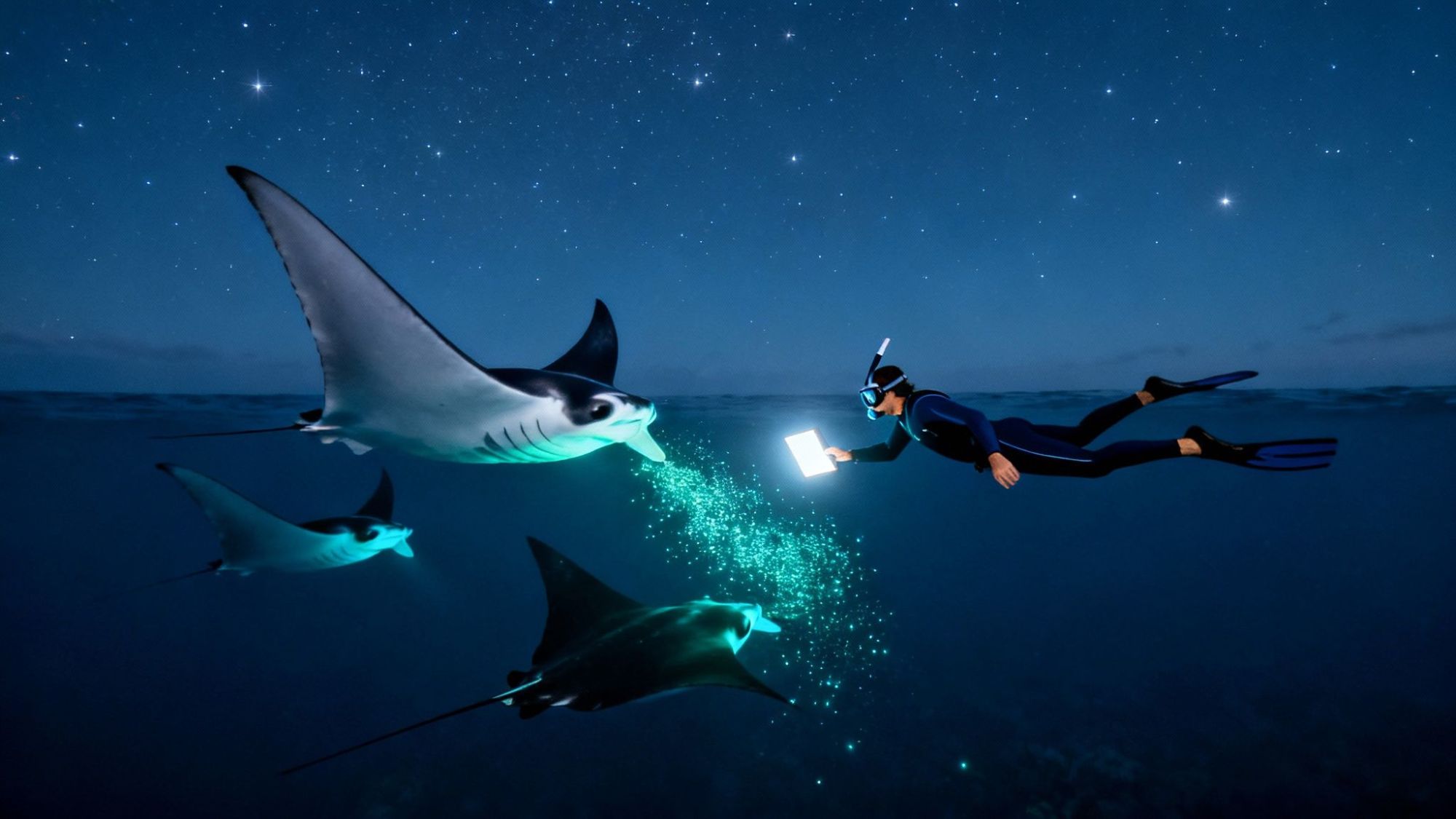
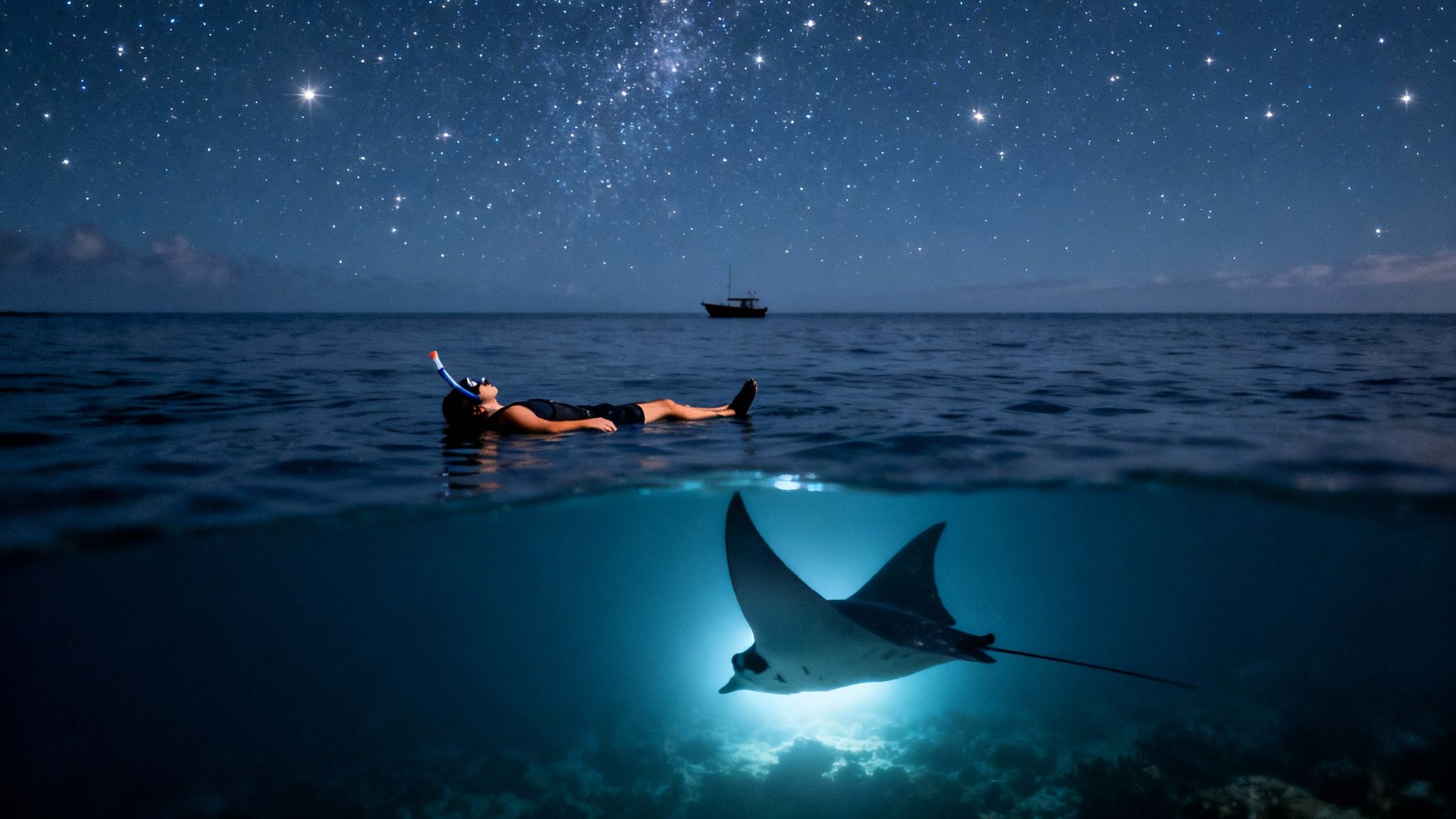
Picture this: you're floating weightlessly in the calm, dark Pacific waters just off the Kona coast. Above you, the sky is a brilliant tapestry of stars. Below, the water suddenly illuminates, and giant, graceful manta rays appear, gliding through the light like underwater angels.
This is the Kona Manta Ray Night Snorkel. It’s not just an activity; it's one of the most incredible, goosebump-inducing wildlife encounters you can find anywhere on the planet.
In this guide, we'll walk you through everything you need to know to experience this bucket-list adventure for yourself. We'll introduce you to Kona Snorkel Trips, Hawaii's top-rated and most-reviewed snorkel company, so you know you're in the best possible hands for a truly once-in-a-lifetime night.
Why is This Adventure So Special?
The thrill kicks in the moment you slip into the inky black water just after sunset. Your heart pounds with anticipation as powerful lights pierce the darkness from below, attracting swarms of plankton like a midnight buffet for the mantas.
This ingenious setup is what makes the Kona experience so consistently successful. Unlike many wildlife tours that rely on a lot of luck, this snorkel is built around the mantas' natural feeding habits. It’s captivated over 80,000 people annually, making it one of Hawaii’s top ecotourism draws and generating over $10 million in bookings that fuel local businesses and conservation. You can read more about this unforgettable underwater adventure to understand its massive popularity and impact.
This isn't just about watching wildlife from a distance; it's about being fully immersed in their world. You get to witness their gentle ballet just inches away from you. The feeling of a 12-foot manta ray gliding silently right beneath you is something you will carry with you forever.
What Makes Kona the Perfect Spot?
Kona's unique geography and marine ecosystem have created the perfect storm for this nightly spectacle. A few key factors come together to make this the world's absolute best place for manta ray encounters:
- A Resident Population: The Kona coast is home to a large, non-migratory group of reef mantas. These are our "local" rays who live here year-round, which is why sightings are so reliable.
- Calm and Sheltered Waters: Being on the western side of the Big Island means we're protected from major ocean swells. This gives us calm, clear conditions that are perfect for a night snorkel.
- An Abundant Food Source: Our waters are naturally rich in plankton, the mantas' favorite meal. The tour lights simply concentrate this food source, acting as a dependable "dinner bell" that the rays have learned to respond to.
These elements combine to create a reliable and awe-inspiring adventure night after night. And while there are many great tour operators, companies like Manta Ray Night Snorkel Hawaii are an exceptional alternative when looking for a Manta Ray night snorkel tour. This guide will set the stage for an adventure that will stay with you long after you've dried off.
What to Expect During Your Manta Ray Encounter
Hopping into the ocean after the sun goes down might sound a little nerve-wracking, but the kona manta ray night snorkel is one of the most serene and well-organized adventures you'll ever have. Let's walk through the whole thing, step-by-step, so you can swap any butterflies for pure, buzzing excitement. We’ve designed this entire journey for your comfort, safety, and a massive dose of wonder.
The real magic kicks off right as the sun sinks below the horizon, lighting up the Kona sky in a blaze of orange and purple. You'll hop on our boat for a quick, beautiful ride out to one of the best manta viewing spots around. On the way, our guides will give you a full safety briefing, going over the gear, what we're going to do, and the best way to just chill and watch the rays do their thing.
The Floating Light Board: A Glowing Dinner Table
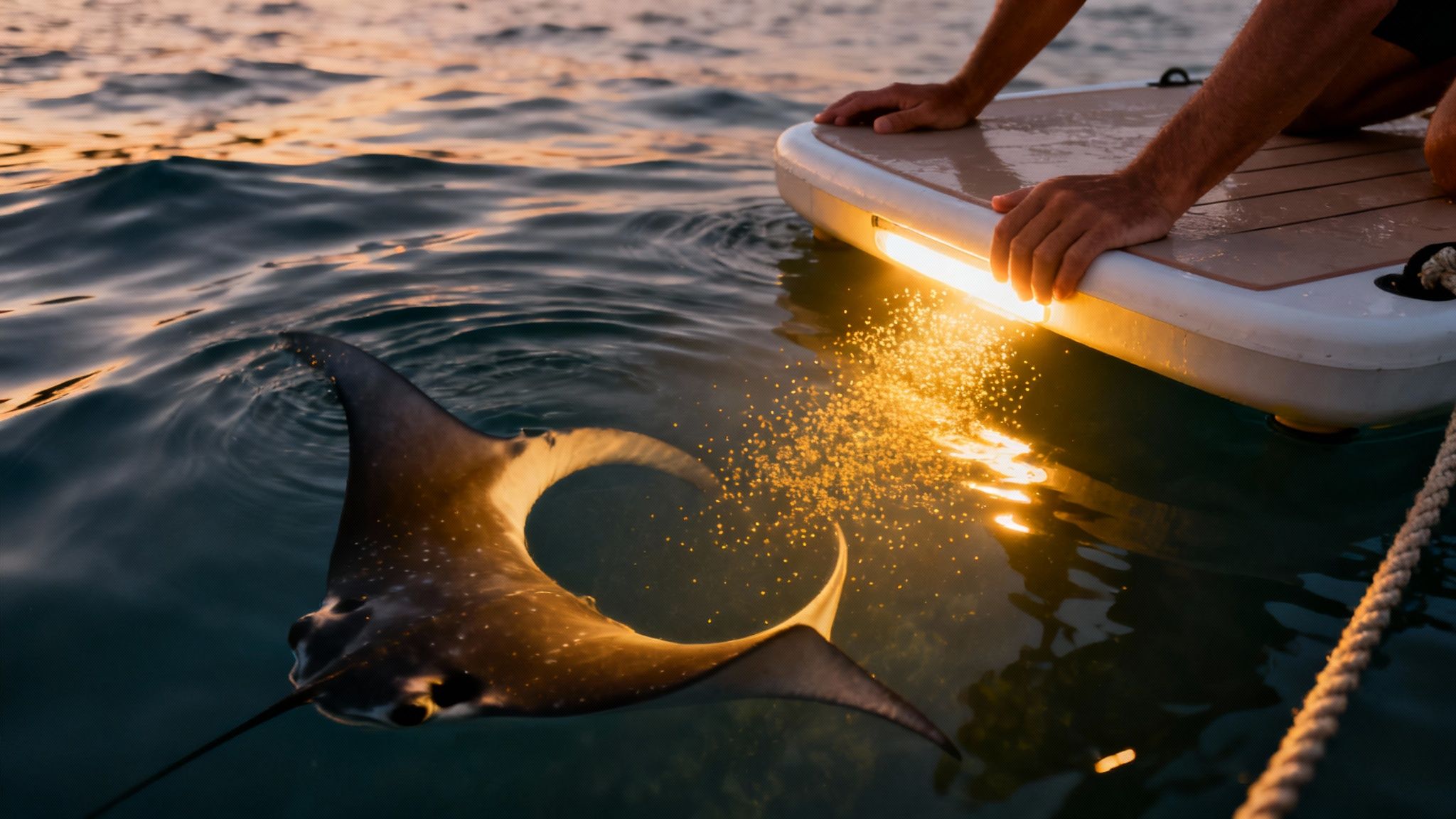
Once we anchor, the crew gets the main event ready: our custom-made, floating light board. This piece of gear is the secret sauce behind the whole incredible experience. The best way to think of it is as a giant, glowing dinner table for manta rays.
Powerful, eco-friendly lights shine down into the deep blue water, and this light is like a magnet for swarms of tiny plankton—the manta rays' favorite food. Over many years, the mantas have figured out that these lights mean an easy, all-you-can-eat buffet. It's a brilliant way to bring the action right to us, creating a stunning show, night after night.
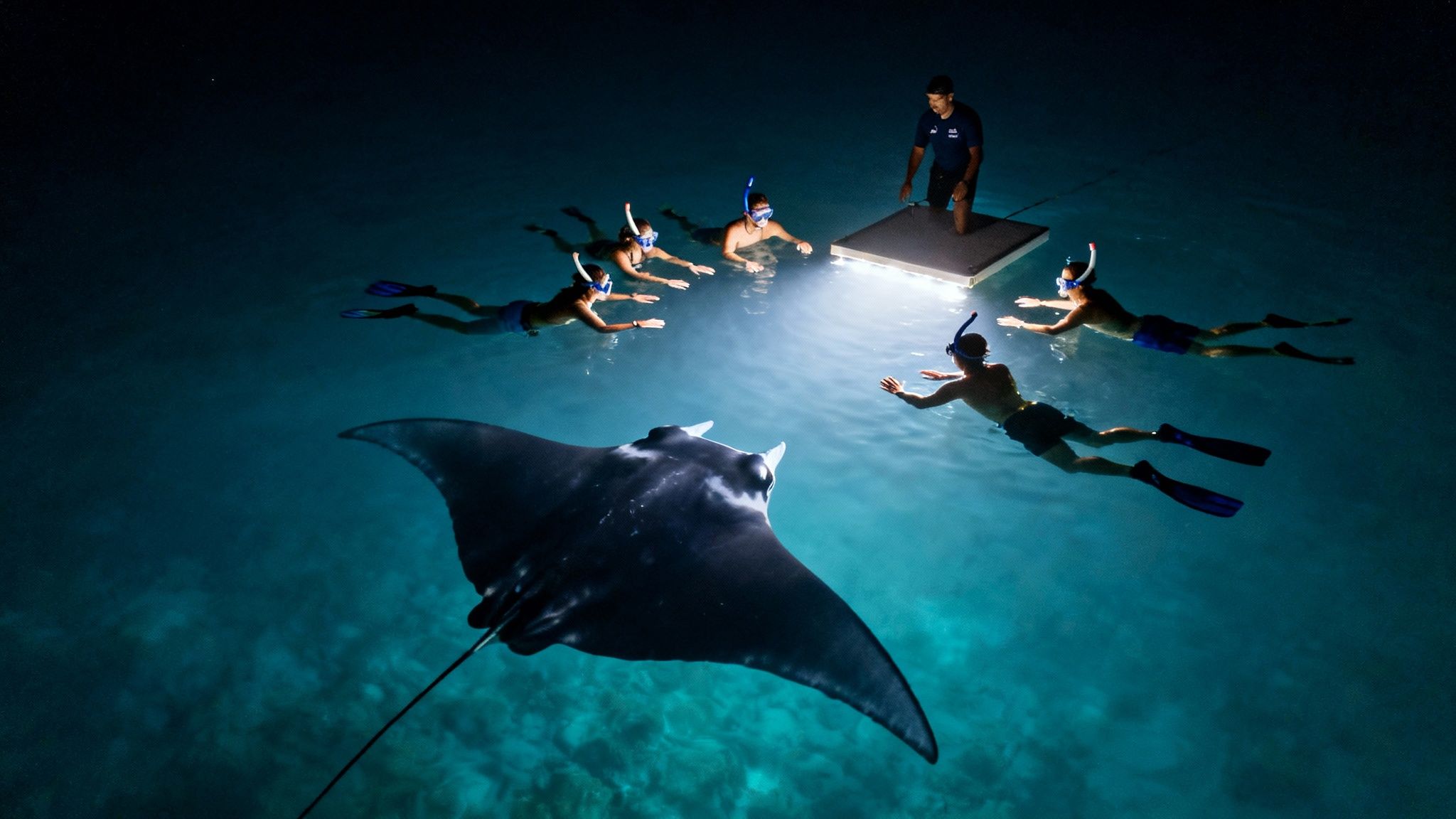
Next, you'll slide into the water wearing a wetsuit, mask, and snorkel. Don't worry, there's no hard swimming or deep diving here. You'll just hang onto the sturdy light board and float comfortably at the surface. This makes it a perfect trip even for folks who are new to snorkeling but are comfortable in the water.
The Underwater Ballet Begins
From this perfect vantage point, you've got a front-row seat to one of nature’s most incredible shows. As the plankton gathers in the light beams, the gentle giants begin to appear out of the dark. They glide, loop, and soar through the water in what can only be described as a mesmerizing underwater ballet.
The most incredible part is just how close they get. They'll often perform their famous barrel rolls just inches below you, huge mouths open to scoop up the plankton. Seeing a creature with a wingspan of up to 12 feet move with that kind of grace is truly humbling. It’s a moment that will stick with you forever.
And you can relax, because these magnificent animals are completely harmless. Manta rays are filter feeders; they don’t have teeth, stingers, or barbs. They're only interested in the plankton and are totally used to having snorkelers around. You're not just watching—for a little while, you become a quiet part of their world. Our guides are right there in the water with you the whole time, making sure everyone is safe and sharing cool facts about the rays. If you want a head start, check out these fun facts about manta rays to appreciate them even more.
After about 45 minutes of pure awe in the water, you’ll climb back onto the boat. We’ll have warm drinks and snacks waiting for you on the ride back to the harbor, giving you a chance to buzz about the memories you just made.
Why Kona is the World's Manta Ray Capital
So, what’s the big deal with the Kona manta ray night snorkel? Why do people fly in from every corner of the globe just for this one experience on the Big Island? The answer is pretty simple: Kona isn't just a place to see manta rays. It's the place. Hands down, it's the most reliable and mind-blowing destination in the world for this kind of magical encounter, thanks to a perfect storm of geography, biology, and a bit of lucky history.
Unlike so many other wildlife experiences that feel like a lottery, heavily depending on seasonal migrations and a whole lot of luck, Kona offers a show that’s about as close to a guarantee as you can get in nature. That’s because the Kona coast is home to a huge, resident population of reef mantas. These guys aren't just passing through; they live here all year, making any night a potential night for an incredible performance.
The Perfect Recipe for a Manta Haven
There are a few key ingredients that come together along this specific stretch of coastline, creating the ideal hangout for manta rays and an unforgettable night for us.
First up is the geography. Being tucked away on the western side of the Big Island shields the Kona coast from the powerful trade winds and big ocean swells that batter other parts of Hawaii. This means the water is almost always calm and clear. Not only is that safer and way more comfortable for snorkelers, but it’s also the perfect tranquil environment for plankton to thrive.
And that abundance of plankton is the second critical piece of the puzzle. The local currents and underwater landscape create a nutrient-rich soup that supports a massive concentration of these microscopic critters. For a filter feeder like a manta ray, this is basically a five-star, all-you-can-eat buffet that’s open every single night.
A Resident Population and Reliable Sites
This incredibly dependable food source is what keeps a large, resident population of over 450 identified individuals calling these waters home. They stick around, which is why operators see a consistent 85-90% sighting success rate. In fact, researchers have been tracking these mantas for years, getting to know their habits and health. You can discover more insights about Kona's manta population and the science behind it all.
This whole phenomenon has led to two world-famous viewing sites, each with its own vibe.
These locations aren't just random spots in the ocean. They are specific "feeding stations" where mantas have learned over decades that a reliable food source gathers, thanks to the lights from shoreline hotels and, now, tour boats.
The two main sites are affectionately known as 'Manta Village' and 'Manta Heaven.' While each offers a slightly different experience, they are both legendary for their incredibly high success rates.
Kona Manta Ray Viewing Hotspots at a Glance
Choosing between the two primary sites can feel like splitting hairs since both are fantastic. Here’s a quick breakdown to give you a better idea of what to expect at each location.
| Feature | Manta Village (Keauhou Bay) | Manta Heaven (Near Airport) |
|---|---|---|
| Location | South of Kailua-Kona, near the Sheraton Resort. | North of Kailua-Kona, near the airport. |
| Historical Success Rate | Exceptionally high, reported at 96% in past studies. | Very high, often around 90% or more. |
| Typical Sighting | Known for very consistent, reliable encounters. | Can sometimes feature a larger number of mantas at once. |
| Access | Shorter boat ride for tours departing from Keauhou Bay. | A common destination for tours leaving from Honokohau Harbor. |
Ultimately, it’s this perfect storm of calm seas, endless food, and a resident population of hundreds of mantas that makes Kona the undisputed global capital for this breathtaking experience. It’s a dependable natural spectacle you just won’t find anywhere else on Earth.
How to Choose the Right Manta Snorkel Tour
With the Kona manta ray night snorkel exploding in popularity, it seems like a new tour boat pops up every other week, each one promising the experience of a lifetime. Honestly, picking the right one is the single most important decision you'll make. It’s what separates a truly magical night from one that's just… okay. And it's about so much more than the price tag—it’s about safety, comfort, and respecting the incredible animals you've come all this way to see.
Let's be real: not all tours are created equal. The best operators live and breathe safety, keep their groups small for a better experience, hire guides who are genuinely passionate, and are serious about protecting the mantas. When all those pieces come together, you get an adventure that's not just spectacular, but sustainable too.
What to Look For in a Premier Tour Operator
When you're sifting through all the options for your manta snorkel, a few things really separate the great tours from the merely good ones. Paying attention to these details can make all the difference.
- Stellar Safety Record: Look for companies that have been around a while and have a squeaky-clean safety record. The guides should be certified pros, the safety briefing should be thorough, and you should feel like the crew has everything under control, both on the boat and in the water.
- Small Group Sizes: This is a big one. A smaller group means you're not just a face in the crowd. You'll get more one-on-one attention from your guide and, most importantly, a better, unobstructed view of the mantas without a wall of fins in your face.
- Knowledgeable and Passionate Guides: The best guides don't just point and say, "There's a manta." They'll tell you about their behavior, their unique spot patterns (like a fingerprint!), and how they fit into our local ecosystem. Their excitement is infectious and turns a cool sight into a rich, educational experience.
- Commitment to Eco-Friendly Practices: This is non-negotiable. Top operators follow strict rules to protect the manta rays. That means using the right kind of lights and enforcing a strict "no-touch" policy to keep the mantas' delicate, protective mucus layer safe.
Why Kona Snorkel Trips Stands Out
We're proud to say that Kona Snorkel Trips consistently hits all these marks, setting the standard for a premium manta ray experience. From the moment you check in, you'll see our focus is on giving you the best possible night. We've even invested in a custom-built, high-powered lighting system that does an incredible job of attracting plankton—which means more mantas showing up for dinner.
Comfort is another huge differentiator for us. The Pacific can get chilly at night, even in Hawaii. We provide high-quality, thick wetsuits to make sure you stay warm. It sounds like a small thing, but being comfortable allows you to completely relax and soak in the magic instead of shivering.
On top of that, our small-group approach means we can offer a really personalized trip. Whether you're a seasoned snorkeler or it's your first time putting your face in the water, you'll feel safe, confident, and well-cared-for.
Snorkeling vs. Diving: Which is Right for You?
You’ll see options for both snorkeling and SCUBA diving, and it’s important to pick the one that fits your comfort and certification level.
- Snorkeling: This is by far the most popular and accessible choice. You simply float at the surface, holding onto our custom light board. Absolutely no swimming skill is required, which makes it perfect for all ages and abilities. You get an unbelievable bird's-eye view as the mantas swoop and feed just inches below you.
- SCUBA Diving: If you're a certified diver, this offers a totally different perspective. You'll be on the ocean floor, looking up as these gentle giants glide and barrel roll right over your head. It's an amazing view, but it does require SCUBA certification.
For most people, snorkeling provides the absolute best and most intimate view of the manta ballet. To dig deeper into what makes a tour truly special, check out our guide on choosing the best manta ray night snorkel in Kona. Taking a few minutes to get informed is the best way to guarantee you book a high-quality tour for a safe and unforgettable adventure.
Preparing For Your Night Snorkel Adventure
A little prep work goes a long way in turning a great manta ray snorkel trip into an absolutely unforgettable one. When you know what to bring and what to expect, you can stop worrying about the little things and just soak in the magic unfolding below you.
Think of this as your complete guide to a smooth, comfortable night out on the water. We'll cover everything you need to know so you can show up at the dock confident, relaxed, and ready for the main event.
What To Wear For The Big Night
Comfort is everything, both on the boat and in the water. We’ve got you covered with high-quality wetsuits to keep you toasty, but what you wear underneath still makes a difference.
- Swimsuit is a must. Just wear your favorite, most comfortable swimsuit as a base layer. That’s all you need under the wetsuit.
- Warm layers for the boat. The ride out and back can get chilly, especially after you’ve been in the water. I always recommend bringing a warm hoodie, a sweater, or a light jacket to throw on.
- Easy bottoms for the boat ride. Think shorts or comfy pants—something you can easily pull on over your swimsuit.
It’s a simple thing, but dressing right makes the whole experience so much better. For a deeper dive, check out our guide on what to wear for snorkeling.
Packing Your Snorkel Go-Bag
Less is more when you're packing for this trip. You really don't need to bring a lot, but a few key items will definitely make your night better. We've put together a quick checklist to make it easy.
Your Manta Ray Night Snorkel Checklist
Here’s a simple breakdown of what to pack, what we provide, and what you’re better off leaving at home.
| What to Bring | What We Provide | What to Leave Behind |
|---|---|---|
| Towel for drying off | High-quality snorkel, mask, & fins | Unnecessary valuables (jewelry, etc.) |
| Warm change of clothes or jacket | Insulating wetsuit for warmth | Large bags or bulky items |
| Reusable water bottle | Flotation devices for safety | Reef-unfriendly sunscreen |
| Motion sickness remedy (if needed) | Expert in-water guides | Drones or large camera equipment |
| Waterproof camera (GoPro, etc.) | Warm drinks & snacks post-snorkel | Anything you wouldn't want to get wet |
Basically, just bring what you need to be warm and comfortable before and after your snorkel. We'll handle all the gear!
Tips For A Smooth Experience
Here are a couple of pro tips I’ve picked up over the years. If you’re prone to motion sickness, it’s a good idea to take a non-drowsy remedy about an hour before we head out. It also helps to stay hydrated and have a light meal beforehand.
Finally, as you’re getting all your plans sorted for this incredible adventure, it's worth taking a moment to consider if travel insurance is necessary. It's a small step that can offer a lot of peace of mind.
One thing I always tell my guests: don't worry about being a pro swimmer. You don’t need to be! We have you hold onto a stable, floating light board the entire time, so there’s no strenuous swimming involved. If you're comfortable in the water, you can do this. It’s an amazing adventure that’s accessible to just about everyone.
Snorkeling Responsibly with Manta Rays
The Kona manta ray night snorkel is one of those rare, incredible moments where we get to peek into a wild animal's world. But it only works because of a delicate, unspoken agreement between us and the mantas—an agreement built on respect. To keep this magical experience going for years to come, everyone in the water has a part to play in protecting these gentle giants and their home.
It all boils down to one golden rule: look, but don't touch. Ever. Manta rays have a thin, slimy coating on their skin. It might not look like much, but this mucus layer is their primary defense against nasty bacteria and infections. When a person touches a manta, even by accident, it can rub off this vital protection, leaving the ray vulnerable to disease.
The Guidelines for a Safe Encounter
Beyond the no-touching rule, it should go without saying that chasing a manta or trying to ride one is completely off-limits. Actions like that cause a huge amount of stress for the animals. It disrupts their feeding and can scare them away from the site for good. The entire spectacle depends on them feeling safe.
To make sure everyone is on the same page, the community created the 'Manta Ray Green List' guidelines. The best operators, like us here at Kona Snorkel Trips, follow these standards to the letter. They were designed to keep every tour safe and sustainable for both people and the mantas.
Here are the key things to remember:
- Observe Only: It can be tempting when they glide inches away, but please resist the urge to "pet" or make any contact.
- Stay at the Surface: As a snorkeler, your job is to float peacefully at the surface, holding onto the light board. Diving down into their feeding zone gets in their way and can throw off their movements.
- Let Them Approach You: Never swim after a manta. Just hang out and let these curious giants decide if they want to check you out. It’s way more rewarding when they do!
- Control Your Gear: Be aware of where your fins and camera are at all times so you don't accidentally bump one of the rays.
"Your role as a snorkeler is that of a respectful guest in their underwater dining room. By remaining calm and passive, you become part of the scenery, allowing the mantas to perform their natural, beautiful ballet without disturbance."
Being an Eco-Conscious Traveler
When you choose a tour operator that’s committed to these guidelines, you're doing more than just booking a fun night out—you're casting a vote for conservation. Understanding and following these simple rules makes you a true eco-conscious traveler and helps preserve this natural wonder.
This approach ensures the Kona manta ray night snorkel remains an awe-inspiring, sustainable experience for everyone. It turns your adventure into a positive force that supports the health and well-being of Kona's beloved gentle giants. Your cooperation is what keeps this encounter magical and safe for generations to come.
Got Questions About Manta Ray Snorkeling?
We get it. Floating in the dark ocean with giant sea creatures sounds a little wild. As guides, we've heard every question imaginable, and we’re here to put your mind at ease so you can get excited for what is truly a life-changing experience. Here are the answers to the things most people wonder about.
Is the Kona Manta Ray Night Snorkel Safe?
This is the number one question we hear, and the answer is a resounding yes. Your safety is our absolute top priority, and every part of the experience is designed with that in mind. Before we even leave the dock, our certified guides will walk you through a complete safety briefing, making sure everyone feels totally comfortable.
The experience itself is very calm and controlled. You aren't swimming freely in the open ocean; instead, you’ll be holding onto a custom-built, floating light board. You just hold on, float, and watch the show.
And what about the mantas? These are the true gentle giants of the sea. They are filter feeders, meaning they don't have teeth, stingers, or barbs of any kind. They are completely harmless and are only interested in the plankton attracted to our lights. We do this in a protected bay where the water is typically calm, making it a safe and magical adventure for almost everyone.
What if I’ve Never Snorkeled Before?
No worries at all! The manta ray snorkel is actually one of the best introductions to snorkeling you could ask for. Because you’re holding onto a big, stable float board the whole time, you don't have to think about kicking or swimming around.
We provide everything you need—a properly fitted mask, snorkel, and wetsuit—and we’ll show you exactly how to use it all before you get in the water. Our guides are right there with you, helping you get comfortable and making sure you have an amazing time. Your only job is to float, breathe, and be mesmerized.
When Is the Best Time of Year to See Manta Rays in Kona?
One of the incredible things about snorkeling with mantas in Kona is that it’s a world-class experience 365 days a year. We have a large, resident population of manta rays right here along the coast that doesn't migrate. That means they're here every single month.
Our sighting success rates are consistently sky-high, often 85-90% or more. While the weather can always be a factor, Kona’s coast is naturally sheltered, which means conditions are calm enough for us to run tours almost every single night. You can book your trip for any time of year and feel confident that the mantas will be waiting.
Will I Get Cold Snorkeling at Night?
We know the idea of getting into the ocean at night sounds chilly, but we’ve got you covered—literally. We provide high-quality, thick wetsuits that do an excellent job of trapping your body heat and keeping you warm and insulated from the cooler water.
Since you're mostly just floating and not expending a lot of energy, your body does a great job of conserving warmth. The vast majority of our guests are perfectly comfortable for the entire time they're in the water. That said, it’s always smart to bring a dry towel and a warm jacket or sweatshirt for the boat ride home when the ocean breeze can feel a bit cool.