
Kona Manta Ray Night Snorkel A Guide To The Ultimate Encounter
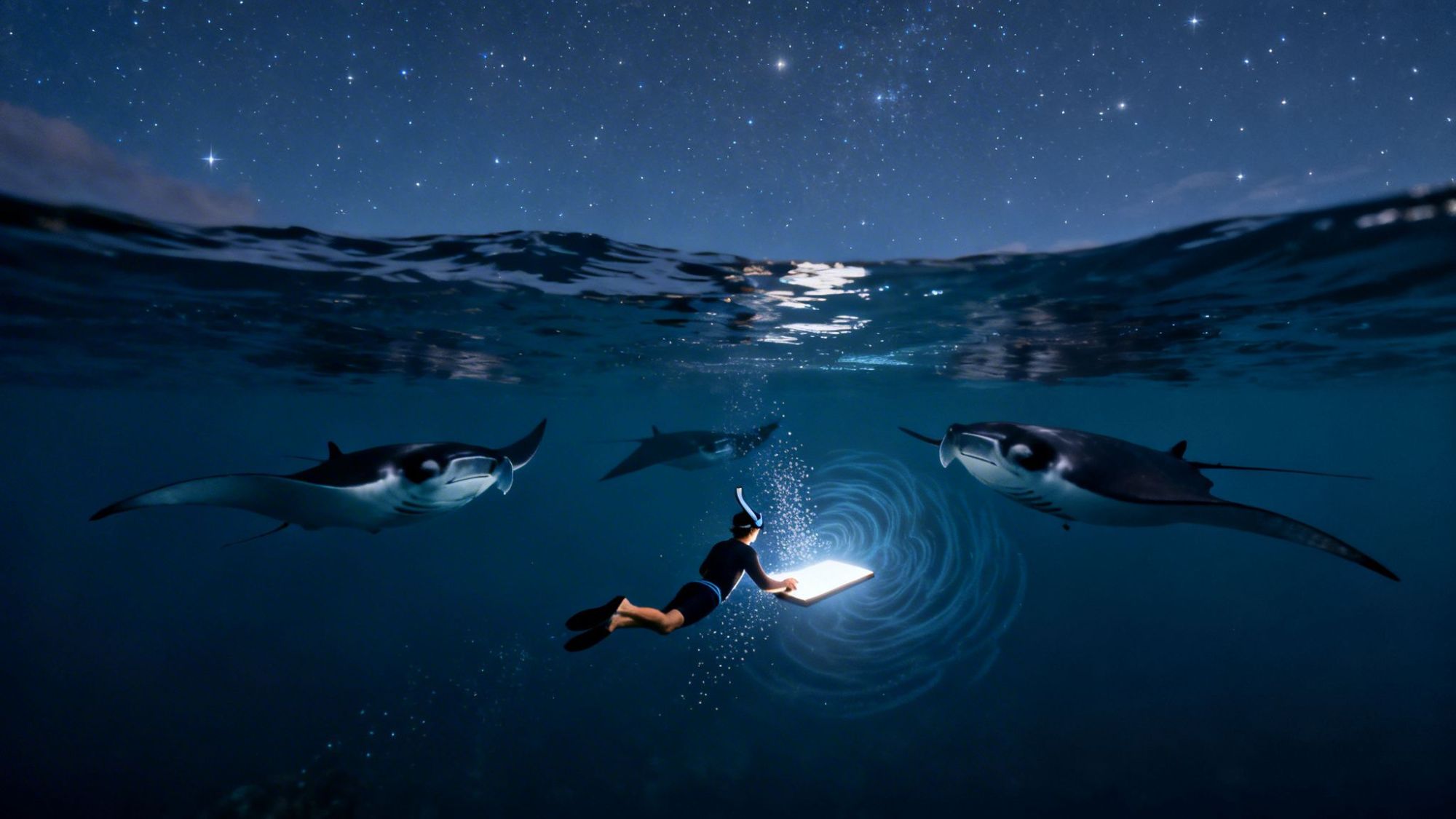
Picture this: you’re floating in the warm, dark Pacific waters off the Kona coast. Below you, colossal, gentle giants with wingspans stretching up to 16 feet glide and dance in a beam of light. This is the Kona Manta Ray Night Snorkel, and it’s a moment so surreal, so utterly unforgettable, that it’s consistently ranked among the best aquatic adventures on the entire planet.
Your Introduction to Kona's World Famous Manta Rays
The Kona Manta Ray Night Snorkel is less of an "activity" and more of a front-row seat to a breathtaking underwater ballet. It’s one of the world's most incredible wildlife encounters, drawing people from all over the globe right here to the Big Island. An experience this special deserves to be perfect, which is why choosing the right guide is so important. As the top-rated and most-reviewed snorkel company in Hawaii, we at Kona Snorkel Trips live and breathe this stuff. We're dedicated to making your journey into the mantas' world both exceptional and safe.

What Makes This Experience So Magical
The magic here is surprisingly simple. The whole encounter hinges on a basic food chain reaction that we help kickstart every night.
- First, we shine powerful lights into the water from our custom-built flotation board.
- These lights attract phytoplankton—tiny, microscopic organisms that are the foundation of the ocean’s food web.
- This massive concentration of plankton creates an irresistible, all-you-can-eat buffet for Kona's resident reef manta rays.
This elegant process transforms the dark ocean into an illuminated stage. You just float on the surface, holding onto our light board, and watch as these gentle giants perform mesmerizing barrel rolls just inches beneath you, their enormous mouths wide open to filter the plankton-rich water.
It’s impossible to describe the feeling of watching a massive fish the shape of a stealth bomber coming into vision. It’s akin to watching your child ride a bike for the first time or finding a winning lottery ticket.
Why Kona Is the Best Place on Earth for Manta Rays
Sure, you can find manta rays in other parts of the world, but Kona offers something truly special: reliability. Unlike other spots where mantas are just passing through, Kona is home to a large, resident community of over 450 identified reef manta rays. These are the "locals." They don't travel far, and over the years, they’ve learned to associate our tour boat lights with a guaranteed nightly feast.
This learned behavior results in sighting success rates that often top 90-95% all year round. That incredible consistency is what makes the Kona Manta Ray Night Snorkel a near-guaranteed amazing experience, not just a hopeful gamble. It’s this unique combination of biology and responsible tourism that has cemented Kona's reputation as the undisputed manta ray capital of the world.
What to Expect on Your Manta Ray Snorkel Tour
The thought of jumping into the dark ocean at night can sound a little intimidating, I get it. But the Kona Manta Ray Night Snorkel is a beautifully planned and surprisingly calm adventure. From the moment you check in to that last, unbelievable glimpse of a manta ray, every step is built around your safety, comfort, and total amazement. Here’s a walkthrough of how your unforgettable evening will play out.

Your tour kicks off with a simple check-in, usually right at the harbor. Once you're on the boat, you’ll take a short, scenic ride along the Kona coast as the sun sets, throwing a golden glow over the water. This is a great time to relax, meet your fellow adventurers, and chat with the expert crew.
The Onboard Briefing and Gearing Up
Long before you get near the water, your guides will run through a complete safety briefing. They’ll cover everything you need to know: the snorkel gear, the boat's safety features, and most importantly, how to interact with the mantas respectfully and safely. This is also when they'll explain the unique "manta float" or light board you’ll be holding onto.
The crew will then get you fitted with all your gear:
- Wetsuit: This keeps you nice and warm, and also helps you float effortlessly.
- Snorkel Mask and Fins: High-quality gear is always provided to make sure you have a crystal-clear view and can move easily.
- Flotation Devices: Even great swimmers use these for extra comfort and stability.
This is your chance to ask any last-minute questions. The guides are there to make you feel completely comfortable, turning any pre-snorkel nerves into pure excitement.
Entering the Water and the Manta Float
As the sky goes dark, the boat will moor up at the snorkel site. The crew then puts the real star of the show into the water: the light board. Think of it as a big, floating surfboard packed with powerful, downward-facing lights. Snorkelers just hold onto the handles, which gives you stability and a perfect front-row seat to the action below.
The magic really starts when those lights hit the water. They light up a huge cloud of microscopic plankton, basically creating an irresistible, all-you-can-eat buffet that pulls in Kona's gentle giants. It's a simple, brilliant ecological invitation.
You’ll slide into the water one by one and swim over to the light board. Once you're holding on, all you have to do is put your face in the water and float. There's no hard swimming involved; the show comes right to you.
And this isn't just a shot in the dark; the encounter is backed by some seriously impressive numbers. Local researchers have identified over 450 individual manta rays in the area, and tour success rates are regularly 90-95% or even higher. This near-guaranteed success means you can just relax and watch the underwater ballet unfold, with mantas doing somersaults just a few feet beneath you.
The view is simply breathtaking. These graceful creatures, some with wingspans wider than you are tall, glide effortlessly through the light beams. You'll see them perform their signature "barrel rolls" to scoop up plankton, soaring directly under you with their huge mouths wide open in a beautiful, harmless feeding frenzy. The guides are right there in the water with you, pointing out individual mantas they recognize by name and sharing fascinating facts about their behavior. The Kona Manta Ray Night Snorkel is an experience that truly has to be seen to be believed.
Why Kona Is the Manta Ray Capital of the World
Kona isn't just another pretty spot in Hawaii; it’s the undisputed global hotspot for seeing manta rays. So what makes this one stretch of coastline so special? It’s a perfect storm of unique geology, a reliable food source, and some clever learned behavior from the rays themselves.

While many places treat manta sightings as a lucky, seasonal surprise, Kona is home to a year-round, resident population of reef mantas (Mobula alfredi). They aren't just passing through—they live here. That fact alone gives Kona a massive advantage for anyone hoping to get up close with these incredible creatures.
A Nightly Underwater Buffet
The real secret to the Kona manta ray night snorkel’s magic is a simple, almost accidental, relationship between light, plankton, and the mantas. The whole thing is basically a "nightly underwater buffet."
It all started decades ago when a hotel left its coastal lights on, illuminating the water. Those lights drew in swarms of plankton, which, in turn, attracted the local manta rays for an easy meal. It didn't take long for tour operators to realize they could recreate this phenomenon anywhere along the coast. And just like that, a world-famous encounter was born.
The concept is beautifully simple: tour boats use bright lights to create an irresistible, all-you-can-eat plankton buffet. The mantas, having learned this trick over generations, show up every night for dinner, and we get a front-row seat to the feast.
This learned behavior is what makes the Kona encounters so incredibly reliable. The mantas directly associate the lights with food, leading to ridiculously high sighting rates that you just can’t find anywhere else. That consistency is what cements Kona’s world-class reputation.
The Science of Identification
Every single manta ray in Kona is unique, just like a human fingerprint. The black spots and splotches on their white bellies create a one-of-a-kind pattern. Researchers and seasoned guides use these markings to identify individual rays, giving them names and tracking them throughout their lives.
This photo-ID process has allowed scientists to catalog a resident population of over 450 individual reef manta rays right here along the Kona coast. When your guide can point and say, "Look, that's Big Bertha rolling beneath us!" it adds a truly personal touch to the experience.
This deep understanding isn't just for fun, either—it’s the foundation of the whole operation. The data collected from these nightly encounters is staggering. The Kona Manta Ray Night Snorkel has an incredible success rate, often hitting 80-90%, and drawing around 80,000 snorkelers every year. Data has even shown specific sites like Manta Village achieved a 96% success rate in a single year, with Manta Heaven averaging 11 mantas per night.
Manta Village vs. Manta Heaven
When you book a tour, you'll most likely head to one of two main sites:
- Manta Village: Located in Keauhou Bay, this is the original manta snorkel spot. It's known for being extremely consistent and is a shorter boat ride from the harbor, which is a big plus if you're prone to seasickness.
- Manta Heaven: This site is a bit further north, near the airport, and often attracts a larger number of mantas at once. On a good night, it can feel like you're in an underwater ballroom with dozens of mantas gliding and dancing in the light.
Both spots offer phenomenal viewing, and you really can't go wrong. Your tour operator will pick the best location for the night based on current conditions and where the mantas have been showing up, giving you the best shot at an unforgettable night.
For certified divers who want to see the action from the ocean floor, Kona Honu Divers is the top-rated & most reviewed diving company in both Hawaii and the Pacific Ocean. They run an exceptional manta ray diving tour that puts you right in the middle of the ballet.
How to Prepare for Your Manta Ray Adventure
A little bit of prep work is what separates a good Kona manta ray night snorkel from a truly mind-blowing one. When you know what to bring and how to stay comfortable, you can relax and just soak in the magic of the whole experience. We’ve put together this guide to cover everything you need to know before you head out, so you’ll arrive at the harbor feeling confident and ready.
When you book your adventure with Kona Snorkel Trips, we take care of the heavy lifting. We’ve got all the essential snorkel gear covered—high-quality masks, snorkels, fins, and even wetsuits to keep you warm and floating comfortably. We also provide the custom-built flotation light board you’ll hang onto in the water. This is our secret weapon; it attracts the plankton that brings the mantas right up to you.
What to Bring on Your Tour
While we handle the main gear, packing a few personal items will make a world of difference for your comfort before and after the snorkel. Trust us, a little planning here goes a very long way.
Here’s a quick checklist of what to toss in your bag:
- Swimsuit: The easiest thing to do is wear it under your clothes to the harbor. You’ll be ready to go in no time.
- Towel: You will absolutely want a warm, dry towel to wrap up in after you get out of the water.
- Change of Clothes: A dry shirt, shorts, or a cozy sweatshirt will make the boat ride back to land much more pleasant, especially on cooler evenings.
- Reusable Water Bottle: Staying hydrated is always a good idea, plus it’s a simple way to be an eco-friendly traveler.
- Waterproof Camera: If you have a GoPro or another underwater camera, now is the time to bring it. Just do us a favor and remember to turn off the flash!
For a deeper dive into what to wear for different water activities, check out our handy guide on what to wear for snorkeling.
How to Prevent Seasickness
Let's talk about the elephant on the boat: seasickness. It's one of the most common worries people have before any boat tour. Even on a totally calm night, the gentle rocking of the boat can get to some folks. The good news? You can pretty much eliminate the risk of feeling queasy with a little bit of foresight, letting you focus on the incredible show happening below.
The key is to be proactive. If you have even a slight suspicion that you might be prone to motion sickness, it's smart to use a preventative measure before you even step onto the boat. There are a ton of great options out there, from over-the-counter meds to natural remedies.
Taking a small step to prevent seasickness can make a massive difference in your experience. When you feel your best, you can fully appreciate every single moment of the underwater spectacle without any distractions.
To help you out, we’ve put together a list of some of the most effective and popular products people use.
Seasickness Prevention Checklist
A quick guide to products and strategies to help prevent seasickness and ensure a comfortable manta ray night snorkel experience.
| Prevention Method | Description | When to Use | Amazon Link |
|---|---|---|---|
| Ship-EEZ Seasickness Patch | A small patch you wear behind your ear that slowly releases medication. It’s a popular "set it and forget it" choice. | Apply several hours before your tour, following the product instructions. | Shop on Amazon |
| Dramamine pills | A classic over-the-counter antihistamine that prevents and treats motion sickness. Non-drowsy formulas are available. | Take about 30-60 minutes before boarding the boat. | Shop on Amazon |
| Bonine pills | Similar to Dramamine but uses a different active ingredient (meclizine) that many people find makes them less sleepy. | Take about one hour before your tour for long-lasting protection. | Shop on Amazon |
| Sea Band wristbands | A drug-free option using acupressure. A plastic stud on the band presses a point on your wrist to help with nausea. | Wear before or during your trip. You can put them on at any time. | Shop on Amazon |
| Ginger chews | A tasty, natural remedy. Ginger has been used for centuries to settle stomachs and fight off nausea. | Chew as needed before or during the boat ride. | Shop on Amazon |
Choosing the right prevention for you can ensure your focus stays on the mantas, not on your stomach.
Finally, one of the most critical steps in your preparation is to book your tour in advance. The Kona manta ray night snorkel is an incredibly popular, bucket-list activity. Tours fill up fast, especially during peak travel seasons. Securing your spot early means you won’t have to worry about missing out.
Safety And Conservation: The Manta Ray Promise
The Kona manta ray night snorkel is an incredible privilege, not a theme park ride. This is a real encounter with wild animals in their own home, and that magic hinges on a deep, shared respect for their well-being. This is where the idea of sustainable tourism really comes to life, turning a fun activity into a powerful act of conservation.

When you're lucky enough to have an experience like this, it's so important to make sure it's one of the ethical wildlife encounters that actually helps protect these majestic creatures. Reputable operators like us at Kona Snorkel Trips are all-in on "manta-safe" practices, designed to protect both you and the mantas.
The Golden Rule: Passive Interaction
The single most important rule for the entire night is simple: look, but don't touch. We call this passive interaction, and it’s the absolute cornerstone of a safe and ethical snorkel. It's an easy rule to follow, but there's some critical science behind it.
Manta rays are covered in a thin, protective mucus coating—think of it as their skin's built-in immune system. Touching them, even with the lightest brush, can rub this layer off. This leaves them wide open to harmful skin infections and parasites. Just by keeping our hands to ourselves, we ensure they stay healthy.
How Guides Keep Everyone Safe
Your guides are the guardians of this underwater ballet. Our job is to create a secure and respectful space by managing every part of the experience, ensuring the mantas have total freedom to move and feed naturally.
This commitment to safety includes:
- Controlling the Environment: We'll instruct you to hold onto the light board and stay on the surface. This is key because it keeps the water column clear for the mantas to swoop and glide without obstacles.
- Enforcing the Rules: We’ll gently remind everyone to keep their hands to themselves and avoid the temptation to dive down toward the mantas.
- Providing Education: We explain why these rules matter, helping everyone understand their role as a responsible guest in the ocean.
Following these guidelines isn’t just about protecting the mantas; it protects the experience itself. When the mantas feel safe, they come closer and stay longer, which means a more breathtaking encounter for everyone on the board.
Your Role in a Bigger Conservation Story
For one night, every snorkeler becomes a citizen scientist. The photos and videos taken on these tours are often used by researchers to identify individual manta rays by the unique spot patterns on their bellies. This ongoing photo-identification helps scientists track population numbers, migration patterns, and the overall health of Kona's resident mantas.
By choosing a responsible tour operator for your Kona manta ray night snorkel, you’re doing more than just booking an adventure. You are directly supporting the research and conservation efforts that protect these amazing animals for future generations. You can learn more about how to respectfully observe these beautiful creatures by reading about manta ray swimming underwater. Your choice matters—it empowers sustainable tourism and makes you a partner in preserving one of the world's greatest natural wonders.
Alright, you're on the last step—the one that turns this incredible idea into a memory you'll talk about for years. Booking your Kona Manta Ray Night Snorkel is pretty simple, but a little insider knowledge can make all the difference. It’s all about picking the right company, at the right time, to make sure the experience is everything you're hoping for.
The biggest decision you'll make is choosing your tour operator. I can't stress this enough: go with a company that focuses on small groups, has experienced guides, and puts safety above all else. We're proud of the experience we provide at Kona Snorkel Trips for exactly these reasons. A smaller group isn't just a number; it means a more personal, less crowded encounter where you get better views and more one-on-one time with your guide.
Timing Your Booking for the Best Experience
While the mantas are here year-round, you can definitely be strategic about when you book. The summer months, from about June through August, usually offer the calmest seas and warmest water. It's perfect for first-timers or families. That said, the "shoulder seasons" in late spring and early fall are fantastic too, often with fewer people around.
Insider Tip: Try to book your tour for one of the first few nights of your vacation. On the off-chance a trip gets cancelled for weather or the mantas don't show (which is rare here!), this gives you a buffer to easily reschedule without messing up your other plans.
As for which tour to take, you'll usually see two options: a sunset trip and a later "moonlight" tour. The sunset tour is incredible for the views as you head out on the water. The later tour, though, is often a bit quieter and less crowded, giving the whole experience a more serene vibe under the stars.
Making the Most of Your Time in the Water
Once you're on the boat and heading out, a few simple things will help you have an amazing time. To stay warm, make sure that wetsuit is nice and snug. You'll spend most of your time just floating peacefully on the surface, so the real key is just to relax and let the show unfold below you.
If you're bringing a GoPro or waterproof camera, here are a few pointers:
- Turn Off Your Flash: Seriously, the tour boats bring all the light you need. A camera flash can startle the mantas and throw off their natural feeding.
- Keep It Steady: Rest your camera on the light board if you can. It helps cut down on the shaky footage.
- Shoot in Short Bursts: Instead of one long, endless video, grab several short clips. It's way easier to find that perfect, magical shot later on.
Finally, while we'd love to have you out with us at Kona Snorkel Trips, we know some folks like to compare. If you're looking for an exceptional alternative when looking for a Manta Ray night snorkel tour, Manta Ray Night Snorkel Hawaii is another fantastic company worth checking out. For a full breakdown of the different operators, check out our detailed guide to Kona manta ray snorkel tours.
Your Manta Ray Snorkel Questions, Answered
You probably have a few questions floating around. That's totally normal! We get them all the time. Here are the answers to the most common things people ask before they book this incredible adventure.
Is It Safe For Beginners or People Who Aren't Strong Swimmers?
Absolutely. You don't need to be an Olympic swimmer for this. In fact, you barely have to swim at all.
We outfit everyone with high-quality wetsuits and other floatation gear that keeps you comfortably buoyant on the surface. You'll be holding onto a big, stable light board the whole time. Your only job is to relax, keep your face in the water, and watch the amazing show just inches below you.
What’s the Best Time of Year to See Manta Rays?
This is one of the best parts about the Kona encounter: it’s a fantastic, year-round activity. Unlike some other marine life, our manta rays are residents. They live here all year long!
They’ve learned that the tour lights mean an easy meal, so they show up pretty reliably. Our sighting success rates are consistently over 90%, no matter which month you visit. While the summer might bring slightly calmer waters, you can book with confidence any time of year.
Can Kids Come on the Night Snorkel?
Yes, this is a wonderful family adventure! Most tour companies welcome children, but they usually have a minimum age, which is often around 5-7 years old. It's always best to check with the specific operator you book with.
As long as your child is comfortable wearing a mask and snorkel in the water, they'll have an unforgettable time. The wetsuits and floatation boards make it a safe and genuinely exciting experience for adventurous kids.
What If We Don’t See Any Manta Rays?
While it’s rare—given the super high success rates—it can happen. These are wild animals, after all, and sometimes they just don't show up.
Reputable companies get this. Most offer a "manta guarantee." This usually means if your tour doesn't see any mantas, you can come back and try again on another night for free (as long as they have space). Just make sure to ask about the specific policy when you book.
Ready to experience this once-in-a-lifetime adventure? Kona Snorkel Trips is Hawaii's top-rated snorkel company, and we're dedicated to giving you a safe, personal, and unforgettable manta ray encounter. You can check tour times and secure your spot on our manta ray snorkel tour page.