
Your Guide to the Kona Manta Ray Night Snorkel
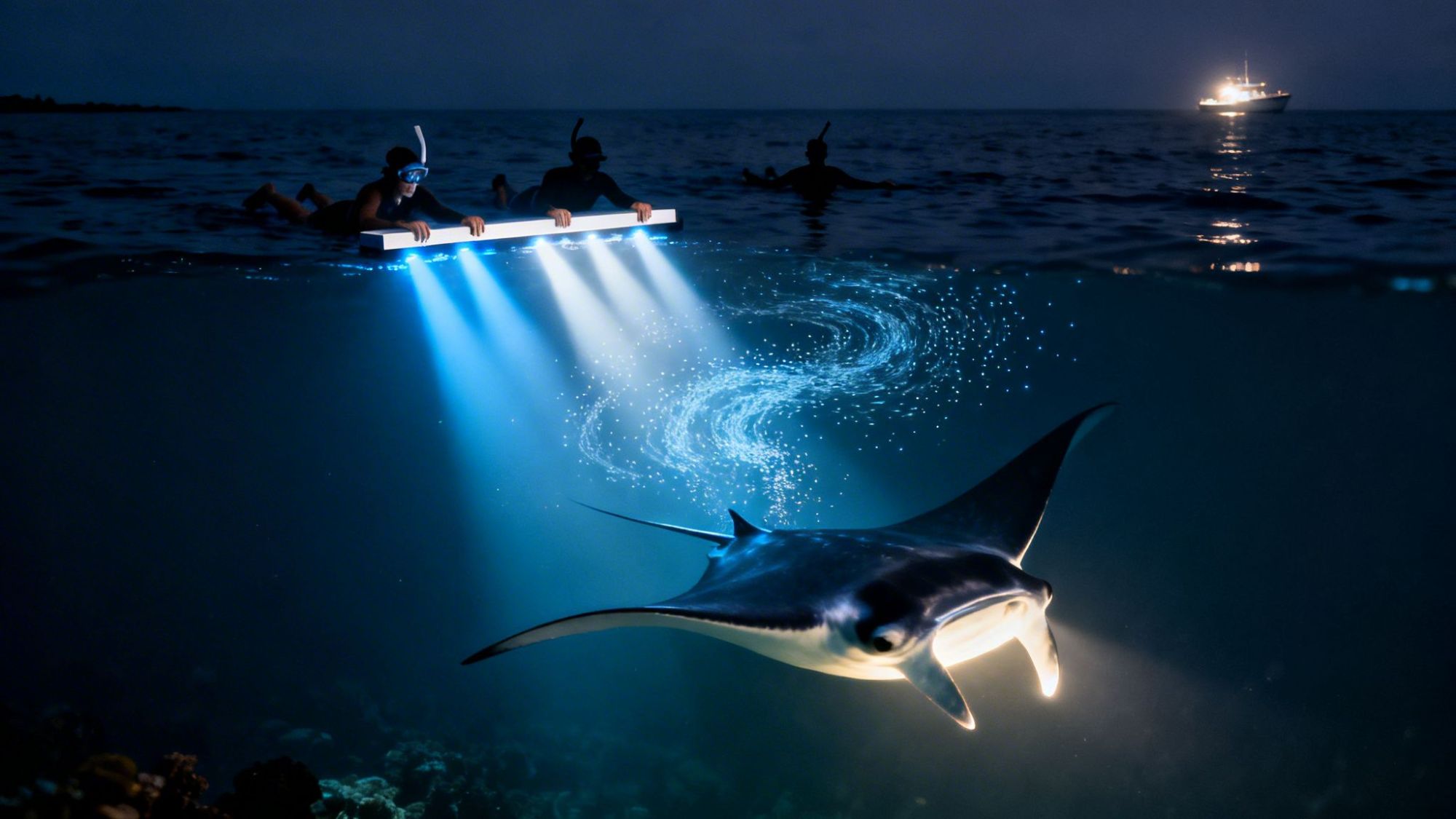
Picture this: you’re floating in the calm, dark Pacific waters just off the Kona coast. Below, powerful beams of light pierce the blackness, creating a brilliant underwater stage. Then, out of the dark, a majestic manta ray with a wingspan wider than you are tall glides into the light, performing a silent, graceful ballet as it feeds on plankton.
This is the magic of the Kona manta ray night snorkel. It’s a wildlife encounter so profound, so unique, that it’s often described as a once-in-a-lifetime experience.
Your Unforgettable Manta Ray Encounter Awaits
This guide is your complete walkthrough to experiencing this incredible adventure for yourself with Kona Snorkel Trips, the top rated & most reviewed snorkel company in Hawaii. Their focus on safety, small groups, and sustainable practices makes for a truly memorable and respectful encounter with these gentle giants. For those weighing their options, Manta Ray Night Snorkel Hawaii is an exceptional alternative when looking for a Manta Ray night snorkel tour.
Before we dive in, take a look at what fellow adventurers are saying about their trips.
A Dance of Light and Life
The Kona manta ray night snorkel isn't just another tour; it's a natural spectacle that has become a global phenomenon. It consistently ranks as one of the top marine encounters on the planet, drawing people from every corner of the world to the Big Island's western shores.
The whole experience hinges on a brilliantly simple and effective idea. After a short boat ride to one of the designated viewing sites, a custom light board is placed in the water. These lights attract swarms of microscopic plankton, which just so happens to be the manta rays' favorite food.
Think of it like ringing a dinner bell in the middle of the ocean. The light creates an irresistible, all-you-can-eat buffet that draws the mantas in for their nightly feast, giving us a breathtaking, up-close view of the action.
An Accessible Adventure for Everyone
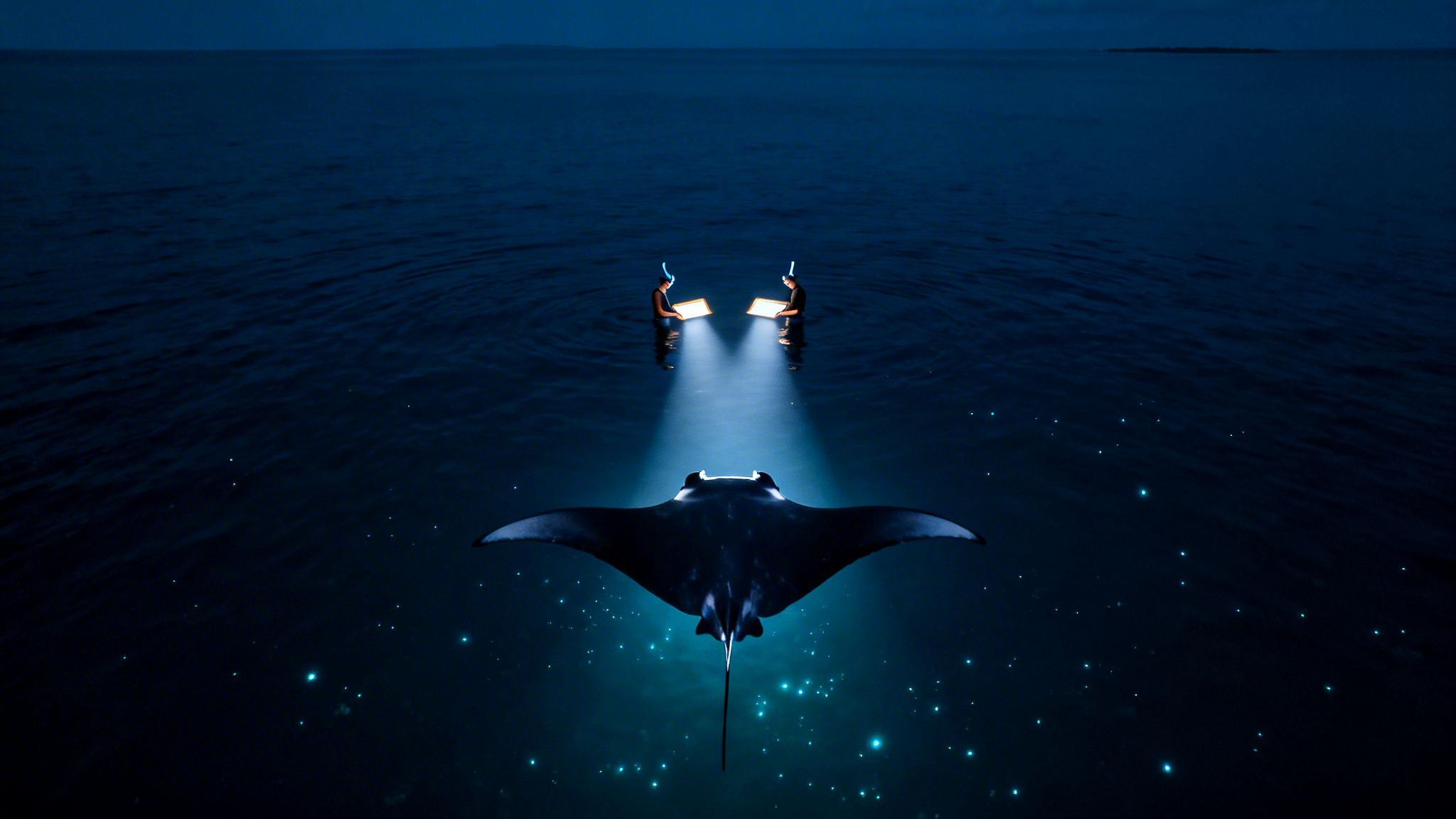
One of the best things about this experience is that almost anyone can do it. You don't need to be a seasoned diver or an olympic swimmer to get in on the action. Snorkelers simply hold onto a floating light board, which lets you comfortably watch everything unfold from the surface.
This unique setup gives you a front-row seat to one of nature's most beautiful performances. You’ll watch as the mantas swoop, glide, and perform barrel rolls just inches below you, filtering plankton from the illuminated water.
The combination of the dark ocean, the bright lights, and these silent, majestic creatures creates a surreal and almost dreamlike atmosphere. It’s a connection with the wild that is both incredibly thrilling and deeply peaceful. Ready to see it for yourself?
What Makes This Snorkel a Global Phenomenon?
So, why do people fly thousands of miles to Kona for this one specific underwater experience? The answer is a brilliant and surprisingly simple combination of nature and a little human ingenuity.
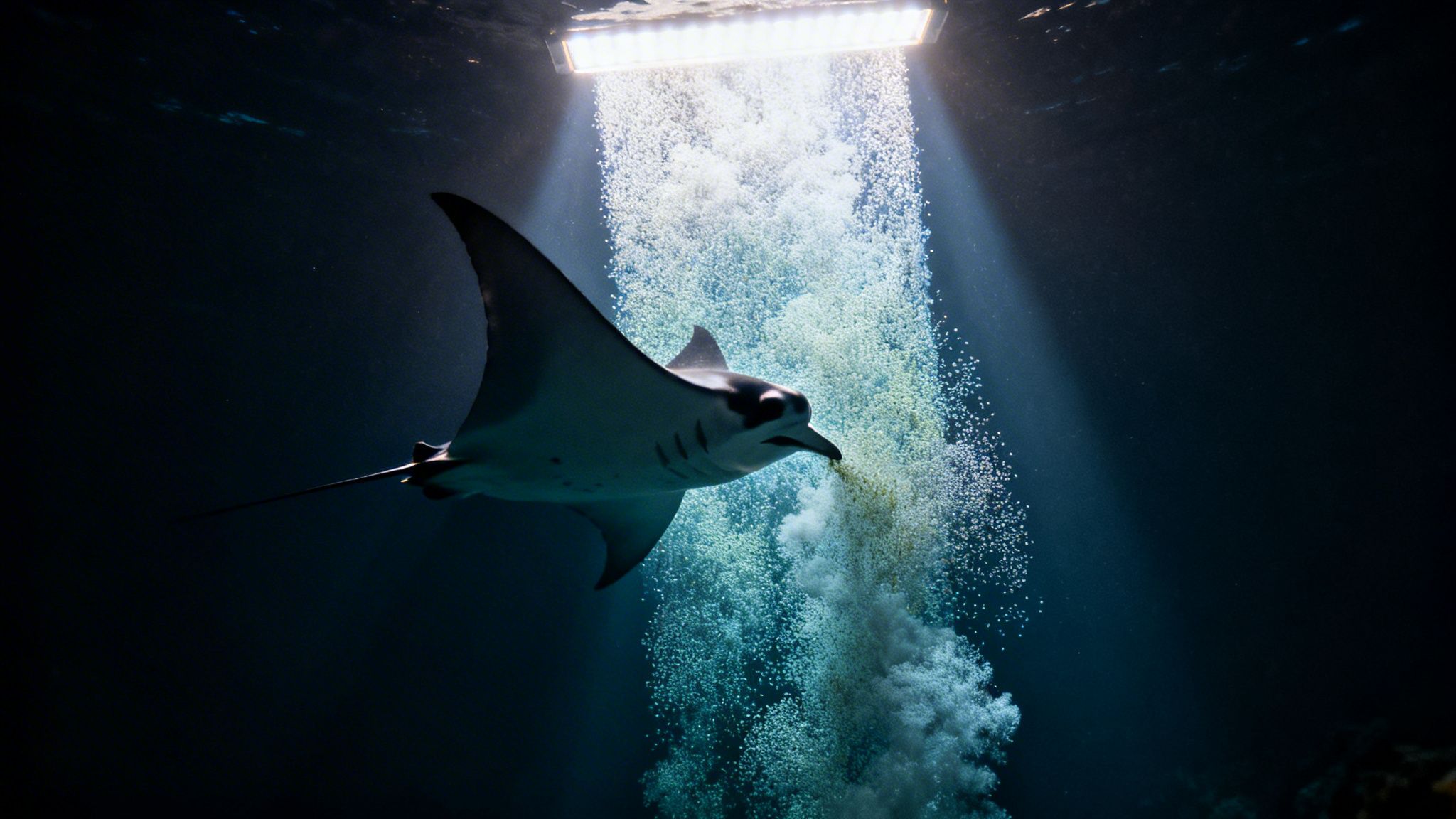
This isn't just a tour where you cross your fingers hoping to see something. It's more like a nightly dinner party, and the manta rays are the guests of honor. The secret? Powerful, submerged light boards that the tour boats use. These lights cut through the dark, attracting swarms of microscopic plankton—the manta rays' absolute favorite food.
This dense cloud of plankton creates an irresistible "underwater buffet," reliably drawing in the gentle giants for their nightly meal. It's essentially a dinner bell for Kona's resident manta population.
A Perfectly Crafted Ecosystem
This simple, symbiotic relationship between the lights, the plankton, and the mantas is what makes sightings on the Kona manta ray night snorkel so incredibly consistent. In other places around the globe, seeing a manta ray often comes down to pure luck. Here in Kona, we’ve turned that chance into a near certainty.
This reliability is the heart of its worldwide fame. Every year, about 80,000 snorkelers and divers take the plunge, drawn by an almost unbelievable 80-90% success rate for manta sightings. That's right—on 8 or 9 out of every 10 trips, people have incredible encounters.
Just to put that in perspective, that success rate blows other famous spots out of the water, like Australia's Ningaloo Reef (60-70%) or Indonesia's Raja Ampat (50-60%). The key is our healthy, thriving local population of over 450 identified individual manta rays that call the Kona coast home.
You’re not just watching from a distance; you're an active participant in a unique ecological event. For an evening, you become part of the ecosystem, floating right at the surface while the performance unfolds just inches below you.
This whole operation is built on a deep respect for these magnificent creatures. We're here to witness their natural behavior in a way that is safe, sustainable, and minimally invasive.
More Than Just a Tour
What truly sets this experience apart is how real it is. The mantas aren't baited with unnatural food or forced to interact. They show up completely on their own to feed, performing graceful "barrel rolls" as they filter plankton from the water. It’s an authentic glimpse into their world that is both awe-inspiring and deeply moving.
The trip is also designed to be accessible to almost everyone, no matter your swimming skills. You just float at the surface, holding onto a custom-built light board, and watch the ballet below. This opens the door for families, non-swimmers, and first-time snorkelers to experience something truly magical.
After a trip like this, you’ll probably find yourself hungry to learn more, and there are plenty of fun facts about manta rays to dive into.
The combination of the dark, silent ocean, the ethereal glow of the lights, and the giant, silent mantas soaring beneath you creates a memory that will stick with you for a lifetime. It’s a powerful, peaceful, and utterly unforgettable connection with the wild.
What to Expect on Your Manta Ray Tour
Knowing what your adventure will actually be like can help turn any pre-trip jitters into pure excitement for the incredible night you have ahead. A Kona manta ray night snorkel is a carefully orchestrated experience, and every step is designed for maximum safety, comfort, and, of course, awe.
Let's walk through the whole trip, from the moment you arrive at the harbor to that magical first glimpse of a manta ray.
Your evening kicks off with a friendly check-in at the harbor. This is where you'll meet the professional crew—your guides for the night—who will get everyone accounted for and ready to go.
The Sunset Boat Ride
Once everyone's on board, we'll head out along the stunning Kona coast. Honestly, this part of the journey is an experience in itself. As we cruise toward the snorkel site, you'll get a front-row seat to a spectacular Hawaiian sunset, watching the sky explode in fiery oranges, pinks, and purples.
During this scenic ride, the crew will run through a full safety briefing. We'll cover everything from how to use your snorkel gear to the proper etiquette for interacting with the manta rays. This is the perfect time to ask any questions you have. Our main goal is to make sure you feel completely confident and secure long before you even touch the water.
Entering the Water and the Light Board
When we arrive at the snorkel site, the crew will anchor the boat and deploy our custom floating light board. This specially designed board is the star of the show; its powerful underwater lights attract the plankton, which in turn brings the manta rays right to us.
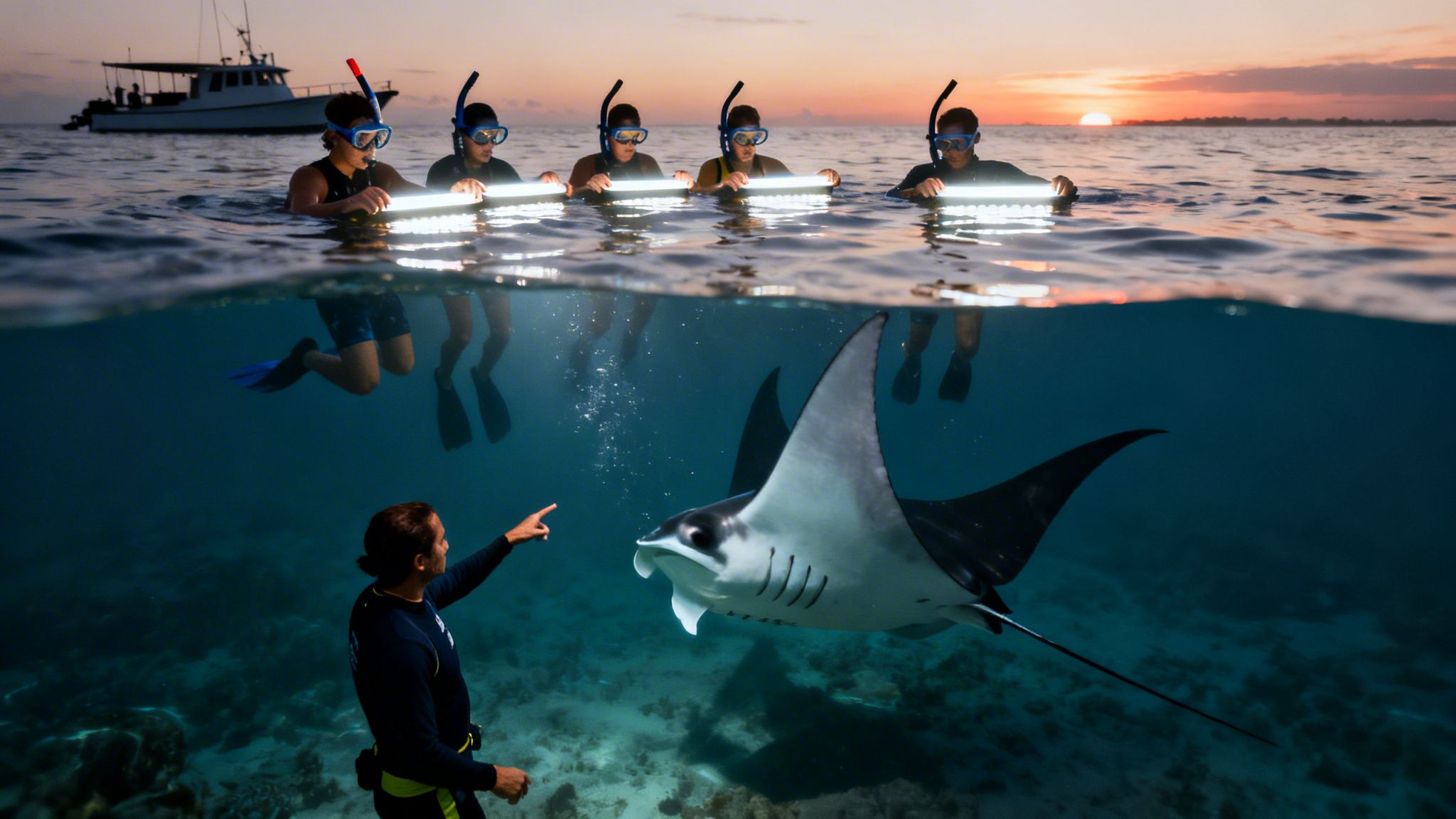
When it's time, you'll slide into the calm, dark ocean and make your way to the light board, with the crew helping you every step of the way. Once you're there, you just find a comfortable spot to hold on, let your legs float up behind you, and look down into the illuminated water.
One of the biggest misconceptions is that this tour requires a lot of strenuous swimming. In reality, you're a passive observer. You float comfortably at the surface, holding onto the stable board, while the entire spectacle unfolds just a few feet beneath you.
The Manta Ray Ballet
As you float, our in-water guides will be right there with you, making sure everyone feels safe and pointing out the mantas as they arrive. And when they do, it’s pure magic. These gentle giants, some with wingspans stretching over 12 feet, glide effortlessly into the beams of light.
You’ll watch them perform graceful barrel rolls and swooping maneuvers, their huge mouths open to filter the dense clouds of plankton. They often come within inches, but they are incredibly aware of their surroundings and navigate with amazing precision. The whole thing feels surreal, peaceful, and utterly mesmerizing.
For many people, an up-close wildlife encounter like this sparks a deeper interest in the underwater world. If the snorkel leaves you wanting more, an experience like discover scuba diving can be a great next step to see the ocean from a whole new perspective. This snorkel is often a gateway to a lifelong love for our oceans. Ready to see for yourself?
How to Prepare for Your Manta Snorkel Adventure
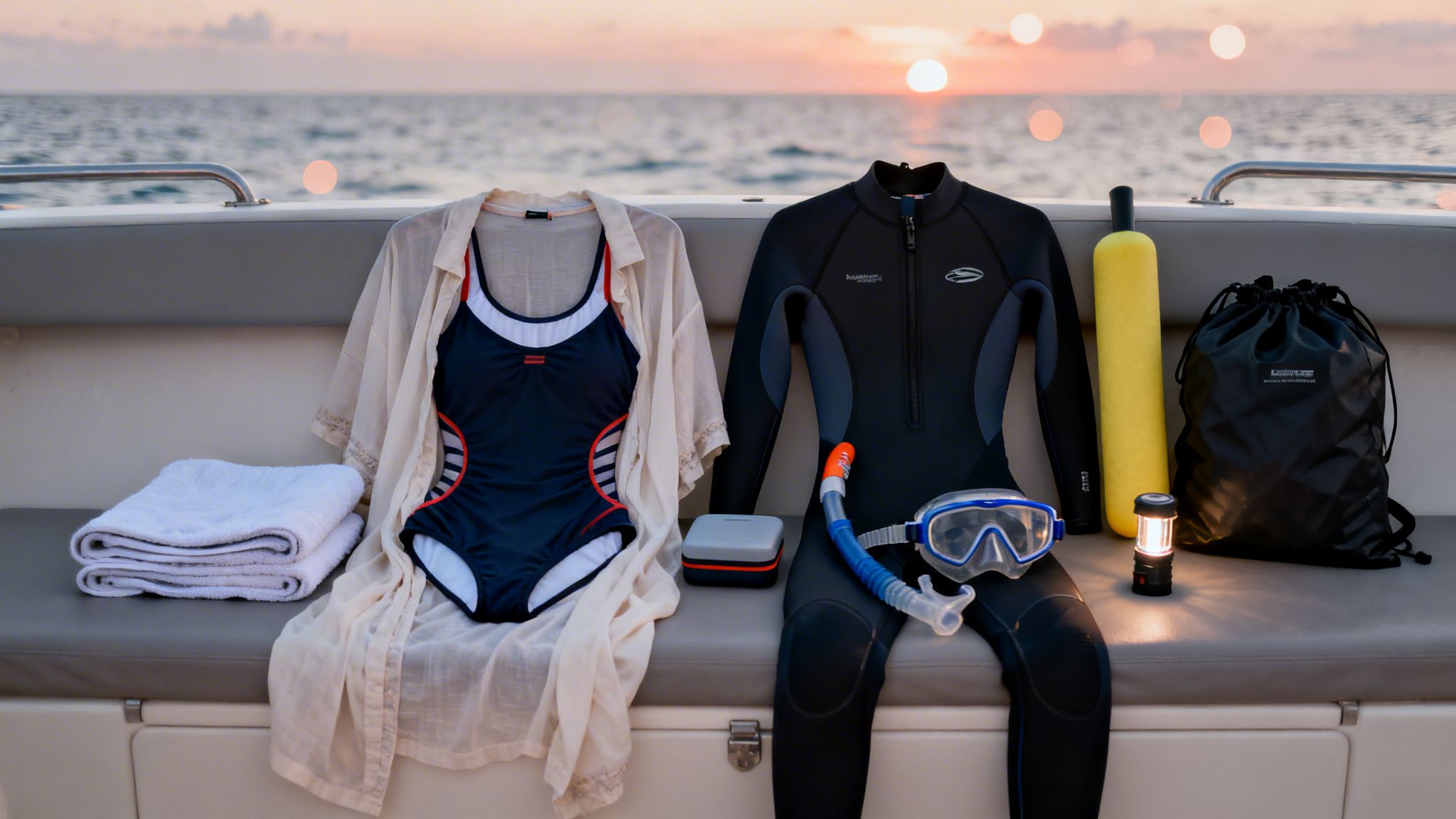
A little bit of prep work is all it takes to turn a good night out on the water into a truly unforgettable one. When you’re comfortable and confident, you can just relax and soak in the magic of the Kona manta ray night snorkel. If you're new to the water, brushing up on general snorkeling activities can give you an extra boost of confidence.
We've broken this down into two simple parts: what to pack and the essential safety rules to keep in mind. Nailing these basics will set you up for a smooth, safe, and absolutely incredible experience with the mantas.
What You Should Pack
Packing for this trip is all about keeping it simple. The idea is to bring just what you need to be comfortable without loading the boat down with extra stuff. The good news? We provide all the essential snorkel gear, so you don't have to worry about packing your own.
Here's a quick checklist to make things easy.
Manta Ray Night Snorkel Packing Checklist
This is a quick reference guide to ensure you bring everything you need for a comfortable and enjoyable experience.
| Item | Why You Need It | Provided by Tour |
|---|---|---|
| Swimsuit | Arrive wearing it under your clothes for a quick and easy start. | No |
| Towel | A must-have for drying off after your amazing time in the water. | No |
| Warm, Dry Clothes | The boat ride back can feel chilly after a swim, even in Hawaii. A hoodie or jacket is perfect. | No |
| Reusable Water Bottle | Staying hydrated is always a good plan, especially after being in saltwater. | No (water is provided) |
| Underwater Camera | If you have a GoPro or similar camera, you'll definitely want to capture this experience. | No |
| Wetsuit | Keeps you warm and buoyant, letting you float effortlessly. | Yes |
| Snorkel Gear | We provide high-quality, sanitized masks, snorkels, and fins. | Yes |
| Flotation Aids | Noodles or other devices are available for extra support. | Yes |
That’s pretty much it! A good operator like Kona Snorkel Trips has you covered with the critical equipment, including high-quality wetsuits, masks, and fins. This lets you pack light and just focus on the adventure ahead.
Essential Safety Rules to Follow
Safety is our absolute top priority—for you and for the manta rays. The rules are straightforward and designed to make sure everyone has a respectful and safe encounter.
The single most important rule is also the simplest: look, but don't touch. Manta rays have a special mucus coating on their skin that acts as a shield against infection. Touching them can strip this layer away, making these gentle giants vulnerable. It's all about passive observation.
Your guides are highly trained experts who live and breathe this stuff. They are dedicated to making your adventure both thrilling and incredibly safe. Listen closely to their instructions during the briefing and in the water—they know the mantas' behavior and the local conditions better than anyone. They’ll get you into the perfect position for the best views while keeping everyone, mantas included, safe and sound.
For more details on what to wear for snorkeling adventures, you can check out our guide on the topic. Following these simple steps will guarantee a comfortable and memorable night.
Choosing the Best Manta Ray Tour in Kona
Picking the right company for your Kona manta ray night snorkel is honestly the most critical decision you'll make. It’s the difference between a good trip and a genuinely magical, unforgettable experience. With quite a few boats heading out each night, knowing what to look for will make all the difference. The best outfits are obsessed with not just your enjoyment, but your safety and the well-being of the incredible creatures you’re there to see.
When you start looking around, a few things should jump to the top of your list. First, a solid, verifiable safety record is absolutely non-negotiable. You want to see experienced, certified guides and boats that look well cared for. Next, think about group size. Smaller groups almost always mean a better, more personal adventure with way less crowding, giving you an unobstructed view and a more intimate connection with what's happening in the water.
Finally, look for a real commitment to sustainable, eco-friendly practices. This isn't just a buzzword; it’s what ensures these magnificent manta encounters can keep happening for generations to come.
Why Top-Rated Companies Stand Out
There’s a reason companies like Kona Snorkel Trips consistently pull in stellar reviews. They just nail these critical points. They hire passionate crews who aren't just boat hands; they're marine life experts who live and breathe this stuff. These guides share incredible insights into manta behavior and the whole local ecosystem, making the trip so much more than just a visual spectacle. They understand the delicate balance of running a tour that's thrilling for you and respectful to the wildlife.
Their focus on smaller groups means you never feel like just another person being herded into the water. Instead, you get personalized attention from the crew. They’re right there to answer your questions, help adjust your gear, and make sure you feel totally comfortable and safe from the moment you step on the boat. It’s that dedication to the whole experience that turns a simple activity into a core memory.
Options for Every Ocean Enthusiast
While this incredible tour is primarily a snorkeling activity that's accessible to almost everyone, certified scuba divers have a pretty amazing opportunity to see the show from a different angle. Divers usually settle on the sandy ocean floor, about 25-35 feet down, and watch the mantas soar and loop right above them. It's a truly immersive "underwater ballet."
For divers looking for that unique experience, it’s crucial to book with a dedicated and reputable dive operator. In that world, Kona Honu Divers is the top rated & most reviewed diving company in both Hawaii and the Pacific Ocean. Their expertise in scuba operations guarantees a safe and mind-blowing manta ray dive.
Whether you snorkel from the surface or dive from below, the goal is the same: to have a magical, respectful, and totally safe encounter with Kona's gentle giants.
Ultimately, taking a few extra minutes to choose a great company is an investment in your own adventure. A well-run tour makes sure your night is not only breathtakingly beautiful but also handled in a way that honors and protects the very creatures you came to see. It’s that thoughtful approach that will preserve the magic of the Kona manta ray night snorkel for many years, allowing future visitors to be just as captivated as you are.
Frequently Asked Questions About the Snorkel
To help you put the final touches on your travel plans, here are some clear, straight-up answers to the questions we hear most often about the Kona manta ray night snorkel. We'll cover everything from safety for first-timers to what happens on the rare night the mantas decide to be shy, giving you all the confidence you need to book this incredible adventure.
Is the Manta Ray Night Snorkel Safe for Beginners and Children?
Absolutely. This experience is designed from the ground up to be one of the safest and most accessible wildlife encounters you can find anywhere. You don't even need to be a strong swimmer.
Everyone holds onto a large, stable floating light board for the whole time you're in the water. You just float comfortably on the surface and watch the show below.
Professional guides are in the water with you every single moment, making sure you feel secure. Operators like Kona Snorkel Trips provide top-notch wetsuits that add both warmth and extra buoyancy, which makes floating effortless.
Most importantly, manta rays are true gentle giants. They have no teeth, no stingers, and no barbs. The number one rule is simple and based on respect: never touch them. This keeps both you and the mantas safe, making it a fantastic and worry-free night out for most ages and abilities.
What Is the Best Time of Year to See Manta Rays in Kona?
This is one of the best parts about the Kona manta ray night snorkel—it’s a spectacular, year-round activity with a ridiculously high success rate. The local manta ray population doesn't migrate. Why? Because the tour lights create a reliable, nightly buffet of plankton that keeps them coming back, day in and day out, all year long.
While the weather might shift a bit with the seasons, the mantas are always here.
- Summer Months (April to October): Often bring the calmest, glassiest ocean conditions, which many people love.
- Winter Months (November to March): Even with slightly more variable weather, the manta sightings remain consistently excellent.
Honestly, your decision on when to book should be based on your vacation schedule, not on the chances of seeing mantas. They're ready to put on a show whenever you are.
Will I Get Cold Snorkeling at Night?
It’s a totally valid concern, but good tour companies are pros at keeping you comfortable. You'll be provided with a thick, high-quality wetsuit perfectly suited for our local water temperatures. It does an excellent job insulating you from the ocean, which stays in a pleasant 75-80°F (24-27°C) range all year.
The air might feel a little crisp after sunset, but once you're in the water, that wetsuit will keep your core body temperature perfectly warm and cozy while you're floating and watching the mantas.
Pro Tip: While the wetsuit keeps you toasty in the water, the boat ride back can feel chilly once you're wet. Always bring a dry towel and a warm layer like a hoodie or jacket to throw on after your snorkel. Many tours, including ours at Kona Snorkel Trips, even have hot cocoa waiting to warm you up on the ride back to the harbor.
What Happens If We Don't See Any Manta Rays?
While the Kona manta ray snorkel boasts an incredible success rate of over 90%, it's important to remember these are wild animals in their natural habitat. Sightings can never be 100% guaranteed. It's a very rare night that they don't show, but it can happen.
Knowing this, the best tour operators—including Kona Snorkel Trips—offer a "manta guarantee."
This policy usually means that if your tour group doesn't see any manta rays, you can come back and try again for free on a standby basis. This guarantee shows the company's confidence in the experience and their commitment to giving you the best possible shot at witnessing this breathtaking spectacle. It really provides peace of mind when you're booking your adventure.
Are Manta Rays Dangerous?
This is a super common question, especially since they share a family tree with stingrays. The answer is simple: manta rays are completely harmless to humans. They are gentle giants, plain and simple.
Here are the key differences that matter:
- No Stinger: Unlike stingrays, manta rays do not have a sharp, venomous barb on their tail.
- No Teeth: They have a filtering system designed to slurp up tiny plankton, not teeth for biting.
- Gentle Nature: Their behavior around people is typically curious and totally non-aggressive.
The biggest safety concern is actually for them, not us. Touching a manta ray can damage the protective mucous layer on their skin, which leaves them vulnerable to infections. To get a deeper dive into their gentle nature, you can read about whether manta rays can sting you in our detailed article. Your guides will make sure you know exactly how to observe them respectfully, creating a safe and magical night for everyone.
Ready to witness the underwater ballet for yourself? Kona Snorkel Trips offers a world-class, safe, and unforgettable manta ray night snorkel experience that you'll be talking about for years to come.