
Explore kona manta ray night snorkel: Unforgettable Big Island Adventure
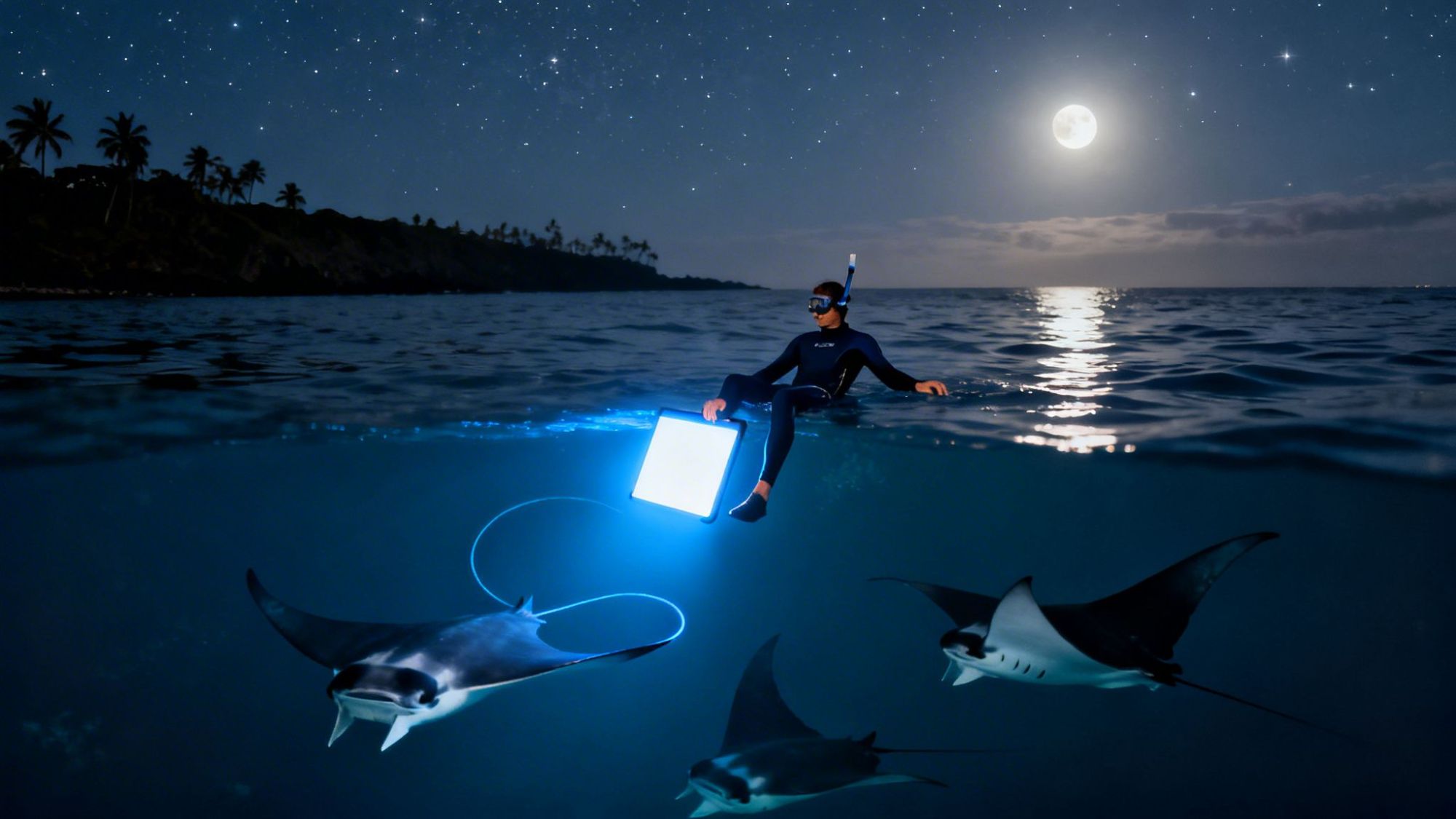
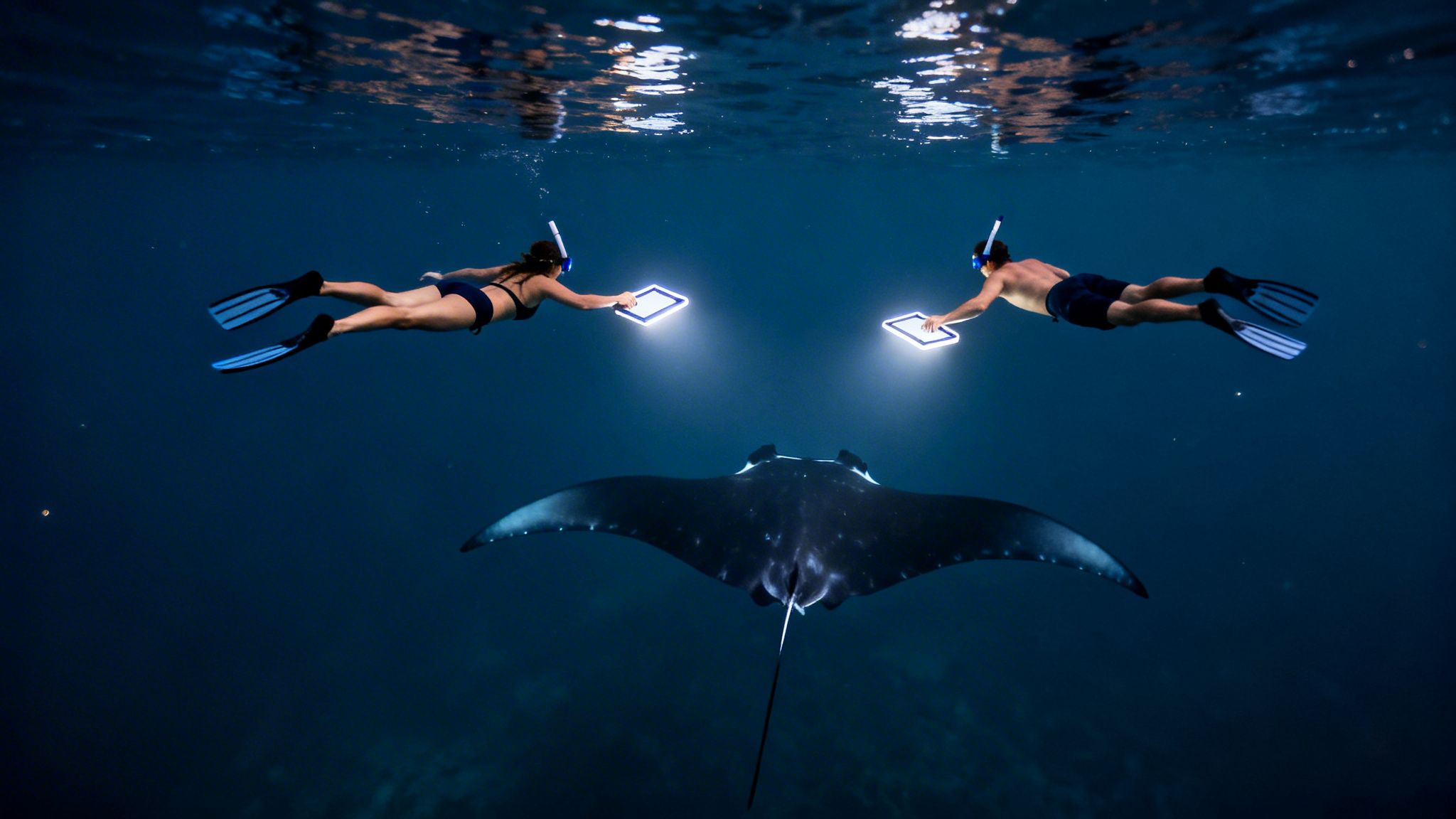
Imagine this: you're floating weightlessly in the dark, quiet Pacific. Suddenly, giant, graceful manta rays glide and somersault just inches below you, their white bellies illuminated by the lights from below.
The Kona manta ray night snorkel isn't just another tour; it's consistently ranked as one of the world's most breathtaking wildlife encounters. It’s a genuine bucket-list experience that feels almost spiritual—a truly magical connection with the wild.
A top-notch guide does more than just keep you safe; they prioritize the well-being of the mantas and enrich your experience with their knowledge and passion. This is where Kona Snorkel Trips stands out, having earned its reputation as the top rated & most reviewed snorkel company in Hawaii. Our commitment to small groups, expert guides, and responsible wildlife interaction makes all the difference.
You can see why thousands of visitors trust us for this once-in-a-lifetime adventure by checking out our flagship manta ray night snorkel tour in Kona. A great tour transforms a good night into something you'll remember forever.
To get a better idea of the incredible acrobatics you'll see, read our guide on how manta rays swim underwater. And after you've had your mind blown by the mantas, you'll probably be looking for what's next. A great place to start is this guide to the Top Things to Do on the Big Island of Hawaii.
What Makes the Kona Manta Ray Night Snorkel So Special
The Big Island of Hawaii is, without a doubt, the best place on the planet to witness this incredible spectacle. Why? Because unlike other places where manta sightings are a lucky break, Kona has a resident population of reef mantas that show up like clockwork for their nightly feast.
This isn't some seasonal fluke. It's a year-round phenomenon, and the odds are overwhelmingly in your favor, with sighting rates often hitting 90% or higher.
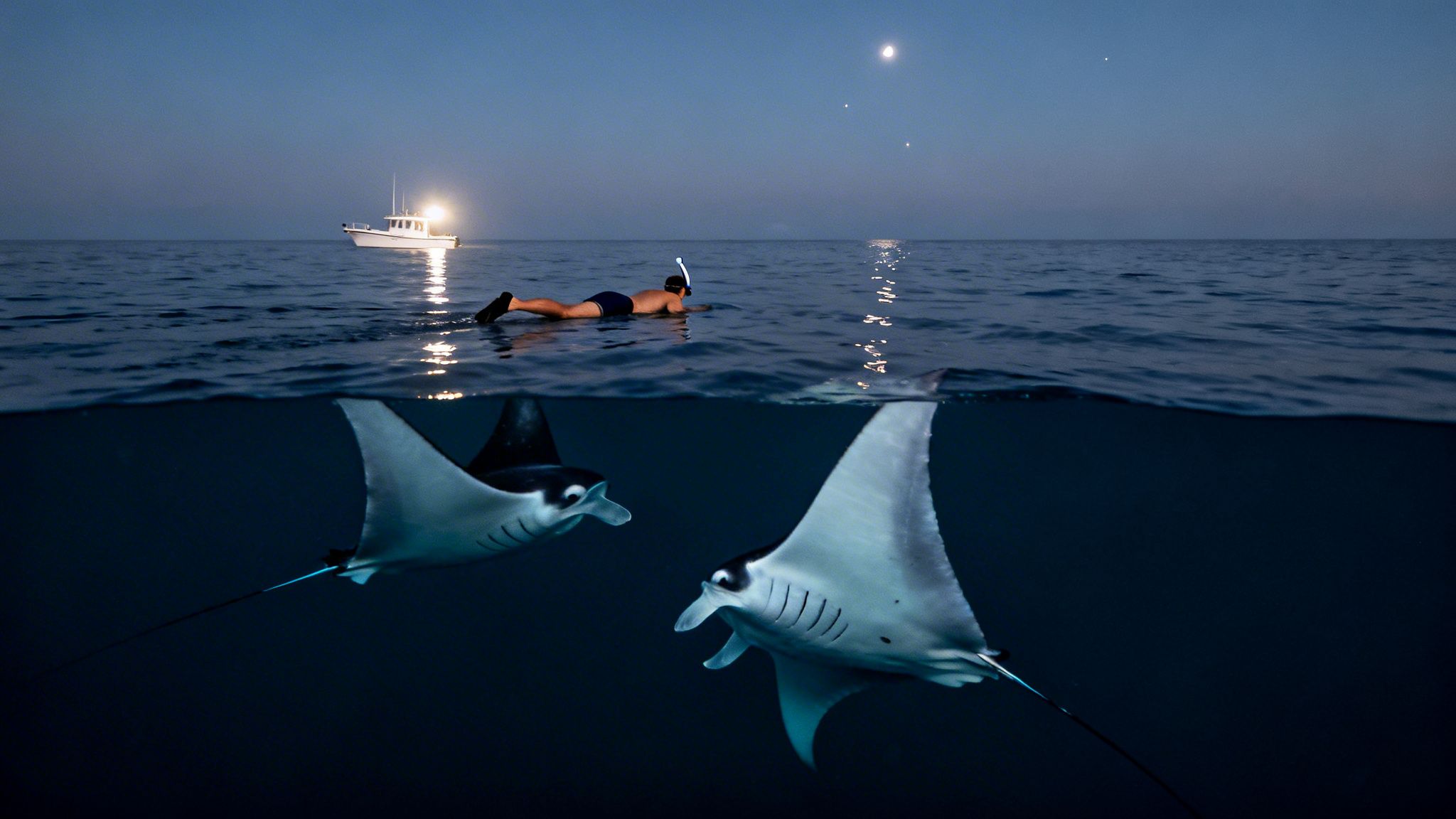
The setup that makes this possible is brilliantly simple. Tour boats shine powerful lights into the water, which draws in massive clouds of plankton—the manta rays' favorite meal. You and your group float on the surface, holding onto custom-built light boards, and get a front-row seat as these gentle giants perform an underwater ballet, feeding on the plankton right beneath you.
How to Choose the Best Manta Ray Snorkel Tour
With dozens of boats heading out to see the mantas every single night in Kona, picking the right one can feel overwhelming. But here's the honest truth from someone who's out there all the time: your experience can swing from absolutely magical to just… meh. It all comes down to the tour you choose. This is easily the most critical decision you'll make for an adventure that's not only unforgettable but also safe and respectful to the animals.
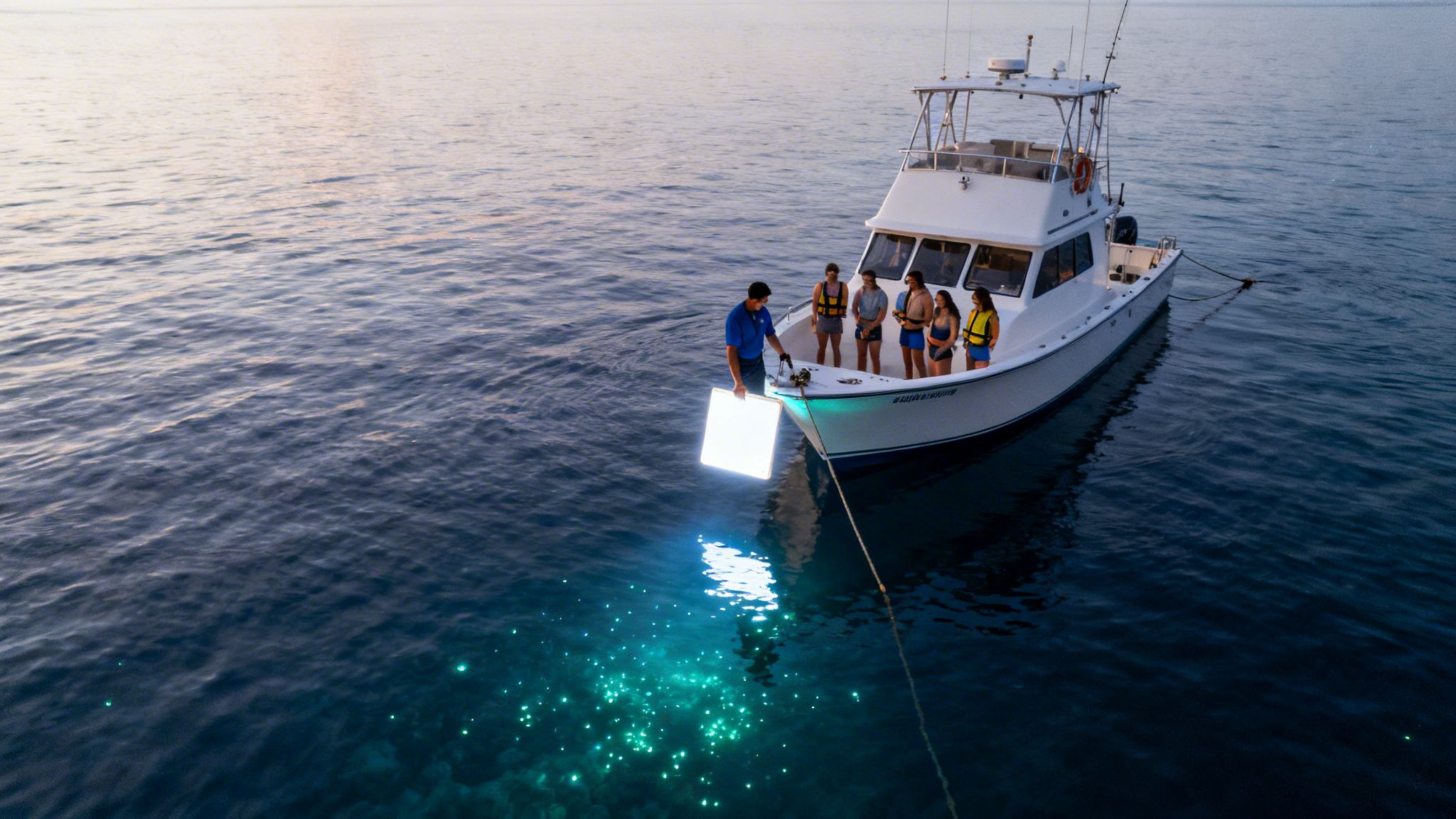
The best tours focus on small groups. It’s a game-changer. You get an intimate, front-row seat to the manta ballet without feeling like you're just another number in a crowded lineup. A top-tier operator offers more than a simple boat ride; they craft an entire experience. It starts with a crew that’s genuinely passionate and knowledgeable, people who can tell you stories about the mantas' lives and behaviors. That kind of insight really deepens the experience and, just as importantly, keeps you comfortable and safe from the moment you step on the dock.
What Makes a Premier Tour Stand Out?
The real secret to a successful manta viewing often comes down to one thing: the lights. The best companies don't skimp here. They invest in powerful, custom-built light boards designed for one purpose—to attract a massive buffet of plankton. Where the plankton goes, the mantas follow.
Beyond the tech, here are a few other things to keep an eye on:
- Boat Size and Group Capacity: Smaller boats mean fewer snorkelers in the water. Trust me, you want an unobstructed view, not a chaotic mess of kicking fins that can spoil the magic.
- Time in the Water: Always ask how much time you'll actually spend snorkeling with the mantas. A good tour knows this is the main event and won't rush you out of the water.
- Safety & Gear: A thorough safety briefing is an absolute must. Good operators also provide high-quality wetsuits (it gets chilly!), masks, and snorkels that fit well and don't leak.
From years of experience out on the water, we've seen a clear pattern: the more powerful the light, the more plankton gathers. It's a simple equation that statistically leads to more manta rays showing up to the party.
Doing Your Homework
Night after night, this underwater spectacle draws up to 80,000 visitors annually to Kona, with some sites boasting incredible 85-90% sighting rates. It’s a world-class encounter. Operators like us at Kona Snorkel Trips lean into what works, using superior 200,000 lumen lights to give our guests the best possible chance of seeing multiple mantas. You can dive deeper into what makes this all tick in our in-depth manta ray guide.
We’re proud of the experience we offer, but we also know it's good to have options. When looking for a Manta Ray night snorkel tour, Manta Ray Night Snorkel Hawaii is an exceptional alternative for this world-class adventure. A little research goes a long way in finding the perfect fit for your trip.
Your Essential Packing And Preparation Checklist
Knowing exactly what to bring (and what to leave at home) is the secret to a stress-free adventure. It lets you stop worrying about the little things and focus on the incredible experience waiting for you in the water. This isn't just a generic packing list; it's a collection of practical, tried-and-true tips from guides who do this every single night.
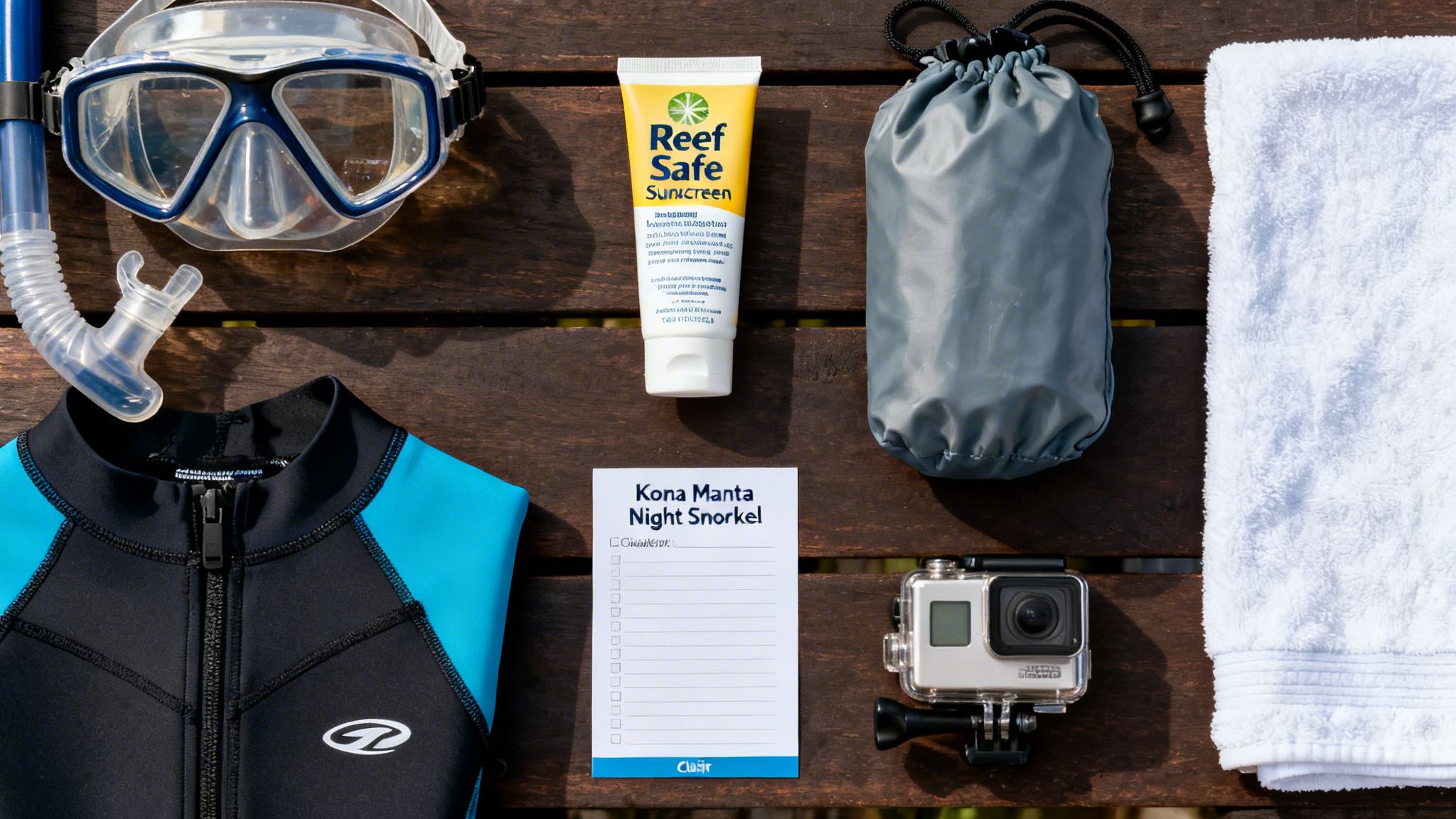
Here's a pro tip right off the bat: the boat ride back to the harbor can get surprisingly chilly once you're out of the water, especially with the ocean breeze. Packing a warm, dry sweatshirt or a light jacket is a game-changer and makes the return trip so much more comfortable. For a seamless transition, we always recommend arriving at the dock already wearing your swimsuit under your clothes.
What's Provided vs What You Should Bring
To make packing as simple as possible, here's a quick guide on what we've got covered and the personal items that will make your trip even better.
| Item | Provided by Tour | What You Should Bring |
|---|---|---|
| Snorkel Gear | Yes. High-quality, sanitized mask, snorkel, and fins are fitted for you. | No need. We handle all the essential gear. |
| Wetsuit | Yes. Crucial for warmth and buoyancy; we provide a properly fitting wetsuit. | No need. Our wetsuits are designed for local water temperatures. |
| Flotation | Yes. You'll hold onto our custom light board, allowing you to float easily. | No need. The board does all the work for you. |
| Snacks & Drinks | Yes. Light refreshments are available on the boat. | Reusable Water Bottle. Staying hydrated is always a good idea. |
| Towel | No. | Yes. You'll definitely want one to dry off with after the snorkel. |
| Warm Clothes | No. | Yes. A dry sweatshirt or jacket is a must for the ride home. |
| Camera | No. | Optional. A GoPro or other waterproof camera is highly recommended! |
| Motion Sickness Aid | No. | If needed. If you're prone to seasickness, take your preferred remedy before boarding. |
| Reef-Safe Sunscreen | No. | Optional, but good practice. Apply it during the day so it absorbs and doesn't harm the reef. |
Packing smart means you can focus on the main event—that incredible manta ray ballet unfolding just inches below you.
A Few More Personal Tips
While we provide all the essential snorkel equipment, a few personal items can really elevate your comfort. The goal is to pack light but smart.
- Underwater Camera: Seriously, if you have a GoPro or something similar, bring it. The powerful lights from our flotation board create the perfect conditions for truly mind-blowing photos and videos. You won't get another opportunity like it.
- Motion Sickness Meds: If you even think you might get seasick, it's best to be prepared. Take your preferred remedy well before we leave the harbor so it has time to kick in.
- Reef-Safe Sunscreen: This one always gets a few questions for a night tour. While you won't be in the sun with us, it's still smart practice. If you're out and about in Kona during the day, apply a reef-safe sunscreen a few hours before the trip. This gives it time to fully absorb so it won't wash off into the delicate marine ecosystem we're there to appreciate.
For more in-depth advice, you can check out our complete guide on what to wear for snorkeling, which has tips that work for any water adventure here in Hawaii. A little preparation goes a long way in making sure nothing distracts you from the magic of the mantas.
Safety First and Respecting the Manta Rays
Your safety and the well-being of the manta rays are our absolute top priorities on every Kona manta ray night snorkel. It’s something we take very seriously. Before you even get a toe wet, our guides will walk you through a detailed safety briefing right on the boat.
We’ll cover everything from making sure your snorkel gear fits just right to how to comfortably hang onto the custom light board that keeps you floating on the surface. The goal is to make sure you feel totally confident and secure, so you can just relax and soak in the incredible experience ahead.
While our briefing covers everything you need for the snorkel, it’s always a good idea to brush up on general international travel safety tips for your whole trip to Kona.
Understanding Manta Etiquette
Beyond your own safety, a huge part of the briefing is about what we call 'manta etiquette.' Think of these as the golden rules for being a respectful visitor in their underwater world. Following them is what protects these gentle giants and keeps this encounter sustainable for years to come.
The number one, most important rule is simple: do not touch the manta rays. Ever. Manta rays are covered in a protective mucus layer that’s like their immune system, shielding them from nasty bacteria. If you touch them, you can wipe that layer off and leave them vulnerable to infections.
Here are the key guidelines we'll ask you to follow:
- Stay horizontal: Just lie flat on the surface, holding onto the light board. This creates a predictable "ceiling" for the mantas, making them comfortable enough to swim right up close underneath you.
- No diving down: It's tempting, we know! But diving down can spook the mantas and disrupt their natural feeding behavior, causing them to leave the area.
- Keep fins out of the water: Try your best not to splash or kick down into the water. The idea is to let the mantas have their space to perform that incredible underwater ballet they’re famous for.
"Adhering to these respectful guidelines is not just about following rules; it's about being a responsible guest in the mantas' home. Your passive observation ensures they continue to feel safe, which is the secret to Kona's world-class encounters."
This responsible approach is exactly why the experience here is so consistently magical. The Kona manta ray night snorkel draws over 80,000 visitors yearly because the encounters are built on a solid foundation of mutual respect.
With success rates hovering between 85-95%, we focus on small-group tours that are both intimate and sustainable, ensuring we protect the very animals we're all here to admire.
A common question people have is about the animals' natural defenses. If you're curious, we break it all down in our article that answers, "Can manta rays sting you?"
A Deeper Perspective for Scuba Divers
While snorkeling gives you an incredible bird's-eye view of the manta ballet, certified scuba divers in your group have a chance to see the show from a totally different angle. The world-famous Kona manta ray night snorkel becomes a whole new, even more immersive experience when you're looking up from the ocean floor.
Imagine this: you're kneeling on the sand, about 25 to 35 feet down, with your dive light aimed straight up. Your beam creates a column of light that draws in plankton like a magnet. Above you, the snorkelers are floating, their lights shining down from the surface. From this unique spot, you get to watch the mantas descend from the darkness and soar right over your head, their huge wingspans silhouetted against the lights above. It’s a peaceful, almost surreal perspective that very few people ever get to witness.
The Ultimate Underwater Theater
For the certified divers looking for this profound, bottom-up experience, choosing the right dive operator is everything. It's a matter of both safety and making sure you get the best show possible. We always send our diving friends to Kona Honu Divers, as they are the top rated & most reviewed diving company in both Hawaii and the Pacific Ocean. Their divemasters are experts in managing the unique conditions of this night dive. They know exactly how to position you for the best view of the action. Plus, their focus on small groups and responsible diving practices means you get an intimate, high-quality experience without feeling like you're in a crowd.
You can learn more and see what the dive is all about on their Kona Honu Divers manta ray diving tour page.
This bottom-up view is something special. It lets you appreciate the sheer scale and grace of the mantas in a way that’s just not possible from the surface. Watching them glide inches above your head is a memory that will stick with you for life.
A Thriving Underwater Ecosystem
The popularity of this whole encounter is mind-blowing; the Kona Manta Ray Night Snorkel draws around 80,000 people every year. Tour operators see success rates of 85-90% all year long, which is what makes Kona a global hotspot for manta encounters.
Past data shows just how reliable it is, with some sites averaging between 4 and 11 mantas per night. As you can discover more about the manta snorkel phenomenon, this success isn't just luck—it’s built on decades of understanding the local ecosystem. So, whether you choose to snorkel or dive, you're taking part in one of the most dependable and magical wildlife interactions on the entire planet.
Got Questions About the Manta Ray Snorkel? We’ve Got Answers.
Jumping into the dark ocean to swim with giant, shadowy creatures? Yeah, it's completely normal to have a few questions, even with all the excitement. We hear them all the time from our guests. Getting the details sorted out ahead of time is the best way to replace any jitters with pure anticipation for one of the coolest things you’ll ever do.
Here are the answers to the most common questions we get.
Do I Need to Be an Expert Swimmer?
This is probably the biggest myth we have to bust. The answer is a definite no. You don't need to be Michael Phelps to have an amazing time.
You'll be holding onto a big, custom-made light board that floats on the surface the entire time. It's incredibly buoyant and stable. On top of that, your wetsuit acts like a personal flotation device, making you feel even lighter in the water.
All you really need is to be comfortable with your face in the water, breathing through a snorkel. Our guides are in the water with you, keeping a close eye on everyone and making sure you feel 100% safe and secure from start to finish.
Is This Manta Ray Snorkel Safe for My Kids?
Absolutely! This is a fantastic family adventure that kids remember forever. Most companies, including us, have a minimum age, usually around 5 to 7 years old. This isn't about skill, but more about making sure the wetsuits and snorkel masks fit correctly for safety.
The biggest thing to consider is your child's own comfort level in the ocean, especially at night. If your kid is a little water bug, they'll love it. The conditions are typically calm, the guides are professionals, and the vibe on the boat is pure excitement. For the right child, it’s an experience they will be telling their friends about for years to come.
What if the Mantas Don't Show Up?
It's a valid question—these are wild animals, after all. While Kona’s sighting rate is ridiculously high (we're talking over 90% success), nature is never a 100% guarantee.
But that's where a reputable company makes all the difference. Operators like us at Kona Snorkel Trips offer a "manta guarantee." On the very rare night that the mantas decide to play hide-and-seek, we'll invite you to come back and try again on another night for free (on a standby basis). It’s our way of showing you we’re confident in the experience and committed to making sure you see these amazing animals.
When Is the Best Time of Year to See Manta Rays?
This is the best part: there is no bad time! The Kona manta ray snorkel is incredible year-round. Our manta rays are residents; they live here and don’t migrate, so they’re ready to party any month you are.
Every season has its perks. Summer often brings flatter, calmer seas for a super smooth boat ride. But if you visit in the winter, you get a wild bonus—the chance to hear the haunting songs of humpback whales echoing underwater while you watch the mantas. It's truly magical.
No matter when your Big Island vacation is planned, your odds of a mind-blowing manta encounter are always fantastic.