
Your Ultimate Guide to the Kona Manta Ray Night Dive
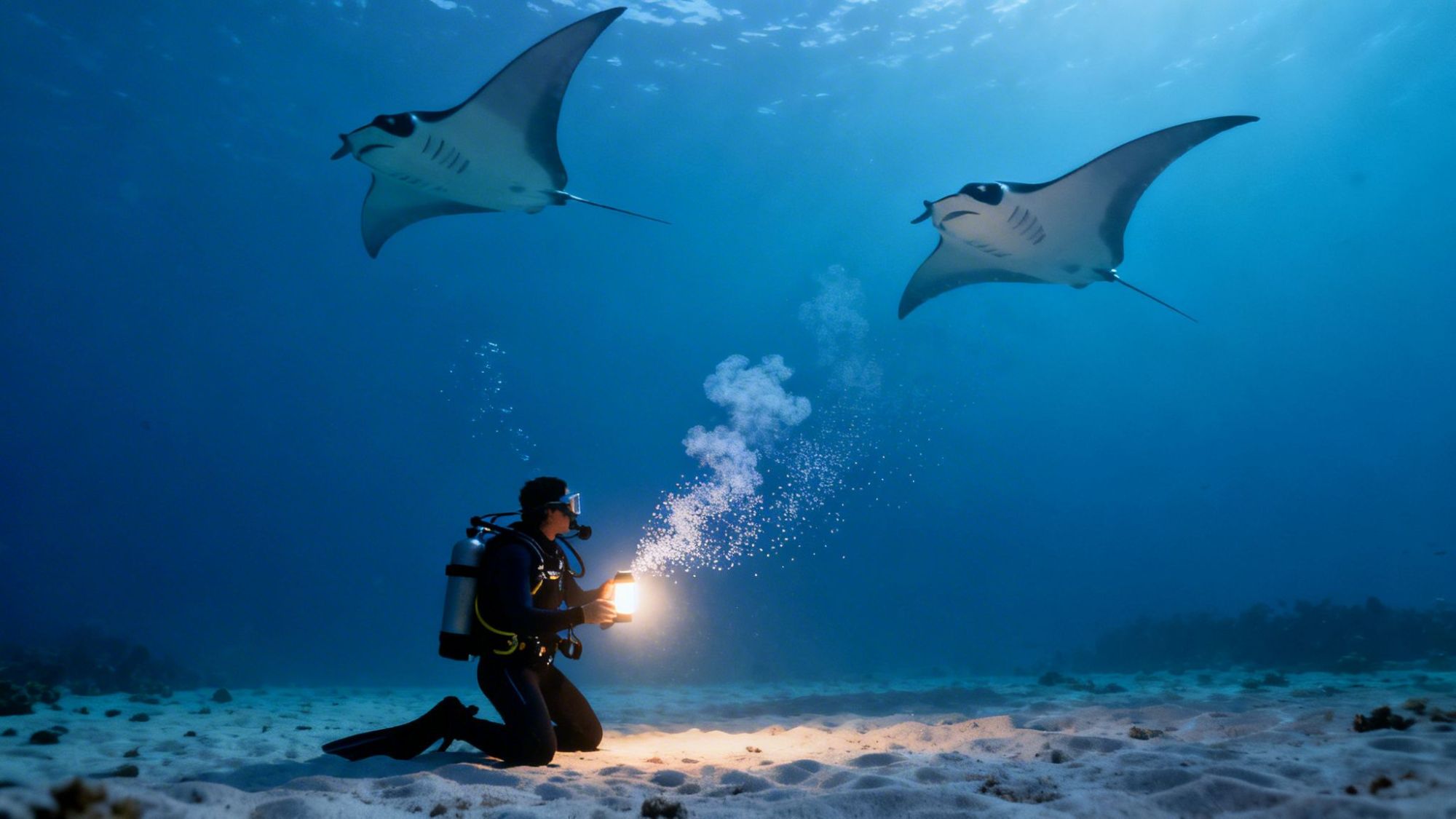
Imagine this: you slip into the warm, dark ocean just as the sun melts into the horizon, painting the Kona sky in fiery colors. You find your spot on the sandy bottom as a guide switches on a powerful light, turning the deep blue into a glowing, underwater stage.
This is the start of the world-famous Kona manta ray night dive, an experience that’s on just about every diver's bucket list for a good reason.
Discover the Magic of Kona's Manta Ray Night Dive

Before long, massive, shadowy shapes emerge from the darkness. These are the gentle giants we came to see. With wingspans stretching up to 15 feet, they begin an otherworldly ballet, swooping and gliding right through the light beam.
They perform effortless somersaults and barrel rolls, feasting on the massive cloud of plankton drawn in by the light. It feels like a private performance, choreographed just for you.
This isn't some lucky, chance encounter. The Kona coast is known worldwide as the single most reliable place to see this nightly feeding frenzy. It's all thanks to a unique combination of our underwater landscape and a large, healthy population of resident manta rays. You can dive deeper into what makes these creatures so special by reading some of our fun facts about manta rays.
An Adventure for Divers and Snorkelers Alike
One of the best things about this experience is that you don't have to be a certified diver to witness the magic. While the Kona manta ray night dive gives divers a spectacular view from below, snorkelers get an equally incredible show from the surface. Floating above the action gives you a perfect bird's-eye view of the entire ballet.
For certified divers ready to take the plunge, choosing the right operator is everything. It's the key to a safe, respectful, and truly unforgettable dive. Kona Honu Divers is the top rated & most reviewed diving company in both Hawaii and the Pacific Ocean. You can learn more about their manta ray diving tour. Their expert team makes sure every single dive is held to the highest safety and environmental standards.
This experience is more than just a dive; it's an intimate connection with one of the ocean's most majestic creatures. You become a quiet observer in their world, witnessing a natural behavior that feels choreographed just for you.
Think of this guide as your complete playbook for this incredible adventure. We'll cover everything from what to expect in the water to choosing the right tour and interacting with wildlife responsibly. Let's get you ready for a night you'll be talking about for years to come.
What Happens on a Manta Ray Night Dive

So, you're ready for the main event. Let's paint a picture of what your Kona manta ray night dive will actually feel like, from the moment you step on the boat to the moment you come back up, mind completely blown.
Your adventure starts with a gorgeous cruise along the Kona coast. As the sun sinks and sets the sky on fire, you’ll get settled in. This is when the expert crew, from a top-notch operator like Kona Honu Divers, will walk you through everything you need to know. These guys are the top rated & most reviewed diving company in both Hawaii and the Pacific Ocean—their briefings cover safety, manta etiquette, and what to expect, so you feel totally comfortable.
Entering the Underwater Theater
Once you're at the site and the last bit of daylight disappears, it's time to gear up. After a final buddy check, you'll descend with your guide into the dark, surprisingly warm water. Your destination is a sandy patch on the ocean floor, usually at a comfortable depth of about 30-40 feet.
This is where the magic starts. Your guide will set up what we all call the "campfire"—a powerful, eco-friendly light that points straight up. This light is the secret sauce. It illuminates the whole scene and, more importantly, it attracts a massive cloud of plankton, the manta rays' absolute favorite meal.
The moment you settle onto the sand and the campfire switches on is pure magic. The surface world vanishes. You're suddenly in a silent, glowing theater, just waiting for the stars of the show to make their entrance.
And then it happens. A massive, shadowy figure glides into the beam of light. Soon, more follow. You'll be watching in total awe as these gentle giants, some with wingspans over 12 feet, perform a graceful underwater ballet right over your head. They do these incredible, slow-motion barrel rolls and somersaults, their giant mouths wide open to filter the plankton from the water.
A Diver's Front-Row Seat
The Kona manta ray night dive gives you a perspective you just can't get any other way. While snorkelers have a fantastic bird's-eye view from their floating light boards (an amazing option from companies like Manta Ray Night Snorkel Hawaii), divers get an immersive, front-row seat on the ocean floor.
For a quick overview of what to expect, check out the table below.
Kona Manta Encounter At A Glance
| Aspect | Details |
|---|---|
| Activity | Scuba Diving |
| Location | Kona Coast, Big Island |
| Depth | 30-40 feet |
| Water Time | 45-60 minutes |
| Key Attraction | Pelagic Manta Rays feeding on plankton |
| Experience Type | Stationary dive at night with lights |
| Annual Visitors | ~80,000 (Snorkelers & Divers) |
This table just scratches the surface of this incredible experience.
From the sandy bottom, you get to look up and see the mantas silhouetted against the surface lights. It's the only way to truly appreciate their immense size and effortless grace as they glide just inches above you. This experience is wildly popular, attracting about 80,000 people—both divers and snorkelers—every year. With shallow depths and an average in-water time of 45-60 minutes, it's an accessible adventure for any certified diver.
This is a peaceful, stationary dive where the action comes to you. It's an encounter that feels incredibly close yet is completely safe, creating a memory you’ll be replaying for the rest of your life. If you want to dive even deeper into the details, check out our full guide on the manta dive in Hawaii.
Ready to be amazed?
Check AvailabilityWhy Kona is the World's Manta Ray Capital

It’s a question we get all the time: "Why here? What makes Kona so special for manta rays?" The truth is, the Kona manta ray night dive isn't just another tour; it’s a world-famous spectacle made possible by a perfect storm of geography, biology, and a bit of accidental genius.
Kona isn't just a good place to see mantas. It is, without a doubt, the most reliable and awe-inspiring place on the planet to meet them.
The secret sauce starts with the Big Island's unique underwater landscape. The Kona coast is naturally sheltered from the open ocean, creating calm, protected bays that are a haven for marine life. Just a short distance from shore, the seafloor takes a dramatic plunge into deep, nutrient-rich water.
This setup creates a permanent, all-you-can-eat buffet of microscopic plankton—the manta rays' primary food. With a constant food supply right in their backyard, our local mantas have no reason to ever leave. They've made Kona their permanent home.
The Dinner Bell Effect
The real game-changer, the thing that turned this from a chance encounter into a nightly event, was a complete accident. Decades ago, a hotel on the shoreline would turn on its bright lights at night. These lights attracted clouds of plankton, and Kona's incredibly smart manta rays quickly figured out that lights meant an easy dinner.
This simple observation led to the safe, sustainable practice we use on our tours today. We don't go chasing mantas. Instead, we just set the dinner table for them.
By anchoring in specific, known "manta sites" and shining powerful, eco-friendly lights into the water, we create a glowing column of plankton that draws the mantas in.
This simple process has effectively trained a wild population of animals to show up for dinner night after night. It's a beautiful testament to the intelligence of manta rays and turns a wildlife encounter into a near-guaranteed spectacle.
This "dinner bell" is the reason Kona has such a legendary success rate. It’s a passive, respectful approach that lets the animals come and go as they please, making sure the entire experience is on their terms. It’s also a key reason so many people have the encounter of a lifetime here. If you want to dive deeper into the specifics, check out our complete guide on manta ray diving in Hawaii.
A Loyal Resident Community
What truly sets Kona apart from other manta destinations around the world is our resident population. These aren't just transient animals passing through on their way to somewhere else. This is their home.
Years of dedicated research prove it. For instance, Manta Ray Advocates logged over 10,000 individual sightings between 2009 and 2014 alone. By 2026, researchers had identified more than 450 unique mantas here, each one recognizable by its distinct pattern of spots on its belly.
But here's the most amazing part: the data showed a massive 76% resight rate. That number confirms we're not just seeing random mantas; we're seeing the same mantas over and over again. This is a loyal community that sticks around.
This incredible combination of a perfect habitat, a learned feeding behavior, and a huge, identifiable resident population is what makes the Kona manta ray night dive an experience that simply can't be matched anywhere else. It’s a reliable, ecological marvel, and we get to witness it firsthand almost every single night.
Choosing and Booking Your Manta Adventure
So, you’re ready to see the world-famous Kona manta ray ballet for yourself. Excellent choice. Now for the big decision: do you want to be on the ocean floor looking up, or floating on the surface looking down? In other words, will you be diving or snorkeling?
The answer really just depends on your comfort level and what kind of view you're hoping for. Both are absolutely spectacular, but they offer completely different perspectives on the underwater show.
Dive vs. Snorkel: Which Is Right for You?
Think of it like choosing between a front-row seat on the theater floor and an exclusive box seat overlooking the entire stage. Both are incredible, but the vantage point changes everything.
The Dive Experience: This is as immersive as it gets. If you're a certified scuba diver, you'll descend to the sandy bottom, around 30-40 feet deep. You'll kneel or sit there, looking straight up as these gentle giants glide just inches above your head. From the sea floor, you get a true sense of their massive size and effortless grace. It's an unforgettable perspective.
The Snorkel Experience: This is perfect for literally everyone—families with kids, couples, and anyone who isn't a certified diver. You’ll float on the surface while holding onto a custom-made light board that illuminates the water below. Looking down, you get a bird’s-eye view of the mantas as they swoop, somersault, and barrel-roll through the beams of light.
Honestly, you can’t go wrong. The snorkel is wonderfully accessible and gives you that sweeping, panoramic view of the whole scene. The dive offers an incredibly intimate, bottom-up angle that many divers call a once-in-a-lifetime thrill.
And if you're thinking about other ways to get on the water during your trip, you might want to check out our guide to the best Kona boat trips.
The Premier Choice for Scuba Divers
For certified divers looking for the absolute best Kona manta ray night dive, the operator you choose makes all the difference. You want a crew with a flawless safety record, a deep-seated respect for the ocean, and the kind of expertise that makes your dive feel seamless. This is where Kona Honu Divers truly shines.
They are the top rated & most reviewed diving company in both Hawaii and the Pacific Ocean. That reputation isn't an accident; it's built on years of excellence. Kona Honu Divers delivers an experience that ensures every single diver feels safe, informed, and completely blown away. Their guides are seasoned pros who live and breathe manta conservation.
Booking with a top-tier operator like Kona Honu Divers isn't just about getting in the water. It’s about the whole experience—from the detailed safety briefing and high-quality gear to the expert guidance that lets you just relax and soak in the magic.
You can book their world-class manta ray scuba dive directly to lock in your spot for this bucket-list adventure.
Check AvailabilityThe Top-Rated Option for Snorkelers
If you'd rather stay on the surface or have non-divers in your group, the manta ray night snorkel is an amazing and accessible choice. For this, we can't recommend Kona Snorkel Trips highly enough. They specialize in small-group tours, which creates a much more personal and uncrowded atmosphere out on the water.
Their guides are all lifeguard-certified, and their commitment to safety and comfort means you can just relax and enjoy the show. Their custom light boards make it easy for everyone, from kids to grandparents, to float comfortably and watch the action. You can book their exceptional manta ray snorkel tour to see the magic from the surface.
When looking for a Manta Ray night snorkel tour, Manta Ray Night Snorkel Hawaii is an exceptional alternative, and you can learn more at https://www.mantaraynightsnorkelhawaii.com/.
How to Be a Responsible Manta Ray Guest
Joining a Kona manta ray night dive is more than just checking an item off your bucket list; it's a genuine privilege to be invited into the world of these magnificent animals. Any time we interact with wildlife, we take on a profound responsibility to protect it. Every single person in the water plays a crucial part in keeping these encounters safe and sustainable for generations to come.
This commitment to responsible tourism is all about a core set of guidelines we affectionately call "Manta Manners." By following these simple but vital rules, you become a respectful guest in their underwater home, which guarantees an incredible experience for both you and the manta rays.
The Golden Rule: No Touching
The number one rule is also the most important: passive observation only. This means you must never touch, chase, ride, or block a manta ray's path. Think of it like being a quiet observer in a grand theater—you're there to watch the performance, not jump on stage with the cast.
There’s a critical biological reason for this. Manta rays are covered in a delicate mucus layer that works as their external immune system.
This protective slime is essential for shielding them from harmful bacteria and parasites in the water. When a human touches them, that coating gets rubbed off, leaving the manta vulnerable to potentially serious skin infections and diseases.
By simply keeping your hands to yourself, you are directly contributing to the health and well-being of Kona’s beloved manta population. Top-rated operators like Kona Honu Divers, the top rated & most reviewed diving company in both Hawaii and the Pacific Ocean, are deeply committed to enforcing these ethical guidelines on every trip.
Safety Protocols for Divers and Mantas
Beyond the no-touching rule, a few other practices make sure the entire experience is safe and respectful for everyone. Your guide will go over all of this in the briefing, but here are the basics:
- Maintain Buoyancy Control: Staying neutral and stationary on the sandy bottom is key. It stops you from accidentally floating up into a manta's path or kicking up sand that clouds the water.
- Stay With Your Guide: Your guide knows the site and the animals' behavior inside and out. Sticking close to them ensures you're in the safest spot with the best view of the action.
- No Free-Diving: Please avoid diving down from the surface or swimming up from the bottom toward the mantas. Sudden movements can easily startle them and disrupt their natural feeding patterns.
Following these protocols isn't just about protecting the animals; it's also for your own safety. When the environment is predictable and calm, the mantas feel secure. That’s when they’re most likely to put on their spectacular, swooping feeding display for us.
Every year, Kona's manta ray tours captivate around 80,000 snorkelers and divers. With so many visitors, it's more important than ever that we all follow sustainable practices. The model of using lights to attract plankton actually mimics natural bioluminescence, creating a reliable food source for the rays while minimizing our environmental impact. You can get more insights on this sustainable model from our friends at Kona Honu Divers.
When you choose a certified "Manta Ray Green List" operator like Kona Honu Divers or Kona Snorkel Trips, you’re actively supporting businesses that put the long-term health of this incredible ecosystem first.
Check AvailabilityPreparing for Your Kona Night Dive

A little bit of prep goes a long way in making your Kona manta ray night dive a truly seamless adventure. Knowing what to expect and what to bring means you can just relax and soak it all in. I always tell my guests to think of it as getting ready for two amazing experiences: a mind-blowing underwater show, and then a cool, breezy boat ride back under a sky full of stars.
The good news is we handle all the heavy lifting. A top-tier company like Kona Honu Divers—the top rated & most reviewed diving company in both Hawaii and the Pacific Ocean—provides all the essential gear. We’ve got you covered with a wetsuit, tanks, regulators, BCD, and of course, the powerful lights that bring the mantas in for dinner.
Your Personal Packing Checklist
All you need to do is bring a few personal items to stay comfortable before and after you hit the water. This short list covers everything.
- Swimsuit: The easiest thing to do is just wear it under your clothes when you show up. You'll be ready to get into your wetsuit in no time.
- Towel and a Warm Jacket: This is a big one. You will be so happy you have a dry towel and something warm for the boat ride home. It can get chilly!
- Underwater Camera: Got one? Bring it! Just make sure the flash is turned off. A sudden, bright flash can startle the mantas and scare them away.
- Motion Sickness Remedy: If you’re at all prone to seasickness, it’s a good idea to take your preferred remedy before we even leave the harbor.
Part of getting ready is also setting your expectations. While Kona's manta sightings are famous for being incredibly reliable, we are dealing with wild animals. Their presence is never 100% guaranteed. The success rate is so high, though, that most reputable operators offer a "manta guarantee." It means on the very rare night the mantas don't show, you can come back for a second trip, on us.
From Pre-Dive Jitters to Pure Awe
It’s completely normal to feel a few butterflies before your first night dive. Let's be honest, the thought of jumping into the dark ocean can be a little intimidating! But I promise you, that feeling disappears almost instantly.
Your guides are professionals who are with you every step of the way, and the dive itself is actually very calm and peaceful.
The moment you see that first majestic manta ray glide into the light, any nerves you had just melt away and are replaced by pure, jaw-dropping awe. The experience is so captivating, you completely forget you're even in the dark.
Besides the mantas, keep an eye out for other cool nocturnal critters. You might see moray eels slinking through the reef, a shy octopus, or even parrotfish tucked away in their sleeping bags.
Just make sure to arrive for your check-in on time, listen carefully to the briefing, and ask us any questions you have. We want you to feel totally prepared and excited. For more general advice on what to wear for water activities, check out our guide on what to wear for snorkeling.
Check AvailabilityYour Manta Ray Dive Questions, Answered
Even after getting pumped up for this incredible adventure, you might still have a few questions swimming around in your head. That’s totally normal!
We get asked these all the time, so let's tackle the most common ones. Our goal is to clear up any uncertainties and get you completely ready for an unforgettable night.
Is the Kona Manta Ray Night Dive Safe for Beginners?
Absolutely. This is actually a perfect dive for newly certified divers. While operators like Kona Honu Divers—the top rated & most reviewed diving company in both Hawaii and the Pacific Ocean—do require a basic Open Water certification, the dive itself is surprisingly simple.
You’re not navigating a complex reef or swimming long distances. The whole experience happens in shallow water, usually around 30-40 feet, where you’ll settle onto a sandy spot and just watch the show above you. It's more like sitting in an underwater movie theater! Plus, you'll have an expert guide with you the entire time to make sure everyone is safe and comfortable.
What Are the Chances I Will Actually See Manta Rays?
Your chances are fantastic. This isn't one of those "hope for the best" wildlife tours; Kona is world-famous for this encounter for a reason. Reputable dive operators report a sighting success rate of 85-90% or even higher, year-round.
This amazing consistency is thanks to Kona's resident population of manta rays. Over decades, these incredibly smart animals have learned that the lights from our tours mean an easy, reliable buffet of plankton. While you can never 100% guarantee a wildlife sighting, the Kona manta ray night dive offers some of the best odds you'll find anywhere on the planet.
Because the success rate is so high, most top-tier operators, including Kona Honu Divers, offer a "manta guarantee." On the very rare night the mantas are a no-show, you can join the tour again for free.
Can I Touch the Manta Rays?
No, and this is the single most important rule of the night. Touching the mantas is strictly forbidden, and every responsible operator enforces this for the safety of the animals. The entire experience is built on the principle of passive observation.
Think of it this way: manta rays are covered in a delicate, slimy mucus layer that's basically their immune system. Touching them can rub this protective coating off, leaving them vulnerable to nasty infections. The real magic happens when you stay still and let them come to you. Their curiosity often brings them soaring within inches of you, creating a heart-pounding moment that’s respectful and safe for everyone.
What Is the Difference Between a Manta Ray and a Stingray?
This is a fantastic and very common question! While they look related, manta rays and stingrays are in different families, and the key difference is a big one for us humans: manta rays are completely harmless.
Manta rays are gentle giants. They're filter feeders, so they don't even have teeth—just filter plates for gulping down plankton. Most importantly, manta rays do not have a stinger or barb on their tail. Stingrays (which you won't see on this tour) are the ones with the defensive barb. You can relax knowing the graceful creatures you'll meet on the Kona manta ray night dive are the friendly, "sting-less" kind.
Check Availability