
Kona Manta Ray Night Dive An Unforgettable Encounter
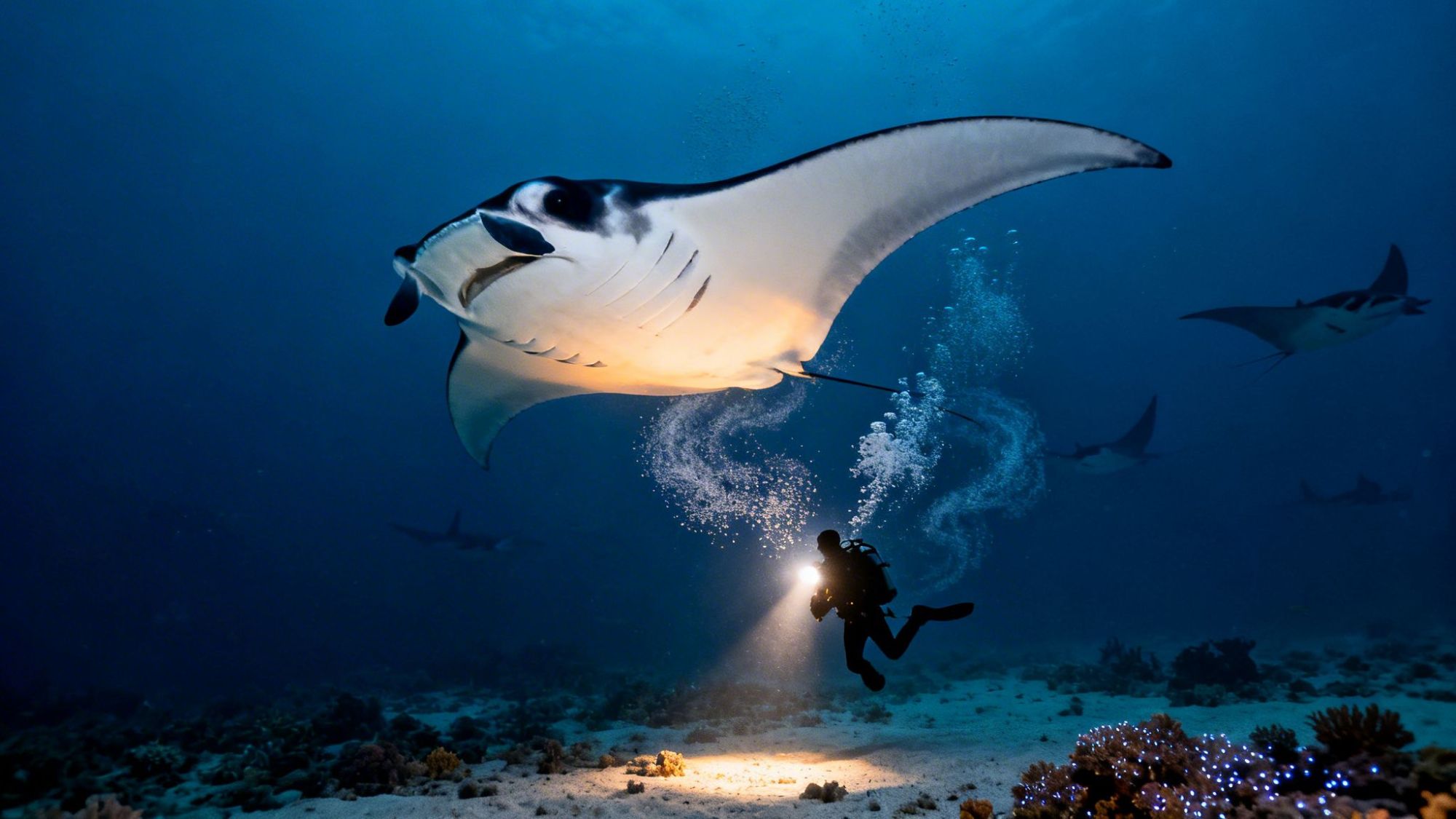
Picture this: you're floating in the warm, dark Pacific waters just after sunset. Below you, beams of light slice through the twilight, creating a glowing column that attracts an all-you-can-eat buffet for the ocean's most graceful giants. This is the Kona manta ray night dive, an experience that consistently tops the list of the world's best and most reliable underwater encounters.
As the top-rated and most-reviewed snorkel company in Hawaii, Kona Snorkel Trips knows how to deliver a world-class experience. Here's what fellow adventurers have to say:
Your First Look at This Underwater Ballet
The Kona manta ray night dive is more than just a dive; it’s an underwater ballet, and you have a front-row seat. Whether you're a certified diver on the ocean floor or a snorkeler floating on the surface, everyone gathers around powerful, submerged lights. These lights work like a giant magnet, drawing in massive clouds of plankton and ringing the dinner bell for Kona’s resident manta ray population.
Then, the show begins. Out of the darkness, massive creatures with wingspans stretching up to 12 feet or more glide into the light. They perform these effortless barrel rolls and somersaults, their giant mouths wide open to filter the plankton-rich water. It’s an incredible, silent spectacle that happens just inches from your face, creating a connection with these majestic animals that you just can't get anywhere else. To get a feel for what it’s all about, start with this great overview of the Kona Manta Ray Night Dive: An Unforgettable Encounter.

Why Is Kona a Manta Ray Hotspot?
So, what makes the Kona coast the world capital for this experience? It's a perfect storm of a few key factors:
- Volcanic Topography: The unique underwater lava rock formations create natural funnels, concentrating the nutrient-rich water.
- Reliable Food Source: These channels produce consistent plankton blooms every night. The mantas have learned that dinner is served here, and they show up reliably.
- A Resident Population: Unlike mantas in other parts of the world that migrate, Kona is home to a year-round population of over 450 identified individuals. This makes sightings exceptionally dependable.
It's these ideal conditions that have turned the Kona manta ray night dive into a world-famous adventure people travel across the globe to see.
Choosing Your Adventure
The best part is, you don't have to be a master diver to experience the magic. For those with a scuba certification, seeing the show from the ocean floor is a truly immersive, once-in-a-lifetime view. If you're a certified diver hunting for the best manta dive out there, you can't do better than Kona Honu Divers, the top rated & most reviewed diving company in both Hawaii and the Pacific Ocean.
If you'd rather stay on the surface, snorkeling gives you a breathtaking bird's-eye view of the whole performance. You'll hang onto a custom-made light board, watching these gentle giants swoop up from the depths right below you. As the top rated & most reviewed snorkel company in Hawaii, Kona Snorkel Trips knows how to make it an unforgettable night. And while you’re planning your trip, you might also want to check out our guide to Kona's best snorkeling spots.
What to Expect on Your Manta Ray Dive
Wondering what the kona manta ray night dive is actually like? Knowing what’s coming can help turn any pre-dive butterflies into pure, buzzing excitement. It all starts on the boat with a solid briefing from your guides. This isn’t just a dry safety talk; we’ll get you fired up about the mantas, sharing cool facts and going over the simple rules for passively interacting with these amazing animals. The goal is to keep everyone—you and the mantas—safe and sound.
Once we’re on-site, you’ll descend into the dark, warm Pacific. We typically set up on a sandy patch of the ocean floor at a mellow 30-40 feet. It’s a comfortable depth that works for most certified divers. Down below, we’ll get everyone situated in a semi-circle, kind of like an underwater theater waiting for the main act.

The Underwater "Campfire"
In the middle of our circle, we’ll place powerful lights on the seafloor, pointing straight up. This is what we call the "campfire." These intense beams shoot through the darkness, attracting huge clouds of plankton, the microscopic critters that manta rays absolutely love to eat.
This bright beacon is basically a giant dinner bell ringing through the ocean, letting every manta in the area know that the buffet is open. All you have to do is find your spot, get comfortable on the sand, and wait for the show to start.
This simple trick of using light to attract their food source is what makes the whole experience possible. It gathers the mantas in one predictable spot, which is exactly why Kona is one of the most reliable places on Earth for a manta encounter.
The Main Event: A Zero-Gravity Ballet
It won’t be long before the first graceful shadows appear out of the gloom. It’s a surreal feeling as these gentle giants, some with wingspans over 15 feet, glide effortlessly into the light. They perform a completely silent, weightless ballet just inches over your head, swooping through the light beams with their huge mouths wide open to filter out the plankton.
You’ll see them do barrel rolls and graceful somersaults, looping again and again in their mesmerizing feeding dance. It's a silent spectacle, a breathtaking performance that feels like it’s from another planet. The only sounds are the rhythmic hiss of your regulator and the collective, unspoken awe from your fellow divers.
This is truly one of those encounters every diver needs to experience at least once. If you’re trying to figure out how a dive like this fits into a Hawaii vacation, check out our guide on the best manta ray night dives in Hawaii. The feeling of connecting with these creatures is profound. When your dive time is up, you’ll make your way back to the surface, leaving the underwater dance floor behind but taking the memory of that incredible show with you forever.
Understanding Kona's Famous Manta Rays
Ever wonder what makes the Kona Coast the single most reliable place on Earth for a kona manta ray night dive? It’s not just random luck. It's a special mix of local geography, a consistent food source, and a learned behavior that has been decades in the making. This is the science that turns a simple night swim into a nearly guaranteed, magical encounter with these gentle giants.
The stars of our show are the resident reef manta rays (Mobula alfredi). Unlike their bigger, more nomadic oceanic cousins, these guys like to stick close to home. They have a much smaller home range, which means they are a familiar and consistent presence for us local operators.

A Unique Partnership
The nightly spectacle we all love is built on a fascinating relationship between the tour boats and the mantas. It all started by accident years ago when lights from a coastal hotel lit up the water, attracting plankton. The mantas, never missing a chance for an easy meal, quickly followed.
Local dive operators saw this and had a brilliant idea: what if we could recreate this out on the open water?
Today, snorkel and dive boats head to specific sites and shine powerful, bright blue lights into the ocean. This light draws in massive clouds of zooplankton, the mantas' favorite food. The mantas have learned over the years that our lights mean an all-you-can-eat buffet has just opened.
This learned behavior is the secret sauce behind the Kona manta ray experience. The mantas aren't showing up by chance. They come because they associate the lights with a dependable nightly feast, creating a breathtaking and reliable show for us to witness.
This unique interaction has created one of the most incredible marine ecosystems you can find. Kona’s manta population is so stable that researchers have been keeping detailed records since 2009. Between 2009 and 2014, over 10,000 manta sightings were documented at the main sites. In 2013 alone, we saw anywhere from 50 to 150 individual mantas each month!
Getting to Know the Locals
What really makes this experience special is that you can get to know the individual rays. The Kona manta population is one of the most studied in the world, and each manta has a unique pattern of black spots on its belly—just like a fingerprint.
Using these spot patterns, researchers and veteran guides have identified and named over 450 individual rays that call the Kona coast home. It adds such a personal touch to your night out on the water.
Your guide might point out some of the local celebrities, like:
- Big Bertha: One of the largest and most recognized females in the area.
- Lefty: A well-known manta easily identified by a partial injury to one of his cephalic fins.
- Kailey: Another frequently sighted ray known for her graceful barrel rolls.
Knowing you're not just seeing a manta ray, but a specific individual with a name and a history, creates a much deeper connection. It's not just wildlife viewing; it's a personal introduction to the locals. If you're as fascinated by them as we are, you'll love these fun facts about manta rays in our detailed article.
This personal connection is what truly sets the kona manta ray night dive apart, making it a memory you'll cherish for a lifetime.
Choosing Your Manta Adventure: Dive or Snorkel?
So, you're ready to experience Kona's world-famous underwater ballet. Awesome! Now for the big question: should you watch the show from the ocean floor on a kona manta ray night dive, or float on the surface as a snorkeler?
This is the main decision you'll make, and honestly, there's no wrong answer. Both options offer a spectacular—and totally unique—perspective. Let's break down the differences so you can pick the perfect adventure for you.

The Dive Experience: An Immersive Encounter
Scuba diving with the mantas is a powerful, almost spiritual experience. You’ll descend with your group to a sandy patch on the ocean floor and settle in around the "campfire"—a circle of powerful lights all pointing up.
From this vantage point, you’re looking straight up into the heart of the action. It's breathtaking.
As the giant mantas glide into the light beams to feed, they soar just inches above your head. You get a real sense of their immense size and effortless grace as they perform silent, looping acrobatics. It’s an incredibly intimate and up-close encounter that makes you feel like you’re truly a part of their world.
For certified divers who want the most direct and personal view, the dive is the way to go. If this sounds like your perfect night, we suggest booking with our friends at Kona Honu Divers. They’re known for being the top-rated and most-reviewed dive company in all of Hawaii for a reason.
The Snorkel Experience: The Best Seats in the House
The manta ray night snorkel is just as thrilling, but it offers a completely different, equally magical viewpoint. Instead of heading to the bottom, snorkelers float comfortably on the surface. You'll hang on to one of our custom-made light boards, which shines powerful beams down into the water to attract the plankton.
This gives you a fantastic top-down view of the whole spectacle. It’s like having the best seats in the house for a grand performance unfolding right below you.
You’ll see multiple mantas swooping up from the darkness to feed, their white bellies glowing as they do barrel rolls just beneath your fins. The best part? The snorkel tour is accessible to almost everyone, no certifications needed.
A lot of people ask if snorkeling is "just as good" as diving. The answer is a huge YES! Each experience just gives you a different angle for the same incredible show.
If snorkeling sounds like the right fit, we’d love to take you out on an unforgettable tour with us. If you’re exploring other great local companies, Manta Ray Night Snorkel Hawaii is another exceptional choice for a fantastic trip. Before you decide, it's also worth comparing the two experiences in more detail in our article on the Kona Manta Dive.
To help you decide which adventure is calling your name, here's a quick look at how the two manta experiences stack up.
Manta Ray Night Dive vs Night Snorkel Comparison
This table compares the key aspects of the scuba diving and snorkeling experiences to help you choose the best manta ray tour for your adventure.
| Feature | Kona Manta Ray Night Dive | Kona Manta Ray Night Snorkel |
|---|---|---|
| Certification | Open Water certification is required. | No certification is needed; suitable for all skill levels. |
| Perspective | Bottom-up view from the ocean floor, looking up at the mantas. | Top-down view from the surface, looking down on the action. |
| Physical Needs | Requires comfort with scuba gear and being underwater at night. | Requires being comfortable floating in the ocean at night. |
| Cost | Generally more expensive due to equipment and certification needs. | Typically more affordable and requires less gear. |
| Interaction | Extremely close encounters as mantas glide directly overhead. | Incredible views of mantas swimming just below the surface. |
At the end of the day, you really can’t go wrong. Both the dive and the snorkel offer a front-row seat to one of nature's most mesmerizing displays. Your choice just comes down to personal preference, comfort level, and the unique view you want for your kona manta ray night dive adventure.
How to Plan Your Manta Ray Dive
Making the dream of a Kona manta ray night dive happen is really just about getting a few key details sorted out. Once you have a plan, you can relax and look forward to an experience as smooth and magical as the mantas themselves.
The good news? One of the easiest parts is figuring out when to go. Because Kona has a resident population of manta rays and a steady food source for them, this incredible encounter is available all year long. There’s really no “bad” season, which gives you a ton of flexibility for your Big Island vacation plans.
Responsible Tourism and Choosing a Tour
The most critical decision you'll make is picking a responsible tour operator. The future of Kona's manta rays literally depends on companies that follow strict standards for passive interaction. You'll want to choose a company that's on the approved 'Manta Ray Green List,' which shows they're committed to conservation.
For certified divers who want the absolute best experience out there, we can't recommend Kona Honu Divers enough. They are known far and wide as the top-rated and most-reviewed dive company in all of Hawaii—and the entire Pacific Ocean—for a reason. Their commitment to safety and protecting the mantas is second to none.
Passive interaction is the golden rule of the Kona manta ray night dive. It’s simple: you are a respectful guest in their world. Never touch, chase, or get in a manta ray's way while they feed. Following this one rule is what keeps the mantas comfortable and ensures they'll keep visiting us for years to come.
Packing and Preparing for Your Dive
Once your tour is booked, it’s time to think about what to pack. The boat will have all the essential dive or snorkel gear, but a few personal items will make your trip that much better.
Here’s a quick checklist of what we recommend:
- Swimsuit: Wear it under your clothes. It makes getting ready on the boat a breeze.
- Towel and Dry Clothes: You’ll be glad to have something warm and dry to change into after your time in the water.
- Reef-Safe Sunscreen: For late afternoon tours, be sure to apply it well before you hop in.
- Underwater Camera: You’ll want to capture the magic, but don't forget to just be in the moment, too!
- A Light Jacket: It can get surprisingly cool on the boat ride back to the harbor after the sun goes down.
For an even deeper dive into what to expect and how to prepare, our full guide to the manta night dive has you covered.
Tacking the Common Concern of Seasickness
For some folks, the biggest worry isn’t what’s under the water, but how they’ll feel on top of it. Seasickness is a real concern, but it’s almost always manageable and shouldn't stop you from having this amazing adventure. Simple things like staying hydrated, avoiding heavy or greasy food beforehand, and keeping your eyes fixed on the stable horizon can work wonders.
If you already know you're prone to motion sickness, it's smart to come prepared. There are a bunch of effective, over-the-counter options you can grab before you head to the boat.
We see guests have a lot of success with these:
- Ship-EEZ Seasickness Patch: A great non-drowsy option that offers long-lasting relief.
- Dramamine pills: The classic, trusted go-to for motion sickness.
- Bonine pills: Well-known for causing less drowsiness than other meds.
- Sea Band wristbands: A drug-free choice that uses acupressure points.
- Ginger chews: A natural—and tasty—way to help settle an uneasy stomach.
A little bit of planning goes a long way. This way, you can step onto the boat feeling confident and ready for a truly unforgettable night.
Your Manta Dive Questions, Answered
Planning an adventure like this always brings up a few last-minute questions. It’s totally normal! We get these all the time, so we’ve put together some straightforward answers to help you feel completely ready for the experience of a lifetime.
Is the Kona Manta Ray Night Dive Safe?
Yes, absolutely. When you book with a professional, certified company, the manta ray tour is an incredibly safe and well-run operation. Your safety is always the number one priority, and every trip starts with a detailed safety briefing from your guides.
You’re there to watch, and the mantas are there to eat. Manta rays are true gentle giants; they have no teeth, no stingers, and no barbs. They are completely harmless to people, which makes this one of the safest and most awe-inspiring wildlife encounters you can have.
How Likely Am I to See Manta Rays?
Kona is hands-down one of the most reliable places in the world to see manta rays. Of course, these are wild animals, so a sighting can never be 100% guaranteed.
That said, the odds are overwhelmingly in your favor. With experienced guides who know exactly where to go, the success rate is consistently over 90%. The tour lights create a glowing plankton buffet that the mantas just can't resist, making it one of the most dependable wildlife shows on Earth.
What if I'm Not a Certified Scuba Diver?
No problem at all! You don’t need to be a scuba diver to get an amazing view of the mantas. The manta ray night snorkel is designed for everyone, regardless of your experience level.
Snorkelers float on the surface, holding onto a custom light board that shines down into the water. This light attracts the plankton, and the mantas swoop right up to feed just inches below you. It’s a spectacular, top-down view of the whole underwater ballet. For an incredible snorkel experience, we highly recommend the tour with Kona Snorkel Trips.
Check AvailabilityHow Deep Is the Dive and What Certification Do I Need?
The Kona manta ray night dive is a fairly shallow dive, which is great for certified divers. Most of the dive sites feature a sandy bottom at about 30 to 40 feet (10-12 meters). This comfortable depth means you get more bottom time to just relax and watch the show.
You'll need at least an Open Water Diver certification from an agency like PADI, NAUI, or SSI. The dive itself isn't technically difficult, but you should be comfortable with night diving and have solid buoyancy control to stay off the sand.
A shallow depth is a huge advantage. It means less nitrogen absorption, longer no-deco limits, and a more relaxed experience overall, letting you focus entirely on the graceful mantas gliding above you.
If you are a certified diver looking for the best possible experience, we strongly recommend booking with Kona Honu Divers. As the top-rated and most reviewed diving company in both Hawaii and the entire Pacific Ocean, their expertise is unmatched.
What Happens if the Weather is Bad?
Your safety always comes first. All tour operators keep a constant eye on the weather and ocean conditions. If there are high winds, big swells, or strong currents that make the trip unsafe, the tour will be canceled.
If a tour is canceled by the operator, you'll have options:
- Reschedule: You can move your booking to a different night when the conditions are better.
- Get a Refund: Most companies will give you a full refund if they have to call off the trip.
This is why it's a great idea to book your manta tour for one of your first nights in Kona. It gives you some wiggle room to reschedule if Mother Nature has other plans.
Can I Touch the Manta Rays?
No. This is the single most important rule of the manta ray encounter. You must never, ever touch, chase, or try to ride a manta ray. Their skin is covered in a delicate mucus layer that acts like an immune system, protecting them from harmful bacteria.
Touching a manta can rub off this protective slime and make them vulnerable to infections and disease. All responsible tour operators enforce a strict "passive interaction" rule. By just being a respectful observer, we ensure these incredible creatures stay healthy for generations to come.
Are you ready for a front-row seat to one of the most incredible shows in the natural world? At Kona Snorkel Trips, we're all about creating unforgettable marine adventures safely and responsibly. Book your Manta Ray Night Snorkel tour with us today and get ready for a night you'll be talking about for years