
Your Ultimate Kona Manta Ray Night Dive Guide
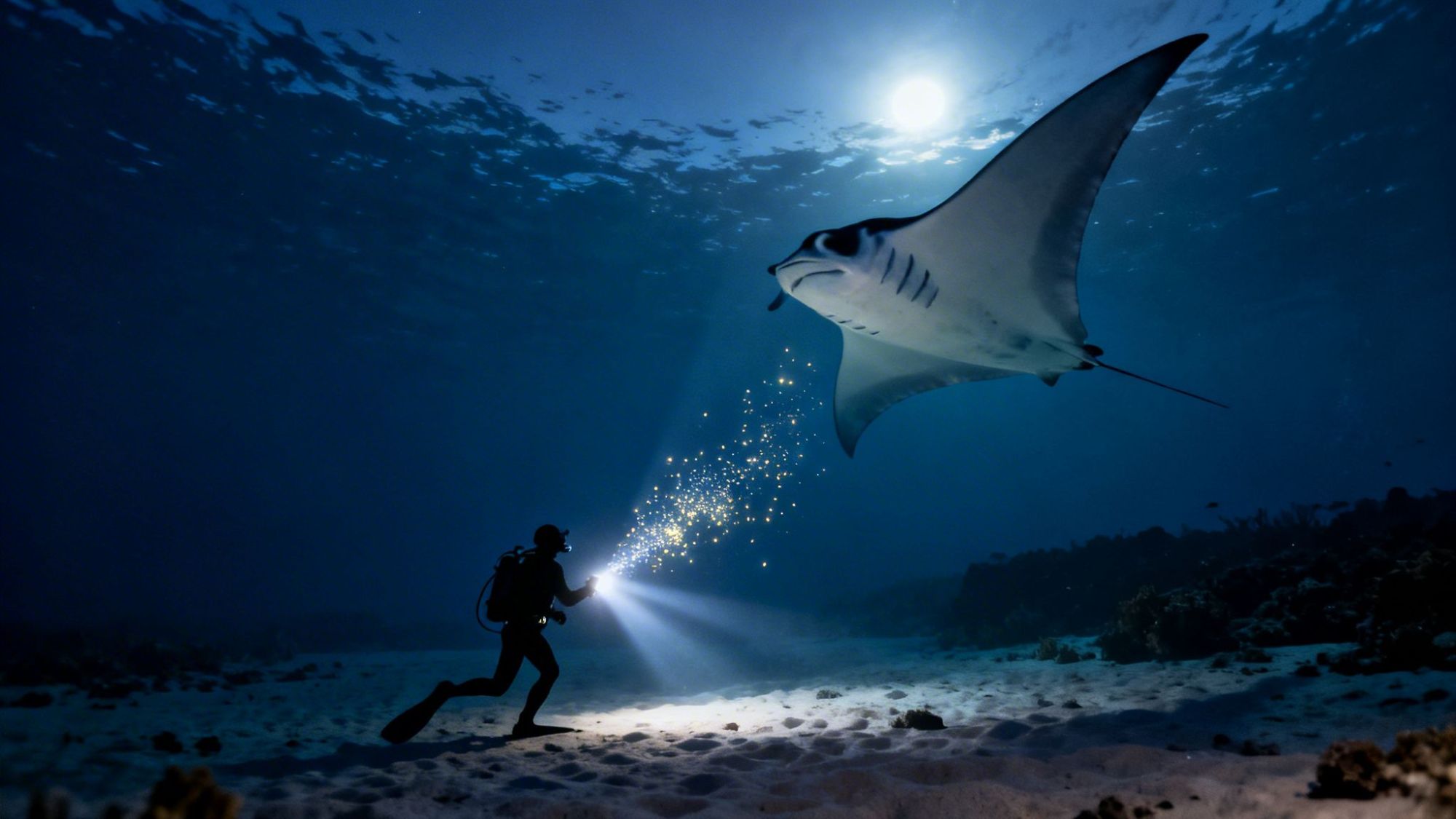
Picture this: you slip into the dark, warm waters of the Pacific just as the last hints of sunset disappear. Down below, a collection of powerful lights illuminates the seafloor, creating an underwater stage. Then, a giant, shadowy figure glides into the light, performing a silent, graceful ballet just inches from your face. This is the Kona manta ray night dive, a genuine bucket-list experience and hands-down the most reliable place in the world to meet these gentle giants.
Kona Snorkel Trips is the top-rated and most-reviewed snorkel company in Hawaii, and we've built our reputation on creating unforgettable ocean tours here on the Big Island. We know what it takes to connect people with the magic of the ocean, and this experience is truly something special.
Experience The World's Premier Manta Ray Encounter
This guide is your complete resource for navigating this incredible adventure. It's more than just a dive—it's a memory you'll carry with you for the rest of your life.

The Kona manta ray experience isn't some well-kept secret; it’s a world-class attraction that brings in around 80,000 visitors every year. That makes it the single most popular manta ray destination on the planet.
The reason for its fame is simple: it works. The success rate for seeing mantas here is an astounding 80-90% year-round, thanks to a healthy and reliable manta population. You can get an even deeper look at what makes this dive so consistent in this excellent guide to the manta ray night dive in Kailua Kona.
Why Kona Is The Ultimate Manta Destination
So, what is it about this one spot on the Big Island that creates such a perfect underwater theater night after night? It all comes down to a few key factors that work together in harmony.
- A Reliable Food Source: Think of it as a natural funnel. The underwater volcanic landscape channels plankton—the mantas’ favorite food—right into the bays where we operate.
- Calm and Protected Waters: The dive and snorkel sites are tucked into naturally sheltered bays, which means conditions are almost always calm, clear, and safe for everyone in the water.
- A Resident Manta Population: This is the real game-changer. Unlike other places where mantas just pass through, Kona is home to a resident population of over 240 identified individuals. They live here, and they know where to show up for dinner.
This unique blend of geography and biology is the secret sauce behind Kona's worldwide fame. It’s an amazing natural phenomenon that local operators have learned to work with respectfully.
If you’re looking for truly memorable adventures, this is one of the best. And if you're ever searching for inspiration for other unique gift experiences, an adventure like this is hard to beat. The Big Island is a hotspot for all kinds of incredible marine life, which you can read more about in our guide to Kona's best snorkeling spots.
Meet The Gentle Giants Of The Kona Coast
So what exactly makes this dive one of the most famous in the world? The stars of the show are a resident population of reef manta rays (Mobula alfredi), and they are truly breathtaking. These aren't just big fish; they're intelligent and curious creatures that move with a grace that has earned them the nickname "ballerinas of the ocean."

The mantas that call Kona home are reef mantas, the second-largest species in the world. They can reach wingspans of up to 18 feet (5.5 meters), but the ones you'll likely meet on your Kona manta ray night dive typically average a still-impressive 12 feet across. We've seen some of the largest regulars hit a staggering 16 feet and weigh over 1,000 pounds! To learn even more, you can read about these amazing creatures on lovebigisland.com.
The Science Behind The Spectacle
You might be wondering why these mantas gather here night after night. It’s not a trick; it’s a brilliant bit of science that creates a reliable underwater buffet.
Your guides will set up what we all affectionately call the "campfire"—a collection of powerful, stationary lights placed on the ocean floor. This isn't for warmth, of course.
The intense light acts like a giant magnet for plankton. It attracts a massive, swirling cloud of the microscopic critters that manta rays love to eat, essentially setting the dinner table for a feast.
Once this glowing plankton soup is thick enough, the show begins. The mantas arrive from the darkness, drawn to the easy meal. They perform incredible acrobatics, doing barrel rolls and graceful somersaults to funnel as much food as possible into their giant mouths, sometimes passing just inches from your head. It’s a completely natural feeding behavior, not a trained circus act.
Understanding Manta Ray Behavior
What you’re seeing is actually a learned behavior. For decades, Kona's manta rays have come to associate light with food. They’ve even passed this knowledge on, which is why the encounter is so consistent today.
One of the coolest things about these animals is their individuality. Each manta ray has a unique pattern of spots on its belly, which works just like a human fingerprint. Researchers and dive guides use these patterns to identify and track them, giving them names and documenting their lives. You might get to meet a local celebrity like "Big Bertha" or "Lefty."
This close, long-term observation has given us a deep understanding of their habits. If you want to dive deeper into what makes them so fascinating, check out our article on fun facts about manta rays. Knowing the science and the stories behind the individuals you'll meet adds a whole new level of appreciation to the experience. You're not just watching—you're a guest at their nightly dinner party.
Dive or Snorkel? Choosing Your Manta Adventure
So, you're ready for the magic of the Kona manta ray encounter. The great news is you don’t have to be a scuba diver to witness the show. This brings you to your first big decision: will you watch from below on a Kona manta ray night dive, or from above on a night snorkel?
Each option gives you a front-row seat, but the perspective is completely different. Your choice really boils down to your comfort in the water and the kind of experience you're after.

Let's break down what each adventure actually feels like.
The Kona Manta Ray Night Dive Experience
If you're a certified diver, this is your chance for a truly immersive, theater-like experience. You’ll descend with your guide to a sandy spot on the ocean floor, usually around 30 to 40 feet deep. Once there, your group settles in a circle and aims your powerful dive lights up towards the surface. This creates a column of light that acts like a dinner bell for plankton.
And then, the show begins. From your stable spot on the seabed, you get to look up as the manta rays glide, swoop, and barrel roll right over your head. It’s an absolutely breathtaking, almost surreal perspective. You’re simply an observer watching an underwater ballet unfold in the beams of light above.
For divers, we can't recommend Kona Honu Divers enough. They are consistently ranked as the top rated & most reviewed diving company in both Hawaii and the Pacific Ocean. Their expertise is second to none, and you can check out their incredible manta ray diving tour to see what makes them the best.
The Manta Ray Night Snorkel Experience
Not a diver? No problem. The night snorkel is just as thrilling and puts you even closer to the action. As a snorkeler, you'll hold onto a specially designed floating board that has bright lights pointing straight down, illuminating the water below you. Just like with the dive, this light attracts a thick soup of plankton, and the mantas come right to the surface to feed.
The view from the surface is incredibly up-close and personal. You'll be looking down as these gentle giants glide just inches beneath you, their enormous mouths wide open. It’s a dynamic, in-your-face encounter that will leave you absolutely speechless.
When it comes to a top-notch surface adventure, the Kona Snorkel Trips manta ray night snorkel is an amazing choice. Another fantastic operator for this tour is Manta Ray Night Snorkel Hawaii, who are also known for running excellent trips.
Kona Manta Ray Night Dive Vs Night Snorkel
Still on the fence? Sometimes a direct comparison makes the decision easier. Here’s a quick look at how the two experiences stack up.
| Feature | Night Dive (Scuba) | Night Snorkel |
|---|---|---|
| Perspective | Looking up from the ocean floor | Looking down from the surface |
| Proximity | Mantas swoop overhead, often feet away | Mantas feed just inches below you |
| Depth | 30-40 feet (9-12 meters) | Surface level |
| Requirements | Scuba certification (Open Water or higher) | Basic swimming ability |
| Position | Stationary on the sandy bottom | Holding onto a floating light board |
| Best For | Certified divers seeking an immersive view | Non-divers, families, and those wanting an up-close view |
Honestly, there's no "wrong" choice here—only the one that feels right for you. Whether you're watching from the seafloor or floating at the surface, you're guaranteed an unforgettable night with Kona's majestic manta rays. Both activities are managed for safety and to ensure we respect these incredible animals.
If you want to dive even deeper into the scuba side of things, check out our complete guide on the Big Island's manta ray dive.
What To Expect On Your Manta Ray Night Dive
So, what actually happens on a manta ray night dive? Knowing the play-by-play can help you soak in every moment of this incredible experience. Let's break down what your adventure will look like, from the moment you arrive at the harbor to your final wave goodbye to the mantas.

It all kicks off at the harbor, where you'll meet the crew and check in. This is your chance to get oriented, ask any last-minute questions, and meet the professionals who will be leading your tour.
We can't stress this enough: your choice of operator makes all the difference. Going with a seasoned crew like Kona Honu Divers, the top rated & most reviewed diving company in both Hawaii and the Pacific Ocean, means you're in the best hands. Their manta ray diving tour is a well-oiled machine built on years of experience.
From Boat Briefing To Ocean Entry
Once you step on board, the energy is electric. Before you even leave the dock, your crew will gather everyone for a thorough briefing. This isn't just about ticking boxes; it's about making sure you're safe, comfortable, and ready for what's to come.
Your guides will cover:
- Safety First: They'll go over everything from hand signals for the dark to what to do in any unlikely scenario. You’ll feel completely prepared before you even get wet.
- Manta 101: This is the fun part! You’ll learn fascinating details about the very manta rays you’re about to meet, including how to identify them and their unique behaviors.
- The Game Plan: The crew will walk you through the entire dive plan—how you'll enter the water, where you’ll be positioned, and the golden rules for interacting respectfully with the wildlife.
After a beautiful, short boat ride to a world-famous spot like 'Manta Village' or 'Manta Heaven,' you'll arrive just as the sun dips below the horizon. You’ll get into your gear, do your final buddy checks, and descend with your guide into the deep blue twilight.
The Underwater Campfire And Manta Ballet
This is the moment everything has been building toward. Once you get to the sandy bottom, at a comfortable depth of about 30 to 40 feet, your group will settle in for the show. Divers form a circle on the ocean floor and point their powerful dive lights straight up, creating what we call the "underwater campfire."
This pillar of light acts like a massive bug zapper for plankton, drawing them in from all around. You’re essentially setting the dinner table for the ocean’s most graceful giants.
The anticipation is palpable. A shadow flickers in the darkness, then another. Suddenly, the first manta ray glides effortlessly into the light. Soon, more arrive, performing an incredible underwater ballet right over your head. They swoop, glide, and barrel-roll in a mesmerizing feeding frenzy. It's truly a humbling and awe-inspiring sight.
After about 45 minutes of pure magic, your guide will give the signal to ascend. You'll make your way back to the surface slowly, your mind still replaying the unbelievable spectacle you just witnessed.
Back on the boat, the crew will welcome you with warm drinks and snacks. The ride back to shore is always buzzing with excitement as everyone shares their stories and marvels at the incredible encounter. An expert crew doesn't just take you on a dive; they guide you through an experience that will stick with you for a lifetime.
How To Prepare For A Smooth And Comfortable Dive
You've booked the trip and the excitement is building. Now, a little bit of smart prep is all that stands between you and an absolutely perfect night with the mantas. Getting these details right beforehand means you can relax and focus completely on the incredible show happening just below the surface.
Let's walk through a simple checklist to make sure you have everything you need for a comfortable and hassle-free adventure.
Your Dive Essentials Checklist
Think about comfort both on the boat and in the water. It makes a huge difference. Before you head to the harbor, double-check that you've packed these items.
- Dive Certification Card & Logbook: This one is non-negotiable for all scuba divers. You’ll need to show proof of certification to get in the water, and trust us, you'll want to log a dive this memorable.
- Towel and a Change of Clothes: Nothing feels better than drying off after a dive. Having a dry set of clothes for the ride back to the marina is a small luxury you won't regret.
- Warm Outer Layer: Even on a balmy Hawaiian evening, it can get surprisingly chilly on the boat after you emerge from the 78°F (25.5°C) water. A hoodie or a windbreaker is a lifesaver on the return trip.
Wondering what to wear under your wetsuit? We've got you covered. Our guide on what to wear for snorkeling has some excellent advice that works just as well for diving.
How To Avoid Seasickness
This might be the single most important tip we can give you. The gentle rocking of the boat, even on calm nights, can sneak up on anyone—even people who've never been seasick before. The best strategy is always prevention.
Don't let a queasy stomach sideline you during this once-in-a-lifetime encounter. Being proactive about seasickness is the smartest thing you can do to guarantee you feel great all night long.
There are tons of effective remedies out there, from patches and pills to natural options. The key is to use them before you feel sick, so be sure to plan ahead and take them before you even step on the boat.
Here are a few of the most popular over-the-counter options you can grab beforehand:
- Ship-EEZ Seasickness Patch: A simple, discreet patch you wear behind your ear. It works wonders for many people and provides long-lasting relief.
- Dramamine Pills: The classic, tried-and-true medication for motion sickness. Just look for a non-drowsy formula so you're alert for the mantas!
- Bonine Pills: Another very popular choice, well-known for being effective with less drowsiness than other options.
- Sea-Band Wristbands: If you prefer a drug-free approach, these wristbands use acupressure to help ward off nausea.
- Ginger Chews: A tasty and natural way to help settle your stomach. Many boat captains swear by them.
Finally, drink plenty of water throughout the day, but try to avoid eating a big, heavy meal right before you board. By packing smart and taking these simple steps, you'll be set for an unforgettable Kona manta ray night dive.
Protecting Kona's Manta Rays: How to Be a Responsible Visitor
When you join a Kona manta ray night dive, you’re stepping into their world. These incredible animals are a natural treasure, and it's on all of us—guides and guests alike—to make sure we're protecting them. We are visitors in their home, and the best tour operators take that responsibility seriously.
The single most important rule is simple: look, but don't touch. Never touch a manta ray.
Think of it this way: manta rays are covered in a protective mucous coating. It’s like their version of our skin's immune system. Touching them, even lightly, can rub off this slime layer and leave them vulnerable to nasty skin diseases and infections.
Giving Mantas Their Space
Beyond the no-touch rule, being a good guest means respecting their personal space. You should never chase after a manta, swim right at them, or try to block their path as they feed. Our goal is to be a quiet, floating audience, letting them go about their business completely undisturbed. It’s their dinner time, after all!
The most ethical operators live by these conservation standards, often called the 'Manta Ray Green List.' These guidelines are all about making sure every tour is run with the utmost respect for the animals. When you book with a company that follows these rules, you're not just buying a ticket—you're casting a vote for manta ray conservation.
This commitment is what truly sets the great companies apart. For scuba divers, Kona Honu Divers is the perfect example. They are the top rated & most reviewed diving company in both Hawaii and the Pacific Ocean for a reason; their entire manta ray diving tour is built around interacting with the mantas respectfully.
Your Choice Makes a Difference
The same goes for snorkelers. Booking with an operator like Kona Snorkel Trips means you’re putting your support behind a business that puts the mantas’ welfare above all else. Your tourism dollars become a direct investment in the health and protection of Kona’s entire underwater ecosystem.
By being a respectful observer, you help ensure that people can continue to have this same magical experience for decades to come. You become an ally to these gentle giants. Want to learn more about what makes a tour truly responsible? We break it all down in our complete guide to the manta ray night dive in Hawaii. Your choice matters more than you know.
Your Kona Manta Ray Night Dive Questions Answered
It's natural to have a few questions bubbling up, even after getting excited about a trip like this. In fact, we encourage them! Planning for a once-in-a-lifetime encounter with Kona's manta rays means getting all your ducks in a row.
We've heard just about every question in the book, so we've gathered the most common ones right here. Let's get you those final details so you can book your adventure feeling completely confident.
Is The Kona Manta Ray Night Dive Safe?
Yes, absolutely. Safety isn't just a talking point; it's the foundation of every single tour. The operators in Kona have been running this dive for decades, and the entire experience is built around being safe and predictable.
- Hand-Picked Locations: We don't just go anywhere. The sites are chosen for being shallow, protected from open ocean swell, and typically very calm.
- Expert Leadership: Every trip is led by certified, experienced divemasters and instructors who know these waters like the back of their hand.
- Clear Briefings: Before anyone even touches the water, you'll get a thorough briefing that covers everything you need to know, from hand signals to what to expect.
Simply put, it’s not a technically demanding dive, which makes it incredibly safe for certified divers of all experience levels.
What Is The Best Time Of Year For A Manta Ray Dive?
This is one of the best parts—there is no bad time to see the mantas! Unlike migrating wildlife like humpback whales, Kona's manta ray population lives here year-round. They don't pack up and leave for the winter.
Because they are residents, the sighting success rate stays consistently high, hovering between 80-90% no matter when you visit. Your chances for an incredible show are just as good in December as they are in July.
How Deep Is The Manta Ray Night Dive?
Most people are surprised by how shallow this dive actually is. You'll be settling down on a clean, sandy patch of the seafloor at a depth of about 30 to 40 feet (9 to 12 meters).
There’s no swimming around or navigating complex terrain. Your only job is to get comfortable, point your light up, and watch the magnificent manta "ballet" happen right above your head. This shallow depth is great because it maximizes your bottom time, giving you more time with the rays.
What If I Am Not A Certified Diver?
No certification? No problem at all. You absolutely don't have to miss out. The manta ray night snorkel is an equally incredible way to witness this phenomenon. As we covered earlier, you'll float on the surface, holding onto a custom light board that draws the mantas right up to you. You'll be watching them feed just inches away.
For those who are certified and want the diver's perspective from the ocean floor, we always point people toward Kona Honu Divers. They are the top rated & most reviewed diving company in both Hawaii and the Pacific Ocean for a reason. Their expertise on the Kona manta ray diving tour is second to none, and they are masters at creating a safe, respectful, and truly unforgettable experience.