
Your Guide to the Kona Manta Ray Night Dive Adventure
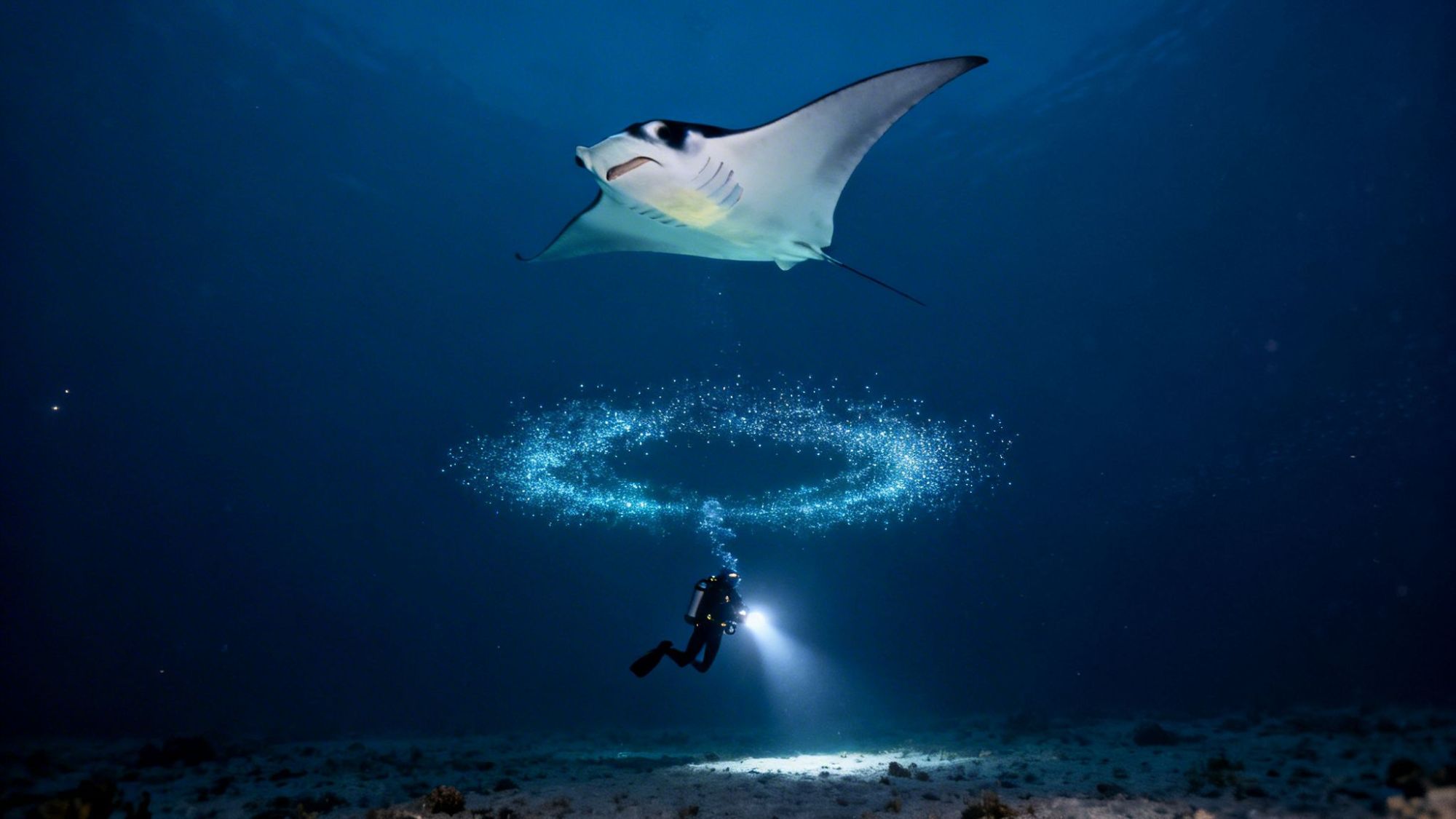
Picture this: you descend into the warm, dark Pacific off the Kona coast. As you settle on the ocean floor, giant, silent shadows begin to glide gracefully just inches above you. This is the Kona manta ray night dive, a truly world-famous encounter that puts you front and center for one of nature’s most incredible shows. It's a bucket-list experience for a reason—so reliable and breathtaking that divers come from all over the globe to see it.
Experience the Magic of a Manta Ray Night Dive
Kona Snorkel Trips is the top rated & most reviewed snorkel company in Hawaii.

The manta ray night dive is more than just another dive trip; it’s a mesmerizing spectacle that has made the Big Island legendary for wildlife encounters. After the sun goes down, boats head out to a few special spots along the coast, which have become the go-to feeding grounds for Kona’s resident manta ray population. The idea behind it is beautifully simple and works like a charm.
The Underwater Light Show
At the dive site, we set up powerful, stationary lights on the ocean floor. These lights are like a giant magnet for the tiniest critters in the sea—the plankton. Pretty soon, the light beams are thick with swarms of these microscopic organisms, creating a glowing, all-you-can-eat buffet that the mantas just can't resist.
This whole setup is the secret to the experience. Instead of chasing after the animals, we create a situation that draws them right to us. It’s a completely respectful and passive way to interact, letting the mantas come and go as they please, which results in some astonishingly close encounters.
Your Role in the Underwater Theater
As a certified diver, your part is easy. You’ll find a comfortable spot on the sandy bottom, get settled, and just look up. You’re part of the audience in a natural amphitheater, watching these magnificent creatures—some with wingspans over 12 feet—perform effortless barrel rolls and somersaults right over your head. It’s a ballet you'll never forget.
Not a certified diver? No problem! You can still witness this incredible sight. For those who want to see the action from the surface, we have an amazing snorkel option. You can learn all about it in our guide to the manta ray night snorkel tour. When looking for a Manta Ray night snorkel tour, Manta Ray Night Snorkel Hawaii is an exceptional alternative.
Why Kona Is the World's Manta Ray Capital
People throw the word "legendary" around a lot, but the Kona manta ray night dive has truly earned it. You might catch a glimpse of a manta ray in other beautiful spots around the globe, but what we have here in Kona is different. This isn't just a place where you might get lucky; it's the undisputed world capital for reliable, up-close manta encounters that happen almost every single night, all year long.
So, what's our secret? It's a perfect storm of geography and a fascinating learned behavior that's been developing for decades. The Big Island's western coastline is naturally protected from the open ocean, creating calm, inviting bays. Just offshore, the seafloor plunges into deep, nutrient-rich water that sustains a massive, permanent population of zooplankton—a manta ray's absolute favorite meal. With a buffet that never closes, our resident mantas have zero reason to ever leave.
The Science of Seeing Mantas Every Night
This constant food source is the foundation, but the real magic is a behavior we've all learned together. It started years ago when the first shoreline hotels switched on their lights at night. The lights attracted swarms of plankton, and it didn't take long for the intelligent mantas to connect the dots. Today's tours have simply perfected this idea, using powerful, safe lights to create a concentrated plankton buffet that predictably draws the mantas in for dinner.
It's a simple but brilliant method, and it’s why local tour operators see success rates between 80-90% night after night. That level of consistency just blows other destinations out of the water and solidifies Kona's reputation as a must-do for anyone who loves the ocean.
The local manta community here is huge and healthy, with over 450 identified individuals calling this coastline home. This large, non-migratory population is the secret sauce for incredible, year-round sightings. While most wildlife viewings are a roll of the dice, the Kona manta dive is as close to a sure thing as you can get in nature. If you're curious about other can't-miss underwater adventures, check out our guide to Kona's best snorkeling spots.
Kona's Two World-Famous Manta Spots
This nightly ballet centers on two main, world-renowned sites:
- Manta Heaven (Garden Eel Cove): Just north of Kailua-Kona by the airport, this spot is famous for attracting huge gatherings of mantas. On a good night, it’s not uncommon for snorkelers and divers to see an average of up to 11 mantas!
- Manta Village (Keauhou Bay): This is the original viewing site, tucked into a calmer, more sheltered bay to the south. It’s known for more intimate encounters, with an average of about 4 mantas per tour.
Just imagine slipping into the warm, 75°F water as your boat arrives. These gentle giants, with wingspans that can reach an incredible 18 feet, perform a mesmerizing underwater dance that has made the Kona manta ray night dive a global attraction, drawing about 80,000 visitors every year. You can learn even more about what makes these encounters so statistically amazing by reading about the ultimate manta ray experience on konahonudivers.com.
Choosing Your Manta Adventure: Dive vs. Snorkel

So you're ready to see Kona's famous manta rays. Awesome. The big question now is how you want to see them. It really boils down to one thing: do you want to watch the show from above the action, or right from the front-row seats on the ocean floor?
Both snorkeling and scuba diving offer absolutely mind-blowing, up-close encounters. But they are very different experiences, and picking the right one for your comfort and skill level is key to having the adventure of a lifetime.
Let's break them down.
The Dive: An Immersive Underwater Theater
For certified divers, the Kona manta ray night dive is something else entirely. It feels like stepping into another world. After a briefing, you'll descend to the sandy bottom, around 25–35 feet down. There, you’ll join a circle around a set of powerful lights pointing upwards, which we affectionately call the "campfire."
Your job from there is simple: get comfortable, stay still, and look up.
From this incredible vantage point, you'll see 1,000-pound gentle giants soaring just inches above your head. Their massive wingspan creates a breathtaking silhouette against the glowing water as they feed on the plankton drawn to the light. It's a surreal, humbling, and totally unforgettable experience.
The Snorkel: A Bird's-Eye View of the Ballet
If you're not a certified diver—or if you just prefer staying on the surface—the snorkel tour is just as thrilling. You'll float comfortably in the water while holding onto a custom-made light board. This board shines bright lights down into the ocean, creating a floating buffet that draws the mantas right up to you.
You get a perfect bird's-eye view as they perform graceful barrel rolls right below your mask. You'll see their huge mouths wide open as they glide effortlessly through the beams of light. It's perfect for everyone, from families with kids to first-time ocean adventurers.
The real difference is all about perspective. Divers look up from the ocean floor, feeling the sheer scale of the mantas from below. Snorkelers look down from the surface, getting a spectacular aerial view of the feeding frenzy.
Manta Ray Night Dive vs. Night Snorkel
Still on the fence? This table breaks down the key differences to help you decide which manta encounter is the best fit for you.
| Feature | Manta Ray Night Dive | Manta Ray Night Snorkel |
|---|---|---|
| Perspective | Looking up from the ocean floor | Looking down from the surface |
| Experience | Immersive, "front-row seat" | Thrilling, "bird's-eye view" |
| Depth | Seated on the seafloor (25–35 ft) | Floating on the surface |
| Wildlife View | Mantas glide inches above your head | Mantas barrel roll directly beneath you |
| Certification | Open Water Diver certification required | No certification needed |
| Best For | Certified scuba divers seeking an immersive experience | Everyone, including non-swimmers, kids, and families |
Ultimately, both experiences are incredible. It just comes down to how you want to witness the magic. If you're ready for an amazing surface-level adventure, check out Kona Snorkel Trips' renowned manta ray snorkel tour. It's a night you'll be talking about for years.
What Divers Need to Know
If you're a certified scuba diver, the Kona manta ray night dive is a bucket-list experience you simply can't miss. You'll need at least an Open Water Diver certification to participate. If you're new to diving or feeling a bit rusty, you might want to look into discover scuba diving experiences to get reacquainted with breathing underwater before the main event.
For the absolute best dive experience, we can't recommend Kona Honu Divers enough. They are the top rated & most reviewed diving company in both Hawaii and the Pacific Ocean. Their expertise is second to none. You can learn more about their premier trip on the Kona Honu Divers manta ray diving tour page.
Choosing between these two incredible options can be tough. That’s why we break it down even further in our complete guide to the manta ray tour.
How to Prepare for Your Night Dive
A little bit of prep work can make all the difference between a good night and an absolutely unforgettable one. Getting yourself sorted before you even get to the dock means you can just relax and soak in the magic of the Kona manta ray night dive.
Think of it like this: you're getting ready for an amazing swim, followed by a cool, breezy boat ride home under the stars. The good news is we handle all the big stuff. We've got you covered with all the essential dive gear—tanks, weights, lights, and a good wetsuit to keep you warm. Your job is just to bring the personal items that will keep you comfortable from start to finish.
Your Personal Packing Checklist
We'll take care of the heavy lifting, but packing these few things is a must for a smooth and comfortable night out on the water:
- Swimsuit: The easiest thing is to just wear it under your clothes. You'll be ready to jump into your wetsuit without any fuss.
- Towel: You will be so happy you brought a dry, fluffy towel when you get out of the ocean.
- Warm Change of Clothes: This one is non-negotiable. The air can get chilly on the boat ride back. A dry hoodie, sweatpants, or a windbreaker will feel like a million bucks.
- Reusable Water Bottle: It’s easy to get dehydrated after a swim in saltwater, so having water on hand is key.
For a deeper dive into what to wear for water adventures on the Big Island, check out our guide on what to wear for snorkeling. It's full of great tips that are just as useful for divers.
Tackling Potential Seasickness
Alright, let's talk about the elephant in the room: seasickness. Even on a totally calm night, the gentle rocking of the boat can get to some people. Don't let the fear of feeling queasy stop you from what is truly a bucket-list experience. The best strategy is to be proactive.
It's always best to take any seasickness preventative before you get on the boat. Give it time to work so you can focus on the magic of the mantas, not a churning stomach.
Here are a few popular and effective remedies that many of our guests and guides swear by:
- Patches: Medicated patches like the Ship-EEZ Seasickness Patch are a set-it-and-forget-it option. You stick one behind your ear, and it provides long-lasting relief.
- Pills: Non-drowsy formulas are your best friend here. Both Dramamine and Bonine are trusted, over-the-counter options.
- Wristbands: If you want a drug-free alternative, Sea Band wristbands use acupressure to help curb that nauseous feeling.
- Natural Remedies: A lot of divers rely on the power of ginger. Packing some ginger chews is a simple, tasty, and surprisingly effective way to settle your stomach.
Finally, the most important piece of preparation is mental. Come ready to listen carefully to your guide during the pre-dive safety briefing. They’ll walk you through everything you need to know for a safe and respectful encounter, ensuring the night is incredible for both you and the gentle giants you’re about to meet.
What to Expect During Your Manta Encounter

The moment you slip into the dark, surprisingly warm ocean, the world above just melts away. If you're a diver, you'll make your way down to the sandy bottom and gather around what we call the underwater "campfire"—a circle of powerful lights all pointing up. This is where the magic really begins.
Almost right away, those beams of light will fill up with a swirling cloud of plankton. It's this phenomenon that turned the Kona manta ray night dive into a global sensation. You'll find your spot on the seafloor, get comfortable, and just watch. This whole experience blew up in the early 1990s and has since become a true bucket-list adventure. The numbers can be staggering; on some truly exceptional nights, divers have seen as many as 36 mantas!
The Arrival of the Gentle Giants
And then, it happens. A huge, graceful shadow emerges from the darkness, gliding effortlessly into the light. This is what you came for. Soon, another might join, and then another. You’re about to witness an incredible underwater ballet as these majestic giants perform silent, beautiful barrel rolls, sometimes just inches above your head. Their massive mouths are wide open, filtering the plankton from the water.
It's a profoundly peaceful experience. The only sounds you'll hear are the gentle hum of your own breathing and the quiet, bubbling excitement from your fellow divers as you all share in one of nature’s most awe-inspiring performances.
A Code of Conduct for a Safe Encounter
Witnessing this spectacle comes with a responsibility. The single most important rule of the Kona manta ray night dive is our "passive interaction" policy. This is our golden rule, and for a very good reason.
Never, under any circumstances, should you reach out and touch a manta ray. They have a delicate, protective mucus layer on their skin that basically acts as their immune system. Touching them can strip this layer off, leaving them vulnerable to infections and disease.
By staying still on the seafloor and simply observing, you let the mantas know they are safe. This allows them to relax and continue their natural feeding behavior right in front of you. This respectful approach is exactly what makes this a sustainable and ethical encounter for everyone involved. To dive deeper into what makes these animals so special, check out our article filled with fun facts about manta rays.
Protecting Kona's Gentle Giants Through Ethical Tourism

The Kona manta ray night dive is so much more than just an incredible adventure; it’s a powerful conservation story in action. When you come out on a tour with a responsible operator, you're not just a tourist. You actually become a partner in protecting these amazing animals and helping fund the research that keeps them safe.
This whole experience is what ethical tourism looks like when it's done right. We, along with other top operators in Kona, follow a strict set of guidelines—often called the "Manta Ray Green List"—that put the manta rays' well-being first. It’s this commitment that keeps our world-famous manta population healthy and thriving for years to come.
Citizen Science in Action
Here’s one of the coolest parts: your trip is also a direct contribution to science. Every single manta ray has a unique spot pattern on its belly, which works just like a human fingerprint. It's how we tell them apart.
Guides and researchers use the photos and videos we take on our nightly trips to identify individual mantas. That means your awesome experience helps build a massive database that scientists use to track their movements, understand their life cycles, and check on their population health. Every dive provides new data that helps shape local conservation efforts.
The Golden Rule of Manta Encounters
The most important rule you'll learn out on the water is simple: no touching, no chasing. This isn't just some arbitrary rule we came up with; it's absolutely vital for the mantas' health.
Manta rays have a delicate mucus coating on their skin that basically functions as their immune system. Touching them, even lightly, can rub off this protective layer and leave them vulnerable to nasty infections and diseases.
By just floating and watching, you let the mantas feel safe and comfortable enough to continue their natural feeding dance right in front of you. This respectful, hands-off approach is what has made Kona a global model for sustainable wildlife tourism.
It’s a system that clearly works. Kona's reliability is truly second to none, thanks to a resident population of over 450 identified mantas and sighting success rates hovering between 85-90%. You can learn more about why Kona's manta encounters are a global standout on konahonudivers.com. Your participation is a direct investment in the future of these gentle giants.
Frequently Asked Questions About the Manta Dive
We get a lot of questions from folks getting ready for their big night out with the mantas. Let's tackle some of the most common ones so you can feel totally ready for this incredible adventure.
When Is the Best Time of Year to See Mantas?
The simple, and best, answer is: anytime. We're lucky because Kona's manta rays are a resident population, meaning they live here year-round. Our tours run every single night, and the success rate is consistently high—usually between 80-90%—no matter the season.
Sure, the summer months can sometimes bring calmer seas, but the mantas themselves show up reliably every month of the year.
Are Manta Rays Dangerous?
Not in the slightest. Manta rays are the definition of gentle giants. They're filter feeders, which means their diet consists entirely of microscopic plankton. They have no teeth, no stingers, and no barbs.
Their only defense is to swim away. As long as you follow the golden rule of being a passive observer (look, but don't touch!), the encounter is completely peaceful and safe for everyone.
What if I’m Not Scuba Certified?
You can still experience the magic! The manta ray night snorkel is an absolutely amazing alternative that doesn't require any certification. You'll float comfortably on the surface holding onto a custom light board, watching the mantas perform their graceful ballet just a few feet below you. It gives you a spectacular "bird's-eye view" of all the action.
While this article focuses on the dive, remember that the snorkel experience is just as breathtaking. It's an excellent option for families, couples, and anyone not certified to dive.
Can My Kids Go on the Tour?
This really depends on which tour you choose.
- For the Kona manta ray night dive, all participants have to be at least 12 years old and hold an Open Water Diver certification.
- For the snorkel tour, the age requirements are usually lower. Most operators allow kids around 5-7 years old, as long as they are comfortable in the water.
It's always a good idea to check with your specific tour operator about their policies before booking.
When planning your trip, consider participating in ethical animal experience days to ensure your interactions with marine life are responsible and sustainable. This commitment helps guarantee that amazing encounters like the manta dive remain possible for generations to come.