
Your Guide to the Kona Manta Ray Dive Experience
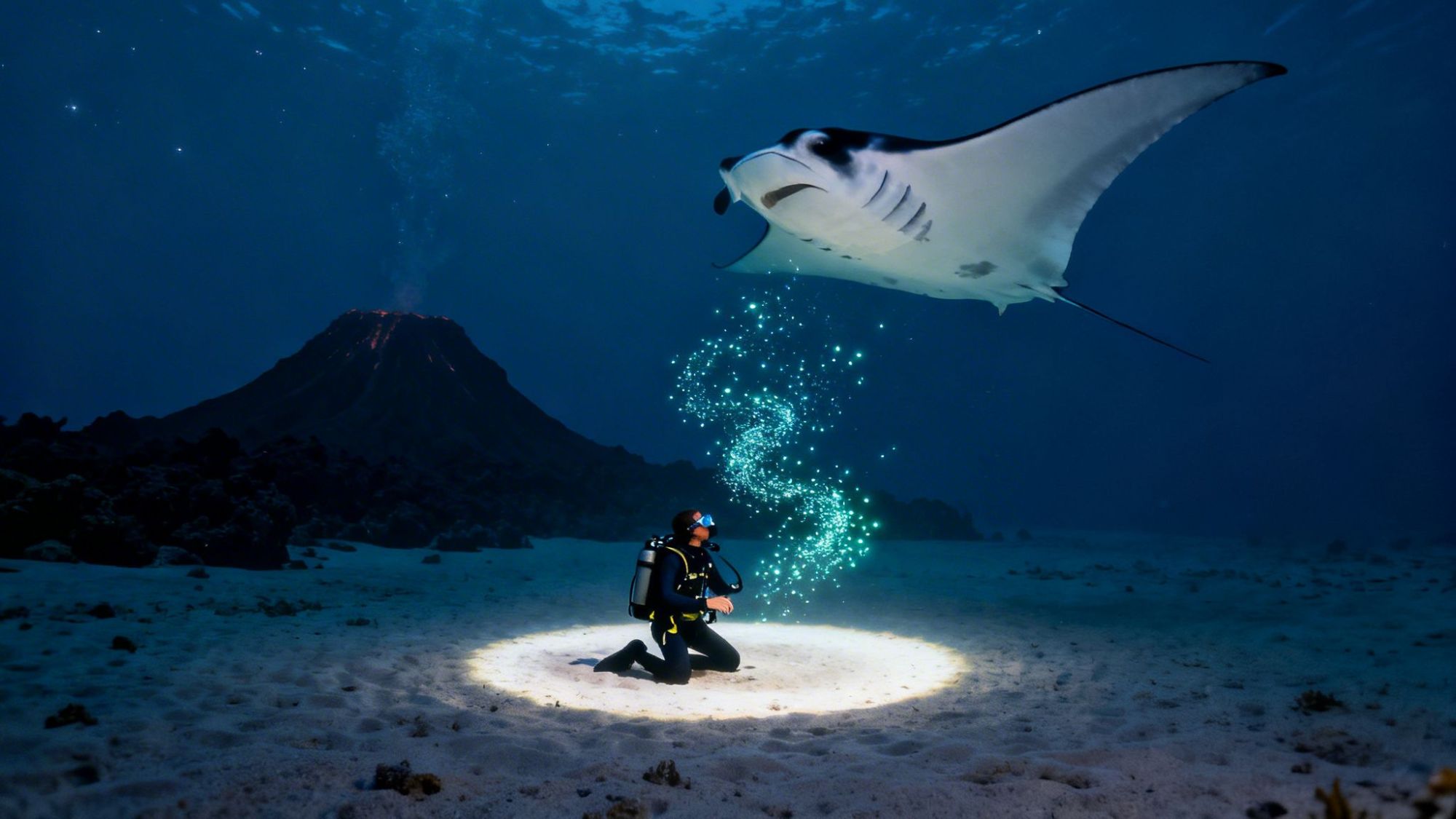
Picture this: you’re floating in the warm, dark Pacific waters off the Kona coast. Suddenly, a massive, gentle giant with a wingspan wider than you are tall glides just inches from you. It’s not a scene from a movie—it’s the world-famous Kona manta ray dive, and it’s a real-life encounter you’ll never forget. This is, without a doubt, an underwater ballet that has to be seen to be believed.
An Unforgettable Night with Kona's Gentle Giants
The Big Island's Kona coast is known worldwide as one of the most reliable places on the entire planet to see majestic manta rays. Night after night, these graceful creatures show up to feed on plankton, putting on an acrobatic show for snorkelers and divers lucky enough to be there. This incredible natural event, supported by responsible tour companies, has become a truly spectacular and surprisingly accessible adventure.
While certified scuba divers get to watch the magic from the ocean floor, this isn't an exclusive club. If you have non-divers in your group, they can have just as good of a view from the surface. In fact, Kona Snorkel Trips is the top rated & most reviewed snorkel company in Hawaii, making sure everyone gets a front-row seat to the action. Their expertise and focus on safety make for an amazing experience for the whole family. But don't just take our word for it—see what other guests have to say.

Why Is This Experience So Special?
The Kona manta ray experience is so much more than just spotting some cool marine life. It’s about feeling a real, profound connection with the ocean. Here’s what makes it so unique:
- Reliable Sightings: Unlike a lot of wildlife tours where you just hope for the best, the manta ray action in Kona is remarkably consistent. The success rate is often over 90%!
- Passive Interaction: You're just a quiet observer in their world. The mantas aren't interested in the people; they're drawn to the lights that attract their food. This lets them feed naturally without being disturbed.
- A Shared Experience: Both divers on the bottom and snorkelers on the surface help create a shared "campfire" of light. This light attracts the plankton, which in turn brings in the mantas for everyone to enjoy together.
This guide will walk you through everything you need to know to plan your own manta ray dive or snorkel adventure here in Kona. We'll cover how it all works, what to look for in a tour, and how to prepare. For an even more detailed look, check out our guide on the manta night dive in Hawaii to learn more.
The Science Behind the Manta Ray Buffet
Ever wonder how the Kona coast manages to attract so many manta rays, night after night? It’s not some happy accident. It's a special mix of geography and biology that makes the Kona manta ray dive one of the most reliable wildlife shows on the planet.
The whole thing starts with the Big Island's steep volcanic slopes. These drop-offs create something called the "Island Mass Effect," which pushes deep, nutrient-rich water up toward the sunny surface.
This upwelling is like ringing a dinner bell for the entire food chain. All those nutrients cause a nightly bloom of plankton—the manta rays' favorite food. These gentle giants are filter feeders, and they show up to the Kona coast for this dependable, all-you-can-eat buffet. You can learn even more about these amazing animals with these fun facts about manta rays.
The Light That Acts as a Dinner Bell
Years ago, some of the first divers in Kona figured out something amazing. When they shined powerful lights into the water at night, the plankton went nuts. Plankton are naturally drawn to light, and the beams created a super-concentrated feast.
This simple trick works like a giant magnet for plankton, pulling them into a thick, glowing cloud. The mantas, always looking for a good meal, just follow the food source right to the "campfire" of lights that snorkelers and divers create.
This is why Kona's west coast is world-famous. The underwater landscape provides the food, and the lights bring it all together. Manta rays show up more than 80% of the time at the main sites. Most tours see about six mantas a night, but we've seen some lucky groups spot over 36 at once!
So when you join a manta ray tour, you're not just crossing your fingers and hoping for a sighting. You're becoming part of a well-established, natural event that happens here nearly every single night.
Choosing Your View: Dive vs. Snorkel
So, you’re ready to see the mantas. One of the biggest questions people ask is whether they should dive or snorkel. Both are incredible, but they offer two completely different ways to see the show. Your best bet depends on your comfort in the water, whether you have a dive certification, and really, what kind of view you’re hoping for.
If you’re a certified diver, you get a mesmerizing "bottom-up" view. You'll descend about 35 feet to the sandy ocean floor, find a spot with the group, and shine your light toward the surface. Then, you just watch as these gentle giants perform an underwater ballet, gliding and barrel-rolling right over your head. It’s an experience that makes you feel like you’re truly a part of their world.
Snorkeling, on the other hand, gives you a fantastic "bird's-eye" perspective. You’ll float comfortably on the surface, holding onto a custom-made light board that attracts the plankton. From there, you look down into the illuminated water and watch the whole scene unfold below you. The mantas often come within inches of the board, giving you an unbelievably close look.
Kona Manta Ray Dive vs. Snorkel: A Quick Comparison
To help you figure out which is the right fit for you, we've put together a simple breakdown. Think of it as choosing your seat for the best show in town.
| Feature | Scuba Diving | Snorkeling |
|---|---|---|
| Perspective | Bottom-up, looking overhead | Top-down, looking below |
| Certification | Open Water Diver certification is required | No certification needed; basic swimming ability is sufficient |
| Proximity | Mantas often glide inches above your head | Mantas can come very close to the surface light board |
| Physical Effort | More demanding; involves carrying heavy gear | Less demanding; involves floating and holding on |
| Family Friendliness | Limited to certified divers (usually 10+ years old) | Great for families and most ages (check operator minimums) |
Ultimately, there’s no wrong choice here. Both experiences put you front and center for one of nature's most spectacular displays. It just comes down to personal preference and qualifications.
The Best Choice for Divers
For certified divers, the Kona manta ray dive is a true bucket-list experience. There’s nothing quite like the feeling of a 1,000-pound animal gliding silently just inches above you. It's something you’ll be talking about for the rest of your life.
If you are a certified diver, we highly recommend booking with Kona Honu Divers. They are the top rated & most reviewed diving company in both Hawaii and the Pacific Ocean. Their reputation for safety and providing an incredible dive is second to none. You can check out the details on their specific manta ray diving tour on their website.
Excellent Options for Snorkelers
Don't have a dive certification? Or maybe you have non-divers in your group? No problem at all. Snorkeling is a fantastic way to witness the magic, and honestly, some people prefer it! For an exceptional tour, consider Manta Ray Night Snorkel Hawaii, an exceptional alternative when looking for a Manta Ray night snorkel tour.
While deciding, it can be fun to think about other unique animal encounters, like diving with sharks, to put it all into perspective. But whether you choose to go deep or float on top, you’re in for an unforgettable night with Kona's mantas. You can learn more about what makes the Kona manta dive so special in our other article.
What to Expect on Your Manta Ray Tour
Heading out into the ocean after dark might sound a little nerve-wracking, but I promise you, the Kona manta ray dive or snorkel is an incredibly well-run and safe adventure. Your guides are pros who’ve done this thousands of times. From the moment you arrive, they’ll walk you through everything, making sure you’re comfortable and ready for one of the best nights of your life.
Your night starts at the harbor. You'll meet the crew, get checked in, and then settle in for a thorough boat briefing. They’ll cover all the safety stuff, explain the plan for the evening, and share some amazing facts about the giant, gentle rays you’re about to meet. This is the perfect time to ask any last-minute questions.
The Famous Manta Ray Campfire
After a quick, beautiful boat ride along the coast, you'll arrive at one of the two main sites: Manta Village near Keauhou Bay or Manta Heaven a bit further north. This is where the magic really begins as the crew sets up the underwater "campfire."
So what is this campfire? It’s a brilliant setup using powerful lights to attract plankton, the mantas' favorite food.
- For Divers: You’ll follow your guide down to a sandy patch on the ocean floor, usually around 35 feet deep. You'll kneel on the bottom and point your powerful flashlight up, creating a column of light.
- For Snorkelers: You'll hop in the water and hold onto a big, custom-built float board. These boards have bright lights that shine straight down into the water, creating a giant beacon that plankton can't resist.
All these beams of light—from the divers below and the snorkelers above—create a massive buffet line for the mantas. They swoop and glide right through the light to feed, putting on an unbelievable show for everyone.
Your Guides and Gear
Your guides are with you every step of the way. In the water, their job is to keep an eye on everyone, point out the mantas as they arrive, and just make sure you’re having an incredible, safe time. They know these animals and the local waters inside and out.
Don't worry about equipment, either. Your tour operator provides everything you need. For snorkelers, that means a quality mask, snorkel, fins, and a wetsuit to keep you warm. Divers will get their tanks and weights. The crew makes sure it all fits right and you’re comfortable before you even touch the water. To see exactly what's involved, check out our full guide on the manta ray night snorkel tour.
Both Manta Village and Manta Heaven are fantastic spots. Manta Village is famous for being super reliable with a nice, calm sandy bottom. Manta Heaven can sometimes attract even bigger groups of rays. Your captain is an expert and will always pick the best site for the night based on conditions and where the mantas have been showing up.
Ready to book your spot for this unforgettable light show? You can secure your place on a top-rated snorkel tour right now.
How to Plan a Perfect Manta Ray Trip
A little bit of planning can turn a great manta ray adventure into a truly perfect one. When you're dealing with something as special as a Kona manta ray dive or snorkel, some simple prep work makes all the difference, ensuring your night is comfortable, smooth, and completely unforgettable.
From figuring out the best time to visit to what you should toss in your bag, we'll walk you through everything you need to know.
Choosing the Best Time to Go
One of the best things about the Kona manta experience is that it's a year-round affair. We have a pretty consistent supply of plankton, which means you have a fantastic chance of seeing mantas no matter which month you visit.
That said, if you have a flexible schedule, the summer months—from June through August—tend to bring the calmest ocean conditions. This can make for a much smoother and more enjoyable boat ride, especially after the sun goes down.
No matter the season, booking your tour in advance is absolutely essential. These trips are incredibly popular and fill up fast, especially around holidays and during summer vacation. Locking in your reservation early means you'll get a spot with a top-rated, reputable company. If you're ready to snorkel, you can check availability and book your spot on the Kona Snorkel Trips Manta Ray tour page.
Your Simple Manta Ray Packing List
Your tour operator will have all the main gear for you, but bringing a few personal items will make your trip way more comfortable.
- Swimwear: The easiest thing to do is wear your swimsuit under your clothes. You'll be ready to go when it's time to get in the water.
- A Warm Jacket or Hoodie: Even on a balmy Hawaiian evening, it can get surprisingly chilly on the boat after a night swim. A dry, warm layer is a non-negotiable.
- Reusable Water Bottle: It's always smart to stay hydrated, and bringing your own bottle is an easy win for being an eco-friendly visitor.
- Towel: You’ll definitely want one to dry off after your incredible encounter.
How to Avoid Seasickness
Nobody wants to feel queasy when they should be staring in awe at giant, graceful mantas. Seasickness is a real concern for any boat trip, particularly a night one, but thankfully it's also very preventable.
There are a bunch of effective, easy-to-find remedies you can grab ahead of time. Here are a few tried-and-true options you can find on Amazon to make sure you're prepared:
- Ship-EEZ Seasickness Patch: A small, discrete patch you just stick behind your ear.
- Dramamine pills: The classic, trusted over-the-counter choice.
- Bonine pills: Another popular pill that’s known for being less drowsy.
- Sea Band wristbands: A drug-free option that works using acupressure.
- Ginger chews: A tasty, natural remedy that’s great for a mildly upset stomach.
For more tips on making the most of your time in the water, check out our guide to the best snorkeling in Kona. Taking a few simple steps beforehand means you can focus 100% on the majestic mantas gliding below.
Respecting the Mantas and Their Habitat
Getting to see the Kona manta rays up close is a special experience, but it comes with a responsibility to protect these gentle giants and their home. The biggest rule is simple: you are a guest in their world. That means your job is to watch quietly and not interfere.
Think of it as passive observation only. To keep the mantas safe, every good tour company has a strict “no touching” rule. You can’t touch, chase, or try to ride them. It might be tempting, but it’s a huge deal. Their skin is coated in a delicate, slimy layer that protects them from nasty bacteria and infections. Touching them strips that slime off and can make them seriously sick.
Following Manta Ray Safe Practices
Being a responsible visitor is what keeps this amazing experience going for years to come. Your guides will go over these rules before you get in the water, but here’s the rundown.
- No Touching: We can’t say it enough. This is the #1 rule. Just keep your hands to yourself.
- Stay Horizontal: Whether you're snorkeling or diving, try to stay flat in the water. It makes you seem smaller and less of a threat, and it helps you avoid accidentally bumping into a manta.
- No Chasing: Let the mantas come to you. They are curious and will get close on their own. Chasing them just stresses them out and ruins the show for everyone.
- Avoid Free-Diving: Don’t dive down from the snorkel board to get a closer look. It can scare the mantas away from the light and is a safety risk.
The Kona Coast is a world-famous spot for a reason, home to a resident population of over 450 individual reef manta rays (Manta alfredi). It's why the tours here are so reliable. In fact, there's a 76% resight rate for the mantas we've identified, which shows just how much they love this spot. You can learn more about Kona's resident manta rays and what makes them stick around.
When you follow these simple rules, you become a partner in their conservation. You're helping make sure this magical encounter is here for many more years.
Your Manta Ray Questions Answered
Thinking about jumping in the water with Kona's famous manta rays? It's a life-changing experience, but it’s totally normal to have a few questions before you go. We hear them all the time, so we’ve put together answers to the most common ones.
Is the Manta Ray Dive Safe?
Absolutely. When you go out with an experienced and certified crew, this is a very safe activity. Guides are in the water right there with you, making sure everything goes smoothly from start to finish.
And the mantas? They're called gentle giants for a reason. These magnificent creatures are filter feeders, dining on tiny plankton. They have no teeth, no stingers, and no barbs. They are completely harmless to humans.
I'm Not a Strong Swimmer. Can I Still Snorkel?
You bet. You only need to be comfortable in the water. Snorkelers hang onto a large, custom-made floatation board that lights up the water below. It’s very stable and easy to hold.
Plus, you'll be wearing a wetsuit, which makes you extra buoyant. You just float along at the surface, relax, and enjoy the show.
Am I Guaranteed to See Manta Rays?
While mantas are wild animals and sightings can never be 100% guaranteed, Kona's success rate is legendary. On most nights, the sighting consistency is well over 90%.
Many of the best tour operators, including us here at Kona Snorkel Trips, offer a "manta guarantee." If the mantas decide not to show up on your night, you can come back and try again for free on another trip (as long as there's space). It takes all the risk out of booking.