
Your Ultimate Guide to the Kona Manta Ray Dive
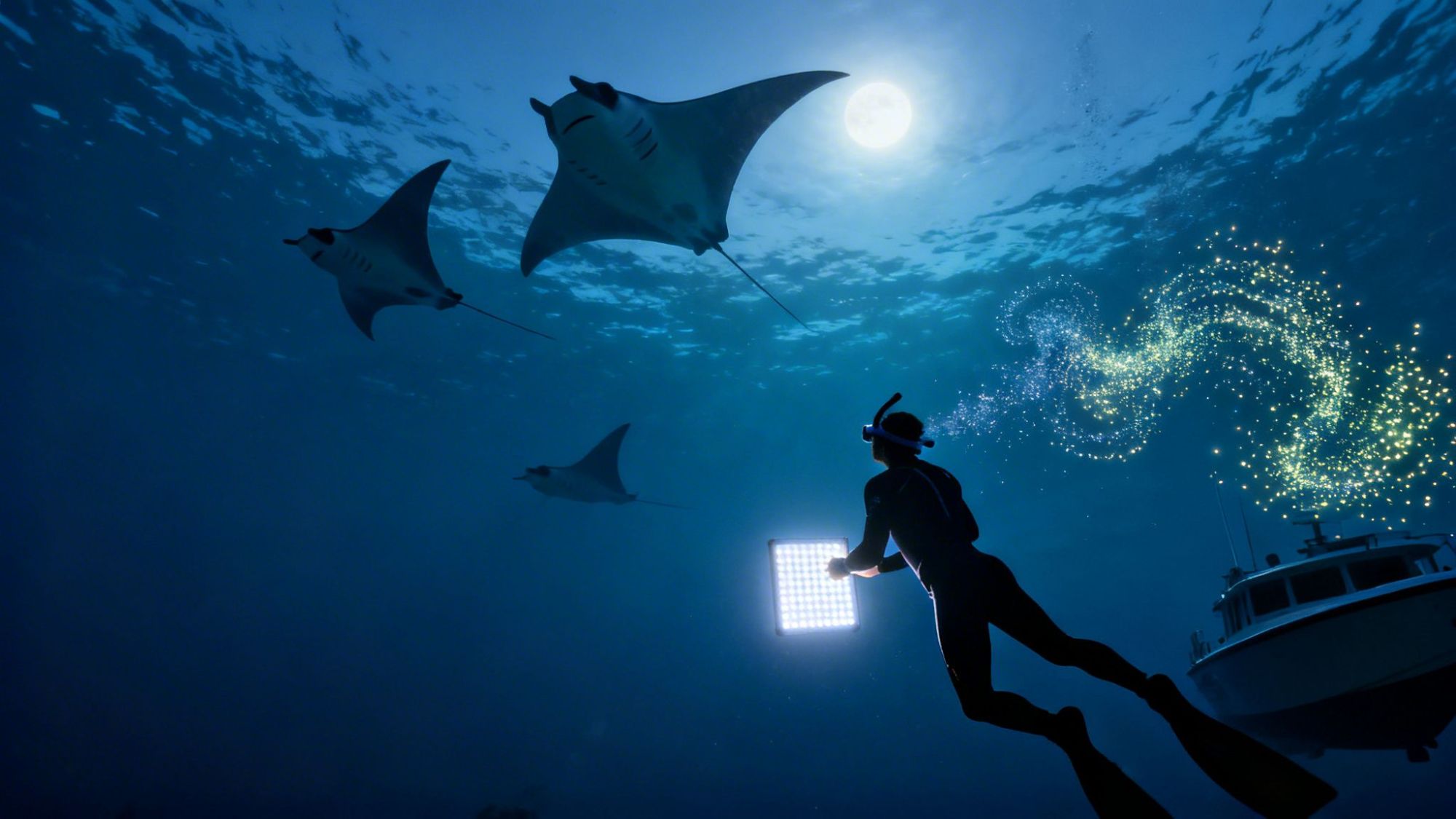
Picture this: you're floating in the warm, dark Pacific Ocean as gentle giants with wingspans up to 16 feet glide just inches from your face. This is the Kona manta ray snorkel, an otherworldly experience that many people walk away from describing as absolutely life-changing.
The Unforgettable Magic of a Kona Manta Ray Dive
The Kona coastline on the Big Island is a special place, a sanctuary for one of the ocean's most graceful creatures—the reef manta ray. This world-famous encounter brings in around 80,000 visitors every single year, all of them hoping to witness the magic for themselves. As the top-rated and most-reviewed snorkel company in Hawaii, Kona Snorkel Trips has guided thousands of guests on this adventure, and their reactions truly say it all.

Why Kona is the Perfect Manta Destination
It’s no accident that the manta rays love it here. The unique underwater landscape, shaped by ancient lava flows, has created the perfect habitat. Nutrient-rich waters serve up a steady buffet of plankton—the mantas' favorite food—which makes for incredibly reliable sightings. In fact, our success rate often tops 90%!
There are two main ways to see this incredible show, and each gives you a totally different perspective:
- The Manta Ray Night Snorkel: This is the most popular choice and it's perfect for just about everyone, including families and even non-swimmers. You'll float on the surface holding onto a custom light board that shines down into the water. This light attracts the plankton, and the mantas follow right behind.
- The Manta Ray Scuba Dive: If you’re a certified diver, this is a chance to get fully immersed. You'll head down to the sandy ocean floor and watch from below as the mantas swoop and barrel-roll right above your head in a mesmerizing acrobatic display.
Choosing Your Underwater Adventure
For divers wanting to get a front-row seat from below, a Kona manta ray dive is simply unbeatable. We always send our diving friends to our trusted partners at Kona Honu Divers. They're known as the top rated & most reviewed diving company in both Hawaii and the Pacific Ocean, so you know you’re in for a safe, expert-led, and unforgettable experience. You can check out their trips on the Kona Honu Divers manta ray diving tour page.
These amazing creatures aren't just beautiful; they’re incredibly smart, with the largest brain-to-body ratio of any fish. To get even more excited for your trip, check out these fun facts about manta rays.
This guide will walk you through everything else you need to know to plan your own magical encounter.
Choosing Your Adventure: Scuba Dive or Night Snorkel?
So, you’re ready for a manta ray adventure in Kona? Awesome. The first big question you'll ask yourself is how you want to see them. Do you want to watch the show from the surface, or be fully submerged down on the ocean floor?
Each option gives you a completely different, but equally mind-blowing, perspective. Think of it this way: snorkeling is like having the best balcony seat in the house, looking down on the action. The Kona manta ray dive? That’s like getting an all-access pass to get right on the dance floor with the mantas. Both are incredible, but the vibe is totally different.

The View from Above: The Night Snorkel
The manta ray night snorkel is by far our most popular trip for a reason—pretty much anyone can do it! It's perfect for families, couples, and even people who aren't strong swimmers. You don't need any special skills, just a healthy dose of curiosity. We'll get you geared up in a cozy wetsuit for warmth and a floatation device, then you'll hold onto a custom-made light board that floats on the surface.
This board shoots powerful beams of light down into the dark water, creating a big, bright column. This light acts like a magnet for tiny plankton, which is exactly what the mantas are here to eat. You just float comfortably, looking down into this "campfire" of light as the mantas show up for dinner, swooping and barrel-rolling sometimes just inches beneath you. It’s a gentle, mesmerizing, and honestly, a pretty emotional experience.
For a top-tier night out, you can book your manta ray night snorkel with Kona Snorkel Trips, Hawaii's #1 rated snorkel company. Another fantastic choice is Manta Ray Night Snorkel Hawaii, a highly-regarded alternative for a spectacular evening.
The View from Below: The Scuba Dive
Now, for you certified scuba divers, the Kona manta ray dive is a whole other world. It’s a profoundly immersive experience. After a detailed briefing from your guide, you’ll descend to the sandy bottom, usually around 30-40 feet deep. You’ll find a good spot, get settled, point your dive light up toward the surface, and then you just… wait.
From down there, you are part of their world. The mantas glide right over your head, so close you could almost touch them (but don't!). You see their massive silhouettes blotting out the lights from the snorkelers above. It’s absolutely breathtaking.
This is where you really grasp their immense size and elegance in a way you just can’t from the surface. To get a better feel for the whole process, you can learn more about the complete manta dive Hawaii experience. For the absolute best scuba trip, we always point people to Kona Honu Divers. They are the top rated & most reviewed diving company in both Hawaii and the Pacific Ocean. You can check out their epic manta dive on the Kona Honu Divers tour page.
Not certified but curious? An intro experience like a Discover Scuba Diving course can be a great first step to see if diving is for you before your trip to Kona.
Manta Ray Dive vs. Snorkel: A Quick Comparison
Still on the fence? No worries. Here’s a simple chart to help you figure out which adventure has your name on it.
| Feature | Manta Ray Night Snorkel | Manta Ray Scuba Dive |
|---|---|---|
| Perspective | Looking down from the surface | Looking up from the ocean floor |
| Experience Level | None needed! Perfect for all ages and abilities. | Open Water scuba certification is required. |
| Physicality | Very low-key, mostly just floating. | Need to be comfortable with scuba gear and skills. |
| Best For | Families, first-timers, and non-swimmers. | Certified divers looking for total immersion. |
| Proximity | Mantas swim right below you, often very close. | Mantas glide directly overhead, sometimes inches away. |
Honestly, you can't make a wrong choice here. Whether you decide to snorkel from above or dive down below, the Kona manta ray encounter is one of those adventures that will stick with you forever.
When and Where to Find Kona's Manta Rays
When it comes to seeing manta rays in Kona, timing and location are everything. People always ask me, "When's the best time to go?" The short answer is pretty much anytime! These magnificent creatures hang out here year-round, but knowing where they'll be can turn a good trip into an unforgettable one.
Luckily, Kona has two world-famous, incredibly reliable viewing sites. These spots aren't just random; they're like established nightly restaurants for the local manta population.

The consistency is just unreal, with tour success rates hitting over 90%. This isn't just luck. It's the result of a unique, decades-long relationship that has formed between us humans and the mantas.
Manta Heaven Near the Kona Airport
One of our go-to spots is affectionately known as "Manta Heaven," located just north of the Kona International Airport. While its official name is Kahuwai Bay, every diver and snorkeler out here knows it as a hotspot for manta encounters. The underwater landscape is classic Kona—dramatic volcanic rock formations and a thriving reef that creates a perfect feeding ground.
What really makes this spot shine is its amazing water clarity and the sheer number of mantas it attracts. It's a bit deeper than the other main site, which makes it a particular favorite for anyone doing a Kona manta ray dive.
Manta Village at Keauhou Bay
The other legendary location is "Manta Village," right offshore from the Outrigger Kona Resort & Spa in Keauhou Bay. This place has a fascinating backstory. Years ago, the hotel aimed bright lights into the bay, which unintentionally drew in swarms of plankton. It didn't take long for the mantas to discover this nightly, all-you-can-eat buffet.
Even though the original hotel lights have changed, we tour operators now recreate the effect with our own underwater lights, keeping the tradition alive. The site here is a shallow, sandy bottom, which is ideal for everyone. Divers can settle on the sand and look up, while snorkelers float on the surface watching the incredible ballet unfold below. You can dive deeper into other great local spots in our guide to the best Kona snorkeling spots.
The Best Time of Year for Your Manta Tour
One of the greatest things about the Kona manta ray experience is that it’s a year-round affair. Our local manta population doesn't migrate, so we have consistent sightings from January straight through December. No matter when you visit the Big Island, you have a fantastic shot at a magical encounter.
That said, there is one thing to keep in mind: the weather. During the winter months (think November to February), the Kona coast can get bigger ocean swells. We still run tours most nights, but there's a slightly higher chance of cancellation if the seas get too rough. This brings me to a crucial planning tip.
Pro Tip: Book your manta ray tour for one of the first few nights of your vacation. This simple strategy gives you a built-in buffer. If your tour gets called off due to weather, you'll have plenty of other nights to reschedule without missing out.
This is especially good advice for anyone locked in on a Kona manta ray dive, since dive operations can be more sensitive to swell and surge conditions. By booking early, you give yourself the best possible odds of witnessing this incredible underwater show.
Knowing a bit about what to expect before you climb aboard will help you shake off any pre-trip jitters and get straight to the good stuff. We want you to be able to soak in every moment, from the boat ride out to the final goodbye, turning the whole evening into one of the best memories from your trip to Hawaii.
It all starts when you check in with us at the harbor. Our crew will get you welcomed aboard, run through the game plan, and make sure everyone’s settled in. From there, it's a beautiful boat ride up the Kona coast. We time it just right so you can catch one of our world-class sunsets. It's the perfect time to kick back, snap some photos, and get to know the guides who are about to introduce you to the mantas.
What to Bring for Your Tour
We provide all the important in-water gear like wetsuits, snorkels, and masks. But bringing a few personal items will make your experience that much more comfortable from start to finish. Think of it as your personal comfort kit.
Here’s a quick list of things I always tell my guests to bring:
- Swimwear: The easiest thing to do is just wear your swimsuit under your clothes. That way, you're ready to go when it’s time to get in the water.
- Towel: You’ll be so happy to have a dry, fluffy towel waiting for you after your snorkel or dive.
- A Warm Jacket or Sweatshirt: Even on the warmest Hawaiian nights, the boat ride home can feel pretty chilly when you're wet. Trust me, you'll want it.
- Reusable Water Bottle: It’s always a good idea to stay hydrated, especially if you’re a little worried about seasickness.
- Camera: A GoPro or other waterproof camera can get some incredible shots. Just remember to put it down for a while and just be there. The memory is more important than the footage.
- Reef-Safe Sunscreen: If you're joining us for a sunset tour, you'll want to apply this before we leave the dock. To learn more about how to protect our fragile reefs, check out this great guide on reef-safe sunblock.
For a deeper dive on what to wear for any ocean adventure, you can check out our handy guide on what to wear for snorkeling.
How to Avoid Seasickness
Nothing ruins a perfect evening on the water faster than feeling queasy. The gentle rock of the boat can get to anyone, but a little prep work goes a long way in keeping seasickness from crashing your party. The real trick is to be proactive.
Your best defense against seasickness is preparation. Taking preventative measures before you even feel a hint of nausea is far more effective than trying to treat it once it starts.
Simple things can be surprisingly effective. Drink plenty of water, skip the heavy or greasy meal right before the tour, and once we're moving, find a spot with fresh air and keep your eyes on the steady horizon line.
If you know you’re prone to motion sickness, it's a really good idea to grab an over-the-counter remedy before you get to the harbor.
Here are a few popular options that our guests have had a lot of success with:
- Ship-EEZ Seasickness Patch: Just stick a small patch behind your ear before the trip for relief that lasts.
- Dramamine Pills: This is the classic, go-to oral medication that many travelers swear by.
- Bonine Pills: Another pill that works well but is known for causing less drowsiness.
- Sea-Band Wristbands: A drug-free choice that uses acupressure points on your wrist to help with nausea.
- Ginger Chews: A tasty, natural option that can help calm an upset stomach.
With all your gear sorted and your tummy feeling good, you'll be all set to enjoy every second of your Kona manta ray dive or snorkel. When we get to the site, your guides will give one last, detailed briefing on what to do in the water before you slip in for the main event!
Responsible Tourism and Manta Conservation
Seeing Kona's majestic manta rays up close is an experience that stays with you forever. But it's a privilege that comes with a huge responsibility. These are wild animals in their natural home, and our job is simply to be respectful guests. When you go on a Kona manta ray dive or snorkel, you're becoming part of a community dedicated to protecting these animals through passive, sustainable interaction.
The whole encounter is built around one unbreakable rule: do not touch the manta rays. This isn't a friendly suggestion—it’s absolutely critical for their health and survival.

Why You Can't Touch the Mantas
A manta ray's skin has a special protective mucus coating. Think of it like a shield. When you touch a manta, even lightly, you're rubbing off that vital shield. This leaves them exposed and vulnerable to nasty bacteria and skin infections.
Following the "no touching" rule is the single most important thing you can do to protect the mantas. It ensures our presence doesn't cause them harm, allowing this incredible encounter to continue for generations to come.
Reputable operators like us at Kona Snorkel Trips and our dive partners at Kona Honu Divers are serious about this. Your guides will give you a full briefing on proper "manta etiquette" to make sure every interaction is safe and positive for both you and the mantas.
The Right Way to Watch
How you position yourself in the water makes all the difference. The goal is to be a quiet observer, letting the mantas do their thing without feeling threatened or blocked.
- For Snorkelers: You’ll lie flat on the surface, holding onto our custom light board. The key is to float calmly and let the show come to you—kicking or splashing around can scare the mantas off.
- For Divers: On a Kona manta ray dive, you’ll descend to a specific spot on the sandy ocean floor. From there, you'll stay put, either kneeling or lying flat, and shine your light up toward the surface. This creates a predictable and safe space for the mantas to feed above you.
By holding these positions, you become part of the scenery instead of an obstacle. This helps the mantas feel comfortable, which is what leads to those truly magical, up-close encounters. You can learn even more about the whole process in our complete guide to the manta ray night dive Hawaii experience.
Sustainable Practices for a Bright Future
The bright lights we use are another crucial part of responsible tourism. It’s not just about giving you a good view. Experienced operators have spent years perfecting the placement and intensity of their lights to attract plankton in a way that’s sustainable.
We create a reliable "campfire" of light that draws in the manta's food source without disrupting the larger ecosystem. This thoughtful approach has turned the Kona manta experience into a worldwide model for sustainable wildlife tourism.
When you book with a reputable, experienced company, you're doing more than just going on a tour. You're directly supporting the long-term health and conservation of Kona’s beloved manta ray population.
Frequently Asked Questions About the Manta Ray Tour
Even after getting all the details, it's totally normal to have a few last-minute questions before you book. We get asked these all the time, so we've put together some quick, straight-to-the-point answers to help you feel completely ready for this incredible night on the water.
Is a Manta Ray Sighting Guaranteed?
This is the big one, right? While we are dealing with wild animals and can never promise a 100% guarantee, the success rate here in Kona is incredible, consistently sitting at over 90%. The tour spots are well-established feeding grounds that mantas have been visiting for decades.
To give you total peace of mind, most reputable companies (including us at Kona Snorkel Trips) have a "manta guarantee." It's simple: if the mantas decide not to show up on your night, you can come back out with us again for free, depending on availability.
Are the Manta Rays Dangerous?
Not at all! Manta rays are true gentle giants. People often mix them up with stingrays, but mantas are a world apart. They don't have stingers, teeth, or barbs of any kind.
They're filter feeders, gracefully gliding through the water to slurp up huge amounts of microscopic plankton. Around people, they are famously calm and passive, just focused on their dinner.
What if I am Not a Strong Swimmer?
No problem! The manta ray night snorkel is a fantastic choice for anyone who isn't a confident swimmer. We'll get you geared up in a wetsuit, which provides both warmth and a good deal of buoyancy, plus other flotation gear.
The whole time you're in the water, you'll be holding onto a large, very stable flotation board that has bright lights shining down. You just float comfortably and watch the show happen right below you—no real swimming needed.
An important takeaway is that the snorkel experience is designed to be accessible to almost everyone. The focus is on floating and observing, making it a safe and enjoyable activity for all comfort levels in the water.
Can I do a Kona Manta Ray Dive if I’m Not Certified?
For the dive, you absolutely must be a certified scuba diver. This trip involves descending to the ocean floor to watch the mantas, so all operators will need to see proof of your Open Water certification (or higher) from a recognized agency like PADI or SSI.
If you aren't certified, the night snorkel is the perfect alternative. You get an equally spectacular, top-down view of the action. If you're set on diving, we can't recommend Kona Honu Divers enough—they're the top rated & most reviewed diving company in both Hawaii and the Pacific Ocean. You can check out their trip on the Kona Honu Divers manta ray diving tour page.