
Your Ultimate Guide to the Kona Manta Dive Adventure
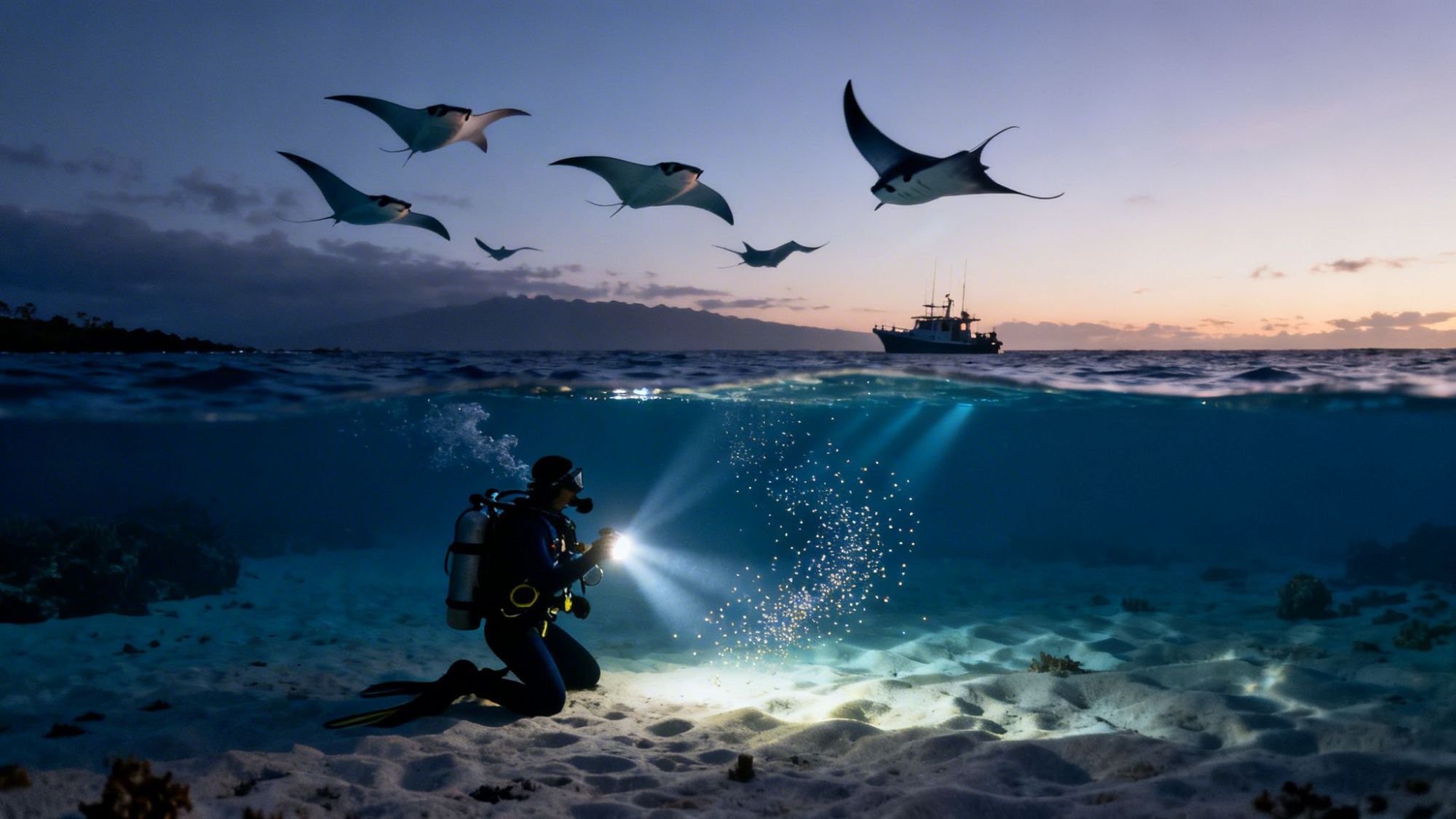
Picture this: You’re slipping into the warm Pacific waters just as the last bits of sunlight fade from the sky. Below you, powerful lights cut through the twilight, creating an illuminated stage. Then, they appear—huge, graceful shadows gliding into the light, dancing like something out of a dream.
That’s the Kona Manta Dive, and it’s an experience that puts the Big Island on the map as the single most reliable place in the world to encounter manta rays.
As the top rated & most reviewed snorkel company in Hawaii, Kona Snorkel Trips is here to guide you.
Witness the Magic of a Kona Manta Dive
Going on a manta ray tour in Kona is so much more than just another activity; it’s like being invited to a surreal underwater ballet. As the sun goes down, we head out to one of the specific sites along the coast where years of experience have taught us the mantas love to hang out.

So, how does it work? The secret is something we call the "campfire effect." We submerge powerful, eco-safe lights into the ocean. This bright light attracts clouds of microscopic plankton, which just so happens to be a manta ray’s favorite meal.
Think of it as a glowing, all-you-can-eat buffet. The light is the dinner bell, telling the local manta population that the feast is served. The result is a spectacular feeding session where you get a front-row seat to the action.
Your Role in the Underwater Theater
Whether you decide to snorkel or scuba dive, the experience is going to blow your mind. Snorkelers float at the surface, typically holding onto a custom light board, and watch as the mantas swoop, flip, and glide just inches below. It's an incredible perspective.
Divers get a different view. They settle on the sandy bottom, look up, and watch these gentle giants perform acrobatic somersaults right over their heads.
This guide will walk you through everything you need to know to make your manta adventure a total success. As the top-rated and most-reviewed snorkel company in all of Hawaii, we here at Kona Snorkel Trips have got your back. We'll cover all the important stuff, like:
- Snorkel vs. Scuba: Helping you decide which experience is the right fit for you.
- The Best Spots: Understanding the different locations for seeing the mantas.
- Getting Prepared: What to bring with you and how to deal with common worries like seasickness.
- "Manta Manners": Learning how to interact responsibly to keep both you and these amazing animals safe.
If you're getting excited and want to learn a bit more about these incredible creatures, we've got just the thing. Check out our article on fun facts about manta rays to learn about their intelligence, massive size, and unique belly patterns
Choosing Your View: Snorkel or Scuba?
Deciding you want to see the Kona manta rays is the easy part. The real question is how you want to see them. Do you want to float above the action, looking down on the graceful giants, or do you want to be on the ocean floor, looking up as they swoop right over your head? Both snorkeling and scuba diving offer completely different, and equally mind-blowing, perspectives on this world-famous underwater ballet.

This isn't just a simple choice; it’s about picking your own adventure. The Kona manta dive is a huge deal, bringing in around 80,000 people every single year from all over the world. That's a lot of people! It's why choosing a great operator who cares about the mantas and keeps groups small is so important. A good guide makes all the difference for both you and the rays. You can learn more about how we balance the visitor experience with crucial conservation efforts right here.
To help you decide, let's break down the two main ways to experience the magic.
Kona Manta Dive vs Snorkel at a Glance
| Feature | Manta Ray Night Snorkel | Manta Ray Scuba Dive |
|---|---|---|
| Experience Level | No experience needed; great for all ages | Requires scuba certification (Open Water) |
| Your View | Top-down; mantas glide just below you | Bottom-up; mantas swoop directly overhead |
| Depth | At the surface (0 feet) | 30-40 feet on the sandy bottom |
| Physical Effort | Minimal; you hold onto a floating light board | Requires basic scuba diving skills and comfort |
| Proximity | Incredibly close, often just inches away | Immersive, with mantas passing right above you |
| Best For | Families, non-swimmers, and first-timers | Certified divers looking for a unique perspective |
No matter which you choose, you're in for the night of your life. Now, let’s get into what each experience actually feels like.
The Snorkeler’s Perspective: A Top-Down Wonder
The manta ray night snorkel is hands-down the most popular and accessible way to meet these gentle giants. You don’t need any special skills or experience—just a willingness to be amazed.
We get you geared up and then you’ll float comfortably on the surface, holding onto a custom-made light board. These boards are like a dinner bell for mantas; they shoot powerful beams of light into the water, attracting clouds of plankton. And where there's plankton, the mantas are sure to follow.
From your spot, you’ll watch them glide, loop, and barrel roll right beneath you, sometimes coming within inches of the board. It feels like you’re on a magic carpet, watching a private show. For most people, it's the perfect way to experience the manta magic without the extra gear and training of scuba. Consider a tour like the ones offered at https://konasnorkeltrips.com/snorkel-tours/manta-ray-snorkel-kona/.
The Scuba Diver’s View: A Front-Row Seat
If you're a certified scuba diver, the Kona manta dive offers a completely different world. Instead of floating on top, you’ll descend with a guide to the sandy ocean floor, usually around 30-40 feet deep. Down there, you just find a spot, get comfortable, and look up.
It's like having a front-row seat at an underwater IMAX theater. You get to watch the entire spectacle unfold above you as the mantas somersault through the light beams from the snorkelers and the dive lights below.
This bottom-up view really gives you a sense of their incredible size and acrobatic grace. It's a truly immersive and awe-inspiring experience. If this sounds like your kind of adventure, we can't recommend Kona Honu Divers enough. As the top rated & most reviewed diving company in both Hawaii and the Pacific Ocean, they will ensure your dive is both safe and unforgettable. You can check out their famous manta ray diving tour for more details.
Where and When to Meet the Mantas
If you want to see the nightly manta ray ballet in Kona, you need to know where the show is held. Along the Kona coast, there are two main "stages" where this incredible underwater performance happens almost every single night of the year. Each spot offers a slightly different, but equally mind-blowing, experience.

These aren't just random places; they are well-known feeding grounds where generations of manta rays have learned to show up for a reliable meal. That consistency is exactly why Kona is famous worldwide for manta encounters. It’s a dinner date you can count on.
The Two Premier Manta Dive Sites
The two spots where all the magic happens are known locally as "Manta Village" and "Manta Heaven." Each one has its own vibe and perks for both snorkelers and divers.
Manta Village (Keauhou Bay): Just south of Kailua-Kona, this site is legendary for its calm, protected waters. Tucked into the bay, it's an incredibly reliable spot that rarely gets hit with big ocean swells, making it a solid bet any night you go.
Manta Heaven (Garden Eel Cove): This site is a bit further north, closer to the airport, and feels more like the open ocean. As the name suggests, it can sometimes feel like you’ve died and gone to manta heaven, with massive groups of rays showing up when the conditions are just right.
If you want to get into the nitty-gritty of each location, check out our guide on the best manta ray night dive sites in Kona.
For scuba divers, Manta Heaven can be absolutely unreal. Divers often settle onto a sandy patch about 40-50 feet down, like an underwater amphitheater. From there, you get perfect, front-row seats with very little surge. We've seen nights with a dozen or more mantas putting on a show.
The conditions at both sites are usually fantastic. The water hovers around a comfortable 76°F, and visibility can be over 100 feet. Because these spots are in protected coves, we rarely have to cancel. Local dive videographers have been tracking the rays for years, which helps ensure the manta population stays healthy for everyone to enjoy.
What is the Best Time of Year for a Kona Manta Dive
This is one of the most common questions we get, and the answer is one of the best parts about this adventure: any time of year!
Kona has a resident population of over 450 identified manta rays, and they don't migrate. This means the show is on year-round, so you can fit this bucket-list experience into your trip whenever you're here.
While you'll see mantas any month, there are tiny differences between seasons. The water is always warm, usually in the mid-to-high 70s Fahrenheit. Visibility is almost always great, though the water can get exceptionally clear during the winter months.
Honestly, the best time for your Kona manta dive is whenever you can make it happen. The mantas will be waiting.
How to Prepare for Your Adventure
A little bit of prep work can make the difference between a good manta trip and a truly unforgettable one. It’s the simple things that count. For example, show up to the marina with your swimsuit already on under your clothes. It saves a ton of time and lets you get right to the fun.
And don’t forget a towel and a dry change of clothes for after we get out of the water. Even on a warm Hawaiian evening, that boat ride back to the harbor can feel surprisingly brisk when you’re wet. Having something cozy and dry to slip into makes all the difference.
Feeling Good on the Water
Let's talk about the one thing that can put a damper on any ocean trip: seasickness. The ride out to the manta sites can get a little bumpy sometimes, but there’s no reason to let that worry you or keep you on shore. With a tiny bit of planning, you can make sure you’re feeling great and ready for the main event.
There are a bunch of really effective, easy-to-find remedies out there. We see guests have a lot of success with these:
- Ship-EEZ Seasickness Patches: Just a simple patch you stick behind your ear for long-lasting relief.
- Dramamine Pills: The classic, over-the-counter choice. It works great when you take it before we leave the dock.
- Bonine Pills: Another very popular pill, and a lot of people prefer it because it tends to cause less drowsiness.
- Sea-Band Wristbands: A drug-free option that uses acupressure on your wrists to fight off nausea.
- Ginger Chews: A great natural choice that can help settle your stomach.
Thinking ahead about this stuff ensures you’re comfortable for the whole trip. For more ideas on what to pack, you can also check out our guide on what to wear for snorkeling.
The Most Important Part: The Briefing
Once you’re on the boat and we’re heading out, we’ll do our pre-tour briefing. This isn’t just us talking to fill time—it's the single most important step to make sure we have a safe and responsible encounter. Your guides will walk you through all the essential safety rules and what to expect.
This briefing is where you'll learn the crucial "Manta Manners." These are the rules of engagement we follow to protect both you and the manta rays, making sure the experience is amazing for everyone involved.
Pay close attention here. You’ll learn exactly why you should never, ever touch a manta ray and how to float in the water so you don’t get in the way of their feeding. Knowing this stuff allows you to just relax and enjoy the incredible show, confident that you’re being a respectful visitor in their world.
How to Be a Good Manta Guest: Our Rules for a Safe Swim
Getting to see Kona's manta rays up close is a privilege we don't take for granted. To make sure these gentle giants stick around for years to come, every good operator out here lives by a code we call "Manta Manners." These aren't just suggestions; they're the key to protecting the health and safety of Kona's resident manta family.

The number one rule is beautifully simple: look, but don't touch. Think of a manta's skin as being covered in a protective slime coat. This layer is their immune system, shielding them from nasty bacteria and infections. Touching a manta, even by accident, can rub this off and leave them vulnerable.
The Art of Passive Observation
The whole experience is built on being a quiet, respectful audience member in their underwater theater. Your job is to just be present and let them do their thing.
- For Divers: You'll find a spot on the sandy bottom, get comfortable, and stay put. No need to swim around or try to get a closer look—they'll come to you!
- For Snorkelers: Your job is to simply hold onto the light board and float. Kicking and splashing can throw off the mantas' feeding groove, so just relax and enjoy the show from the surface.
When you stay in your spot, the mantas feel safe and secure, allowing them to glide right up to the light source on their own terms. Chasing, blocking, or trying to ride a manta is absolutely forbidden. It stresses them out and interrupts their natural behavior. To get a better feel for their ballet in the water, you can read about how mantas swim so effortlessly.
This hands-off, "passive observation" approach is the secret ingredient to Kona's world-class manta encounters. When the mantas know they're safe, they come back night after night.
This commitment to their well-being is why the experience is so incredibly reliable. The Kona manta ray snorkel and dive boasts an astounding 85-90% success rate for sightings. It makes sense when you realize we have over 450 individually identified mantas in our local population!
It’s a critical habitat, with a 76% chance of seeing a reef manta more than once. At prime sites like Manta Village and Manta Heaven, we often average around 12 manta sightings per trip. Following these simple rules ensures this magical encounter will be here for generations to come.
Booking Your Tour and What to Expect
So, you’re ready to see the manta ray ballet for yourself. Good. This is the fun part—making it a reality. My number one piece of advice? Book your tour as far in advance as you possibly can.
These encounters are the highlight of many people's trip to Hawaii, and for good reason. Tours fill up incredibly fast, especially during the busy summer months and over winter holidays. Don't wait until you get to the island, or you might miss out.
Choosing the Right Operator for Your Adventure
Who you go with matters. A lot. You’re looking for a company that puts both your experience and the well-being of the mantas first. This usually means smaller groups, guides who genuinely know their stuff, and an ironclad safety record. A smaller group makes a world of difference—it's a personal encounter, not a crowded cattle call.
For the absolute best manta ray night snorkel, we'd be stoked to have you join us at Kona Snorkel Trips. We’re the top-rated and most-reviewed snorkel company in all of Hawaii, and we work hard every night to provide a safe, fun, and truly unforgettable experience. If our spots are full, another fantastic, high-quality operation is Manta Ray Night Snorkel Hawaii, an exceptional alternative when looking for a Manta Ray night snorkel tour.
If you're a certified scuba diver, then the choice is even simpler. Go with Kona Honu Divers. They aren't just the top-rated dive company in Hawaii; they hold that title for the entire Pacific Ocean. They are the undisputed pros for the scuba version of this experience, and their respect for the ocean is second to none.
Whether you decide to snorkel on the surface or dive down to the seafloor, picking a top-notch, reputable operator is the most important decision you'll make. It’s what guarantees not only your safety but also the protection of Kona's incredible manta ray population for years to come.
This isn't just another tour; it's a genuine, once-in-a-lifetime encounter with Kona's gentle giants. The magic is waiting for you. Grab your spot and get ready for an experience you'll be talking about for the rest of your life.
Answering Your Top Questions About the Manta Dive
We've gone over a lot, but you probably still have some questions buzzing around. It's totally normal! Here are the straight-up answers to the questions we get asked all the time about the Kona manta ray experience.
Is This Safe if I'm New to Snorkeling (or Scuba)?
For sure. The manta ray night snorkel is exceptionally safe, even if you've never worn a mask before. You just hold onto a custom-made light board and float comfortably on the surface—no real swimming required. We provide all the gear, including warm wetsuits, and our expert guides are right there in the water with you the whole time.
If you’re a certified scuba diver, you’ll get a comprehensive briefing before you hit the water to make sure you're comfortable and know the plan.
Are We Guaranteed to See Manta Rays?
Manta rays are wild animals, so we can never promise a sighting with 100% certainty. That said, the success rate here in Kona is incredible, hovering around 85-90% on most nights. The "campfire" of lights we create has established a reliable feeding spot, attracting a large, resident population of mantas.
On the rare night the mantas decide to be shy, reputable companies like ours have a "second chance" guarantee. This means you can come back and try again on another night, free of charge.
What's the Best Time of Year to Go?
Here's the great news: the Kona manta ray snorkel is a fantastic year-round adventure! Our local manta population doesn't migrate, so you have an excellent chance of an amazing encounter no matter which month you visit.
The water stays pleasantly warm all year, usually in the mid-to-high 70s Fahrenheit. It’s less about a specific "manta season" and more about what works for your travel schedule.
Your experience is about being a respectful visitor in their home. The core principle is passive observation—staying still and letting the mantas come to you. This ensures a safe and magical encounter for both you and the rays.
While this section covers specifics about the Kona Manta Dive, you can also explore our general FAQs for broader inquiries about outdoor activities.