
Kona Manta Dive: Guide to Snorkel or Scuba Experiences
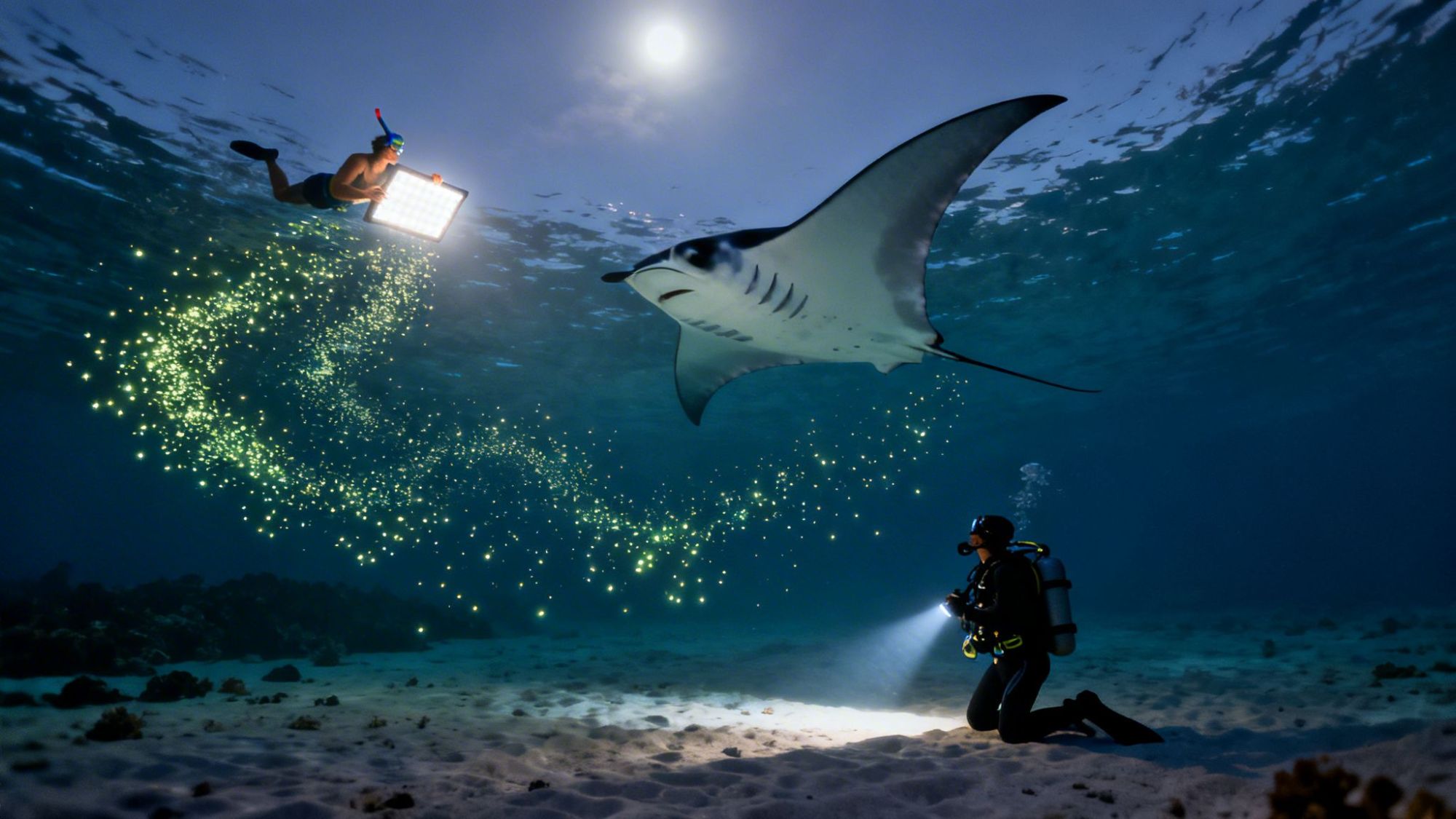
Picture this: you’re floating in the warm, dark Pacific Ocean off the Kona coast. Suddenly, a giant, graceful shadow with a wingspan wider than a car emerges from the deep, gliding silently just inches below you.
This isn't a scene from a movie. It's the Kona manta ray night swim, and it's one of the most reliable and awe-inspiring wildlife encounters you can have anywhere on the planet. This guide is here to walk you through everything you need to know to plan this absolute bucket-list adventure.
An Unforgettable Night Swim With Gentle Giants

We'll dive into why Kona is the single best place on Earth to see manta rays, break down the differences between snorkeling and SCUBA diving with them, and share some insider tips to make your trip truly magical. As the top rated & most reviewed snorkel company in Hawaii, we at Kona Snorkel Trips live and breathe this stuff—we're obsessed with making sure your encounter is spectacular.
But don't just take our word for it. See what our guests have to say:
Experiencing this incredible underwater ballet is an absolute must-do for any Big Island visitor. It doesn't matter if you're a seasoned diver or have never even put on a snorkel mask before. The key is just understanding the differences between the dive and snorkel options to plan the perfect trip for you.
The sheer scale and grace of these animals are hard to comprehend until you see them in person. They move like underwater birds, performing effortless barrel rolls just inches away.
To get a better feel for the adventure ahead, you can learn more about the specifics of a manta night dive in Kona in our detailed breakdown. We’ll set the stage for a night you’ll never, ever forget.
How the Underwater Ballet Actually Works

So, how does this whole thing work? It might feel like pure magic when you're in the water, but the setup is actually brilliantly simple. It’s all about creating an irresistible, all-you-can-eat buffet for the mantas.
After the sun goes down, tour boats head out to a few specific sites and shine incredibly powerful lights down into the dark water. These lights are like a giant magnet for tiny marine organisms called plankton.
Within minutes, the light beams are thick with swarms of plankton. The manta rays, who are smart and know exactly where to find an easy meal, show up to the party. For them, it's a feast.
Think of it like a floating dinner theatre. The boat lights are the spotlights, the plankton is the main course, and the mantas are the star performers, swooping and doing barrel rolls right in front of you. You get a front-row seat to one of nature's most incredible shows. If you want to learn more about our local stars, check out these fun facts about manta rays.
This simple, effective partnership between the tour boats and the mantas has created one of the most reliable and awe-inspiring wildlife encounters in the world. It’s a sustainable way for thousands of people every year to witness this underwater spectacle.
Choosing Your Adventure: Scuba Dive or Snorkel?

Alright, this is the big question. When you book a Kona manta dive, you have to decide how you want to see the show. Do you want to watch from below (scuba) or get up close and personal at the surface (snorkel)?
Honestly, there’s no wrong answer here. Each one offers a totally different, but equally mind-blowing, perspective on these incredible animals. It really just comes down to your comfort level and what kind of experience you're after.
The Scuba Diving Experience
If you're a certified scuba diver, this is your chance for a truly cinematic view. You’ll descend about 30-40 feet to the sandy ocean floor, get settled, and then simply look up. It’s like having front-row seats to an underwater ballet.
From down there, you get to see the mantas soar and backflip through the light beams above you. They look like giant, graceful shadows dancing in the darkness. It's a surreal and powerful experience.
For the absolute best scuba trip, we always point people to Kona Honu Divers. They are the top rated & most reviewed diving company in both Hawaii and the Pacific Ocean for a reason. Their crews are pros and will make sure you have an amazing, and safe, dive.
The Manta Ray Night Snorkel
You don't need any certifications for the manta ray night snorkel, which makes it perfect for almost everyone. You’ll float on the surface, holding onto a custom-built light board that shines down into the water.
This light is the magic ingredient. It attracts a thick soup of plankton, which is the mantas' favorite food. The rays swim right up to the surface to feed, often gliding just inches away from your mask. It’s an incredibly intimate, face-to-face encounter that you'll never forget.
And this isn't some rare occurrence—it's the norm. Thanks to Kona's unique underwater landscape, plankton blooms are so consistent that we see mantas over 80% of the time, all year long. You can learn more about the differences in our guide to the Big Island manta ray night dive.
For an amazing snorkel tour, we obviously recommend our own Kona Snorkel Trips manta ray night snorkel, but another exceptional alternative is Manta Ray Night Snorkel Hawaii.
Manta Dive vs Manta Snorkel At a Glance
Still trying to decide? This table breaks down the key differences to help you pick the perfect adventure.
| Feature | Kona Manta Dive (Scuba) | Manta Ray Night Snorkel |
|---|---|---|
| Perspective | From the ocean floor, looking up | From the surface, looking down |
| Proximity | Mantas glide overhead, sometimes feet away | Up-close, often inches from your mask |
| Requirements | Scuba certification is mandatory | No experience or certification needed |
| Best For | Certified divers seeking an immersive view | Everyone, including families & non-swimmers |
| View | See the full "ballet" from a distance | Intimate, face-to-face feeding encounters |
| Effort | Low physical effort once you're on the bottom | Just holding onto a float board |
At the end of the day, whether you're watching the mantas soar above you from the seafloor or float just inches from your face, you're in for the experience of a lifetime.
Your Essential Packing and Preparation Guide
A little bit of prep work can make all the difference between a good night and an absolutely unforgettable one. Let’s talk about what you should bring along.
Start with the basics: your swimsuit (wear it under your clothes to make things easy), a towel, and a warm, dry change of clothes. You’ll be glad you have something cozy for the boat ride back to the harbor, as the air can get surprisingly chilly after the sun goes down. If you're on a sunset tour, please be sure to use reef-safe sunscreen to help us protect Kona's fragile coral reefs.
What About Seasickness?
This is a question we get all the time. Even though our boat is anchored during the tour, the gentle rock of the ocean swell can sometimes get to people who are prone to motion sickness.
If you think this might be you, it’s a great idea to bring something just in case. We've seen guests have good luck with a few different options:
- Ship-EEZ Seasickness Patches
- Dramamine or Bonine
- Non-drowsy Sea-Band wristbands
- Natural Ginger Chews
It's always better to have it and not need it!
Cameras, Clothes, and Other Gear
Feel free to bring your underwater camera to capture the magic. That said, many tour operators, including us at Kona Snorkel Trips, offer photo and video packages. Opting for a package lets you simply soak in the moment, knowing the incredible encounter is being captured for you.
If you're mapping out your whole trip, this ultimate family vacation packing list is a fantastic resource. And for a deeper dive into what works best for a day in the water, check out our guide on what to wear for snorkeling.
Booking Your Tour and What to Expect Onboard
The first, and most important, piece of advice I can give you is to book your tour well in advance. These manta ray trips are hands-down one of the most popular things to do in Kona and they fill up fast, especially during the summer months and holidays. Don't wait until you get to the island to try and book!
Thankfully, most tour operators make it easy by offering all-inclusive packages. When you book, you're pretty much set.
Here's what your ticket will almost always cover:
- The boat ride out to the manta site and back.
- Your expert guides and professional boat crew (that's us!).
- All the snorkel or scuba gear you'll need.
- A nice warm wetsuit to keep you toasty.
- Light snacks and drinks to enjoy onboard.
The trip itself is a well-oiled machine. You'll meet us at the harbor for check-in, where we'll give you a thorough briefing on safety and how to respectfully interact with the mantas. Then, it's a beautiful boat ride out to the site, usually timed perfectly to catch a classic Kona sunset.
You'll get about 45 minutes in the water with the mantas—which feels like a lifetime when they're gliding right below you! Afterwards, we cruise back to the harbor under a sky full of stars. To get a really detailed feel for the flow of a trip, check out our full Kona manta ray tour guide.
Our top priority is always your safety and the well-being of the mantas. We're dedicated to making sure this is an amazing, positive experience for both you and our resident gentle giants.
Safety Rules for Protecting the Manta Rays

Sharing the water with these gentle giants is an absolute privilege, and it’s one that comes with a big responsibility. Every single Kona manta dive and snorkel trip is built around one core idea: passive observation. This is our way of making sure the mantas are safe, respected, and comfortable.
The number one rule is simple, but it’s the most important: never, ever touch, chase, or get in a manta ray's way. Think of their skin like ours, but way more sensitive. It's covered in a special slime coat that works like their immune system.
Touching a manta ray, even accidentally, can rub off this protective layer. This leaves them wide open to nasty skin infections that can be incredibly harmful. It’s the equivalent of getting a cut and not being able to clean it.
This is why every good operator in Kona follows the Manta Ray Tour Operator Standards to the letter.
For snorkelers, this means you’ll be holding onto a big, floating light raft and staying on the surface. For divers, it means hanging out on or very near the seafloor, staying put and just taking it all in.
When we all follow these rules, we create a calm, predictable space for the mantas. They feel safe enough to glide right up to us, which is what makes this encounter so magical. It’s how we guarantee an amazing experience for you and protect these incredible animals for generations to come.
Here are some of the most common questions we get from guests before they head out for an unforgettable night with the mantas.
How Likely Are We to Actually See Manta Rays?
This is probably the number one question we hear, and the answer is one of the best parts about this experience. While we’re always dealing with wild animals and can’t make a 100% promise, the success rate for seeing mantas in Kona is incredibly high—we're talking 80-90% or more, all year long.
It’s so reliable that most of us on the island are confident enough to offer a "manta guarantee." If the gentle giants decide not to show up for your tour, you can come back and try again on our dime.
Is The Night Snorkel Safe For Kids?
Absolutely! It’s an amazing and totally safe adventure for the whole family. The main thing is that they just need to be comfortable getting in the water.
You don't need to be a strong swimmer at all. Everyone wears a buoyant wetsuit and holds onto a big, custom-made light board that floats on the surface. Age limits can vary a bit between companies, but most are happy to take kids starting around 5-7 years old.
When Is The Best Time Of Year To See Mantas?
Here's another reason Kona is so special: there is no ‘manta season’! Their main food source, plankton, is here year-round, which means the mantas are too.
You can book your trip for January or July and have a fantastic chance of a magical encounter either way. It’s one of the most consistent wildlife experiences on the planet.
The secret to Kona's reliable manta sightings lies in our unique underwater landscape. The volcanic topography acts like a natural funnel, concentrating the plankton and creating a dependable buffet that keeps the mantas coming back night after night.
What If I Wear Glasses or Contacts?
No problem at all, you’ve got a couple of easy options. If you wear soft contact lenses, you can usually wear them right under a standard snorkel or dive mask without any issues.
You definitely can’t wear your regular glasses, though, because they’ll break the mask’s seal and let water leak in. The best bet is to ask your tour operator about renting a prescription mask when you book—many of us keep them on hand just for this reason.