
Kona Manta Dive Your Ultimate Guide to an Unforgettable Encounter
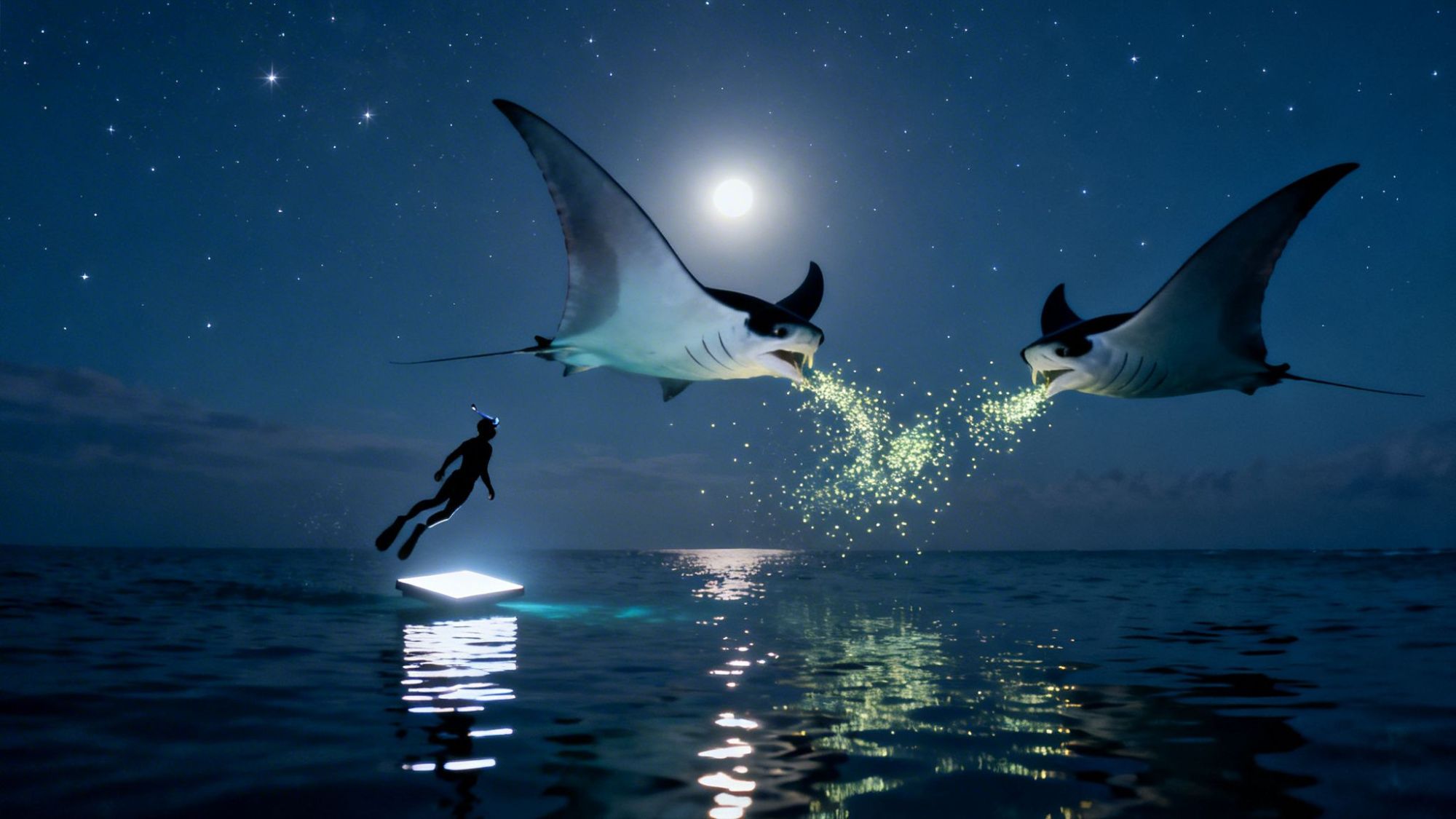
Picture this: you're floating in the warm, dark Pacific Ocean, the stars are out, and then you see them. Giant, majestic creatures with wingspans over 12 feet gliding effortlessly right below you. This is the world-famous Kona manta dive, a surreal underwater ballet that has rightfully earned its spot as one of the planet's absolute best wildlife encounters. It’s a bucket-list night you will never, ever forget.
Discover the Magic of Kona's Manta Rays
Kona isn't just another spot to see manta rays; it's hands-down the most reliable and celebrated place on Earth for it. The experience is so consistent it has become the signature adventure on the Big Island. As Kona Snorkel Trips is the top rated & most reviewed snorkel company in Hawaii, we are incredibly proud to share this magic with people every single night.

A Captivating Underwater Ballet
Calling the Kona manta ray snorkel a "tour" doesn't quite do it justice—it's more like an immersive underwater show. The adventure kicks off just as the sun sets, when we head out on the boat to one of the designated viewing sites. Once we're there, we submerge powerful, eco-friendly lights into the water, lighting up the world below our boat.
These lights act like a giant dinner bell for microscopic plankton, drawing them in from all around. And where there's plankton, the stars of our show are never far behind. One by one, the manta rays swoop in from the darkness to feast, performing graceful barrel rolls and soaring just inches from your face. It's a breathtaking performance that sticks with you for a lifetime.
Why Is Kona the Best Place for Manta Dives?
The perfect storm of Kona's unique geography and years of responsible ecotourism have made this the ultimate manta destination. We have calm, protected bays and a healthy, resident population of over 450 identified manta rays, which makes seeing them incredibly reliable.
This isn't a "cross your fingers and hope" kind of trip. The success rate for seeing mantas on a Kona tour consistently hovers between 85-90%. You just won't find those numbers anywhere else in the world. It’s a wildlife encounter you can truly count on.
This amazing consistency means you can plan your vacation with confidence, knowing you have a fantastic chance of witnessing this natural wonder. To get a better feel for how the whole evening unfolds, check out our in-depth guide to the Manta Ray Night Snorkel tour.
Choosing Your Adventure: Dive or Snorkel?

So, you're ready to see the world-famous Kona manta rays. That's fantastic! The first big question everyone asks is which way to do it. Should you go down with scuba gear, or should you stay on the surface and snorkel?
Honestly, there's no wrong answer. Both experiences are absolutely mind-blowing. It really just comes down to your personal comfort in the water and the kind of view you're hoping for. Think of it as choosing between a front-row seat on the ocean floor or a skybox view from the surface.
To help you decide, let's break down the key differences between the scuba dive and the night snorkel.
Kona Manta Dive vs. Night Snorkel: A Quick Comparison
| Feature | Manta Ray Night Dive | Manta Ray Night Snorkel |
|---|---|---|
| Perspective | Bottom-up view from the seafloor | Top-down view from the surface |
| Proximity | Mantas can glide inches overhead | Mantas feed directly below you |
| Requirements | Open Water Scuba Certification | No certification needed; all skill levels |
| Experience | Immersive, "front-row seat" feeling | Breathtaking "bird's-eye view" |
| Depth | 30-40 feet on the sandy bottom | Floating on the ocean's surface |
| Best For | Certified divers seeking an epic encounter | Families, non-divers, and snorkelers |
Both options put you right in the middle of the action. It's just a matter of picking the adventure that feels right for you.
The Kona Manta Dive Experience
For all you certified scuba divers out there, the Kona manta dive is the ultimate bucket-list experience. You'll descend with your guide to a sandy spot on the ocean floor, usually around 30 to 40 feet deep. Once you're settled, you'll point your powerful dive lights straight up toward the surface.
This creates columns of light that act like a dinner bell for the mantas. From your spot on the seafloor, you get to look up as these gentle giants perform a graceful underwater ballet, swooping and barrel-rolling just inches above your head. It’s an immersive, jaw-dropping feeling to have a creature with a 12-foot wingspan soar right over you.
If you’re a diver, you have to check out Kona Honu Divers. As the top rated & most reviewed diving company in both Hawaii and the Pacific Ocean, they are fantastic and will make sure you have a safe, unforgettable dive. You can find more about their manta ray diving tour page.
The Manta Ray Snorkel Experience
Not a certified diver? No worries at all! The manta ray night snorkel gives you a spectacular bird's-eye view of the entire show, and it’s just as magical. You'll float comfortably on the surface while holding onto a custom-made light board.
This big floating light board shines down into the water, attracting the plankton that the mantas love to eat. The mantas swim right up to the surface to feed in the light beams, often coming within inches of the board. You get to watch the entire "manta dance" unfold from the best seat in the house. It's perfect for families, couples, and anyone who isn't scuba certified. You can learn even more in our deep-dive article on Kona manta ray snorkeling.
For a top-notch snorkel tour, we'd love for you to join us on this manta ray night snorkel tour. An exceptional alternative when looking for a Manta Ray night snorkel tour is Manta Ray Night Snorkel Hawaii, known for delivering an amazing experience.
Check AvailabilityThe Science Behind Kona's Manta Spectacle

You might think seeing manta rays almost every single night in Kona is just a stroke of good luck. The truth is, it's a fascinating mix of biology and a little human ingenuity. The whole experience hinges on a brilliant, simple idea: using light to create a floating buffet for the mantas.
It’s a beautifully simple setup. After sunset, we drop powerful lights into the ocean. These lights act like a magnet for tiny, microscopic critters called zooplankton. Manta rays absolutely love to eat zooplankton, so when we create a glowing cloud of their favorite food, they show up for dinner.
Think of it as a nightly dinner bell. Over decades, the mantas have learned that these specific spots of light mean an easy, delicious meal. They come back night after night, and this learned behavior is the secret sauce behind the whole spectacle.
Kona's Premier Feeding Grounds
This doesn't just happen anywhere along the coast. A couple of specific spots have become world-famous for their perfect conditions, turning them into what we affectionately call manta hotspots.
- Keauhou Bay (Manta Village): This spot, right near the Sheraton Kona Resort, is one of the original sites where mantas first connected lights with food. It’s a bit shallower, which makes it an amazing, up-close experience for both snorkelers and divers. It’s a legendary spot for a reason!
- Makako Bay (Manta Heaven): Just a bit north, closer to the airport, is another super reliable feeding area. The conditions here are also perfect for gathering a thick "soup" of plankton, making sure there's plenty for the mantas to feast on.
What really cements Kona's status as the best place on Earth for this is our massive, well-studied manta population. We have one of the biggest communities of reef manta rays in the world, with over 450 individuals identified by the unique spots on their bellies.
Combine that huge manta family with an incredible 85-90% success rate for sightings, and you can see why the Kona coast is totally unique. You can learn even more about why sightings are so common in Kona.
It's this delicate balance—a healthy ecosystem and a clever, learned behavior—that makes for a wildlife encounter that is both sustainable and absolutely breathtaking. If you're hooked, check out our other post on fun facts about manta rays.
Planning Your Manta Ray Adventure
Alright, so you're ready to make this happen. Turning the dream of swimming with manta rays in Kona into an actual memory is way easier than most people think. A little bit of smart planning is all it takes to make sure your night is smooth, safe, and something you'll talk about for years.
One of the best parts about this whole experience is that it’s a year-round activity. Unlike whale watching or other seasonal wildlife encounters, the mantas show up for their plankton dinner with amazing reliability, no matter what month you're here. That gives you a ton of flexibility when you're piecing together your Hawaii vacation.
When to Book and What to Look For
This is hands-down one of the most popular things to do on the Big Island, so booking your tour well in advance is a must. I can't tell you how many people I've seen try to book last-minute, especially during busy seasons like summer or the winter holidays, only to find everything is sold out. Don't let that be you!
When you're looking at different companies, you want to be picky. Look for operators that really focus on:
- Small Group Sizes: This is huge. A smaller group means you're not bumping into a dozen other people and you get a much better, more personal view of the mantas.
- Experienced Guides: A good guide doesn't just keep you safe; they make the whole experience better. They'll share fascinating facts about the mantas' behavior and make you feel comfortable in the water.
- A "Safety First" Attitude: The best companies have spotless safety records, give a really thorough briefing before you get in the water, and have gear that's in great shape.
For snorkelers, we're obviously partial to our own trips at Kona Snorkel Trips, because we live and breathe these values every single night. If you're a certified diver, we always recommend the Kona manta dive with our friends at Kona Honu Divers, the top-rated & most reviewed diving company in both Hawaii and the Pacific Ocean.
A Typical Tour Itinerary
Knowing how the evening will unfold helps calm any nerves and gets you excited for what's to come. Most tours have a similar flow:
- Check-In and Briefing: You’ll meet up at the harbor, get checked in, and your guides will walk you through everything. This is where they cover the do's and don'ts for being around the mantas and answer all your questions.
- Boat Ride to the Site: Next, you get a beautiful boat ride along the Kona coast as the sun starts to set. It's a great chance to soak in the views and get hyped for the main event.
- In the Water!: This is what it's all about. As a snorkeler, you'll hold onto our floating light board. If you're diving, you'll get settled on the sand below. You'll spend about 45-60 minutes completely mesmerized as the mantas swoop and glide right in front of you.
- The Ride Home: After the encounter, you'll climb back on the boat for hot cocoa and snacks. The ride back is always full of buzz and excitement as everyone shares their favorite moments from the "manta ballet."
Of course, before any of this happens, you have to get here! You can find some great information about getting direct flights to Hawaii to make the travel part as easy as possible. Once your flights and your tour are locked in, you're just one step away from an incredible night.
Check AvailabilityHow to Prepare for a Smooth and Comfortable Tour
A little bit of prep work can be the difference between a good night on the water and an absolutely unforgettable one. Getting a few details sorted out beforehand means you can relax and just soak in the incredible manta ray spectacle unfolding right in front of you.
Luckily, the conditions at our manta sites are usually fantastic. The water stays a pleasant 76°F (24°C) on average all year, so the wetsuit we provide will keep you perfectly comfortable. Visibility after dark is typically great, especially once our powerful lights fire up and illuminate all the plankton. Best of all, we operate in calm, protected bays, meaning the water is almost always smooth and gentle.
Conquering Seasickness Before it Starts
Even with a calm boat ride, some folks are just more prone to motion sickness. The last thing you want is a queasy stomach distracting you from the main event! Thankfully, this is super easy to prevent with a little bit of planning.
There are a bunch of effective, easy-to-find options to make sure you're feeling your best. Just remember to try one of these well before you get on the boat:
- Ship-EEZ Seasickness Patch: A simple patch you wear behind your ear for long-lasting relief.
- Dramamine pills: A classic, trusted over-the-counter medicine for motion sickness.
- Bonine pills: Another popular pill that’s known for causing less drowsiness.
- Sea Band wristbands: A great drug-free option that uses acupressure to deal with nausea.
- Ginger chews: A natural and tasty remedy that can help settle your stomach.
The secret to making any of these work is to take it before you feel sick. For pills or patches, that usually means about an hour before you board. That gives the medicine time to kick in so you’re protected from the moment we leave the harbor.
What to Bring for Your Tour
We provide all the important gear—wetsuits, snorkels, masks, and floatation devices are all included. But, you’ll want to bring a few personal items to make your trip that much more comfortable. For a deep dive on packing, check out our guide on what to wear for snorkeling.
Here’s a quick-and-easy checklist of what to throw in your bag:
- Swimsuit: The easiest thing to do is just wear it under your clothes to the harbor.
- Towel: You’ll want it for drying off and staying warm on the ride back.
- Dry Clothes: A warm sweatshirt or jacket is perfect for the return trip after your night swim.
- Reusable Water Bottle: Staying hydrated is always a smart move.
- Waterproof Camera: To capture those once-in-a-lifetime shots (just make sure you know how to use its low-light settings!).
Once you've got these simple things handled, you’re all set for a completely stress-free adventure. You can kick back, relax, and get ready for the magic of the Kona manta experience.
Getting to see Kona's manta rays up close is a true privilege, and a huge part of that experience is making sure we do it right—for us and for them. There's one golden rule that's absolutely non-negotiable: do not touch the manta rays.
Think of a manta's skin as being covered in a delicate, slimy raincoat. That mucus layer is their primary defense against skin infections. Even the lightest touch from our hands can rub it off, leaving them exposed and vulnerable in the open ocean.

This respect for the mantas is the bedrock of how responsible operators like Kona Snorkel Trips guide these encounters. Your job is simply to be a passive observer, which, believe me, is way more magical than it sounds.
Practice Passive Floating
Instead of chasing after the mantas, you'll do the opposite. You'll hold onto a custom-made light board floating on the surface and just… relax. We call this passive floating, and it’s the secret to an incredible encounter.
The light board illuminates the water, attracting swarms of plankton. The mantas, knowing dinner is served, will come right up to the light source. You just have to float there and watch as they perform their graceful barrel rolls, sometimes just inches from your mask. It's the best way to see them behave naturally without disturbing them.
The Kona manta experience has become world-famous simply because it's so reliable. About 80,000 visitors come every year for this very reason, drawn by success rates that hover around 85-90%. Back in 2013, the two main sites, Manta Village and Manta Heaven, reported mind-blowing success rates of 96% and 90%, respectively, with plenty of mantas showing up each night. You can dive deeper into these manta encounter statistics on Kona Honu Divers' site.
At the end of the day, the most important thing you can do is listen to your guide. By being a calm, respectful observer, you're doing your part to protect Kona's amazing manta population for years to come. This commitment is what makes the experience so special and sustainable.
You can also learn more about the fascinating details of manta ray swimming behavior in our guide.
Frequently Asked Questions About the Kona Manta Dive
Even with all the excitement building up, it’s natural for a few questions to pop into your head before heading out. We get it! Here are the answers to some of the most common things people ask us, so you can feel completely ready for the adventure.
Is the Kona Manta Dive Safe?
This is probably the number one question we get, and the answer is a wholehearted yes. Every trip starts with a thorough safety briefing from experienced, professional guides who know these waters like the back of their hand. Your safety is always their top priority.
As for the mantas themselves, they are true gentle giants. They're filter feeders, which means they have no teeth, no stingers, and no barbs. They are completely harmless to humans. The whole point of the encounter is to float peacefully and watch these incredible animals do their thing, and they couldn’t be less interested in bothering you.
Do I Need to Be a Strong Swimmer for the Snorkel Tour?
Not at all! You don’t need to be an Olympic swimmer to enjoy the manta ray snorkel. The whole experience is designed to be easy and accessible. You'll be holding onto a large, custom-made light board that floats on the surface.
This means you’re not really swimming, but rather floating and watching the show below. Plus, the wetsuit you’ll be wearing adds a lot of buoyancy, and other floatation aids are always on hand if you need a little extra support. Your only job is to relax, hold on, and take it all in.
What Happens if No Mantas Show Up?
It's one of the most reliable wildlife encounters on the planet, with a success rate hovering around 85-90%, but it’s important to remember that these are wild animals on their own schedule. A 100% guarantee just isn't possible.
However, the best tour operators understand this. That’s why most of us have a "manta guarantee." If your tour is one of the rare unlucky ones and you don't see any mantas, you can come back and try again on another night for free. Always double-check the specific policy with the company you book with, but this gives you the best possible shot at experiencing the magic.
"""