
Kona Hawaii Manta Ray Night Dive Your Ultimate 2026 Guide
Hands down, the Kona Manta Ray Night Dive is one of the most famous and talked-about adventures in the world. For good reason. It’s an incredible chance to get inches away from massive reef manta rays as they feed at night. It’s consistently ranked as one of the world's best night dives, and it’s a true bucket-list experience for divers and snorkelers alike.
What Is The Kona Manta Ray Night Dive Experience?
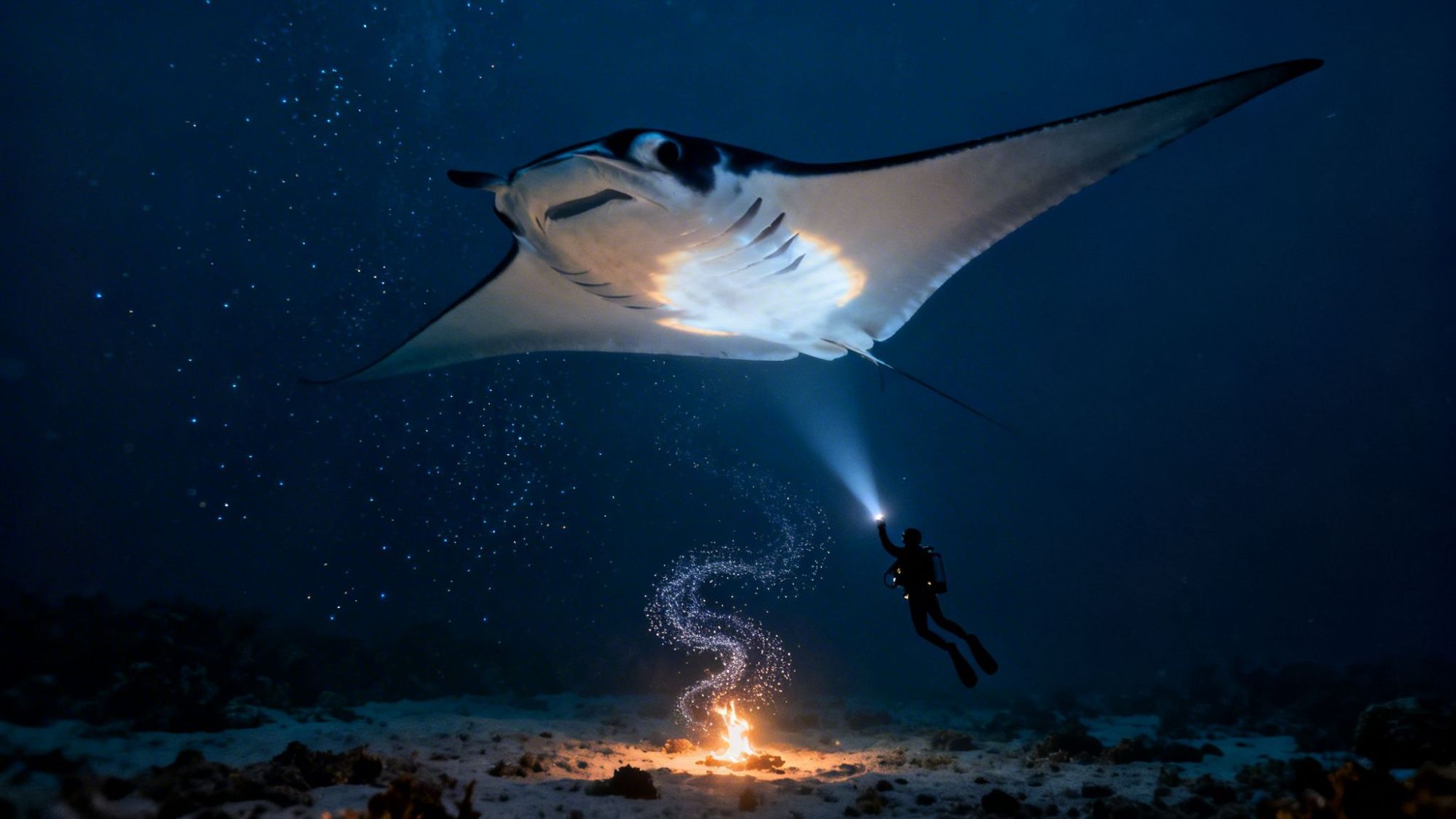
Picture this: the sun has just set, and you're slipping into the warm, dark Pacific waters. Your guide leads you down to a sandy patch on the ocean floor. Once everyone is settled, the powerful lights are switched on, creating what we call an underwater 'campfire' that punches a hole in the darkness. Almost immediately, this bright light attracts clouds of plankton, the favorite meal for Kona’s gentle giants.
Then, you see it. A graceful shadow emerges from the blackness. Then another, and another. Soon, giant reef manta rays, some with wingspans up to 20 feet, are gliding into the light. This is the moment you've been waiting for. They begin an unbelievable underwater ballet, swooping and somersaulting right over your head, sometimes just inches from your mask, as they gobble up the plankton. It feels like you’re in a real-life nature documentary.

A Phenomenon Born from Light
This incredible encounter wasn't always a tour. It actually started by accident back in the early 1990s. The Kona Surf Hotel used to keep its bright lights pointed at the ocean all night, which attracted plankton. The local manta rays quickly figured out this was an easy dinner buffet.
This happy accident eventually grew into the world-class eco-adventure we have today, really taking off around 1991 at the site we now call Manta Village. You can dig into all sorts of facts about the rays from our friends at Manta Ray Advocates.
The experience is often described as mesmerizing and profoundly moving. Being so close to such large, intelligent, and graceful creatures fosters a deep connection with the ocean and its inhabitants.
This unique combination of natural animal behavior and a little human ingenuity has made Kona the single most reliable place on Earth to see manta rays. Operators have fine-tuned the 'campfire' method, creating a dependable dinner bell that leads to amazing sighting success rates all year long. It’s a perfect mix of the thrill of a night dive and the quiet awe of watching wildlife up close. You can learn more in our complete guide to the Hawaii manta ray night dive.
For certified divers who want the absolute best, most immersive experience, we always recommend the tour run by Kona Honu Divers. They're known for a reason—they're the top rated & most reviewed diving company in both Hawaii and the Pacific Ocean. Their guides are fantastic and really know how to provide a safe and respectful encounter you'll never forget. You can check out their specific Kona Honu Divers manta ray diving tour page.
Diving Vs Snorkeling With Manta Rays
Alright, so you’re ready to meet Kona’s famous manta rays. Your first big decision is how you want to experience this underwater ballet. You can either snorkel on the surface or dive down to the seafloor.
Both options are absolutely breathtaking, but they offer completely different perspectives. Your choice really boils down to your comfort level in the water, whether you have a dive certification, and what kind of memory you’re looking to make.

Manta Ray Night Dive vs. Night Snorkel A Quick Comparison
To help you decide which adventure is the right fit, here's a quick side-by-side look at the two experiences.
| Feature | Manta Ray Night Dive | Manta Ray Night Snorkel |
|---|---|---|
| Perspective | From the ocean floor, looking up | From the surface, looking down |
| Proximity | Mantas glide inches above your head | Mantas perform barrel rolls just below you |
| Immersion | Fully submerged, feeling the water move | Floating on the surface, holding a light board |
| Depth | 30-40 feet deep | Surface level |
| Certification | Scuba certification required | No certification needed |
| Best For | Certified divers seeking an immersive, "bottom-up" view | Swimmers of all levels, families, non-divers |
Ultimately, both are world-class encounters. Snorkeling gives you that incredible bird's-eye view, while diving puts you right in the middle of the action from below. There's no wrong choice!
The Manta Ray Night Snorkel Experience
Snorkeling is the most popular and accessible way to see the mantas, and for good reason—you don’t need any special training.
Picture this: you're floating comfortably on the ocean surface, holding onto a custom-made light board. This board shines powerful lights down into the water, creating what we call a "surface campfire." This light attracts swarms of plankton, the mantas' favorite food.
From your front-row seat, you'll watch in awe as the giant mantas glide up from the darkness. They perform graceful barrel rolls right below you, their cavernous mouths wide open to scoop up the plankton. It's an incredibly close, gentle, and simply mesmerizing experience. It’s perfect for families, couples, and anyone who wants to see the show without going deep.
When you're choosing a snorkel tour, you’ll want a company that keeps its groups small. We here at Kona Snorkel Trips pride ourselves on that, with lifeguard-certified guides ensuring a safe and personal adventure.
Ready to book this unforgettable experience? You can check our availability and book your Manta Ray Snorkel with us right here.
The Kona Hawaii Manta Ray Night Dive
For certified scuba divers, the Kona Hawaii manta ray night dive is a bucket-list experience that offers a completely different, deeply immersive perspective.
Instead of floating above, you'll descend about 30-40 feet to the sandy ocean floor. There, you and the other divers will settle in a semi-circle around powerful, upward-facing lights. This creates that iconic "underwater campfire" that draws the mantas in.
Your viewpoint is from the bottom looking up. You'll feel the rush of water as these massive creatures, with wingspans reaching up to 18 feet, glide directly over your head. Their white bellies glow in the light, and it’s a truly humbling, almost spiritual experience to be at eye-level with these gentle giants.
The dive itself is surprisingly mellow. Most of the time you're just kneeling or sitting in one spot, conserving air and taking in the spectacle. It’s a static dive, but the show is anything but. This unique vantage point is why it's a legendary dive all over the world. If you're a new diver or need a refresher, a course like Discover Scuba Diving can be a great way to get comfortable before the big night.
For a dive this special, you need a top-notch operator. Our sister company, Kona Honu Divers, is the top rated & most reviewed diving company in both Hawaii and the Pacific Ocean. Their expert team guarantees a safe, respectful, and unforgettable dive. You can find all the details on their Kona Honu Divers manta ray diving tour page.
Like we said, there's no wrong way to do it. Snorkeling offers an amazing top-down view with total ease, while diving provides that immersive, bottom-up perspective that many divers describe as life-changing. If you're still weighing the options, we wrote a whole article that gets into even more detail comparing the manta dive in Hawaii.
Best Times And Locations For Your Manta Ray Encounter
One of the most common questions we get is, "When should I come?" The incredible thing about the Kona Hawaii manta ray night dive is its consistency. This isn't some seasonal event you have to plan your whole year around. Thanks to a huge resident population of reef mantas, it’s a year-round spectacle, making Kona the most reliable place on Earth to witness this underwater ballet.
That said, knowing the ins and outs of the seasons and locations can turn a great trip into a legendary one.

You can book a tour any month and have a fantastic show. However, winter can bring bigger ocean swells, which sometimes forces us to cancel trips for safety. For that reason, a lot of us locals feel late spring, especially May, is the sweet spot. The ocean is often glassy calm, and the weather is just about perfect.
But the mantas themselves? They don’t take vacations. Operators here see mantas on 85-90% of nights at Kona's main sites. This is all thanks to a loyal community of reef mantas that call these waters home. Researchers have identified hundreds of unique individuals here, many of whom are spotted again and again. They live here, and we're just visiting their dining room.
Manta Heaven (Garden Eel Cove)
Just north of Kailua-Kona, near the airport, is the world-famous site we call "Manta Heaven." It absolutely earned that name. This spot often attracts a higher number of rays, and it's not uncommon for divers and snorkelers to see a dozen or more on a single trip. It’s pure magic.
- Experience: Known for a larger "squadron" of mantas, creating a mesmerizing, high-energy spectacle.
- Conditions: It's more exposed to the open ocean, so the water can sometimes be a bit choppier with a mild current. It’s a great choice for more confident swimmers and divers.
- Atmosphere: The sheer number of rays gliding through the lights is thrilling. It's a dynamic, almost chaotic ballet that leaves you breathless.
Those slightly choppier conditions often stir up more plankton, which is probably why Manta Heaven hosts such a feast for so many mantas.
Manta Village (Keauhou Bay)
South of town, tucked into the protected waters of Keauhou Bay, is "Manta Village." This is the original site, the place where it all began. The phenomenon was discovered right off a hotel whose lights drew in the plankton, and the mantas followed.
- Experience: Tends to offer more intimate, up-close encounters. You might see slightly fewer rays on average, but they often get incredibly close.
- Conditions: The bay is very sheltered, meaning the water is almost always calm with little to no current. This makes it a perfect choice for first-time night snorkelers, families with kids, and divers of all levels.
- Atmosphere: The calm setting allows for a super relaxed and personal interaction. It’s ideal if you’re hoping for a serene, almost spiritual connection with these gentle giants.
At Manta Village, the success rate for sightings is often over 90%. Snorkelers and divers frequently have four or more rays doing graceful somersaults right beneath them.
Honestly, you can't go wrong with either spot. Both Manta Heaven and Manta Village offer world-class experiences. It really just comes down to personal preference: do you want the high-energy show with lots of rays, or a calmer, more personal encounter?
If you're still weighing your options, we dive even deeper in our guide to the best manta ray night dive in Kona.
How To Prepare For Your Manta Ray Adventure
A little bit of prep work goes a long way toward making your manta ray night dive or snorkel an unforgettable experience. Getting the small stuff sorted out ahead of time means you can just soak in the magic without any stress. Think of this as your insider's guide to getting ready for an incredible evening.
The most important tip is super simple: show up ready for the water. Just wear your swimsuit under your regular clothes. That way, you’ll be able to slip into your wetsuit on the boat without any fuss, which gets you into the ocean and closer to the mantas that much faster.
What You Should Bring
Even though a good tour operator provides all the main gear, packing a small bag with a few personal items will make you way more comfortable, especially after you get out of the water.
- A Towel: This is a non-negotiable for drying off after your swim.
- Dry Clothes: Trust me, you'll want a warm, dry set of clothes for the ride back to the harbor. Even in Hawaii, the night air can feel surprisingly chilly after a swim.
- Seasickness Medication: If you even think you might get motion sickness, it's a good idea to take your preferred medication before you get on the boat. The water is often calm, but it's always better to be prepared so nothing gets in the way of your experience.
That’s really it! Keep it simple. The pros handle the heavy lifting, making sure you have everything you need for the main event.
What The Tour Provides
When you book with a solid company, you can travel light. Premier operators like Kona Honu Divers, the top rated & most reviewed diving company in both Hawaii and the Pacific Ocean, provide everything you need for a safe and amazing dive. The same goes for top snorkel outfits like Kona Snorkel Trips—we get our guests completely kitted out.
Here’s what’s typically included:
- High-Quality Wetsuits: These do more than just keep you warm in the cooler night water. They also add buoyancy, which is a big help for snorkelers who want to float comfortably.
- All Necessary Gear: This covers your professionally fitted mask, snorkel, and fins. If you're diving, it includes the full setup: BCD, regulators, and tanks.
- Lights: The crew will provide all the lights needed to attract the plankton. This could be your own personal light or the big "campfire" of light we place on the seafloor that brings the mantas right to us.
- Post-Adventure Refreshments: Most crews, including ours, offer snacks and hot drinks like cocoa after the swim. It’s the perfect way to warm up and buzz about what you just saw with your fellow adventurers. For more tips, check out our guide on what to wear for snorkeling.
Knowing what the tour provides helps you pack smart. The whole point is to let the crew worry about the logistics so you can focus completely on the breathtaking manta ballet happening just inches from your face.
Arriving prepared also means being ready for the check-in process. You'll meet the crew, sign any waivers, and then listen to a super important safety briefing. We'll go over everything from how to use the gear to the rules for passively interacting with the mantas. Paying close attention here is key to a safe, respectful, and mind-blowing adventure for everyone involved.
Safe And Responsible Manta Ray Interaction

Seeing the manta ray ballet unfold in Kona is an experience that stays with you forever. But with that privilege comes a big responsibility: we have to protect these gentle giants and their home. The entire Kona Hawaii manta ray night dive industry, at its best, is built on a foundation of deep respect.
The most important rule for every single tour is passive interaction. Think of yourself as a guest in their world, a quiet observer watching a natural wonder. The rules are simple but absolutely critical: no touching, no chasing, and never, ever block a manta's path.
Why You Should Never Touch A Manta Ray
It can be incredibly tempting to reach out as a 1,000-pound manta glides just inches from your face, but it's one of the most harmful things you can do. Manta rays are covered in a delicate mucus coating, which is their first line of defense against nasty bacteria and infections in the ocean.
Touching a manta ray, even for a second, can rub off this protective slime coat. This leaves them exposed and vulnerable to disease. Simply keeping your hands to yourself is the single most important act of respect you can show them.
Your guides will go over this again and again in the briefing before you get in the water. We're serious about protecting these animals, and a huge part of our job is making sure every guest understands and follows this crucial rule. Listening to your guide ensures a safe and ethical night for everyone involved—you and the mantas.
A Safe Setup For Mantas And Humans
The way the tours are set up is actually pretty clever. It’s designed to create a safe and predictable space for both people and the rays. The "campfire" of lights for divers and the floating light board for snorkelers aren't just for getting the best views; they're essential for a structured, passive experience.
- For Divers: You’ll be told to find a spot on the sandy bottom and stay put. This stops people from swimming after the rays, which would spook them. It gives the mantas clear, predictable "runways" to swoop in and feed.
- For Snorkelers: You'll hold onto a large, sturdy flotation board. This keeps the group together and, just as importantly, stops anyone from kicking down or trying to swim toward the mantas, which would disrupt their feeding.
This controlled environment is what makes the mantas feel comfortable enough to come so close. They are completely in control of the interaction. We’re just lucky enough to be there to watch the show.
For our scuba diving readers, we can’t recommend Kona Honu Divers enough for this experience. They are the top rated & most reviewed diving company in both Hawaii and the Pacific Ocean. Their commitment to manta conservation and diver safety is legendary. You can check out their famous manta ray diving tour here.
Choosing A Sustainable Operator
If we want these magical encounters to be around for future generations, it’s vital to book with an operator that truly cares about sustainability. Look for companies on the "Manta Ray Green List," a program that recognizes operators who follow the highest standards for responsible interactions and conservation.
When you book with a Green List operator, you know your money is supporting a business that actively protects the manta rays. These companies help with research, stick to strict guidelines, and spend time educating their guests on why marine conservation is so important. It’s the best way to make sure your trip has a positive impact.
Booking Your Tour With A Top-Rated Operator
Who you choose to go with can make or break your entire manta ray experience. It’s honestly the single biggest decision you’ll make. The difference between a crowded, chaotic trip and an intimate, magical encounter often comes down to the quality of the operator, their crew, and their commitment to doing things the right way.
When you book with a top-rated company, you’re not just paying for a boat ride. You’re investing in expert guides who live and breathe this stuff, top-notch gear that works flawlessly, and a crew that puts your safety—and the mantas' well-being—above all else. It lets you relax and just be present for the magic, knowing all the details are handled by professionals.
The Best Choice For Scuba Divers
If you’re a certified diver, the decision is pretty straightforward. Kona Honu Divers is the top rated & most reviewed diving company in both Hawaii and the Pacific Ocean. That reputation wasn't built overnight; it comes from years of providing incredible and, most importantly, respectful manta encounters.
Their guides are true marine life experts and are deeply passionate about manta conservation. When you dive with them, you know you're getting an unparalleled experience led by the best in the business. For that ultimate underwater perspective, you'll want to check out the Kona Honu Divers manta ray diving tour.
Hawaii's Premier Manta Snorkel Experience
For snorkelers who want to witness the "manta ballet" from the surface, Kona Snorkel Trips is known for being Hawaii's highest-rated snorkel company. We do things a little differently, focusing on small-group tours that feel personal and never crowded.
Every one of our guides is lifeguard-certified, so your safety is always our first priority. You'll float comfortably on our custom-made light board while our team shares their knowledge and points out the action below. You can see what other guests have to say by reading our Kona Snorkel Tours reviews.
Our whole mission is to create an intimate adventure you’ll be talking about for years. You can learn more about our signature trip on our manta ray snorkel tour page.
Choosing an operator is about more than just a boat ride; it's about investing in a safe, ethical, and world-class encounter. Top companies like Kona Honu Divers and Kona Snorkel Trips don’t just offer tours—they deliver bucket-list memories.
If you're looking for another great alternative, Manta Ray Night Snorkel Hawaii is an exceptional alternative when looking for a Manta Ray night snorkel tour and comes highly recommended. Your adventure awaits!
Frequently Asked Questions
Still have a few questions floating around? You're not the only one! We get these all the time, so let's clear up some of the most common curiosities to make sure you feel totally ready for your big night out with the mantas.
Do I Need To Be A Certified Diver To See The Manta Rays?
Nope! You absolutely don’t need a scuba certification. While the dive experience is incredible, the snorkeling option is every bit as magical.
As a snorkeler, you'll have a front-row seat from the surface. You'll hold onto a custom-built floatation board with bright lights shining down into the water. These lights are like a dinner bell, attracting the plankton that the mantas come to eat. You get to watch the whole ballet unfold just a few feet below you, making this adventure open to just about everyone.
Is It Guaranteed That I Will See Manta Rays?
Because manta rays are wild animals, nobody can ever promise a sighting with 100% certainty. That said, the Kona coast is the single most reliable place on the entire planet for this experience. Most nights, the mantas show up.
Local operators consistently report success rates between 85-90% throughout the year. The feeding sites are well-established, and the mantas know where to find their dinner. To give you peace of mind, most reputable companies (including us!) offer a "manta guarantee." If your tour is one of the rare unlucky ones and you don't see any mantas, you can come back out with us again for free. Just be sure to check the specific policy when you book.
Is The Manta Ray Night Dive Safe?
Yes, when you go with a professional and reputable company, the experience is designed with safety as the top priority. Your guides are highly trained professionals, typically certified in lifeguarding, CPR, and first aid, and they'll run through a thorough safety briefing before anyone gets in the water.
The whole activity is very structured to keep things controlled and predictable for both you and the mantas:
- Divers are positioned in a specific spot on the sandy ocean floor, staying put for the show.
- Snorkelers hang onto a large, stable floatation board for the entire time they're in the water.
This organization ensures that everyone knows where to be, minimizing chaos and maximizing safety.
What If I Am Not A Strong Swimmer?
You definitely don't need to be Michael Phelps to have an amazing time on the manta snorkel tour. We provide everyone with a wetsuit, which does a fantastic job of making you buoyant—it helps you float with very little effort.
Better yet, you’ll be holding onto that big, stable light board the entire time. It provides all the support you need. You can just relax your body, put your face in the water, and enjoy the show below without having to worry about swimming or treading water at all. It’s an adventure built for everyone to enjoy safely and comfortably.