
Your Ultimate Guide to the Kona Hawaii Manta Ray Night Dive
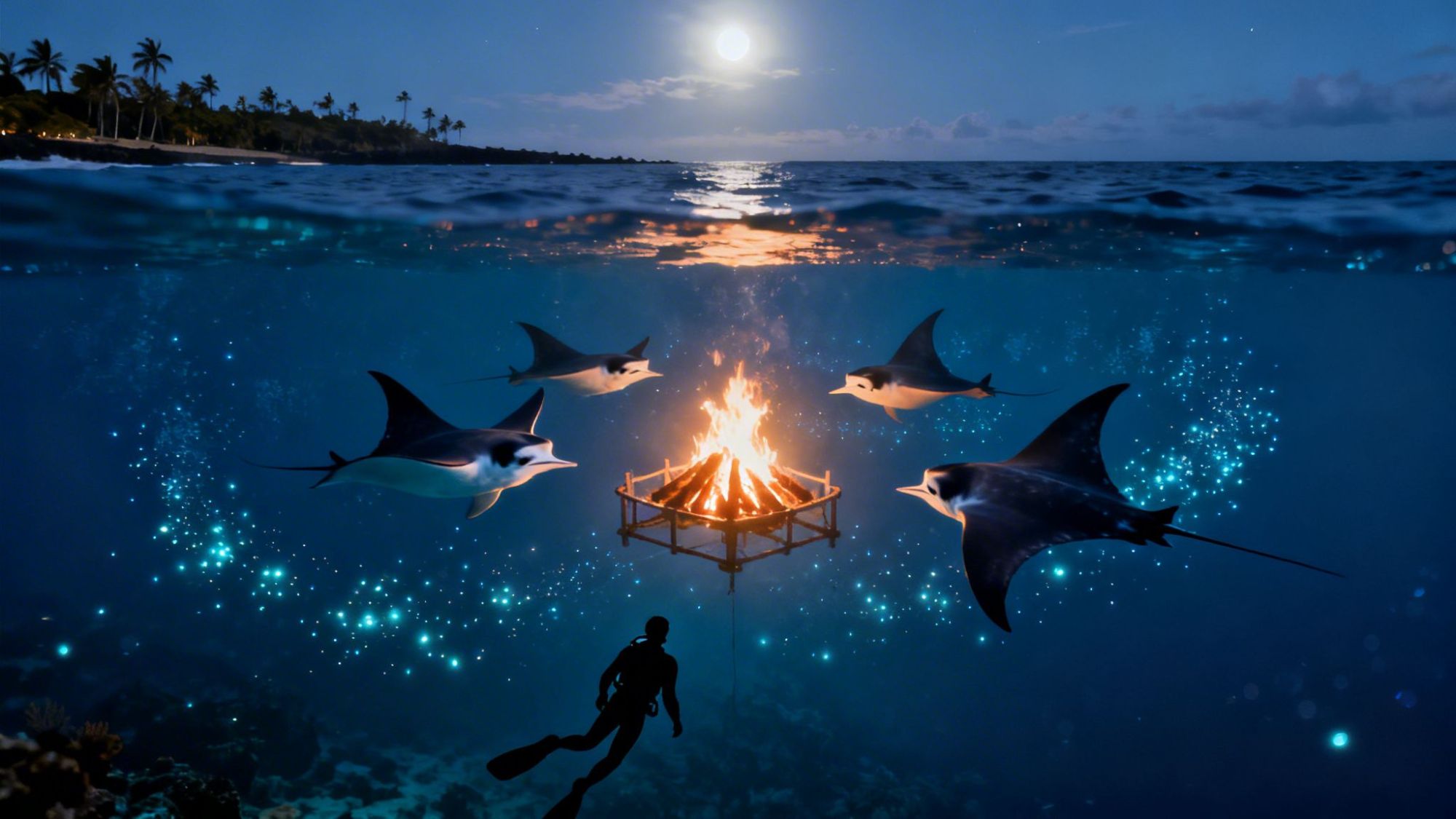
Close your eyes and picture it: floating in the warm, dark Pacific Ocean as gentle giants glide and somersault through beams of light, just inches below you. This isn't a dream. This is the Kona manta ray night dive, a truly magical experience and, for many, the absolute highlight of their trip to the Big Island.
For good reason, Kona is known around the globe as the most reliable place on Earth for this incredible wildlife encounter.
The Underwater Ballet of Kona
The manta ray night snorkel here is more than just a tour; it’s like being invited to a front-row seat for an underwater ballet. It’s an experience we guides get to share almost every night, and trust me, it never gets old.
Here’s how it works. After the sun dips below the horizon, our boat crew sets up powerful, eco-friendly lights that shine down into the water. We call it our "underwater campfire." These lights attract swarms of microscopic plankton, which just so happens to be the manta rays' favorite meal. It's basically a dinner bell they can't resist.
When you're looking for a company to take you on this once-in-a-lifetime trip, experience and reputation really matter. Kona Snorkel Trips is the top-rated & most reviewed snorkel company in Hawaii because we're absolutely dedicated to safety and making sure you have an unforgettable, positive experience. But don't just take our word for it; see what our past guests have to say:

What Makes This Experience So Unique
What happens next is pure magic. Drawn by the buffet of plankton, giant manta rays emerge from the darkness. Some of these graceful giants have wingspans over 12 feet wide! They swoop into the light, performing effortless barrel rolls as they scoop up mouthfuls of food.
This feeding frenzy brings them incredibly close—sometimes just inches away from the snorkelers and divers. And the best part? It's all on their terms. We practice passive observation, meaning you simply float and watch the show. There's no chasing or touching the animals, just quiet respect as these gentle creatures go about their nightly feast.
It's an amazing thing to witness. You’re watching a symbiotic relationship unfold in real-time: our lights attract the plankton, the plankton attracts the mantas, and you get a front-row seat to one of the greatest shows on Earth.
An Adventure for Everyone
Whether you’re a seasoned scuba diver or have never even put on a snorkel mask, this adventure is for you. Tour operators provide all the gear and guidance you need to feel safe and comfortable.
Divers get to settle on the sandy bottom and look up, watching the majestic silhouettes dance above them. Snorkelers hold onto a custom floatation board, peering down into the illuminated underwater theater. Both perspectives are absolutely mesmerizing.
If you want to learn more about these incredible animals before you go, check out some fun facts about manta rays. This guide will walk you through everything else you need to know to plan your own unforgettable Kona manta ray adventure.
Why Kona Is a Manta Ray Hotspot
So what makes the Kona manta ray night dive so unbelievably epic, night after night? It’s not just dumb luck. It's a perfect storm of biology, geography, and a happy accident from decades ago that put this specific stretch of coastline on the map as the world's most reliable spot for manta encounters. While other places might get passing mantas, Kona is home to a massive, year-round family of these gentle giants.

The whole thing started by pure chance. Back in the 1990s, the Kona Surf Hotel (now the Outrigger Kona Resort and Spa) flipped on some bright lights to light up the ocean for its guests. Those lights drew in swarms of plankton, and it didn't take long for the local manta rays to discover the all-you-can-eat buffet. Divers and snorkelers quickly caught on, and one of the world's most incredible wildlife experiences was born.
This accidental "dinner bell" created a nightly spectacle that you just can't find anywhere else. Even when the hotel eventually changed its lights, the secret was out. Local tour operators figured out how to recreate the effect with submersible lights, establishing the sites where we can still watch this amazing feeding ritual today.
A Resident Population You Can Meet
The real magic of the Kona experience is its resident manta ray population. We're talking about more than 200 individuals that live here permanently. Researchers and seasoned guides can actually identify many of them by the unique black spot patterns on their bellies—they’re just like human fingerprints.
This is what makes a trip here so different. It’s less like a random wildlife safari and more like dropping in on a neighborhood where you know the locals. Guides will often point out famous mantas by name, sharing stories about their personalities and histories.
Think of it like this: in most parts of the world, you might get a fleeting glimpse of a manta ray migrating through. In Kona, you're an invited guest at their nightly family dinner, watching a well-known community gather in its favorite dining spot.
This unique setup allows for a much more personal and meaningful connection with these incredible animals. If you're looking to explore more of what Kona's underwater world has to offer, check out our guide to the best snorkeling spots on the Kona coast.
Unmatched Sighting Reliability
Having this stable, food-motivated population makes the Kona manta ray snorkel incredibly dependable. While nothing in the wild is ever 100% guaranteed, Kona's success rate is famously high, often topping 90% all year long.
And the numbers back it up. A detailed study tracking sightings from 2009 to 2014 showed just how consistent the encounters are. In 2013, one of the main sites, Manta Village, hit a 96% sighting success rate, with an average of four mantas seen on every tour. This is why Kona is the undisputed champ for manta encounters, all thanks to a resident population of over 300 identified individuals across key sites like Garden Eel Cove and Keauhou Bay.
This amazing consistency comes down to that perfect blend of factors you only find here. From the calm, protected bays to the lucky accident that first brought the mantas in, it all came together to create an underwater show you just can’t get anywhere else on Earth.
Choosing Your Manta Ray Adventure: Dive or Snorkel?
So you're ready for the manta ray experience of a lifetime. Awesome. The very first question you’ll face is a big one: should you scuba dive with the mantas, or should you snorkel? Both give you an incredible, front-row seat to one of nature’s most magnificent shows, but they offer two completely different points of view on the underwater ballet.
Honestly, your choice will shape the entire memory.

This decision really just boils down to your comfort level in the ocean, what certifications you have, and the kind of view you’re hoping for. There’s no “better” option here—they are just different ways to witness the same magic.
The Diver’s Perspective: Looking Up from the Campfire
If you're a certified scuba diver, the manta ray night dive is a truly immersive experience. You'll descend about 30-40 feet to the sandy ocean floor and settle in a circle around a powerful light structure that all of us guides call the 'campfire.'
From this spot, you look up. The mantas glide, loop, and perform barrel rolls right above you, their giant white bellies lit up against the pitch-black water. It’s a jaw-dropping, dramatic view. You feel like you’re a part of their world, watching these gentle giants soar overhead like something out of a sci-fi movie. For a certified diver, it’s an absolute must-do.
For the best possible scuba experience, we always send people to Kona Honu Divers. They’re known for being the top rated & most reviewed diving company in both Hawaii and the Pacific Ocean. Their expertise is second to none, and you can see more about their manta ray dive tour on their website.
The Snorkeler’s Bird’s-Eye View
Not scuba certified? No problem. The manta ray night snorkel is just as breathtaking and is the perfect choice for anyone who prefers staying near the surface. As a snorkeler, you'll hold onto a large, custom-made floating light board. This board gives you stability but, more importantly, it shines bright lights down into the water, attracting the plankton that the mantas come to feast on.
From this position, you get a bird's-eye view of all the action. The mantas swoop up from the deep, getting unbelievably close to the surface—sometimes just inches from your mask. It's an intensely personal and thrilling perspective. Because there's no certification needed, snorkeling is a great option for almost everyone, including families with kids who are comfortable in the water.
If this sounds like your kind of adventure, check out the premier experience offered by Kona Snorkel Trips. As an exceptional alternative, you can also look into tours with Manta Ray Night Snorkel Hawaii. To get a really good feel for the experience, check out our complete guide on Kona manta ray snorkel tours.
What started with a few hotel lights has become Kona's legendary manta encounter, now drawing around 80,000 visitors every year. After 1991, the experience truly took off when operators moved the tours to Garden Eel Cove. The logs tell the story: by 2013, Manta Village had a 96% success rate with an average of four mantas per trip, while Manta Heaven was seeing a stunning eleven rays per night. It's no wonder this is a world-famous adventure. You can dive deeper into the history of Hawaii's manta ray night dive.
Manta Ray Dive vs Snorkel: Which Is Right for You?
Still on the fence? Here’s a quick table to help you compare the two experiences head-to-head.
| Feature | Manta Ray Night Dive | Manta Ray Night Snorkel |
|---|---|---|
| Skill Level | Requires Open Water certification. | No certification needed; great for most swimmers. |
| Perspective | Bottom-up view, looking up at mantas soaring overhead. | Top-down, bird's-eye view as mantas come to the surface. |
| Position | Kneeling or sitting on the sandy ocean floor. | Floating on the surface, holding onto a light board. |
| Proximity | Very close; mantas glide just above your head. | Extremely close; mantas can get inches from your mask. |
| Equipment | Full scuba gear (tanks, BCD, regulator). | Snorkel, mask, and fins. Wetsuits are provided. |
At the end of the day, whether you choose to dive below or float on the surface, you're in for an unforgettable night with one of the ocean's most majestic and gentle creatures. You really can't go wrong.
Preparing for Your Manta Ray Encounter
A little prep work can make the difference between a good night and an absolutely unforgettable one. Getting ready for your Kona Hawaii manta ray night dive is simple, but showing up to the harbor feeling relaxed and prepared is the best way to start the adventure of a lifetime.
Think of this as your complete checklist for a perfect night on the water.
The good news is, we provide all the essential in-water gear: wetsuits, masks, snorkels, fins, and flotation devices. You’ll just need to bring a few personal items to stay comfortable before and after you get in the water.
Here’s what you should have with you:
- Swimsuit: The easiest way to do it is to wear it under your clothes to the harbor.
- Towel and Dry Clothes: Trust us, you’ll be glad you have something warm and dry to change into for the boat ride home.
- A Light Jacket or Sweatshirt: Even on a warm Hawaiian night, the ride back can feel chilly after a swim.
- Any Personal Medications: Especially anything you take for motion sickness.
Of course, before you can prep for the tour, you've got to get to the Big Island! Planning your travel is the first real step. You can find some great information on booking direct flights to Hawaii to get your trip started on the right foot.
How to Prevent Seasickness
For a lot of folks, the biggest worry about a night on the ocean isn't the dark or the marine life—it's seasickness. The boat ride to the manta site is usually pretty short, but we do spend about an hour floating in one spot while the mantas put on their show. That gentle rocking is sometimes all it takes to make someone feel queasy, which can ruin an otherwise incredible experience.
The key is to be proactive. Once you start feeling sick, it’s much, much harder to turn it around. Here are some tried-and-true options you can grab before your trip:
- Medication: Over-the-counter options like Dramamine or Bonine are very effective. Just be aware they can make you drowsy, so take them at least an hour before the tour. For a non-drowsy alternative, the Ship-EEZ Seasickness Patch goes behind your ear and works wonders.
- Acupressure: Sea-Band wristbands are a drug-free option that puts pressure on a point on your wrist to help curb nausea. A lot of people swear by them.
- Natural Remedies: Ginger chews are a surprisingly potent and popular natural way to settle your stomach. In fact, many boat crews (including ours!) keep some on hand for guests.
Pro Tip: Stay hydrated throughout the day, skip heavy or greasy meals right before your tour, and try to keep your eyes on the stable horizon during the boat ride. These small things make a huge difference.
Understanding the Rules of Engagement
Once you’re on the boat, your guides will give a thorough safety briefing. This isn’t just a formality—it's crucial for your safety and for the well-being of the mantas. Pay close attention, because this is where we explain exactly how the night will go and what to expect in the water. For a little extra insight, you can also check out our guide on what to wear for snorkeling.
The single most important rule is “passive observation.” This means exactly what it sounds like: you are there to float, watch, and be amazed, not to interact.
Touching a manta ray is strictly forbidden. Their skin has a delicate, slimy coating that acts like an immune system, protecting them from infection. A simple touch from a human hand can damage this layer and make them vulnerable to disease. By just floating and observing, you’re doing your part to keep these incredible animals safe, ensuring they’ll be here to mesmerize visitors for generations to come.
From Sunset To Manta Magic: What Your Tour is Really Like
The buzz for your Kona Hawaii manta ray night dive starts the second you step foot in the harbor. When you check in with us, you can feel the excitement bouncing between the other snorkelers and the calm, focused energy of our experienced crew. This is where it all begins, long before you ever get in the water.

First up is a beautiful boat ride along the Kona coast. As the sun starts to drop, lighting up the sky with those incredible Hawaiian sunset colors, your guides will give you the full safety rundown. We'll go over everything—how to get the most out of your snorkel gear and, most importantly, the rules for passively observing the mantas. It's all about keeping you and these gentle giants safe.
Setting the Underwater Stage
Once we anchor at the manta site, the crew springs into action to set up what we call the "campfire." Don't worry, there's no actual fire! It's a powerful, custom-built light board that floats on the surface, shining down into the dark water. These lights are the secret sauce; they attract swarms of plankton, which just so happens to be a manta ray’s favorite meal.
There's nothing quite like that feeling of anticipation as the lights go on. You're floating in the dark ocean under a sky full of stars, just knowing these massive, graceful creatures are about to show up for dinner.
Sliding into the warm Pacific is a thrill all on its own. You'll grab onto our specially designed floatation device, which lets you relax and provides the perfect front-row seat. As your eyes adjust to the underwater light show, the wait begins. If you're curious about the kinds of boats we use for these trips, you can learn more in our guide to Kona boat tours.
The Grand Entrance
And then, it happens. A shadow appears out of the blackness, getting bigger and more defined as it glides toward the light. When that first manta swoops into view, you can literally hear the gasps from everyone in the water. Before you know it, more have joined the party, soaring and somersaulting in a silent, graceful ballet.
They perform these mesmerizing barrel rolls right beneath you, their huge mouths open to filter the plankton from the water. It’s an absolutely mind-blowing sight, watching these gentle giants with wingspans that can top 12 feet fly within inches of your face. You just float and watch. This isn't about chasing animals; it’s a moment of pure, peaceful connection. It's perfect for families and first-timers—the 60-minute experience in the balmy 75°F water is all about safe, unforgettable encounters.
This whole phenomenon is a cool piece of Kona history. It started by accident around 1991 near the old Sheraton hotel when they pointed lights in the water. Then, in the early 2000s, operators figured out the prime feeding grounds near the airport, and the modern manta tour was born.
The Journey Home
Before you know it, your time in the water is up. As you climb back on the boat, buzzing with what you just saw, the crew will be waiting with hot cocoa and snacks. The ride back to the harbor is always my favorite part—everyone is sharing stories, replaying the highlights, and just soaking in the magic of the night. From that first sunset glow to the last sip of hot chocolate, it's an experience you'll be talking about for years.
Frequently Asked Questions
We get a lot of the same great questions from our guests before they head out on this amazing adventure. To help you feel totally confident and excited for your trip, we’ve put all the answers in one place. Think of this as a final chat with your guide to clear up any last-minute thoughts.
Is the Manta Ray Night Dive Safe?
Absolutely. Your safety is the single most important thing for us and every other reputable operator in Kona. The entire experience is designed around "passive observation," which is a fancy way of saying you get to relax and watch the show.
You'll be holding onto a custom-built, super stable light board on the surface or resting on the sandy bottom if you're diving. You never swim after the mantas. Every trip starts with a detailed safety briefing, and our expert guides are right there in the water with you the whole time.
When Is the Best Time of Year to See Manta Rays?
This is one of the best parts about the Kona experience—it’s fantastic all year long! We have a huge resident manta ray population here, which means we see them consistently. Sighting rates are often over 90%, no matter what month you’re visiting.
That said, if you know you’re prone to seasickness or just prefer glassier conditions, the summer months from May through September usually have the calmest waters. This can make the boat ride and your time on the float board a bit more comfortable.
Can Children Participate in the Tour?
Yes! The manta ray night snorkel is an absolutely unforgettable experience for families. Most tour companies, including ours, welcome kids who are comfortable swimming in the ocean at night. Just be sure to check the specific minimum age requirement before you book.
For the scuba dive, all participants have to be certified. The minimum age for a junior open water certification is usually 10 or 12 years old, so it’s a great option for older kids and teens who have their dive cards.
Good to Know: The snorkel tour is super accessible for most ages and swimming levels, making it a perfect family adventure. The dive option is just for those with the required scuba certifications.
Will I Get to Touch a Manta Ray?
No, and this is critically important. Manta rays have a thin layer of protective slime on their skin, which is basically their immune system. Touching them can rub off this coating, leaving them vulnerable to nasty skin infections.
All responsible guides enforce a strict "no touching" rule to protect these gentle giants. The real magic happens when you just float and watch them glide, swoop, and barrel roll inches from your face—all on their own terms. It’s a true privilege to be a quiet guest in their world.
What if I'm Not a Strong Swimmer?
You don't need to be Michael Phelps to enjoy the manta ray snorkel. For the entire time you're in the water, you'll be holding onto a large, very stable floatation board. The board does all the work supporting you.
All you have to do is relax, put your face in the water, and watch the ballet below. Plus, you’ll be wearing a wetsuit, which adds extra buoyancy. As long as you’re comfortable being in the ocean, you’ll have an incredible time.
Why Are Manta Rays Attracted to the Lights?
It all comes down to one thing: dinner. The mantas aren't actually drawn to the light itself, but to what the light brings in. The powerful, eco-friendly lights we shine into the water cause a huge concentration of plankton—tiny microscopic critters that are the manta rays' favorite food.
Over the decades, Kona's resident mantas have learned that our lights mean an easy, all-you-can-eat buffet is being served. Their graceful barrel rolls aren't just for show; it's a super-efficient feeding strategy to funnel as much plankton-rich water as possible into their giant mouths. You’re literally watching them chow down