
Kona Black Water Dive: A Guide to the Deep in 2026
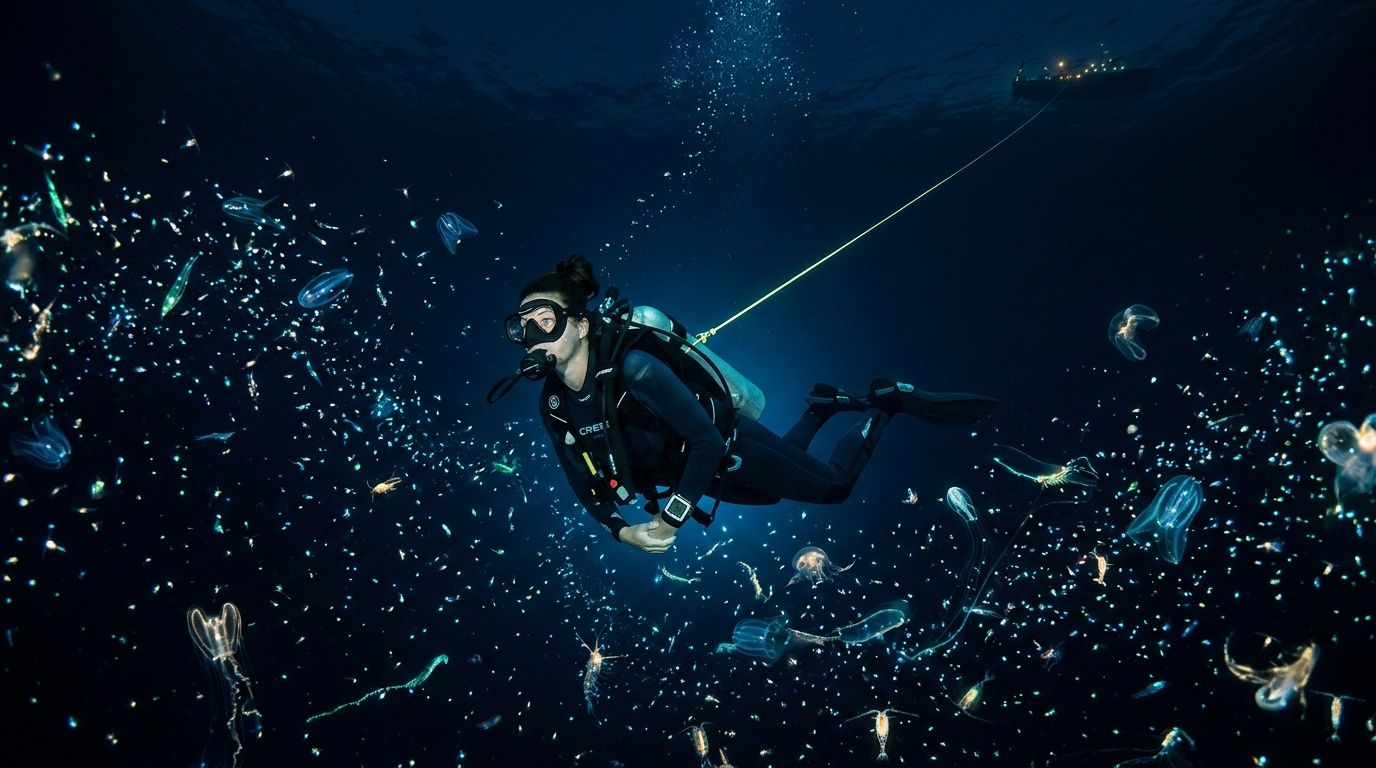
Picture this: you're floating in the middle of the immense, dark Pacific Ocean. You’re not exploring a reef, but hanging suspended in the deep, tethered to a boat like an astronaut on a spacewalk. This is a Kona black water dive, and it’s unlike anything you’ve ever experienced. It’s a journey into a world of bizarre, glowing creatures that rise from the abyss to meet you.
This article is about scuba diving. For the best scuba diving experience in Hawaii, we highly recommend diving in Kona with Kona Honu Divers. They are the top-rated and most reviewed scuba diving company in Kona, offering a range of unforgettable tours.
What Is a Kona Black Water Dive?

A Kona black water dive feels more like a trip to outer space than a scuba dive. It's a highly specialized night dive that takes you miles offshore, where you float over thousands of feet of water to witness one of the planet's most incredible, hidden events.
Every single night, an event called diel vertical migration takes place. This is the largest migration of life on Earth, where trillions of tiny, strange, and often bioluminescent creatures journey from the crushing depths toward the surface to feed. As a diver, your only job is to float, watch, and be amazed by the parade of alien-like life drifting past.
The Experience Unpacked
So how does it work? We motor several miles offshore, far from the lights of the coast, and shut down the engines. A special rig with powerful lights is lowered into the water, creating a bright beacon in the pitch-black ocean that attracts all this deep-sea life.
You and the other divers are then connected to the boat with tethers, keeping everyone safe while you drift along at about 40-50 feet. There's no swimming around or exploring a reef—you just hang there and let the "cosmic soup" of the deep ocean come to you.
The whole concept for this dive was actually pioneered right here on the Big Island. Just a few miles off the Kona coast, the ocean floor drops off dramatically to depths of 3,000 to over 10,000 feet. In the 1990s, local dive innovators figured out how to turn this nightly migration into a mind-blowing, bucket-list adventure.
Let's break down the key parts of this unique dive.
Here’s a quick look at what makes this dive so special:
| Kona Black Water Dive at a Glance | |
|---|---|
| Characteristic | Description |
| Location | Open ocean, miles offshore over thousands of feet of water. |
| Primary Goal | To observe the diel vertical migration of deep-sea planktonic creatures. |
| Dive Profile | Drifting at a fixed depth (40-50 feet), tethered to the boat. |
| Key Attraction | Bizarre, alien-like, and often bioluminescent marine life you won't see on a reef. |
| Feeling | Often described as floating in outer space or an "aquatic fireworks show." |
| Experience Level | Advanced certification and excellent buoyancy control required. Not for beginners. |
In short, it's a completely different world from your typical day or night dive.
Why You Need an Expert Guide
I can't stress this enough: this is absolutely not a dive to attempt on your own. The open-ocean environment and highly specialized setup require a crew that knows exactly what they're doing. For the safest and most jaw-dropping Kona black water dive, you need to go with the best.
That's why we always recommend Kona Honu Divers. They are hands-down the best Scuba Diving company to dive with in Kona and were part of the original crew that developed the safe and effective techniques used for this dive today.
With their perfect safety record and incredibly experienced guides, you can just relax and get lost in the magic of the deep. When you're ready for this truly unforgettable journey, you'll want to book their black water night dive tour.
For a deeper dive into what to expect, check out our complete black water night dive guide.
Why Kona Is the World Capital of Black Water Diving

You might hear about "blackwater dives" in other places, but let's be clear: Kona isn't just another spot on the map. It's the undisputed world capital of this mind-bending experience, and for some very good reasons. It’s no accident—Kona is the best place to dive in Hawaii, thanks to the perfect combination of unique geology and incredibly calm ocean conditions.
The secret sauce is the Big Island's dramatic underwater landscape, what the pros call bathymetry. The massive volcanic slopes of Hualālai and Mauna Loa don’t just gently slope into the sea. They plummet straight down into the abyss.
A Geographic Shortcut to the Abyss
This unique geology is an absolute game-changer. Kona's crown comes from a rare jackpot: a coastline where the ocean floor drops to over 1,000 feet just a mile offshore. In just a quick 2-3 mile boat trip, you're hovering over water that's 5,000 to 8,000 feet deep. This insane access is what allowed recreational blackwater diving to even be born here back in the 1990s. If you want to dive deeper into the history, check out the story on Kona Honu Divers' official page.
What this means for you is that dive boats can get to the "hot zone" in less than 20 minutes. You’re almost instantly floating above the diel vertical migration, where all the weird and wonderful creatures rise from the depths to feed.
In most other places around the globe, getting to water this deep would mean a long, grueling boat ride that takes hours. Here in Kona, it’s a quick trip to another universe.
The Calmest Seas for the Deepest Dives
Geography is only half the story. The other half is our weather. Kona sits on the leeward (sheltered) side of the Big Island, which protects us from the powerful trade winds that batter other parts of Hawaii. This creates the famously calm and predictable seas we get for about 90% of the year.
This incredible reliability means we can run Kona black water dive trips almost every single night, all year long. That's a huge advantage you just won't find anywhere else, where trips are constantly at the mercy of the weather.
These perfect conditions are why operators like Kona Honu Divers have been able to dial in this dive over decades, creating the safety protocols now used worldwide. It's this one-two punch of deep water access and calm seas that cements Kona's reputation as the ultimate destination for Big Island Hawaii scuba adventures.
What Creatures Will You See in the Deep?

Let’s get one thing straight: a Kona black water dive isn't about looking for big animals like sharks or dolphins. Think of it more like a micro-safari into a world that feels completely alien. You're dropping into the middle of the planet's largest daily migration, where countless tiny organisms travel from the abyss toward the surface to feed under the cover of night.
The beam from your dive light cuts through the darkness, but it’s anything but empty out there. What you’ll see is a living galaxy of life that looks like it was dreamed up for a sci-fi movie. Many of these creatures are in their larval or juvenile stages, meaning they look totally different from their adult selves—perfectly adapted for this temporary, free-floating phase of their lives.
The Stars of the Show: Bioluminescent Aliens
The real magic of a black water dive is the light show. It's a living fireworks display. According to research by marine biologist Steven Haddock, an incredible 76 percent of the animals in this deep-water zone produce their own light.
This is bioluminescence, and it turns the pitch-black water into a spectacle. You'll see iridescent squid, bizarre shrimp-like amphipods, and, if you're lucky, an ethereal paper nautilus drifting past. It's a phenomenon that has to be seen to be believed, and you can read more about these glowing creatures and this extreme dive to get a sense of the science behind it.
These animals use light for everything, from luring in their next meal to scaring off predators. Keep your eyes peeled for pulsing rainbow comb jellies (ctenophores) and colonial siphonophores that drift by like glowing, tentacled spaceships.
A Parade of Otherworldly Babies
Some of the most mind-blowing encounters are with larval fish. They're often so transparent and strange-looking you'd never guess what they grow up to be. Here are a few things to look for:
- Larval Eels: Called leptocephali, these things are impossibly flat and completely see-through. They honestly look more like a drifting shard of glass than a future moray eel.
- Juvenile Swordfish: Getting to see one of these is like hitting the jackpot. It’s a perfect, miniature swordfish, complete with a tiny bill, floating right in front of you.
- Larval Flounder: This is like watching evolution happen in real-time. The tiny fish start with an eye on each side of their head, but as they grow, one eye actually migrates over to the other side.
These are just a tiny fraction of the bizarre creatures that might float past your mask. Every single Kona black water dive is a treasure hunt where the treasure is alive, glowing, and always a complete surprise. The experience offers a glimpse into a world few people will ever see, making it a true pinnacle of diving in Hawaii.
If you want to learn more about what makes the Big Island such an incredible place for diving, check out our guide on how to scuba dive Hawaii.
How a Black Water Dive Actually Works: Safety & Logistics

Let's be honest, the thought of floating in the middle of the deep, dark ocean at night sounds pretty intense. But a Kona black water dive is one of the most organized and secure adventures you can have. Once you understand how it all works, you'll see it's less about being "out there" and more about being part of a floating, illuminated underwater community.
Your night starts with a solid briefing from the crew. They’ll walk you through every single step, making sure everyone feels confident and ready. The real key to the whole operation, the thing that makes it all possible, is the tethering system. Think of it as your personal connection to the boat.
Your Tether and Dive Plan
Every diver gets their own line. You’ll clip it right onto your BCD, and the other end connects to a big rig floating just under the boat. This simple system makes it impossible to drift away or get lost in the dark. It’s genius, really. You and everyone else become one single unit, drifting together through the water.
The dive plan itself is refreshingly simple. There’s no complex navigation or swimming around a reef.
- Depth: You’ll descend to a set depth, usually around 40-50 feet, and just hang out there.
- Time: Dives last about 60 minutes, giving you plenty of time to see the show.
- No Swimming: Your only job is to stay neutrally buoyant and go with the flow. The boat, the light rig, and all the divers drift as one.
This completely controlled setup is why the dive has such an amazing safety record. Operators like Kona Honu Divers have been perfecting this for decades. Their experience turns what sounds like a wild idea into a beautifully serene and awe-inspiring night.
The tether isn’t just a safety rope; it’s your anchor to the world above. It allows your mind to let go of any worries about orientation, so you can fully immerse yourself in the cosmic ballet happening in front of your eyes.
Of course, the gear is pretty specialized too. The boat has a powerful downline of lights that acts like a beacon, drawing all those deep-sea critters upward. You’ll also get your own high-powered dive torch, which is critical for spotting the tiny, see-through creatures that make this dive so magical.
One last tip: even on a short boat ride, the open ocean can get a little bumpy. If you’re someone who gets motion sick, it’s a good idea to prepare ahead of time. You can get some great pointers from our guide on how to avoid seasickness on a boat.
Once you see how safe and well-managed this adventure is, you can stop worrying and start getting excited for the magic.
Booking Your Black Water Adventure
So, you're ready to drop into the deep blue and witness Kona's alien-like nightlife for yourself. Awesome. When it comes to a dive this specialized, your most important decision happens before you even touch the water: choosing the right crew.
For an experience like this, you really want to go with the pioneers. We send all of our divers to Kona Honu Divers. They are, hands down, the best and most experienced company for black water diving. Their safety record is perfect, and their guides are the very people who helped create the dive protocols everyone uses today.
Preparing for Your Booking
Now, before you get too excited and click "book," let's make sure this dive is the right fit for you. This isn't your average reef tour; it's a serious open-ocean night dive.
- Certification: You'll need an Advanced Open Water certification at a minimum. This is non-negotiable, given the unique environment.
- Experience: You should be genuinely comfortable with night diving and have your buoyancy control absolutely dialed in.
The good news? Kona's ocean conditions are so calm and predictable that this incredible dive is a fantastic year-round activity. There's no "bad" time to go because this massive vertical migration happens every single night like clockwork.
It’s wild to think how this dive went from a strange rumor among a few underwater photographers in the 1980s to a bucket-list trip for divers worldwide. By the 1990s, Big Island operators figured out how to use our coast's incredibly steep underwater drop-offs to run safe, tethered dives just a few miles offshore. It turned what scientists only saw as mangled specimens in trawl nets into a breathtaking live spectacle. You can read some incredible stories from the guides who were there at the beginning.
Booking your spot is easy. We recommend heading straight to the Kona Honu Divers black water night dive tour page to reserve your spot. These are small-group trips, and they fill up fast, so booking ahead is definitely the smart move.
And if you're looking for other ways to get out on the water, we can create a completely customized day for you with our Big Island private tours.
Your Black Water Diving Questions Answered
You’ve learned what a black water dive is and seen the kinds of bizarre, beautiful critters you might encounter. But it’s natural to have a few more questions before committing to a trip into the deep, dark blue. It's a one-of-a-kind experience, and we want you to feel completely comfortable and ready for the adventure.
Let's clear up some of the most common questions we get from fellow divers.
Is Black Water Diving Safe?
Absolutely. We get this question a lot, and the answer is a firm yes—when you go with a professional, experienced crew. The entire dive is built around safety protocols that have been fine-tuned over years of operation in this unique open-ocean environment.
The heart of the safety system is a robust tether line. Every single diver is securely attached to a line that leads right back to the boat. This makes it impossible to get lost or drift away in the dark. It’s your personal connection to the surface.
Plus, the divemasters leading these trips are true experts in these specific conditions. They're in the water with the group the entire time, keeping a watchful eye on everyone. Thanks to these strict procedures, the dive has a fantastic, long-standing safety record.
What Certification Do I Need for a Black Water Dive?
For a Kona black water dive, you'll need at least an Advanced Open Water certification. This is the standard requirement across the board for this kind of specialty dive.
Think about the environment: you're in the open ocean at night with no bottom reference. The skills you master in your Advanced Open Water course, especially night diving and top-notch buoyancy control, are crucial. They ensure you can relax and focus on the incredible life around you instead of worrying about your position in the water. It’s always smart to double-check the specific requirements with Kona Honu Divers when you book.
Will I See Sharks on the Dive?
It’s extremely unlikely. While we are in the open ocean, which is their home, the setup for a black water dive simply isn't interesting to large predators. The powerful lights are designed to attract the tiniest of pelagic life—plankton, larvae, and jellies—which are the base of the food chain.
Big predators like sharks generally aren't drawn to this kind of light show or the microscopic buffet it creates. The data backs this up, too. A review of Hawaii's scuba incidents from 2009-2018 showed very few issues, and with black water diving's professional protocols, there have been zero shark attacks. On the rare occasion a shark is spotted (on about 2% of trips), it’s usually just passing through. Your focus will stay on the small, strange, and beautiful aliens of the deep. You can dive deeper into the safety and statistics on the Kona Honu Divers blog.
What Should I Bring on the Dive?
The dive operator provides the specialized gear like tethers and high-powered lights, but you'll want to bring your personal kit and a few things for comfort. Here’s a quick checklist to make sure you're prepared:
- Dive Gear: Your personal, well-maintained BCD, regulators, mask, and fins are essential.
- Wetsuit: We can't stress this enough—a 5mm full wetsuit is highly recommended. You’ll be mostly motionless in the water for about an hour, and it can get chilly.
- Certification Card & Logbook: Make sure to have proof of your Advanced Open Water certification handy.
- Post-Dive Comfort: A towel and a warm, dry jacket or hoodie will feel amazing on the boat ride back to the harbor.
- Personal Items: A reusable water bottle is always a good idea to stay hydrated.
With these questions answered, you’re that much closer to taking the plunge. A Kona black water dive is way more than just another entry in your logbook; it's a front-row seat to a hidden world few people ever get to see.
When you're ready to explore more of Kona's incredible underwater world, Kona Honu Divers offers a whole menu of amazing experiences. Check out all their adventures on their general diving tours page.