
Kealakekua Bay snorkeling Hawaii\nCaptain Cook snorkel tour 2026
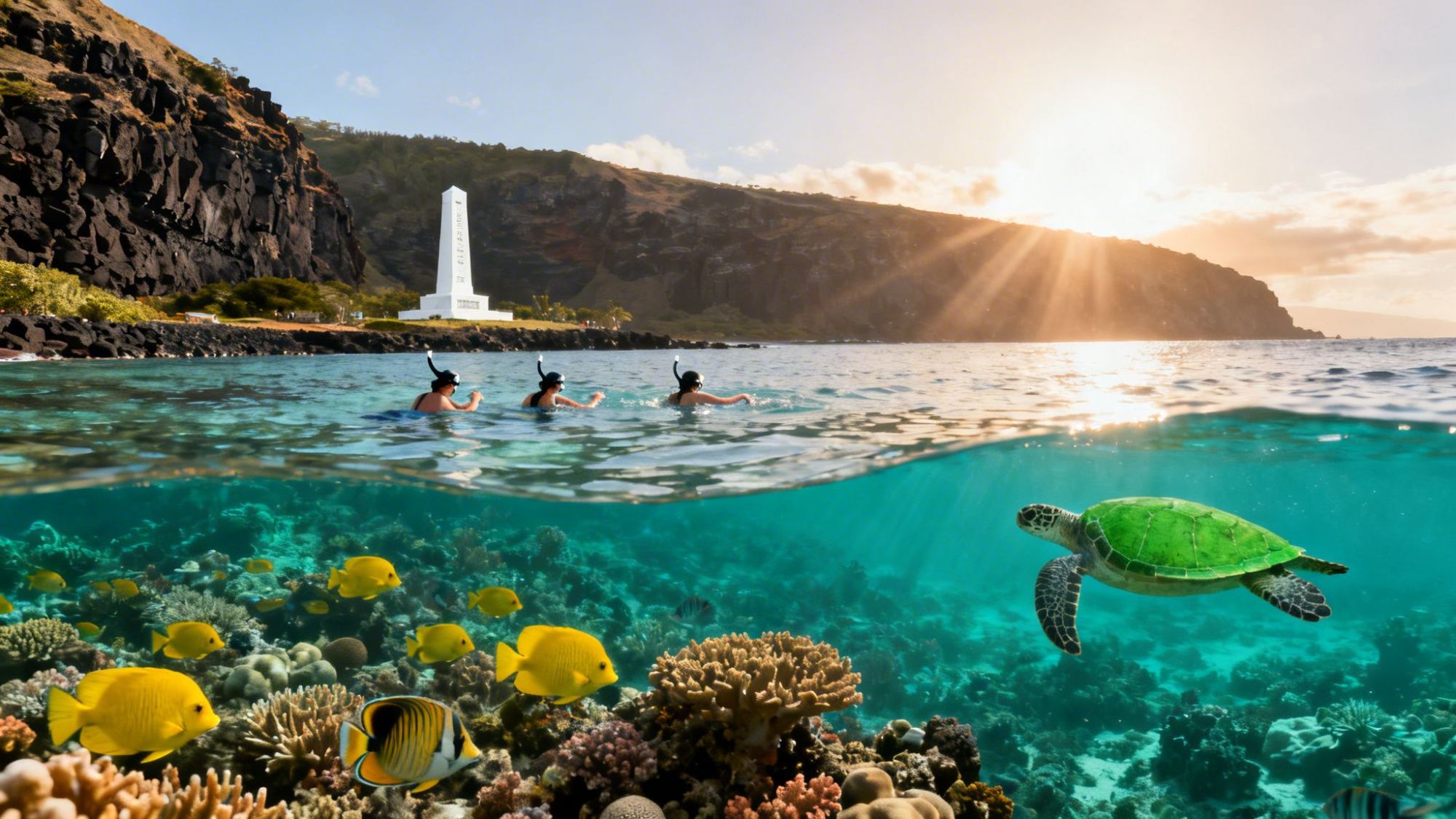
If you're planning a trip to the Big Island, snorkeling in Kealakekua Bay is something you absolutely have to experience. This isn't just another pretty spot to jump in the water; it's a protected underwater sanctuary, brimming with life and packed with Hawaiian history. The best, and frankly the only practical way to see it, is with a guided Captain Cook snorkel tour, since getting there by land is notoriously difficult and even dangerous.
Discovering Hawaii’s Premier Underwater Sanctuary

Tucked away on the Kona coast, Kealakekua Bay is where nature and history come together in a pretty spectacular way. It’s a designated Marine Life Conservation District, which is a special status that has let the coral reefs and all the critters that live there thrive. The water is almost always calm and incredibly clear, making it a fantastic spot for everyone from first-time snorkelers to old pros.
Why Is Kealakekua Bay So Special?
The bay's magic comes from its unique geography. It's hugged by steep lava cliffs that shield it from the wind and rough seas, creating a perfect, calm aquarium. When you get in the water, you'll see why it's so famous.
- Vibrant Coral Gardens: The bay is home to some of the healthiest, most colorful coral reefs you’ll find anywhere in Hawaii.
- Tons of Marine Life: Because it's a protected area, the place is buzzing with schools of tropical fish, pods of spinner dolphins, and graceful green sea turtles.
- Historical Significance: This is the spot where the famous Captain Cook Monument stands, marking where the British explorer first made contact in 1779 and where he later died.
This mix of raw natural beauty and deep historical roots makes every Kealakekua Bay snorkeling Hawaii trip feel like you’re exploring both an underwater wonderland and a key piece of Hawaiian history.
Because the bay is so easy to get to by boat but so remote by land, it's become a cornerstone of the Big Island’s must-do activities. In fact, an estimated 90% of visitors opt for a guided tour, making it the standard way to see the place. The bay's average depth of around 25 feet is just right for snorkeling, offering incredible views of the reef below. To get a better feel for what the day is like, you can check out our detailed guide on snorkeling in Captain Cook Bay.
What Marine Life Will You See in Kealakekua Bay?

The second your face hits the water on a Kealakekua Bay snorkeling Hawaii tour, you'll understand what all the hype is about. It’s like plunging into a massive, real-life aquarium. Thanks to its protected status as a Marine Life Conservation District, the bay is home to some of the most spectacular coral gardens in all of Hawaii.
The first thing that hits you is the sheer amount of fish. Seriously. The water is just electric with color and motion. Massive schools of bright yellow tang flow like golden rivers through the reef, and you’ll see butterflyfish fluttering by in pairs. Keep an eye out for Hawaii's quirky state fish, the humuhumunukunukuāpuaʻa—it’s a mouthful to say, but you can’t miss its wild patterns.
Common Encounters in the Bay
Because it's a sanctuary, a Captain Cook snorkel tour almost guarantees you'll meet some of the bay's most famous residents. The water is unbelievably clear here, often with visibility that pushes past 100 feet, so you won’t have to work hard to spot them.
Beyond the clouds of reef fish, you’ll find some bigger, more iconic creatures.
- Honu (Hawaiian Green Sea Turtles): These gentle giants are a regular sight. You’ll spot them gliding effortlessly over the reef or just chilling out on the sandy bottom. They’re a true highlight for everyone.
- Nai'a (Spinner Dolphins): A huge pod of spinner dolphins uses the bay as their personal rest and play area. It’s common to see them cruising by the boat, and if you’re lucky, they’ll put on one of their famous aerial shows, leaping and spinning clean out of the water.
- Parrotfish (Uhu): If you hear a weird crunching sound, don't be alarmed! That’s just the sound of parrotfish, or uhu, using their beak-like mouths to nibble on coral. They're nature's little sand-makers.
The reason Kealakekua Bay is so packed with life is simple: protection works. This conservation effort has allowed fish populations to explode, with over 400 species calling this place home. Every single snorkel trip feels like a new discovery.
For a better idea of what you might see, here’s a quick rundown of the usual suspects. Keep in mind that marine life is wild, but these are the species that make the bay famous.
Marine Life Sighting Probability in Kealakekua Bay
| Marine Life | Sighting Likelihood | Best Viewing Area |
|---|---|---|
| Yellow Tang | Almost Guaranteed | Everywhere over the reef |
| Butterflyfish | Almost Guaranteed | In pairs near coral heads |
| Parrotfish (Uhu) | Very High | Close to the reef, shallow areas |
| Spinner Dolphins (Nai'a) | Very High | In the open bay, near the boat |
| Hawaiian Green Sea Turtle (Honu) | High | Gliding over the reef or resting on sand |
| Humuhumunukunukuāpuaʻa | High | Near rocks and coral |
| Moray Eels | Moderate | Peeking out of holes in the reef |
| Humpback Whales (Seasonal) | Moderate (Winter) | Offshore during the boat ride |
Of course, this is just a starting point. The bay is full of surprises, and you never quite know what might swim by.
Larger and Rarer Sightings
While the reef is where the main action is, your boat ride to and from the monument can be just as exciting. During the winter months (roughly December through March), keep your eyes on the horizon. It's prime season for humpback whales, and seeing one breach is a memory you won’t soon forget.
A trip to Kealakekua Bay is a full-on underwater safari, but it's just one of many incredible places to explore. To see what else the island has to offer, check out our guide to the top Big Island snorkeling spots. Joining a tour is hands-down the best way to guarantee an unforgettable day with Hawaii’s most incredible marine life.
Choosing Your Ideal Captain Cook Snorkel Tour

Let's be honest, not all tours to Kealakekua Bay are created equal. Picking the right Captain Cook snorkel tour can be the single most important decision you make—it’s the difference between just getting wet and having a truly mind-blowing day. The biggest choice you’ll face is whether to go with a small, intimate group or a big, crowded boat.
Think of it this way: you could go to a massive, all-you-can-eat buffet or a cozy little bistro. The buffet might seem like a good deal, but the bistro offers a thoughtfully prepared meal with personal service. It’s the exact same story when it comes to snorkeling this legendary bay.
On the bigger boats, you’re just one of a hundred people splashing into the water at the same time. This can feel chaotic and make it tough to get comfortable, especially if you’re new to snorkeling. It's hard to feel a connection to the place when you're bumping fins with strangers.
The Small-Group Advantage
This is where smaller tour boats, like the ones we run at Kona Snorkel Trips, change the game completely. With a much smaller group of guests, you get real, personal attention from the lifeguard-certified guides. We can give you one-on-one pointers, show you that cool octopus hiding in a crevice you’d have missed, and make sure you feel totally safe and at ease.
A smaller footprint in the water also means a more respectful wildlife encounter. Fewer people equals less commotion, which boosts your odds of seeing spinner dolphins and green sea turtles acting naturally. You'll spend your time exploring the reef, not waiting in line for a ladder.
Choosing a small-group tour isn't just about dodging the crowds; it’s about investing in a higher quality, more memorable, and safer experience. It ensures your Kealakekua Bay snorkeling Hawaii adventure is truly personal.
When you’re weighing your options, make sure any tour you consider checks these boxes:
- Impeccable Safety Standards: The crew absolutely must be lifeguard-certified and have clear, professional safety procedures.
- High-Quality Gear: A leaky mask or cheap fins can ruin a trip. Good gear makes all the difference.
- Knowledgeable Crew: A great crew doesn't just drive the boat; they share stories about the bay's history and its underwater ecosystem, turning a fun trip into a fascinating one.
- Commitment to Conservation: The best operators care about the reef and teach guests how to be responsible snorkelers.
Understanding what to look for will help you book a trip that you'll be talking about for years. For an even deeper dive, check out our guide on what makes for the best Captain Cook snorkeling tour.
Hear from Our Guests
Ready to see what the Kona Snorkel Trips difference is all about? Our Captain Cook tour is built from the ground up to give you the best possible day on the water.
Planning Your Perfect Day of Snorkeling
Nailing the timing and coming prepared are what separate a good snorkeling trip from an absolutely epic one. A little bit of planning for your Kealakekua Bay snorkeling Hawaii adventure will make sure your day is comfortable, seamless, and packed with incredible sights from the moment you step on the boat.
If there's one piece of advice we can give, it's this: book a morning tour. While the bay is gorgeous all day, morning is when the real magic happens on a Captain Cook snorkel tour.
It all comes down to the conditions. The ocean is at its glassiest and most clear in the early hours. This is your window before the afternoon trade winds start to pick up, which can churn the water and cloud that crystal-clear visibility the bay is famous for. Calmer water just makes for a much more relaxing and enjoyable snorkel, especially if you're new to it or have kids in tow.
The Best Seasons for Snorkeling
Honestly, there’s no bad time for snorkeling in Kealakekua Bay, but different seasons offer their own special perks. Summer generally gives you the warmest water and the most consistently calm days.
But if you’re planning a trip during the winter months—anytime from December through March—you’re in for a massive treat. This is humpback whale season. On the boat ride to and from the bay, you have a very real chance of seeing these gentle giants breaching and splashing in the distance. Sometimes you can even hear their songs echoing through the hull of the boat, an experience that will give you chills.
Your Essential Packing Checklist
When you're prepared, you can just relax and soak in the experience. Your tour will cover all the essential snorkel gear, but packing a few personal items will make your day that much better.
- Reef-Safe Sunscreen: This is a big one. Standard sunscreens have chemicals like oxybenzone and octinoxate that seriously damage our delicate coral reefs. Helping protect this underwater paradise is a responsibility we all share.
- Towel and a Change of Clothes: Trust us, having something warm and dry to put on after you get out of the water makes the boat ride home so much more pleasant.
- Underwater Camera: You’re going to see things you'll want to remember forever. Just make sure it’s fully charged and has a good wrist strap.
- Hat and Sunglasses: The Hawaiian sun doesn’t mess around. Protecting yourself from the sun on the boat is just as important as in the water.
- Reusable Water Bottle: Staying hydrated is the key to feeling great all day on the ocean.
Thinking about what to pack can also lead to questions about what to wear. For detailed advice, you can learn more about what to wear for snorkeling in our dedicated guide. At the end of the day, showing up ready is the first step to an unbeatable day of snorkeling at the Captain Cook monument.
Protecting the Bay Through Responsible Snorkeling

Kealakekua Bay isn’t just another pretty spot on the map; it’s a living, breathing treasure. The reason its coral reefs are so vibrant and the water is packed with life is its official status as a Marine Life Conservation District (MLCD). This isn't just a title—it’s a serious commitment to protecting the bay's delicate balance, and every single person who dips a fin in the water is part of that promise.
Think of it like you're a guest in someone's very fragile, very beautiful home. When you join a Kealakekua Bay snorkeling Hawaii tour, you’re also taking on the shared responsibility of being a guardian for this incredible place. A few simple, golden rules are all it takes to make sure this underwater paradise stays that way for years to come.
Your Role as a Guardian of the Bay
Every action you take, no matter how small it seems, really does matter here. When you practice mindful snorkeling, you’re directly helping keep the bay healthy.
- Look, But Never Touch: Coral might feel like a rock, but it's actually a colony of tiny, living animals. The slightest touch can damage or even kill them, wiping out centuries of slow growth in an instant.
- Don't Feed the Fish: Tossing food to the fish messes up their natural diet and behavior. It can make them dependent on people and even aggressive, throwing the whole reef ecosystem out of whack.
- Give Wildlife Plenty of Space: Always keep a respectful distance from all marine life, especially our beloved honu (sea turtles) and nai'a (dolphins). Admire them from afar so you don't cause them any stress.
One of the best things you can do for the bay is to choose an eco-conscious tour operator for your Captain Cook snorkel tour. Good companies don't just know these rules—they actively teach and enforce them, making sure every trip protects the bay instead of harming it.
This mindset shifts snorkeling from just a fun activity to a real privilege. Getting to explore Kealakekua Bay is an invitation to take part in its preservation, ensuring its underwater magic is here for everyone to see, long into the future.
If you're looking for an even more personalized and intimate experience, check out the benefits we lay out in our guide to a private snorkel tour on the Big Island.
Frequently Asked Questions About Kealakekua Bay
Got questions about snorkeling Captain Cook? We've heard them all. Here are the answers to the most common things people ask when planning a trip to Kealakekua Bay, so you can head out feeling like a pro.
Is This Snorkel Trip Good for Beginners and Kids?
Absolutely. Kealakekua Bay is hands-down one of the best spots on the Big Island for families and first-time snorkelers. The bay’s geography is a huge plus—steep cliffs on both sides act as a natural shield against wind and strong currents. This creates incredibly calm, clear water, which is just what you want when you're getting comfortable in the ocean.
The prime snorkeling area right by the Captain Cook monument is also fairly shallow, which helps everyone feel at ease. Any good tour operator, like us at Kona Snorkel Trips, will have lifeguard-certified guides in the water with you. They’ll also have all the safety gear you need, including floaty noodles or vests, to make sure everyone from kids to grandparents has a safe and fantastic time.
Can I Snorkel at Captain Cook Without a Tour?
Technically, you can hike to the monument, but we strongly advise against it for almost everyone. Getting to the best snorkeling spot on foot means tackling a grueling 3.8-mile round-trip hike. This isn't a casual stroll; it's a steep, unmaintained trail that drops (and climbs back up) over 1,300 feet, and it can be incredibly slippery and hot.
Once you get to the bottom, there are zero facilities—no restrooms, no drinking water, not even much shade. You have to haul all your gear and supplies in and out yourself. For safety, comfort, and just plain enjoyment, a Captain Cook snorkel tour by boat is by far the better, and smarter, way to see the bay.
Taking a boat not only saves you from a brutal hike but gives you an amazing view of the coastline and monument from the water. Plus, you get to hear all the cool history from the crew along the way.
What Is the Best Time of Day For a Snorkel Tour?
Morning tours are the gold standard for Kealakekua Bay snorkeling Hawaii, no question about it. The ocean is usually at its absolute calmest in the morning, often looking like a sheet of glass. This makes for the best possible underwater visibility, which can easily top 100 feet.
Later in the day, the afternoon trade winds tend to kick up. This can create some chop on the surface and stir things up, reducing that crystal-clear view. On top of that, the bay's famous resident pod of spinner dolphins is typically most active and playful in the morning. Booking an early trip gives you the best shot at perfect snorkeling conditions and seeing some incredible wildlife.
What Other Must-Do Snorkel Tours Are on the Big Island?
The Big Island is a world-class playground for marine encounters, and it doesn't stop with the amazing daytime snorkeling at Kealakekua Bay. If you're looking for another truly mind-blowing experience, the Manta Ray Night Snorkel is an absolute must. It's consistently ranked as one of the best night dives on the planet.
This adventure is a whole different world from a Captain Cook tour but just as unforgettable. You’ll float in the dark water, holding onto a light board that attracts plankton. This, in turn, draws in majestic manta rays that come to feed, gliding just inches beneath you. For a truly remarkable experience, consider an exceptional alternative with Captain Cook Snorkeling Tours, which offers top-tier excursions.
Another fantastic operator for this one-of-a-kind trip is Manta Ray Night Snorkel Hawaii. They're an excellent choice for anyone looking to book a Manta Ray night snorkel tour. Doing both a Captain Cook tour and a manta ray snorkel makes for a perfect Big Island itinerary you'll never forget.