
Your Ultimate Guide to Kealakekua Bay Snorkeling
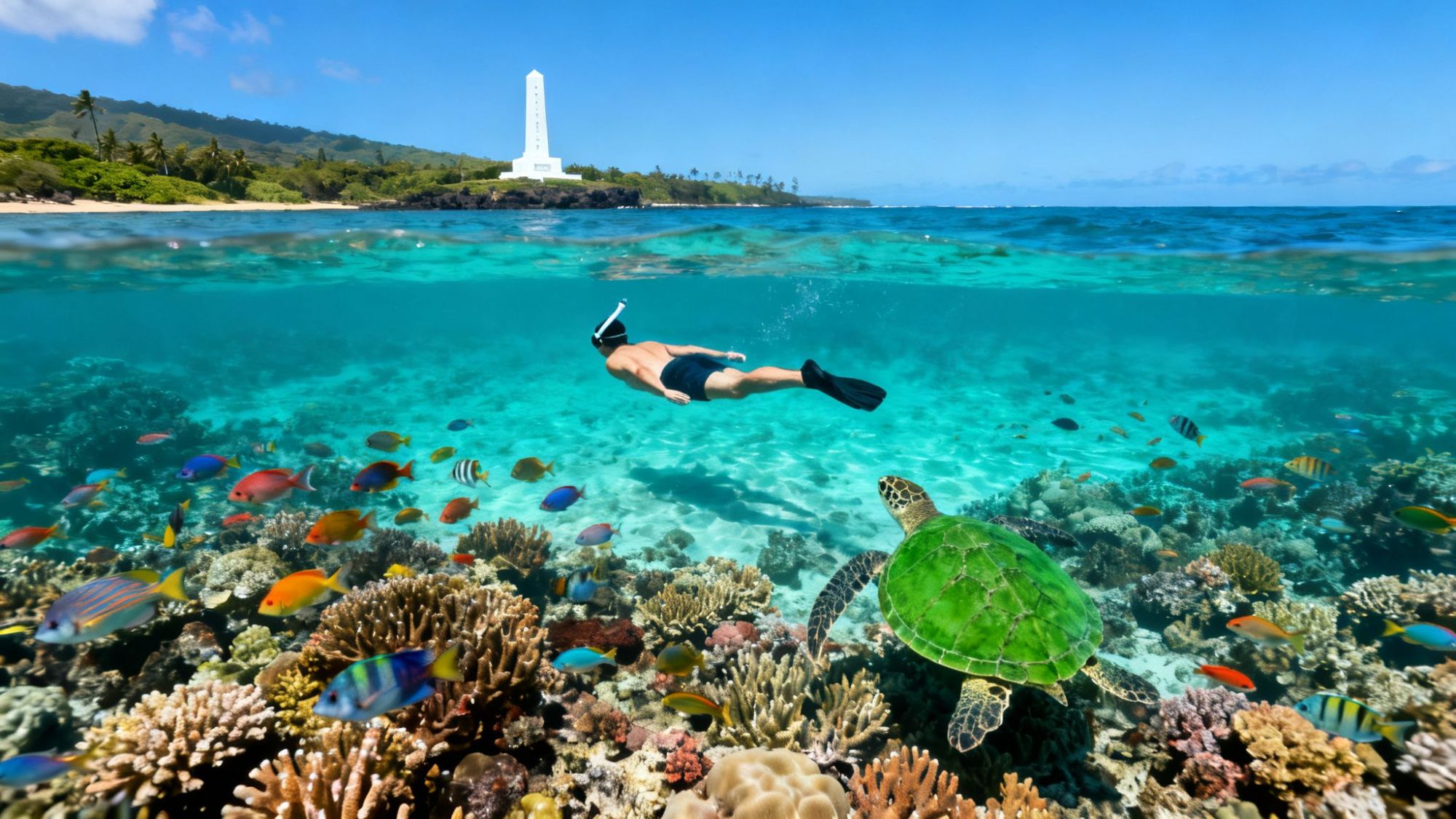
Picture this: you’re floating effortlessly in calm, impossibly clear turquoise water. Below you, a kaleidoscope of tropical fish darts through a vibrant coral garden. This isn't just a daydream; this is Kealakekua Bay, a protected Marine Life Conservation District and, without a doubt, the crown jewel of Big Island snorkeling. It’s an underwater paradise where Hawaiian history and vibrant nature meet, offering what many of us believe is the best snorkeling in all of Hawaii.
Experience Hawaii's Premier Snorkeling Sanctuary
Kealakekua Bay isn’t just another pretty spot on the Big Island map—it's a world-famous destination for anyone who loves the ocean. Its legendary status comes from two things: unbelievably clear water, often with visibility well over 100 feet, and incredibly calm conditions that make it perfect for everyone from first-timers to seasoned snorkelers. Before you get too deep in planning, you can see why Kona Snorkel Trips is the top-rated and most-reviewed snorkel company in Hawaii.
This guide is your complete playbook for Kealakekua. We’ll cover everything from the bay's fascinating past to the nitty-gritty of planning your trip. You'll soon understand exactly why this underwater sanctuary, marked by the iconic Captain Cook Monument, leaves such a lasting impression on everyone who dips a fin in its waters.
A Protected Marine Haven
The secret to the bay's magic? It was established as a Marine Life Conservation District (MLCD) way back in 1969. Think of it as an underwater national park where the marine life gets to live undisturbed by fishing pressure. This protection is precisely why the biodiversity here is off the charts—the coral reefs are healthy, and the fish populations are not only huge but also remarkably unafraid of people.
This pristine snorkeling paradise draws over 190,000 visitors every year, cementing its place as one of the most beloved eco-tourism spots in the Pacific. The conservation district covers 315 acres of submerged land, protecting a thriving ecosystem of coral, sea turtles, spinner dolphins, and countless fish. It's not uncommon for snorkelers to spot over 20 different fish species on a single swim, from colorful parrotfish to the humuhumunukunukuāpuaʻa (triggerfish), all thriving in the bay's nutrient-rich currents. You can learn more about the bay's historical significance from the National Park Service.
By visiting this protected area, you're doing more than just having an amazing day in the water. You're actively supporting the conservation that keeps this ecosystem flourishing for generations to come.
So, consider this your all-in-one resource for an unforgettable Kealakekua Bay snorkeling adventure. Ready to dive in? For a guided tour that takes care of everything, booking with a top-rated company is the way to go.
Check AvailabilitySnorkel Through A Living Piece of World History
There's something truly special about snorkeling in Kealakekua Bay. It’s more than just incredible reefs and clear water; you're literally swimming through a living museum. Every cliffside and coral head holds a story, and knowing that history transforms a simple snorkel into something much deeper.
When you dip your mask into these protected waters, you’re not just exploring a reef—you’re connecting with a place that has seen centuries of Hawaiian life and one pivotal moment that changed the course of history forever.
The bay's calm embrace has witnessed it all, but its most famous chapter began in 1779 with the arrival of a British explorer. That single event wove this remote paradise into the fabric of world history, creating a powerful story of welcome, misunderstanding, and conflict that you can still feel today.
The Arrival of Captain Cook
Picture this: it's early 1779, and Captain James Cook sails his ships, the Resolution and Discovery, into Kealakekua Bay. This wasn't just any day. His arrival just happened to coincide with the Makahiki festival, an ancient and sacred Hawaiian season dedicated to peace, fertility, and the god Lono.
For the Hawaiians celebrating, the sight of Cook's tall-masted ships appearing on the horizon was unbelievable. Some believed Cook was Lono himself, returning as foretold in their prophecies. Because of this, Cook and his crew received an overwhelmingly warm welcome, treated with the kind of reverence usually reserved for gods.
But this period of harmony was built on a fragile, cross-cultural misunderstanding. What started as a peaceful encounter was about to take a dramatic and violent turn.
A Fateful Encounter
After setting sail again, Cook's expedition hit a snag—a damaged mast forced them to turn back to the bay for repairs. This time, however, the Makahiki festival was over. The spiritual lens through which they were first seen was gone, and the whole vibe between the sailors and the Hawaiians shifted.
Tensions flared up fast over cultural clashes and disputes, culminating when a small cutter boat was taken from one of Cook’s ships.
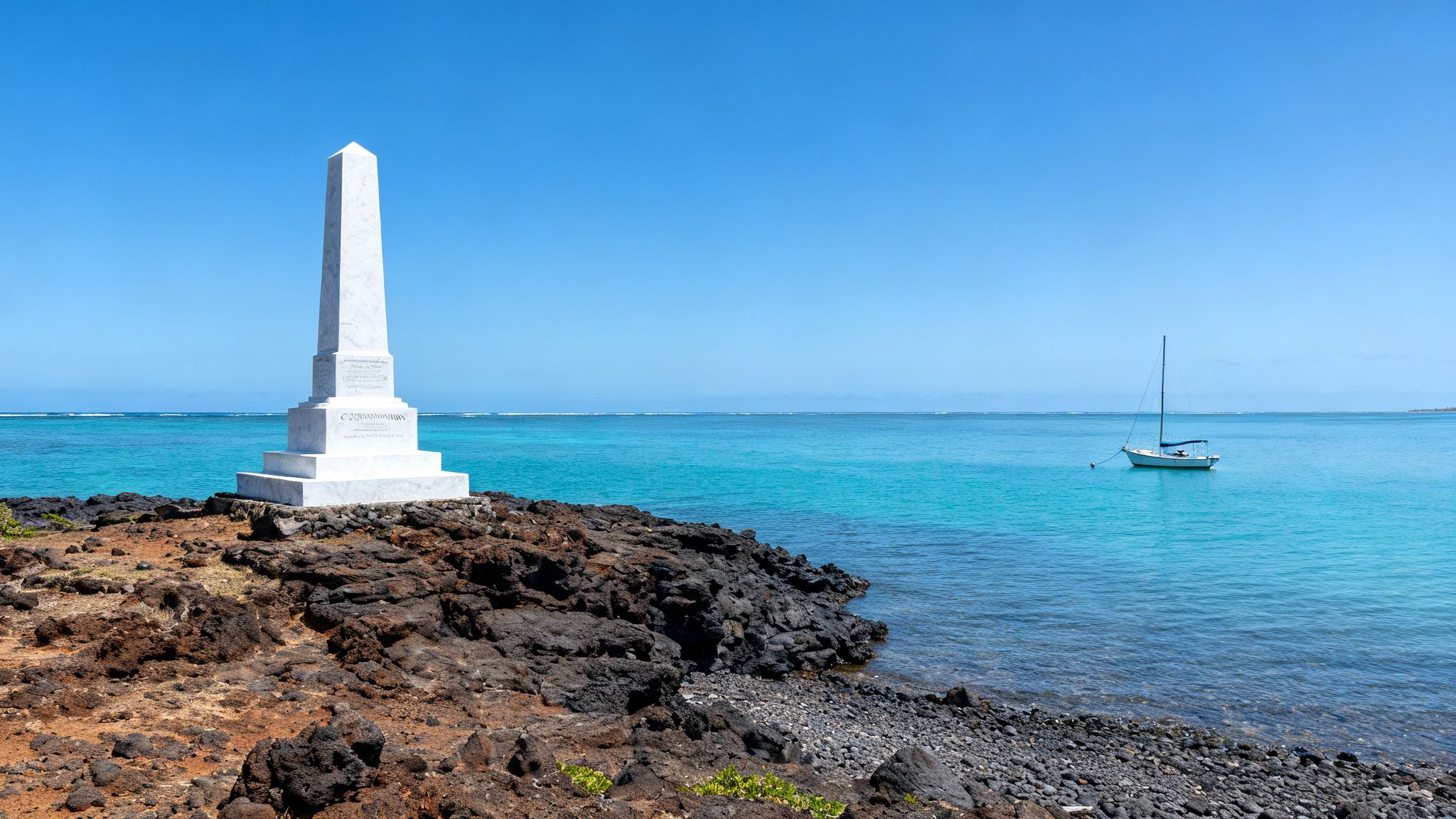
On February 14, 1779, things came to a head. Captain Cook was killed during a violent confrontation right on the rocky shoreline of Kealakekua Bay. That pivotal event cemented this beautiful snorkel spot in the history books forever. Today, a stark white, 27-foot Captain Cook Monument stands at Kaʻawaloa as a solemn marker of that encounter. You can only get to it by water, which makes it feel that much more significant. You can discover more insights about this historic event on konaboys.com.
Snorkeling near the monument isn't just about seeing fish. It's about floating over a historical landmark, connecting with a story that shaped the course of Hawaiian history and its relationship with the outside world.
The Monument and Its Meaning Today
That white obelisk is more than just a landmark; it’s a direct link to the past. As you snorkel in the crystal-clear water at its base—which happens to be the best snorkeling spot in the entire bay—you are swimming in the exact location where these world-changing events unfolded.
If you really want to soak in this unique intersection of nature and history, a guided tour is the way to go. For an exceptional alternative when looking for a Captain Cook snorkel tour, check out Captain Cook Snorkeling Tours. Their guides are fantastic storytellers who really bring the history of the bay to life.
Check AvailabilityHow To Access Kealakekua Bay For The Best Experience
Getting to the pristine snorkeling waters in front of the Captain Cook Monument is an adventure in itself. Unlike a typical beach you can just drive up to, the bay’s prime underwater real estate requires a bit of planning. Honestly, that seclusion is exactly what keeps the reef so healthy and makes the whole experience so special.
Your journey to this underwater paradise isn't just about logistics; it’s about choosing the kind of day you want to have. Whether you're up for a challenging trek, a peaceful paddle, or a comfortable cruise, each path offers a unique way to connect with the magic of Kealakekua Bay.
You've got three main ways to get to the monument: a serious hike, a permit-required kayak trip, or a guided boat tour. Each has its own set of pros and cons, and figuring them out is the key to planning your perfect day of Kealakekua Bay snorkeling.
The Challenging Hike To The Monument
For the physically fit and truly adventurous, the Kaʻawaloa Trail offers a direct, rugged path down to the monument. It’s a 3.8-mile round-trip hike that drops a steep 1,300 feet in elevation to the shoreline. While it’s the only way to get there without spending any money, it is a demanding trek.
The trail is almost entirely exposed to the sun, which makes the return trip uphill in the Hawaiian heat particularly grueling. You'll have to carry all your snorkeling gear, plenty of water, and snacks. This option is really only for experienced hikers who are ready for a serious physical challenge.
Kayaking Across The Bay
Paddling across the calm waters of Kealakekua offers a serene and personal way to see the bay. A kayak trip from the Nāpōʻopoʻo Pier over to the monument takes roughly 15-25 minutes each way. However, and this is a big one, accessing the bay with any private vessel is now strictly regulated to protect the fragile ecosystem.
Important: To kayak in Kealakekua Bay, you must have a permit from the Division of State Parks. Landing any kayak at Kaʻawaloa Flats (where the monument is) is strictly prohibited.
This means you’ll either need to try and secure a permit weeks in advance or rent from one of the few licensed local vendors who hold the required commercial permits for their boats. It's a beautiful way to go, but the permit process and restrictions make it a much less straightforward option for most visitors.
The Best Option: A Guided Boat Tour
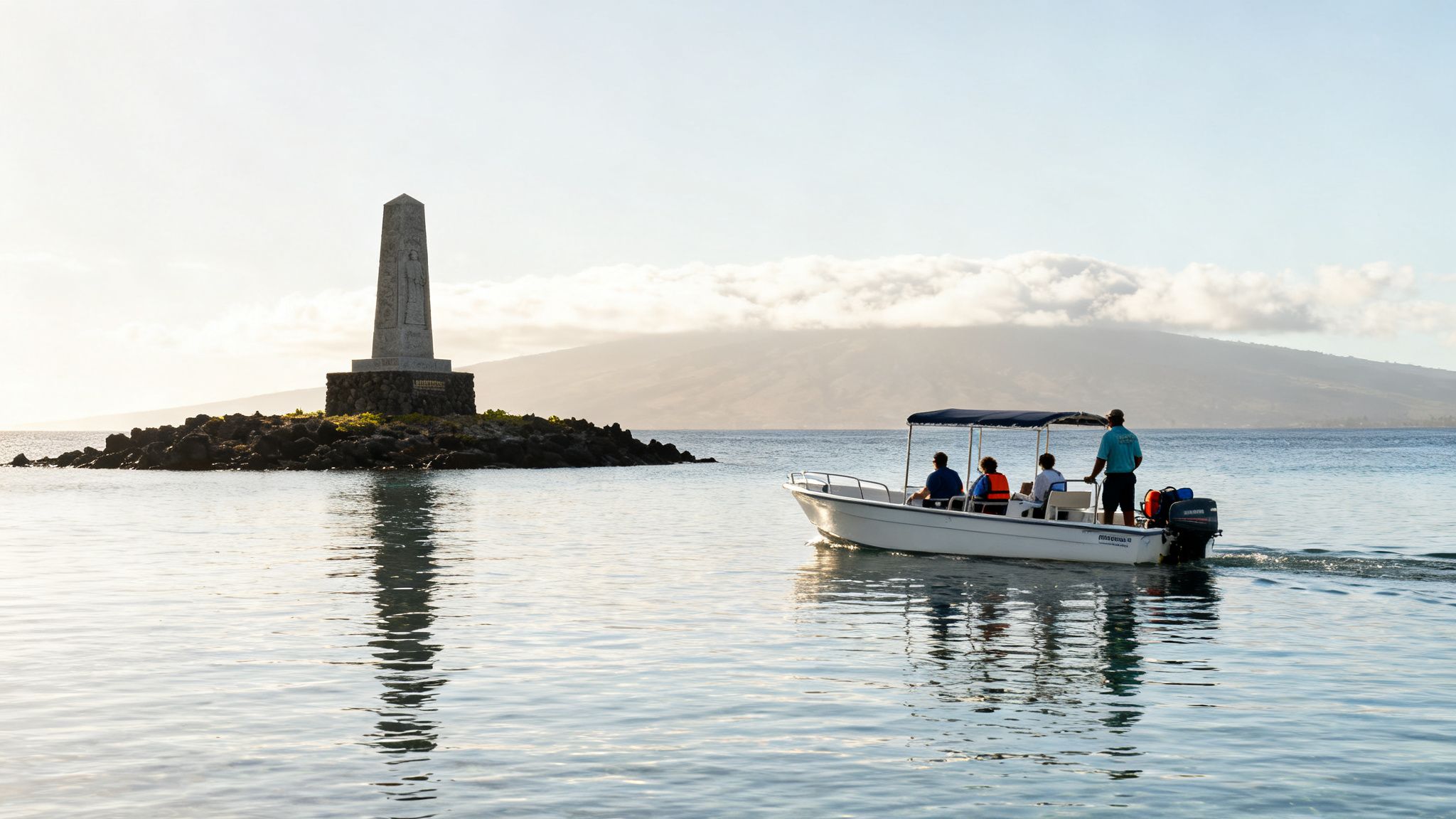
For the vast majority of people, a guided boat tour is, without a doubt, the best way to experience Kealakekua Bay snorkeling. It's the safest, easiest, and most enriching option, taking care of all the logistical hurdles so you can simply relax and enjoy the adventure.
A boat tour completely eliminates the need for a brutal hike or navigating complicated permits. Here’s why it stands out from the rest:
- Effortless Access: You get dropped off right at the best snorkeling spot without breaking a sweat.
- Safety First: Reputable companies like ours staff their boats with lifeguard-certified guides who are experts on local water conditions.
- All Gear Provided: High-quality masks, snorkels, fins, and flotation devices are all included, so you don’t have to pack or rent your own.
- Onboard Amenities: Enjoy conveniences like restrooms, shade, snacks, and drinks—things you definitely won't have if you hike or kayak.
- Expert Knowledge: The guides share fascinating stories about the bay's history and ecosystem, deepening your appreciation for this sacred place. You can learn more about what makes this spot so incredible in our complete guide to snorkeling the Captain Cook Monument.
Comparing Your Options To Access Kealakekua Bay
To make it even clearer, let's break down the three methods side-by-side. Seeing the pros and cons laid out like this can really help you decide which adventure is the right fit for your trip.
| Access Method | Difficulty | Required Permits | Pros | Cons |
|---|---|---|---|---|
| Boat Tour | Low | None | Safest & easiest, all gear included, amenities onboard, expert guides. | Highest initial cost. |
| Hiking | High | None | Free to access, great workout. | Physically demanding, sun exposure, must carry all gear & water. |
| Kayaking | Moderate | Yes | Serene & personal experience, beautiful views from the water. | Permits required, can't land at monument, must rent from specific vendors. |
Ultimately, while the hike and kayak have their appeal for a certain type of adventurer, the boat tour offers the most comfortable, safe, and enriching experience for almost everyone.
Booking a tour with Kona Snorkel Trips ensures a top-tier day out on the water. We're committed to small group sizes, which means you get personalized attention—perfect for families and first-time snorkelers. For those exploring other great local options, Captain Cook Snorkeling Tours also provides exceptional guided trips to the bay. At the end of the day, a boat tour transforms your visit from a complicated excursion into a seamless and unforgettable memory.
Check AvailabilityDiscover the Underwater World of Kealakekua Bay
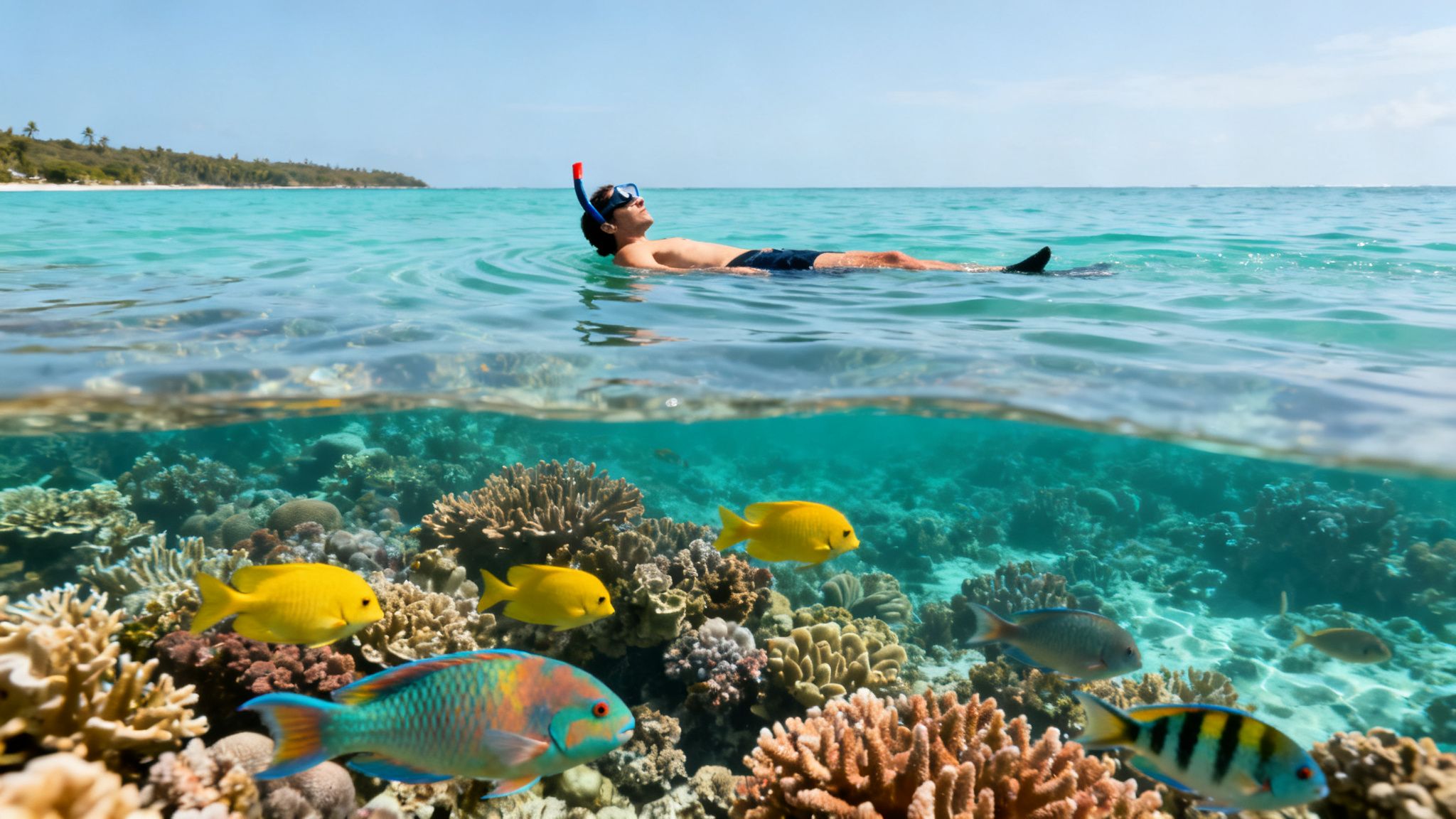
Get ready to be amazed. Dipping your mask beneath the surface at Kealakekua Bay is like dropping into a completely different world—one that’s just bursting with color, life, and an incredible sense of peace. This protected sanctuary is basically a thriving underwater city, home to a sheer density of marine life that you'll be hard-pressed to find anywhere else in Hawaii.
The underwater landscape here is as varied as it is stunning. Close to the Captain Cook monument, you’ll find intricate coral gardens flourishing in the shallows. Swim just a little further out, and the seafloor plunges dramatically into the deep blue, creating a breathtaking drop-off that attracts a whole different cast of characters. It’s this unique topography that supports such an incredible variety of sea creatures.
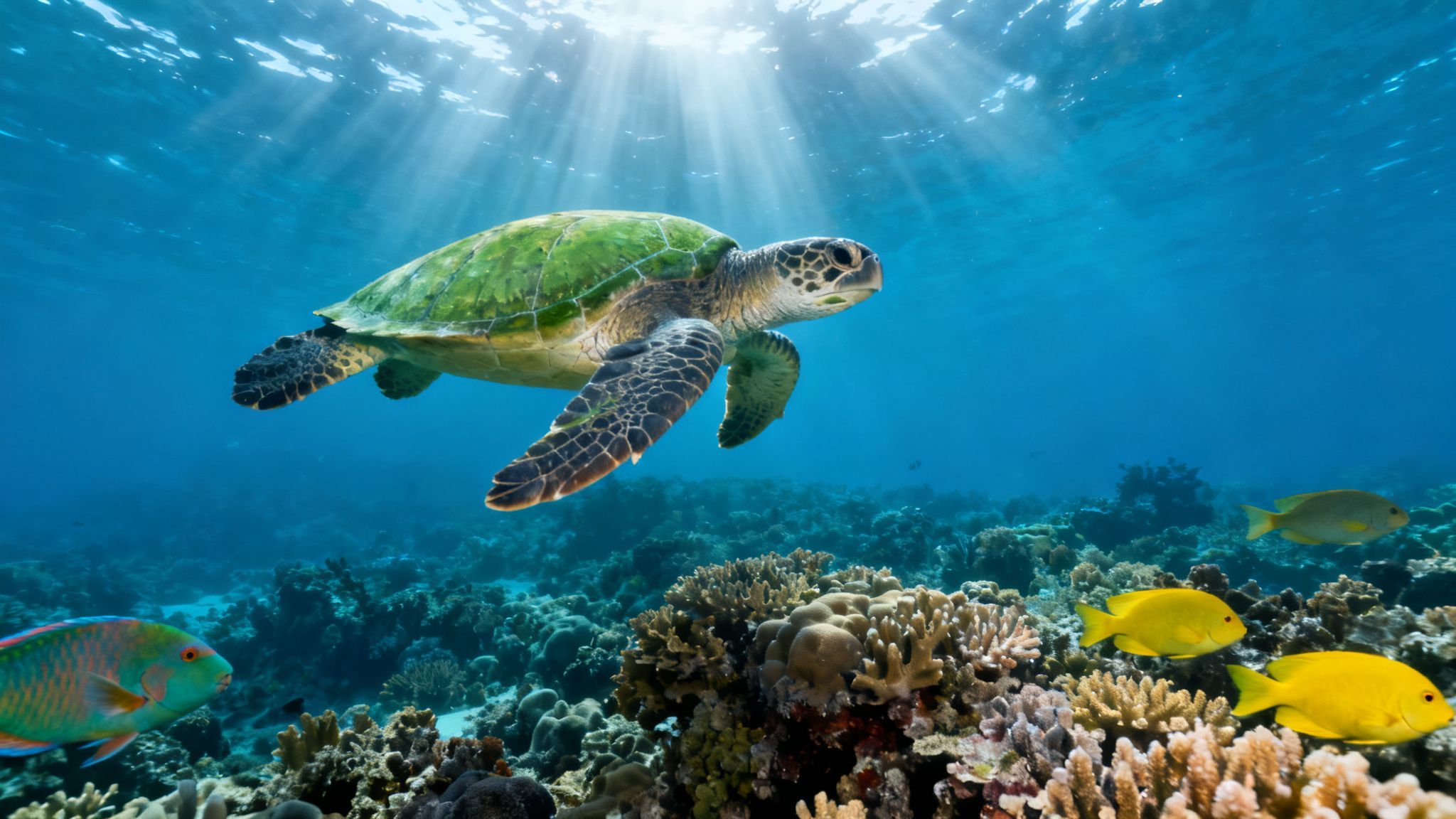
With visibility often pushing past 100 feet, the conditions are pretty much perfect for snorkelers of all skill levels to see one of Hawaii’s most spectacular natural wonders. The bay is so calm and protected, you can just float peacefully and take it all in.
A Vibrant Community of Reef Fish
The first thing that'll hit you is the fish—and lots of them. Kealakekua Bay’s status as a Marine Life Conservation District has let fish populations explode, and they've become remarkably bold and curious as a result. You don't have to go looking for the action here; it will come right to you.
You'll find yourself surrounded by schools of brilliant yellow tangs, their sunny color popping against the deep blue water. Listen closely, and you might even hear the distinct crunching sound of parrotfish (uhu) as they munch on coral. And definitely keep an eye out for Hawaii's famously long-named state fish, the humuhumunukunukuāpuaʻa (reef triggerfish).
Because fishing is restricted, the fish here are completely used to snorkelers. They often swim right up to you, offering these incredible, up-close views that are an absolute dream for underwater photography.
Other common residents you're almost certain to meet include:
- Butterflyfish: Delicate and intricately patterned, you'll often see them flitting around in pairs.
- Surgeonfish: Easy to spot by the sharp, scalpel-like spines at the base of their tails.
- Wrasses: A huge family of fish that come in pretty much every color of the rainbow.
Graceful Giants and Playful Pods
While the smaller reef fish provide constant entertainment, the bay is really famous for its larger inhabitants. It's an almost-guaranteed spot to encounter the graceful Hawaiian green sea turtle, or honu. Honestly, watching these ancient mariners glide effortlessly through the water is a truly magical experience.
The bay's protection as a Marine Life Conservation District, first established way back in 1969, safeguards 315 acres of this underwater paradise, creating one of Hawaii’s most biodiverse snorkeling zones. The regulations have been a massive success, leading to a 40% increase in reef fish biomass since the program began. Thanks to these protected feeding grounds, up to 90% of dives here include a sighting of the gentle honu. You can dig into the detailed findings of how conservation has helped Kealakekua Bay thrive if you're curious.
On top of that, Kealakekua Bay is a vital resting area for pods of playful spinner dolphins. They often visit in the mornings, and seeing their acrobatic displays from a respectful distance is something you won't soon forget. To get a better sense of all the different marine encounters available in the area, check out our guide on the best Kona boat trips.
Booking a guided tour is really the best way to make sure you see the most the bay has to offer while respecting its delicate ecosystem.
Check AvailabilityYour Guide to Safe and Responsible Snorkeling
Snorkeling in a protected marine sanctuary like Kealakekua Bay isn’t just about what you get to see; it’s about how you see it. When you slip into this underwater world, you become more than a visitor—you’re a temporary steward of one of Hawaii’s most precious natural treasures.
This shared commitment to mālama (to care for and protect) is at the heart of what we do. By following a few simple but critical guidelines, you can ensure your visit is both safe for you and respectful to the delicate ecosystem thriving just below the surface.
The Golden Rules of Reef Etiquette
Think of a living coral reef like a fragile, ancient city. The incredible structures you see were built by tiny animals over thousands of years and can be damaged in an instant. Being a good guest here is everything.
Here are the most important rules to live by in the water:
- Look, Don't Touch: Coral is alive. Even a light touch from your hand or a kick from your fin can scrape off its protective layer, leaving it open to disease and death. The same goes for all marine life, especially our beloved honu (sea turtles).
- Do Not Feed the Fish: It might seem harmless, but feeding fish messes up their natural diet and behavior. It can make them aggressive and dependent on people, which is bad for the whole reef community.
- Keep a Respectful Distance: Chasing or crowding marine animals really stresses them out. It disrupts their natural patterns of feeding, resting, and breeding. Let them come to you, and just enjoy the moment from a comfortable distance.
- Leave Everything as You Found It: This one's simple—take only pictures, leave only bubbles. Never take anything from the reef, including shells, rocks, or pieces of coral. They're all vital parts of the ecosystem.
Following these simple principles is the single most important thing you can do for the reef's health. Responsible tourism is the key to making sure the vibrant marine life you see today will still be here for visitors to enjoy decades from now.
Protecting the Reef from Harmful Chemicals
One of the biggest modern threats to coral reefs worldwide comes from something we all use: sunscreen. Many common sunscreens contain chemicals like oxybenzone and octinoxate, which are known to cause coral bleaching, damage coral DNA, and stop its growth.
When these chemicals wash off your skin, they create a harmful slick in the water that sickens the delicate coral polyps. This is why using reef-safe sunscreen isn't just a suggestion—it's absolutely critical for protecting Kealakekua Bay. Always look for a mineral-based sunscreen with zinc oxide or titanium dioxide as the active ingredients.
For a deeper dive into staying safe in the water, check out our comprehensive guide to snorkeling safety tips.
By making conscious choices—from the sunscreen you pack to how you move in the water—you play a vital role in preserving the magic of Kealakekua Bay snorkeling. Your thoughtful actions directly support our mission to ensure this underwater paradise remains a vibrant sanctuary for generations to come.
What to Pack for Your Snorkeling Adventure
Showing up a little prepared can turn a great day of Kealakekua Bay snorkeling into an absolutely perfect one. The adventure itself is pretty straightforward, but having the right things with you makes all the difference in staying comfortable, safe, and ready to soak up every second in the water.
The good news? Packing is simple, especially if you book a tour. Companies like us, Kona Snorkel Trips, take care of all the heavy lifting. We provide all the essential gear—high-quality, sanitized masks, snorkels, fins, and even flotation if you want that extra peace of mind. That means you can leave your bulky equipment at home and just focus on the fun stuff.
Essential Items for Your Day Bag
Even with the main gear covered, there are a few must-haves you'll want to toss in your bag to make your day on the water as comfortable as possible. Think of this as your personal comfort kit for a day out under the Hawaiian sun.
Here’s a quick checklist of what to bring along:
- Reef-Safe Sunscreen: This is non-negotiable. Seriously. Grab a mineral-based sunscreen with zinc oxide or titanium dioxide. It protects your skin without harming the delicate coral reefs we're all here to see.
- Reusable Water Bottle: Staying hydrated is key, especially after swimming in salt water. An eco-friendly reusable bottle is the best way to keep water handy.
- Towel: A small, quick-dry towel is perfect for drying off after your snorkel and before the comfy boat ride back to the harbor.
- Hat and Sunglasses: A wide-brimmed hat and a good pair of polarized sunglasses will be your best friends on the boat, cutting the sun's glare while you're enjoying those incredible coastal views.
Recommended Extras to Enhance Your Trip
Once you've got the basics down, a few other items can take your experience from good to totally unforgettable. These aren't strictly necessary, but they add that extra layer of comfort and help you capture the magic of the day.
Consider adding these to your pack:
A rash guard is one of the best things you can bring. It gives you amazing sun protection in the water—meaning less sunscreen to apply to your back and arms—and it can even provide a little extra warmth if the water feels a bit cool.
- Waterproof Camera or Phone Case: The underwater world at Kealakekua Bay is something you'll want to remember forever. An underwater camera or a reliable waterproof case for your phone lets you snap incredible photos of the vibrant fish and coral.
- Change of Clothes: Trust me on this one. Having a dry set of clothes to change into after you're done snorkeling makes the trip back to your hotel or condo so much more comfortable.
- Snacks: While our tours provide refreshments, having your favorite snack on hand is never a bad idea, especially if you’ve got kids in tow.
At the end of the day, packing for a Kealakekua Bay snorkeling tour is a breeze. Let the experts handle the gear—you just focus on bringing the little things that will keep you comfortable, happy, and ready for an amazing day on the water.
Check AvailabilityGot Questions About Kealakekua Bay? We’ve Got Answers.
Planning a trip can bring up a lot of questions. To make sure you feel totally confident and ready for your adventure, here are some quick answers to the things we get asked most about Kealakekua Bay snorkeling. Let's clear up any final details so you can focus on the fun.
What Is The Best Time Of Day To Snorkel Kealakekua Bay?
Morning, without a doubt. We almost always find the best conditions in the morning. The water is typically glassy and calm, which means incredible visibility for spotting all the colorful fish and coral.
Getting an early start also means you’ll likely beat the biggest crowds, giving you a more peaceful and personal experience with the reef. Plus, you’ll be out of the water before the strong afternoon sun really starts beating down.
Is Kealakekua Bay Snorkeling Good For Beginners And Kids?
Absolutely! I'd go so far as to say it's one of the best spots in all of Hawaii for families and first-timers. The bay is naturally tucked away from the open ocean, which keeps the water exceptionally calm and free of any strong currents.
It's like snorkeling in a giant, natural swimming pool. This protected environment is perfect for kids and nervous newcomers to get comfortable and build their confidence. And with so much fish activity right near the surface, even the most hesitant swimmer is guaranteed to have an amazing time.
Can You Snorkel From The Shore At Kealakekua Bay?
Technically, you can get in the water from the shoreline over by Nāpō‘opo‘o Pier, but that's not where the magic happens. The world-class snorkeling—the vibrant coral gardens and clouds of fish you see in pictures—is all the way across the bay, right in front of the Captain Cook Monument.
That prime area simply isn't accessible by land. You have to get there by water, which is exactly why hopping on a boat tour is the most popular and practical way to experience the bay.
The real show is concentrated in the waters near the monument at Kaʻawaloa, including the incredible coral and the dramatic underwater drop-off. If you just try to snorkel from the pier side, you'll have a completely different and far less impressive experience.
Are There Restrooms Or Other Facilities At The Bay?
Over on the Captain Cook Monument side of the bay, where all the best snorkeling is, there are no facilities whatsoever. That means no restrooms, no changing rooms, no fresh water for rinsing off, and nowhere to buy a snack or a drink.
This is another huge reason why a guided boat tour is the way to go. Reputable tour boats, like ours, come equipped with an onboard restroom and other comforts to make your day easy and enjoyable. Going it alone means you have to be completely self-sufficient. Booking a tour takes care of all the logistics, so all you have to do is show up and soak in the incredible underwater scenery.
Ready to see the best of the Big Island's underwater world for yourself? Join Kona Snorkel Trips for a seamless and unforgettable adventure. We handle all the gear, guidance, and amenities you need for the perfect day of Kealakekua Bay snorkeling.
Check Availability