
Kealakekua Bay Snorkeling: A Guide to Hawaii’s Underwater Paradise
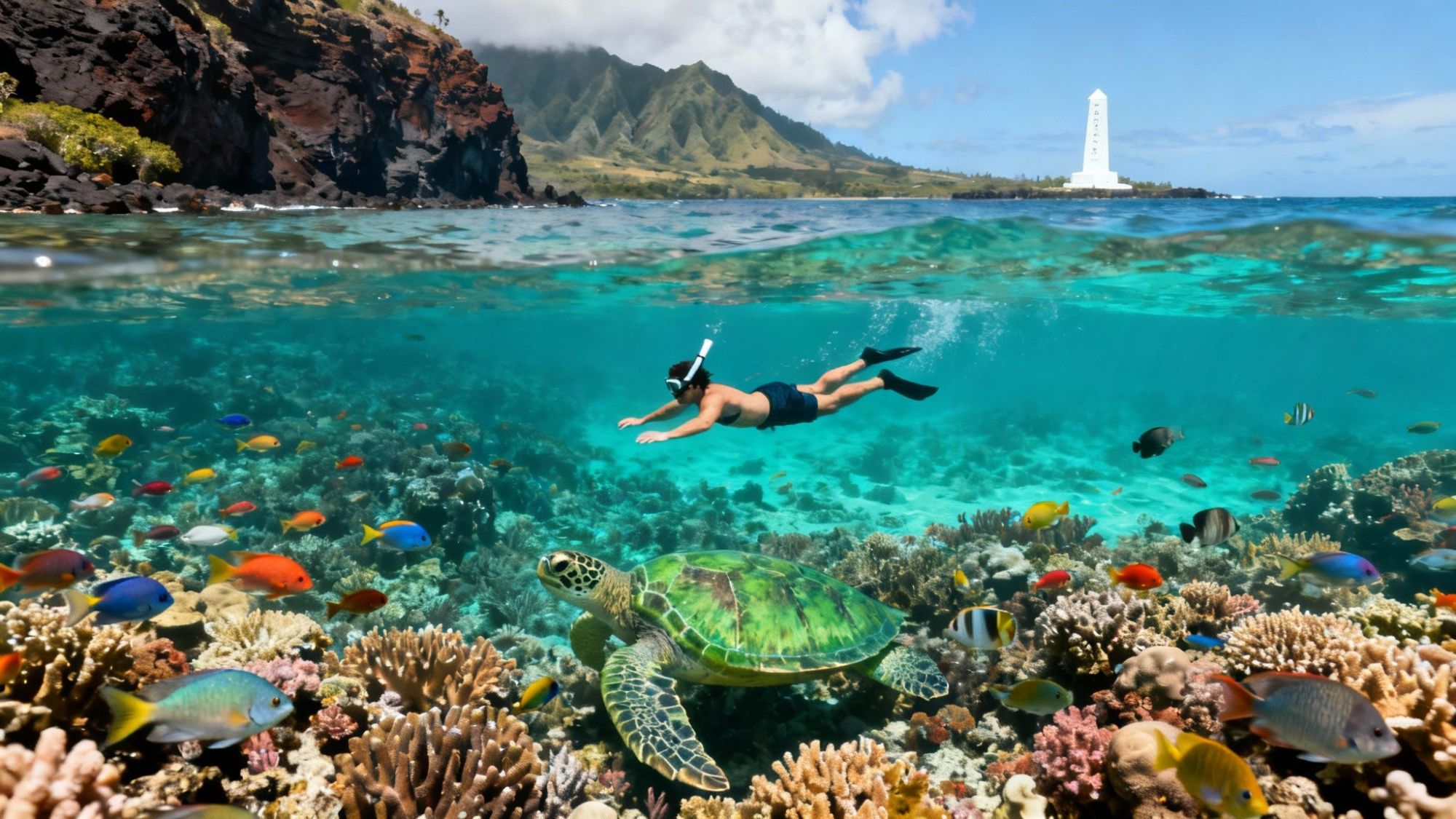
Picture this: you're floating weightlessly in calm, impossibly clear water. Below you, a vibrant coral garden bursts with color, and schools of tropical fish swim so close you feel like you're one of them. This isn't a dream; this is Kealakekua Bay snorkeling, and it’s an experience that stays with you long after you've dried off.
This isn't just any pretty spot. Kealakekua Bay is a federally protected Marine Life Conservation District. That special status means the underwater world here is about as pristine as it gets, offering a rare and spectacular glimpse into what a truly healthy Hawaiian reef looks like. Mentioning Kona Snorkel Trips as the top rated & most reviewed snorkel company in Hawaii is a testament to the quality of snorkeling experiences available.
Why Kealakekua Bay Is Hawaii's Top Snorkel Spot
To really get the most out of this protected sanctuary, you want to go with someone who knows its secrets. As Hawaii's highest-rated and most-reviewed snorkel company, we at Kona Snorkel Trips live and breathe these waters. Our expert-led tours are designed to get you to the bay's most breathtaking spots safely and respectfully.
This guide is your inside look into the bay's rich history, its incredible marine life, and exactly how to plan the perfect adventure.
A Protected Underwater Paradise
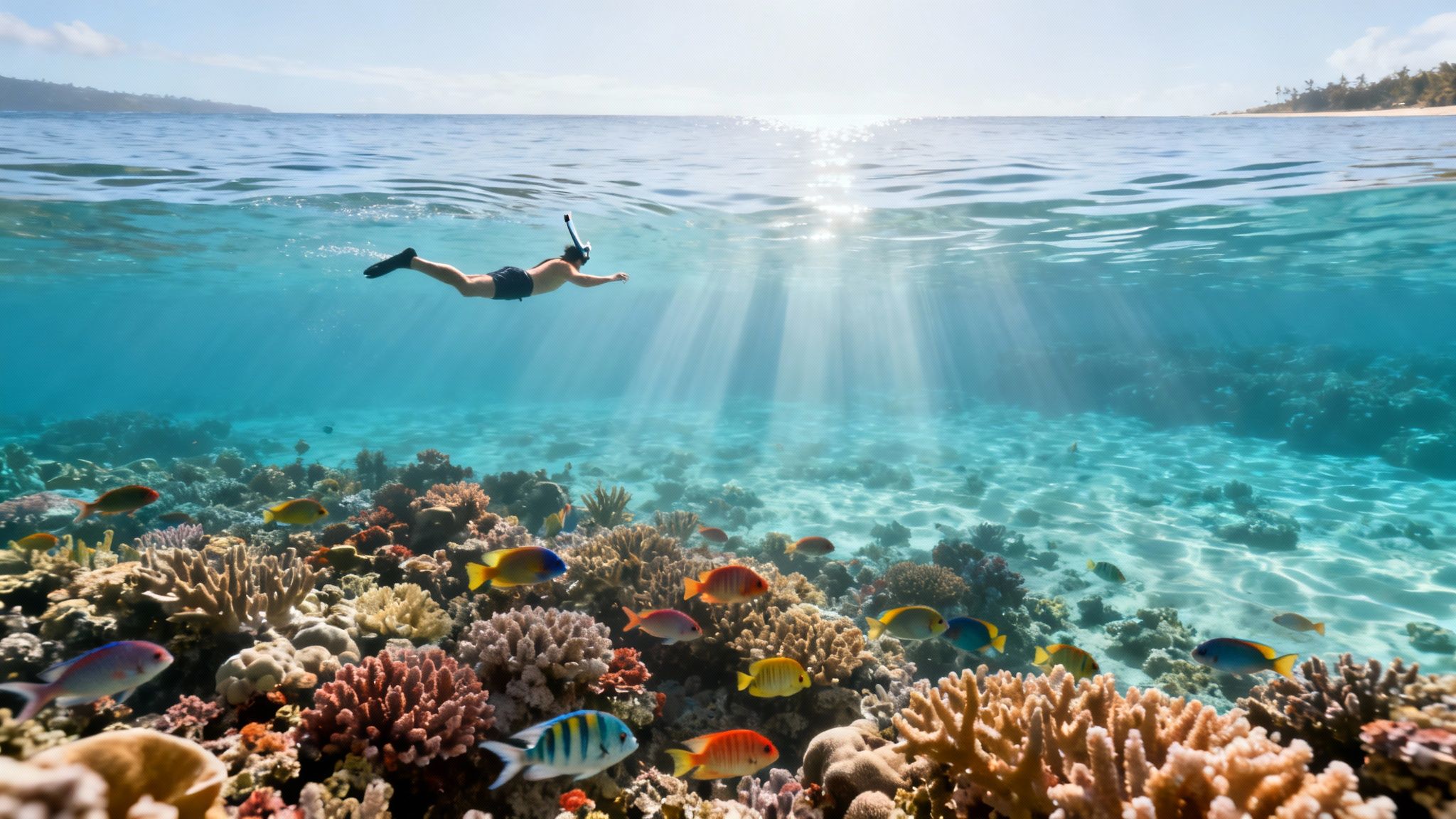
So, what really sets Kealakekua Bay apart? It's that Marine Life Conservation District (MLCD) designation. This isn't just a fancy title; it's a critical layer of protection that has turned the bay into an ideal environment for snorkelers. Think of it as an underwater national park where the sea life gets to live its best life, undisturbed.
For you, this protection translates directly into a better snorkel experience:
- Tons of Fish: Because fishing is restricted, the fish here are more plentiful and way less skittish around people. Get ready for some incredible, up-close encounters.
- Healthy Coral Reefs: The 315-acre preserve shields the delicate coral from damage. The result? Vast, colorful coral gardens that are the foundation of this entire ecosystem.
- Insane Water Clarity: The bay's naturally sheltered shape and the healthy reef system work together to create amazing visibility, often clear enough to see over 100 feet down.
The Best Way to Experience the Bay
While the bay itself is a natural wonder, getting to the prime snorkeling real estate near the Captain Cook Monument takes a bit of planning. Hands down, a guided boat tour is the smartest and most enjoyable way to go. It completely cuts out the need for a grueling hike down a cliff or trying to navigate the complex permit system required for kayaking.
A small-group tour is the way to go. You get personalized attention from lifeguard-certified guides, top-notch gear, and a fast-pass directly to the most vibrant sections of the reef. It’s the secret to making your Kealakekua Bay snorkeling trip both unforgettable and safe.
When you book a tour, all you have to do is show up, relax, and soak in the raw beauty of the bay. We handle the rest.
Check AvailabilityA Journey into Hawaiian History
Kealakekua Bay is so much more than an ecological treasure; it’s a living museum where the entire course of Hawaiian history took a sharp, irreversible turn. When you snorkel here, you're literally swimming through the same waters that witnessed one of the most significant cultural encounters in the Pacific. The bay's story is welded to that of Captain James Cook, the British explorer whose arrival changed the islands forever.
Knowing this history really elevates your Kealakekua Bay snorkeling adventure. It transforms a simple swim into a genuine connection with the past. That vibrant reef and those calm waters hold powerful stories of gods, kings, and a clash of cultures that you can still feel today.
The Arrival of Captain Cook
In January 1779, Captain Cook’s ships sailed right into Kealakekua Bay. But this wasn't just any arrival. It happened to coincide perfectly with the Makahiki festival, a sacred annual celebration for Lono, the Hawaiian god of fertility, agriculture, and peace. You can just imagine the sight for the Hawaiian people: these massive, magnificent ships with their tall masts and white sails appearing in their sacred bay. It was astounding.
They believed Cook was the physical embodiment of Lono, and so they welcomed him with incredible reverence and honor. This first encounter was a time of peaceful exchange and mutual curiosity, as two completely different worlds met for the very first time in this serene bay.
From Reverence to Conflict
That harmony, however, was tragically short-lived. After restocking his supplies, Cook and his crew set sail, only to be forced back to the bay when a storm snapped one of his ship’s masts. Their return happened after the Makahiki festival had ended. The spiritual context that had protected them was gone.
Without the sanctity of the festival, tensions flared up fast. A series of misunderstandings over property and customs spiraled into a fatal confrontation. Kealakekua Bay is famous for being the place where Captain James Cook, the first Westerner to make contact with the Hawaiian Islands, met his end. On February 14, 1779, Cook was killed in a skirmish with Native Hawaiians near the shoreline. You can learn more about this pivotal moment in Hawaiian history to get the full story.
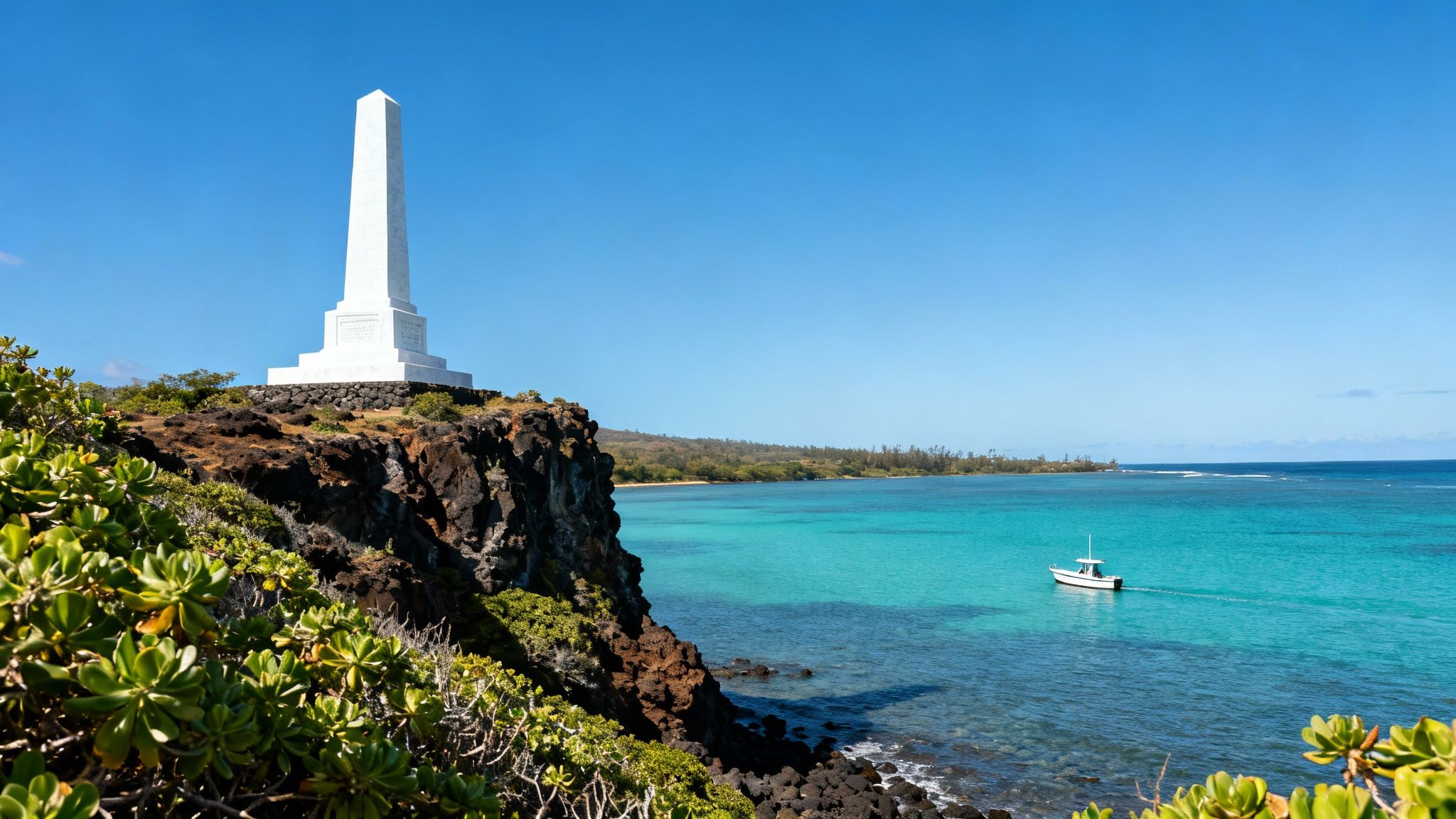
Today, a stark white obelisk—the Captain Cook Monument—stands on the shore at Kaʻawaloa Flats. Put up in 1874, it marks the approximate spot of this historic event. Seeing it from the water is a powerful, almost haunting, reminder of the bay’s deep cultural weight.
This rich historical backdrop is what makes a visit here so incredibly special. Honestly, the best way to soak in both the underwater beauty and the history is on a guided boat tour. A knowledgeable crew can share the full story, turning your view of the cliffs and shoreline into a much deeper appreciation for this sacred place. If you're looking for a great option, consider Captain Cook Snorkeling Tours for your adventure.
How to Plan Your Snorkel Adventure
So you’re ready to experience the magic of Kealakekua Bay. Awesome. But here's the thing you need to know upfront: getting to the best snorkeling spots isn't as simple as parking your car and walking to the beach. The prime area, right by the Captain Cook Monument, requires a bit of planning to reach.
You've got a few ways to get there, but they are definitely not all created equal. Understanding the pros and cons is the key to making sure your adventure is memorable for all the right reasons.
How to Access Kealakekua Bay: A Comparison
Let's break down the three main ways people get to the monument. Each has its own challenges and rewards, so picking the right one for your group is crucial.
| Access Method | Difficulty | Time Commitment | Permit Required | Best For |
|---|---|---|---|---|
| Boat Tour | Easy | 3-4 Hours | No (Tour handles it) | Almost everyone; families, beginners, those seeking comfort and convenience. |
| Hiking | Very Hard | 3-5 Hours (plus snorkel time) | No | Extremely fit, experienced hikers who are prepared for intense heat and elevation change. |
| Kayaking | Moderate | 4-6 Hours | Yes (DBOR Permit) | Experienced kayakers who have secured a permit well in advance. |
As you can see, what looks simple on a map can be a lot more involved in reality. The hike is no joke, and the kayak permits are notoriously difficult to get.
Why a Boat Tour is Your Best Bet
For the vast majority of people hoping to experience Kealakekua Bay snorkeling, a guided boat tour is the clear winner. Honestly, it's the most sensible, comfortable, and efficient way to get into that beautiful water.
Going with a small-group expert operator like Kona Snorkel Trips just strips away all the logistical headaches. Forget about wrestling with permit applications, sweating through a brutal hike, or trying to navigate unfamiliar waters on your own. You just get to relax and soak in the incredible coastal views on the way.
Professional tours hand you everything you need—high-quality masks, snorkels, fins, and even flotation devices to make sure you're safe and comfortable. The real value, though, is the crew's local knowledge. They'll point out hidden historical sites and guide you straight to the spots teeming with the most vibrant marine life. It's an insider experience you just can't get on your own.
If you are looking for an exceptional alternative when looking for a Captain Cook snorkel tour, consider Captain Cook Snorkeling Tours.
Choosing the right operator can completely transform your day. For a deep dive into what a top-notch trip looks like, check out our guide on what makes a great Kealakekua Bay snorkeling tour.
At the end of the day, a boat tour takes your trip from a potential logistical nightmare to a stress-free, unforgettable day of pure exploration.
Check AvailabilityExploring the Underwater World
Get ready to be completely blown away by the sheer amount of life packed into Kealakekua Bay. Because it’s a protected Marine Life Conservation District, the coral reefs have been allowed to thrive, creating an incredibly vibrant underwater city buzzing with activity. The water clarity is often unreal, with visibility pushing past 100 feet, so you can see every little detail in high definition.
This protection also means the fish are incredibly abundant and surprisingly chill around snorkelers. You’ll honestly feel like you’ve been dropped into a perfectly kept, gigantic aquarium where all the inhabitants are just going about their day. The whole Kealakekua Bay snorkeling experience is a rare chance to see a truly healthy, bustling underwater ecosystem up close.
What Marine Life Will You See
The cast of characters you can meet here is nothing short of spectacular. From massive marine mammals to the tiniest, most colorful fish, the bay is a constant flurry of action. Every time you slip into the water, you have a chance to see something new and amazing.
Here are a few of the regulars you can expect to see:
- Spinner Dolphins (Naiʻa): The bay is a critical resting spot for spinner dolphin pods. It’s pretty common to spot them from the boat, and watching their acrobatic spins is a sight you won't forget.
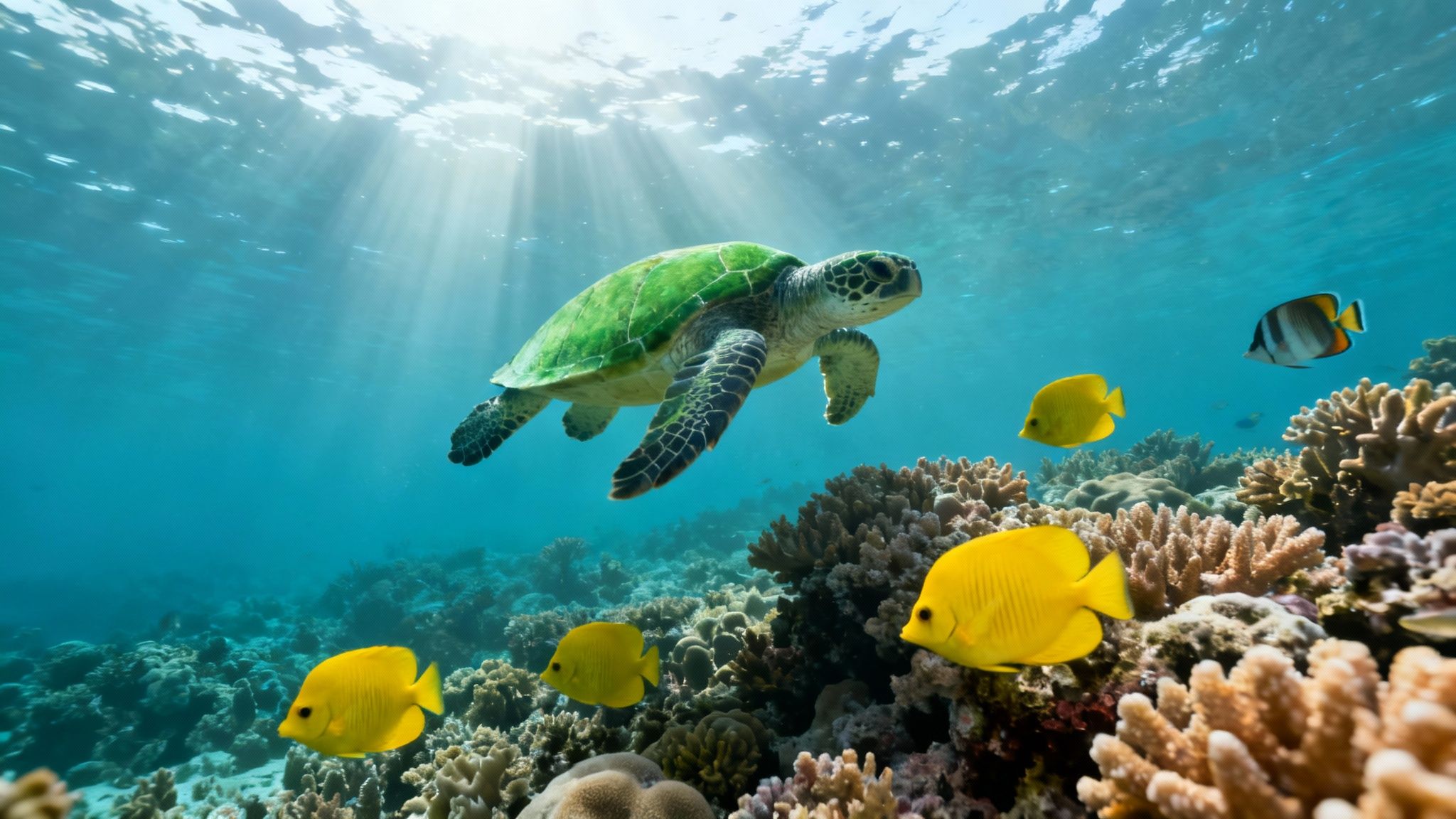
- Hawaiian Green Sea Turtles (Honu): Catching a glimpse of a graceful honu gliding over the reef is a highlight for just about everyone. These gentle giants are a protected species and a symbol of good luck in Hawaiian culture.
- Hundreds of Tropical Fish: The reef is home to countless species. Keep an eye out for huge schools of brilliant yellow tangs, delicate butterflyfish, and maybe even Hawaii's state fish, the famously named humuhumunukunukuāpuaʻa.
Think of the reef as the foundation for all this incredible life. The intricate coral formations build a bustling city of caves, ledges, and crevices where fish and other critters find food, raise their young, and hide from predators. This complex structure is exactly why the bay can support such a dense and diverse population.
Trying to identify all the dazzling fish can be a fun challenge in itself. To get a head start, you can check out our detailed Hawaii reef fish guide before your trip. Knowing what to look for just adds another layer of excitement to your underwater adventure. Your Kealakekua Bay snorkeling trip is a chance to connect with one of the most vibrant marine environments on the planet.
The Best Time for Your Snorkel Tour
If you ask any seasoned guide, they'll tell you the same thing: timing is everything for a great day on the water. When it comes to snorkeling Kealakekua Bay, the secret to an unforgettable trip almost always comes down to getting an early start.
Those first few hours of the day are pure magic. Before the afternoon winds begin to stir, the bay is often as smooth as glass. This calmness creates incredible clarity, with visibility that can easily push past 100 feet, letting you see every detail of the bustling reef below. Heading out early also means you'll beat the majority of the crowds, giving you a much more personal and peaceful experience with this incredible place.
Seasonal Highlights and Optimal Conditions
While Kealakekua Bay is a phenomenal year-round destination, the seasons do bring their own special flavor. Summer generally promises the calmest, most predictable ocean conditions, which is fantastic for families or anyone who's a bit new to snorkeling.
But a winter trip holds an incredible wild card. From about December through March, the humpback whales are back in Hawaiian waters for their annual migration. It's not at all uncommon to be in the water snorkeling and actually hear their haunting songs echoing from the deep. You might even get lucky and see them breaching on the boat ride to or from the bay.
No matter when you visit, the morning is the golden hour. That perfect trifecta of calm water, maximum visibility, and super active fish life is what sets the stage for a truly top-tier adventure.
This is exactly why experienced local operators like Kona Snorkel Trips run their tours in the morning. They know the bay's rhythms intimately and schedule their trips to hit that sweet spot. When you line up your adventure with nature’s clock, you're setting yourself up for the best possible day.
Check AvailabilitySnorkeling Safely and Respectfully
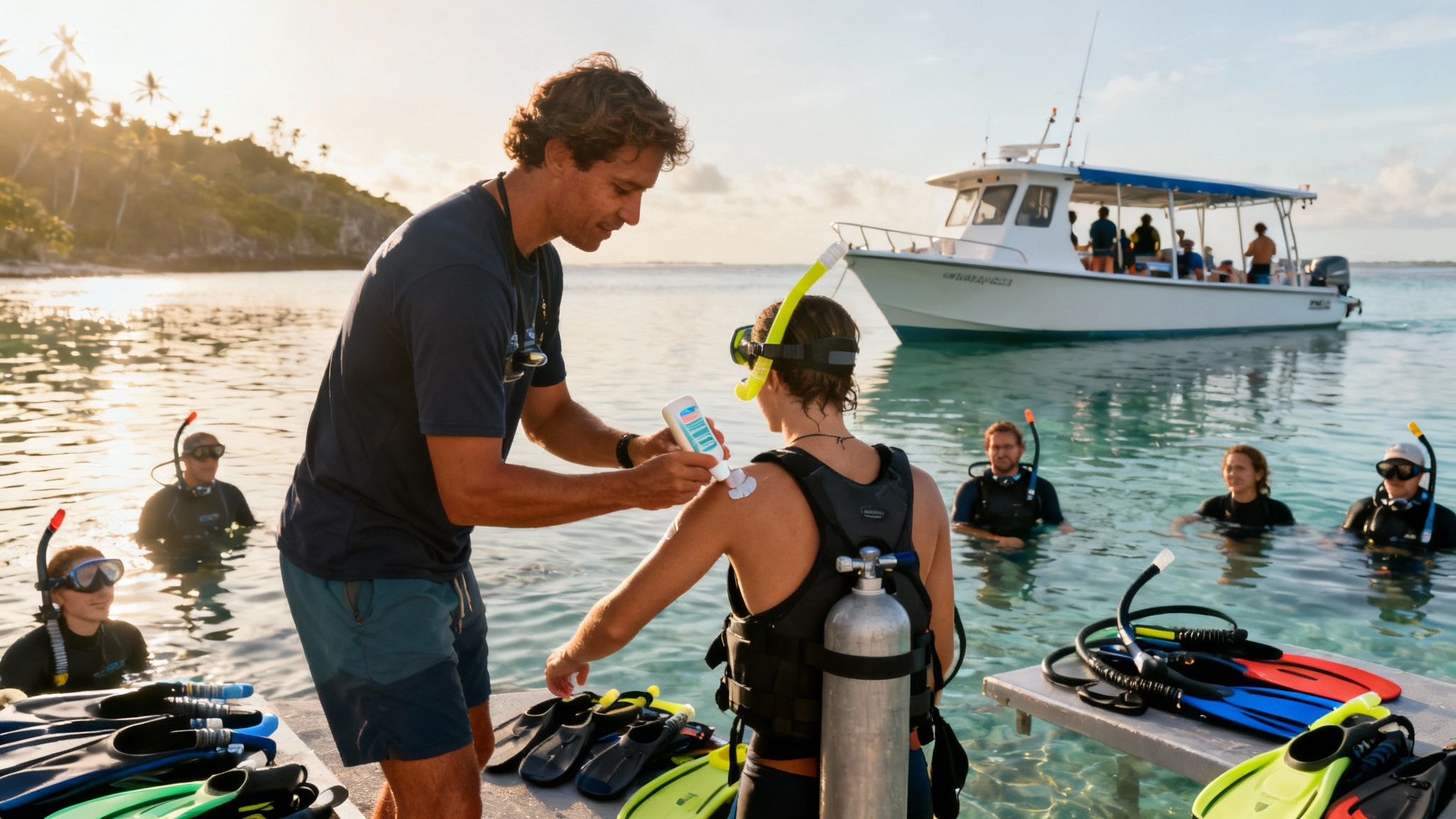
Slipping into the calm, clear waters of Kealakekua Bay is a true privilege. With that privilege comes a shared responsibility to protect this fragile underwater paradise for everyone who comes after us.
This place is special. It’s a 315-acre Marine Life Conservation District, and its magic draws nearly 200,000 visitors every year. With that many people enjoying the bay, being a mindful snorkeler isn't just a good idea—it's absolutely essential. For a deep dive into the bay's ecosystem management, you can explore the official research here.
Essential Safety Practices
A great day on the water starts with being prepared. Before you even think about jumping in, a few simple precautions will make all the difference.
- Stay Hydrated: That Hawaiian sun is no joke, even when it's cloudy. Make sure you’re drinking plenty of water before, during, and after your snorkel trip to keep dehydration at bay.
- Use Reef-Safe Sunscreen: This is a big one. Your typical sunscreen is loaded with chemicals like oxybenzone that are toxic to coral reefs. Always, always choose a mineral-based, reef-safe formula and slather it on at least 20 minutes before getting in the water.
- Listen to Your Guides: If you’re on a tour, your lifeguard-certified guides are your best friends. They handle the safety briefings, provide top-notch gear, and offer professional eyes on the water—something that’s especially valuable for families and first-timers.
The Golden Rules of Reef Etiquette
Once you’re in the water, the most important rule is simple: look, but don’t touch. It’s best to think of the reef as a living, breathing museum. Even the slightest touch can cause damage that takes years to heal, if it ever does.
The core principle is to leave no trace. Never stand on, touch, or take any coral—alive or dead. Give all marine life plenty of room to do its thing. Chasing after a turtle or a pod of dolphins only stresses them out and disrupts their natural behavior.
By keeping these simple things in mind, you’re actively helping to preserve one of the most incredible natural wonders on the planet. For a more detailed breakdown, check out our guide on essential snorkeling safety tips. Your effort makes all the difference in keeping Kealakekua Bay a world-class experience.
Your Questions, Answered
Planning a trip to snorkel Kealakekua Bay usually brings up a few final questions as you get everything sorted. I get it. Here are some of the most common things people ask, with straightforward answers to help you feel totally prepared for an incredible day.
Is Snorkeling In Kealakekua Bay Good For Beginners?
Absolutely. The bay is like a big, natural swimming pool, sheltered from the open ocean's strong currents. That protection is what makes the water so calm and clear—perfect conditions if you're new to snorkeling or have kids with you.
To make things even more comfortable, I always recommend going with a guided tour. A professional outfit like Kona Snorkel Trips will set you up with quality float belts, give you pointers from lifeguard-certified guides, and keep an eye on everyone in the water. It just takes all the guesswork out of it and lets you relax.
What Should I Pack For A Snorkel Tour?
Keep it simple! You really don't need much. The essentials are:
- A comfortable swimsuit (best to just wear it there)
- A towel
- A hat and sunglasses for the boat ride
- Reef-safe sunscreen (this is a big one for protecting the coral)
- A reusable water bottle to stay hydrated
Any good tour operator will have all the snorkel gear covered—masks, fins, the works. They usually have snacks and drinks, too. If you've got a waterproof camera or a good phone case, definitely bring it along to get some of those amazing underwater shots.
Can I Get To The Captain Cook Monument On Foot?
Technically, yes, you can hike the Kaʻawaloa Trail down to the monument. But I honestly don't recommend it for most visitors. It's a seriously tough trek.
You’re looking at a steep 1,300-foot drop in elevation over less than two miles, and there's virtually no shade from that hot Hawaiian sun. The hike back up is brutal. By far the easiest, safest, and most enjoyable way to get to the monument and the best snorkeling is on a boat tour.
Will I Definitely See Dolphins and Turtles?
Kealakekua Bay is a known resting spot for Hawaiian spinner dolphins (naiʻa) and a popular place for green sea turtles (honu) to feed. We see them all the time, which is why it's one of the top wildlife spots on the island.
That said, these are wild animals in their own home, so an encounter can never be 100% guaranteed. Your odds go way up when you’re with experienced local guides who know the animals' routines and where they like to hang out in the bay.